




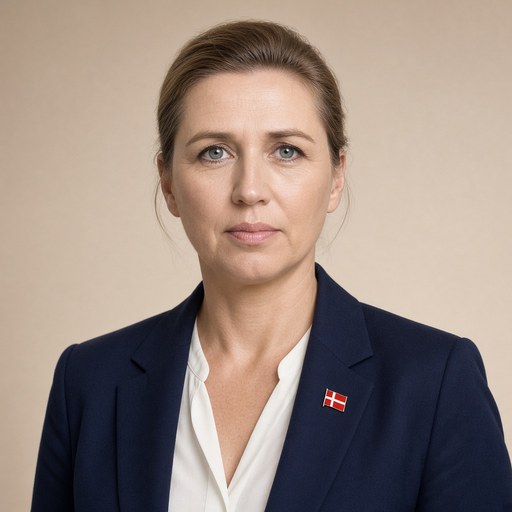
Prime Minister Mette Frederiksen's speech to the final debate of the Folketing on May 21, 2025.
 Mette Frederiksen · Prime Minister of Denmark
- Context
- Frederiksen addressed the Folketing's final debate on May 21, 2025, covering defense, Greenland sovereignty under US pressure, and the Danish realm community.
- Main themes
- Danish defense and Home Guard volunteerism, Greenland sovereignty and US pressure, realm community unity, NATO and collective security, Faroese autonomy, territorial integrity and international law, Denmark-US alliance, Baltic security, civil preparedness
- Duration
- ~41 min
- Words
- 4,972
- Sentences
- 519
- Readability
- 61
- Grade
- 6.5
- Syntax
- 2.28
- Vocabulary
- 2.14
Translated from Danish
The broad sphere of national life a sentence belongs to. Every sentence has an Arena, so it is the denominator the other indices are read against.
Other519 sentences in 325 paragraphs
Today, I would like to start in Bornholm.
Our wonderful Danish sunshine island. Right in the middle of the Baltic Sea.
Here, the Home Guard has its hands full.
Around 300 Bornholmers are active in the Home Guard. They assist the Armed Forces, authorities, and local police with disaster preparedness and crisis management. And the threat from the east means that new tasks have arisen.
In short, there is a need for more forces.
That is why the commander of the Bornholm Home Guard sent a letter to everyone who has previously been active.
Would you consider signing up under the banners again?
Fortunately, many were ready to do so.
One of them was a woman. At 81 years old.
Born during World War II. Grew up during the Cold War. And now again ready to contribute to protect the homeland.
Just think. More than 80 years old. Yes, she thinks, I must be able to contribute in some way.
And not only that. Her husband, 87 years old, followed suit.
It is so fine and so moving.
That will to do something.
That is what we Danes are made of. And that is exactly what we need now.
The Home Guard is experiencing the largest increase in volunteers in 40 years. More than 43,000 are now volunteers.
You are ready to protect NATO infrastructure in Denmark. Ready if the storm surge, terrorism, or environmental disaster strikes.
You assist at all kinds of events where the rest of us enjoy ourselves and live our peaceful lives.
And you stand with machine guns in Kosovo to ensure stability in the Balkans.
Thank you to all of you in the Home Guard.
And thank you to all of you others who are helping to defend and take care of the Denmark we love and cherish. In the Emergency Services. The Armed Forces. And the police.
You who help at Europe’s external borders or right here, where we stand.
You are helping to guide Denmark safely through turbulent times.
* * *
And turbulent times. One must say that they are.
In recent months, Greenland and Denmark have been subjected to unacceptable pressure from our closest ally for a generation.
Demands to take over part of the Kingdom's territory. Threats of annexation – without wanting to rule out military force. From the world's most powerful country. As we have seen up to now. Which has created peace and freedom. And which has always been able to count on us.
Who in their wildest imagination would have thought it would come to this?
But we do not bend. For that is not who we are. And we cannot let the world develop like this.
That is why we stand tall. We know what we stand for. And our allies know it too.
Denmark has been a good and loyal ally to the USA. Our soldiers have stood shoulder to shoulder in war for our common values.
If we allow ourselves to be divided, we only serve the interests of our enemies. I will do what I can to prevent that from happening.
But the world order we have built together is challenged.
Fundamental principles that have bound us together across the Atlantic since World War II. The sovereignty of states and territorial integrity. Respect for a people's right to determine its own future.
So that small countries do not have to fear large countries. So that power does not become right.
* * *
Dear Greenlanders.
You have shown enormous strength.
In the midst of the storm, you have stood firm. Not just on what is right and fair. That no one but you should define your future.
But also on completely fundamental values. The inviolability of borders. Democracy and freedom.
We have followed and admired your courage, which has resonated around the globe.
I am proud that we – Greenland and Denmark – have succeeded in staying together. And I am proud of our shared will to find the way forward.
We have come closer together. But we must also acknowledge that we are in a new time. Which places demands on each of us. And on the realm community.
From the Danish side, we are ready to ramp up cooperation. To invest in Greenland and the Greenlandic community. This could be in business policy and critical infrastructure.
I fully acknowledge and understand your desire to build a strong economic foundation.
We will continue to work on uncovering our shared history. And its consequences.
And if you wish to revise the Self-Government Act, we are also ready for that.
* * *
Dear Faroese.
It was only ten days ago that I visited your beautiful islands. For the fourth time as Prime Minister.
The past few months have mostly been about Greenland. With good reason.
But the realm community consists of three countries.
You have a raw strength and a stubbornness that I personally quite like.
A strong will to develop your society. On your own terms and according to your own traditions.
A concrete example is your desire for Faroese membership in the WTO in your own name.
We have together raised this with the § 6 Committee and sent a joint request to the President of the Supreme Court. It is the first time in the now 77-year history of the Home Rule Act that we have taken this step together.
* * *
We are 179 members of the Folketing from all parts of the Kingdom.
And we are here for one reason only: We want to make decisions that create better lives for the people and the society we serve.
So what do a wolf, an elderly check, fertility treatment, driving licenses for 17-year-olds, and a cooling cap have in common?
It may sound like the start of a somewhat bad North Jutland joke.
But it is something entirely different. It is five concrete examples of what politics can do. And what we are here for.
* * *
Around Denmark, the wolf has created unease. Understandably.
It roams where people live. Kills livestock. And in several places, the local population has asked for help.
They are now getting it. We are making it easier to regulate the wolves that create problems. And in collaboration with the Wildlife Management Council and sheep farmers, we are strengthening the protection of livestock.
* * *
Everyone can feel that prices in the supermarket have risen. On some common items, even dramatically. Coffee. Chocolate. Meat and butter.
We have done a lot to bring inflation under control. It is now.
But some prices are still high. Therefore, it is good that we have given tax cuts to single parents.
And it is good that the old-age pension has increased. So a single pensioner now receives up to 7,000 DKK more per year. And if you also receive the elderly check, you get an increase of up to 13,000 DKK.
* * *
More and more young Danes are struggling with involuntary infertility. It is hard not to be able to have the children one desires.
That is why we have expanded fertility treatment. With up to twice as many treatment attempts for the first child. And free help for the second child. So a little brother or sister can come into the world.
Far more can now get help to create the family you dream of.
And the waiting time for treatment? It is decreasing.
* * *
We have decided that 17-year-olds should be allowed to drive cars during the day.
And that can lead to many discussions.
But everyday life there, where the sky is high and a bit further to the nearest neighbor, must hold together.
Also for you young people. You will now find it easier to get to and from school, apprenticeship, or education.
* * *
And then we are strengthening cancer treatment.
One in three Danes will be affected by cancer before they turn 75.
And almost all of us have had that cursed disease close to our lives as relatives.
We do not have to go many years back before a cancer diagnosis was almost automatically a death sentence.
Today, many more survive cancer. And therefore, we must focus more on the aftereffects and on life after cancer.
I remember from my own mother how intense it was when the hair disappeared after chemotherapy.
In a short time, the government will present Cancer Plan 5. Where we provide the largest financial boost to the cancer area to date. With tailored treatment pathways. More focus on late effects. More prevention.
And then more of the women who have breast cancer will be offered a cooling cap that can reduce the risk of losing their hair.
We must take better care of all of you who are in the exhausting battle that a cancer disease is.
* * *
All that I have just mentioned are examples of political decisions that create concrete improvements for people.
If not for you, then perhaps for your family, your neighbors, or your best friends.
I could also have mentioned the fixed teams we are expanding in elderly care. So our elderly actually know the people who come into their homes.
Or the junior master education for the school-weary teenager.
Or the green tripartite agreement that restores large parts of the Danish nature.
We have allocated more billions to our healthcare system than any other government.
And we can see that what we are doing is starting to work.
Many have probably forgotten it. But when the government took office, one of the first things we did was to launch an acute plan for the healthcare system.
And the goals we set – together with many of the parties here in the chamber – yes, they have actually been achieved.
The waiting time for somatic treatment has fallen by 9 days and is back to the level before corona.
We have given a pay raise to many public employees.
Nurses are returning to hospitals.
Maternity wards have received more midwives.
And more social and health workers are being trained.
Does that mean we have reached our goal?
No, of course it does not.
There is still a lot that can be improved. And must be improved.
Not least in psychiatry. Here we have just made an agreement on a comprehensive 10-year plan. That completes the financial boost of 4.6 billion DKK each year to psychiatry. We are on our way.
When we soon embark on one of the longest debates of the year, let us keep this in mind:
Politics must mean something.
* * *
This also applies to the political decisions we make together in Europe.
This month marks exactly 75 years since one of the most pivotal events in recent European history took place.
We are in May 1950.
The early days of the Cold War. Germany is divided in two. The communists have taken power in Czechoslovakia. And the Soviet Union has just developed its first nuclear weapons.
The European countries are on high alert. Many fear a third world war.
In Paris, the French foreign minister is pacing. He has called a press conference. And rewritten his speech nine times.
“World peace can only be secured through creative forces that match the dangers threatening it,” he begins.
And then Schuman presents an idea that would come to mean much more than he perhaps realized.
He proposes to pool French and German production of coal and steel “under a higher, common authority, an organization that will be open to participation from other countries in Europe.”
Back then, an almost unthinkable vision. That countries that had waged war against each other for centuries would now lay down their arms and work together.
11 months later, the Coal and Steel Community was a reality.
And what we today know as the EU was born.
A cooperation on trade. And prosperity.
But first and foremost, a cooperation for peace.
* * *
I do not think I am exaggerating when I say that European cooperation has never truly been a pet project for many Danes.
We have stumbled over cultural differences and slow processes. Discussed crooked cucumbers and bans on plastic straws.
Disagreed on the overly uncontrolled immigration. And missed understanding for the importance of a well-organized labor market with decent wages.
But bad decisions can be undone.
And the old world no longer exists.
We are in a new time.
Where Russia's brutal war of aggression in Ukraine rages with unabated strength.
Where Pakistan and India – two neighbors with nuclear weapons – are on a collision course.
Where the situation in Gaza becomes more and more desperate with each passing day. Israel is blocking humanitarian aid and has intensified a land operation. And the population of Gaza is desperately lacking access to food, water, and medicine.
And a time when old allies create doubt about support for the ideas that have united the free world for generations.
The world order on which our freedom, security, and prosperity have rested since World War II. It is threatened.
And the answer. In a way, it is quite simple: Hold on to democracy. And be willing to fight for it.
In a strong Denmark. And a strong Europe.
* * *
“Down in Europe, they have gotten a clever idea,” sang Skousen and Ingemann in the 70s.
But Europe is here. It is Copenhagen. It is Lemvig. It is Nakskov.
Europe is not primarily a place.
It is an idea. Values. A way of looking at the world.
Europe is the ancient Greeks who invented democracy.
Montesquieu, who created the separation of powers.
Europe is the Enlightenment. The rights of the individual. Respect for the community.
The belief in progress, science, and reason.
That we can think as we wish. Believe as we wish. Speak as we wish.
That the foundation of our public discourse is facts, not feelings. And that God must yield to democracy.
It is the fundamental idea on which our continent is built, and which runs in the blood of all Europeans.
Europe is our spiritual life.
It is Mozart, Edith Piaf, and Picasso. It is Marie Curie. Kierkegaard. Marx. Darwin. Rousseau, Luther. And Hannah Arendt.
It is Václav Havel, Stefan Zweig, and Hartvig Frisch.
It is Anne Frank, The Little Prince, Einstein, Astrid Lindgren, Thomas Mann, The Unbearable Lightness of Being, Tolkien, and J. K. Rowling.
It is Kafka, Ursula Von der Leyen, Jacques Delors, Newton, and Inge Lehmann.
It is the Eurovision Song Contest. And the Champions League.
It is feminism, the right to abortion, and the nation-state.
Europe is Churchill.
Europe is a mentality.
It is German thoroughness, Southern European charm, Scandinavian trust, Polish realism, and West Jutland common sense.
Europe is the heroism of the Ukrainians.
Europe is revolutions, crises, and wars.
And yes. It is also bureaucracy, Brexit, and difficult compromises.
But above all, Europe is a magnificent, rich, and diverse community that has managed to rise again and again.
Europe is the Phoenix that shakes the ashes from its wings.
Now the world around us is smoldering again.
* * *
I love Denmark with all my heart.
Denmark, my homeland, as H. C. Andersen wrote it. And I am so proud of what we have built up over generations.
But I am also a passionate European.
Only with a strong Europe can we move our own society forward.
And only in a strong alliance with our neighbors can we secure our freedom and security.
I am currently experiencing a sense of action and unity that makes me optimistic about Europe’s future.
Large countries like Germany, France, Poland, and Italy are taking the lead. The United Kingdom is back at the table.
It is time to recall the words of the French Foreign Minister Schuman. To find the creative forces that match the dangers that threaten us.
In a short while, Denmark will take over the presidency of the EU. Here, we will do everything we can to move our continent forward.
And to make ourselves so strong that we can ensure our own populations a bright and prosperous future. And deter any enemy from destroying our societies.
It is primarily about our ability to defend ourselves. To deter Russia from attacking yet another European country.
That is why we are rearming.
It has been 80 years since World War II ended.
For all those years, we Danes have marked the liberation with beautiful words about freedom, heroism, and action.
But this year, it is about much more than words.
Denmark is one of the countries that has supported Ukraine the most.
And I am grateful for the support of the Danish people for the historic decisions we have made together here in the Folketing.
The war has never only been about Ukraine.
Putin's imperial dreams extend far, far beyond.
And we have no reason to believe that Russia will stop at Kyiv.
Russia has transformed its economy into a real war economy, and according to the Defense Intelligence Service, they see themselves in conflict with the West and are preparing for a war against NATO.
I do not trust tyrants.
Just as wrong as it was to bow to Hitler in the 1930s, it is just as wrong to back down today.
It is up to Russia to prove that they want peace.
Ukraine's future must be secured. And we must rearm to prevent Russia from expanding the war to even more countries in Europe.
* * *
Today, we are spending more than double the amount on defense and security compared to when I took office as Prime Minister nearly six years ago.
This is necessary for our own security and for our responsibility towards Ukraine and the alliance of which we are a part.
But it is also about something more fundamental.
About what kind of country we want to be.
A Denmark and a Europe that are not willing to defend themselves. What does that really mean?
No matter how brutal it sounds, it is a form of indifference towards ourselves and our own. A relativization of our country and our continent.
And how can we expect others to defend us if we are not prepared to do so ourselves?
Never again must the Danish defense be cut back so far. Never again must our will to defend ourselves erode.
We must rebuild the European defense industry. Secure the supply chains and replenish the ammunition and weapon stocks.
That is why we have accelerated the rebuilding of the Danish defense.
With the words buy, buy, buy, we are rebuilding our combat power.
We are building a heavy brigade that will be able to participate in the defense of NATO's eastern flank.
We are acquiring long-range drones and air refueling aircraft so that we can operate in NATO's northernmost areas.
We are strengthening the defense of the Baltic Sea with infantry on Bornholm.
And acquiring a coastal missile defense system that will contribute to the security of Danish waters.
More conscripts for both defense and emergency preparedness. A longer and more operational conscription. Which, of course, is for both men and women.
We are starting to build a ground-based air defense.
And we have an ambition to build military ships in Denmark again.
Ships for the maritime home guard and the protection of our marine environment and underwater critical infrastructure.
And Arctic ships for defense in the North. In close cooperation with our NATO allies.
In a month, there will be a NATO summit. Before that, new force goals will be decided. Sub-agreement 2 on the Arctic and the North Atlantic must be in place.
In other words, we will need even more money for the Danish defense.
* * *
We must also prepare ourselves in other areas.
Our business sector.
Thanks to skilled employees and courageous business leaders, Denmark is a wealthy export country.
But competition has become tougher. Markets more unstable.
We must rally around Europe's businesses. Make it easier and cheaper to do business. Invest more strategically in future technologies. And make ourselves independent of countries with which we do not share values.
Russia is still the second-largest supplier of gas to EU countries.
Every single cent Russia receives from us is a help to Putin's war machine.
That is why we support Energy Commissioner Dan Jørgensen's proposal for a complete stop to the import of Russian gas from 2027.
Instead, we must build more green energy.
Denmark is a world champion in wind power.
Already today, over 50 percent of our electricity comes from wind turbines. And over 80 percent of our electricity production comes from renewable energy.
But even world champions can be delayed. And even world champions can dream of becoming even better.
I am pleased that we have now agreed on the framework for new tenders for three offshore wind farms. That could potentially supply electricity to 3 million households. And more than double Danish offshore wind production.
The electricity we do not use ourselves can be sold to our neighboring countries. And thus ensure not only ourselves but Europe a greener and more independent future.
We know the answers to the challenges we face.
But we also know that none of it will be easy.
On the horizon, there is a risk of an even worse trade war with the USA. We are preparing for that.
The Danish economy is rock solid.
We have the highest employment ever. Low unemployment.
Our economic muscles have grown. And the economic room for maneuver is expected to be larger again than we anticipated.
Not least because so many people go to work every day and contribute.
But large bills await.
For defense. Climate protection. Emergency preparedness. And of course welfare.
Last year, we secured the largest boost to municipal welfare in more than 15 years. Now we are negotiating with the municipalities again.
A strong welfare society is important, regardless of the situation Denmark finds itself in.
Even though we are strong. And even though we are doing better than many of the countries we normally compare ourselves with. We cannot avoid having to prioritize.
The balances are crucial. For cohesion. For the Denmark we pass on. And for the everyday life that is lived here and now.
* * *
There are many threats from outside. And unfortunately, there are also threats from within.
For several years, especially the western part of Europe has undergone a dramatic change in immigration. Immigration has been far too high and out of control in several countries.
And the consequences are very, very serious.
Many who have come here are doing well. Working. Contributing.
But the minority that does not. Who are not willing to integrate and become part of our society. That is destructive.
That is where we are.
And around Europe, we see the result. Crime. Insecurity. Parallel societies. Radicalization. Terror.
We must take control of Europe's external border. And we must realize our proposal for centers outside of Europe.
We cannot take in everyone who wants to come here. It must and shall be a democratic decision who enters our countries.
And those who come here and do not comply with the rules. They should be able to be expelled if they commit serious crimes.
Denmark stood alone with that attitude for many years. But now it is growing in Europe.
The strict asylum policy that Denmark pursues is now receiving support from a majority of EU countries. And several of the initiatives we have pushed for are now being translated into concrete legislation.
At the same time, I believe there is a need for a reckoning with the interpretation of international conventions.
The conventions were created to protect the individual against abuse and persecution. We support that.
But today one might think that it has almost been reversed.
The conventions are in some cases used to protect the wrong people. And as a country, we have lost the ability to secure our society and our citizens against those who wish us harm.
Politics must work.
We must regain control. Each individual country must have much greater room to expel people who have clearly shown that they do not want to be in Denmark.
The safety and stability of our society must have the highest priority.
* * *
I will never understand why anyone chooses to come to Denmark only to commit crimes.
To harm people in the country that offers one shelter and security.
The fact is that there is today a strong overrepresentation of male immigrants and descendants from non-Western countries in crime statistics.
Gangs. Criminal clans.
That terrorize entire neighborhoods and create insecurity for ordinary people.
When we feel insecure, all of us who obey the law lose a part of our freedom.
That is why it has been a core priority for me since I became Prime Minister in 2019 to take a harder and more consistent approach to crime.
We have already introduced double penalties for gang-related crime.
Increased penalties for reckless driving and illegal possession of knives.
Allocated funds for a strengthened investigative effort.
And presented a safety package where we take a tougher stance against those who create insecurity at train stations and in shopping centers.
But even though we have done all that. It is not enough.
The sentences for violent crime are too short. Far too short.
The people who commit brutal crimes against the rest of us, against our community, spend too little time in prison.
And if they commit new crimes, the punishment is too lenient.
That is why the government will soon present a reform of the penal system. Where we significantly increase the penalties for violent crime.
Denmark is one of the safest societies in the world. We have fundamental trust in each other. The crime rate is low.
But there are areas where things are going in the wrong direction.
In the past 10 years, the number of reports of violence has increased by over 40 percent.
We see terrible examples of unprovoked assaults. And of rapes, which are devastating for the victims' lives.
Criminals must be sentenced to a much greater extent to penalties that reflect the severity of the crime.
That is why we propose a doubling of the penalty for serious and particularly serious violence.
We will also increase penalties for assaults and gang rapes and simple violence committed against a partner or children.
When I first started working on criminal policy, I was influenced by my childhood and youth in Aalborg. I had seen the dark side of society. Seen how a bad childhood and neglect can lead to much misery.
I approached the task with a desire for rehabilitation and a focus on getting people out of crime.
I still feel that way.
But things have changed. There are now people in our society with an enormous readiness for violence. Who attack in groups and use violence as dominance.
Here we must be consistent. Punish harder. Expel criminals. Give the police even more power.
But there are also others who commit crimes. Who can still be saved. Who speak other languages than violence.
That is why the reform of the penal system also includes important social policy goals.
More young people who are willing to choose a life away from crime should have better opportunities for a new start. We will create new paths for them.
And the vulnerable addict should be seen as just that. A person we should help, rather than a criminal.
So we create a real opportunity to choose community and return to society. And thus reduce the risk of new crime.
* * *
The reform of the penal system requires that we secure more prison places. And hire more staff.
For it should never be the capacity of the criminal justice system that determines what kind of criminal policy we pursue in Denmark. It is today.
To all of you who work in Danish prisons and detention centers.
Prison officers, teachers, social workers, workshop managers, lawyers, cleaners, and many others.
You provide a completely fantastic and absolutely indispensable effort.
I have visited many of you over the years. My respect is without reservation.
Your job is not easy. On the contrary. You deserve ongoing focus on your working conditions.
I am glad that you prison officers have received pay during training and a pay increase.
And we are willing to look at whether there is more we can do.
* * *
Today, we conclude a parliamentary year that has brought events that few of us could have imagined.
And where the Kingdom of Denmark has been the subject of more attention than most of us would wish.
Nevertheless, we have managed to make a long series of political agreements that set the course for an even safer and greener Denmark.
We have strengthened our welfare. And paved the way for small and large advances in the everyday lives of Danes.
9 out of 10 political agreements have been made with parties from both sides of the political center.
Thank you to the Folketing for taking responsibility in a serious and in every way unpredictable time.
We must not only get through difficult times. We must emerge stronger on the other side.
From Gedser to Qaanaaq.
Behind the icebergs of Diskobugten.
Over the golden grain fields in Jutland, the islands, and Bornholm.
And to Holmen by Mykines.
That is known by the couple from Bornholm. And it is known by each and every one of us sitting here in the hall.
And no task is more important or more honorable than the one that primarily rests on us now:
To take care of the Kingdom of Denmark.
The original Danish. The tags above are read on the English translation's sentences.
I dag vil jeg gerne starte på Bornholm.
Vores vidunderlige danske solskinsø. Lige midt i Østersøen.
Her har hjemmeværnet fået hænderne fulde.
Omkring 300 bornholmere er aktive i Hjemmeværnet. De hjælper Forsvaret, myndighederne og det lokale politi med katastrofeberedskab og krisehåndtering. Og truslen fra øst betyder, at nye opgaver er kommet til.
Der er kort og godt brug for flere kræfter.
Derfor sendte den øverstkommanderende for det bornholmske hjemmeværn et brev til alle, der tidligere har været aktive.
Vil man overveje at melde sig under fanerne igen?
Det var der heldigvis mange, der var parat til.
En af dem var en kvinde. På 81 år.
Født under Anden Verdenskrig. Opvokset under den kolde krig. Og nu igen klar til at yde sit for at beskytte fædrelandet.
Tænk jer. Mere end 80 år gammel. Ja, så tænker hun, at noget må jeg da kunne bidrage med.
Og ikke nok med det. Hendes mand på 87 år fulgte trop.
Det er så fint og så rørende.
Dén vilje til at gøre noget.
Det er, hvad vi danskere er gjort af. Og det er præcis det, vi har brug for nu.
Hjemmeværnet oplever i disse måneder den største stigning af frivillige i 40 år. Mere end 43.000 er nu frivillige.
I er klar til at beskytte NATO-infrastruktur i Danmark. Er klar, hvis stormfloden, terroren eller miljøkatastrofen rammer.
I hjælper til ved alverdens arrangementer, hvor vi andre hygger os og lever vores fredelige liv.
Og I står med maskingevær i Kosovo for at sikre stabiliteten på Balkan.
Tak til alle jer i Hjemmeværnet.
Og tak til alle jer andre, der er med til at forsvare og passe på det Danmark, vi elsker og holder af. I Beredskabet. Forsvaret. Og politiet.
Jer, der hjælper til ved Europas ydre grænser eller lige her, hvor vi står.
I er med til at føre Danmark sikkert gennem urolige tider.
* * *
Og urolige tider. Det må man sige, at det er.
De seneste måneder har Grønland og Danmark været udsat for et uacceptabelt pres fra vores nærmeste allierede gennem en menneskealder.
Krav om at overtage en del af Kongerigets territorium. Trusler om annektering – uden at ville afvise militær magt. Fra verdens mægtigste land. Som vi har set op til. Som har skabt fred og frihed. Og som altid har kunnet regne med os.
Hvem havde i sin vildeste fantasi forestillet sig, at det skulle komme hertil?
Men vi bøjer os ikke. For sådan er vi ikke. Og sådan kan vi ikke lade verden udvikle sig.
Derfor står vi med rank ryg. Vi ved, hvad vi står for. Og det ved vores allierede også.
Danmark har været en god og trofast allieret for USA. Vores soldater har stået skulder ved skulder i krig for vores fælles værdier.
Hvis vi lader os splitte, går vi kun vores fjenders ærinde. Det vil jeg gøre, hvad jeg kan, for ikke sker.
Men den verdensorden, vi har bygget op sammen, er udfordret.
Fundamentale principper, som har bundet os sammen over Atlanten siden Anden Verdenskrig. Staternes suverænitet og territorial integritet. Respekten for et folks ret til at bestemme sin egen fremtid.
Så små lande ikke skal frygte store lande. Så magt ikke bliver ret.
* * *
Kære grønlændere.
I har udvist en enorm styrke.
Midt i stormen har I stået fast. Ikke bare på, hvad der er ret og rimeligt. At ingen andre end jer selv skal definere jeres fremtid.
Men også på helt fundamentale værdier. Grænsernes ukrænkelighed. Demokrati og frihed.
Vi har fulgt og beundret jeres mod, som har givet genklang over hele kloden.
Jeg er stolt af, at vi – Grønland og Danmark – er lykkedes med at holde sammen. Og jeg er stolt af vores fælles vilje til at finde vejen frem.
Vi er rykket tættere sammen. Men vi må også erkende, at vi er i en ny tid. Som stiller krav til os hver især. Og til rigsfællesskabet.
Fra dansk side er vi klar til at skrue op for samarbejdet. Til at investere i Grønland og det grønlandske samfund. Det kunne være erhvervspolitisk og i kritisk infrastruktur.
Jeg anerkender og forstår til fulde jeres ønske om at kunne bygge et stærkt økonomisk fundament.
Vi vil arbejde videre med at få afdækket vores fælles historie. Og dens konsekvenser.
Og hvis I ønsker at revidere selvstyreloven. Så er vi også parat til det.
* * *
Kære færinger.
Det er kun ti dage siden, jeg besøgte jeres smukke øer. For fjerde gang som statsminister.
De seneste måneder har mest handlet om Grønland. Med god ret.
Men rigsfællesskabet består af tre lande.
I har en råstyrke og en stædighed, som jeg personligt godt kan lide.
En stærk vilje til at udvikle jeres samfund. På egne præmisser og efter egne traditioner.
Et konkret eksempel er jeres ønske om færøsk medlemskab af WTO i eget navn.
Det har vi sammen rejst over for § 6-nævnet og sendt en fælles anmodning til Højesterets præsident. Det er første gang i hjemmestyrelovens nu 77-årige historie, vi har taget det skridt sammen.
* * *
Vi er 179 medlemmer af Folketinget fra alle dele af Kongeriget.
Og vi er her af en eneste grund: Vi vil træffe beslutninger, der skaber bedre liv for de mennesker og det samfund, vi tjener.
Så hvad har en ulv, en ældrecheck, fertilitetsbehandling, kørekort til 17-årige og en kølehætte med hinanden at gøre?
Det lyder måske som starten på en lidt dårlig nordjysk vittighed.
Men det er noget helt andet. Det er fem konkrete eksempler på, hvad politik kan. Og hvad vi er her for.
* * *
Rundt om i Danmark har ulven skabt utryghed. Forståeligt nok.
Den strejfer omkring, hvor mennesker bor. Slår husdyr ihjel. Og flere steder har lokalbefolkningen bedt om hjælp.
Det får de nu. Vi gør det nemmere at regulere de ulve, der skaber problemer. Og i samarbejde med Vildtforvaltningsrådet og fåreavlerne styrker vi beskyttelsen af husdyr.
* * *
Alle kan mærke, at priserne i supermarkedet er steget. På nogle almindelige varer også voldsomt. Kaffen. Chokoladen. Kød og smør.
Vi har gjort meget for at få inflationen under kontrol. Det er den nu.
Men nogle priser er stadig høje. Derfor er det godt, vi har givet skattelettelser til enlige forsørgere.
Og det er godt, at folkepensionen er steget. Så en enlig pensionist nu får op mod 7.000 kr. mere om året. Og modtager du også ældrecheck, får du en stigning på op mod 13.000 kr.
* * *
Flere og flere unge danskere kæmper med ufrivillig barnløshed. Det er hårdt ikke at kunne få de børn, man ønsker.
Derfor har vi udvidet fertilitetsbehandlingen. Med op til dobbelt så mange behandlingsforsøg til første barn. Og gratis hjælp til barn nummer 2. Så en lillebror eller lillesøster kan komme til verden.
Langt flere kan nu få hjælp til at skabe den familie, I drømmer om.
Og ventetiden på behandling? Den falder.
* * *
Vi har besluttet, at 17-årige skal have lov til selv at køre bil i dagtimerne.
Og det kan jo give anledning til mange diskussioner.
Men hverdagen der, hvor der er højt til himlen og lidt længere til nærmeste nabo. Den skal hænge sammen.
Også for jer unge. I får nu lettere ved at komme til og fra skole, læreplads eller uddannelse.
* * *
Og så styrker vi behandlingen af kræft.
Hver tredje dansker bliver ramt af kræft, inden de fylder 75 år.
Og næsten os alle har haft den forbandende sygdom tæt inde på livet som pårørende.
Vi skal ikke mange år tilbage, før en kræftdiagnose nærmest per automatik var en dødsdom.
I dag overlever mange flere kræft. Og derfor skal vi sætte mere fokus på mén og på livet efter kræft.
Jeg kan huske fra min egen mor, hvor voldsomt det var, da håret forsvandt efter kemobehandlingen.
Om kort tid fremlægger regeringen Kræftplan 5. Hvor vi giver det hidtil største økonomiske løft til kræftområdet. Med skræddersyede behandlingsforløb. Mere fokus på senfølger. Mere forebyggelse.
Og så vil flere af de kvinder, der har brystkræft, få tilbudt en kølehætte, der kan mindske risikoen for at miste håret.
Vi skal tage os bedre af alle jer, der står midt i den opslidende kamp, en kræftsygdom er.
* * *
Alt det, jeg lige har nævnt, er eksempler på politiske beslutninger, der skaber konkrete forbedringer for mennesker.
Hvis ikke for dig, så måske for din familie, dine naboer eller dine bedste venner.
Jeg kunne også have nævnt de faste teams, vi udbreder i ældreplejen. Så vores ældre rent faktisk kender de mennesker, der kommer i deres hjem.
Eller juniormesterlæren til den skoletrætte teenager.
Eller den grønne trepart, der genopretter store dele af den danske natur.
Vi har afsat flere milliarder til vores sundhedsvæsen end nogen anden regering.
Og vi kan se, at det, vi gør, begynder at virke.
Mange har nok glemt det. Men da regeringen trådte til, var noget af det første, vi gjorde, at iværksætte en akutplan for sundhedsvæsnet.
Og de mål, vi satte os – sammen med mange af partierne her i salen – ja, de er faktisk nået.
Ventetiden på somatisk behandling er faldet med 9 dage og er tilbage på niveauet inden corona.
Vi har givet et lønløft til mange offentligt ansatte.
Sygeplejersker vender tilbage til sygehusene.
Fødegangene har fået flere jordemødre.
Og der bliver uddannet flere social- og sundhedsmedarbejdere.
Betyder det, at vi er i mål?
Nej, selvfølgelig gør det ikke det.
Der er stadig rigtig meget, der kan blive bedre. Og skal blive bedre.
Ikke mindst i psykiatrien. Her har vi netop lavet en aftale om en samlet 10-årsplan. Der fuldender det økonomiske løft på 4,6 mia. kr. hvert år til psykiatrien. Vi er på vej.
Når vi om lidt tager hul på en af årets længste debatter. Så lad os have det i baghovedet:
Politik skal betyde noget.
* * *
Det gælder også de politiske beslutninger, vi træffer sammen i Europa.
I denne måned er det præcis 75 år siden, at en af de mest skelsættende begivenheder i nyere europæisk historie fandt sted.
Vi er i maj 1950.
Den spæde start af den Kolde Krig. Tyskland er delt i to. Kommunisterne har taget magten i Tjekkoslovakiet. Og Sovjet har netop udviklet sine første atomvåben.
De europæiske lande er i alarmberedskab. Mange frygter for en tredje verdenskrig.
I Paris går den franske udenrigsminister rundt om sig selv. Han har indkaldt til pressemøde. Og skrevet sin tale om ni gange.
”Verdensfreden vil kun kunne sikres gennem skabende kræfter, der står mål med de farer, der truer den,” starter han.
Og så fremlægger Schuman en idé, der skulle komme til at betyde meget mere, end han måske selv anede.
Han foreslår at samle den franske og tyske produktion af kul og stål ”under en øverste, fælles myndighed, en organisation, der vil stå åben for deltagelse fra andre lande i Europa.”
Dengang en nærmest utænkelig vision. At lande, der havde bekriget hinanden i århundreder, nu skulle lægge våbnene og arbejde sammen.
11 måneder senere var Kul- og Stålunionen en realitet.
Og det, vi i dag kender som EU, født.
Et samarbejde om handel. Og velstand.
Men først og fremmest et samarbejde om fred.
* * *
Jeg tror ikke, jeg overdriver, hvis jeg siger, at det europæiske samarbejde aldrig for alvor har været et hjertebarn for mange danskere.
Vi har slået os på kulturforskelle og langsommelige processer. Diskuteret krumme agurker og forbud mod plastiksugerør.
Været uenige i den alt for ukontrollerede indvandring. Og savnet forståelse for vigtigheden af et velorganiseret arbejdsmarked med ordentlige lønninger.
Men dårlige beslutninger kan laves om.
Og den gamle verden findes ikke mere.
Vi er i en ny tid.
Hvor Ruslands brutale angrebskrig i Ukraine raser med uformindsket styrke.
Hvor Pakistan og Indien – to naboer med atomvåben – er på kollisionskurs.
Hvor situationen i Gaza bliver mere og mere fortvivlende for hver dag, der går. Israel blokerer for nødhjælp og har intensiveret en landoperation. Og Gazas befolkning mangler desperat adgang til mad, vand og medicin.
Og en tid, hvor gamle allierede skaber tvivl om støtten til de idéer, der har samlet den frie verden i generationer.
Den verdensorden, som vores frihed, tryghed og velstand har hvilet på siden Anden Verdenskrig. Den er truet.
Og svaret. Det er på sin vis ret enkelt: Hold fast i demokratiet. Og vær villig til at kæmpe for det.
I et stærkt Danmark. Og et stærkt Europa.
* * *
”Nede i Europa har de fået en fiks idé,” sang Skousen og Ingemann i 70’erne.
Men Europa er her. Det er København. Det er Lemvig. Det er Nakskov.
Europa er ikke først og fremmest et sted.
Det er en idé. Værdier. En måde at anskue verden på.
Europa er de gamle grækere, der opfandt demokratiet.
Montesquieu, der skabte magtens tredeling.
Europa er oplysningstiden. Individets ret. Respekten for fællesskabet.
Troen på fremskridtet, videnskaben og fornuften.
At vi kan tænke, som vi vil. Tro, som vi vil. Tale, som vi vil.
At fundamentet for vores offentlige samtale er fakta, ikke følelser. Og at gud har vigepligt for demokratiet.
Det er den grundlæggende idé, som vores kontinent er bygget på, og som løber i blodet på alle europæere.
Europa er vores åndsliv.
Det er Mozart, Edith Piaf og Picasso. Det er Marie Curie. Kierkegaard. Marx. Darwin. Rousseau, Luther. Og Hannah Arendt.
Det er Václav Harvel, Stefan Zweig og Hartvig Frisch.
Det er Anne Frank, Den lille prins, Einstein, Astrid Lindgren, Thomas Mann, Tilværelsens ulidelige lethed, Tolkien og J. K. Rowling.
Det er Kafka, Ursula Von der Leyen, Jacques Delors, Newton og Inge Lehmann.
Det er Melodi Grand Prix. Og Champions League.
Det er feminismen, den fri abort og nationalstaten.
Europa er Churchill.
Europa er en mentalitet.
Det er tysk grundighed, sydeuropæisk charme, skandinavisk tillid, polsk realisme og vestjysk snusfornuft.
Europa er ukrainernes heltemod.
Europa er revolutioner, kriser og krige.
Og ja. Det er også bureaukrati, Brexit og svære kompromiser.
Men frem for alt er Europa et storslået, rigt og mangfoldigt fællesskab, der har formået at rejse sig igen og igen.
Europa er fugl Føniks, der basker asken af vingerne.
Nu ulmer det i verden omkring os igen.
* * *
Jeg elsker Danmark af hele mit hjerte.
Danmark, mit fædreland, som H. C. Andersen skrev det. Og jeg er så stolt over, hvad vi igennem generationer har bygget op.
Men jeg er også glødende europæer.
Kun med et stærkt Europa kan vi bevæge vores eget samfund fremad.
Og kun i en stærk alliance med vores naboer kan vi sikre vores frihed og sikkerhed.
Jeg oplever lige nu en handlekraft og et sammenhold, der gør mig optimistisk på Europas vegne.
Store lande som Tyskland, Frankrig, Polen og Italien tager lederskabet på sig. Storbritannien er tilbage ved bordet.
Det er tid til at genkalde os den franske udenrigsminister Schumans ord. Finde de skabende kræfter frem, der står mål med de farer, der truer os.
Om kort tid overtager Danmark formandskabet i EU. Her vil vi gøre alt, hvad vi kan, for at bringe vores kontinent fremad.
Og gøre os så stærke, at vi både kan sikre vores egne befolkninger en lys og rig fremtid. Og afskrække enhver fjende fra at ødelægge vores samfund.
Det handler først og fremmest om, at vi skal kunne forsvare os selv. Afskrække Rusland fra at angribe endnu et europæisk land.
Derfor opruster vi.
Det er 80 år siden, at Anden Verdenskrig sluttede.
I alle de år har vi danskere markeret befrielsen med smukke ord om frihed, heltemod og handlekraft.
Men netop i år handler det om meget mere end ord.
Danmark er et af de lande, der har støttet Ukraine allermest.
Og jeg er taknemmelig over danskernes opbakning til de historiske beslutninger, vi har truffet sammen her i Folketinget.
Krigen har aldrig kun handlet om Ukraine.
Putins imperiale drømme rækker langt, langt videre.
Og vi har ingen grund til at tro, at Rusland stopper ved Kyiv.
Rusland har omlagt deres økonomi til en egentlig krigsøkonomi, og ifølge Forsvarets Efterretningstjeneste ser de sig selv i konflikt med Vesten og forbereder sig på en krig mod NATO.
Jeg stoler ikke på tyranner.
Lige så forkert det var at bøje sig for Hitler i 1930’erne, lige så forkert er det at bøje af i dag.
Det er op til Rusland at bevise, at de vil freden.
Ukraines fremtid skal sikres. Og vi skal opruste for at undgå, at Rusland udvider krigen til endnu flere lande i Europa.
* * *
Vi bruger i dag mere end dobbelt så mange penge på forsvar og sikkerhed, som da jeg tiltrådte som statsminister for snart seks år siden.
Det er nødvendigt for vores egen sikkerhed og for vores ansvar over for Ukraine og den alliance, vi er en del.
Men det handler også om noget mere grundlæggende.
Om hvilket land, vi vil være.
Et Danmark og et Europa, der ikke er villig til at forsvare sig selv. Hvad er det egentlig?
Hvor brutalt det end lyder, er det jo en form for ligegyldighed med os selv og vores egne. En relativering af vores land og vores kontinent.
Og hvordan kan vi forvente, at andre vil forsvare os, hvis vi ikke selv er parat til det?
Aldrig igen må dansk forsvar skæres så langt ned. Aldrig igen må vores vilje til at forsvare os selv erodere.
Vi skal genopbygge den europæiske forsvarsindustri. Sikre forsyningskæderne og fylde ammunitions- og våbenlagrene op.
Derfor har vi sat fart på genopbygningen af dansk forsvar.
Med ordene køb, køb, køb genopbygger vi vores kampkraft.
Vi opbygger en tung brigade, der skal kunne indgå i forsvaret af NATO’s østlige flanke.
Vi anskaffer langtrækkende droner og lufttankningsfly, så vi kan operere i NATO’s nordligste områder.
Vi styrker forsvaret af Østersøen med infanteri på Bornholm.
Og anskaffer et kystmissilforsvar, der skal bidrage til sikkerheden i de danske farvande.
Flere værnepligtige til både forsvaret og beredskabet. En længere og mere operativ værnepligt. Som selvfølgelig er for både mænd og kvinder.
Vi påbegynder opbygningen af et jordbaseret luftforsvar.
Og så har vi en ambition om, at vi igen skal bygge militære skibe i Danmark.
Skibe til marinehjemmeværnet og beskyttelsen af vores havmiljø og undersøiske kritiske infrastruktur.
Og arktiske skibe til forsvaret i Nord. I et tæt samarbejde med vores NATO-allierede.
Om en måned er der topmøde i NATO. Inden da besluttes nye styrkemål. Delaftale 2 om Arktis og Nordatlanten skal på plads.
Med andre ord får vi brug for endnu flere penge til dansk forsvar.
* * *
Også på andre områder skal vi ruste os.
Vores erhvervsliv.
Takket være dygtige medarbejdere og modige erhvervsledere er Danmark et rigt eksportland.
Men konkurrencen er blevet hårdere. Markederne mere ustabile.
Vi må slå ring om Europas virksomheder. Gøre det lettere og billigere at drive virksomhed. Investere mere strategisk i fremtidens teknologier. Og gøre os uafhængige af lande, vi ikke deler værdier med.
Rusland er stadig den næststørste leverandør af gas til EU-landene.
Hver eneste øre, Rusland får fra os, er en hjælp til Putins krigsmaskine.
Derfor støtter vi energikommissær Dan Jørgensens forslag om et fuldt stop for import af russisk gas fra 2027.
I stedet skal vi bygge mere grøn energi.
Danmark er verdensmestre i vindkraft.
Allerede i dag kommer over 50 procent af vores strøm fra vindmøller. Og over 80 procent af vores elproduktion kommer fra vedvarende energi.
Men selv verdensmestre kan blive forsinkede. Og selv verdensmestre kan have drømme om at blive endnu bedre.
Jeg er glad for, at vi nu er blevet enige om rammerne for nye udbud af tre havvindmølleparker. Der potentielt kan levere strøm til 3 millioner husstande. Og mere end fordoble den danske produktion af havvind.
Den strøm, vi ikke selv bruger, kan vi sælge til vores nabolande. Og dermed sikre ikke blot os selv, men Europa en grønnere og mere uafhængig fremtid.
Vi kender godt svarene på de udfordringer, vi står over for.
Men vi ved også, at intet af det bliver nemt.
I horisonten er der risiko for en endnu værre handelskrig med USA. Den er vi ved at forberede os på.
Dansk økonomi er bundsolid.
Vi har den højeste beskæftigelse nogensinde. Lav arbejdsløshed.
Vores økonomiske muskler er vokset. Og det økonomiske råderum forventes igen at blive større, end vi regnede med.
Ikke mindst fordi så mange går på arbejde hver dag og bidrager.
Men forude venter store regninger.
Til forsvar. Klimasikring. Beredskab. Og selvfølgelig velfærd.
Sidste år sikrede vi det største løft af den kommunale velfærd i mere end 15 år. Nu forhandler vi med kommunerne igen.
Et stærkt velfærdssamfund er vigtigt, uanset hvilken situation Danmark befinder sig i.
Selvom vi står stærkt. Og selvom vi står bedre end mange af de lande, vi normalt sammenligner os med. Så kommer vi ikke uden om at skulle prioritere.
Balancerne er afgørende. For sammenhængskraften. For det Danmark, vi giver videre. Og for den hverdag, der leves nu og her.
* * *
Der er mange trusler udefra. Og der er desværre også trusler indefra.
Igennem en årrække har især den vestlige del af Europa gennemgået en voldsom forandring på udlændingeområdet. Indvandringen har i flere lande været alt for høj og ude af kontrol.
Og konsekvenserne meget, meget alvorlige.
Mange, der er kommet hertil, klarer sig godt. Arbejder. Bidrager.
Men det mindretal, der ikke gør det. Som ikke er villig til at integrere sig og blive en del af vores samfund. Det er ødelæggende.
Det er der, vi er.
Og rundt om i Europa ser vi resultatet. Kriminalitet. Utryghed. Parallelsamfund. Radikalisering. Terror.
Vi skal have styr på Europas ydre grænse. Og vi skal have realiseret vores forslag om centre uden for Europa.
Vi kan ikke tage imod alle, der vil hertil. Det må og skal være en demokratisk beslutning, hvem der kommer ind i vores lande.
Og de, der kommer hertil, og som ikke overholder reglerne. De skal kunne udvises, hvis de begår alvorlig kriminalitet.
Den holdning stod Danmark i mange år alene med. Men nu grøder det i Europa.
Den stramme asylpolitik, Danmark fører, får nu opbakning fra et flertal af EU’s lande. Og flere af de initiativer, vi har presset på for, er nu ved at blive udmøntet i konkret lovgivning.
Samtidig mener jeg, at der er behov for et opgør med fortolkningen af de internationale konventioner.
Konventionerne blev skabt for at beskytte det enkelte menneske mod overgreb og forfølgelse. Det bakker vi op om.
Men i dag kan man tænke, om det nærmest er blevet omvendt.
Konventionerne bliver i nogle tilfælde brugt til at beskytte de forkerte. Og vi har som land mistet muligheder for at sikre vores samfund og vores borgere mod dem, der vil os ondt.
Politik skal virke.
Vi skal have kontrollen tilbage. Det enkelte land skal have langt større rum til at udvise mennesker, der med al tydelighed har vist, at de ikke vil Danmark.
Vores samfunds tryghed og stabilitet må have højeste prioritet.
* * *
Jeg kommer aldrig til at forstå, hvorfor nogen vælger at rejse til Danmark for derefter at begå kriminalitet.
At man vil gøre mennesker ondt i det land, der tilbyder én husly og tryghed.
Kendsgerningen er, at der i dag er en kraftig overrepræsentation af mandlige indvandrere og efterkommere fra ikke-vestlige lande i kriminalitetsstatistikkerne.
Bander. Kriminelle klaner.
Som terroriserer hele boligområder og skaber utryghed for helt almindelige mennesker.
Når vi er utrygge, mister alle os, der er lovlydige, en del af vores frihed.
Derfor har det været en kerneprioritet for mig, siden jeg blev statsminister i 2019, at der sættes hårdere og mere konsekvent ind over for kriminalitet.
Vi har allerede indført dobbeltstraf for bandekriminalitet.
Skærpet straffen for vanvidskørsel og ulovlig besiddelse af kniv.
Sat penge af til en styrket efterforskningsindsats.
Og fremlagt en tryghedspakke, hvor vi sætter hårdere ind over for dem, der skaber utryghed på s-togsstationer og i butikscentre.
Men selvom vi har gjort alt det. Så er det ikke nok.
Straffene for personfarlig kriminalitet er for korte. Alt for korte.
De mennesker, der begår afstumpede forbrydelser mod os andre, mod vores fællesskab, sidder for kort tid i fængsel.
Og begår de ny kriminalitet, er straffen for mild.
Derfor præsenterer regeringen om kort tid en strafreform. Hvor vi øger straffene for personfarlig kriminalitet markant.
Danmark er et af de tryggeste samfund i verden. Vi har grundlæggende tillid til hinanden. Kriminalitetsraten er lav.
Men der er områder, hvor det går den forkerte vej.
De seneste 10 år er antallet af anmeldelser om vold steget med over 40 procent.
Vi ser forfærdelige eksempler på umotiverede overfald. Og på voldtægter, som er ødelæggende for ofrenes liv.
Kriminelle skal i langt højere grad idømmes straffe, der afspejler forbrydelsens grovhed.
Derfor foreslår vi en fordobling af straffen for grov og særdeles grov vold.
Vi vil også skærpe straffene for overfalds- og gruppevoldtægter og simpel vold begået mod en partner eller børn.
Da jeg i sin tid begyndte at arbejde med retspolitik, var jeg præget af min barndom og ungdom i Aalborg. Jeg havde set bagsiden af samfundet. Set, hvordan en dårlig barndom og svigt kan føre meget elendighed med sig.
Jeg gik til opgaven med ønske om resocialisering og fokus på at få folk ud af kriminalitet.
Sådan har jeg det stadig.
Men tingene har forandret sig. Der er nu mennesker i vores samfund med en enorm voldsparathed. Som angriber i flok og bruger volden som dominans.
Her må vi være konsekvente. Straffe hårdere. Udvise kriminelle. Give politiet stadig flere muskler.
Men der er også andre, der begår kriminalitet. Som stadig kan reddes. Som taler andre sprog end voldens.
Derfor indeholder strafreformen også vigtige socialpolitiske mål.
Flere unge, der er villige til at vælge kriminaliteten fra, skal have bedre mulighed for en ny start. Dem vil vi skabe nye veje for.
Og den udsatte misbruger skal ses som netop det. Et menneske, vi andre skal hjælpe, frem for en kriminel.
Så vi skaber en reel mulighed for at kunne vælge fællesskabet til og vende tilbage til samfundet. Og så vi mindsker risikoen for ny kriminalitet.
* * *
Strafreformen kræver, at vi skaffer flere fængselspladser. Og ansætter mere personale.
For det bør aldrig være kapaciteten i det strafferetlige system, der afgør, hvilken retspolitik vi fører i Danmark. Det er det i dag.
Til alle jer, der arbejder i de danske fængsler og arresthuse.
Fængselsbetjente, lærere, socialrådgivere, værkmestre, jurister, rengøringsfolk og mange andre.
I yder en fuldstændig fantastisk og helt uundværlig indsats.
Jeg har igennem årene besøgt mange af jer. Min respekt er uden forbehold.
Jeres job er ikke nemt. Tværtimod. I fortjener et vedvarende fokus på jeres arbejdsvilkår.
Jeg er glad for, at I fængselsbetjente har fået løn under uddannelse og et lønløft.
Og vi er villige til at se på, om der er mere, vi kan gøre.
* * *
Vi afslutter i dag et folketingsår, der har budt på begivenheder, de færreste af os havde fantasi til at forestille os.
Og hvor Kongeriget Danmark har været genstand for mere bevågenhed, end de fleste af os kunne ønske os.
Alligevel har vi formået at lave en lang række politiske aftaler, der sætter kursen mod et endnu tryggere og grønnere Danmark.
Vi har styrket vores velfærd. Og banet vejen for små og store fremskridt i danskernes hverdag.
9 ud 10 politiske aftaler er lavet med partier fra begge sider af den politiske midte.
Tak til Folketinget for at tage ansvar i en alvorlig og på alle måder uforudsigelig tid.
Vi skal ikke blot igennem svære tider. Vi skal styrket ud på den anden side.
Fra Gedser til Qaanaaq.
Bag Diskobugtens isbjerge.
Over korngule marker i Jylland, øerne og Bornholm.
Og til Holmen ved Mykines.
Det ved ægteparret fra Bornholm. Og det ved hver eneste af os, der sidder her i salen.
Og ingen opgave er vigtigere eller mere ærefuld end den, der først og fremmest påhviler os nu:
At passe på Kongeriget Danmark.