




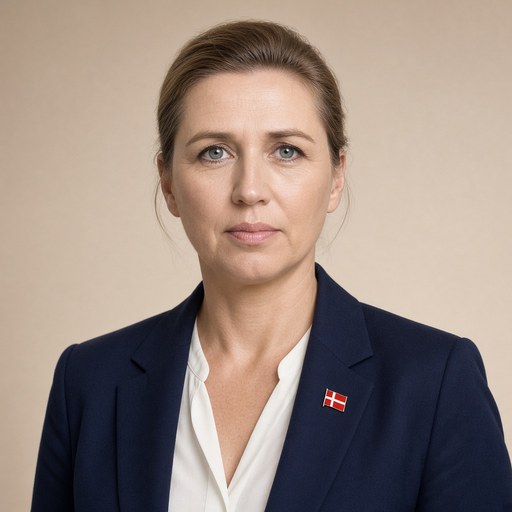
Prime Minister Mette Frederiksen's speech at the KL Summit 2025
 Mette Frederiksen · Prime Minister of Denmark
- Context
- Frederiksen addressed the KL Municipal Political Summit 2025 in Aalborg via recorded greeting, honoring retiring local leaders and outlining national and European challenges.
- Main themes
- Municipal democracy and local governance, farewell to retiring municipal leaders, role of municipalities in welfare delivery, European security and geopolitical threats, defense and military strengthening, green transition and energy, societal resilience and preparedness, social cohesion and welfare state, hybrid warfare and cyber threats, broad political cooperation
- Duration
- ~18 min
- Words
- 2,132
- Sentences
- 196
- Readability
- 61
- Grade
- 7.0
- Syntax
- 2.43
- Vocabulary
- 2.06
Translated from Danish
The broad sphere of national life a sentence belongs to. Every sentence has an Arena, so it is the denominator the other indices are read against.
Other196 sentences in 128 paragraphs
Dear everyone.
Thank you for allowing me to send you a greeting today, now that I cannot be with you in Aalborg.
The Municipal Political Summit 2025 is a very special one.
Not only because we are in an election year.
But because this year we say goodbye not just to one, but to several people who have colored the municipal map of Denmark for decades.
You, Mogens Gade, have said that being a mayor is the best job in the world. And that you will miss it immensely. But also, that you look forward to being down there full-time.
I guess many of your colleagues can relate to that.
Many of you have been in municipal politics for both half and whole human lifetimes.
You were there before the structural reform. Before the financial crisis and before corona.
Back when there was still something called Thyborøn-Harboøre and Brovst Municipality.
Yes, perhaps even before anyone thought of making Lars Løkke the deputy mayor in Græsted-Gilleleje.
Just think of what you have been a part of.
Since you became mayor, Erik Flyvholm, Lemvig has initiated a significant transition to green energy. More than 90 percent of your electricity consumption is covered by green and locally produced electricity. That is a Danish record.
While you have led Holstebro, H.C., you have experienced an increasing population in 12 of the last 13 years. And this summer, your young people can complete a full teacher education right in Holstebro.
And you, Marcel Meijer, have worked tirelessly to ensure that taking the ferry is not more expensive than driving on the highway. And for the fast ferry to Samsø. To the benefit and joy of both your own islanders and all the tourists from outside.
* * *
Both you and I know the truth: We can make as many decisions as we want inside Christiansborg. About everything between heaven and earth from welfare to green transition.
But when it comes to making it happen in reality. It is your decisions, and it is your work that makes all the difference.
When the smallest children need a place in a safe daycare. And the slightly older ones need to go to school and after-school care.
When our elderly need help and care.
Or when a new bike path, a multi-hall, or a wind farm needs to be constructed.
It is you, and it is your employees, who are ready.
Dear all of you who will soon stop in local politics.
And dear all of you others who work in the service of democracy.
Thank you.
Thank you for your tireless efforts to make your municipalities and our entire little fantastic country an even better place to live, work, and thrive.
* * *
We need people who dare.
We need people who dare to take responsibility.
Europe is at a turning point.
And we are in the most dangerous security political situation since the 1940s.
What we do now in the very short term will help determine the future of our continent.
We must increase our resilience.
We must strengthen our military.
We must strengthen our democracy.
It will be expensive. It will be really expensive. And therefore, it is a shared task for all of us who want to take care of our welfare society. To safeguard welfare in the coming years. It is crucial to maintain the necessary social balance.
And to show that our societal model is the best at solving the challenges we face.
On the green transition, which is crucial for our planet.
On the quality of welfare, which the Danes rightly expect and need.
And on the cohesion, which is the very prerequisite for our community.
And on strengthening our defense and preparedness, which is necessary to protect our country.
We must make our society more robust. So that we are equipped to handle a new reality with serious and complex threats. From severe weather. To cyberattacks. To hybrid warfare.
And this is a task where you municipalities and your preparedness play an important role.
If we cannot do that. If we do not provide the answers and solutions that are needed in such a difficult time as now.
And if we in Europe are unable to offer our citizens good, secure lives. With opportunities and safety. Then we have paved the way for others to step in.
New strong men. Autocrats. Forces that do not want democracy.
So the task is quite clear.
We must absolutely solve the challenges we face. Whether it concerns security, welfare, poor integration, green energy, or creating new jobs.
We must show a path that is responsible and just, and that can help develop Denmark.
So we create jobs, create prosperity, and ensure our welfare.
And so our little fantastic country is also in the future the best place in the world to live and thrive.
* * *
Democracy is the very nerve of our society. And nowhere does it unfold more beautifully than in the country's municipalities.
In the associations. On the pedestrian streets. And in the city council chambers.
The broad political cooperation is not something Lars, Troels, and I came up with on a dark December evening at Marienborg.
It is essentially your idea.
Local democracy lives in Denmark, as it has for more than 150 years.
But there is a need for us to cherish it. And strengthen it.
For just as our democracy is now challenged from the outside, it is also under pressure from the inside.
We see it more and more. Unfortunately.
Hatred. Harassment. Threats. Against politicians who dare to stand up.
In the inbox. In the comment sections on social media. And unfortunately sometimes even in your homes.
All with the same purpose, namely to intimidate and perhaps instill fear in you and your loved ones.
We are now at a point where half of the country’s local politicians have experienced harassment.
And when several of you and more than half of Danes refrain from participating in debates on social media due to the harsh tone.
Then we face a significant democratic problem. We must do something about it.
And as a country, we must say enough.
Otherwise, we risk that this hatred develops.
So that one day someone points out your house during a taxi ride and makes death threats, forcing you to isolate yourself at the town hall.
So that one day there is combat-ready police with submachine guns in your own home. Ready to take you to a safe address.
So that one day there is one or more people who stop a bottle with paper and flammable liquid and throw it at your house while you and your son are at home.
These three examples are not something I made up. They are very concrete incidents that Birgit, Tonni, and you, Pernille, have experienced.
It makes me both sad, but it also makes me very, very angry.
And it goes without saying that it is very far from the Denmark we want.
All of us who are politicians, we must be able to endure a lot. But we should not have to endure everything. And our families, they should not have to endure anything.
And when there are some who try to put a stop to your political work by threatening you or your families, then we are touching on the fundamental conditions of democracy.
Therefore, we in the government have decided on a number of measures that will make everyday life safer for you and other elected officials.
As an elected politician, you should spend your time on what it is all about. Politics. And you should feel safe. Of course, you should.
The foundation of a democracy is that there is an open and free political debate.
And that is only possible if threats and harassment are eliminated.
And that is only possible if we do not allow misinformation and other influences to come to us from the outside.
* * *
And here, artificial intelligence will play an increasingly larger role.
The development of increasingly advanced artificial intelligence can, on the one hand, be a threat to our democracy.
In the wrong hands, it can be used to derail and undermine the democratic conversation.
We have a very large task in shielding ourselves against that. And we are in a hurry.
But on the other hand – and we must hold on to this – the new computing powers open up colossal opportunities.
Also for our welfare society.
Let me just say here at the outset: It is not about not leaving presence and care in elder care to robots. Or that our children should be taught by a chatbot in the future. Never.
It is about using artificial intelligence to make some things easier, faster, and better.
It can be in administration. It can be in simpler case processing. In shift planning. So we can use employees' time on what is important, namely relationships.
And many of you are already on it.
As a country, we are one of the most digitized countries in the world.
And together we – municipalities, regions, and the government – have set ourselves a rather ambitious goal:
The public sector in Denmark should be world-leading in the use of artificial intelligence.
It is good that we have set that goal together.
For there are already some really good examples of how artificial intelligence can help improve our welfare.
In Lemvig, they have saved almost half of the driving time for home care workers. And at the same time, the elderly now meet the same people even more than before when they receive visits at home.
And in the capital, they have discovered significantly more cases of breast cancer by using artificial intelligence. And at the same time freed up important time for the radiologists.
The good work must continue.
But today I would like to propose that we together decide to accelerate the pace.
Before summer, I want us to have identified three major artificial intelligence large-scale projects that can be rolled out in the public sector in the future.
I propose that we reach out to skilled Danish companies. To skilled Danish researchers. Our skilled public employees. And hold a kind of symposium.
That is to say – try to gather the smartest minds who know something about this field in one room. And yes, stay there for a couple of days.
We will make sure to provide coffee and some good food. But the sole goal is one: Namely to develop these three large-scale projects for artificial intelligence in the Danish welfare society.
By creating projects that truly redefine the way we work. So we simultaneously take some enormous leaps into the future of welfare.
* * *
For we must continue to develop the welfare society. And we must do so especially in a time when our societal model is being tested.
Last year, we in the government – together with you – secured the largest economic boost in the municipalities in more than 15 years.
And we have initiated a comprehensive liberation in our welfare society.
Therefore, we have made reforms on everything from primary school to elderly care and soon hopefully also employment.
And the idea behind it all is that the primary school teacher and the social and health assistant can spend time on those who it is all about: namely the citizen.
Now the major reforms must come to life.
And I know well that it is not an easy task. It is actually a really difficult task.
For the road from Slotsholmen to you out in the municipalities. And all the way out to the individual daycare center, the individual school, the individual community center. It can be long.
Sometimes too long.
But I have no doubt that we can lift that task.
It will require a lot from us. And there will be mistakes.
But it is not the mistakes that are our problem.
The problem is that we too often interfere when mistakes occur.
And therefore, this time we must have the courage to keep our hands off. And not react with new rules as soon as someone voices a criticism.
And we must as a society understand that the same size does not fit all. And when we talk about our welfare, there are 98 different municipalities and thus 98 different models.
And yes. I believe in the value of precisely those local differences.
* * *
We face some major challenges. We have faced them before.
And I am confident that if we hold on to everything we can. Everything that makes Denmark, Denmark. Then we will be fine.
Thank you for your attention.
And have a really good summit.
The original Danish. The tags above are read on the English translation's sentences.
Kære alle sammen.
Tak for at måtte sende jer en hilsen i dag, nu hvor jeg ikke kan være med i Aalborg.
Kommunalpolitisk Topmøde 2025 er et helt særligt et af slagsen.
Ikke kun fordi, vi er i et valgår.
Men fordi vi i år siger farvel til ikke bare én, men til adskillige mennesker, der har farvet det kommunale danmarkskort i årtier.
Du, Mogens Gade, har sagt, at dét at være borgmester er verdens bedste job. Og at du kommer til at savne det helt vildt. Men også, at du glæder dig til at komme ned på fuld tid.
Jeg gætter på, at mange af dine kolleger kan genkende det.
Mange af jer har været i kommunalpolitik i både halve og hele menneskealdre.
I var der før strukturreformen. Før finanskrisen og før corona.
Dengang der stadig var noget, der hed Thyborøn-Harboøre og Brovst Kommune.
Ja, måske endda før nogen fandt på at gøre Lars Løkke til viceborgmester i Græsted-Gilleleje.
Tænk, hvad I ikke har været med til.
Siden du blev borgmester, Erik Flyvholm, har Lemvig sat gang i en markant omstilling til grøn energi. Mere end 90 procent af jeres elforbrug er dækket af grøn og lokalproduceret el. Det er danmarksrekord.
Mens du har stået i spidsen for Holstebro, H.C., så har I oplevet stigende indbyggertal i 12 af de seneste 13 år. Og til sommer kan jeres unge læse en fuld læreruddannelse i netop Holstebro.
Og du, Marcel Meijer, har kæmpet ihærdigt for, at det ikke skal være dyrere at tage færgen, end at køre på landevejen. Og for hurtigfærgen til Samsø. Til gavn og glæde for både dine egne øboere og til alle turisterne udefra.
* * *
Både I og jeg kender godt sandheden: Vi kan træffe nok så mange beslutninger inde på Christiansborg. Om alt imellem himmel og jord fra velfærd til grøn omstilling.
Men når det handler om at få det til at ske i virkeligheden. Så er det jeres beslutninger, og det er jeres arbejde, der gør hele forskellen.
Når de mindste børn skal have plads i en tryg daginstitution. Og de lidt større skal i skole og på fritidshjem.
Når vores gamle har brug for hjælp og omsorg.
Eller når der skal anlægges en ny cykelsti, en multihal eller en vindmøllepark.
Så er det jer, og det jeres medarbejdere, der står klar.
Kære alle jer, der lige om lidt stopper i lokalpolitik.
Og kære alle I andre, der arbejder i demokratiets tjeneste.
Tak.
Tak for jeres utrættelige indsats for at gøre jeres kommuner og hele vores lille fantastiske land til et endnu bedre sted at bo, arbejde og leve i.
* * *
Vi har brug for mennesker, der tør.
Vi har brug for mennesker, der tør tage ansvaret på sig.
Europa står i en skæbnestund.
Og vi er i den farligste sikkerhedspolitiske situation siden 1940’erne.
Det, vi gør nu på den helt korte bane er med til at afgøre vores kontinents fremtid.
Vi skal øge vores modstandskraft.
Vi skal opruste militært.
Vi skal opruste demokratisk.
Det bliver dyrt. Det bliver rigtigt dyrt. Og derfor er det en fælles opgave for alle os, der vil passe på vores velfærdssamfund. At vi passer på velfærden i de kommende år. Det er helt afgørende med den nødvendige sociale balance.
Og at vi viser, at vores samfundsmodel er den bedste til at løse de udfordringer, vi står over for.
På den grønne omstilling, som er afgørende for vores klode.
På den kvalitet i velfærden, som danskerne med rette forventer og har brug for.
Og på sammenhængskraften, der er selve forudsætningen for vores fællesskab.
Og på styrkelsen af vores forsvar og beredskab, der er nødvendig for at beskytte vores land.
Vi skal gøre vores samfund mere robust. Så vi er rustet til at håndtere en ny virkelighed med alvorlige og komplekse trusler. Fra det voldsomme vejr. Til cyberangreb. Til hybridkrig.
Og det er en opgave, hvor I kommuner og jeres beredskab spiller en vigtig rolle.
Hvis ikke, vi kan det. Hvis ikke, vi giver de svar og de løsninger, der er brug for i en så vanskelig tid som nu.
Og hvis ikke, vi i Europa er i stand til at tilbyde vores borgere gode trygge liv. Med muligheder og sikkerhed. Så har vi selv banet vejen for, at andre kan træde ind.
Nye stærke mænd. Autokrater. Kræfter, der ikke vil demokratiet.
Så opgaven er sådan set ret klar.
Vi skal død og pine løse de udfordringer, vi står over for. Hvad enten det gælder sikkerhed, velfærd, den dårlige integration, grøn energi eller at skabe ny arbejdspladser.
Vi skal vise en vej, der er ansvarlig og retfærdig, og som kan være med til at udvikle Danmark.
Så vi skaber arbejdspladser, skaber velstand og sikrer vores velfærd.
Og så vores lille fantastiske land også i fremtiden er verdens bedste sted at bo og leve.
* * *
Demokratiet er jo selve nerven i vores samfund. Og ingen steder folder det sig smukkere ud end i landets kommuner.
I foreningerne. På gågaderne. Og i byrådssalene.
Det brede politiske samarbejde, det er jo ikke noget Lars, Troels og jeg fandt på en mørk decemberaften på Marienborg.
Det er jo sådan set jeres idé.
Det lokale demokrati lever i Danmark, som det har gjort det i mere end 150 år.
Men der er brug for, at vi værner om det. Og styrker det.
For ligesom vores demokrati nu er udfordret udefra, så er det altså også under pres indefra.
Vi ser det mere og mere. Desværre.
Had. Chikane. Trusler. Mod politikere, der tør stille sig frem.
I mailboksen. I kommentarsporet på de sociale medier. Og desværre engang i mellem sågar i jeres hjem.
Alle med det samme formål nemlig at intimidere og måske skabe frygt hos jer og jeres kære.
Vi er nu der, hvor halvdelen af landets lokalpolitikere har oplevet chikane.
Og når flere af jer og mere end halvdelen af danskerne afholder sig fra at deltage i debatter på sociale medier på grund af den hårde tone.
Så står vi med et stort demokratisk problem. Det bliver vi nødt til at gøre noget ved.
Og som land må vi sige fra.
For ellers så risikerer vi jo, at det had udvikler sig.
Så der en dag er en, der på en taxatur udpeger dit hus og fremsætter dødstrusler, så du må isoleres på rådhuset.
Så der en dag står kampklart politi med maskinpistoler i dit eget hjem. Klar til at føre dig til en sikker adresse.
Så der en dag er en eller flere, der stopper en flaske med papir og brændbar væske og kaster det mod dit hus, mens du og din søn er hjemme.
De her tre eksempler er ikke noget, jeg finder på. Det er helt konkrete hændelser, som Birgit, Tonni og du Pernille har været udsat for.
Det gør mig både ked af det, men det gør mig også meget meget vred.
Og det siger sig selv, at det er meget langt fra det Danmark, vi ønsker.
Alle os, der er politikere, vi skal kunne tåle meget. Men vi skal ikke kunne tåle alt. Og vores familier, ja de skal slet ikke.
Og når der er nogle, der forsøger at sætte en stopper for jeres politiske arbejde ved at true jer eller jeres familier, så er vi inde ved demokratiets grundvilkår.
Derfor har vi i regeringen besluttet os for en række tiltag, der skal gøre hverdagen mere tryg for jer og andre folkevalgte.
Som folkevalgt politiker, skal man jo bruge sin tid på det, det handler om. Politik. Og man være tryg. Selvfølgelig skal du det.
Fundamentet for et demokrati det er, at der er en åben og fri politisk debat.
Og det kan kun lade sig gøre, hvis truslerne og chikanen falder bort.
Og det kan kun lade sig gøre, hvis ikke vi lader misinformation og anden påvirkning komme til os udefra.
* * *
Og her kommer kunstig intelligens til at spille en større og større rolle.
Udviklingen af en stadig mere avanceret kunstig intelligens kan på den ene side være en trussel mod vores demokrati.
I de forkerte hænder kan den bruges til at afspore og undergrave den demokratiske samtale.
Det har vi en meget stor opgave i at skærme os imod. Og vi har travlt.
Men på den anden side – og det skal vi holde fast i – så åbner de nye computerkræfter nogle kolossale muligheder.
Også for vores velfærdssamfund.
Lad mig bare lige her indledningsvist sige: Det handler
ikke
om, at nærvær og omsorg i ældreplejen skal overlades til robotter. Eller at vores børn fremover skal undervises af en chatbot. Aldrig.
Det handler om, at vi kan bruge den kunstige intelligens til at gøre nogle ting lettere, hurtigere og bedre.
Det kan være på administrationen. Det kan være på den mere simple sagsbehandling. På vagtplanlægning. Så vi kan bruge medarbejdernes tid på det, der er det vigtige, nemlig relationer.
Og mange af jer er allerede i gang.
Vi er som land et af de mest digitaliserede lande i verden.
Og sammen har vi – kommuner, regioner og regeringen – sat os et ret ambitiøst mål:
Den offentlige sektor i Danmark skal være verdensførende i anvendelsen af kunstig intelligens.
Det er godt, at vi sammen har sat det mål.
For der er allerede nu nogle rigtig gode eksempler på, hvordan kunstig intelligens kan være med til at forbedre vores velfærd.
I Lemvig har man sparet næsten halvdelen af køretiden for hjemmeplejerne. Og samtidig møder de ældre nu i endnu større grad end tidligere de samme mennesker, når de får besøg derhjemme.
Og i hovedstaden har man opdaget markant flere tilfælde af brystkræft ved at bruge kunstig intelligens. Og samtidig frigjort vigtig tid for radiologerne.
Det gode arbejde det skal fortsætte.
Men i dag vil jeg foreslå, at vi sammen beslutter at sætte tempoet op.
Inden sommer ønsker jeg, at vi har fundet frem til tre store kunstig intelligens storskalaprojekter, som det fremover er muligt at rulle ud i den offentlige sektor.
Jeg vil foreslå, at vi rækker ud til dygtige danske virksomheder. Til dygtige danske forskere. Vores dygtige offentlige ansatte. Og holder en form for symposium.
Det vil sige – prøver at samle de klogeste hoveder, der ved noget om det her felt, i ét rum. Og ja, blive der et par dage.
Vi skal nok sørge for kaffe og lidt god mad. Men målet alene er ét: Nemlig få udviklet de her tre storskalaprojekter for kunstig intelligens i det danske velfærdssamfund.
Ved at lave nogle projekter, der reelt redefinerer den måde, vi arbejder på. Så vi på én gang tager nogle enorme hop ind i fremtidens velfærd.
* * *
For vi skal fortsætte med at udvikle velfærdssamfundet. Og det skal vi især i en tid, hvor vores samfundsmodel bliver testet.
Sidste år sikrede vi i regeringen – sammen med jer – det største økonomiske løft i kommunerne i mere end 15 år.
Og vi har sat gang i en omfattende frisættelse i vores velfærdssamfund.
Derfor har vi lavet reformer om alt fra folkeskole til ældre og inden længe forhåbentligt også beskæftigelse.
Og ideen med det hele er, at folkeskolelæreren og social- og sundhedshjælperen kan bruge tiden på dem, det hele handler om: nemlig borgeren.
Nu skal de store reformer ud at leve.
Og jeg ved godt, det er ikke nogen nem opgave. Den er faktisk en rigtig svær opgave.
For vejen fra Slotsholmen til jer ude i kommunerne. Og helt ud i den enkelte vuggestue, i den enkelte skole, i det enkelte forsamlingshus. Den kan være lang.
Nogle gange for lang.
Men jeg er ikke i tvivl om, at vi godt kan løfte den opgave.
Det kommer til at kræve meget af os. Og der kommer til at ske fejl.
Men det er ikke fejlene, der er vores problem.
Problemet er, at vi for tit blander os, når fejlene opstår.
Og derfor skal vi denne gang have modet til at holde nallerne væk. Og ikke reagere med nye regler, så snart nogen lufter en kritik.
Og vi skal som samfund forstå, at den samme størrelse ikke passer til det hele. Og når vi taler om vores velfærd, så er der 98 forskellige kommuner og dermed 98 forskellige modeller.
Og ja. Jeg tror på værdien af lige præcis de lokale forskelle.
* * *
Vi står over for nogle store udfordringer. Det har vi gjort før.
Og jeg er sikker på, at hvis vi holder fast i alt det, vi kan. Alt det, der gør Danmark til Danmark. Så skal vi nok klare os.
Tak for ordet.
Og hav nu et rigtig godt topmøde.