




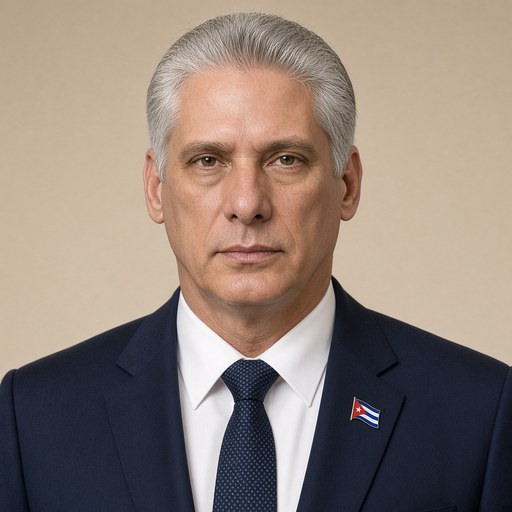
Díaz-Canel: Strength Cuba, we will continue living, driving the economy, and overcoming!
 Miguel Díaz-Canel · President of Cuba
- Context
- Díaz-Canel addressed Cuba's Council of Ministers in July 2020 to present and approve a national economic and social strategy amid the COVID-19 crisis and U.S. pressure.
- Main themes
- Economic and social recovery strategy, COVID-19 crisis response, Cuban economic reform, anti-imperialism and U.S. policy criticism, neoliberal paradigm collapse, party congress guidelines implementation, national development planning, Bolton book revelations, U.S. interference in Latin America, political and ideological assurance, Venezuelan solidarity, popular debate and governance
- Duration
- ~39 min
- Words
- 4,629
- Sentences
- 145
- Readability
- 34
- Grade
- 16.2
- Syntax
- 3.29
- Vocabulary
- 2.16
Translated from Spanish
The broad sphere of national life a sentence belongs to. Every sentence has an Arena, so it is the denominator the other indices are read against.
Other145 sentences in 87 paragraphs
We reiterate our greetings to all members of the Council of Ministers and also to the first secretaries of the Party and the governors who are participating via videoconference.
More than anything, I would like to focus on some contextual elements, on some elements that also relate to the ideological approach, the political approach, the political assurance, and the way we need to work to support this entire strategy.
First of all, we all start from the premise that we are acting in a world that has a complex situation, which is totally challenging, and that we work or will face it with the conviction that we cannot continue doing the same in a number of areas of our economic life, as doing so is not yielding the results we need.
This Strategy was approved last week in a meeting of the Political Bureau, chaired by its First Secretary, Army General Raúl Castro Ruz, and today it has been brought to the Council of Ministers for approval and also to inform the governors, thus preparing the entire leadership system that will be involved in its implementation.
We have started from the Foundations of the National Economic and Social Development Plan that were approved at the Seventh Congress of the Party, from the Conceptualization of the Economic and Social Model that was approved at the Seventh Congress of the Party, and from the Guidelines that were approved at the Sixth Congress of the Party and updated at the Seventh Congress.
With that, what have we designed and what do we already have approved at different levels? A COVID recovery strategy that is yielding results; a National Economic and Social Development Plan in a first moment, in a first stage, in a first version that we have already approved in the Political Bureau and that we will take to the Council of Ministers next week, and an economic and social strategy to strengthen the economy to face the crisis situation, which is already approved here in the Council of Ministers and which we will immediately begin to implement.
For all this, we have started from the situation of the world, from the situation of the country. We have analyzed all the proposals that have been made in the public debate that exists on this in social networks, in academia, in the Cuban population itself. All kinds of criteria have been taken into account, including those that are contrary to the Revolution, to see in what elements they attack us, in what are the focal points of attention to dismantle our economic and social program.
On the other hand, as we are starting from the documents approved by the Party Congress, these are things that were approved; it is the implementation of things that have been postponed to some extent, but that were approved in a broad popular debate that preceded the Congress and that were also ratified in the National Assembly of People's Power.
We must recognize that at a global level we are witnessing the confluence of a profound crisis as a consequence of the impact of COVID-19, of the definitive collapse of the neoliberal paradigms that imperialism has been defending at this time, of the abusive exercise of imperial hegemony, which have been exposed in Bolton's book by showing the perversion of their practices, and here we can mention some.
In that book, it is stated how there is permanent pressure on other governments, how there is blatant support for coups and attempted coups, interference, violence, threats of military intervention, and offensive deployment of forces and bases around the world by the Government of the United States; how there is a close alliance of the United States administration with the Cuban counter-revolution and with the Venezuelan opposition; how the Monroe Doctrine has been reactivated; how slander and lies are used as a pretext for interference and interventionism; how corruption and bribery of governments in countries are also employed to achieve their purposes.
That book demonstrates the obsession and malice against Cuba and Venezuela; how the persecution of the fuel that our country needed to acquire was orchestrated, which was what led us to the first moment in which we had to propose a group of measures in the middle or at the end of last year. The lack of dignity in the exercise of politics.
In summary, we can say that every page of Bolton's book corroborates the validity of the denunciations made by the Cuban Revolution and our statements about the current outrageous policy of the empire.
On the other hand, we must also recognize that there is a profound crisis underway at a global level, provoked by the factors mentioned earlier and reinforced by the problems faced by the U.S. administration, and you have all seen the economic problems they have, the social problems, the irresponsible and inefficient way they have managed the confrontation with the pandemic: the country that has the most wealth in the world is the country that has the most deaths and the most affected by that pandemic; police abuse, racial problems.
And that administration is bothered and hurt by the prestige and results of our country. This explains the increase in their aggressiveness at this time, which is manifested in constant measures they apply against Cuba, in the increase of financial persecution and the freezing of Cuban bank accounts and assets in third countries, which they have as a proposal; in actions aimed at discrediting Cuban leaders; in actions seeking to cut the sending of remittances to Cuba; in the application of sanctions against companies that do business in Cuba; in the permanent attempts to create conditions for a social explosion, and in the attempts to promote opposing political positions within our institutions.
Therefore, we must position ourselves in a battlefield where the enemy's strategy is proving to be: attacking us from various fronts and firing from all possible flanks. Each issue is a sector of fire: they take the issue of queues for chicken and aim at the standard of living of the population; they take the issue of shortages and attack the economic management of the Government. They incessantly attack everything that is done and promoted by the State institutions or their leaders to discredit them, and their image is a permanent object of scorn and defamation.
In matters of rights and society, they have not given up in their search for breaking points in national unity, magnifying possible dissent on sensitive issues such as same-sex marriage, racism, violence against women, or animal mistreatment, to mention a few, in all of which we are working seriously to resolve centuries-old debts that only the Revolution in power has faced with indisputable progress.
It is important to understand that the more fronts they manage to open and the less capacity our political and social institutions have to resolve pending issues and demonstrate with arguments the induced fallacies, the greater results the historical enemies of the Revolution will obtain in their supreme objective behind all the campaigns they organize, which is to denigrate the revolutionary State and the political system, to always mediatize negatively and to show chaos in our society.
There is a lot of money flowing, but there are also ideological laboratories behind all this, because the new fields of virtual and media operation have proven effective in terms of manipulation and disarming the ideologies of the peoples in our region and in the world.
We must also be able to generate, in the face of all this, a communication strategy with rigor, even using many of the tools they employ against us, but also creating new tools more suited to our reality and the uniqueness of our people. In any case, there is no doubt that the most effective way to communicate is to do things and do them well. Cuba, like few countries of similar development, has the possibility of doing it well. There are many institutions, organizations, and the necessary infrastructure to contribute to the generation of this strategy, and, what is even more important, we have people prepared for it, we have the human and revolutionary capital prepared for it.
We must take advantage of all our potential, we cannot remain anchored to ways of communicating prior to the digital age, and we cannot bureaucratize ideological processes. Social communication has finally arrived at the country's agencies; but we must be more proactive, capable of anticipating the media manipulations that our adversaries will try to impose.
Right now, in these moments, in the last few days there has been speculation around some measures that are complex and that do not benefit all social sectors equally, but that are known to be necessary to overcome our economic problems and that have been explained here by comrade Alejandro. Immediately they have begun to sow doubts and to feed distrust.
The enemy, with its media systems and its mercenaries of the moment, works to sow despair and discouragement. One must see how they tear their garments and assume roles of victims or very concerned thinkers for the people and for the workers, some of whom would be incapable of the slightest sacrifice for the nation, and where they never speak of the true cause or the main cause of our problems, which is the blockade, which they are never able to repudiate or condemn.
They take phrases out of context to ridicule efforts, they talk about economic apartheid. Can one question economic apartheid in a country where the Government every day worries about how to ensure that the majority of things reach everyone equally? What happens is that, where is the malice? —and this is one of the things we must explain well—, in that they have said that we are going to close the stores in CUC and that only the stores in freely convertible currency will remain. And that is not the case.
We are going to maintain, at a tremendous cost, a level of sales in the stores in CUC, fundamentally of food, hygiene products, baby supplies, powdered milk, a whole group of things, and that will reach everyone, and will be sold in CUC or in CUP, as is stated.
We are going to link more economic actors than we have in the country, also to sell in those stores and supply other things in which we cannot spend money in currency today, such as furniture, footwear, clothing made by our artisans and by the national industry; but we need to sell a quantity of goods in freely convertible currency to have foreign currency, to continue expanding that sale and with that sale to have money to also introduce a part of that money into the national industry and for the national industry to become a source of products for those stores and for the others, and, in addition, to have money that also allows us in the other stores to sustain the other things we want to sell.
But they have not said that. They went out yesterday on social media to say: these people are going to dollarize the economy, they are going to close the stores in CUC and everything will be sold in foreign currency. And the working people —who they are so “worried” about— who earn in national currency and who can acquire CUC with national currency will be left completely unprotected. That is the opinion matrix they are trying to sow today on social networks.
And some of our people, because we have not yet provided the information, because we were preparing all the measures, go with that and begin to show dissatisfaction, misunderstanding, insecurity, they begin to predict that there will be a complex situation. No, do not predict, there has been a complex situation since mid-last year, and we have been overcoming all that. But the complex situation is not Cuba's, it is the world's. And we, in the midst of that situation, continue proposing things for everyone and seeking solutions for all.
"Everything we are proposing and everything we are working on is being done to seek a common good, which is to improve, even in conditions of crisis."
There is no State in the world that worries about whether all its inhabitants eat every day. People fill the markets and buy what they can, and those who cannot, do not, and that does not interest anyone. Here every day we are exhausting ourselves in determining what the per capita will be that will reach the people, where we can get a little to distribute in a controlled manner and not through the normal market channels.
Here five pounds of rice are given by the basket to the farmer, the one who has a paladar, and the one who lives in a city and works for the State. Tell me in what country in the world such things are lived; because there are also people who forget at a complex moment the work of the Revolution, and in complex moments is when we must bring out the arguments of the Revolution and the strengths of the Revolution. Today no State in the world nor any government goes out to explain to its population why it has to face a strategy to boost the economy or how it will do it, and here it will be explained with complete transparency, at every moment, gradually, as we apply the measures.
Now, they have only taken one measure —of course, they do not know the others— and against that, they have bombarded with all their resentment and all their hatred. That measure, among all these, carries less weight, but, as you have seen, this is a system of measures, and it is aimed precisely at that, to strengthen us, not only to resist but also to move forward, advance, and develop.
Everything we are proposing and everything we are working on is being done to seek a common good, which is to improve, even in times of crisis.
In the midst of this, we have had to make a tremendous effort to ensure that, through controlled sales, additional products reach the population in July and August. And yes, some food items will appear for sale in foreign currency, which a part of the population will have access to; but to all Cubans, even those who have foreign currency, we are guaranteeing, at a minimum, two more pounds of rice in July and August, and perhaps we can provide even a little more based on other efforts that are being made.
We will also provide an additional amount of grains, of beans, and we are also looking to provide an additional amount of chicken meat. All of this in the midst of this situation. It is not just an isolated measure here, and this is the "star" measure —as they have wanted to demonstrate— and the measure with which to "attack the Cuban government, which has no sensitivity for its people, which does not recognize the needs of the working people." That is the lie, the slander, the way they construct all these things.
And there is a shortage in the stores, yes, and why is there? Why does Cuba not have more foreign currency? Among other things, because of the blockade, because of financial persecution, because we cannot export everything we want; because every time we export to someone, they try to cut that export; because every time we are managing a credit, they try to take that credit away from us; because they try to prevent fuel from reaching Cuba, and then we have to buy in third markets at a higher price. Why is that not talked about? Are those people patriots, are they really that interested in the people, or do they want a change of system that favors a minority?
It is true that with some of these measures there are risks: we will have to confront the "coleros" more decisively and intensively. We have to face the resellers, who complicate our lives.
We will have to confront cases of corruption, who will try to take advantage of this situation. We will have to confront the illicit foreign exchange market. But for all of that, we have the strength of the Revolution and the participation of the people, and what we need to achieve is for the people to understand well why we are taking all these measures.
As a government, of course, it is our responsibility to listen, to attend to, to differentiate honest criticism and valuable suggestions from malicious acts and impractical proposals; and it is our duty to respond, explain, argue, and apply everything that contributes. Only in this way can we gain the trust of the majority and prove that everything we do, we do to save the country and to advance.
The people, of whom we are all a part, know how to distinguish the legitimate from the false when they actively participate in what we do to defend and strengthen the nation in the face of the difficult prevailing situation, aggravated by the imperial threat.
Every day we are engaged in seeking solutions to problems, thinking and feeling as a people, thinking and acting for the good of all, and we must explain that, at times, to benefit everyone, it is necessary to implement measures that "seem" to favor a few, but that in the long run will benefit everyone.
I want to remind you that in recent months we have faced numerous attempts to prevent the arrival of fuel at our ports, shortages of food, supplies, and raw materials to sustain important productive processes, and sanctions that have diminished our foreign currency income in the midst of the pandemic. Even so, we raised, to the extent possible, salaries in the budgeted sector; we avoided blackouts; we maintained the vitality of productive activity, the fundamental investments for the development of the country; we approved measures to protect and care for the entire Cuban population, without distinction, from the impacts of COVID-19.
With a sensitive lack of resources, we managed to control the pandemic and, although we regret the loss of 87 lives due to that cause, which is minimal compared to what is happening in the world, we are comforted and encouraged that no child, no doctor, no health personnel died; that our Health System did not collapse; that the government's management favored the integrated action of the Cuban Health System and our scientists with indisputable results; that our medical protocols saved more lives than those implemented in other places; that we maintain transparent and systematic communication with the population and that we have supported dozens of countries with our medical brigades, earning the respect and admiration of the world.
With satisfaction for those results, we will now concentrate our greatest efforts on developing actions to boost the economy.
The Revolution, in its historical development, has constantly and unchangingly proven its vocation for social justice, and no one can doubt that. No one is left unprotected in our country, that has been, that is, and will always be.
We owe ourselves to the people to whom we belong, we respect and love them, and we work for their well-being.
Under those premises, which give meaning to our lives, we have set out how to face the new situation imposed by the post-COVID-19 world, not only to resist but to advance and strengthen ourselves.
Today, the Economic and Social Strategy to boost the economy is presented here, which stems from the need to transform the behavior of the Cuban economy with aggressiveness, intensity, and innovation.
Developing the economy means nothing less than offering greater well-being to the people. It is about, first of all, resuming everything pending from what we approved at the Party Congress, removing the obstacles identified in the constant analyses of the economic processes we have carried out.
The ongoing transformations demand the application of 209 Guidelines. In all of them, there are opportunities and risks that we must identify, with the willingness to immediately correct all possible distortions. The worst risk would be not to change, not to transform, and to lose popular trust and support. We will achieve popular support because we will achieve well-being and improvements, and it is essential to constantly evaluate the political and social impact of everything we apply.
The transformations of this stage will be implemented gradually, but advancing in all simultaneously with all the agility and effectiveness that the moment demands, and for that, we are very responsible, the agencies of the Central State Administration, the state institutions, and also all the government structures at all levels.
We must learn to live with fewer imports and more exports, promoting national production to satisfy internal demand, enhancing territorial and local productive systems —and here the role of local governments must be reinforced— establishing a sequence of actions according to priorities, as has been proposed here.
We will immediately initiate the most urgent transformations and —I reiterate an idea that Alejandro gave— we are convinced and determined to apply everything that is in this Strategy; some things will be done faster and others will take the necessary time to finish implementing them, but everything that is in this Strategy we will apply.
This decision requires the preparation of the agencies. Implementing a communication strategy that quickly and effectively conveys information to the people, closing all avenues to manipulation and opportunistic distortions from the adversary. That is why today we have gathered the Council of Ministers and the governors are participating. Next week, with this information, we will be reaching the presidents of the municipal assemblies of the People's Power, the Party secretaries in the municipalities, and the mayors.
Today begins a series of Round Tables for the broadest possible explanation to the people, and, little by little, in the Round Tables, we will inform about the measures that are being applied within this Strategy, their scope, and also the evaluations on the application of the same.
A period of implementation and control is already starting, in fact. The most complex issues, the issues that require a deeper political assessment will also be systematically brought to the Political Bureau of the Communist Party of Cuba, and there we will see what needs to be approved, what is being approved, how all the implementations are progressing. And in October, we will present this Strategy to the National Assembly of the People's Power, and, I would say, more than anything, we would already be discussing the first results of its application.
And we will do everything in a sequence, where now we will focus on food production, on food and nutritional sovereignty, which involves important transformations: it involves transformations in the structural system of the Ministry of Agriculture, it involves transformations in agricultural enterprises, it involves transformations in the way state enterprises relate adequately with all forms of management and property that contribute to food production; it involves a transformation in the marketing system, it involves incentives, it involves support in credits; it involves studying the possibilities of banking actions to promote agriculture. It also involves the possibility for any of the productive forms to import the inputs they need, through state enterprises, and also the possibility for any of the productive forms to export productions to have, also, financing in foreign currency that helps to expand their economic activity.
We will also insist on:
the reorganization of domestic trade, with a whole group of elements that were explained here;
the strengthening of the socialist state enterprise, where the first thing to prioritize are the 33 measures we already have approved to achieve greater autonomy in their management;
the transformation of the monetary environment in which foreign investment operates, as explained here;
the modification of the foreign currency distribution system in the economy;
the participation of the national industry as the main supplier of goods and services demanded by the economy;
the increase and diversification of exports, including, as I said, the export of all forms of management, through state foreign trade enterprises;
the improvement of the work of the non-state sector, with immediate priority on expanding self-employment, removing obstacles;
the elimination of the tax on the purchase of dollars;
the ways and mechanisms for channeling remittances for economic and social development;
the design and implementation of tax incentives for exporters;
the design and implementation of the public debt market with participation from various sectors.
And in the midst of all that, we will provide the results of the latest analyses to complete the full scope of the task of monetary and exchange unification, to approve it as soon as possible, and also to implement it, when approved, in its entirety, and that it, by itself, when we implement it, will remove many, almost all, of the obstacles we currently have for the development of productive forces in our country.
Comrades:
I have thought that we could define our Strategy as a plan that defends an ideal; not as an idea of perfection, but as a sum of the Objectives to be achieved in the following order:
Implement the agreements of the Party Congress and meet the popular demands arising from the popular debate of its guidelines.
Defeat the policy of the blockade.
Confront the global and multidimensional crisis that neoliberalism and the pandemic have exacerbated.
Apply science and innovation to all productive processes and social dynamics to strengthen development.
Legitimize and strengthen the socialist ideal as the only path known so far towards prosperity with social justice.
If we combine the initial letters of these five fundamental Objectives, we will read: IDEAL.
Cuba is once again challenged by a daunting global context and an aggressive imperial policy. It does not seek it, but it does not fear it. We have a sufficiently great and inspiring history to launch ourselves into the fight!
To that history, we now add the renewed and elevated spirits of the dedication and talent of our scientists and our health personnel, who have placed us among the countries that have managed to control and overcome a terrible pandemic, amid the most atrocious policies of blockade and financial persecution and the most outrageous campaigns to discredit our heroes: the health collaborators.
Exactly twenty years ago, in an oratory piece that would become his Political Testament, our Commander in Chief bequeathed to us the concept of Revolution, from which we now take some fundamental ideas, linked to what we are proposing with the Strategy we approved today:
"Revolution is the sense of the historical moment; it is to change everything that must be changed (...); it is to emancipate ourselves by our own efforts; it is to challenge powerful dominant forces both within and outside the social and national sphere; it is to defend values in which we believe at the cost of any sacrifice..."
In light of these unsurpassable ideas from the work built over more than sixty years of struggle and sacrifice, we reiterate: We could! We will be able! We were able to face and control the pandemic. We will be able to face and control the crisis.
Strength Cuba, for we will continue to live, driving the economy and overcoming!
As the Army General taught us to always say, from this and other platforms, who continues to command the Revolution: Long live Free Cuba! (Taken from the Presidency)
Related information
Cuban government reports new economic measures
The radio and television space Mesa Redonda served this Thursday, July 16, 2020, as a communication platform to inform about economic measures adopted by the Government. It began with the broadcast of an intervention by the President of the Republic Miguel Díaz-Canel Bermúdez this morning at the meeting of the Council of Ministers.
The original Spanish. The tags above are read on the English translation's sentences.
Reiteramos el saludo a todos los miembros del Consejo de Ministros y también a los primeros secretarios del Partido y a los gobernadores que se encuentran participando por videoconferencia.
Más que todo, quisiera detenerme en algunos elementos de contexto, en algunos elementos también que tienen que ver con el abordaje ideológico, con el abordaje político, con el aseguramiento político y con la manera en que tenemos que trabajar para apoyar toda esta estrategia.
En primer lugar, todos partimos de que estamos actuando en medio de un mundo que tiene una situación compleja, que es totalmente desafiante, y que nosotros trabajamos o la vamos a enfrentar con la convicción de que no podemos continuar haciendo lo mismo en un grupo de ámbitos de nuestra vida económica, que haciéndolo de esa manera no está dando los resultados que necesitamos.
Esta Estrategia se aprobó la semana pasada en una reunión del Buró Político, presidida por su Primer Secretario, el General de Ejército Raúl Castro Ruz, y hoy se ha traído al Consejo de Ministros para aprobarla y también para informarles a los gobernadores, y de esta manera vamos preparando todo el sistema de dirección que va a estar implicado con la implementación de la misma.
Se ha partido de las Bases del Plan Nacional de Desarrollo Económico y Social que se aprobaron en el Séptimo Congreso del Partido, de la Conceptualización del Modelo Económico y Social que se aprobó en el Séptimo Congreso del Partido y de los Lineamientos que se aprobaron en el Sexto Congreso del Partido y fueron actualizados en el Séptimo Congreso.
Con eso, ¿qué hemos diseñado y que ya hoy tenemos aprobado a diferentes niveles? Una estrategia de recuperación de la COVID que nos va dando resultados; un Plan Nacional de Desarrollo Económico y Social en un primer momento, en una primera etapa, en una primera versión que ya aprobamos en el Buró Político y que vamos a llevar al Consejo de Ministros la próxima semana, y una estrategia económica y social de fortalecimiento de la economía para enfrentar la situación de crisis, que ya hoy queda aquí aprobada en el Consejo de Ministros y que vamos a iniciar de inmediato su implementación.
Para todo esto hemos partido de la situación del mundo, de la situación del país. Hemos analizado todas las propuestas que se han hecho en el debate público que hay de esto en las redes sociales, en la Academia, en la propia población cubana. Se han tomado en cuenta los criterios de todo tipo, incluso los que son contrarios a la Revolución, para ver en qué elementos nos atacan, en qué están los focos de atención para desmontar nuestro programa económico y social.
Por otra parte, como estamos partiendo de los documentos aprobados por el Congreso del Partido, son cosas que se aprobaron; es la implementación de cosas que han quedado postergadas en alguna medida, pero que fueron aprobadas en un amplio debate popular que precedió al Congreso y que se ratificaron también en la Asamblea Nacional del Poder Popular.
Nosotros tenemos que reconocer que a nivel global estamos asistiendo a la confluencia de una profunda crisis como consecuencia del impacto de la COVID-19, del derrumbe definitivo que tienen los paradigmas neoliberales que venía defendiendo el imperialismo en estos momentos, del ejercicio abusivo que hay de la hegemonía imperial, que han sido puestos al descubierto en el libro de Bolton al mostrar la perversidad de sus prácticas, y aquí podemos mencionar algunas.
En ese libro se plantea cómo se hace presión permanente sobre otros gobiernos, cómo hay un apoyo desembozado de golpes de Estado e intentos de golpes de Estado, injerencia, violencia, amenaza de intervención militar y despliegue ofensivo de fuerzas y bases por todo el mundo por parte del Gobierno de los Estados Unidos; cómo hay una estrecha alianza de la administración de los Estados Unidos con la contrarrevolución cubana y con la oposición venezolana; cómo se ha reactivado la Doctrina Monroe; cómo se usan las calumnias y mentiras como pretexto para la injerencia y el intervencionismo; cómo se emplea también la corrupción y el soborno a gobiernos de países para lograr sus propósitos.
En ese libro se demuestra la obsesión y la saña que hay contra Cuba y contra Venezuela; cómo se orquestó la persecución al combustible que necesitaba adquirir nuestro país, que fue lo que nos llevó al primer momento en el que tuvimos que plantear un grupo de medidas a mediados o a finales del pasado año. La falta de dignidad en el ejercicio de la política.
En síntesis, podemos decir que cada página del libro de Bolton corrobora la validez de las denuncias que ha hecho la Revolución Cubana y de nuestras declaraciones sobre la indignante política actual del imperio.
Por otra parte también tenemos que reconocer que hay una profunda crisis en curso a nivel mundial, provocada por los factores citados anteriormente y reforzada por los problemas que atraviesa la administración norteamericana, y ustedes han visto todos los problemas económicos que tienen, los problemas sociales, la manera irresponsable e ineficiente con que han manejado el enfrentamiento a la pandemia: el país que más riquezas tiene en el mundo, es el país que tiene más muertos y más afectados por esa pandemia; el abuso policial, los problemas raciales.
Y a esa administración le molesta y le duele el prestigio y los resultados de nuestro país. Eso explica el incremento de su agresividad en estos momentos, que se manifiesta en constantes medidas que aplica contra Cuba, en el incremento de la persecución financiera y el congelamiento de cuentas bancarias y bienes cubanos en terceros países, que lo tienen como una propuesta; en acciones orientadas a desprestigiar a los dirigentes cubanos; en acciones buscando el recorte del envío de remesas a Cuba; en la aplicación de sanciones contra empresas que mantienen negocios en Cuba; en los permanentes intentos de crear condiciones para un estallido social, y en los intentos de promover posiciones políticas opositoras dentro de nuestras instituciones.
Por lo tanto, nosotros nos tenemos que ubicar en un campo de batalla donde la estrategia enemiga está demostrando ser: atacarnos por varios frentes y disparar por todos los flancos posibles. Cada tema es un sector de fuego: toman el tema de las colas para el pollo y apuntan al nivel de vida de la población; toman el tema del desabastecimiento y atacan la gestión económica del Gobierno. Van al ataque incesante de todo lo que se hace y promueven las instituciones del Estado o sus dirigentes para desacreditarlos y su imagen es objeto permanente de escarnio y difamación.
En temas de derecho y sociedad no han desistido en la búsqueda de puntos de quiebra en la unidad nacional, magnificando los posibles disensos en asuntos sensibles como el matrimonio igualitario, el racismo, la violencia contra la mujer, o el maltrato a los animales, por mencionar algunos, en todos los cuales trabajamos seriamente para resolver deudas de siglos que solo la Revolución en el poder ha enfrentado con indiscutibles progresos.
Es importante comprender que mientras más frentes logren abrir y mientras menor sea la capacidad de nuestras instituciones políticas y sociales para resolver lo pendiente y demostrar con argumentos las falacias inducidas, mayores resultados obtendrán los enemigos históricos de la Revolución en su objetivo supremo detrás de todas las campañas que organizan, que es denostar al Estado revolucionario y al sistema político, mediatizar siempre en negativo y mostrar un caos en nuestra sociedad.
Hay mucho dinero corriendo, pero hay, además, laboratorios ideológicos detrás de todo esto, porque los nuevos terrenos de operación virtual y mediática han demostrado efectividad en cuanto a la manipulación y a desarmar ideológicamente a los pueblos en nuestra región y en el mundo.
Nosotros debemos ser capaces de generar también, ante todo esto, una estrategia de comunicación con rigor, utilizando incluso muchas de las herramientas que ellos emplean contra nosotros, pero también creando nuevas herramientas más ajustadas a nuestra realidad y a la singularidad de nuestro pueblo. De todos modos, no hay dudas de que la manera más efectiva de comunicar es hacer las cosas y hacerlas bien. Cuba, como pocos países de similar desarrollo, tiene la posibilidad de hacerlo bien. Existen muchas instituciones, organizaciones y la infraestructura necesaria para que tributen a la generación de esta estrategia y, lo que es aún más importante, tenemos a las personas preparadas para ello, tenemos el capital humano y revolucionario preparado para ello.
Tenemos que aprovechar todas nuestras potencialidades, no podemos seguir anclados a formas de comunicar anteriores a la era digital, y no podemos burocratizar los procesos ideológicos. La comunicación social ha llegado, por fin, a los organismos del país; pero tenemos que ser más proactivos, capaces de anticiparnos a las manipulaciones mediáticas que van a tratar de imponer nuestros adversarios.
Ahora mismo, en estos momentos, en los últimos días se ha estado especulando alrededor de algunas medidas que son complejas y que no benefician a todos los sectores sociales por igual, pero que se saben necesarias para remontar nuestros problemas económicos y que han sido explicadas aquí por el compañero Alejandro. Inmediatamente han comenzado a sembrar dudas y a alimentar la desconfianza.
El enemigo, con sus sistemas de medios y sus mercenarios de turno, trabaja para sembrar desesperanza y desaliento. Hay que ver cómo se rasgan las vestiduras y asumen roles de víctimas o de pensadores ahora muy preocupados por el pueblo y por los trabajadores, algunos que serían incapaces del menor sacrificio por la nación, y donde nunca hablan de la verdadera causa o de la mayor causa de nuestros problemas, que se el bloqueo, al que no son capaces nunca de repudiar ni condenar.
Sacan de contexto frases para ridiculizar esfuerzos, hablan de un apartheid económico. ¿Se puede cuestionar de apartheid económico a un país donde el Gobierno todos los días se preocupa por cómo les llega la mayor parte de las cosas posibles a todos por igual? Lo que pasa es que, ¿dónde está la maldad? —y es de las cosas que tenemos que saber explicar bien—, en que han dicho que vamos a cerrar las tiendas en CUC y que van a quedar nada más las tiendas en moneda libremente convertible. Y no es así.
Nosotros vamos a mantener, a un costo tremendo, un nivel de venta en las tiendas en CUC, fundamentalmente de alimentos, de aseo, de la canastilla, leche en polvo, todo un grupo de cosas, y que le van a llegar a todo el mundo, y se van a vender en CUC o en CUP, como se plantea.
Vamos a vincular más actores económicos de los que tenemos en el país, también para vender en esas tiendas y suplir otras cosas en las cuales no podemos gastar hoy dinero en divisa, como son muebles, calzado, ropas que hacen nuestros artesanos y que hace la industria nacional; pero necesitamos vender una cantidad de mercancías en moneda libremente convertible para tener divisas, para seguir ampliando esa venta y con esa venta tener dinero para también una parte de ese dinero introducirla en la industria nacional y que la industria nacional se convierta en una fuente de productos para esas tiendas y para las otras, y, además, tener un dinero también que nos permita en las otras tiendas poder sostener las otras cosas que queremos vender.
Pero eso no lo han dicho ellos. Ellos ayer salieron a las redes a decir: esta gente van a dolarizar la economía, van a cerrar las tiendas en CUC y todo lo van a vender en divisas. Y el pueblo trabajador —que tanto les “preocupa”— que gana en moneda nacional y que puede con moneda nacional adquirir CUC va a quedar totalmente desamparado. Esa es la matriz de opinión que están tratando de sembrar hoy en las redes sociales.
Y alguna de nuestra gente, porque no hemos dado la información todavía, porque estábamos preparando todas las medidas, se van con eso y empiezan a mostrar insatisfacción, incomprensión, inseguridad, empiezan a vaticinar que va a haber una situación compleja. No, no vaticinen, hay una situación compleja desde mediados del pasado año, y todo eso lo hemos ido superando. Pero la situación compleja no es de Cuba, es del mundo. Y nosotros, en medio de esa situación, seguimos proponiendo cosas para todos y buscando la solución para todos.
"Todo lo que estamos proponiendo y todo lo que estamos trabajando se está haciendo para buscar un bien común, que es mejorar, incluso, en condiciones de crisis."
No hay ningún Estado en el mundo que se preocupe porque todos sus habitantes coman todos los días. La gente llena los mercados y compra el que puede y el que no, no, y eso no le interesa a nadie. Aquí todos los días nos estamos desgastando en cuál es el per cápita que va a llegar a la gente, de dónde sacamos un poquito para distribuir de manera controlada y no por las vías normales de mercado.
Aquí se le dan las cinco libras de arroz por la canasta lo mismo al campesino, que al que tiene una paladar, que al que vive en una ciudad y trabaja por el Estado. Díganme en qué país del mundo se viven esas cosas; porque también hay personas a quienes se les olvida en un momento complejo la obra de la Revolución, y en los momentos complejos es donde hay que sacar los argumentos de la Revolución y las fortalezas de la Revolución. Hoy ningún Estado en el mundo ni ningún gobierno sale a explicarle a su población por qué tiene que enfrentar una estrategia de impulso a la economía ni cómo lo va a hacer, y aquí se va a explicar con toda transparencia, en cada momento, de manera gradual, en la medida en que vayamos aplicando las medidas.
Ahora bien, han sacado solo una medida —claro, no conocen las otras—, y contra esa han bombardeado con todo su rencor y todo su odio. Esa medida, dentro de todas estas, tiene menos peso, pero, como ustedes han visto, esto es un sistema de medidas, y que está orientado, precisamente, a eso, a fortalecernos, no solo para resistir, sino también para salir adelante, avanzar y desarrollarnos.
Todo lo que estamos proponiendo y todo lo que estamos trabajando se está haciendo para buscar un bien común, que es mejorar, incluso, en condiciones de crisis.
En medio de eso, hemos tenido que hacer un tremendo esfuerzo para lograr que, por la venta controlada, en julio y en agosto lleguen productos adicionales a la población. Y sí, aparecerán a la venta algunos alimentos en divisa a los que tendrá acceso una parte de la población; pero a todos los cubanos, incluso a esos que tienen divisa, les estamos garantizando, como mínimo, dos libras más de arroz en julio y en agosto, y tal vez podamos dar hasta un poquito más a partir de otras gestiones que se están haciendo.
Vamos a dar también una cantidad adicional de granos, de frijoles, y estamos buscando también para dar una cantidad adicional de carne de pollo. Todo eso en medio de esta situación. No es solo una medida por aquí aislada y esta es la medida “estrella” —como lo han querido demostrar— y la medida con la que hay que “atacar al Gobierno cubano, que no tiene sensibilidad por su gente, que no reconoce las necesidades del pueblo trabajador”. Esa es la mentira, la calumnia, la manera en que construyen todas estas cosas.
Y hay desabastecimiento en las tiendas, sí, ¿y por qué lo hay? ¿Por qué Cuba no tiene más divisas? Entre otras cosas, por el bloqueo, por la persecución financiera, porque no podemos exportar todo lo que queremos; porque cada vez que le exportamos a alguien, tratan de cortar esa exportación; porque cada vez que estamos gestionando un crédito, tratan de quitarnos el crédito; porque tratan de que no llegue combustible a Cuba y entonces tenemos que comprar en terceros mercados a un precio más alto. ¿Por qué no se habla de eso? ¿Son esa gente patriotas, están tan interesados de verdad por el pueblo, o lo que quieren es un cambio de sistema donde se favorezca a una minoría?
Es cierto que con algunas de estas medidas se corren riesgos: tendremos que enfrenar a los “coleros” de manera más decisiva y más intensiva. Tenemos que enfrentar a los revendedores, que nos complican la vida.
Tendremos que enfrentar casos de corrupción, que tratarán de aprovecharse de esta situación. Tendremos que enfrentar el mercado ilícito de divisas. Pero para todo eso nosotros tenemos la fuerza de la Revolución y la participación del pueblo, y lo que tenemos que lograr es que el pueblo entienda bien por qué vamos a todas estas medidas.
Como Gobierno, por supuesto, nos corresponde escuchar, atender, diferenciar la crítica honesta y la sugerencia valiosa del acto malicioso y la propuesta impracticable; y nos toca responder, explicar, argumentar y aplicar todo cuanto aporte. Solo así se gana la confianza de las mayorías y se prueba que todo lo que hacemos, lo hacemos para salvar al país y para avanzar.
El pueblo, del que formamos parte todos nosotros, sabe distinguir lo legítimo de lo falso cuando participa activamente en lo que hacemos para defender y fortalecer a la nación frente a la difícil situación imperante, agravada por la amenaza imperial.
Todos los días estamos enfrascados en la búsqueda de soluciones a los problemas, pensando y sintiendo como pueblo, pensando y actuando para el bien de todos, y nos toca explicar que, en ocasiones, para beneficiar a todos hay que implementar medidas que “parece” que favorecen a pocos, pero que a la larga beneficiarán a todos.
Quiero recordar que en los últimos meses hemos enfrentado numerosos intentos para impedir la llegada de combustible a nuestros puertos, desabastecimiento de alimentos, insumos y materias primas para sostener importantes procesos productivos, y sanciones que han mermado nuestros ingresos en divisas en medio de la pandemia. Aun así elevamos, hasta donde se podía, los salarios en el sector presupuestado; se evitaron los apagones; mantuvimos la vitalidad de la actividad productiva, las inversiones fundamentales para el desarrollo del país; aprobamos medidas para proteger y atender a toda la población cubana, sin distinción, de los impactos de la COVID-19.
Con sensible carencia de recursos logramos controlar la pandemia y, aunque lamentamos la pérdida de 87 vidas por esa causa, que es mínima comparada con lo que pasa en el mundo, nos consuela y anima que no falleció ningún niño, ningún médico, ningún personal de la Salud; que no colapsó nuestro Sistema de Salud; que la gestión del Gobierno favoreció la acción integrada del Sistema de Salud cubano y de nuestros científicos con indiscutibles resultados; que nuestros protocolos médicos salvaron más vidas que los implementados en otros confines; que mantenemos una comunicación transparente y sistemática a la población y que hemos apoyado a decenas de países con nuestras brigadas médicas, ganando el respeto y la admiración del mundo.
Con la satisfacción por esos resultados, ahora vamos a concentrar los mayores esfuerzos en desarrollar acciones para impulsar la economía.
La Revolución, en su devenir histórico, ha probado de modo constante e invariable su vocación por la justicia social, y eso nadie lo puede dudar. Nadie queda desamparado en nuestro país, así ha sido, así es y será siempre.
Nos debemos al pueblo al que pertenecemos, lo respetamos y queremos y para su bienestar trabajamos.
Bajo esas premisas, que dan sentido a nuestras vidas, nos hemos planteado cómo enfrentar la nueva situación que impone el mundo pos-COVID-19, no solo para resistir, sino para avanzar y fortalecernos.
Hoy se presenta aquí la Estrategia Económica y Social para impulsar la economía, que parte de la necesidad de transformar el comportamiento de la economía cubana con agresividad, intensidad e innovación.
Desarrollar la economía significa ni más ni menos que ofrecer mayor bienestar al pueblo. Se trata, en primer lugar, de retomar todo lo pendiente de lo que aprobamos en el Congreso del Partido, quitando las trabas identificadas en los constantes análisis de los procesos económicos que hemos realizado.
Las transformaciones en marcha demandan la aplicación de 209 Lineamientos. En todas hay oportunidades y riesgos que debemos identificar, con la voluntad de corregir de inmediato todas las posibles distorsiones. El peor riesgo estaría en no cambiar, en no transformar y en perder la confianza y el apoyo popular. Lograremos apoyo popular porque vamos a lograr bienestar y mejorías, y es obligado evaluar constantemente el impacto político y social de cuanto apliquemos.
Las transformaciones de esta etapa se implementarán de manera gradual, pero avanzando en todas simultáneamente con toda la agilidad y la eficacia que el momento demanda, y de ahí somos muy responsables los organismos de la Administración Central del Estado, las instituciones estatales y también todas las estructuras de Gobierno a todas las instancias.
Nos toca aprender a vivir con menos importaciones y con más exportaciones, promoviendo la producción nacional para satisfacer la demanda interna, potenciando los sistemas productivos territoriales y locales —y aquí se tiene que reforzar el papel de los gobiernos locales—, estableciendo una secuencia de acciones según prioridades, como se ha planteado aquí.
Iniciaremos de inmediato las transformaciones más urgentes y —reitero una idea que dio Alejandro— estamos convencidos y decididos a aplicar todo lo que está en esta Estrategia; unas cosas se harán más rápido y otras llevarán el tiempo necesario para terminar de implementarlas, pero todo lo que está en esta Estrategia lo vamos a aplicar.
Esta decisión exige preparación de los organismos. Implementar una estrategia de comunicación que logre llevar rápido y eficazmente la información al pueblo, cerrando todos los caminos a la manipulación y las tergiversaciones oportunistas del adversario. Por eso hoy hemos reunido al Consejo de Ministros y participan los gobernadores. La próxima semana con esta información estaremos llegando a los presidentes de las asambleas municipales del Poder Popular, a los secretarios del Partido en los municipios y a los intendentes.
Hoy se inicia una serie de Mesas Redondas para la explicación más amplia posible al pueblo y, poco a poco, en las Mesas Redondas iremos informando las medidas que se vayan aplicando dentro de esta Estrategia, sus alcances y también las valoraciones sobre la aplicación de las mismas.
Se inicia ya, de hecho, entonces, un período de implementación y control. Los temas más complejos, los temas que llevan una valoración política más profunda los estaremos llevando también, sistemáticamente, al Buró Político del Partido Comunista de Cuba, y ahí estaremos viendo qué hay que aprobar, qué se va aprobando, cómo van marchando todas las implementaciones. Y en octubre estaremos presentando esta Estrategia a la Asamblea Nacional del Poder Popular, y, yo diría, más que todo, ya estaríamos discutiendo los primeros resultados de la aplicación de la misma.
Y todo lo haremos en una secuencia, donde ahora nos vamos a centrar en la producción de alimentos, en la soberanía alimentaria y nutricional, que lleva importantes transformaciones: lleva transformaciones en el sistema de estructura del Ministerio de la Agricultura, lleva transformaciones en las empresas de la agricultura, lleva transformaciones en la manera de relacionarse adecuadamente empresas estatales con todas las formas de gestión y propiedad que aportan a la producción de alimentos; lleva una transformación en el sistema de comercialización, lleva incentivos, lleva apoyos en créditos; lleva el estudio de las posibilidades de acciones bancarias de fomento a la agricultura. Lleva también la posibilidad de que cualquiera de las formas productivas pueda importar insumos que necesita, a través de empresas estatales, y también la posibilidad de que cualquiera de las formas productivas pueda también exportar producciones para tener, también, financiamientos en divisas que ayuden a reproducir, de manera ampliada, su actividad económica.
Vamos a insistir también en:
el reordenamiento del comercio interior, con todo un grupo de elementos que aquí se explicaron;
el fortalecimiento de la empresa estatal socialista, donde lo primero que hay que priorizar son las 33 medidas que ya tenemos aprobadas para lograr mayor autonomía en su gestión;
la transformación del entorno monetario en que opera la inversión extranjera, como se explicó aquí;
la modificación del sistema de distribución de divisas en la economía;
la participación de la industria nacional como principal proveedor de bienes y servicios que demanda la economía;
el incremento y diversificación de las exportaciones, incluyendo, como decía, la exportación de todas las formas de gestión, a través de empresas estatales de Comercio Exterior;
el perfeccionamiento del trabajo del sector no estatal, con prioridad inmediata en la ampliación del trabajo por cuenta propia, de quitarle trabas;
la eliminación del gravamen a la compra de dólares;
las vías y mecanismos para la canalización de las remesas en función del desarrollo económico y social;
el diseño e implementación de incentivos fiscales para los exportadores;
el diseño e implementación del mercado de deuda pública con participación de diversos sectores.
Y en medio de todo eso, vamos a dar los resultados de los últimos análisis para completar toda la envergadura que abarca la Tarea de unificación monetaria y cambiaria, para aprobarla en el menor tiempo posible, y también implementarla, cuando esté aprobada, en todo su conjunto, y que ella, por sí sola, cuando la implementemos, va a quitar muchas, casi la totalidad de las trabas que hoy tenemos para el desarrollo de las fuerzas productivas en nuestro país.
Compañeras y compañeros:
He pensado que podríamos definir nuestra Estrategia como un plan que defiende un ideal; no como una idea de perfección, sino como suma de los Objetivos a conseguir en el siguiente orden:
Implementar los acuerdos del Congreso del Partido y cumplir con las demandas populares emanadas del debate popular de sus lineamientos.
Derrotar la política del bloqueo.
Enfrentar la crisis global y multidimensional que el neoliberalismo y la pandemia han exacerbado.
Aplicar ciencia e innovación a todos los procesos productivos y dinámicas sociales para afianzar el desarrollo.
Legitimar y afianzar el ideal socialista como único camino hasta ahora conocido hacia la prosperidad con justicia social.
Si unimos las letras iniciales de estos cinco Objetivos fundamentales, leeremos: IDEAL.
Cuba vuelve a ser retada por un desafiante contexto mundial y una agresiva política imperial. No lo busca, pero no le teme. ¡Contamos con una historia suficientemente grande e inspiradora para lanzarnos a la pelea!
A esa historia suman ahora los ánimos renovados y enaltecidos por la consagración y el talento de nuestros científicos y nuestro personal de la Salud, que nos han colocado entre los países que han logrado controlar y vencer a una pandemia terrible, en medio de las más atroces políticas de bloqueo y persecución financiera y las más indignantes campañas de descrédito de nuestros héroes: los colabores de la Salud.
Hace exactamente veinte años, en una pieza oratoria que se convertiría en su Testamento Político, nuestro Comandante en Jefe nos legó el concepto de Revolución, del que hoy tomamos algunas ideas fundamentales, enlazadas con lo que estamos proponiéndonos con la Estrategia que aprobamos hoy:
“Revolución es sentido del momento histórico; es cambiar todo lo que debe ser cambiado (...); es emanciparnos por nosotros mismos y con nuestros propios esfuerzos; es desafiar poderosas fuerzas dominantes dentro y fuera del ámbito social y nacional; es defender valores en los que se cree al precio de cualquier sacrificio...”
Ante estas ideas insuperables de la obra construida en más de sesenta años de lucha y sacrificios, reiteramos: ¡Pudimos! ¡Podremos! Pudimos enfrentar y controlar la pandemia. Podremos enfrentar y controlar la crisis.
¡Fuerza Cuba, que seguiremos viviendo, impulsando la economía y venciendo!
Como nos enseñó a decir siempre, desde esta y otras tribunas, el General de Ejército, quien sigue comandando a la Revolución: ¡Viva Cuba Libre! (Aplausos.) (Tomado de Presidencia)
Información relacionada
Informa Gobierno cubano nuevas medidas económicas
El espacio radiotelevisivo Mesa Redonda sirvió este jueves 16 de julio de 2020 como plataforma de comunicación para informar sobre medidas económicas adoptadas por el Gobierno. La misma comenzó con la transmisión de una intervención del Presidente de la República Miguel Díaz-Canel Bermúdez esta mañana en la reunión del Consejo de Ministros.