




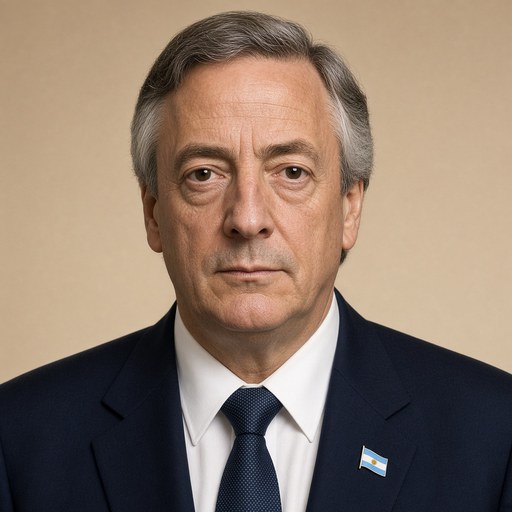

- Context
- Kirchner delivered his presidential inauguration address in Buenos Aires on May 25, 2003, outlining his government's transformative agenda for Argentina.
- Main themes
- National transformation and change, social justice and common good, democracy and rule of law, economic priorities and debt, state regulatory capacity, national unity and dialogue, political leadership accountability, historical memory and learning from the past, education, health, and social policy, Argentina's sovereignty and future
- Duration
- ~45 min
- Words
- 5,444
- Sentences
- 201
- Readability
- 30
- Grade
- 15.7
- Syntax
- 3.18
- Vocabulary
- 2.30
Inaugural Addresses Translated from Spanish
The broad sphere of national life a sentence belongs to. Every sentence has an Arena, so it is the denominator the other indices are read against.
Other201 sentences in 110 paragraphs
Ladies and gentlemen heads of state; Your Royal Highness; gentlemen heads of government; gentlemen representatives of foreign governments; special guests who honor us with their presence in this place; members of Congress gathered in Assembly; citizens present; dear Argentine people: in this act, which in terms of Article 93 of the Constitution of the Nation aims at the taking of office as President of the Nation Argentina for which I have been elected, I believe it is necessary to share with you some reflections expressing the objectives of Government and the guiding axes of management so that the entire Argentine society knows where we are going and each one can, in turn, contribute their collaboration to achieve the goals that we Argentines must impose on ourselves above any party affiliation.
We aim to build collective practices of cooperation that surpass individual opposition discourses. In civilized countries with strong democracies, adversaries discuss and dissent while cooperating. That is why we invite you to invent the future.
We come from the South of the world and we want to set, together with you, the Argentines, national priorities and build long-term state policies in order to create a future and generate tranquility. We know where we are going and we know where we do not want to go or return.
On April 27, the citizens of our homeland, in exercising popular sovereignty, decided on a decisive advance towards the new, to turn a page in history. It has not been the merit of one or several leaders; it has been, above all, a conscious and collective decision of the Argentine citizenry.
The people have made a strong choice for the future and change. In the level of participation of that day, it is evident that by thinking differently and respecting diversities, the immense and absolute majority of Argentines want the same thing even if we think differently.
It is not necessary to make a detailed review of our ills to know that our past is full of failures, pain, confrontations, energies wasted in sterile struggles, to the point of seriously confronting leaders with their constituents, to the point of seriously confronting Argentines with each other.
Under those conditions, it must be absolutely clear to us that in the Argentine Republic, in order to have a future and not repeat our past, we need to fully face the challenge of change.
By popular mandate, by historical understanding, and by political decision, this is the opportunity for transformation, for the cultural and moral change that the moment demands. Change is the name of the future.
We must not and cannot be satisfied as Argentines with having elected a new Government. Political leadership should not exhaust its program in obtaining an electoral victory; rather, it is about changing the paradigms by which the success or failure of a country's leadership is analyzed.
In the early 80s, the emphasis was placed on maintaining the rules of democracy, and the objectives set did not go beyond ensuring the real subordination of the Armed Forces to political power. The measure of success of that historical stage did not require going beyond the preservation of the rule of law, the continuity of authorities elected by the people. Thus, the simple alternation of different parties in power was highlighted as a significant advance and proof of greater effectiveness.
In the 90s, the demand added the need for progress in economic matters, particularly in controlling inflation. The measure of success of that policy was given by the profits of the most concentrated groups in the economy, the absence of stock market crashes, and the magnitude of speculative investments, regardless of the consolidation of poverty and the condemnation of millions of Argentines to social exclusion, national fragmentation, and enormous and endless external debt.
Thus, in a practice that must not be repeated, it was very difficult to distinguish pragmatic solutions from surgery without anesthesia.
Efforts were made to reduce politics to the mere obtaining of electoral results; the Government to the mere administration of the decisions of economic power centers with wide media echo, to the point that some political forces in 1999 proposed change in terms of a more orderly management, but always in tune with those same interests. The result could only be the increase in the discredit of politics and the collapse of the country.
In this new millennium, overcoming the past, the success of policies must be measured by other parameters in accordance with new paradigms. They must be judged by their approach to the goal of achieving the common good, adding to the full functioning of the rule of law and the existence of effective democracy, the correct management of government, the effective exercise of national political power in compliance with transparent and rational rules, imposing the regulatory capacity of the State exercised by its oversight and application agencies.
Change implies measuring the success or failure of leadership from another perspective. Discourses and diagnoses about the crisis will not be enough nor sufficient. Behaviors and the results of actions will be analyzed. Success will be measured by the capacity, decision, and effectiveness to tackle changes.
A way of doing politics and a way of questioning the State comes to an end in Argentina. The cycle of grandiloquent announcements, great plans followed by frustration due to the absence of results and their consequences: constant disillusionment, permanent despair, has collapsed.
In this new logic, which is not only functional but also conceptual, management is built day by day in daily work, in the everyday action that will allow us to measure the levels of progress. A government should not be distinguished by the speeches of its officials, but by the actions of its teams.
Changes must be faced with determination and courage, advancing without pauses but without placing trust in magical or savior plays or isolated genius. It is about changing, not destroying; it is about adding changes, not dividing. Changing means taking advantage of diversities without nullifying them.
It will require a lot of plural, diverse, and transversal work and effort to party alignments. We must reconcile politics, institutions, and government with society.
That is why no one should think that things will change overnight just because they are declared. A change that can be consolidated will require the sum of everyday actions that, in their persistence, defeat any immobility and an active commitment from society in that change.
No leader, no ruler, no matter how capable they are, can change things if there is not a citizenry willing to actively participate in that change. Disarmed of individual or sectoral selfishness, consciousness and actions must meet in the broad common space of a national project that contains us, a space where many ideas can contribute to a common purpose.
In our project, we place at the center the idea of rebuilding a national capitalism that generates the alternatives that allow for the reinstatement of upward social mobility. It is not about closing ourselves off from the world; it is not a problem of ultramontane nationalism, but of intelligence, observation, and commitment to the Nation.
Just look at how the most developed countries protect their workers, their industries, and their producers. It is about giving birth to an Argentina with social progress, where children can aspire to live better than their parents, based on their effort, ability, and work.
For this, it is necessary to promote active policies that allow for the development and economic growth of the country, the generation of new jobs, and the better and fairer distribution of income. As will be understood, the State plays a principal role in this, where the presence or absence of the State constitutes a whole political attitude.
Of course, it is not about starting up, once again, pendulum movements that go from an omnipresent and crushing State of private activity to a deserting and absent State, to continuously return from one extreme to the other, in what seems to be an authentic national mania that prevents us from finding the just, sensible, and necessary balances.
It is about having what is necessary for our development, in a reengineering that allows us to have an intelligent State. We want to recover the values of solidarity and social justice that allow us to change our current reality to advance towards the construction of a more balanced, more mature, and more just society. We know that the market organizes economically, but does not articulate socially; we must make the State provide equality where the market excludes and abandons.
It is the State that must act as the great repairer of social inequalities in a permanent work of inclusion and creating opportunities based on strengthening access to education, health, and housing, promoting social progress based on the effort and work of each individual. It is the State that must enable constitutional rights by protecting the most vulnerable sectors of society, namely, workers, retirees, pensioners, users, and consumers. We will act as what we were and will always continue to be: ordinary men and women, who want to rise to the occasion by taking on the great responsibilities that the people confer upon us with dedication.
We are willing to tackle all necessary reforms together with society, and for this we will also use the instruments that the Constitution and the laws provide to build and express the popular will. We will rely on the Constitution to build a new legitimacy of laws that goes beyond the might of the strongest. A State cannot have legitimacy if its people do not ratify the primary foundation of its rulers. In the same way that we fight against economic poverty, we will have an unwavering conduct to prevent civic poverty. Only when the Government neglects the people does the entire society become impoverished, not only economically but also morally and culturally.
We are aware that none of these reforms will be productive and lasting if we do not create the conditions to generate an increase in institutional quality. Institutional quality implies full adherence to the norms and not an Argentina that at times appears to the world as a place where violations of laws go unpunished legally or socially. The Constitution must be read in full. Legal security must be for all, not just for those who have power or money.
There will be no reliable change if we allow the existence of areas of impunity. A guarantee that the fight against corruption and impunity will be relentless will strengthen institutions based on eliminating any possible suspicion about them.
We flatly reject the identification between governability and impunity that some seek. Governability is not and cannot be synonymous with impunity. Governability is not and cannot be synonymous with dark agreements, political manipulation of institutions, or spurious pacts behind the backs of society.
This fight is a joint task of the Executive Power, Congress, and the Judiciary, but also of society because we cannot ignore that it is from that same society that the men and women who make up public and private institutions come.
Responsible change, institutional quality, strengthening the role of institutions with adherence to the Constitution and the law, and a strong fight against impunity and corruption must preside not only over the acts of the Government that we will begin but over the entire institutional and social life of the Republic.
We want to be the generation of Argentines that reinstalls upward social mobility, but that also promotes the cultural and moral change that implies respect for norms and laws. In this conceptual framework, we want to express the guiding axes in matters of international relations, economic management, health processes, education, social containment for the unemployed and families at risk, and the problems posed by security and justice in a democratic society.
Deepening social containment for families at risk, guaranteeing unemployment subsidies and food assistance, consolidating a true federal network of comprehensive social policies so that those who are below the poverty line can have access to education, public health, and housing.
Reinstating upward social mobility that characterized the Argentine Republic requires understanding that the problems of poverty are not solved through social policies but through economic policies. We know that we must correct errors and improve methods in the way social assistance is allocated. But it is essential to point out that the civic tragedy of political clientelism is not a product of social assistance as state management, but of unemployment as a consequence of an economic model. In our country, the emergence of the figure of the political client is contemporaneous with that of the unemployed. While there was work in the Argentine Republic, no one was held hostage by a party leader.
The drama of the disappearance of work and effort as the great social articulator has been compounded by the collapse of Argentine education. There is no greater factor of cohesion and human development that promotes inclusion than ensuring access to education, a formidable tool that builds national identity and cultural unity, basic prerequisites for any country that wishes to be a Nation.
A society like the one we want to promote must be based on knowledge and on everyone's access to that knowledge. The situation of Argentine education reveals two data points linked to its central problem, which is the quality of teaching. On one hand, there is a growing educational anarchy, and on the other, the crisis of teacher training systems. Both severely affect educational equality. The last national teacher training system was that of our old and beloved normal schools. Criticized for being encyclopedic, memoristic, and repetitive, but our generation was the last trained in that public school, and the quality of education was superior to what we have today.
That old system was not replaced by another. As if that were not enough, what was intended to be the federalization of education was added with very good intentions, but with dubious results, which sought autonomy, an objective with which we agree, but it ended in a certain degree of anarchy in curricular content and functional systems. Educational equality is for us an unrenounceable principle not only as an ethical attitude but essentially as institutional responsibility. We must guarantee that a child from northern Argentina has the same educational quality as a student from the Federal Capital.
It is correct that the provinces direct and manage the educational service delivery system, but the national state must recover its role in planning, educational content, and teacher training and evaluation systems. Guaranteeing educational equality from north to south contributes to the formation of a true national consciousness and identity.
In the field of health, the state will assume a coordinating and regulatory role in comprehensive public health, combining the efforts of provincial and national public subsectors, private entities, and social security systems, aimed at consolidating actions that enable accessibility to medical services and medications for the entire population.
The recently regulated Law on the prescription by the generic name of medications will be applied with full vigor, and the Remediar Program, for the free distribution of outpatient medications, will continue.
The government's objective is to establish a National Health System, which will be consolidated into a network in which the public hospital will be a reference axis, along with other health centers, public or private, to be strategic pillars of primary health care, integrating with social containment policies to advance in the task of prevention.
The objective of providing health to Argentines imposes that state policies be impervious to interested pressures, no matter how powerful they may be, regardless of their origin.
Among the fundamental and irreplaceable roles of the state, we place the exercise of the monopoly of force and the fight against any form of impunity for crime, to achieve citizen security and justice in a democratic society where human rights are respected.
The strict enforcement of the law that we will demand in all areas must take into account the social and economic circumstances that have led to the increase in crimes directly related to the growth of exclusion, marginalization, and the crisis that permeates all levels of society.
But it is also necessary to understand that, as a society, we have long lacked a system of rewards and punishments. In criminal matters, in taxation, in economics, in politics, and even in verbal matters, there is impunity in Argentina. In our country, complying with the law has no reward or social recognition.
In terms of security, the responsibility for detecting risk situations that serve as a basis for the development of crime should not rest solely on the police. It is the state and society as a whole that must act participatively and coordinately for the prevention, detection, repression, and punishment of illegal activity.
A society with high levels of inequality, impoverishment, family disintegration, lack of faith and horizons for youth, with impunity and irresponsibility, will always be a scene of high levels of insecurity and violence. A society dedicated to production and providing dignified employment for all will be an indispensable support in the fight against crime.
To understand the problem of security, we find solutions that should not only be read in the Penal Code; we must also read the National Constitution in its articles 14 and 14 bis, which establish as rights of all inhabitants of the Nation the right to work, to fair remuneration, to dignified and equitable working conditions, to mobile pensions and retirements, to mandatory social insurance, to family economic compensation, and to access to decent housing, among others.
The state must be a slave to the law to confront crime, but it cannot accept extortion from anyone, neither from those who take advantage of a position of strength in any of the powers of the state or in the economy, nor from those who use the needs of the poor for partisan purposes.
Social peace, respect for the law, and the defense of life and dignity are inalienable rights of all Argentines.
Crime is crime, whether it is white-collar, of common nature, or from organized mafias.
Governability is guaranteeing the provision of a justice service close to the citizen, with standards of performance, efficiency, and equity that ensure real legal security for all inhabitants, regardless of their economic or social situation.
In the economic sphere, it is where the state needs to reconcile with society the most. It cannot be a burden that ends up overwhelming all activities, nor equalizing them downwards with permanent adjustment policies for those who have the least.
The basic objective of economic policy will be to ensure stable growth, allowing for constant expansion of activity and employment, without the very strong and abrupt fluctuations of recent years.
The result must be the doubling of wealth every fifteen years, and a distribution that ensures greater income distribution and, very especially, strengthens our middle class and lifts all compatriots out of extreme poverty.
To achieve such objectives, we will respect fundamental principles that help consolidate what has been achieved and allow for the necessary advances.
The wise rule of not spending more than what comes in must be observed. Fiscal balance must be safeguarded. This implies more and better collection and efficiency and care in spending. The balance of public accounts, both of the Nation and of the provinces, is fundamental.
The country cannot continue covering the deficit through permanent indebtedness nor can it resort to uncontrolled money issuance, running inflationary risks that always end up affecting the lower-income sectors.
This important fiscal balance must rest on two pillars: controlled and efficient spending and taxes that reward investment and job creation and that fall where there is real contributory capacity.
Maintaining fiscal balance and tailored suits for major tax evaders, with the assurance that if we impose correctly on the powerful, the rest of the country will discipline itself.
We will end the Argentina where the thread is cut at the weakest point, and we will act with energy in this, because an economy without effort is not possible, and it will not be enough to help the unprotected if there is no tax compliance. Those who do not fulfill their tax obligations take away opportunities for social ascent from others. Evasion is the opposite of the social solidarity that we will demand.
We must ensure the existence of a normal country, without shocks, with the public sector and the private sector each in their respective roles. We must provide the Argentine Republic with good administration, governability, stability with inclusion, social progress, and competitiveness.
With fiscal balance, the absence of exchange rigidity, the maintenance of a floating system with long-term macroeconomic policy determined according to the growth cycle, the maintenance of the primary surplus, and the continuity of the external surplus will allow us to grow in direct relation to the recovery of consumption, investment, and exports.
We know that local savings capacity, and therefore local financing, is central to any process of sustained growth. This requires price stability, solid financial entities focused on lending to the private sector, individuals, and companies, with operational efficiency and reasonable rates.
The development of the capital market with new instruments, with transparency, with security, is fundamental to recover the capacity for savings and to definitively distance ourselves from internal financial crises, which in the last 20 years have severely impacted savers and depositors three times.
External funds must be complementary to this development of local markets, and their great appeal is linked to being direct foreign investment funds – productive investment – which not only provide resources but also bring progress in process and product technology.
Our country must be open to the world, but open to the world in a realistic way, willing to compete within the framework of regional preference policies and fundamentally through MERCOSUR, and with flexible exchange policies in line with our relative productivity and the circumstances of the international context.
Growth will require increasing demand that encourages investments, both to meet the domestic market and for exports.
Contrary to the model of permanent adjustment, internal consumption will be at the center of our expansion strategy.
Precisely to fulfill this idea of constantly expanding consumption, the purchasing power of our population must progressively grow as a result of wages, the number of people working, and the number of hours worked. These three variables together define the mass of resources that will go to consumption and local savings, and their evolution cannot be the result of fantasy or pure voluntarism.
In our national project, we will work in the only serious way, which is to create a virtuous circle where the mass of resources grows – it grows if production grows – and production increases if the mass of resources also increases.
We will advance simultaneously in a careful and progressive manner, creating the conditions to produce more and distribute what is effectively produced.
Our best possibilities lie in advancing institutional quality within the framework of a serious and credible economy.
By working around these principles, without spectacular changes or abruptness, seriously, step by step, like any normal country in the world, we will be able to meet our objectives and fulfill our obligations and commitments both internally and externally.
By shortening the timelines, the state will urgently incorporate itself as an active economic subject, aiming to complete unfinished public works, generate genuine jobs, and make strong investments in new works. These will not be grandiose projects; we will focus more on meeting the housing and infrastructure needs in critical sectors of the economy to improve quality of life and to profile a more competitive country, distributing investment with federal criteria and developing our productive profile.
We must return to planning and executing public works in Argentina, to disprove with facts the singular discourse of neoliberalism that stigmatized them as unproductive public spending. We are not inventing anything new; the United States in the 1930s overcame the most profound financial economic crisis of the century in this way.
The more intensive construction of housing, road and railway infrastructure projects, and the best and most modern hospital, educational, and security infrastructure will profile a productive country in terms of agri-food industry, tourism, energy, mining, new technologies, transport, and will generate new genuine jobs.
We will produce changes in the tax system to make it progressive, which will then allow for reducing rates based on improved collection, expanded as the tax base will be and eliminated those exemptions incompatible with good administration. This will give us fiscal solidity and solvency.
It is part of our decision to comply with what was a constitutional mandate from '94 that unfortunately has not been fulfilled to this day. Granting ourselves a new federal revenue-sharing law not only implies new distribution and new responsibilities but also the design of a new model of country.
One cannot resort to adjustment or increase indebtedness. One cannot pay debt at the cost of hunger and exclusion of Argentines, generating more poverty and increasing social conflict. The unviability of that old model can be recognized even by the creditors themselves, who must understand that they will only be able to collect if Argentina does well.
This model of production, work, and sustainable growth with clear rules will generate fiscal resources, macroeconomic solvency, and fiscal sustainability, creating the conditions to generate new and greater added value, and must also allow for rational negotiations to achieve a reduction of external debt.
This government will adhere to firm negotiation principles with sovereign debt holders in the current default situation, immediately aiming at three objectives: the reduction of the amounts of debt, the reduction of interest rates, and the extension of the maturity and expiration dates of the bonds.
We know that our debt is a central problem. It is not about failing to comply, about not paying. We are not the default project. But we also cannot pay at the cost of more and more Argentines being denied access to decent housing, secure jobs, their children's education, or health care.
By growing our economy, our capacity to pay will grow.
In terms of defense, we will act with a comprehensive concept of national defense, integrating the contribution of our Armed Forces' actions for development, working for their modernization, and promoting scientific and technological research in coordination with other government agencies, so that without deviating from their main activity, they can contribute to the general well-being of the population.
We want our Armed Forces to be highly professionalized, esteemed for fulfilling the role that the Constitution assigns them, and above all, committed to the future and not to the past.
From this national project, the Argentine Republic will integrate into the world by taking concrete steps towards political consensus based on strengthening international law, respecting our convictions, history, and national priorities.
As supporters of a global multilateralism, one should not expect automatic alignments from us but rather serious, mature, and rational relationships that respect the dignity that countries possess.
Our priority in foreign policy will be the construction of a politically stable, prosperous, united Latin America, based on the ideals of democracy and social justice.
We come from the south of the homeland, from the land of Malvinas culture and the continental ice, and we will unwaveringly uphold our claim of sovereignty over the Malvinas Islands.
MERCOSUR and Latin American integration must be part of a true regional political project, and our strategic alliance with MERCOSUR, which must deepen into other institutional aspects that should accompany economic integration and expand to include new Latin American members, will be among the top points on our regional agenda.
A serious, broad, and mature relationship with the United States of America and the countries that make up the European Union is what should be expected from us, as well as strengthening ties with other developed nations and with large developing nations from the Far East, and participating in favor of peace and achieving consensus in areas such as the United Nations to effectively commit to promoting social and economic development while helping to combat poverty.
The fight against international terrorism, which has left such deep and horrible scars in the memory of the Argentine people, will find us willing and attentive to eradicate it from among the evils that humanity suffers.
Argentina's commercial insertion occupies a central place in the government agenda. Consolidating trade policy as a permanent state policy that transcends the duration of government mandates and has the participation of the private sector, the academic community, and civil society in general will be a top strategic objective of this administration.
Deepening the strategy of market opening, substantially increasing our exchange with the rest of the world, diversifying exports towards goods with higher added value, deconcentrating sales by destination, and multiplying the number of exporters so that the beneficiaries of foreign trade spill over into all our productive sectors.
The massive opening of new markets requires simultaneous and permanent negotiation in all negotiation forums involving our country.
Finally, it is not about exhausting in these lines the entirety of the course of action we will follow; we do not believe in catalogs of good intentions, we want to express the sense and direction of the things we will do. It is about addressing the main issues differently by adequately identifying the true problems of the social agenda so that the whole knows how to help, how to contribute, how to assist in correcting.
We think of the world in Argentine terms, from our own model. This national project that we express calls upon each and every Argentine citizen, above and beyond party alignments, to roll up their sleeves for this work of rebuilding the homeland.
We know we are at the end of an era; the time of predestined leaders, fundamentalists, and messianics is behind us. Contemporary Argentina must recognize and rebuild itself in the integration of types and organic groups with the capacity for transversal calls in respect for diversity and the fulfillment of common objectives.
We have a record of management and results; we are part of this new generation of Argentines who openly and invitingly, and from the proposal of an Argentine model of production, work, and sustainable growth, call upon society as a whole to unite, not to divide; to advance and not to retreat. In summary, to help each other build an Argentina that contains us and expresses us as citizens.
We call for work, effort, and creativity so that we take charge of our future, to make the necessary changes to forge a serious country, a normal country with hope and optimism.
I am part of a decimated generation, marked by painful absences; I joined political struggles believing in values and convictions that I do not intend to leave at the entrance of the Casa Rosada.
I do not believe in the axiom that when governing, one exchanges conviction for pragmatism. That is truly an exercise in hypocrisy and cynicism. I have dreamed all my life that this, our country, could be changed for the better. We arrive without resentments, but with memory. Memory not only of the errors and horrors of others but also of our own mistakes. Memory without resentment that is political learning, historical balance, and a current management challenge.
With God's help, a new time can surely begin that finds us shoulder to shoulder in the struggle to achieve progress and social inclusion. Placing history on a hinge, with my relative truths, in which I deeply believe but know must be integrated with yours to produce genuine fruits, I await your contribution.
I have not asked for nor will I request blank checks. Instead, I come to propose a dream: to rebuild our own identity as a people and as a Nation; I come to propose a dream that is the construction of truth and Justice; I come to propose a dream that is to once again have an Argentina with all and for all. I come to propose that we remember the dreams of our founding patriots and our immigrant and pioneering grandparents, of our generation that gave everything and left everything thinking of a country of equals. But I know and am convinced that in this historical symbiosis we will find the country that we Argentines deserve.
I come to propose a dream: I want a united Argentina, I want a normal Argentina, I want us to be a serious country, but, moreover, I want a fairer country.
I long for a new and glorious Nation to rise up on the face of the Earth: ours.
Thank you very much. Long live the homeland!
The original Spanish. The tags above are read on the English translation's sentences.
Señores jefes de Estado; su Alteza Real; señores jefes de Gobierno; señores representantes de gobiernos extranjeros; señores invitados especiales que nos honran con sus presencias en este lugar; señores miembros del Congreso reunidos en Asamblea; ciudadanas y ciudadanos presentes; querido pueblo argentino: en este acto, que en los términos del artículo 93 de la Constitución de la Nación tiene por finalidad la toma de posesión del cargo de Presidente de la Nación Argentina para el que he sido electo, creo que es necesario poder compartir con ustedes algunas reflexiones expresando los objetivos de Gobierno y los ejes directrices de gestión para que el conjunto de la sociedad argentina sepa hacia donde vamos y cada uno pueda, a su vez, aportar su colaboración para la obtención de los fines que los argentinos deberemos imponernos por encima de cualquier divisa partidaria.
Es que nos planteamos construir prácticas colectivas de cooperación que superen los discursos individuales de oposición. En los países civilizados con democracias de fuerte intensidad, los adversarios discuten y disienten cooperando. Por eso los convocamos a inventar el futuro.
Venimos desde el Sur del mundo y queremos fijar, junto a ustedes, los argentinos, prioridades nacionales y construir políticas de Estado a largo plazo para de esa manera crear futuro y generar tranquilidad. Sabemos adonde vamos y sabemos adonde no queremos ir o volver.
El 27 de abril, las ciudadanas y los ciudadanos de nuestra patria, en ejercicio de la soberanía popular, se decidieron por el avance decidido hacia lo nuevo, dar vuelta una página de la historia. No ha sido mérito de uno o varios dirigentes, ha sido, ante todo, una decisión consciente y colectiva de la ciudadanía argentina.
El pueblo ha marcado una fuerte opción por el futuro y el cambio. En el nivel de participación de aquella jornada se advierte que pensando diferente y respetando las diversidades, la inmensa y absoluta mayoría de los argentinos queremos lo mismo aunque pensemos distinto.
No es necesario hacer un detallado repaso de nuestros males para saber que nuestro pasado está pleno de fracasos, dolor, enfrentamientos, energías mal gastadas en luchas estériles, al punto de enfrentar seriamente a los dirigentes con sus representados, al punto de enfrentar seriamente a los argentinos entre sí.
En esas condiciones, debe quedarnos absolutamente claro que en la República Argentina, para poder tener futuro y no repetir nuestro pasado, necesitamos enfrentar con plenitud el desafío del cambio.
Por mandato popular, por comprensión histórica y por decisión política, ésta es la oportunidad de la transformación, del cambio cultural y moral que demanda la hora. Cambio es el nombre del futuro.
No debemos ni podemos conformarnos los argentinos con haber elegido un nuevo Gobierno. No debe la dirigencia política agotar su programa en la obtención de un triunfo electoral sino, por el contrario, de lo que se trata es de cambiar los paradigmas de lo que se analiza el éxito o el fracaso de una dirigencia de un país.
A comienzos de los 80, se puso el acento en el mantenimiento de las reglas de la democracia y los objetivos planteados no iban más allá del aseguramiento de la subordinación real de las Fuerzas Armadas al poder político. La medida del éxito de aquella etapa histórica, no exigía ir más allá de la preservación del Estado de derecho, las continuidad de las autoridades elegidas por el pueblo. Así se destacaba como avance significativo y prueba de mayor eficacia la simple alternancia de distintos partidos en el poder.
En la década de los 90, la exigencia sumó la necesidad de la obtención de avances en materia económica, en particular, en materia de control de la inflación. La medida del éxito de esa política, la daba las ganancias de los grupos más concentrados de la economía, la ausencia de corridas bursátiles y la magnitud de las inversiones especulativas sin que importara la consolidación de la pobreza y la condena a millones de argentinos a la exclusión social, la fragmentación nacional y el enorme e interminable endeudamiento externo.
Así, en una práctica que no debe repetirse, era muy difícil de distinguir la solución pragmática de la cirugía sin anestesia.
Se intentó reducir la política a la sola obtención de resultados electorales; el Gobierno, a la mera administración de las decisiones de los núcleos de poder económico con amplio eco mediático, al punto que algunas fuerzas políticas en 1999, se plantearon el cambio en términos de una gestión más prolija, pero siempre en sintonía con aquellos mismos intereses. El resultado no podía ser otro que el incremento del desprestigio de la política y el derrumbe del país.
En este nuevo milenio, superando el pasado, el éxito de las políticas deberá medirse bajo otros parámetros en orden a nuevos paradigmas. Debe juzgárselas desde su acercamiento a la finalidad de concretar el bien común, sumando al funcionamiento pleno del Estado de derecho y la vigencia de una efectiva democracia, la correcta gestión de gobierno, el efectivo ejercicio del poder político nacional en cumplimiento de trasparentes y racionales reglas, imponiendo la capacidad reguladora del Estado ejercidas por sus organismos de contralor y aplicación.
El cambio implica medir el éxito o el fracaso de la dirigencia desde otra perspectiva. Discursos, diagnósticos sobre la crisis no bastarán ni serán suficientes. Se analizarán conductas y los resultados de las acciones. El éxito se medirá desde la capacidad y la decisión y la eficacia para encarar los cambios.
Concluye en la Argentina una forma de hacer política y un modo de cuestionar al Estado. Colapsó el ciclo de anuncios grandilocuentes, grandes planes seguidos de la frustración por la ausencia de resultados y sus consecuencias: la desilusión constante, la desesperanza permanente.
En esta nueva lógica, que no sólo es funcional sino también conceptual, la gestión se construye día a día en el trabajo diario, en la acción cotidiana que nos permitirá ir mensurando los niveles de avance. Un gobierno no debe distinguirse por los discursos de sus funcionarios, sino por las acciones de su equipos.
Deben encararse los cambios con decisión y coraje, avanzando sin pausas pero sin depositar la confianza en jugadas mágicas o salvadoras ni en genialidades aisladas. Se trata de cambiar, no de destruir; se trata de sumar cambios, no de dividir. Cambiar importa aprovechar las diversidades sin anularlas.
Se necesitará mucho trabajo y esfuerzo plural, diverso y transversal a los alineamientos partidarios. Hay que reconciliar a la política, a las instituciones y al Gobierno con la sociedad.
Por eso, nadie piense que las cosas cambiarán de un día para otro sólo porque se declamen. Un cambio que pueda consolidarse necesitará de la sumatoria de hechos cotidianos que en su persistencia derroten cualquier inmovilismo y un compromiso activo de la sociedad en ese cambio.
Ningún dirigente, ningún gobernante, por más capaz que sea, puede cambiar las cosas si no hay una ciudadanía dispuesta a participar activamente de ese cambio. Desarmado de egoísmos individuales o sectoriales, la conciencias y los actos deben encontrarse en el amplio espacio común de un proyecto nacional que nos contenga, un espacio donde desde mucha ideas pueda contribuirse a una finalidad común.
En nuestro proyecto ubicamos en un lugar central la idea de reconstruir un capitalismo nacional que genere las alternativas que permitan reinstalar la movilidad social ascendente. No se trata de cerrarse al mundo, no es un problema de nacionalismo ultramontano, sino de inteligencia, observación y compromiso con la Nación.
Basta ver como los países más desarrollados protegen a sus trabajadores, a sus industrias y a sus productores. Se trata, entonces, de hacer nacer una Argentina con progreso social, donde los hijos puedan aspirar a vivir mejor que su padres, sobre la base de su esfuerzo, capacidad y trabajo.
Para eso es preciso promover políticas activas que permitan el desarrollo y el crecimiento económico del país, la generación de nuevos puestos de trabajo y la mejor y más justa distribución del ingreso. Como se comprenderá el Estado cobra en eso un papel principal, en que la presencia o la ausencia del Estado constituye toda una actitud política.
Por supuesto no se trata de poner en marcha, una vez más, movimientos pendulares que vayan desde un Estado omnipresente y aplastante de la actividad privada a un Estado desertor y ausente, para retornar continuamente de extremo a extremo, en lo que parece ser una auténtica manía nacional que nos impide encontrar los justos, sensatos y necesarios equilibrios.
Se trata de tener lo necesario para nuestro desarrollo, en una reingeniería que nos permita constar con un Estado inteligente. Queremos recuperar los valores de la solidaridad y la justicia social que nos permitan cambiar nuestra realidad actual para avanzar hacia la construcción de una sociedad más equilibrada, más madura y más justa. Sabemos que el mercado organiza económicamente, pero no articula socialmente, debemos hacer que el Estado ponga igualdad allí donde el mercado excluye y abandona.
Es el Estado el que debe actuar como el gran reparador de las desigualdades sociales en un trabajo permanente de inclusión y creando oportunidades a partir del fortalecimiento de la posibilidad de acceso a la educación, la salud y la vivienda, promoviendo el progreso social basado en el esfuerzo y el trabajo de cada uno. Es el Estado el que debe viabilizar los derechos constitucionales protegiendo a los sectores más vulnerables de la sociedad, es decir, los trabajadores, los jubilados, los pensionados, los usuarios y los consumidores. Actuaremos como lo que fuimos y seguiremos siendo siempre: hombres y mujeres comunes, que quieren estar a la altura de las circunstancias asumiendo con dedicación las grandes responsabilidades que en representación del pueblo nos confieren.
Estamos dispuestos a encarar junto a la sociedad todas las reformas necesarias y para ello también utilizaremos los instrumentos que la Constitución y las leyes contemplan para construir y expresar la voluntad popular. Vamos a apoyarnos en la Constitución para construir una nueva legitimidad de las leyes, que vaya más allá de la prepotencia del más fuerte. Un Estado no puede tener legitimidad si su pueblo no ratifica el fundamento primario de sus gobernantes. De la misma manera que luchamos contra la pobreza económica tendremos una conducta sin dobleces para impedir la pobreza cívica. Sólo cuando el Gobierno se desentiende del pueblo es que toda la sociedad empobrece, no sólo económicamente sino moral y culturalmente.
Somos conscientes de que ninguna de esas reformas serán productivas y duraderas si no creamos las condiciones para generar un incremento de la calidad institucional. La calidad institucional supone el pleno apego a las normas y no una Argentina que por momentos aparece ante el mundo como un lugar donde las violación de las leyes no tiene castigo legal ni social. A la Constitución hay que leerla completa. La seguridad jurídica debe ser para todos, no solamente para los que tienen poder o dinero.
No habrá cambio confiable si permitimos la subsistencia de ámbitos de impunidad. Una garantía de que la lucha contra la corrupción y la impunidad será implacable, fortalecerá las instituciones sobre la base de eliminar toda posible sospecha sobre ellas.
Rechazamos de plano la identificación entre gobernabilidad e impunidad que algunos pretenden. Gobernabilidad no es ni puede ser sinónimo de impunidad. Gobernabilidad no es ni puede ser sinónimo de acuerdos oscuros, manipulación política de las instituciones o pactos espurios a espaldas de la sociedad.
Este combate es una tarea conjunta del Poder Ejecutivo, el Congreso y el Poder Judicial, pero también de la sociedad porque no podemos ignorar que es de esa misma sociedad de donde provienen los hombres y mujeres que integran las instituciones públicas y privadas.
Cambio responsable, calidad institucional, fortalecimiento del rol de las instituciones con apego a la Constitución y a la ley y fuerte lucha contra la impunidad y la corrupción deben presidir no sólo los actos del Gobierno que comenzaremos sino toda la vida institucional y social de la República.
Queremos ser la generación de argentinos que reinstale la movilidad social ascendente, pero que también promueva el cambio cultural y moral que implica el respeto a las normas y las leyes. En este marco conceptual queremos expresar los ejes directrices en materia de relaciones internacionales, manejo de la economía, los procesos de la salud, la educación, la contención social a desocupados y familias en riesgo y los problemas que plantean la seguridad y la justicia en una sociedad democrática.
Profundizar la contención social de las familias en riesgo, garantizando subsidios al desempleo y asistencia alimentaria, consolidando una verdadera red federal de políticas sociales integrales para que quienes se encuentran por debajo de la línea de pobreza puedan tener acceso a la educación, la salud pública y la vivienda.
Reinstalar la movilidad social ascendente que caracterizó a la República Argentina requiere comprender que los problemas de la pobreza no se solucionan desde las políticas sociales sino desde las políticas económicas. Sabemos que hay que corregir errores y mejorar métodos en la forma de asignación de la ayuda social. Pero es imprescindible advertir que la tragedia cívica del clientelismo político no es producto de la asistencia social como gestión de Estado, sino de la desocupación como consecuencia de un modelo económico. En nuestro país la aparición de la figura del cliente político es coetánea con la del desocupado. Mientras en la República Argentina hubo trabajo, nadie fue rehén de un dirigente partidario.
Al drama de la desaparición del trabajo y el esfuerzo como el gran articulador social, se sumó el derrumbe de la educación argentina. No hay un factor mayor de cohesión y desarrollo humano que promueva más la inclusión que el aseguramiento de las condiciones de acceso a la educación, formidable herramienta que construye identidad nacional y unidad cultural, presupuestos básicos de cualquier país que quiera ser Nación.
Una sociedad como la que queremos promover debe basarse en el conocimiento y en el acceso de todos a ese conocimiento. La situación de la educación argentina revela dos datos vinculados a su problema central, que es la calidad de la enseñanza. Por un lado, una creciente anarquía educativa, y por el otro, la crisis de los sistemas de formación docente. Ambos afectan severamente la igualdad educativa. El último sistema nacional de formación docente fue el de nuestras viejas y queridas maestras normales. Criticado por enciclopedista, memorista y repetitivo, pero nuestra generación fue la última formada en esa escuela pública y la calidad de la educación era superior a la que hoy tenemos.
Aquel viejo sistema no fue suplantado por otro. Por si esto fuera poco se le agregó con muy buena intención, pero con resultado dudoso, lo que quiso ser la federalización de la educación que trató de lograr autonomía, objetivo con el que estamos de acuerdo, pero se terminó en un grado cierto de anarquía en los contenidos curriculares y en los sistemas funcionales. La igualdad educativa es para nosotros un principio irrenunciable no sólo como actitud ética, sino esencialmente como responsabilidad institucional. Debemos garantizar que un chico del Norte argentino tenga la misma calidad educativa que un alumno de la Capital Federal.
Es correcto que las provincias dirijan y administren el sistema de prestación del servicio educativo, pero el Estado nacional debe recuperar su rol en materia de planificación , contenidos de la educación y sistemas de formación y evaluación docente. Garantizar la igualdad educativa de norte a sur es aportar a la formación de una verdadera conciencia e identidad nacional.
En el campo de la salud, el Estado asumirá un rol articulador y regulador de la salud pública integral sumando los esfuerzos de los subsectores públicos provinciales y nacionales, privados y de obras sociales, orientado a consolidar las acciones que posibiliten generar accesibilidad a las prestaciones médicas y a los medicamentos para toda la población.
La Ley de prescripción por el nombre genérico de los medicamentos recientemente reglamentada, será aplicada con todo el vigor, y el Programa Remediar, de gratuita distribución de medicamentos ambulatorios, continuará.
Es objetivo de gobierno concretar un Sistema Nacional de Salud, que se consolidará en una red en la que el hospital público será un eje referencial, con los demás centros de salud, públicos o privados, para ser pilares estratégicos de la atención primaria de salud, integrándose con las políticas de contención social para avanzar en la tarea de prevención.
El objetivo de dar salud a los argentinos impone que se asuman políticas de Estado que sean impermeables a las presiones interesadas, por poderosas que sean, provengan de donde provengan.
Entre los fundamentales e insustituibles roles del Estado ubicamos los de ejercer el monopolio de la fuerza y combatir cualquier forma de impunidad del delito, para lograr seguridad ciudadana y justicia en una sociedad democrática en la que se respeten los derechos humanos.
El cumplimiento estricto de la ley que exigiremos en todos los ámbitos debe tener presente las circunstancias sociales y económicas que han llevado al incremento de los delitos en función directa del crecimiento de la exclusión, la marginalidad y la crisis que recorren todos los peldaños de las sociedad.
Pero también hay que comprender que, como sociedad, hace tiempo que carecemos de un sistema de premios y castigos. En lo penal, en lo impositivo, en lo económico, en lo político, y hasta en lo verbal, hay impunidad en la Argentina. En nuestro país, cumplir la ley no tiene premio ni reconocimiento social.
En materia de seguridad no debe descargarse sólo sobre la policía la responsabilidad de la detección de las situaciones de riesgo que sirve de base al desarrollo de la delincuencia. Son el Estado y la sociedad en su conjunto los que deben actuar participativa y coordinadamente para la prevención, detección, represión y castigo de la actividad ilegal.
Una sociedad con elevados índices de desigualdad, empobrecimiento, desintegración familiar, falta de fe y horizontes para la juventud, con impunidad e irresponsabilidad, siempre será escenario de altos niveles de inseguridad y violencia. Una sociedad dedicada a la producción y proveedora de empleo dignos para todos resultará un indispensable apoyo para el combate contra el delito.
Para comprender la problemática de la seguridad encontramos soluciones que no sólo se deben leer en el Código Penal, hay que leer también la Constitución Nacional en sus artículos 14 y 14 bis, cuando establecen como derechos de todos los habitantes de la Nación el derecho al trabajo, a la retribución justa, a las condiciones dignas y equitativas de labor, a las jubilaciones y pensiones móviles, al seguro social obligatorio, a la compensación económica familiar y al acceso a una vivienda digna, entre otros.
El Estado debe ser esclavo de la ley para enfrentar el delito, pero no puede aceptar extorsiones de nadie, ni de quienes aprovechan una posición de fuerza en cualquiera de los poderes del Estado o en la economía, ni de quienes usan la necesidad de los pobres para fines partidistas.
La paz social, el respeto a la ley, a la defensa de la vida y la dignidad son derechos inalienables de todos los argentinos.
El delito es delito, sea de guante blanco, sea de naturaleza común, sea de mafias organizadas.
Gobernabilidad es garantizar la prestación de un servicio de justicia próximo al ciudadano, con estándares de rendimiento, de eficiencia y de equidad que garanticen una real seguridad jurídica para todos los habitantes, cualquiera sea su situación económica o social.
En el plano de la economía es donde más se necesita que el Estado se reconcilie con la sociedad. No puede ser una carga que termine agobiando a todas las actividades, ni igualándolas hacia abajo con políticas de ajuste permanente a los que menos tienen.
El objetivo básico de la política económica será el de asegurar un crecimiento estable, que permita una expansión de la actividad y del empleo constante, sin las muy fuertes y bruscas oscilaciones de los últimos años.
El resultado debe ser la duplicación de la riqueza cada quince años, y una distribución tal que asegure una mayor distribución del ingreso y, muy especialmente, que fortalezca nuestra clase media y que saque de la pobreza extrema a todos los compatriotas.
Para alcanzar tales objetivos respetaremos principios fundamentales que ayuden a consolidar lo alcanzado y permitan los avances necesarios.
La sabia regla de no gastar más de lo que entra debe observarse. El equilibrio fiscal debe cuidarse. Eso implica más y mejor recaudación y eficiencia y cuidado en el gasto. El equilibrio de las cuentas públicas, tanto de la Nación como de las provincias, es fundamental.
El país no puede continuar cubriendo el déficit por la vía del endeudamiento permanente ni puede recurrir a la emisión de moneda sin control, haciéndose correr riesgos inflacionarios que siempre terminan afectando a los sectores de menos ingresos.
Ese equilibrio fiscal tan importante deberá asentarse sobre dos pilares: gasto controlado y eficiente e impuestos que premien la inversión y la creación de empleo y que recaigan allí donde hay real capacidad contributiva.
Mantenimiento del equilibrio fiscal y trajes a rayas para los grandes evasores, en la seguridad de que si imponemos correctamente a los poderosos el resto del país se disciplinará.
Terminaremos con la Argentina donde el hilo se corta por lo más delgado y en eso actuaremos con energía, porque no es posible una economía sin esfuerzo y no alcanzará para ayudar a los desprotegidos si no hay cumplimiento impositivo. Quien no cumple sus obligaciones impositivas les resta posibilidades de ascenso social a los demás. La evasión es la contracara de la solidaridad social que exigiremos.
Debemos asegurar la existencia de un país normal, sin sobresaltos, con el sector público y el sector privado cada uno en sus respectivos roles. Hay que dotar a la República Argentina de buena administración, gobernabilidad, estabilidad con inclusión y progreso social y competitividad.
Con equilibrio fiscal, la ausencia de rigidez cambiaria, el mantenimiento de un sistema de flotación con política macroeconómica de largo plazo determinada en función del ciclo de crecimiento, el mantenimiento del superávit primario y la continuidad del superávit externo nos harán crecer en función directa de la recuperación del consumo, de la inversión y de las exportaciones.
Sabemos que la capacidad de ahorro local, y, por ende, el financiamiento local, es central en todo proceso de crecimiento sostenido. Ello requiere estabilidad de precios, entidades financieras sólidas y volcadas a prestar al sector privado, personas y empresas, con eficiencia operativa y tasas razonables.
El desarrollo del mercado de capitales con nuevos instrumentos, con transparencia, con seguridad, es fundamental para recuperar la capacidad de ahorro y para alejarnos definitivamente de las crisis financieras internas, que en los últimos 20 años han golpeado fuertemente y por tres veces a los ahorristas y depositantes.
Los fondos externos deben ser complementarios a este desarrollo de los mercados locales y su gran atractivo está ligado a que sean fondos de inversión extranjera directa –inversión productiva-, que no sólo aportan recursos sino también traen aparejado progresos en la tecnología de procesos y productos.
Nuestro país debe estar abierto al mundo, pero abierto al mundo de una manera realista, dispuesto a competir en el marco de políticas de preferencia regional y fundamentalmente a través del MERCOSUR, y de políticas cambiarias flexibles acordes a nuestras productividades relativas y a las circunstancias del contexto internacional.
El crecimiento requerirá de una demanda creciente que aliente las inversiones, tanto para atender el mercado interno como a las exportaciones.
Al contrario del modelo de ajuste permanente, el consumo interno estará en el centro de nuestra estrategia de expansión.
Precisamente para cumplir con esta idea de consumo en permanente expansión, la capacidad de compra de nuestra población deberá crecer progresivamente por efecto de salarios, por el número de personas trabajando y por el número de horas trabajadas. Esas tres variables juntas definen la masa de recursos que irán al consumo y al ahorro local y su evolución no puede ser fruto de una fantasía o de puro voluntarismo.
En nuestro proyecto nacional trabajaremos de la única manera seria que es crear un círculo virtuoso donde la masa de recursos crece –crece si la producción crece- y la producción aumenta si también lo hace la masa de recursos.
Avanzaremos simultáneamente en forma cuidadosa y progresiva creando las condiciones para producir más y distribuir lo que efectivamente se produzca.
Nuestras mejores posibilidades se ubican en torno al avance de la calidad institucional en el marco de una economía seria y creíble.
Trabajando en torno a estos principios, sin espectacularidades ni brusquedad en el cambio, seriamente, paso a paso, como cualquier país normal del mundo, podremos cumplir con los objetivos y cumplir hacia adentro y hacia fuera con nuestras obligaciones y compromisos.
Acortando los plazos, el Estado se incorporará urgentemente como sujeto económico activo, apuntando a la terminación de las obras públicas inconclusas, la generación de trabajo genuino y la fuerte inversión en nuevas obras. No se tratará de obras faraónicas, apuntaremos más a cubrir las necesidades de vivienda y de infraestructura en sectores críticos de la economía para mejorar la calidad de vida y a perfilar un país más competitivo, distribuyendo la inversión con criterio federal y desarrollando nuestro perfil productivo.
Tenemos que volver a planificar y ejecutar obra pública en la Argentina, para desmentir con hechos el discurso único del neoliberalismo que las estigmatizó como gasto público improductivo. No estamos inventando nada nuevo, los Estados Unidos en la década del treinta superaron la crisis económica financiera más profunda del siglo que tuvieron de esa manera.
La construcción más intensiva de viviendas, las obras de infraestructura vial y ferroviaria, la mejor y moderna infraestructura hospitalaria, educativa y de seguridad, perfilarán un país productivo en materia de industria agroalimentaria, turismo, energía, minería, nuevas tecnologías, transportes, y generarán nuevos puestos de trabajo genuinos.
Produciremos cambios en el sistema impositivo para tornarlo progresivo, lo que permitirá luego reducir alícuotas en función de la mejora en la recaudación, ampliada como quedará la base imponible y eliminadas que sean las exenciones no compatibles con la buena administración. Eso nos dará solidez y solvencia fiscal.
Forma parte de nuestra decisión cumplimentar con aquello que fue mandato constitucional del ’94 y que lamentablemente hasta hoy no se ha cumplido. Darnos una nueva ley de coparticipación federal no sólo implica nueva distribución y nuevas responsabilidades sino el diseño de un nuevo modelo de país.
No se puede recurrir al ajuste ni incrementar el endeudamiento. No se puede volver a pagar deuda a costa del hambre y la exclusión de los argentinos, generando más pobreza y aumentando la conflictividad social. La inviabilidad de ese viejo modelo puede ser a advertida hasta por los propios acreedores, que tienen que entender que sólo podrán cobrar si a la Argentina le va bien.
Este modelo de producción, trabajo y crecimiento sustentable y con reglas claras, generará recursos fiscales, solvencia macroeconómica y sustentabilidad fiscal creando las condiciones para generar nuevo y mayor valor agregado, tienen además que permitir negociar con racionalidad para lograr una reducción de la deuda externa.
Este gobierno seguirá principios firmes de negociación con los tenedores de deuda soberana en la actual situación de default, de manera inmediata y apuntando a tres objetivos: la reducción de los montos de la deuda, la reducción de las tasas de interés y la ampliación de los plazos de madurez y vencimiento de los bonos.
Sabemos que nuestra deuda es un problema central. No se trata de no cumplir, de no pagar. No somos el proyecto del default. Pero tampoco podemos pagar a costa de que cada vez más argentinos vean postergado su acceso a la vivienda digna, a un trabajo seguro, a la educación de sus hijos, o a la salud.
Creciendo nuestra economía crecerá nuestra capacidad de pago.
En materia de defensa, actuaremos con un concepto integral de la defensa nacional, integrando la contribución de la acción de nuestras Fuerzas Armadas en pro del desarrollo, trabajando para su modernización e impulsando la investigación científica tecnológica en coordinación con otros organismos gubernamentales, para que sin apartarse de su actividad principal puedan contribuir al bienestar general de la población.
Queremos a nuestras Fuerzas Armadas altamente profesionalizadas, prestigiadas por el cumplimiento del rol que la Constitución les confiere y por sobre todas las cosas, comprometidas con el futuro y no con el pasado.
Desde este proyecto nacional la República Argentina se integrará al mundo dando pasos concretos hacia consensos políticos basados en el fortalecimiento del derecho internacional, el respeto a nuestras convicciones, la historia y las prioridades nacionales.
Partidarios hacia la política mundial de la multilateralidad como somos, no debe esperarse de nosotros alineamientos automáticos sino relaciones serias, maduras y racionales que respeten las dignidades que los países tienen.
Nuestra prioridad en política exterior será la construcción de una América Latina políticamente estable, próspera, unida, con bases en los ideales de democracia y de justicia social.
Venimos desde el sur de la Patria, de la tierra de la cultura malvinera y de los hielos continentales y sostendremos inclaudicablemente nuestro reclamo de soberanía sobre las Islas Malvinas.
EL MERCOSUR y la integración latinoamericana, deben ser parte de un verdadero proyecto político regional y nuestra alianza estratégica con el MERCOSUR, que debe profundizase hacia otros aspectos institucionales que deben acompañar la integración económica, y ampliarse abarcando a nuevos miembros latinoamericano, se ubicará entre los primeros puntos de nuestra agenda regional.
Una relación seria, amplia y madura con los Estados Unidos de América y los Estados que componen la Unión Europea, es lo que debe esperarse de nosotros, el estrechamiento de vínculos con otras naciones desarrolladas y con grandes naciones en desarrollo del Oriente lejano y una participación en pro de la paz y la obtención de consenso en ámbitos como la Organización de las Naciones Unidas para que efectivamente se comprometa con eficacia en la promoción del desarrollo social y económico ayudando al combate contra la pobreza.
La lucha contra el terrorismo internacional, que tan profundas y horribles huellas ha dejado en la memoria del pueblo argentino, nos encontrará dispuestos y atentos para lograr desterrarlos de entre los males que sufre la humanidad.
La inserción comercial de la Argentina ocupa un lugar central en la agenda de gobierno. Consolidar la política comercial como una política de Estado permanente que trascienda la duración de los mandatos de gobierno y cuente con la concurrencia del sector privado, de la comunidad académica, de la sociedad civil en general, será un objetivo estratégico de primer orden de esta administración.
Profundizar la estrategia de apertura de mercados, incrementar sustancialmente nuestro intercambio con el resto del mundo, diversificar exportaciones hacia bienes con mayor valor agregado, desconcentrar ventas por destino y multiplicar el número de exportadores de modo que los beneficiarios del comercio exterior se derramen sobre todas nuestras ramas productivas.
La apertura masiva de nuevos mercados exige la negociación simultánea y permanente en todos los foros de negociación que involucren a nuestro país.
Finalmente, no se trata de agotar en estas líneas la totalidad del curso de acción que seguiremos; no creemos en los catálogos de buenas intenciones, queremos expresar el sentido y la dirección de las cosas que haremos. Se trata de abordar de una manera distinta los principales temas identificando adecuadamente los verdaderos problemas de la agenda social con la finalidad que el conjunto sepa cómo ayudar, cómo sumar, cómo ayudar a corregir.
Pensamos el mundo en argentino, desde un modelo propio. Este proyecto nacional que expresamos, convoca a todos y cada uno de los ciudadanos argentinos y por encima y por fuera de los alineamientos partidarios a poner mano a la obra de este trabajo de refundar la patria.
Sabemos que estamos ante un final de época; atrás quedó el tiempo de los líderes predestinados, los fundamentalistas, los mesiánicos. La Argentina contemporánea se deberá reconocer y refundar en la integración de tipos y grupos orgánicos con capacidad para la convocatoria transversal en el respeto por la diversidad y el cumplimiento de objetivos comunes.
Tenemos testimonio de gestión y resultados, somos parte de esta nueva generación de argentinos que en forma abierta y convocante y desde la propuesta de un modelo argentino de producción, trabajo y crecimiento sustentable, llama al conjunto social para sumar, no para dividir; para avanzar y no para retroceder. En síntesis, para ayudarnos mutuamente a construir una Argentina que nos contenga y que nos exprese como ciudadanos.
Convocamos al trabajo, al esfuerzo, a la creatividad para que nos hagamos cargo de nuestro futuro, para que concretemos los cambios necesarios para forjar un país en serio, un país normal con esperanza y con optimismo.
Formo parte de una generación diezmada, castigada con dolorosas ausencias; me sumé a las luchas políticas creyendo en valores y convicciones a las que no pienso dejar en la puerta de entrada de la Casa Rosada.
No creo en el axioma de que cuando se gobierna se cambia convicción por pragmatismo. Eso constituye en verdad un ejercicio de hipocresía y cinismo. Soñé toda mi vida que éste, nuestro país, se podía cambiar para bien. Llegamos sin rencores, pero con memoria. Memoria no sólo de los errores y horrores del otro, sino también es memoria sobre nuestras propias equivocaciones. Memoria sin rencor que es aprendizaje político, balance histórico y desafío actual de gestión.
Con la ayuda de Dios, seguramente se podrá iniciar un nuevo tiempo que nos encuentre codo a codo en la lucha por lograr el progreso y la inclusión social. Poniendo en una bisagra la historia, con mis verdades relativas, en las que creo profundamente pero que sé que se deben integrar con las de ustedes para producir frutos genuinos, espero la ayuda de vuestro aporte.
No he pedido ni solicitaré cheques en blanco. Vengo, en cambio, a proponerles un sueño: reconstruir nuestra propia identidad como pueblo y como Nación; vengo a proponerles un sueño que es la construcción de la verdad y la Justicia; vengo a proponerles un sueño que es el de volver a tener una Argentina con todos y para todos. Les vengo a proponer que recordemos los sueños de nuestros patriotas fundadores y de nuestros abuelos inmigrantes y pioneros, de nuestra generación que puso todo y dejó todo pensando en un país de iguales. Pero sé y estoy convencido de que en esta simbiosis histórica vamos a encontrar el país que nos merecemos los argentinos.
Vengo a proponerles un sueño: quiero una Argentina unida, quiero una Argentina normal, quiero que seamos un país serio, pero, además, quiero un país más justo.
Anhelo que por estos caminos se levante a la faz de la Tierra una nueva y gloriosa Nación: la nuestra.
Muchas gracias. ¡Viva la patria!