




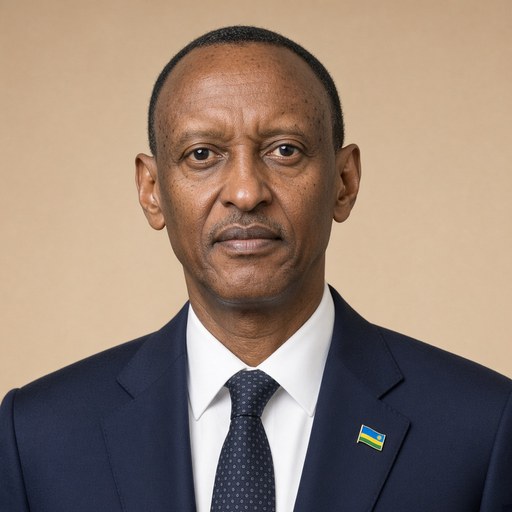
Address by President Paul Kagame at the African Leadership Meeting on Investing in Health | Addis Ababa, 9 February 2019
 Paul Kagame · President of Rwanda
- Context
- Kagame addressed the African Leadership Meeting on Investing in Health in Addis Ababa on 9 February 2019, urging increased domestic and private sector health investment across Africa.
- Main themes
- Investing in health, domestic healthcare financing, African Union cooperation, universal health insurance, private sector role in healthcare, Agenda 2063 and SDGs, progress tracking, resource mobilization, community-based healthcare, public-private partnership
- Duration
- ~4 min
- Words
- 491
- Sentences
- 26
- Readability
- 51
- Grade
- 10.8
- Syntax
- 3.00
- Vocabulary
- 1.95
The broad sphere of national life a sentence belongs to. Every sentence has an Arena, so it is the denominator the other indices are read against.
Other26 sentences in 11 paragraphs
Allow me to join the speakers that have preceded me in welcoming you to this important event, and thanking you for answering our call positively.
I thank, most especially, the Heads of State and Government who are here with us, including those who have come from so far away—Prime Minister Solberg, President Issoufou of Niger, the President of the Sahrawi Republic—and of course the United Nations Secretary-General is here with us as well. We appreciate the African Union Commission, led by Chairperson Moussa, for assisting us to convene this meeting.
The many partners joining forces with us here today have in fact been together with us on this journey all along. From Bill Gates, to the World Health Organisation led by Dr Tedros, and Michel Sidibé, to the leaders of Gavi, the Global Fund, and the African Development Bank, to name just a few: The value we attach to these relationships cannot be overstated, whether as the African Union, or in the case of my country, Rwanda.
The reason why is obvious. Investing in the health of our citizens has already had transformative effects on the people of our continent. But there is much more to do. That is why the outcome of this meeting is so important.
Let me leave you with four points.
First, governments should surely be willing and able to increase domestic investment in healthcare. A good indicator of this is the progress we have made toward securing the financial health of the African Union and mobilizing our own resources for joint priorities, such as the Peace Fund. We should be the first ones to contribute to efforts that directly benefit our people.
Second, we will get better results if we work together as a continent, for example, cheaper prices by negotiating and procuring as a bloc. We also have a lot to learn from each other’s experiences in implementing programmes such as universal health insurance and community-based healthcare.
Third, we need to track progress on making the investments needed to achieve the health outcomes enshrined in Agenda 2063 and the Sustainable Development Goals. That is why the Progress Tracker tool being developed by the African Union Commission is critical.
Finally, the private sector is the key to success. The role goes beyond taxes and philanthropy, as central as those are. We also need to see the private sector investing more in the business of healthcare in Africa as service providers. Companies can also ensure their employees have high-quality, private health insurance coverage. This creates more demand in the market and allows governments to focus on the most vulnerable.
As was mentioned earlier, we are entering a period where most of the special health financing vehicles must replenish their resources. This creates the necessity—or rather the opportunity— for Africa to increase its ownership of the process.
Together we can set an even more ambitious agenda for the next phase. I thank you once again for your attention.