




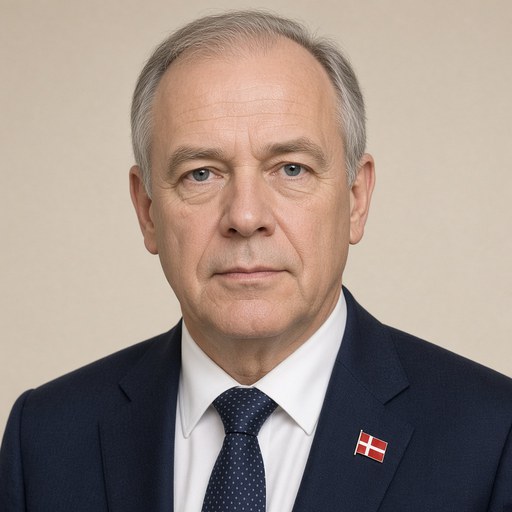
We must stand together! The Prime Minister's speech at the Danish Union of Public Employees' 25th Congress on October 8, 2001.
 Poul Nyrup Rasmussen · Prime Minister of Denmark
- Context
- Rasmussen addressed the Danish Union of Public Employees' 25th Congress on October 8, 2001, speaking on national unity, integration, and economic policy in the aftermath of the September 11 attacks.
- Main themes
- Immigration and integration policy, unity against terrorism, social solidarity, xenophobia and political fear-mongering, economic stability, elderly care, labor market policy, housing policy, family and children policy, rule of law, international solidarity, Finance Act negotiations
- Duration
- ~23 min
- Words
- 2,755
- Sentences
- 162
- Readability
- 61
- Grade
- 9.0
- Syntax
- 2.85
- Vocabulary
- 1.93
Translated from Danish
The broad sphere of national life a sentence belongs to. Every sentence has an Arena, so it is the denominator the other indices are read against.
Other162 sentences in 40 paragraphs
Those who play with fear in politics play with fire in politics. We must not spread fear and uncertainty and incite hatred against groups of Danes, regardless of whether they have different and more amusing names.
Some have told me that we can lose on immigration policy. I say to you, we will not lose on humanity, consistency, and justice. We will not lose by setting demands on each other.
We will not lose by establishing a number of fundamental points that we all agree on: To distance ourselves from violence and terror. To distance ourselves from fundamentalism. To advocate that the constitution and democracy stand above any religion. To fight for equality between men and women. To fight for everyone’s right to choose their partner. To fight for us in this country to contribute positively to positive integration. That everyone must learn Danish – for that is the prerequisite for us to understand each other at work and for us to generally prepare to live well together.
There is no one here in the country who has a monopoly on wanting to combat crime, rape cases, asylum fraud, forced marriages. We all want that. The Social Democrats and the government want it consistently and directly. But apparently, not everyone refrains most directly, most clearly, and most unequivocally from appealing to xenophobia and division.
The terrorists' goal is to divide us. The terrorists' goal is for us to come into conflict with each other. The terrorists want us to talk about division. We will never do that. We talk about unity, and we can make our great contribution to that. We will talk about the fact that we, five million people in our country, want to live our lives, yes, but we will also understand with ourselves even more clearly than ever before that we, after World War II, are bound together by a global community of fate, which is clearer than before. Perhaps it will also become clearer and clearer for the vast majority of Danes. That our community here in the country is closely tied to our solidarity internationally.
There will no longer be a curtain that we can pull down or a door that we can close to the world around us. We are a part of it, and perhaps we have returned, based on the tragedy, to the path that some were in the process of tearing us away from. That true solidarity and unity are indeed also across borders.
The rule of law in our country will be handled with consistency. War criminals will be held accountable, and if there is anything that needs to be corrected and tightened in the legislation, it will happen.
We will start negotiations on the Finance Act already this week. The economy is robust and strong in Denmark, but it is not unaffected; it is not untouched by the international economic situation. We will not weaken our ambitions, and we do not intend to relax our reform legislation.
We have lost revenues in the order of 11-12 billion kroner in public finances because stock prices plummeted, as you saw after September 11. When a state and a government like ours can handle that without having to cut back drastically, it is also because our economic policy and strategy have been strong and coherent for the first eight – soon nine years.
We have the lowest unemployment in 25 years and the highest employment. But we are also sailing in uncertain waters, and therefore it is of course important that we design the Finance Act for next year in such a way that we can also handle an unpredictable event next year.
We will prioritize what is important and what is less important. In the area of the elderly, we will stick to the agreement we have made with the municipalities and your significant contribution to it.
We are determined that the improvements that have been agreed upon will be implemented, and we are determined that the care for our elderly will be developed in the coming year. We will also change the legislation on survivor benefits for our elderly, so that one does not have to live with the grief of having lost a loved one after many years of living together, and then on top of that be burdened with a requirement for repayment of too much received pension – that will be changed!
We will introduce greater legal security for the elderly's safety to receive the treatment they are entitled to. In the area of children and families, we will not shy away from what we have said. We will implement it, and we will do it in a careful manner, in a responsible manner, and in a financed manner. This also applies to the housing area.
We currently have a close collaboration with the National Association of Housing Associations. I hope that we can also find the financial solutions that are needed here. In the labor market area, we will also maintain what we have underway. What we are collaborating on with Karsten, with all of you in the Danish Association of Public Employees, and with the entire Danish labor movement.
We must tackle the integration task. It will be one of the most important tasks for us. We must make the inclusive labor market function. We must have senior policy in place.
We need to establish a new workers' compensation reform. It is pointless for people to be tossed around in an appeals system when they are entitled to a different answer, and when it should not take years and days.
Work-related injuries should be compensated for, and it should be done quickly and consistently when one is entitled to it. Therefore, we will present and implement a reform. We also want the reorientation of our labor market policy to be easier and more direct. We can do that now, after mass unemployment has come down.
We can ensure a more equal path back to the labor market through a much more personalized counseling and educational effort for the individual. We must not forget the vulnerable in our society, as you never do.
Efforts must be made for those with dyslexia and reading difficulties, and we must raise the overall quality of our working life. I know well, and you know it even better, that about one-third of those who go to work every day feel pressured, feel stressed, feel it is too harsh, feel that they are being worn down. We must change that.
Working life occupies so much of our lives in Denmark. We are the people in the world where both men and women work the most. Therefore, it is time now that we give working life a much higher qualitative position in our entire existence than before. We can do that by enhancing the work environment efforts, including the psychological work environment. And we can do that through a much more consistent intervention regarding the companies that do not live up to what we want.
We will also design our systems, our public sector, in a more thoughtful way in the future. I have often wondered in these times that the way we have structured all our rules in our welfare society is based, so to speak, on the old industrial society. Back when you got a job that you basically had for the rest of your life. If you became unemployed, you would return to the same job or within the same industry. Back then, you got married once and basically stayed married to the same person for life. That has changed somewhat! And back then, when you grew up in a certain place, you lived with your family and did not really move much.
All that is different now. The industrial society has been replaced by an immensely mobile society. The individual person, the individual family changes jobs, changes work, changes education, or continues their education many, many times in their lives compared to before. This means, of course, that the individual person, when they encounter the system, the office, the public sector, often experiences that our rules do not really fit the changed conditions of the modern person. We are constantly changing conditions. We need to think this through very carefully, as one of the major service reforms in the welfare society of the 21st century. Therefore, you come in so centrally, so what we are talking about at this congress is that the links in the chain are the strength of the future. That is so true, so true.
The modernization of the welfare society must happen in a way that does not undermine solidarity. So we experience an uplift in service and an understanding of the individual person's conditions and not a deterioration. The political battles and the labor struggles that lie ahead of us will be battles based on people's conditions in the modern society. They will be battles that are very likely rooted in our value foundation, in the Danish labor movement, the Danish Association of Public Employees, and the Social Democrats. That we will never fail a single person.
That the value of every single person is closely tied to my value and your value. The value of a person rests solely on the fact that they are a person. A person who is entitled to care, opportunities, and chances. The welfare society must be the very guarantee that you can find what you are best at and that you can develop your talent not at the expense of others, but together with others. This is where renewal and change come from.
The Social Democrats have not come to a standstill. The government has not come to a standstill. The government is full of determination to hold this country together. To avoid divisions in Denmark's streets in the current situation and the years ahead, the government has also not come to a standstill when it comes to the renewal of the welfare society. We have reached the point, on the contrary, where after eight, soon nine years, we can define the new tasks that we can now take on. Quality tasks, justice tasks, and security tasks. Quality, justice, and security are the three key words that characterize the Social Democrats and the labor movement and thus also the three paths of renewal from which our reforms are drawn. In the labor market, in housing policy, in the development of the service society in the public sector, and thus in your and in education policy and in environmental policy.
And then you also win many victories. By virtue of who you are and by virtue of the battles you fight. When the arbitrator recently decided that ISS should pay 250,000 kroner to you and the Women's Workers' Union, he firmly established that employee representatives must be heard before an infusion. One cannot, with one stroke, push through changes that mean a significant alteration for thousands of employees' everyday lives. It should simply not be allowed to run a business without taking into account the employees. I believe that public and private companies and partnerships will fundamentally understand this in the coming time.
For it will also be a competition for employees. There will be a shortage of younger employees, and thus a demand for a bit more experienced people but also for people of a different skin color and with a different name. And those who can embrace all this are us. We, as union leaders, trusted individuals, and politicians, must think about how we can improve conditions for ordinary Danes in the workplace, and we must make their daily lives easier.
But business owners must also recognize your right to represent your members' interests. That is what has been established with the arbitrator's ruling on ISS.
Then there are those who say that there is no need for the labor movement. But are they not precisely the ones who deep down do not want to cooperate, do not want to understand that the fight for employees is also about unity?
You must keep fighting. You must know that the Social Democrats stand with you. We support you in your daily struggle, and we do what we can do. We legislate, we listen to you. Sometimes we may not completely agree, and sometimes we also run into each other, for example, when it comes to early retirement. Rarely have I received so much criticism. Much can be said about someone like me, but seeking popularity is not what I am accused of!
My point is, of course, also to all of you that I have not forgotten our discussion. I understand well what you are saying – and your feelings. When I stand here and talk about early retirement, even today, it is to signal to you that what I did was of course not to offend anyone, but because sometimes I must do something that you would not do, but which belongs to taking responsibility for leading this country.
It is a bit like the captain of a ship who puts the binoculars in front of him and can see that if the course is held completely without adjustments, he will sail into an iceberg, or whatever it may be. The captain who does not dare to take responsibility closes his eyes and hopes for the best. The one who sees it in the eye calls the crew together and says: "You know what, we need to make a course change. It may be that some coffee cups will fall on the floor, and some passengers will be upset, but the alternative would be that the ship itself would experience tremors and danger."
We have gone through early retirement. We have discussed it, and we have talked it through. Karsten has also told me what he thinks about that issue. I believe that we are strong enough to take it together. We are strong enough to have discussions, to scold, and to set things straight. And then we are strong enough to move on. We still have an early retirement scheme in Danish society. Others did not get it as they would have liked when they wanted to raise the early retirement age or completely remove early retirement.
So they got off a bit easily by sneaking out along the wall and hoping that people would forget what they had said. I do not believe history will do that, and I do not believe you will either. We have an early retirement scheme; over 30,000 people have received an early retirement certificate. I place absolutely crucial importance on the fact that we will also have that in the future because those who are worn down must be able to go on early retirement. We now also have an early retirement scheme that is more robust. If you have a lot on the side, you get a little less. But is it not also precisely on that solidarity basis that our reforms must be built?
Well, no more about early retirement now, but an outstretched hand to you for cooperation and unity.
There will be many, many temptations in the coming months. There will be many overbids. There will be many offers. There will be many promises. The central point is that we maintain our goals instead of scattering golden promises around us. There will be things we do not achieve tomorrow, but then we will achieve them the day after tomorrow. I tell you that what we set out to do in 1993, we have achieved and more.
We should not be elected based on what we have done. We hope to be elected and to continue our work based on what we will do. If anyone is in doubt, one can compare what we said we would do and what we have actually accomplished.
Let us use our common efforts to ensure stability, responsibility, and a willingness to reform for the benefit of the weak in our society. And let us use our community to show that this country can also leave some strong marks in this century. Let us then surprise quite a few, but not a majority - by winning the next two elections - both the municipal election and the upcoming election to the Folketing. We can do this together, and we can do this with you.
I wish you all a really, really good congress. Stick together now.
Thank you all very much.
The original Danish. The tags above are read on the English translation's sentences.
* * *
Den, der leger med frygt i politik, leger med ild i politik. Vi skal ikke sprede frygt og usikkerhed og lægge grupper af danskere for had, uanset om de hedder noget andet og sjovere.
Nogen har sagt til mig, at det med udlændingepolitikken kan vi tabe på. Jeg siger til jer, vi kommer ikke til at tabe på humanisme, konsekvens og på retfærdighed. Vi kommer ikke til at tabe på at stille krav til hinanden.
Vi kommer ikke til at tabe på at stille en række fundamentale punkter op, som vi alle sammen er enige om: At tage afstand fra vold og terror. At tage afstand fra fundamentalisme. At gå ind for at grundloven og demokratiet står over enhver religion. At kæmpe for ligestilling mellem mænd og kvinder. At kæmpe for at enhver har ret til at vælge sin partner. At kæmpe for at vi i det her land bidrager positivt til en positiv integration. At alle skal lære dansk – for det er jo forudsætningen for, at vi kan forstå hinanden på arbejdet og at vi i det hele taget indstiller os på at leve ordentligt sammen med hinanden.
Der er ingen her i landet, der har monopol på at ville bekæmpe kriminalitet, voldtægtssager, asylfup, tvangsægteskaber. Det vil vi alle. Det vil Socialdemokratiet og regeringen konsekvent og direkte. Men tilsyneladende er det ikke alle, der mest direkte, mest klart og mest entydigt afholder sig for at appellere til fremmedfjendskhed og til splittelse.
Terroristernes mål er at splitte os. Terroristernes mål vil være, at vi kommer i konflikt med hinanden. Terroristerne ønsker, at vi taler om splittelse. Det vil vi aldrig gøre. Vi taler om sammenhold, og vi kan yde vores store bidrag hertil. Vi vil tale om, at vi fem millioner mennesker i vores land, vil leve vores liv, ja, men vi vil også forstå med os selv endnu tydeligere end nogensinde før, at vi efter 2. Verdenskrig er bundet sammen af et globalt skæbnefællesskab, som er tydeligere end før. Måske vil det også tydeligere og tydeligere for langt de fleste danskere. At vores fællesskab her i landet er bundet meget tæt sammen med vores solidaritet internationalt.
* * *
Der vil ikke længere være et gardin, vi kan rulle ned eller en dør, vi kan lukke for verden omkring os. Vi er en del af den, og måske er vi kommet tilbage på baggrund af tragedien til det spor, nogen var i færd med at rive os væk fra. At sand solidaritet og sammenhold i virkeligheden også er på tværs af grænserne.
Retspolitikken i vores land vil blive håndteret med konsekvens. Krigsforbrydere vil blive stillet til ansvar og er der noget, der skal rettes og strammes i lovgivningen, så sker det.
Vi går i gang allerede i denne uge med forhandlingerne om Finansloven. Økonomien er robust og stærk i Danmark, men den er ikke upåvirkelig, den er ikke uberørt af den internationale økonomiske situation. Vi svækker ikke vores ambitioner, og vi har heller ikke tænkt os at slappe af i vores reformlovgivning.
Vi har tabt indtægter i størrelsesordnen 11-12 milliarder kroner på de offentlig finanser, fordi aktiekurserne jo væltede ned, som I så efter den 11. september. Når en stat og en regering som os kan klare det uden, at vi skal ud og skære benhårdt, så hænger det også sammen med, at vores økonomiske politik og strategi har været stærk og sammenhængende i de første otte - snart ni år.
Vi har den laveste arbejdsløshed i 25 år og den højeste beskæftigelse. Men vi sejler også på usikkert farvand, og derfor er det selvfølgelig vigtig, at vi indretter Finansloven til næste år sådan, at vi også kan håndtere en uforudsigelig hændelse til næste år.
Vi kommer til at prioritere, hvad der er vigtigt, og hvad der er mindre vigtigt. På ældreområdet vil vi holde fast i den aftale, vi har lavet med kommunerne og jeres væsentlige bidrag dertil.
Vi er fast besluttet på, at de forbedringer, der er aftalt skal gennemføres, og vi er fast besluttet på, at omsorgen for vores ældre skal udvikles i det kommende år. Vi ændrer også lovgivningen om efterlevelseshjælpen for vores ældre, så man ikke skal leve med sorgen over at have mistet ens nærmeste efter mange års sammenliv, og så oven i købet få den forstærket med et krav om efterbetaling af for meget modtaget pension – det bliver der lavet om på!
Vi indfører større retssikkerhed for ældres tryghed for at få den behandling, man har krav på. På børne- og familieområdet løber vi ikke fra det, vi har sagt. Vi vil gennemføre det, og vi vil gennemføre det på en omhyggelig måde, på en ansvarlig måde og på en finansieret måde. Det gælder også på boligomådet
Vi har lige nu et tæt samarbejde med Boligforeningernes Landsforening. Jeg håber, at vi også her kan finde de finansielle løsninger, der skal til. På arbejdsmarkedsområdet vil vi også fastholde det, vi har i gang. Det vi samarbejder om med Karsten, med alle jer i Dansk Funktionærforbund og med hele den danske fagbevægelse.
Vi skal løfte integrationsopgaven. Det bliver én af de allervigtigste opgaver for os. Vi skal have det rummelige arbejdsmarked til at fungere. Vi skal have seniorpolitikken på plads.
Vi skal have indrettet en ny arbejdsskadeerstatningsreform. Det er meningsløst, at folk skal svinges rundt i et appelsystem, når de har krav på et andet svar på, og på at det ikke tager år og dag.
Arbejdsskader skal man have erstatning for, og man skal have det hurtigt og konsekvent, når man er berettiget dertil. Derfor fremlægger og gennemfører vi en reform. Vi ønsker også, at nyorienteringen af vores arbejdsmarkedspolitik bliver lettere og direkte. Det kan vi jo gøre nu, efter massearbejdsløsheden er kommet ned.
Vi kan sikre en mere lige vej tilbage til arbejdsmarkedet via en meget mere personlig indrettet rådgivning og uddannelsesindsats for den enkelte. Så skal vi ikke glemme de svage i vores samfund, som I jo heller aldrig gør det.
Ordblinde og læsesvage skal der gøres en indsats for, og vi skal løfte hele kvaliteten i vores arbejdsliv. Jeg ved godt, og I ved det endnu bedre, at omkring af 1/3 af dem, der går på arbejde hver dag føler sig presset, føler sig stresset, føler det er for barskt, føler at man bliver nedslidt. Det skal vi have lavet om på.
Arbejdslivet fylder så meget i vores liv i Danmark. Vi er det folk i hele verden, hvor både mænd og kvinder arbejder mest. Derfor er det tid nu at vi giver arbejdslivet en meget højere kvalitetsmæssig placering i hele vores tilværelse end før. Det kan vi gøre ved at løfte arbejdsmiljøindsatsen inklusiv det psykiske arbejdsmiljø. Og det kan vi gøre ved et meget mere konsekvent indgreb i forhold til de virksomheder, som ikke lever op til det, vi ønsker.
* * *
Vi kommer også til at indrette vores systemer, vores offentlig sektor, på en mere tænksom måde i fremtiden. Jeg har tit spekuleret på i disse tider, at den måde, vi har indrettet alle vores regler på i vores velfærdssamfund, jo bygger på, om man så må sige, det gamle industrisamfund. På den gang, hvor man fik et job, som man stort set havde resten af livet. Blev man arbejdsløs, ja så kom man tilbage til det samme job eller indenfor den samme branche. Den gang blev man gift én gang, og blev stort set ved med at være gift med den samme hele livet. Det har jo ændret sig noget! Og dengang, når man voksede op på et bestemt sted, ja så levede man med sin familie og flyttede sig egentlig ikke ret meget.
Alt det er jo anderledes nu. Industrisamfundet er afløst af et enormt mobilt samfund. Det enkelte menneske, den enkelte familie skifter job, skifter arbejde, skifter uddannelse eller videreuddanner sig mange, mange gange i ens tilværelse i forhold til før. Det gør selvfølgelig, at det enkelte menneske, når det møder systemet, kontoret, den offentlige sektor for mange gang oplever, at vores regelsæt ikke rigtig passer til det moderne menneskes forandrede vilkår. Vi forandre vilkår hele tiden. Det er vi nødt til meget nøje at tænke igennem, som en af de helt store servicereformer i det 21. århundredes velfærdssamfund. Derfor kommer I så centralt ind, så det vi jo taler om på denne kongres er, at kædens led er fremtidens styrke. Det er så sandt, så sandt.
* * *
Moderniseringen af velfærdssamfundet skal ske på en måde, så det ikke går ud over solidariteten. Så vi oplever et løft i service og en forståelse for det enkelte menneskes vilkår og ikke en forringelse. De politiske kampe og de faglige kampe, der står foran os bliver da kampe, der beror på menneskers vilkår i det moderne samfund. Det bliver kampe, der meget sikkert er forankret i vores værdigrundlag, i dansk fagbevægelse, Dansk Funktionærforbund og Socialdemokratiet. At vi aldrig vil svigte ét eneste menneske.
At hvert eneste menneskes værdi hænger meget nøje sammen med min værdi og jeres værdi. Menneskets værdi beror alene på, at det er et menneske. Et menneske, som har krav på omsorg, muligheder og chancer. Velfærdssamfundet skal være selve garanten for, at du kan finde det, du er bedst til, og at du kan udvikle dit talent ikke på bekostning af andre, men sammen med andre. Det er herfra fornyelse og forandring kommer.
Socialdemokratiet er ikke gået i stå. Regeringen er ikke gået stå. Regeringen er fuld af beslutsomhed for at holde sammen på det her land. Undgå splittelser i Danmarks gader i den aktuelle situation og de år, der ligger foran os regeringen er heller ikke gået i stå, når det gælder fornyelsen af velfærdsamfundet. Vi er nået dertil, tværtimod, hvor vi efter otte snart ni år kan definere de nye opgaver, som vi nu kan tage fat på. Kvalitetsopgaver, retfærdighedsopgaver og tryghedsopgaver. Kvalitet, retfærdighed og tryghed er de tre nøgleord, der karakteriserer Socialdemokratiet og fagbevægelsen og dermed også de tre fornyelsesveje, hvorfra vores reformer tegner sig. På arbejdsmarkedet, på boligpolitikken, i servicesamfundets udvikling i den offentlige sektor og dermed i jeres og i uddannelsespolitikken og i miljøpolitikken.
* * *
Og så vinder I jo også mange sejre. I kraft af dem I er og i kraft af de kampe, I fører. Da opmanden for nylig besluttede, at ISS skulle betale 250.000 kroner til jer og Kvindeligt Arbejderforbund, så slog han jo fast med syvtommer søm, at medarbejdernes repræsentanter skal høres inden en infusion. Man kan ikke med ét slag liste ændringer igennem, som betyder en markant forandring for tusindvis af medarbejders hverdag. Det skal simpelthen ikke være tilladt at drive virksomhed uden at tage hensyn til medarbejderne. Jeg tror, at offentlige og private virksomheder og partnerskaber helt grundlæggende vil forstå det i den kommende tid.
For det bliver også en konkurrence om medarbejdere. Der bliver mangel på yngre medarbejdere, og dermed efterspørgsel efter lidt mere erfarne men også folk af en anden hudfarve og med et andet navn. Og dem, der kan favne alt det her, det er os. Vi skal som faglige ledere, tillidsfolk og politikere tænke på, hvordan vi kan forbedre forholdene for ganske almindelige danskere på arbejdspladsen, og vi skal gøre deres daglige liv nemmere.
Men virksomhedsejerne skal altså også anerkende jeres ret til at varetage jeres medlemmers interesse. Det er det, der er slået fast med opmandens kendelse om ISS.
Så er der dem, der siger, at der ikke er brug for fagbevægelsen. Men er det netop ikke dem, der inderst inde ikke vil samarbejde, ikke vil forstå, at kampen, for medarbejdere også er sammenhold?
* * *
I skal blive ved med at kæmpe. I skal vide, at Socialdemokratiet står sammen med jer. Vi støtter jer i jeres daglige kamp, og vi gør det, vi kan gøre. Vi lovgiver, vi lytter til jer. Engang imellem er vi måske ikke helt enige og engang imellem løber vi også ind i hinanden for eksempel, når det gælder efterlønnen. Sjældent har jeg fået så mange tæv. Meget kan man sige om sådan én som mig, men at gå efter popularitet, det er ikke det, jeg bliver anklaget for!
Min pointe er selvfølgelig også til jer alle sammen, at jeg ikke har glemt vores diskussion. Jeg forstår godt, hvad det er I siger – og jeres følelser. Når jeg står her og taler om den efterløn, også i dag, så er det for at signalere til jer, at det jeg gjorde var jo selvfølgelig ikke for at genere nogen, men fordi jeg engang imellem må gøre noget, som I ikke ville gøre, men som hører til at påtage sig ansvaret for at lede dette land.
Det er lidt som kaptajnen på et skib, der sætter kikkerten foran sig og kan se, at hvis kursen holdes fuldstændig uden tilpasninger, så sejler han ind et isbjerg, eller hvad det nu kan være. Det kaptajn, der ikke tør påtage sig ansvaret, lukker øjnene og håber det bedste. Den, der ser det i øjnene, kalder besætningen op og siger: ”Ved I hvad, vi må lige foretage en kursændring. Det kan være, at der er nogen kaffekopper, der ryger på gulvet, og nogle passagerer, der bliver kede af det, men alternativet ville være, at skibet selv kommer i rystelser og fare.”
Vi har været igennem den efterløn. Vi har diskuteret, og vi har talt det igennem. Karsten har også sagt til mig, hvad han mener om den sag. Jeg mene, at vi er stærke nok til at tage det i fællesskab. Vi er stærke nok til at tage diskussioner, skæld ud og sætte ting på plads. Og så er vi stærke nok til at komme videre. Vi har stadigvæk en efterlønsreform i det danske samfund. De andre fik det ikke som de gerne ville have det, da de ville forhøje efterlønsalderen eller helt fjerne efterlønnen.
Så slap de lidt billigt ved at luske ud langs væggen og håbe, at man glemte, hvad det var de havde sagt. Det tror jeg ikke historien gør, og det tror jeg heller ikke, at I gør. Vi har en efterløn over 30.000 mennesker har fået et efterlønsbevis. Jeg lægger fuldstændig afgørende vægt på, at det har vi også i fremtiden, fordi de mennesker, der er nedslidte skal kunne gå på efterløn. Vi har nu også en efterlønsordning, der er mere robust. Hvis du har meget ved siden af, får du lidt mindre. Men er det ikke også netop på det solidariske grundlag, hvorpå vores reformer må bygge?
Nuvel, ikke mere om efterløn nu, men en fremstrakt hånd til jer om samarbejde og om sammenhold.
* * *
Der kommer mange, mange fristelser i de kommende måneder. Der kommer mange overbud. Der kommer mange tilbud. Der kommer mange løfter. Det centrale er, at vi fastholder vores mål i stedet for at strø om os med gyldne løfter. Der vil være ting, vi ikke når i morgen, men så når vi dem i overmorgen. Jeg siger til jer, at det vi satte os for i 1993, det har vi nået og mere til.
Vi skal ikke vælges på det, vi har gjort. Vi håber at blive valgt og kunne videreføre vores arbejde på det, vi vil gøre. Hvis nogen er i tvivl, kan man sammenligne med det vi sagde, at vi ville gøre, og det vi rent faktisk har gennemført.
Lad os bruge vores fælles kræfter til at sikre stabilitet, ansvar og reformvilje til gavn for de svage i vores samfund. Og lad os bruge vores fællesskab til at vise, at det her land også kan sætte sig nogle gode stærke spor i dette århundrede. Lad os så overraske ret mange, men ikke et flertal - ved at vinde de næste to valg – både kommunevalget og det kommende valg til Folketinget. Det kan vi gøre i fællesskab, og det kan vi gøre sammen med jer.
Jeg ønsker jer en rigtig, rigtig god kongres. Hold nu godt sammen.
Tak skal I have alle sammen. .