




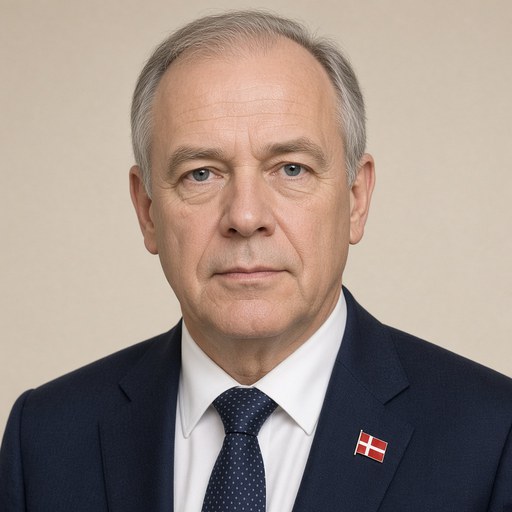
"Janteloven is dead." Prime Minister Poul Nyrup Rasmussen's speech to the government's IT circle on October 25, 2001.
 Poul Nyrup Rasmussen · Prime Minister of Denmark
- Context
- Rasmussen addressed the Danish government's IT circle on October 25, 2001, urging ambitious national IT leadership and rejecting cultural self-doubt embodied by the Law of Jante.
- Main themes
- IT leadership and ambition, rejection of Janteloven, Denmark as world's best IT nation, investment in education and people, international collaboration post-9/11, e-learning and digital pedagogy, government IT policy, national identity and self-belief, economic resilience, IT budget and funding
- Duration
- ~19 min
- Words
- 2,286
- Sentences
- 133
- Readability
- 64
- Grade
- 8.2
- Syntax
- 2.81
- Vocabulary
- 1.84
Translated from Danish
The broad sphere of national life a sentence belongs to. Every sentence has an Arena, so it is the denominator the other indices are read against.
Other133 sentences in 41 paragraphs
A lot can be done with IT, but a simple cold is something IT cannot handle! I say this more in an attempt to dampen the expectations placed on IT in the coming years!
On the other hand – one of the worst things one can do in our country is, of course, to point out that we might become the best in the world at something. Is it not far too bold to even venture into – being the best in the world at something? I sometimes believe that it is a good idea to set some goals that are ambitious. That are very ambitious, but which, when we think carefully, are still realistic.
"The Law of Jante is dead and Denmark is the world champion in utilizing IT education and developing new pedagogy that exploits the potential of IT. Half of Danish teachers have obtained a pedagogical IT driver's license. All students and teachers in Denmark use school-com and the students use sector-net. And by the way, we have some of the world's leading e-learning companies."
I must admit that I had to rub my eyes a second time when I came across Computerworld's article about the "World Conference on Computers and Education," which was held in Copenhagen last summer. The quote comes from there. That Denmark is a leader in IT in education is not a story that gets told every day. And certainly not to me, who at one point had the audacity – as I said – to allow myself to say that Denmark should be the world's best IT nation.
Today, I must say that we have come a long way. The people present here in this hall are living proof that we are well on our way. That the goal may not be so unusual after all. That it is certainly worth striving for.
I will therefore also allow myself to interpret your presence as a rewriting of the Law of Jante. From "you should not think that you are anything" to "you should believe that you are something." And fundamentally, if one is to understand how this small country, Denmark, could become what it has become – a country that the Swedish Nobel laureate in economics, Gunnar Myrdal, once said: "Mainly consists of fog and mediocre soil." How could this small country, which lost 3/4 of its industrial production capabilities over a couple of centuries, still become one of the world's reasonably well-functioning nations, welfare-wise and perhaps also, in some areas, the best country in the world to live in?
It could do so because we invested in people. It could do so because we invested in education, and it could do so because we, without saying it too loudly, perhaps also invested in ourselves. You should believe that you are something.
* * *
Denmark as the world's best IT nation is not a small goal. I know that. It is a huge ambition. We are only at the beginning of a whole new era, where collaboration is the key word.
We see it internationally after the terrible events of September 11, and we see it in the new era we are living in right now, which clearly shows that we need a strong economy, but that no one can survive any longer in blind faith that the economy can more or less handle everything by itself.
In short: We need each other, and we need not only security but also a clear political line, leadership, and collaboration. We need more collaboration. Not less. We need a clear political line and consistency. The world today is not what it was a few months ago. Times have changed, but that does not mean we should lower our ambitions – on the contrary.
That is why I am also so incredibly glad that the government's IT circle, under the leadership of the Minister of IT and Research, has taken up the challenge, and that you, who are present today, through your engagement in the project, through your presence, also feel committed.
At the same time, I think you have already begun to spread the IT vision to the rest of Denmark. One of the publications that I have taken note of is the publication "In Search of IT Gold for Denmark – Will You Join?" because this is precisely what it is all about. That Denmark should take the lead in the field of IT. And as I said before, there are good opportunities for that.
Now comes the classic question: "Yes, that all sounds very good, but what have you allocated in the budget? Because otherwise, we cannot set any goals if there is nothing about it in the budget, and preferably a multi-digit amount, and preferably some millions behind it. We have a tendency here in Denmark to measure everything by what is in the budget."
I can almost already hear the judgments, the criticism. It is absolutely impossible if there is not an extra zero behind what is in the budget.
Actually, we in the government are not that disagreeable. The Minister of IT and Research, I would like to say, has done a tremendous, good job. Again in a way that made all those who made the small, sad prophecies about how it could go, disappointed. Here I am thinking of the UMTS auction which, according to some, would at most yield a couple of hundred million. To secure Denmark four billion kroner was a utopia, and yet it turned out that we got the foundation home. The first billion, which I now note with great satisfaction, is also supported by other parties than the government, with Birte Weiss at the forefront, who are ready to negotiate in the current budget negotiations.
I think that is a breakthrough. I feared for a while that there had been, shall we say, opposition politics in the matter, but something seems to indicate now that in these days there are actually good opportunities for Birte Weiss' wish that the UMTS funds also come to the budget table within the area we are working on here, to have better chances.
At least that is how I read the signals, and I very much hope that it will succeed. I hope very much that all the responsible parties in the UMTS area can also see how important and natural it is that we get the opportunity to use part of those funds to finance our IT and our research, which the IT minister has placed so much emphasis on, and rightly so.
* * *
The government has allocated 500 million kroner in this year's budget for initiatives in the area. This will be a massive investment in the IT sector, which will help lift Denmark into the new era.
Now, I do not belong to those who believe that happiness is achieved just by throwing a bag of money at projects and people. It takes more than that. And that is why I believe that the public sector can and should become the decisive driving force – the locomotive in a certain sense – in Denmark. We have approached things differently compared to Sweden. Sweden is supply-oriented. We need to be demand-oriented.
* * *
I believe that the public sector, by understanding its own role and by understanding the role of partnership, can be elevated, but that cannot happen without collaboration with you in the private sector.
Time does not allow for going deeply into the subject, although I would very much like to. Just a few brief "flights" over history, as far as the public sector is concerned.
The rules that the public sector is based on are the rules of the industrial society. The rules are based on the idea that we humans stayed where we were born. We grew up. We took an education, and that was enough for the rest of our lives. We got married, and we pretty much stuck to that for the rest of our lives. A bit dull for some, but that was the headline. We did not move around much, and on that basis, we created the rules of the current society. A foundation that no longer fits the modern human being.
Now we are not married to the same person – I should say – for very long at a time. We move around quite a bit. We expand our education three, four, five times in our lives. It is not the case that when we become unemployed, we return to the same industry or the same company. It is new companies. It is often a new industry.
That is the mobile, modern human's living conditions. In a way, humans have adapted because humans are the most adaptable beings that exist on this earth. Whereas the public sector may not have adapted to the modern human's new living conditions because the public rules were created on the basis of the industrial society. And that is where IT comes in. As the instrument and tool that may be able to bind it all together again in a new and different way, without people in the public sector becoming afraid.
That is why it is so important that we do not only view IT in the public sector as a tool, a spreadsheet. Something to be used to do things faster. No, the IT tool is the ticket to a new organization of the public sector. And to begin to adapt the rules to the modern human. To the mobile society's human. Not only in this one way, but also that we actually move our minds, our education, our behavior much faster than before.
That is the vision. That is the opportunity. That is what makes Denmark able to take the lead. That is what allows us to formulate the interaction – the partnership in a different way. There are a whole lot of side benefits that can be harvested in the wake of that. We thereby get the opportunity to solve the dilemma of demographics and the growth of the elderly generation in relation to the younger generation's "downturn" in relation to the labor market. We will lack labor in the coming years. IT can also come in here and make the equation work.
This colossal driving force in the inevitable dynamics of change makes it clear that what we have embarked on has many dimensions, is very exciting, and infinitely necessary.
* * *
I will conclude by saying that we actually have something to rely on in our history, and we have something to base our ambition on in the current picture.
95% of Danes, we estimate, will have access to at least 256 kilobytes by next year. In the field of education, we are, as mentioned, quite advanced. In terms of PCs and the Internet in schools, we are currently surpassed only by one single country, Finland, worldwide. Internationally, the picture is such that Denmark is part of a world elite consisting of the USA and the Nordic countries.
There are apparently two paths one can take on the information society's great highway going forward. One is the American model, which – to be fair – has enormous dynamism in it. The ability to attract investments at lightning speed to the area that is needed.
There is another path, the Nordic, the Danish model if you will, which, based on a permanently high level of education and ability to adapt, may be the viable foundation that we find most sympathetic.
When Gunnar Myrdal spoke about Denmark, he also said: "The only country I really want to discuss as a miracle is Denmark." Because it was against all odds that Denmark became the world's welfare society in the highest elite. And the miracle, he says, the secret of it was that one invested in people and people's education.
Once again, it seems to me that this miracle is now finding its new revitalization in the modern information society and knowledge economy's new future. Because it is no longer so much capital, or if you will, material wealth, that is so crucial. In the future perspective of the knowledge economy, it is the human's creative and educational ability that is central.
That is why we do not fear the future, and that is why the "World Investment Report" can also tell us that in seven to eight years – perhaps ten years – we have lifted ourselves from position number 38 to position number 8 as the most attractive investment country in the world.
We can do it, and I am glad that the IT circle has taken up the challenge, and all of you who have come here find it exciting. And I want to say, not least to Michael Mathiesen and to all of you who have engaged yourselves, thank you for your commitment. You know, and I know, that we will not achieve this with a snap of the fingers. But we will achieve it with a vision. We will achieve it by being consistent. We will achieve it by not letting ourselves be thrown off course by a few side issues or two – yes, I meant technical side issues or two! For the worst thing one can do is to lose sight of the big picture, even though times can sometimes be pressured or stressful.
I have great expectations for your creativity and wish you all the best of luck with the continued work. Keep your ambitions high and keep the connection – of course, grounded. Remember, you must believe that you are something! Because you actually are!
Good luck with the conference.
The original Danish. The tags above are read on the English translation's sentences.
Meget kan IT, men en simpel forkølelse kan IT ikke klare! Jeg siger det mere i et forsøg på at neddæmpe forventningspresset på IT de kommende år!
På den anden side – noget af det værste man kan i vores land er naturligvis at pege på, at vi muligvis kan blive verdens bedste til noget. Er det ikke alt for dristigt overhovedet at kaste sig ud i – verdens bedste til noget? Jeg tror engang imellem, at det er en god idé at sætte sig nogle mål, som er ambitiøse. Som er meget ambitiøse, men som alligevel, når vi tænker godt efter, er realistiske.
”Janteloven er død og Danmark er verdensmestre i at bruge IT-undervisningen og udvikle ny pædagogik, der udnytter potentialet i IT. Halvdelen af de danske lærer har taget pædagogisk IT-kørekort. Alle elever og lærer i Danmark bruger skole-com og de studerende bruger sektornet. Og så har vi for resten nogle af verdens førende E-learning virksomheder.”
Jeg må indrømme, at jeg skulle gnide øjnene en ekstra gang, da jeg for et par måneder siden slog op i Computerworld’s artikel om ”World Conference on Computers and Education”, som blev holdt i København i sommer. Citatet stammer derfra. At Danmark er førende på IT i undervisningen er jo ikke en historie, der bliver fortalt hver dag. Og da slet ikke til undertegnede, som på et tidspunkt havde den uhørte frækhed – som sagt – at tillade sig at sige, at Danmark skal være verdens bedste IT-nation.
I dag må jeg sige, at vi er nået et stykke. Her i salen er de tilstedeværende jo et levende bevis for, at vi er godt på vej. At målet måske ikke er helt så usædvanligt. At det i hvert fald er værd at arbejde for.
Jeg vil derfor også tillade mig at opfatte jeres tilstedeværelse som en omskrivning af Janteloven. Fra du skal ikke tro, at du er noget til det modsatte. Du skal tro, at du er noget. Og dybest set hvis man skal forstå, hvordan dette lille land, Danmark, kunne blive til det, som det er blevet til – et land, som den svenske nobelpristager i økonomi, Gunnar Myrdal, engang sagde: ”Hovedsagelig består af tåge og halvdårlig jord. Hvordan kunne det her lille land, som mistede 3/4 af sin industrielle produktionsmuligheder gennem et par århundrede, alligevel blive til én af verdens rimelig velkørende nationer, velfærdsmæssigt og måske også, på nogle felter, verdens bedste land at leve i?
Det kunne det, fordi vi satsede på mennesker. Det kunne det, fordi vi satsede på uddannelse, og det kunne det fordi vi, uden at sige det ret højt, måske også satsede os selv. Du skal tro, at du er noget.
* * *
Danmark som verdens bedste IT-nation er jo ikke en lille målsætning. Jeg ved det godt. Det er en kæmpe ambition. Vi står først ved begyndelsen på en helt ny tid, hvor samarbejde er kodeordet.
Vi ser det internationalt efter de forfærdelige begivenheder den 11. september, og vi ser det i den nye tid, som vi lever i lige nu, der klart viser, at vi har brug for en stærk økonomi, men at ingen længere kan overleve i blind tro på, at økonomien mere eller mindre i sig selv kan klare det hele.
Kort sagt: Vi har brug for hinanden og vi har brug for ikke alene tryghed, men også for politisk klar linie, lederskab og samarbejde. Vi har brug for mere samarbejde. Ikke mindre. Vi har brug for klar politisk linie og konsekvens. Verden i dag er ikke, hvad den var for få måneder siden. Tiderne har forandret sig, men det betyder ikke, at vi skal slække på ambitionerne – tværtimod.
Derfor jeg også så utrolig glad for, at regeringens IT-kreds under IT- og forskningsministerens ledelse har taget handsken op, og at I, der er tilstede i dag ved jeres engagement i projektet, ved jeres tilstedeværelse, også har følt jer forpligtet.
Samtidig har I også, synes jeg, allerede taget fat på at brede IT-visionen ud til resten af Danmark. En af de publikationer, som jeg har hæftet mig ved, er publikationen ”På jagt efter IT-guld til Danmark – vil du med”, for dette er jo netop, hvad det drejer sig om. At Danmark skal tage førertrøjen på IT-området. Og som jeg sagde det før, så er der gode muligheder derfor.
Nu kommer det klassiske spørgsmål: ”Ja, det er meget godt alt sammen, men hvad har du så afsat på finansloven? For ellers kan vi jo ikke sætte os nogle mål, hvis der ikke står noget om det på finansloven og helst et flercifret beløb, og helst nogle millioner bagved. Vi har det jo med her i Danmark, at måle alting på, hvad står der så finansloven.”
Jeg kan næsten allerede nu høre dommene, kritik. Det kan overhovedet ikke lade sig gøre, hvis der ikke kommer et ekstra nul bagved det, der står på finansloven.
Egentlig er vi i regeringen ikke så uenige. IT- og forskningsministeren, vil jeg gerne sige, har gjort et kæmpe, godt stykke arbejde. Igen på en måde, der gjorde, at alle dem, der anlagde de små-sørgelige profetier om, hvordan det kunne gå, blev skuffet. Her tænker jeg på UMTS – auktionen som, ifølge nogle, højest ville indbringe et par hundrede millioner. At skaffe Danmark fire milliarder kroner var en utopi, og dog viste det sig, at vi fik grundlaget hjem. Den første milliard, som jeg med stor tilfredshed nu noterer mig, er der også andre partier end regeringen med Birte Weiss i spidsen, som er parat til at forhandle ved de aktuelle finanslovsforhandlinger.
Det, synes jeg, er et gennembrud. Jeg frygtede en overgang, at der var gået, skal vi sige, oppositionspolitik i sagen, men noget kan tyde på nu, at i de her dage er der faktisk gode muligheder for, at Birte Weiss’ ønske om, at UMTS-midlerne også kom på finanslovsbordet inden for det område, som vi arbejder på her, skulle have bedre muligheder.
Sådan læser jeg i hvert fald signalerne, og jeg håber meget, at det vil lykkes. Jeg håber meget, at alle de ansvarlige partier på UMTS-området også kan se, hvor vigtigt og naturligt det er, at vi får mulighed for at bruge en del af de midler til at finansiere vores IT og vores forskning, som IT-ministeren har lagt så meget og med rette vægt på.
* * *
Regeringen har afsat 1⁄2 milliard kroner på årets finanslov til initiativer indenfor området. Der bliver tale om en massiv satsning på IT-området, som skal være med til at løfte Danmark ind i den nye tidsalder.
Nu hører jeg ikke til dem, der mener, at lykken er gjort bare ved kaste en pose penge efter projekter og folk. Der skal mere til. Og derfor tror jeg, at den offentlige sektor kan og skal blive den afgørende drivkraft – lokomotivet i en vis forstand – i Danmark. Vi har jo grebet tingene anderledes an til forskel fra Sverige. Sverige er udbudsorienteret. Vi skal være efterspørgselsorienteret.
* * *
Jeg tror, at den offentlige sektor ved at forstå sin egen rolle og ved at forstå partnerskabets rolle kan løftes, men det kan ikke ske uden samarbejde med jer i den private sektor.
Tiden levner ikke nogle muligheder for at gå langt ind i emnet, selvom jeg har meget lyst til det. Bare lige et par enkelte ”flyveture” hen over historien, hvad den offentlige sektor angår.
De regler, den offentlige sektor bygger på, er jo industrisamfundets regler. Reglerne bygger på, at vi mennesker blev boende der, hvor vi blev født. Vi voksede op. Vi tog en uddannelse, og den kunne vi såmænd nøjes med resten af livet. Vi giftede os, og det holdt vi stort set ved og fast i hele resten af tilværelsen. Lidt små-kedeligt for nogen, men det var dog overskriften. Vi flyttede ikke ret meget, og på det grundlag skabte vi så det nuværende samfunds regler. Til et grundlag som ikke passer til det moderne menneske længere.
Nu er vi ikke gift med den samme – skulle jeg hilse og sige – ret lang tid af gangen. Vi flytter ret meget. Vi udbygger vores uddannelse tre-fire-fem gange af livet. Det er ikke sådan, at når vi bliver arbejdsløse, at vi så kommer tilbage til den samme branche eller den samme virksomhed. Det er nye virksomheder. Det er ofte en ny branche.
Det er det mobile, det moderne menneskes livsvilkår. På en måde har mennesket tilpasset sig, fordi mennesket er det mest tilpasningsduelige væsen, der overhovedet findes på den her jord. Hvorimod det offentlige måske ikke har tilpasset sig det moderne menneskes nye livsvilkår, fordi det offentlige regler blev skabt på industrisamfundets grundlag. Og der kommer IT så ind. Som det instrument og værktøj, der måske kan binde det sammen igen på en ny og anderledes måde, uden at folk i den offentlige sektor bliver bange.
Derfor er det så vigtigt, at vi ikke kun betragter IT i den offentlige sektor som et værktøj, et regneark. Noget man skal bruge til at gøre tingene hurtigere med. Næh, IT-værktøjet er adgangsbilletten til en ny organisering af den offentlige sektor. Og til at tage fat på at tilpasse regelsæt til det moderne menneske. Til mobilsamfundets menneske. Ikke alene på den her ene måde, men også at vi rent faktisk bevæger vores sind, vores uddannelse, vores adfærd meget hurtigere end før.
Det er det, der er visionen. Det er det, der er muligheden. Det er det, der gør, at Danmark kan komme i front. Det er det, der gør, at vi kan formulere samspillet - partnerskabet på en anderledes måde. Så er der en hel masse sidegevinster, der kan høstes i kølvandet af det. Vi får derigennem mulighed for at løse dilemmaet i demografien og ældregenerationens vækst i forhold til den yngre generations ”nedtur” i forhold til arbejdsmarkedet. Vi mangler arbejdskraft i de kommende år. Også her kan IT komme ind og få ligningen til at gå op.
Denne kolossale drivkraft i forandringens uomgængelige dynamik gør selvfølgelig, at det her vi har taget fat på, har mange dimensioner, er meget spændende og uendeligt nødvendigt.
* * *
Jeg skal slutte med at sige, at vi har faktisk i vores historie noget at have det i, og vi har i det aktuelle billede noget at have vores ambition i.
95% af danskerne, regner vi med til næste år, har adgang til mindst 256 kilobytes. På uddannelsesområdet er vi som sagt ganske langt fremme. På PC-siden og Internettet i skolerne overgås vi lige nu kun af ét eneste land, Finland, på verdensplan. Internationalt tegner billedet sig sådan, at Danmark er med i en verdenselite, der består af USA og de nordiske lande.
Der er åbenbart to veje, som man kan gå på informationssamfundets store landevej fremover. Den ene er den amerikanske model, som – bevares – har en enorm dynamik i sig. Evnen til at tiltrække investeringer lynende hurtigt til det område, der er behov for.
Der er en anden vej, den nordiske, den danske model om man vil, der på grundlag af et permanent højt uddannelsesniveau og evne til omstilling måske er det farbare grundlag, som vi finder mest sympatisk.
Da Gunnar Myrdal talte om Danmark, sagde han også: ”Det eneste land, jeg egentlig ønsker at diskutere som et mirakel, er Danmark”. Fordi det var imod alle ods, at Danmark blev verdens velfærdssamfund i den højeste elite. Og miraklet, siger han så, hemmeligheden i det var, at man satsede på mennesker og menneskers uddannelse.
Én gang til forekommer det mig, at det mirakel i virkeligheden nu finder sin nye revitalisering i det moderne informationssamfunds og videnøkonomiens nye fremtid. Fordi det er jo ikke længere så meget kapitalen, eller om man vil, den materielle rigdom, der er så afgørende. I videnøkonomiens fremtidsperspektiv er det menneskets kreative og uddannelsesmæssige evne, der er det centrale.
Derfor frygter vi ikke fremtiden og derfor kan ”World Investment Report” også fortælle os, at vi på en syv-otte år - måske ti år - har løftet os fra plads nummer 38 til plads nummer 8, som det mest attraktive investeringsland i verden.
Vi kan godt, og jeg er glad for, at IT-kredsen har taget udfordringen op, og alle I, der er kommet her, finder det spændende. Og jeg vil sige, ikke mindst til Michael Mathiesen og til alle jer, der har engageret jer, tak for jeres engagement. I ved, og jeg ved, at det her klarer vi ikke ved et fingerknips. Men vi klarer det ved en vision. Vi klarer det ved at være konsekvente. Vi klarer det ved ikke at lade os slå ud af enkelte sidespring eller to – ja, jeg mente tekniske sidespring eller to! For det værste, som man kan gøre, det er at miste overblikket, selvom tiderne af og til kan være pressede eller stressede.
Jeg har store forventninger til jeres kreativitet og ønsker jer al mulig held og lykke med det fortsatte arbejde. Hold ambitionerne højt og hold forbindelsen - naturligvis til jorden ved lige. Husk, at I skal tro, at I er noget! For det er I rent faktisk!
Held og lykke med konferencen.