




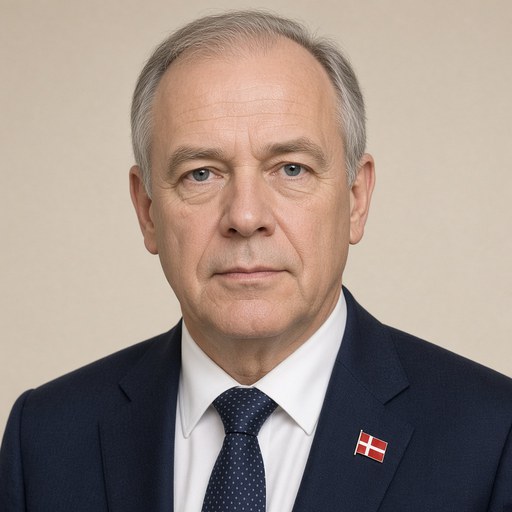
Prime Minister Poul Nyrup Rasmussen's opening statement in the Folketing on Tuesday, October 7, 1997, at 12:00 PM.
 Poul Nyrup Rasmussen · Prime Minister of Denmark
- Context
- Rasmussen addressed the Folketing on October 7, 1997, delivering his opening statement for the new parliamentary session, outlining government priorities and the upcoming Amsterdam Treaty referendum.
- Main themes
- Amsterdam Treaty referendum, Danish economic progress, Denmark's role in Europe, foreign policy achievements, public service quality, family and children's education, environment and climate, business and labor market, immigration policy, NATO and OSCE, UN reform, Baltic Sea cooperation
- Duration
- ~49 min
- Words
- 5,861
- Sentences
- 416
- Readability
- 49
- Grade
- 9.3
- Syntax
- 2.53
- Vocabulary
- 2.08
Translated from Danish
The broad sphere of national life a sentence belongs to. Every sentence has an Arena, so it is the denominator the other indices are read against.
Other416 sentences in 242 paragraphs
Denmark makes a difference
Twenty-five years ago, a majority of the population said yes to Europe.
Eight years ago, people in Eastern Europe toppled the Berlin Wall to free democratic Europe.
Five years ago, Denmark had come to a standstill - with unemployment and debt, despair and inwardness. There was a lack of political will and faith that we could renew and develop Danish society.
Today we know that we could.
Three pieces of recent history. Together they form the basis for some crucial decisions about Denmark's future. Decisions that we must make during this session.
If we choose correctly and responsibly. If we hold on to our own societal values, we can give Denmark the best possible start to the 21st century.
Politics makes a difference. In four and a half years, Denmark has been transformed. Denmark is now on the rise. We have shown that we can.
Our path - the Danish path - is not a copy. It has not come by imitating or sheltering behind others. It has come because we wanted it. It is known and respected abroad.
The government has presented its vision 'Denmark 2005'. We want to equip Denmark and each individual citizen to cope in the new century.
The government is determined to maintain the trajectory of progress for Denmark. Not only for the benefit of those who can stand on their own. But for the entire Danish population.
For what good is it to secure a surplus on the balance of payments if there is a deficit in cohesion and a sense of community?
* * *
For the government, there are two overarching decisions in this session:
First: The referendum on the Amsterdam Treaty.
Second:
The necessary adjustment of the economy.
Along with these two overarching decisions, the government will take a number of initiatives. In my statement today, I will focus on five main areas that are central to our everyday lives:
1.
Quality in public service
2.
Family well-being and children's education
3.
Better environment and healthy food
4.
A dynamic business sector and labor market
5.
Consistent justice and immigration policy.
Denmark in Europe
In the larger international picture, we have shown in recent years that a small country - our country - can indeed make its mark. A country that makes a difference.
It has been a busy year for Denmark in foreign policy. A year with many milestones:
Summits in the EU, in the OSCE, and in NATO. Visits from the President of the United States. It was a year when Danish foreign policy received great recognition.
Also in the fight for human rights, Denmark will continue to be at the forefront. This has created great respect for Denmark in the world.
The 52nd session of the UN General Assembly is currently taking place. The world needs a strong and effective UN. This requires reforms. Denmark has given its full support to the UN Secretary-General. The UN should continue its active line for the clearance of anti-personnel mines in war-torn countries - so that refugees can return home and new flows of refugees can be avoided.
Denmark has been particularly active in shaping a number of international agreements on the environment. Now, at the UN's global climate meeting in Kyoto, we must reduce the man-made greenhouse effect and improve the planet's climate. Here too, Denmark will be one of the frontrunners.
Denmark has also been at the forefront on the international stage regarding the OSCE. This year, we have carried out a particularly active presidency. The OSCE has contributed decisively to keeping a number of conflicts in Eastern Europe under control and preventing others. Albania is a good example.
The NATO summit in Madrid earlier this year was a historic turning point for the organization's contribution to securing peace in Europe. A new foundation has been created with the decision on NATO's expansion and the historic agreement between Russia and NATO.
In the Baltic Sea region, it is the ambition of the Danes to see a Northern European region flourish - in culture, social patterns, employment, and economy. The government will use its presidency this year for the Baltic Sea Council to further accelerate cooperation.
The greatest immediate threat to peace in Europe remains the situation in the former Yugoslavia. Danish soldiers are making a great effort. If there is a need for Danish soldiers to remain in ex-Yugoslavia - even longer than previously planned - the government is positively inclined towards this.
* * *
In the upcoming parliamentary year, we will make a decision through a referendum about Denmark's position in Europe.
The government has learned from the referendums on June 2, 1992, and May 18, 1993 - we have learned, and we have listened. The Danes want to be part of Europe. Europe can also be part of Denmark - but only as a part.
For the government, it was crucial to reach a result in Amsterdam, where the Danish population could recognize the values that Danish society is built upon. We succeeded.
There are three reasons why the government will recommend that the Danish population vote yes in the upcoming referendum:
First: The Amsterdam Treaty is the very prerequisite for the expansion of the EU to also include the countries of Eastern and Central Europe. The prerequisite for a peaceful Europe - also for our children and grandchildren.
Second: The Amsterdam Treaty is better than the one we have. It is a clear advancement for the Danish priorities: Democracy, human rights, better cooperation on the environment and employment.
Third: The four Danish opt-outs remain intact and secured, as the government promised the Danish population.
The new treaty can be compared to new statutes for an association. But the EU is not an association where we should cooperate on just anything. We should cooperate on what is necessary. Cooperate on precisely the issues that we cannot solve individually.
In the new treaty, there are clear positions and goals. The fight against unemployment remains the primary responsibility of each individual country. But now we will learn from the mistakes of the past! Avoid exporting problems to each other in downturns and ensure that we create more employment in upturns.
The acid rain does not stop at Padborg. Old nuclear power plants in Eastern Europe are also our problem. With the new environmental provisions in the Amsterdam Treaty, we can better combat the pollution that crosses borders and secure our common environment.
Most importantly for Denmark and for our future is that the Amsterdam Treaty means that we can now begin the construction of a whole and undivided Europe.
Now we can extend a hand to the Eastern and Central European countries - including the three Baltic states - regarding future membership. No one should be left in uncertainty.
We must decide at the summit in December how the enlargement negotiations will be organized. There will not be a quarter or half enlargement process, but a coherent negotiation process that will stretch several years into the future.
Denmark is at the forefront when it comes to environmental support for Eastern Europe. We are the country that contributes the most, and the results for both them and us have been impressive. Especially in connection with the enlargement of the EU, it is important that the applicant countries meet environmental requirements. Denmark will actively assist with this.
We must help shape the development.
The principle of proximity is clearer than ever. A clearer line has been drawn between our own self-determination and what we want the EU to focus on. The development of the EU must proceed in a direction that the population feels secure about, and where the population sets the pace.
A yes in the upcoming referendum will outline a perspective for Denmark in Europe. A no will put Denmark on the sidelines. This is not what the government wants.
The government is already presenting today a bill on Denmark's accession to the Amsterdam Treaty. The referendum will take place on Thursday, May 28, 1998. There will be time for a thorough debate - both here in the Folketing and, not least, among the population.
Danish economy on track
Denmark is on the rise.
Hope and faith in the future have been restored. We have shown that we are a hardworking people. As long as we are given the chance. Danish companies have shown that they have the talent and strength to seize new challenges.
The government has laid new, better, and more stable frameworks through its economic policy - including reforms of the labor market and tax system.
We have better public service with less burdensome public expenses. We have a surplus in finances. Interest rates and inflation are historically low. There is a surplus on the balance of payments.
It is not the tailwind from outside that has put the Danish economy in good shape. Our largest trading partners, Germany and Sweden, are lagging behind. We have to look long around Europe to find other countries where things are going as well as in Denmark.
In many places here in the country, practically everyone is employed.
Where there were three young unemployed four years ago, today there is only one. In a few years, it will be difficult to find that one!
The new generation is being drawn into education and work. Today's youth are faced with opportunities that one must go back to the generation of the 60s and early 70s to find a match for.
With Denmark on the rise, we can look forward to a future where far fewer are relegated to passive support. Where everyone who can work actually gets a job.
That is the condition for us to gain the strength to quickly reduce the old debt. We have a strong obligation to ensure that the future of the new generation is not unreasonably burdened by old, unpaid bills. Both financial debt and environmental debt must be reduced.
The government will uncompromisingly maintain the course that has yielded such good results.
If one wants to maintain direction, one must have a firm hand on the wheel. If it goes too fast, one must ease off the accelerator a bit.
That is why the government today proposes a tightening of fiscal policy:
Right now, we are going a bit too fast.
Therefore, we will - as we have always said - promptly adjust the economic policy so that we maintain the right course and the right pace. We must not take even the slightest risk of ruining the good times.
We must prevent rather than repair when the damage has been done. We do not want the specter of inflation to be summoned again. We should not ramp up our consumption so quickly that we lose our surplus with respect to other countries.
We do not want to hesitate so long in doing the right thing that we are forced to trigger dramatic interventions like the potato cure in its time. We remember all too well how tens of thousands of jobs were lost. Many families experienced their homes going to foreclosure.
We do not need to brake hard. There should be no cuts in prosperity and welfare. 1998 will still be an even better year than 1997. But the pace of progress should be a little less hectic.
This time, the government will be proactive, adjust in time, and adjust socially reasonably to ensure long-term employment.
We will not attack people's ability to stay in their homes or buy a home.
But the increase in both private and public consumption in Denmark must be tempered next year.
Private consumption is by far the largest item in the budget of family Denmark, and it is currently rising a bit too much.
Therefore, there is a need for Danes to save a little more.
The government will therefore propose that we all set aside 1% of our salary for extra pension savings in ATP - the Labor Market Supplementary Pension. This will increase savings by 4 billion DKK.
To temper the loan-financed consumption here and now, the government proposes a temporary increase in the stamp duty on supplementary loans in owner-occupied homes. The increase does not include loans related to house sales or new construction.
Furthermore, the government will once again comb through the state budget with a fine-tooth comb with a view to saving an additional 2 billion DKK.
Finally, the government will propose tightening the rules for labor market availability as well as simplifying the area of adult and continuing education.
The proposals will not affect the benefits aimed at families with children, pensioners, and the sick. The government will reject proposals for cuts in municipal finances that hinder necessary improvements in hospitals, elderly care, childcare, and schools.
But the government assumes that municipal expenses next year do not develop faster than agreed upon in the summer.
The government's new initiatives should be seen in close connection with the already presented proposal for the finance bill for 1998. To achieve the necessary adjustment of the overall economy, the budget improvements included in the finance bill proposal must also be taken into account - including greater employer obligations for sick pay and tax adjustments.
* * *
I will now turn to the government's initiatives in five main areas.
* * *
Quality in public service
'Denmark 2005' is not a vision of dismantling the welfare state and letting market forces take care of everything.
It is, on the contrary, a vision of a Danish welfare state that is brought into the new century in a new, streamlined, and vibrant version. With even more people in work, fewer on transfers, and far less debt.
Total public expenditures already weigh much less on the economy of society than four years ago - especially because fewer people are relegated to living on transfer income.
State operating expenses have not grown. Through effective prioritization, space has been created for new initiatives within unchanged budgets.
The vast majority of public employees are found in municipalities and regions and do a good job of delivering the core services of the welfare state: Nurseries, kindergartens, primary schools, high schools, home care, hospitals, nursing homes, etc.
These are all areas where Danes have a legitimate expectation of being offered services of decent quality.
But overly tight budgets in the years leading up to 1993 led to obvious service deficiencies and unacceptable waiting times.
We all remember the newspaper headlines and TV reports about the unsatisfactory conditions.
That is why municipalities and regions, in understanding and cooperation with the government, have spent more money and hired more people in a large-scale effort to solve the problems over the last four years.
However, the expenditure increases of recent years have occurred at a pace that cannot continue in the coming years. There is agreement on this between the government and the municipal organizations.
* * *
But it is equally clear that there will also be important new tasks to be solved and necessary service improvements to be implemented in the public sector in the years leading up to 2005.
Therefore, we must sharpen our attention everywhere in the public sector to whether resources and money are being used correctly. If there is rigid organization and bureaucratic thinking, then we must clean up.
The overriding consideration must be that citizens always receive quality and value for their tax kroner. They only get that when employees' talents are used in the best possible way, and they have inspiring working conditions.
* * *
The Parliament should not interfere in how municipalities solve their tasks. It should solely maintain that it is the elected representatives of the municipalities who have the political responsibility for financing, equal access, shorter waiting times, quality, and choices.
It is they who must assess whether private providers can offer citizens better service than the municipal system itself can. We must learn from each other across sectors - also between public and private.
* * *
But even with the most successful renewal of public service, there is no miracle that - as claimed by certain parties - can conjure up new double-digit billion savings in the short term.
* * *
Our hospitals must function well and without long waiting times. The counties have invested large sums over the past four years to approach this goal.
Much has been invested in new technology and modern treatment methods. At the same time, better information and the possibility to book 'appointments for treatment' - the so-called booking system - have been introduced.
We are now seeing the initial results in the form of shorter waiting times for treatment and surgery.
The free choice of hospital in the public sector is gradually becoming a reality. But we must continue down this path so that people who want faster treatment can get it by seeking another hospital where the waiting time is shorter.
We must not relax until the problems of the hospitals are resolved.
The government will follow up on the work of the hospital commission with analyses of our hospitals as service units. This will be done in collaboration with the hospital owners. Is the quality and production satisfactory? Are the right management tools in place? Is the interaction between the various staff groups as it should be? The government will discuss the results of this and possible initiatives with the hospital owners, hospital managements, and staff organizations.
When one is admitted to the hospital, one is often scared and worried. One is vulnerable in these situations. But patients also have rights. The government will propose measures that clarify and strengthen the legal status of patients.
It is about self-esteem and respect for the individual. It is about quality.
* * *
A number of areas will continue to require special attention. We owe it to fulfill the promises to those with wounded and vulnerable minds.
Both the care for psychiatric patients, the physical conditions in hospitals, and housing offers have been completely inadequate.
Now we are finally on the right track, again as a result of good cooperation between the state, counties, and municipalities.
* * *
The elderly have the right to a functioning healthcare system and a good supply of elder-friendly housing. Since 1993, the total number of elder housing units has increased. There has been a targeted effort to provide more elder housing to give the elderly the opportunity to maintain a life as close as possible to the one they have known.
For this to succeed, the elderly must receive proper help in their homes for cleaning, small practical tasks, and more personal matters. The help must be well-organized. It is important that what is promised is also delivered.
But there is a very large difference in how well home care is organized across the country. The elderly cannot benefit from that.
The government views positively that local options are offered to the elderly regarding practical help in the home.
Family well-being and children's education
Family and work life must fit together better. It is also good for children that their parents have jobs.
In the years 1993-1997, an additional 130,000 childcare places have been created in Danish municipalities.
But the fact that many more parents of small children have entered the workforce in recent years is a large part of the explanation for the tremendous growth in demand for public childcare.
The municipalities have achieved more than we believed was necessary four years ago for full coverage of the need. But there is still some way to go to the goal.
Many families with small children need a less stressful everyday life. The government will therefore encourage the labor market parties to discuss an expansion of access to part-time work for employees with small children.
The government will - as a contribution to greater equality in the responsibility for small children - propose a 2-week extension of paternity leave for men.
The government will discuss with the labor market parties the possibilities for making parental leave more flexible and discuss a change in the salaried employees' act so that pregnant women have access to full pay during illness.
In state workplaces, there will be offers of access to home workplaces.
Greater consideration for the needs of families with children will in itself promote equality between women and men. As part of strengthening equality, the government will propose changes to pension legislation so that women and men receive the same annual pension benefits.
* * *
Children are the key to the future. The school is the key to children's future. Our future is therefore largely determined by how the school is now.
The government has - within the good framework set by the Folkeskole Act - initiated a number of initiatives and trials to do things differently than we usually do:
Teachers, parents, municipalities, and politicians all have a responsibility for the quality of the public school.
We are all concerned that children learn to read, write, and calculate. And that they learn to use a computer. We cannot afford to give our children anything less than the best.
We must equip them all to continue their education. We are on the right track!
Never before has such a large proportion of a youth cohort been engaged in education. More places have been created in high schools, vocational schools, universities, and training institutions.
8 out of 10 are now engaged. In the year 2000, the goal is that it will be 9 out of 10.
The government's goal is to offer a good youth education for all - regardless of whether they choose vocational, theoretical, or a combination.
We must inspire more to choose a vocational education. Otherwise, there will be a shortage of craftsmen, etc., in the future labor market.
* * *
The government will initiate tripartite discussions with the labor market parties in the autumn.
We expect that the parties will also show responsibility during the spring collective bargaining negotiations so that we can maintain moderate cost increases and create as many new, additional jobs as possible.
We must discuss how we can jointly promote the development of an inclusive labor market where people with reduced work capacity can maintain or regain employment. We must make room for those who have not yet had a chance.
It is about the social responsibility of companies. 'Project workplace retention' is an important initiative in this regard.
Flex jobs must be expanded as a positive alternative to far too many being referred to early retirement.
We must also agree on an active senior policy, encouraging later and more gradual retirement. Workplaces will increasingly need to retain the experience of older employees.
Therefore, older employees must have real opportunities to reduce their working hours instead of completely withdrawing from the labor market.
* * *
But a long and good working life will only become a reality with a proper working environment.
The working environment is still not good enough. There is still wear and tear and far too many accidents in Danish workplaces. I will encourage companies and labor market parties to prioritize the working environment efforts highly. We must also be a leading country in this area.
In the last parliamentary session, the government had passed the bills that implement parts of the action program 'clean working environment by 2005'. The effort is now being strengthened. A reward scheme will be introduced for companies that make a special effort beyond the legal requirements to improve the working environment.
A better environment and healthy food
The government will continue its offensive environmental policy. We all have a responsibility to ensure that we do not pass on a negative environmental legacy to our children and grandchildren. The protection of water environments and groundwater must be improved. We will not accept that drinking water is contaminated and our fjords die from oxygen depletion. The regulation of agriculture's use of fertilizers has not been good enough. There must be better utilization of animal manure, and nature restoration must be strengthened.
The government will propose legislation this parliamentary year to introduce a nitrogen tax.
Much has been done, but not enough.
The government has banned 170 of the most environmentally harmful pesticides over the past two years. But we have not achieved the goals in the pesticide action plan. Therefore, there is a need for tightening up. The government will propose legislation for a significant increase in the pesticide tax.
Sustainable agriculture, clean water, and healthy food are three sides of the same coin. Denmark must be at the forefront of quality requirements. The government will lay the foundation for a new and simplified food legislation in this session. This will strengthen quality work and create transparency in production.
Consumers must be able to trust that the food they buy is healthy and clean. We will not accept disease-causing bacteria in our food. The quality of our food also depends on animal welfare. The consumption of medicine must be reduced. The government will tighten control over the use of veterinary medicine.
A dynamic business community and labor market
The labor market in Denmark functions much more smoothly than elsewhere in Europe - and much better than a few years ago.
This is a significant part of the background for the uniquely strong growth in Danish employment that has so far been able to coexist with low inflation.
We have maintained - and we will maintain - a good unemployment benefit system that not only provides employees with economic security during unemployment but also relieves companies of the costs associated with long notice periods.
Labor market reforms have since provided people with security and strength in change - with clear rights and obligations for the unemployed to get back to work.
We have massively increased the effort for further education and activation of the unemployed. The youth initiative has been an unequivocal success.
The effort for the long-term unemployed has become increasingly ambitious.
Short-term and often perspective-less job training is being replaced more and more by education and pool jobs that have prospects both for the individual and for society.
One example is the initiative that has now started to ensure employees who can help with monitoring at stations and in S-trains.
With the new and much better employment in our society, there is a need for individuals to be ready to move. To take on new challenges. To change industries. To relocate or move for new job opportunities.
With Denmark progressing, we still experience a shortage of certain qualifications in some areas while high unemployment exists in others.
The government will therefore propose that the unemployed, after 6 months, can be directed to - and must seek - reasonable work also outside their previous field of expertise.
In addition, adjustments to the rules on geographical mobility, relocation assistance, graduates, and activation are proposed.
The establishment benefit will be abolished.
Finally, we will ensure that the unemployed's use of educational leave is more closely linked to an action plan that strengthens their opportunities for new employment.
The government wants to simplify and better utilize further education opportunities. Therefore, it is proposed that user fees for vocational further education AMU courses be abolished.
We will encourage employers to think more long-term and offensively, and therefore use educational leave much more to upskill their employees.
Danish businesses have experienced strong growth in recent years.
Nearly 100,000 more employees, significantly improved profits, record-high stock prices, and a record low number of bankruptcies are the visible results.
The progress is a reflection of good and forward-looking management in many companies.
With the progress also comes a product of an economic policy that has supported the needs of businesses for good market development, stable wage growth, low interest rates, a well-educated workforce, a good research environment, active business policy, and good infrastructure development.
The government has also taken a number of initiatives in recent years to reduce administrative burdens for businesses. Especially smaller companies have had a long range of fees and charges abolished.
The government is now launching a project that will ensure that by the end of 1998, companies can switch to electronic reporting of annual and tax accounts, statistical information, etc.
The government will also provide smaller companies with significant administrative relief by establishing easy and inexpensive access to transfer administrative tasks to specialized service companies.
The government will strengthen cooperation between businesses and research institutions. Not least to strengthen Denmark's positions in the IT field. The effort in higher IT education must be increased in collaboration with businesses.
* * *
A consistent justice and immigration policy
Citizens have the right to effective law enforcement.
Society must therefore be sufficiently equipped for effective action, whether it concerns gangs, drugs, street gangs, serious violence, petty theft, corporate fraud, organized crime, or environmental crimes.
The police must have the strength and technology to visibly and effectively contribute to citizens' safety and the fight against crime. Where there are increasing problems, there must also be an extra police effort and swift prosecution.
Since the multi-year agreement from 1995, the police have been given unforeseen and labor-intensive additional tasks.
The government will therefore invite the parties to the agreement to negotiations on adjustments to the police agreement.
* * *
The government will furthermore take the initiative for the necessary expansion of prisons so that 'negatively strong prisoners' can be securely isolated.
The independence and special position of the courts must be strengthened. The proposal for a comprehensive court reform will therefore be reintroduced already next week. This also applies to the government's proposal for greater transparency regarding judges' secondary jobs.
The Minister of Justice will provide a report to the Parliament on reducing waiting times in the justice system.
The principle of public access has been misused to pursue and harass public employees. The government will present a bill that limits access to documents in personnel cases to create greater legal security for the employees. Just because one is a public employee does not mean one should be publicly exposed.
* * *
The government will maintain a refugee policy that is based on both humanity and consequences.
We must - in accordance with our international obligations - welcome those who come here fleeing civil war and persecution in their home country.
But the more we can lend a hand to peace and progress in their homeland and pave the way for them to return safely, the more we can help in the best possible way.
We must combat human trafficking and prevent illegal immigration from safe countries with even greater efficiency.
For those who are granted legal residence here in the country, we must set higher demands:
The previous integration of foreigners has not been good enough. There has been far too much focus on clientelism and passive support.
The government will present proposals for a completely new integration law that includes both refugees and newly reunited immigrants.
The aim is for newcomers to have the right and obligation to find a place in the labor market and support themselves. More money should be spent on getting refugees and immigrants into work and less on welfare.
It is being considered to make permanent residence something that is not automatically granted after three years, but something one must qualify for through targeted efforts: By integrating into Danish society, learning the language, avoiding accumulating significant debt to the public sector, and avoiding crime. Each foreigner will experience that there are requirements in Denmark. This will also create conditions for a more positive view of the foreigners who receive permanent residence in Denmark.
All of this must, of course, be done with respect for personal, cultural, and religious differences.
Rights and obligations in immigration policy also mean that we must combat the reluctance faced by immigrants in the Danish labor market.
The government has taken the initiative for state workplaces to live up to their responsibilities. But it is crucial that private companies and municipalities also show imagination and openness towards people with different backgrounds.
The Realm
The government emphasizes a close and trusting cooperation between all parts of the Realm.
The Faroese economy has undergone a positively developing trend in several respects over the past few years. Incomes have been rising, unemployment has been falling, emigration has reversed, and the treasury had a surplus in 1996. Surpluses are also budgeted for 1997 and 1998.
The government is pleased with the positive development, which we hope can continue in the years to come.
* * *
The government wishes the newly appointed Greenlandic government good luck with the upcoming work.
Greenland has experienced significant economic stability in recent years, despite considerable sensitivity to changes in fishing.
Resource management will, by agreement between the government and the government of Greenland, be transferred to the Greenland Home Rule. The administration will move to Nuuk under the responsibility of the government. The government hopes that there will be great opportunities in the resource sector in the future to benefit employment and incomes in Greenland.
Hold on
We know for sure that great changes are happening in our society.
But progress - understood as change for the better - is something we must fight for ourselves. If we, as responsible politicians, are to maintain the trust of the population, we must show the will to find new and better answers.
I have outlined our visions and goals for 'Denmark 2005' - and for the course we will insist on to achieve these goals.
I have talked about seven important areas for our common future.
I have discussed why we need to slow down a bit to move safely towards the goal. It is crucial for the government that we maintain coherence and pace in the necessary decisions. The will to do what is necessary.
The government will not be paralyzed by tactical maneuvers and irresponsible statements from elsewhere.
For paralysis only makes small problems grow large and serious problems become unsolvable.
In a situation where there is a need for some adjustment in consumption, it is not helpful to make grand promises about tax cuts - for which there is no coverage - or to propose unilateral cuts affecting the most disadvantaged in society, including those on pensions, early retirement, or unemployment benefits. The economic challenge must not be misused for ideological school fights. There is a task. It must be solved properly and sensibly so that the progress line of the last five years can continue.
The population has entrusted us - the Parliament and the government - with a very great responsibility.
Let us not fail this responsibility.
The government, as a minority government, has achieved all its results in cooperation with others. The path of cooperation is the Danish way. Cooperation is necessary if the goals are to be reached. Between the parties in the Parliament, between the government and the municipalities, and between businesses and society.
Denmark is progressing. This must be maintained.
May I suggest that we begin the work of the Parliament with a toast to Denmark.
LONG LIVE DENMARK!
The original Danish. The tags above are read on the English translation's sentences.
Danmark gør en forskel
For 25 år siden sagde et flertal i befolkningen ja til Europa.
For 8 år siden væltede folk i Østeuropa Berlin-muren til det frie demokratiske Europa.
For 5 år siden var Danmark gået i stå - med arbejdsløshed og gældssætning, modløshed og indadvendthed. Der manglede politisk vilje og tro på, at vi kunne forny og udvikle det danske samfund.
I dag ved vi at vi kunne.
Tre stykker nyere historie. Tilsammen danner de afsæt for nogle afgørende beslutninger om Danmarks fremtid. Beslutninger, som vi skal træffe i løbet af denne samling.
Vælger vi rigtigt og ansvarligt. Holder vi fast i vore egne samfundsværdier, så kan vi give Danmark den bedst tænkelige start på det 21. århundrede.
Politik gør en forskel. På fire et halvt år er Danmark som forvandlet. Danmark er nu i fremgang. Vi har vist, at vi godt kan.
Vores vej - den danske vej - er ikke en kopi. Den er ikke kommet ved at efterligne eller ligge i læ af andre. Den er kommet, fordi vi ville det. Den er kendt og respekteret i udlandet.
Regeringen har fremlagt sin vision 'Danmark 2005'. Vi vil ruste Danmark og hver enkelt borger til at klare sig i det nye århundrede.
Regeringen er fast besluttet på at fastholde fremgangslinien for Danmark. Ikke alene til gavn for dem, der kan selv. Men for hele den danske befolkning.
For hvad hjælper det, at der sikres overskud på betalingsbalancen, hvis der er underskud på samhørighed og fællesskabsfølelse.
* * *
For regeringen er der to overordnede beslutninger i denne samling:
For det første: Folkeafstemningen om Amsterdam-traktaten.
For det andet:
Den nødvendige justering af økonomien.
Sammen med disse to overordnede beslutninger vil regeringen tage en række initiativer. Jeg vil i min redegørelse i dag samle mig om fem hovedområder, der er centrale for vores hverdag:
1.
Kvalitet i den offentlige service
2.
Familiens trivsel og børnenes uddannelse
3.
Bedre miljø og sunde fødevarer
4.
Et dynamisk erhvervsliv og arbejdsmarked
5.
Konsekvent rets- og udlændinge politik.
Danmark i Europa
I det store internationale billede har vi i de senere år vist, at et lille land - vort land - godt kan gøre sig gældende. Et land, der gør en forskel.
Det har været et travlt år for Danmark i udenrigspolitikken. Et år med mange milepæle:
Topmøder i EU, i OSCE og i NATO. Besøg af USAs præsident. Det var et år, hvor dansk udenrigspolitik høstede stor anerkendelse.
Også i kampen for menneskerettigheder vil Danmark fortsat være i front. Det har skabt stor respekt om Danmark i verden.
FN’s 52. generalforsamling afholdes i denne tid. Verden har brug for et stærkt og effektivt FN. Det kræver reformer. Danmark har givet FN’s generalsekretær sin fulde støtte. FN bør fortsætte sin aktive linie for rydning af antipersonelminer i krigsplagede lande - så flygtninge kan vende hjem og nye flygtningestrømme kan undgås.
Danmark har været særdeles aktiv i udformningen af en række internationale aftaler om miljøet. Nu gælder det på FN’s globale klimamøde i Kyoto, at mindske den menneskeskabte drivhuseffekt og forbedre klodens klima. Også her vil Danmark være en af frontløberne.
Danmark har også været i front på den internationale scene, når det gælder OSCE. Vi har i år udfoldet et særdeles aktivt formandskab. OSCE har bidraget afgørende til, at vi i Østeuropa kan holde en række konflikter nede og forebygge andre. Albanien er det gode eksempel.
NATO-topmødet i Madrid tidligere på året var et historisk vendepunkt for organisationens bidrag til sikring af freden i Europa. Et nyt fundament er skabt med beslutningen om NATO’s udvidelse og den historiske aftale mellem Rusland og NATO.
I Østersø-området er det danskernes ambition, at se en nordeuropæisk region blomstre - i kultur, samfundsmønster, beskæftigelse og økonomi. Regeringen vil bruge sit formandskab i år for Østersø-rådet til at sætte yderligere skub i samarbejdet.
Den største umiddelbare trussel mod freden i Europa er stadig situationen i det tidligere Jugoslavien. Danske soldater gør en stor indsats. Hvis der bliver behov for, at danske soldater bliver i ex-Jugoslavien - også længere end hidtil planlagt, - så er regeringen positivt stemt herfor
* * *
I det kommende folketingsår skal vi ved en folkeafstemning træffe beslutning om Danmarks placering i Europa.
Regeringen har lært af folkeafstemningen den 2. juni 1992 og den 18. maj 1993 - vi har lært, og vi har lyttet. Danskerne vil godt være en del af Europa. Europa må også godt være en del af Danmark - men også kun en del.
For regeringen var det afgørende at nå et resultat i Amsterdam, hvor den danske befolkning kunne genkende de værdier, samfundet i Danmark bygger på. Det lykkedes.
Der er tre grunde til, at regeringen vil anbefale den danske befolkning at stemme ja ved den kommende folkeafstemning:
For det første: Amsterdam-traktaten er selve forudsætningen for udvidelsen af EU til også at omfatte landene i Øst- og Centraleuropa. Forudsætningen for et fredeligt Europa - også for vore børn og børnebørn.
For det andet: Amsterdam-traktaten er bedre, end den vi har. Den er et klart fremskridt for de danske mærkesager: Demokrati, menneskerettigheder, bedre samarbejde om miljø og beskæftigelse.
For det tredje: De fire danske forbehold står intakte og sikrede, som regeringen lovede den danske befolkning.
Den nye traktat er jo at sammenligne med nye vedtægter for en forening. Men EU er ikke en forening, hvor vi skal samarbejde om hvad som helst. Vi skal samarbejde om det nødvendige. Samarbejde om præcis de spørgsmål, vi ikke kan løse hver for sig.
I den ny traktat er der klare holdninger og mål . Kampen mod arbejdsløshed er fortsat hvert enkelt lands hovedansvar. Men nu vil vi tage ved lære af fortidens fejl! Undgå, at vi eksporterer problemer til hinanden i nedgangstider og sikre, at vi får mere beskæftigelse i opgangstider.
Syreregnen standser ikke i Padborg. Gamle atomkraftværker i Østeuropa er også vores problem. Med de nye miljøbestemmelser i Amsterdam-traktaten kan vi bedre bekæmpe den forurening, der kommer over grænserne, og sikre vores fælles miljø.
Allervigtigst for Danmark og for vores fremtid er, at Amsterdam-traktaten betyder, at vi nu kan begynde opbygningen af et helt og udelt Europa.
Nu kan vi give de øst- og centraleuropæiske lande - herunder de tre baltiske - et håndslag om kommende medlemskab. Ingen skal efterlades i usikkerhed.
Vi skal på topmødet i december træffe beslutning om, hvordan udvidelsesforhandlingerne tilrettelægges. Der bliver ikke tale om en kvart eller halv udvidelsesproces, men om en sammenhængende forhandlingsproces, der vil strække sig en del år ud i fremtiden.
Danmark er forrest, når det gælder miljøstøtten til Østeuropa. Vi er det land, der bidrager mest, og resultaterne både for dem og os har været imponerende. Ikke mindst i forbindelse med udvidelsen af EU er det vigtigt, at ansøgerlandene lever op til miljøkravene. Det vil Danmark aktivt hjælpe med til.
Vi skal være med til at sætte præg på udviklingen.
Nærhedsprincippet står tydeligere end før. Der er trukket en klarere streg mellem vores egen selvbestemmelse og det, vi ønsker, at EU skal samle sig om. EU’s udvikling skal ske i en retning, som befolkningen føler sig tryg ved, og hvor befolkningen sætter tempoet.
Et ja ved den kommende folkeafstemning vil tegne et perspektiv for Danmark i Europa. Et nej vil sætte Danmark på sidelinien. Det ønsker regeringen ikke.
Regeringen fremlægger allerede i dag lovforslag om Danmarks tilslutning til Amsterdam-traktaten. Folkeafstemningen vil finde sted torsdag 28. maj 1998. Der bliver tid til en grundig debat - både her i Folketinget og ikke mindst i befolkningen.
Dansk økonomi på sporet
Danmark er i fremgang.
Håbet og troen på fremtiden er genskabt. Vi har vist, at vi er et flittigt folk. Når bare vi får chancen. Danske virksomheder har vist, at de har talent og styrke til at gribe nye udfordringer.
Regeringen har gennem sin økonomiske politik - med bl.a. reformerne af arbejdsmarked og skattesystem - lagt nye, bedre og mere stabile rammer.
Vi har bedre offentlig service med mindre tyngende offentlige udgifter. Vi har overskud på finanserne. Renten og inflationen er historisk lav. Der er overskud på betalingsbalancen.
Det er ikke medvinden udefra, der har bragt dansk økonomi i god form. Vore største handelspartnere Tyskland og Sverige halter bagud. Vi skal lede længe rundt i Europa for at finde andre lande, hvor det går lige så godt som i Danmark.
Mange steder her i landet er praktisk talt alle i arbejde.
Hver gang der for fire år siden var 3 unge arbejdsløse, er der i dag kun én. Om få år vil det være svært at finde den ene!
Den nye generation suges ind i uddannelse og i arbejde. Dagens unge stilles over for muligheder, som man skal tilbage til 60’ernes og de tidlige 70’eres generation af unge for at finde mage til.
Med Danmark i fremgang kan vi se ind i en fremtid, hvor langt færre er henvist til passiv forsørgelse. Hvor alle, der kan arbejde, faktisk kommer i arbejde.
Dét er betingelsen for, at vi kan få kraft til hurtigt at nedbringe den gamle gæld. Vi har en stærk forpligtelse til at sikre, at den nye generations fremtid ikke skal tynges urimeligt af gamle, ubetalte regninger. Både pengegælden og miljøgælden skal ned.
Regeringen vil kompromisløst fastholde den kurs, der har givet så gode resultater.
Vil man holde retningen, skal man have en fast hånd på rattet. Går det for hurtigt, må man lette lidt på speederen.
Det er derfor, regeringen i dag foreslår en opstramning af finanspolitikken:
Lige nu kører vi lidt for hurtigt.
Derfor vil vi - som vi hele tiden har sagt - ufortøvet justere den økonomiske politik, så vi holder ret kurs og ret tempo. Vi må ikke løbe selv den mindste risiko for at ødelægge de gode tider.
Vi må forebygge i stedet for at reparere når skaden er sket.Vi vil ikke have inflationsspøgelset manet frem igen. Vi skal ikke skrue vort forbrug så hurtigt i vejret, at vi mister overskuddet over for udlandet.
Vi vil ikke tøve så længe med at gøre det rigtige, at vi bliver tvunget til at udløse dramatiske indgreb som kartoffelkuren i sin tid. Vi husker alt for godt, hvordan titusinder af arbejdspladser gik tabt. Mange familier oplevede, at deres hus gik på tvangsauktion.
Vi har ikke brug for at bremse hårdt op. Der skal ikke skæres i velstand og velfærd. 1998 bliver stadigvæk et endnu bedre år end 1997. Men tempoet i fremgangen skal være en anelse mindre hektisk.
Denne gang vil regeringen være på forkant, justere i tide, og justere socialt rimeligt for at sikre beskæftigelsen på lang sigt.
Vi vil ikke angribe menneskers mulighed for at blive i deres bolig eller købe sig en bolig.
Men stigningen i både det private og det offentlige forbrug i Danmark må dæmpes næste år.
Privatforbruget er langt den største post i familien Danmarks budget, og det stiger lidt for meget i øjeblikket.
Derfor er der brug for, at danskerne sparer lidt mere op.
Regeringen vil derfor foreslå, at vi alle i 1998 lægger 1% af lønnen til side til ekstra pensionsopsparing i ATP - Arbejdsmarkedets Tillægspension. Det øger opsparingen med 4 mia.kr.
For at dæmpe det lånefinansierede forbrug her og nu foreslår regeringen en midlertidig forhøjelse af stempelafgiften på tillægslån i ejerboliger. Forhøjelsen omfatter ikke lån i forbindelse med hussalg eller nybyggeri.
Endvidere vil regeringen på ny gennemgå statsbudgettet med tættekam med henblik på at spare ekstra 2 mia.kr.
Endelig vil regeringen foreslå opstramninger i arbejdsmarkedets rådighedsregler samt en forenkling af voksen- og efteruddannelses-området.
Forslagene vil ikke ramme de ydelser, der retter sig mod børnefamilier, pensionister og syge. Regeringen vil afvise forslag om forringelser i kommunernes økonomi, der bremser nødvendige forbedringer i sygehuse, ældreomsorg, børnepasning og skole.
Men regeringen forudsætter, at de kommunale udgifter næste år ikke udvikler sig hurtigere end aftalt i sommer.
Regeringens nye initiativer skal ses i tæt sammenhæng med det allerede fremlagte forslag til finanslov for 1998. For at opnå den nødvendige justering af den samlede økonomi må også de budgetforbedringer indgå, der er indarbejdet i finanslovsforslaget - herunder større arbejdsgiverforpligtelse for sygedagpenge og afgiftsjusteringer.
* * *
Jeg vil nu vende mig til regeringens initiativer på fem hovedområder.
* * *
Kvalitet i offentlig service
'Danmark 2005' er ikke en vision om at nedbryde velfærdssamfundet og lade markedskræfterne klare det hele.
Det er tværtimod en vision om et dansk velfærdssamfund, der bringes ind i det nye århundrede i en ny, strømlinet og livskraftig udgave. Med endnu flere i arbejde, færre på overførsler og langt mindre gæld.
De samlede offentlige udgifter tynger allerede nu langt mindre i samfundets økonomi end for fire år siden - især fordi færre mennesker er henvist til at leve på overførselsindkomst.
De statslige driftsudgifter er ikke vokset. Ved effektiv prioritering er der inden for uændrede budgetter skabt plads til nye initiativer.
Langt de fleste offentligt ansatte findes ude i kommuner og amter og gør et godt arbejde for at levere velfærdssamfundets kerneydelser: Vuggestuer, børnehaver, folkeskole, gymnasier, hjemmehjælp, sygehuse, plejehjem osv.
Det er alt sammen områder, hvor danskerne har en berettiget forventning om at få tilbudt service af ordentlig kvalitet.
Men for stramme budgetter i årene frem til 1993 førte til åbenbare servicebrist og uacceptable ventetider.
Vi husker alle sammen avisoverskrifterne og TV-reportagerne om de utilfredsstillende forhold.
Derfor har kommuner og amter i forståelse og samarbejde med regeringen i de sidste 4 år brugt flere penge og ansat flere folk i et storstilet forsøg på at løse problemerne.
De sidste års udgiftsstigninger er imidlertid sket i et tempo, der ikke kan fortsætte i de kommende år. Det er der enighed om mellem regeringen og de kommunale organisationer.
* * *
Men det er ligeså klart, at der også i årene frem til 2005 vil være vigtige nye opgaver, der skal løses og nødvendige serviceforbedringer, der skal gennemføres i det offentlige.
Derfor må vi overalt i det offentlige skærpe vor opmærksomhed over for, om kræfterne og pengene bruges rigtigt. Er der stiv organisation og bureaukratisk tankegang, så skal der ryddes op.
Det helt overordnede hensyn må være, at borgerne altid får kvalitet og valuta for deres skattekroner. Dét får de kun, når medarbejdernes talenter bruges bedst muligt, og de har inspirerende arbejdsvilkår.
* * *
Folketinget bør ikke blande sig i, hvordan kommuner løser deres opgaver. Det bør alene fastholde, at det er kommunernes folkevalgte, der har det politiske ansvar for finansiering, lige adgang, kortere ventetid, kvalitet og valgmuligheder.
Det er dem, der må vurdere, om private leverandører kan yde borgerne en bedre service, end det kommunale system selv kan. Vi må lære af hinanden på tværs - også mellem offentlig og privat.
* * *
Men selv med den mest vellykkede fornyelse af den offentlige service, findes der intet mirakel, der - som det hævdes fra visse sider - på kort sigt kan fremtrylle nye tocifrede milliardbeløb i besparelser.
* * *
Vore sygehuse skal fungere godt og uden lange ventetider. Amterne har de sidste fire år satset store midler på at nærme sig dette mål.
Meget er investeret i ny teknik og moderne behandlingsmetoder. Samtidig er der kommet bedre information og mulighed for at bestille 'tid til behandling' - det såkaldte booking-system.
Vi ser nu de begyndende resultater i form af kortere ventetider til behandling og operation.
Det frie valg af sygehus i det offentlige er så småt ved at blive en realitet. Men vi skal videre ad denne vej, så mennesker der ønsker hurtigere behandling kan få det ved at opsøge et andet sygehus, hvor ventetiden er kortere.
Vi skal ikke slappe af, før sygehusenes problemer er løst.
Regeringen vil følge op på sygehuskommissionens arbejde med analyser af vore sygehuse som service-enheder. Det vil ske i samarbejde med sygehusejerne. Er kvalitet og produktion tilfredsstillende? Er de rigtige ledelsesredskaber til stede? Er samspillet mellem de enkelte personalegrupper, som det skal være? Regeringen vil drøfte resultatet heraf og mulige initiativer med sygehusejerne, sygehusledelserne og personaleorganisationerne.
Når man bliver indlagt på hospital, er man ofte bange og bekymret. Man er sårbar i disse situationer. Men patienter har også rettigheder. Regeringen vil fremsætte forslag, som samlet klargør og styrker patienternes retsstilling.
Det handler om selvværd og respekt for den enkelte. Det handler om kvalitet.
* * *
En række områder vil fortsat kræve særlig opmærksomhed. Vi skylder at indfri løfterne til dem med de sårede og sårbare sind.
Både omsorgen for de psykiatriske patienter, de fysiske rammer på sygehusene, og boligtilbuddene har været helt utilstrækkelige.
Nu er vi omsider på rette vej,- igen som resultat af et godt samarbejde mellem stat, amter og kommuner.
* * *
De ældre har krav på, at sundhedsvæsenet fungerer, og at der er god forsyning med ældrevenlige boliger. Siden 1993 er det samlede antal ældreboliger vokset. Der er satset målrettet på netop flere ældreboliger for at give de ældre mulighed for at opretholde en tilværelse, der ligger så tæt som mulig op af den de hidtil har kendt.
For at det skal lykkes, skal de ældre have ordentlig hjælp i deres hjem til rengøring, små praktiske gøremål og mere personlige ting. Hjælpen skal være veltilrettelagt. Det er vigtigt, at det, der bliver lovet, også bliver holdt.
Men der er meget stor forskel på, hvor godt hjemmehjælpen er organiseret udover landet. Det kan de ældre ikke være tjent med.
Regeringen ser positivt på, at der lokalt tilbydes de ældre valgmuligheder, når det gælder praktisk hjælp i hjemmet.
Familiens trivsel og børnenes uddannelse
Familie- og arbejdslivet skal hænge bedre sammen. Det er også godt for børnene, at deres forældre har arbejde.
Der er i årene 1993-1997 skaffet ekstra 130.000 børnepasningstilbud i danske kommuner.
Men det forhold, at mange flere småbørnsforældre er kommet i arbejde de seneste år, er en stor del af forklaringen på den voldsomme vækst i efterspørgslen efter offentlig børnepasning.
Kommunerne har udrettet mere, end vi for fire år siden troede var nødvendigt for fuld dækning af behovet. Men der er endnu et stykke vej til målet.
Mange småbørnsfamilier har brug for en mindre stresset hverdag. Regeringen vil derfor opfordre arbejdsmarkedets parter til at drøfte en udvidelse af adgangen til deltidsarbejde for ansatte med små børn.
Regeringen vil - som bidrag til større ligestilling i ansvaret for småbørnene - komme med forslag om en 2 ugers forlængelse af barselsorloven for mænd.
Regeringen vil med arbejdsmarkedets parter drøfte mulighederne for en smidiggørelse af børnepasningsorloven samt drøfte en ændring af funktionærloven, så gravide får adgang til fuld løn under sygdom.
På de statslige arbejdspladser vil der blive givet tilbud om adgang til hjemmearbejdspladser.
Større hensyn til børnefamiliernes behov vil i sig selv fremme ligestillingen mellem kvinder og mænd. Som led i styrkelse af ligestillingen vil regeringen forslå at ændre pensionslovgivningen, således at kvinder og mænd får udbetalt samme årlige pensionsydelser.
* * *
Børnene er nøglen til fremtiden. Skolen er nøglen til børnenes fremtid. Vores fremtid afgøres derfor i høj grad af, hvordan skolen er nu.
Regeringen har - indenfor de gode rammer, folkeskoleloven angiver - igangsat en lang række initiativer og forsøg med at gøre tingene anderledes, end vi plejer:
Lærere, forældre, kommuner, politikere har alle et ansvar for kvaliteten i folkeskolen.
Vi er alle optaget af, at børnene lærer at læse, skrive og regne. Og at de lærer at bruge en computer. Vi kan ikke være bekendt at give vore børn mindre end det bedste.
Vi skal ruste dem alle til at uddanne sig videre. Vi er på rette vej!
Aldrig før har så stor en del af en ungdomsårgang været i gang med en uddannelse. Der er skabt flere pladser på gymnasier, erhvervsskoler, universiteter og læreanstalter.
8 ud af 10 er nu i gang. I år 2000 er målet, at det er 9 ud af 10.
Regeringens mål er tilbud om en god ungdomsuddannelse for alle -uanset om de vælger fagligt, teoretisk eller en kombination.
Vi skal inspirere til, at flere vælger en faglig uddannelse. Ellers bliver der mangel på håndværkere m.fl. på fremtidens arbejdsmarked.
* * *
Regeringen vil i efteråret indlede trepartsdrøftelser med arbejdsmarkedets parter.
Vi forventer, at parterne også ved forårets overenskomstforhandlinger vil vise ansvarlighed, så vi kan fastholde moderate omkostningsstigninger og skabe flest mulige nye, ekstra job.
Vi skal drøfte, hvordan vi i fællesskab kan fremme udviklingen af et rummeligt arbejdsmarked, hvor mennesker med nedsat arbejdsevne kan fastholde eller genvinde beskæftigelse. Vi skal give plads for dem, der endnu ikke har fået en chance.
Det handler om virksomhedernes sociale ansvar. 'Projekt arbejdsplads-fastholdelse' er et vigtigt intiativ her.
Fleksjob skal udbredes som et positivt alternativ til, at alt for mange henvises til førtidspension.
Vi skal også enes om en aktiv senior politik, tilskynde til en senere og mere gradvis tilbagetrækning. Arbejdspladserne får i stigende grad brug for at bevare de ældres erfaringer.
Derfor skal de ældre have reelle muligheder for at gå ned i arbejdstid fremfor helt at trække sig ud af arbejdsmarkedet.
* * *
Men et langt og godt arbejdsliv bliver kun en realitet med et ordentligt arbejdsmiljø.
Arbejdsmiljøet er stadig ikke godt nok. Der sker fortsat nedslidning og alt for mange ulykker på de danske arbejdspladser. Jeg vil opfordre virksomhederne og arbejdsmarkedets parter til at prioritere arbejdsmiljøindsatsen højt. Vi skal også være foregangsland på dette område.
I sidste folketingssamling fik regeringen vedtaget de lovforslag, der udmønter dele af handlingsprogrammet 'rent arbejdsmiljø år 2005'. Indsatsen forstærkes nu. Der indføres en belønningsordning for virksomheder, der gør en særlig indsats ud over lovens krav for at forbedre arbejdsmiljøet.
Et bedre miljø og sunde fødevarer
Regeringen vil fortsætte sin offensive miljøpolitik. Vi har alle et ansvar for, at vi ikke videregiver en negativ miljøarv til vores børn og børnebørn. Beskyttelsen af vandmiljøet og grundvandet skal være bedre. Vi vil ikke acceptere, at drikkevandet forurenes og vore fjorde dør af iltsvind. Reguleringen af landbrugets brug af gødning har ikke været god nok. Der skal ske en bedre udnyttelse af husdyrgødningen og naturgenopretningen skal forstærkes.
Regeringen vil i dette folketingsår fremsætte lovforslag om indførelse af en kvælstofsafgift.
Der er gjort meget, men ikke nok.
Regeringen har de to sidste år forbudt 170 af de mest miljøbelastende pesticider. Men vi har ikke nået målene i pesticidhandlingsplanen. Der er derfor behov for at stramme op. Regeringen vil fremsætte lovforslag om en mærkbar forhøjelse af pesticidafgiften.
Bæredygtigt landbrug, rent vand og sunde fødevarer er tre sider af samme sag. Danmark skal være foran med kvalitetskravene. Regeringen vil i denne samling lægge fundamentet for en ny og forenklet fødevarelovgivning. Det skal styrke kvalitetsarbejdet og skabe gennemsigtighed i produktionen.
Forbrugerne skal kunne stole på, at de fødevarer, de køber er sunde og rene. Vi vil ikke acceptere sygdomsfremkaldende bakterier i vores mad. Kvaliteten af vores fødevarer afhænger også af dyrernes velfærd. Forbruget af medicin skal reduceres. Regeringen vil skærpe kontrollen med forbruget af veterinærmedicin.
Et dynamisk erhvervsliv og arbejdsmarked
Arbejdsmarkedet i Danmark fungerer langt mere smidigt end andre steder i Europa - og meget bedre end for få år siden.
Det er en væsentlig del af baggrunden for, at enestående stærk fremgang i dansk beskæftigelse hidtil har kunnet forenes med lav inflation.
Vi har bevaret - og vi vil bevare - et godt dagpengesystem, som ikke bare giver lønmodtagerne økonomisk tryghed under ledighed, men også fritager virksomhederne for omkostningerne ved lange opsigelsesvarsler.
Arbejdsmarkedsreformerne har siden givet mennesker tryghed og styrke i forandringen - med klare rettigheder og pligter for de ledige til at komme i gang igen.
Vi har massivt øget indsatsen for efteruddannelse og igangsætning af de ledige. Ungeindsatsen har været en entydig succes.
Indsatsen over for de langtidsledige er blevet stadig mere ambitiøs.
Kortvarig og ofte perspektivløs jobtræning erstattes mere og mere af uddannelse og af puljejob, der har perspektiv både for den enkelte og for samfundet.
Et enkelt eksempel er den indsats, der nu er gået i gang med at sørge for medarbejdere, der kan hjælpe med overvågning på stationer og i S-tog.
Med den ny og langt bedre beskæftigelse i vort samfund er der brug for, at den enkelte er parat til at bevæge sig. Tage nye udfordringer op. Flytte branche. Køre eller flytte efter nye jobmuligheder.
Med Danmark i fremgang oplever vi stadig mangel på bestemte kvalifikationer nogle steder samtidig med høj ledighed andre steder.
Regeringen vil derfor foreslå, at ledige fremover efter 6 måneder kan anvises - og skal søge - rimeligt arbejde også udenfor deres hidtidige fagområde.
Desuden foreslås justeringer i reglerne om geografisk mobilitet, flyttehjælp, dimittenter og aktivering.
Etableringsydelsen afskaffes.
Endelig vil vi sikre, at lediges brug af uddannelsesorlov i højere grad kobles til en handlingsplan, der styrker deres muligheder for at komme i ny beskæftigelse.
Regeringen ønsker, at efteruddannelsesmulighederne forenkler og udnyttes endnu bedre. Derfor foreslås, at brugerbetalingen på faglige efteruddannelser AMU-kurser - skal afskaffes.
Vi vil opfordre arbejdsgiverne til at tænke mere langsigtet og offensivt, og derfor bruge uddannelsesorloven langt mere til at opkvalificere deres medarbejdere.
Dansk erhvervsliv har de seneste år haft stærk fremgang.
Næsten 100.000 flere medarbejdere, stærkt forbedrede overskud, rekordhøje aktiekurser og et rekordlavt antal konkurser er de synlige resultater.
Fremgangen er udtryk for god og fremsynet ledelse i vældig mange virksomheder.
Med fremgangen er også et produkt af en økonomisk politik, der har understøttet erhvervenes behov for god markedsudvikling, rolig lønudvikling, lav rente, veluddannet medarbejderstab, godt forskningsmiljø, aktiv erhvervspolitik og god udbygning af infrastruktur.
Regeringen har desuden i de seneste år taget en række initiativer til at mindske administrative bryder for virksomhederne. Især mindre virksomheder har fået afskaffet en lang række gebyrer og afgifter.
Regeringen iværksætter nu et projekt, der inden udgangen af 1998 sikrer, at virksomhederne kan overgå til elektronisk indberetning af års- og skatteregnskab, statistiske oplysninger m.v.
Regeringen vil endvidere give mindre virksomheder en betydelig administrativ aflastning ved at etablere let og billig adgang til at overdrage administrative opgaver til specielle servicevirksomheder.
Regeringen vil styrke samarbejdet mellem virksomheder og forskningsinstitutioner. Ikke mindst for at styrke Danmarks positioner på IT-området. Indsatsen på de videregående IT-uddannelser skal øges i samarbejde med erhvervene.
* * *
En konsekvent rets- og udlændinge politik
Borgerne har krav på effektiv retshåndhævelse.
Samfundet skal derfor rustes tilstrækkeligt til effektiv indsats, hvad enten det gælder rockere, narko, gadebander, grov vold, simpelt tyveri, selskabstømning, bagmandsvirksomhed eller miljøforbrydelser.
Politiet skal have styrke og teknologi til synligt og effektivt at bidrage til borgernes tryghed og kriminalitetens bekæmpelse. Hvor der er stigende problemer, skal der også være en ekstra politiindsats og hurtig strafforfølgning.
Siden flerårsaftalen fra 1995 har politiet fået uforudsete og arbejdskrævende ekstra opgaver.
Regeringen vil derfor invitere forligspartierne til forhandling om justering af politiaftalen.
* * *
Regeringen vil endvidere tage initiativ til den fornødne udbygning af fængslerne, så de 'negativt stærke fanger' kan isoleres betryggende.
Domstolenes uafhængighed og særlige stilling skal styrkes. Forslaget til en omfattende domstolsreform vil derfor blive genfremsat allerede i næste uge. Det gælder også regeringens forslag om større åbenhed omkring dommeres bijob.
Justitsministeren vil afgive en redegørelse til folketinget om reduktion af ventetider i retssystemet.
Offentlighedssprincippet er blevet misbrugt til at forfølge og chikanere offentligt ansatte. Regeringen vil fremsætte lovforslag, der begrænser aktindsigten i personalesager for at skabe større retssikkerhed for de ansatte. Fordi man er offentlig ansat, skal man ikke være offentligt udhængt.
* * *
Regeringen vil fastholde en flygtningepolitik, der bygger på både humanisme og konsekvens.
Vi skal - i overensstemmelse med vore internationale forpligtelser - tage imod dem, der kommer hertil på flugt fra borgerkrig og forfølgelse i deres hjemland.
Men jo mere vi kan give en håndsrækning til fred og fremgang i deres hjemland og bane dem vejen for i sikkerhed at vende tilbage, - jo flere kan vi hjælpe på bedste vis.
Vi skal med endnu større effektivitet bekæmpe menneskesmugling og forhindre illegal indvandring fra sikre lande.
Til dem, der får lovligt ophold her i landet, skal vi stille større krav:
Den hidtidige integration af udlændinge har ikke været god nok. Der har i alt for høj grad været tale om klientgørelse og passiv forsørgelse.
Regeringen vil fremlægge forslag til en helt ny integrationslov, der både omfatter flygtninge og nye familiesammenførte indvandrere.
Sigtet er, at de nyankomne får ret og pligt til at finde en plads på arbejdsmarkedet og klare sig selv. Der skal bruges flere penge på at få flygtninge og indvandrere i arbejde og færre på underhold.
Det overvejes at gøre permanent opholdstilladelse til noget, der ikke gives automatisk efter 3 år, -men noget man skal kvalificere sig til gennem målrettet indsats: Ved at integrere sig i det danske samfund, lære sproget, undgå at stifte større gæld til det offentlige og undgå kriminalitet. Den enkelte udlænding vil opleve, at der stilles krav i Danmark. Det vil også skabe forudsætninger for et mere positivt syn på de udlændinge, der får permanent opholdstilladelse i Danmark.
Alt dette skal naturligvis ske i respekt for personlige, kulturelle og religiøse forskelle.
Ret og pligt i udlændingepolitikken betyder også, at vi skal bekæmpe den modvilje, der møder indvandrere på det danske arbejdsmarked.
Regeringen har taget initiativ til, at statens arbejdspladser lever op til deres ansvar. Men det er helt afgørende, at også de private virksomheder og kommunerne udviser fantasi og åbenhed overfor folk med anderledes baggrund.
Rigsfællesskabet
Regeringen lægger vægt på et nært og tillidsfuldt samarbejde mellem alle dele af Rigsfællesskabet.
Den færøske økonomi har gennem de seneste par år gennemgået en på flere punkter positiv udvikling. Indkomsterne har været stigende, arbejdsløsheden faldende, udvandringen er vendt og landskassen havde i 1996 overskud. Der budgetteres også med overskud i 1997 og 1998.
Regeringen glæder sig over den positive udvikling, som vi håber kan videreføres i årene fremover.
* * *
Regeringen ønsker det nytiltrådte grønlandske landsstyre held og lykke med det forestående arbejde.
Grønland har de seneste år været præget af stor økonomisk stabilitet - trods en betydelig følsomhed over for ændringer i fiskeriet.
Råstofforvaltningen skal efter aftale mellem regeringen og landsstyret overdrages til Grønlands Hjemmestyre. Administrationen flyttes til Nuuk under landsstyrets ansvar. Regeringen håber, at der fremover vil vise sig store muligheder på råstofområdet til gavn for beskæftigelsen og indkomsterne i Grønland.
Hold fast
Vi ved helt sikkert, at store forandringer sker i vores samfund.
Men fremskridt - forstået som forandring til noget bedre - dét er noget, vi selv skal kæmpe for. Hvis vi som ansvarlige politikere skal bevare befolkningens tillid, så skal vi vise vilje til at finde nye og bedre svar.
Jeg har redegjort for vore visioner og mål for 'Danmark 2005' - og for den kurs, vi vil insistere på for at nå disse mål.
Jeg har talt om syv vigtige områder for vores fælles fremtid.
Jeg har talt om, hvorfor vi skal sætte farten en anelse ned for at nå sikkert videre frem mod målet. Det er afgørende for regeringen, at vi fastholder helhed og tempo i de nødvendige beslutninger. Viljen til at gøre det nødvendige.
Regeringen vil ikke lade sig lamme af taktiske manøvrer og uansvarlige meldinger fra anden side.
For handlingslammelse får bare små problemer til at vokse sig store, og alvorlige problemer til at blive uløselige.
I en situation, hvor der er behov for en vis justering i forbruget, nytter det ikke at komme med store løfter om skattelettelser - som der ikke er dækning for - eller med forslag om ensidige nedskæringer over for samfundets dårligst stillede, bl.a. dem på pension, efterløn eller dagpenge. Den økonomiske udfordring må ikke misbruges til ideologiske skoleridt. Der er en opgave. Den skal løses ordentligt og fornuftigt, så de sidste fem års fremgangslinie kan fortsætte.
Befolkningen har betroet os - folketing og regering - et meget stort ansvar.
Lad os ikke svigte dette ansvar.
Regeringen har som mindretalsregering opnået alle sine resultater i samarbejde med andre. Samarbejdslinien er den danske vej. Der skal samarbejdes, hvis målene skal nås. Mellem partierne i Folketinget, mellem regering og kommunerne og mellem virksomhederne og samfundet.
Danmark er i fremgang. Det skal fastholdes.
Må jeg foreslå, at vi indleder Folketingets arbejde med at udbringe et leve for Danmark.
DANMARK LEVE!