




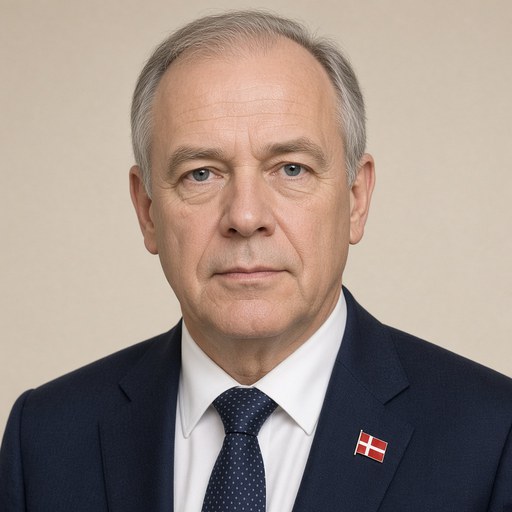
The Prime Minister's opening of the globalization conference on October 28, 1997.
 Poul Nyrup Rasmussen · Prime Minister of Denmark
- Context
- Rasmussen opened a government globalization conference in Denmark on October 28, 1997, addressing Denmark's response to global economic and technological change.
- Main themes
- Globalization and Denmark, information and knowledge society, telecommunications liberalization, Tele Danmark and Ameritech partnership, business competitiveness, technological change, governance levels and democracy, framework conditions for growth, challenges and opportunities of globalization
- Duration
- ~16 min
- Words
- 1,873
- Sentences
- 179
- Readability
- 38
- Grade
- 10.5
- Syntax
- 2.29
- Vocabulary
- 2.20
Translated from Danish
The broad sphere of national life a sentence belongs to. Every sentence has an Arena, so it is the denominator the other indices are read against.
Other179 sentences in 66 paragraphs
Keywords
Denmark in a Global World
Denmark is small. Denmark is flat. Denmark is the land of the Law of Jante. You know the spells.
Nevertheless, we know that the Danes are satisfied. The Danes are hardworking. The Danes are prosperous. Denmark is an international role model.
Things are interconnected. We are at the forefront, not because it has been inevitable, but because we have wanted it.
Why is globalization important to the government?
Globalization means a significantly increased exchange of goods, capital, technology, and ideas.
People's everyday lives and the forms of democracy have been globalized. Levels of governance/democracy levels - local (municipalities and counties), state (government and Parliament), regional Baltic cooperation, Øresund region, Danish-German border region, EU, UN. Each level solves its own tasks/division of labor.
Globalization connects the individual levels. Each and every level has a direct and indirect influence on each person's life and opportunities.
Globalization affects us all. Materially. Decision-wise. Emotionally.
Many are afraid of new technologies and globalization. This is quite understandable in itself. Globalization and technological development pose great challenges for society. But the development also holds many opportunities if we act sensibly and shape our policies accordingly.
In short: We must give people the opportunity to keep up.
Both advantages and disadvantages. Not all the insights we have accumulated over millennia have been to our benefit. Not all decisions are made where we would prefer or to our advantage. But overall, progress is a clear benefit. It is inherent in the word! The same applies to globalization.
Globalization and new technologies are well on their way to transforming the old industrial society into an information and knowledge society.
As a result of technology and its possibilities, rigid hierarchies and organizational structures are breaking down and being replaced by much more flexible, informal, and flat structures. Networks and cooperation between companies are being built - often across national borders.
It is crucial that Denmark has good conditions for a competitive and dynamic business environment, and for the continued development of new products and production methods. Danish companies will generally need to compete on quality and not on having the lowest wages. With quality in order, globalization means that the market prospects for Danish companies are significantly expanded.
The best example is probably the telecommunications sector. Therefore, I would also like to make a remark here about the sale of Tele Danmark.
In the telecommunications field, Denmark has taken the lead. We have been among the first to fully liberalize the telecommunications sector and have implemented the necessary legislation ahead of most of the rest of Europe.
We were also among the first to initiate the privatization of the large national telecommunications companies. This happened with the sale of 49 percent of the share capital in Tele Danmark in 1994. Many other countries are only now in this initial phase, and some have not even begun - including Sweden and Norway.
Being first out has given Denmark a good starting point to become one of the countries that can benefit the most from information and telecommunications technology for the benefit of businesses and consumers.
The agreement the government has reached with the American telecommunications company Ameritech for a partnership with Tele Danmark, which was announced yesterday, is a good example of how we adapt to globalization and the new market conditions. In a way that benefits the entire society.
It is an agreement with great prospects for Denmark.
Together, the two companies will be able to exploit the investment opportunities that are opening up in the rest of Europe as the liberalization of telecommunications markets reaches Danish levels. Denmark thus has the prospect of becoming a center for telecommunications development in Europe.
Tele Danmark is a large company by Danish standards, but a small company in the international telecommunications market. But we are not afraid that the partnership will swallow Tele Danmark. On the contrary, partnership and networks are the way for Danish companies to play a decisive role in the global markets. I believe the partnership between Tele Danmark and Ameritech will become one of the best examples of this.
The challenges are, in other words, significant. This is shown by the analyses we have conducted, which are summarized in the material that forms the basis for our conference today. We will not achieve continued success by sleeping.
What is the government doing? How should businesses respond?
Stability and Good Framework Conditions
Overall stability and good framework conditions. A prerequisite. We have come a long way since 1993, when Denmark was at a standstill. Now Denmark is on the rise.
The Minister of Finance and the Minister of Economic Affairs will elaborate on this point.
Active Labor Market and Social Policy
The labor market must function well and flexibly. So that employment can continue to rise. So that unemployment and the number of people on transfers continue to fall.
Just a few generations ago, it was normal to get a job after completing an apprenticeship. And to stay at the same workplace throughout life. The skills learned in youth were sufficient to remain a good workforce throughout life.
That is no longer the case. Development leads to greater changes in companies than before. Increased job switching is part of today's order. Continuous further education is becoming the norm.
There are significant changes in jobs, in demands for job switching, and in demands for education, which put modern workers under pressures that their parents did not know. This can create uncertainty. But it is a uncertainty that we can face if we are prepared.
The keywords are: Active labor market and social policy. Education, further and continuing education. Rights and obligations. More, better, and more targeted educational offerings. Better working environment 2005. Flex jobs. Senior policy.
Corporate Social Responsibility
Companies must live up to their social responsibility. Not at the expense of or undermining competitiveness. It is a competitive parameter. Just compare it to the environmental discussion 20 years ago.
The goal is retention in the labor market. In some cases, to ensure reattachment. The public sector can secure employment for part of the weaker group in the labor market. But not all of it. It is crucial that private companies contribute.
In the government, we will live up to our responsibility. Directly by retaining and hiring weaker employees. And indirectly by doing what we can to maintain and expand the flexibility of the rules for special employment conditions. And for the labor market in general.
IT, Research, and Education for the Future
The government has reallocated public spending. There is less for passive arrangements. More for self-help. To get started again. For activity. To ensure dynamism. For the future.
The most important investment in the future is investment in abilities, skills, and knowledge. In education. The quality must be top-notch, and everyone must be included. 90-95 percent of a youth cohort must complete a qualification-giving education. The business sector must also get involved here.
We are at the forefront of utilizing IT. We must continue to be. The prerequisite is that IT qualifications are in order.
Therefore, the government will establish at least 1,000 to 2,000 new educational places in IT in 1999 and 2000. This will happen in interaction with companies, and internships during the educational process must have a very prominent place in the educational process.
We will set goals for IT qualifications for students in primary schools and high schools. Introduce exams and tests in IT and evaluate IT teaching. After dialogue with the municipal parties, we will establish a goal for the IT equipment situation in high schools in 2002. So that high schools are on par with the high level of vocational schools.
The IT industry association has - with support from the Electronics Industry and Danish Industry - proposed the establishment of a 'Graduate School' that can ensure the education of highly qualified IT professionals.
The government would like to follow up on that idea.
This will happen through the establishment of an IT education center with 2-3 departments anchored in the strongest IT research and educational environments in Denmark. This will form the basis for new IT education and interdisciplinary collaboration on IT research. Current and future strategic initiatives in IT research and education are envisioned to be integrated within the center's framework.
The centers will be led by an independent board with participation from representatives of the IT industry.
In general, the goal is for the Danish education system to be among the best in the world. It is not bad today. But several things need to be improved:
The primary school must be strengthened and quality developed.
Most young people should in the future receive a qualification-giving education (90 percent), and half a higher education.
Young people should move more directly through the educational process, so we avoid convoluted paths. And so we avoid educational processes being completed at a high age. The means is better guidance and a more targeted effort towards the young.
Finally, collaboration between education, research, and business must be strengthened (e.g., ongoing further education).
International Cooperation
We must be present where decisions are made. We must take advantage of the opportunities that globalization and technology offer us.
The UN Social Summit in Copenhagen. New Partnership for Social Cohesion with the UN/EU/World Bank in Copenhagen at the beginning of this month.
The Amsterdam Treaty, which makes us better able to cooperate on the environment, employment, human rights, and combating fraud.
The Øresund region. The government has already taken a number of initiatives. Regional employment agreements, etc. We are working on a report that - as part of Denmark as a role model - outlines our visions for how we can unlock the strengths of the Øresund region. And we are already following up with the mapping of barriers to integration across the Øresund that the business sector has called for. The Minister of Business will coordinate the latter work. It is my hope that the business sector will contribute.
Conclusion
Mentally, we are already in the 21st century. Optimism and progress. New ideas are being generated. People are getting jobs.
Denmark has a good starting point to succeed in globalization. We are flexible. Well-educated. We are at the forefront of the IT wave. Denmark is socially and democratically cohesive. Geography matters less than before. But still: Denmark is located in a growth region. As the gateway to the Baltic Sea.
Nationally, the government has presented a long series of initiatives in 'Denmark 2005'/Denmark as a role model. Today, I have supplemented with additional concrete forward-looking initiatives (regional integration/barriers in the Øresund region, IT). To bring our country and our values well into the coming century.
Internationally, we actively participate on the fronts where it really matters. Øresund, the Baltic Sea, the Nordic countries, the EU, globally. The government's greatest wish for this year is to achieve a Danish yes to the continued work of healing Europe economically and culturally. The project of peace.
So we are building bridges. Not just between regions. To Sweden. To Europe and the world. We are building bridges to the future.
With this, I declare the conference open. With my best wishes for a creative and fruitful afternoon.
The original Danish. The tags above are read on the English translation's sentences.
Stikord
Danmark i en global verden
Danmark er lille. Danmark er fladt. Danmark er jantelovens land. I kender besværgelserne.
Ikke desto mindre ved vi, at danskerne er tilfredse. Danskerne er arbejdsomme. Danskerne er velstående. Danmark er et internationalt foregangsland.
Tingene hænger sammen. Vi er i front, ikke fordi det har været uundgåeligt, men fordi vi har villet det.
Hvorfor er globaliseringen vigtig for regeringen?
Globalisering betyder kraftigt forøget udveksling af varer, kapital, teknologi og ideer.
Menneskers hverdag og demokratiets former er blevet globaliseret. Styringsniveauer/demokratiniveauer - lokalt (primær- og amtskommuner), stat (regering og Folketing), regionalt østersøsamarbejde, øresundsregion, dansk-tysk grænseregion, EU, FN. Hvert niveau løser hver deres opgaver/arbejdsdeling.
Globalisering får de enkelte niveauer til at hænge sammen. Hvert eneste niveau har direkte og indirekte indflydelse på det enkelte menneskes liv og muligheder.
Globaliseringen berører os alle. Materielt. Beslutningsmæssigt. Følelsesmæssigt.
Mange er bange for de nye teknologier og globaliseringen. Det er i og for sig ganske forståeligt. Globaliseringen og den teknologiske udvikling rummer store udfordringer for samfundet. Men udviklingen rummer også mange muligheder, hvis vi bærer os fornuftigt ad og indretter vores politik efter det.
Kort sagt: Vi skal give menneskene mulighed for at følge med.
Både fordele og ulemper. Ikke al den indsigt, vi i årtusinder har oparbejdet, har været til vores gavn. Ikke alle beslutninger tages dér, hvor vi helst ville det eller til vores fordel. Men alt i alt er fremskridtet en klar fordel. Det ligger i ordet! Og det samme gælder globaliseringen.
Globaliseringen og de nye teknologier er godt i gang med at ændre det gamle industrisamfund til et informations- og videnssamfund.
Som følge af teknologien og dens muligheder brydes stive hierarkier og organisationsstrukturer ned og erstattes af langt mere fleksible, uformelle og flade strukturer. Netværk og samarbejde mellem virksomheder opbygges - ofte på tværs af landegrænser.
Det er afgørende, at der i Danmark er gode vilkår for et konkurrencepræget og dynamisk erhvervsliv, og for fortsat udvikling af nye produkter og produktionsmetoder. De danske virksomheder vil som regel skulle konkurrere på kvalitet og ikke på at have de laveste lønninger. Med kvaliteten er i orden, indebærer globaliseringen, at markedsperspektiverne for de danske virksomheder udvides markant.
Det bedste eksempel er nok telesektoren. Derfor vil jeg også godt her knytte en bemærkning til salget af Tele Danmark.
På teleområdet er Danmark gået foran. Vi har været nogle af de første til at liberalisere telesektoren fuldt ud, og har gennemført den nødvendige lovgivning før det meste af det øvrige Europa.
Vi var også blandt de første til at indlede privatiseringen af de store nationale teleselskaber. Det skete med salget af 49 pct. af aktiekapitalen i Tele Danmark i 1994. Mange andre lande er først i denne indledende fase nu, og en del er slet ikke begyndt - blandt andet i Sverige og Norge.
Det, at vi var først ude, har givet Danmark et godt udgangspunkt for at blive et af de lande, der kan drage størst nytte af informations- og teleteknologien til gavn for erhvervslivet og forbrugere.
Den aftale, regeringen har indgået med det amerikanske teleselskab Ameritech om partnerskab med Tele Danmark, og som blev offentliggjort i går, er et godt eksempel på, hvordan vi tilpasser os til globaliseringen og de nye markedsvilkår. På en måde som er til gavn for hele samfundet.
Det er en aftale med store perspektiver i for Danmark.
Sammen vil de to selskaber kunne udnytte de investeringsmuligheder, der åbner sig i resten af Europa i takt med, at liberaliseringen af telemarkederne når op på dansk niveau. Danmark har dermed udsigt til at kunne blive et center for teleudvikling i Europa.
Tele Danmark er en stor virksomhed efter dansk målestok, men et lille selskab på det internationale telemarked. Men vi er ikke bange for, at partnerskabet vil opsluge Tele Danmark. Tværtimod er partnerskab og netværk vejen til, at også danske virksomheder vil kunne spille en afgørende rolle på de globale markeder. Det tror jeg partnerskabet mellem Tele Danmark og Ameritech vil blive et af de bedste eksempler på.
Udfordringerne er med andre ord store. Det viser de analyser vi har gennemført, og som er opsummeret i materialet der danner baggrund for vores konference i dag. Vi kommer ikke sovende til fortsat succes.
Hvad gør regeringen? Hvordan bør erhvervslivet forholde sig?
Stabilitet og gode rammevilkår
Overordnet stabilitet og gode rammevilkår. En forudsætning. Kommet langt siden 1993, hvor Danmark var sat i stå. Nu er Danmark i fremgang.
Økonomiministeren og finansministeren vil uddybe på dette punkt.
Aktiv arbejdsmarkeds- og socialpolitik
Arbejdsmarkedet skal fungere godt og fleksibelt. Så beskæftigelsen kan fortsætte med at stige. Så ledigheden og antallet af mennesker på overførsler fortsætter med at falde.
For få generationer siden var det normale, at man fik job efter end læretid. Og at man blev på den samme arbejdsplads igennem livet. De kundskaber, man lærte i ungdommen, var nok til at forblive en god arbejdskraft livet igennem.
Sådan er det ikke længere. Udviklingen fører til større forandringer i virksomheder end tidligere. Øget jobskifte er en del af dagens orden. Fortsat efteruddannelse er ved at blive dagens orden.
Det er store ændringer i jobbet, i krav til jobskifte og krav til uddannelse, som sætter den moderne arbejdstager under et pres, som hans forældre ikke kendte til. Det
kan
give usikkerhed. Men det er en usikkerhed, som vi godt kan møde, hvis vi er forberedte.
Nøgleordene er: Aktiv arbejdsmarkeds- og socialpolitik. Uddannelse, efter- og videreuddannelse. Ret og pligt. Flere, bedre og mere målrettede uddannelsestilbud. Bedre arbejdsmiljø 2005. Fleksjobs. Seniorpolitik.
Virksomhedernes sociale ansvar
Virksomhedernes skal leve op til deres sociale ansvar. Ikke omkostning/underminering af konkurrenceevne. Det er en konkurrenceparameter. Sammenlign bare med miljødiskussionen for 20 år siden.
Målet er fastholdelse på arbejdsmarkedet. I nogle tilfælde at sikre tilknytning på ny. Det offentlige kan sikre en del af den svagere gruppe på arbejdsmarkedet beskæftigelse. Men ikke den hele. Afgørende at private virksomheder løfter med.
I regeringen vil vi leve op til vores ansvar. Direkte ved at fastholde og ansætte svagere medarbejdere. Og indirekte ved at gøre, hvad vi kan, for at bevare og udbygge fleksibiliteten i reglerne for de særlige ansættelsesforhold. Og for arbejdsmarkedet generelt.
IT, forskning og uddannelse for fremtiden
Regeringen har omprioriteret de offentlige udgifter. Der er blevet mindre til passive ordninger. Mere til hjælp til selvhjælp. Til at komme i gang igen. Til aktivitet. Til at sikre dynamik. Til fremtiden.
Den vigtigste investering i fremtiden er investering i evner, færdigheder og viden. I uddannelse. Kvaliteten skal være i top og alle skal med. 90-95 pct. af en ungdomsårgang skal gennemføre en kompetencegivende uddannelse. Erhvervslivet skal også på banen hér.
Vi er i front med udnyttelsen af IT. Det skal vi blive ved med at være. Forudsætningen er at IT kvalifikationerne er i orden.
Regeringen vil derfor i 1999 og år 2000 oprette mindst 1-2.000 nye uddannelsespladser inden for IT. Det skal ske i vekselvirkning med virksomhederne, og praktikophold under uddannelsesforløbet skal have en meget fremtrædende plads i uddannelsesforløbet.
Vi vil fastsætte mål for IT-kvalifikationer hos eleverne i folkeskolen og i gymnasierne. Indføre eksamen og prøver i IT og evaluere IT-undervisningen. Efter dialog med de kommunale parter vil vi opstille en målsætning for IT-udstyrssituationen i gymnasierne i 2002. Så gymnasierne ligestilles med erhvervsskolernes høje niveau.
IT-brancheforeningen har - med støtte i Elektronik Industrien og Dansk Industri foreslået, at der oprettes en 'Graduate School', der kan sikre uddannelsen af højt kvalificerede IT-folk.
Den idé vil regeringen gerne følge op på.
Det vil ske gennem
oprettelse af IT-uddannelsescenter med 2-3 afdelinger forankret i de stærkeste IT-forsknings- og uddannelmiljøer i Danmark. Det skal danne grundlag for nye IT-uddannelser og tværfagligt samarbejde om IT-forskning. Nuværende og fremtidige strategiske tiltag inden for IT-forskning og -uddannelse tænkes samlet inden for centrets rammer.
centrene skal ledes af en selvstændig bestyrelse med deltagelse af repræsentanter fra IT-branchen.
I det hele taget er målet, at det danske uddannelsessystem skal være blandt de bedste i verden. Det er ikke dårligt i dag. Men der skal rettes op på flere ting:
folkeskolen skal styrkes og kvalitetsudvikles.
de fleste unge bør fremover få en kompetencegivende uddannelse (90 pct.), og halvdelen en videregående uddannelse.
de unge skal mere direkte igennem uddannelsesforløbet, så vi undgår de krogede forløb. Og så vi undgår, at uddannelsesforløbene færdiggøres i en høj alder. Midlet er en bedre vejledning og en mere målrettet indsats over for de unge.
Endelig skal samarbejdet mellem uddannelse, forskning og erhvervsliv styrkes (f.eks. løbende efteruddannelse).
Internationalt samarbejde
Vi skal være med,hvor beslutningerne tages. Vi skal udnytte de muligheder globalisering og teknologi giver os.
FNs sociale topmøde i København. New Partnership for Social Cohesion med FN/EU/Verdensbanken i København i begyndelsen af denne måned.
Amsterdam-traktaten, der gør os bedre i stand til at samarbejde om miljø, beskæftigelse, menneskerettigheder, bekæmpelse af svig.
Øresundsregionen. Regeringen har allerede taget en række initiativer. Regional beskæftigelsespagt mv. Vi er på vej med en rapport, der - som led i Danmark som foregangsland - gør rede for vores visioner, for hvordan vi forløser Øresundsregionens styrkepositioner. Og vi følger allerede nu op med den kortlægning af barrierer for integration på tværs af Øresund, som erhvervslivet har efterlyst. Erhvervsministeren vil koordinere sidstnævnte arbejde. Det er mit håb at erhvervslivet vil bidrage.
Konklusion
Mentalt er vi allerede i 21. århundrede. Optimisme og fremskridt. Der tænkes nyt. Folk kommer i arbejde.
Danmark har godt udgangspunkt for at klare sig i globaliseringen. Vi er fleksible. Godt uddannede. Vi ligger forrest på IT-bølgen. Danmark hænger sammen socialt og demokratisk. Geografi betyder knap så meget som tidligere. Men alligevel: Danmark ligger i en vækstregion. Som porten til Østersøen.
Nationalt har regeringens fremlagt lang række initiativer i 'Danmark 2005'/Danmark som foregangsland. Jeg har i dag suppleret med yderligere konkrete fremadrettede initiativer (regional integration/barrierer i Øresundsregionen, IT). Skal bringe vores land og vores værdier godt ind i det kommende århundrede.
Internationalt deltager vi aktivt på de fronter hvor det virkelig betyder noget. Øresund, Østersø, Norden, EU, globalt. Regeringens største ønske for i år er at opnå et dansk ja til det fortsatte arbejde med at hele Europa økonomisk og kulturelt. Fredens projekt.
Vi bygger altså bro. Ikke blot mellem landsdelene. Til Sverige. Til Europa og verden. Vi bygger bro til fremtiden.
Hermed erklærer jeg konferencen for åben. Med mine bedste ønsker om idérig og udbytterig eftermiddag