




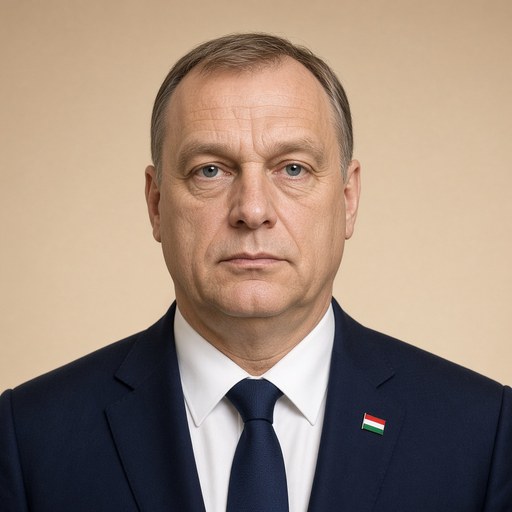
Viktor Orbán's doorstep statement following the informal meeting of the European Council.
 Viktor Orbán · Prime Minister of Hungary
- Context
- Orbán addressed journalists at a doorstep statement following an informal European Council summit in January 2026, discussing Ukraine funding, a new peace body, and Greenland tensions.
- Main themes
- Ukraine funding demand, EU debt financing, peace summit prospects, new peace organization, Greenland dispute, EU-US relations, NATO role, Budapest peace summit, EU member state divisions, transparency of EU documents
- Duration
- ~18 min
- Words
- 2,148
- Sentences
- 120
- Readability
- 63
- Grade
- 8.7
- Syntax
- 2.76
- Vocabulary
- 1.87
Translated from Hungarian
This is an interview, press conference or exchange with other speakers. It is split into sentences and counted in the corpus, but its sentences are not tagged on the twelve indices.
120 sentences in 34 paragraphs
How are you?
Thank you very much!
Was there any tangible result from this extraordinary summit?
Wait! I'm suddenly trying to figure out if what I saw here today is a result. What happened was that we received a paper, a document, which I don't think I'm authorized to disclose. We'll see what happens to it, which is about the acceptance of the Ukrainians' demand for 800 billion dollars. So there is a Ukrainian demand for the union to provide 800 billion dollars over the next ten years, and this is a document that says, okay, let it be so, and presents plans on how to generate this money, which essentially means going into debt. It splits it into 500 and 300 billion – first step, second step: and it also talks about the need for an additional 700 billion in military spending over the next ten years beyond the 800. I don't know if it's a result, but it was definitely a bombshell, as we thought until now that the Ukrainians had such a demand, and the union would perhaps try to backtrack or soften or reduce it. But no! Just as the demand came from Ukraine, they accepted it all.
Why is this secret?
There is a system of rules, so documents cannot just be made public; each has an authorized person, and only they can dispose of it. But, I suppose, this will happen because if the staff of 27 member states received it, then it won't remain a sweet secret of the 27 prime ministers. But this was not the main agenda item; it just sort of fell from the sky, but rather the peace council, essentially. So the confusion here is how to relate to a new body that was explicitly created because the old ones no longer work, yet there are problems in the world, and someone needs to create peace. And with this goal, a new organization is created, in which some were invited, some were not, and the whole union now does not know which foot to stand on. There were only two of us who knew: the Bulgarians and us, who said that this is a good goal; if the old organizations really do not work, then let's try something new. The Americans are committed to leading it. Countries from crisis regions, from Saudi Arabia to Qatar, Turkey, Azerbaijan, the Caucasian countries, so these countries came, and we are two Europeans, let's try! No one can guarantee that this will be successful. So the Americans jumped in with great momentum, and we feel that something could come out of this. This organization definitely has a better chance of success and peace than the old ones, which have failed. And their relationship to this situation causes them problems; they were really occupied with whether to join or not, and so on. This is not our concern; this is their concern. We are fine because we know what we want.
Mr. Prime Minister, how would you comment on the news that appeared in the press today that a meeting may take place between America, Russia, and Ukraine?
We are also working on it. Sooner or later, there will be a peace summit in Budapest; we do not yet know exactly when and with what participants, but it has not been taken off the agenda. It is there in the Americans' notes, and it is also in our workbook. I believe that sooner or later there will be a peace summit in Hungary. Whether it will be in a dual or triple composition, we do not know.
Mr. Prime Minister, what was the discussion about Greenland, and were American relations brought up?
About Greenland?
Were there significant differences among the leaders?
Yes, there were definitely significant differences. Fortunately, this Greenland issue, or as the American president bluntly put it: that piece of ice matter reached a relatively quick resolution, since it no longer exerts pressure, as they agreed that there will be no tariffs – or what do they call it? – taxes – or what are these? – there will be no military intervention, and everyone is interested in reducing the conflict, so they are trying to put out the fire, not heat it up. Therefore, it was no longer such a hot potato, or the issue was not as hot as when this meeting was called, but there were those who were very firmly in the position of "cooperate with America at all costs, find common ground," and there were those who said that if it happened once, it could happen tomorrow or the day after, and we need to be prepared for that. So the debate was very excitingly diverse. It was useful, by the way.
Mr. Orbán, do you have a message for Denmark and Greenland tonight?
Yeah. Be tough! So, I think now the issue is far more consolidated than it was. We always thought that it is not a European issue; it’s a NATO issue. So when two countries, like the United States and your homeland, are members of the same organization that focuses on security, which means NATO, the proper field to manage the conflict and to negotiate and channel the different opinions is basically NATO. That’s going on now. The secretary general of NATO did a good job consolidating the situation. So, I think now it’s easier for you than it was two days ago.
Mr. Prime Minister, the day did not start in Brussels but in Davos. How would you evaluate the statements of the Ukrainian president, and what do you think might be behind these statements?
We need to get used to this now; it is not a unique case; there is a campaign, and there will be elections in about eighty-some days. We are not happy about it, but we understand the situation. The highest stakes of the elections are in Ukraine, outside of Hungary, since this document I mentioned also states that Ukraine must join the European Union by 2027. So it is not only talking about 800 billion and 700, but it also discusses the timing of accession. And Hungary opposes this. So I think that in the next hundred years, there will not be a parliament in Hungary that votes for the Ukrainians to join the European Union. And the Ukrainians think that the only way to remove this obstacle, the obstacle named Hungary, is to have a pro-Ukrainian government in Hungary. And they are working on that. And since it is clear in Hungary that we do not want them to join the union, we oppose Ukraine's membership, while the Tisza and the DK want to let them in, we must acknowledge that the Ukrainians will be active participants in the Hungarian campaign because it is in their fundamental interest that a change of government occurs in Hungary. I am not happy about this; it is not a pretty thing, even if understandable, but we will have to deal with this as well.
Regarding the election and voting, I would like to inquire about your opinion, Mr. Prime Minister, on the fact that the Tisza Party stayed away from the vote of no confidence against Ursula von der Leyen today?
Look, I belong to the old school. So if there is a case, then you have to say yes or no; if you sneak around, you just get burned, that’s what I think. So there is a case, there is a vote of no confidence: either you stand by someone, or you say that they should go because they have made such mistakes that they are not worthy of our trust. Sneaking around seems like a clever, smart thing, but I learned in politics that it does not lead to good outcomes.
Mr. Prime Minister, you have spoken several times in recent years about a world system change. In the context of the Gaza settlement, does the peace council only concern Gaza?
No, this is what causes the biggest problem; everyone agrees that if the peace council were only about Gaza, then almost every country in the European Union would have a place there. But since the Americans have pushed this document with our approval, which goes beyond that, and therefore appears as a potential UN initiative, this makes the situation suspicious for those here, and they would like to participate in the settlement of Gaza, but they do not want to participate in the creation of a broader international organization beyond that. What do we think about this? We think the Americans spoke clearly yesterday and today: the first task is to consolidate Gaza, the second task is to make peace in Ukraine, and then the rest will follow. We think this is a good approach. There is no agreement on this.
Mr. Prime Minister, in December, the EU heads of state and government agreed on joint borrowing of 90 billion euros.
Yes.
Recently, I read that it is not certain that this money, this amount will be enough for Ukraine. Already 135 billion euros are being mentioned. In your opinion, how can Brussels make such statements that it can take on such debt that our grandchildren will still be paying?
There are different numbers, you see. So the president of the commission recently spoke about 170 billion. According to my calculations, we are already at 193, and this 90 is added to that. They calculate that they will solve the 2026-2027 year from this 90, in 2028 there will be a new budget, the Hungarian government will be sidelined, and in the new budget, they will allocate a lot of money to Ukraine, and then they will solve Ukraine's financial support not through separate borrowing but from the union's budget. This is their plan. We want to prevent this. So we want a national government in Hungary that will not support Ukraine's accession and will not support any budget that wants to send money to Ukraine. We are not against those who want to give money to Ukraine being able to do so. But why should the European Union be destroyed for this? The European Union should deal with its own affairs, the affairs of the member states, and if someone wants to give money to Ukraine, then they should do so outside the union, in an intergovernmental format. This is our proposal: on a voluntary basis.
There has already been criticism from President Zelensky towards Hungary in public. Have they perhaps informally expressed their gratitude that Hungary is helping Ukraine in terms of energy supply?
This is not part of the Ukrainian character. Such is life. Do you have any more questions? Let's go home instead!
From the perspective of Hungarian foreign policy, what is more important: the Trump peace council or cooperation with the European Union?
We would like it not to be an either-or situation. That is why it is very important that Bulgaria was also there today, so we were not alone there, as we signed the founding document of the peace council as members of the European Union, but the Bulgarians were also there. I see that there will not be an either-or situation from this. So the European Union also thinks that if a new organization is created in the world, which includes the leaders of the richest Arab countries, Turkey, Egypt, Israel, then it is difficult for a group of countries, a union that sees itself as a global player, to stay out of it. Those who are not in it will indeed be left out. Not to mention domestic political problems, especially regarding Gaza. We do not understand this from Hungary because we do not have such problems; we did not let in migrants, there are no large Muslim masses, but here in Western Europe, in many countries, the Gaza issue is also a domestic political question. So it will be difficult for them to stay out, which is why I think that sooner or later there will be some cooperation.
May I ask one last question?
Yes.
What is the current position of the European Union countries regarding America? An unpredictable ally or a becoming insolent enemy?
Every leader in Europe knows that independence requires strength, and that is not available today. So Europe is a continent that cannot defend itself militarily today. A continent whose competitiveness is declining. A continent that has demographic problems. A continent that is continuously destabilized by people coming from outside, from other civilizations, and cannot get a handle on this situation. So I think Europe is simply not in a position to safely envision its own future without cooperation with the Americans. So common sense pushes both us and the Americans towards cooperation. And now I would like to sleep if you allow me.
Thank you very much!
Good night!
The original Hungarian. The tags above are read on the English translation's sentences.
Hogy vannak?
Köszönjük szépen!
Volt valami kézzel fogható eredménye ennek a rendkívüli csúcsnak?
Várjon! Most hirtelen próbálom kitalálni, hogy eredmény-e, amit ma itt láttam. Az volt, hogy kaptunk egy papírt, dokumentumot, amit nem vagyok jogosult nyilvánosságra hozni, azt hiszem. Majd meglátjuk, hogy mi lesz ennek a sorsa, ami arról szól, hogy befogadták az ukránok 800 milliárd dolláros igényét. Tehát van egy ukrán igény, hogy az unió adjon a következő tíz évben 800 milliárd dollárt, és ez egy olyan dokumentum, amelyik azt mondja, hogy jó, ez legyen így, és terveket mutat be, hogy hogy’ kell előállítani ezt a pénzt, ami lényegében egy eladósodást jelent. Ketté bontja 500-ra és 300 milliárdra – első lépés, második lépés: és beszél arról is, hogy a 800-on túl még egy 700 milliárdos hadikiadásra is szükség lesz a következő tíz évben. Azt nem tudom, hogy eredmény-e, de mindenképpen egy atombomba jellegű mellbe rúgás volt, hogy azt hittük eddig, hogy az ukránoknak van egy ilyen igényük, az unió meg majd próbál esetleg valamit kifarolni vagy lágyítani vagy csökkenteni. De nem! Úgy, ahogy jött Ukrajnából az igény, befogadták az egészet.
Ez miért titkos?
Van egy szabályrendszer, tehát nem lehet csak úgy dokumentumokat nyilvánosságra hozni, mindegyiknek van jogosultja, és csak az rendelkezhet fölötte. De, gondolom, ez meg fog történni, mert ha 27 tagállam munkatársai megkapták, akkor ez nem marad a 27 miniszterelnök édes titka. De nem ez volt a fő napirendi pont, ez csak mintegy beesett az égből, hanem a béketanács lényegében. Tehát itt az okoz zavart, hogy hogy’ viszonyuljanak egy olyan új testülethez, ami bevallottan azért jött létre, mert a régiek már nem működnek, viszont baj meg van a világban, és valakinek békét kellene teremteni. És ezzel a céllal létrejön egy új szervezet, amiben van, akit meghívtak, van, akit nem, és az egész unió itt most nem tudja, hogy melyik lábára álljon. Ketten voltunk csak, akik tudtuk: a bulgárok meg mi, akik azt mondtuk, hogy ez egy jó cél, ha a régi szervezetek valóban nem működnek, akkor próbáljunk meg valami újat. Az amerikaiak vállalják, hogy vezetik. A krízistérségekből származó országok, Szaúd-Arábiától Katarig, Törökország, Azerbajdzsán, a kaukázusi országok, szóval eljöttek ezek az országok, ketten vagyunk európaiak, próbáljuk meg! Senki sem tudja garantálni, hogy ez sikeres lesz. Tehát az amerikaiak nagy lendülettel belevágtak, és úgy érezzük, hogy ebből kijöhet valami. Mindenképpen több esélye van ennek a szervezetnek a sikerre és a békére, mint a régieknek, amelyek kudarcot vallottak. És ehhez a helyzethez való viszony okoz nekik problémát, ők ezzel voltak igazából elfoglalva, hogy csatlakozzanak, vagy ne, és így tovább. Ez nem a mi gondunk, ez az ő gondjuk. Mi rendben vagyunk, mert tudjuk, hogy mit akarunk.
Miniszterelnök úr hogyan kommentálná azt a hírt, ami ma megjelent a sajtóban, hogy Amerika, Oroszország és Ukrajna között lehetséges, hogy létrejön egy találkozó?
Mi is dolgozunk rajta. Előbb-utóbb lesz békecsúcs Budapesten, nem tudjuk még, hogy pontosan mikor és hogy milyen szereplőkkel, de ez nem került le a napirendről. Ez ott van az amerikaiaknak a jegyzetei között, és ott van a mi munkafüzetünkben is. Azt gondolom, hogy előbb-utóbb lesz békecsúcs Magyarországon. Hogy kettős vagy hármas kompozícióban, azt nem tudjuk.
Miniszterelnök úr, milyen volt a vita Greenlandről, és az amerikai kapcsolatok szóba kerültek?
Greenlandről?
Nagy különbségek voltak a vezetők között?
Igen, határozottan nagy különbségek voltak. Szerencsére ez a Greenland, vagy ahogy az amerikai elnök mondta keresetlenül: az a darab jég dolga elég gyorsan nyugvópontra jutott, hiszen az végül is most már nem feszít, hiszen megállapodtak abban, hogy tarifa – vagy hogy hívják? –, adók – vagy mik ezek? –, vámok nem lesznek, katonai beavatkozás nem lesz, és mindenki a konfliktus csökkentésében érdekelt, tehát a tüzet oltani próbálják, nem pedig hevíteni. Ezért most már nem volt olyan forrókrumpli, vagy olyan forró az ügy, mint amikor összehívták ezt a megbeszélést, de volt, aki nagyon határozottan egy „Amerikával mindenáron együttműködni, megtalálni a közös hangot” állásponton volt, és voltak, akik azt mondták, hogyha ez egyszer megtörtént, megtörténhet holnap is meg holnapután is, arra meg föl kell készülni. Tehát nagyon izgalmasan sokszínű volt a vita. Hasznos volt egyébként.
Mr. Orbán, do you have a message for Denmark and Greenland tonight?
Yeah. Be tough! So, I think now the issue is far more consolidated than it was. We always thought that it is not a European issue, it’s a NATO issue. So when two countries, like the United States and your homeland are member of the same organization which is focusing on security, which means NATO, the proper field to manage the conflict and to negotiate and channelize the different opinions is basically NATO. That’s going on now. The secretary general of NATO made a good job, to consolidate the situation. So, I think, now it’s easier for you than it was two days ago.
Miniszterelnök úr, a nap nem Brüsszelben kezdődött, hanem Davosban. Hogyan értékelné az ukrán elnök kijelentéseit, és Ön szerint mi állhat ezeknek a kijelentéseknek a hátterében?
Ehhez hozzá kell most már szoknunk, tehát nem egyedi esetről van szó, kampány van, nyolcvan-egynéhány nap múlva választás van. Nem örülünk neki, de értjük a helyzetet. A választásoknak a legnagyobb tétje Magyarországon kívül Ukrajnában van, hiszen ez a dokumentum, amiről beszéltem, egyébként leírja, hogy 2027-ben csatlakoznia kell Ukrajnának az Európai Unióhoz. Tehát nemcsak 800 milliárdról beszél meg 700-ról, hanem beszél a csatlakozás időpontjáról is. És Magyarország ezt ellenzi. Tehát szerintem a következő száz évben nem lesz olyan parlament Magyarországon, amely az ukránok mellett szavazzon, hogy beüljenek az Európai Unióba. És azt gondolják az ukránok, hogy egyetlen módon lehet ezt az akadályt, a Magyarország nevű akadályt elhárítani, hogyha ukránbarát kormány lesz Magyarországon. És ezen dolgoznak. És miután Magyarországon nyilvánvaló, hogy mi nem akarjuk, hogy bejöjjenek az unióba, ellenezzük Ukrajna tagságát, a Tisza meg a DK be akarja őket engedni, ezért tudomásul kell vennünk, hogy az ukránok aktív szereplői lesznek a magyar kampánynak, mert elemi érdekük fűződik hozzá, hogy Magyarországon kormányváltás történjen. Ettől nem vagyok boldog, nem valami szép dolog, még ha érthető is, de hát majd megküzdünk ezzel is.
A választás és a szavazás kapcsán szeretnék érdeklődni, hogy mi Miniszterelnök úr véleménye arról, hogy a Tisza Párt ma távol maradt az Ursula von der Leyen elleni bizalmatlansági szavazás során?
Nézze, én a régi iskolához tartozom. Tehát ha van egy ügy, akkor bűt vagy bát kell mondani, ha sunnyogsz, csak ráfázol, én ezt gondolom. Tehát van egy ügy, bizalmatlansági indítvány van: vagy kiállsz valaki mellett, vagy azt mondod, hogy most már menjen innen, mert olyan hibákat vétett, hogy nem méltó arra, hogy élvezze a bizalmunkat. Az, hogy sunnyogok, az olyan okos, olyan agyas dolognak tűnik, de én azt tanultam a politikában, hogy az nem vezet jóra.
Miniszterelnök úr, az elmúlt években többször beszélt világ-rendszerváltásról. A gázai rendezés kapcsán a béketanács csak Gázáról szól?
Nem, itt ez okozza a legnagyobb problémát, tehát itt abban mindenki egyetért, hogyha csak Gázáról szólna a béketanács, akkor az Európai Unió szinte minden országának ott lenne a helye. De miután az amerikaiak úgy késztették ezt a dokumentumot a mi jóváhagyásunkkal is, ami ezen túlmegy, és ezért úgy tűnik föl, mint egy leendő ENSZ-kezdeményezés, ez gyanússá teszi a dolgot az itteniek számára, és ők szeretnének részt venni Gáza rendezésében, de nem szeretnének ezen túl részt venni más, szélesebb nemzetközi szervezet létrehozásában. Mit gondolunk mi erről? Mi azt gondoljuk, az amerikaiak világosan beszéltek tegnap is és ma is: első feladat konszolidálni Gázát, a második feladat békét csinálni Ukrajnában, aztán majd jön a többi is. Szerintünk ez jó megközelítés. Itt ebben nincs egyetértés.
Miniszterelnök úr, decemberben az uniós állam- és kormányfők megállapodtak a közös hitelfelvételben, 90 milliárd euróban.
Igen.
A napokban azt olvastam, hogy nem biztos, hogy ez a pénz, ez az összeg elég lesz Ukrajnának. Már 135 milliárd eurókat is lehet hallani. Ön szerint Brüsszel hogy’ tehet olyan kijelentéseket, hogy’ vehet fel olyan hitelt, hogy az unokáink is még ezt fogják fizetni?
Különböző számok vannak, ugye. Tehát a bizottsági elnök asszony legutóbb 170 milliárdról beszélt. Az én számításom szerint már 193-nál vagyunk, és ahhoz jön hozzá még ez a 90. Ők úgy számolnak, hogy a 2026-2027-es évet oldják meg ebből a 90-ből, 2028-ban új költségvetés lesz, a magyar kormányt félretolják, és az új költségvetésben rengeteg pénzt adnak Ukrajnának, és akkor már nem külön hitelfelvétellel, hanem az unió költségvetéséből oldják meg Ukrajna pénzügyi támogatását. Ez az ő tervük. Mi ezt szeretnénk megakadályozni. Tehát mi nemzeti kormányt akarunk Magyarországon, amely nem fogja támogatni Ukrajnának a csatlakozását, és nem támogat olyan költségvetést sem, ami a pénzt Ukrajnába akarja küldeni. Mi nem vagyunk az ellen, hogy aki akar pénzt adni Ukrajnának, az adhasson. De miért kell ezért tönkretenni az Európai Uniót? Az Európai Unió foglalkozzon a saját dolgával, a tagállamoknak a dolgával, és ha valaki pénzt akar adni Ukrajnának, akkor az unión kívül, egy kormányközi formátumban bátran tegye meg. Ez a mi javaslatunk: önkéntes alapon.
Elhangzott itt már a kritika Zelenszkij elnök úrnak a részéről a nyilvánosság előtt Magyarország irányában. Informális úton jelezték-e esetleg hálájukat, hogy az energiaellátás tekintetében Magyarország segíti Ukrajnát?
Ez nem része az ukrán karakternek. Ilyen az élet. Van még kérdésük? Menjünk haza inkább!
A magyar külpolitika szempontjából mi a fontosabb: a Trump-féle béketanács vagy az Európai Unióval való együttműködés?
Azt szeretnénk, ha ez nem vagy-vagy lenne. Ezért nagyon fontos, hogy Bulgária is ott volt ma, tehát nem egyedül voltunk ott, akik az Európai Unió tagjai közül aláírtuk alapítóként a béketanácsnak a dokumentumát, hanem a bulgárok is ott voltak. Én úgy látom, hogy nem lesz ebből vagy-vagy helyzet. Tehát az Európai Unió is úgy gondolja, hogyha a világban létrejön egy olyan szervezet, amelyben azért benne van a leggazdagabb arab országok vezető csoportja, benne van Törökország, benne van Egyiptom, benne van Izrael, szóval ebből kimaradni azért egy olyan országcsoportnak, egy olyan uniónak, amely magát globális játékosként látja, az nehéz. Aki ebben nincs benne, az valóban kimarad. Nem beszélve belpolitikai problémákról, különösen Gáza kapcsán. Ezt mi Magyarországról nem értjük, mert nekünk nincs ilyen problémánk, nem engedtük be migránsokat, nincsenek nagy muszlim tömegek, de itt, Nyugat-Európában számos országban a gázai ügy egyben belpolitikai kérdés is. Úgyhogy nehéz lesz nekik kimaradni, ezért azt gondolom, hogy előbb-utóbb valamilyen összeműködés lesz.
Feltehetek egy utolsó kérdést?
Igen.
Mi most az európai uniós országoknak az álláspontja Amerikával kapcsolatban? Egy kiszámíthatatlan szövetséges vagy egy szemtelenné váló ellenség?
Azt minden vezető tudja Európában, hogy az önállósághoz erő kell, és ez ma nem áll rendelkezésre. Tehát Európa egy olyan kontinens, amely ma nem tudja magát katonailag megvédeni. Egy olyan kontinens, amelynek a versenyképessége csökken. Egy olyan kontinens, amelynek demográfiai problémái vannak. Egy olyan kontinens, amelyet kívülről beözönlő, más civilizációból érkező emberek destabilizálnak folyamatosan, és nem tud úrrá lenni ezen a helyzeten. Tehát azt gondolom, hogy Európa egész egyszerűen nincs abban a helyzetben, hogy biztonságban elgondolhassa a saját jövőjét az amerikaiakkal való együttműködés nélkül. Tehát a józan ész az együttműködés felé tol bennünket is meg az amerikaiakat is. És most aludnék, ha megengedik.
Köszönjük szépen!
Jó éjszakát!