




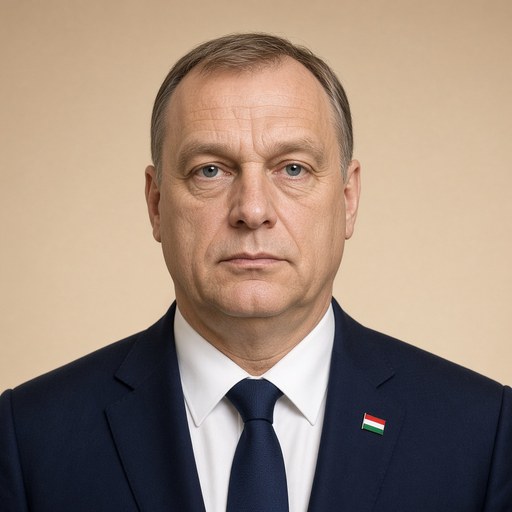
Eulogy by Viktor Orbán at the funeral of Géza Erdélyi, the former bishop of the Slovak Christian Reformed Church.
 Viktor Orbán · Prime Minister of Hungary
- Context
- Orbán delivered a eulogy at the funeral of Géza Erdélyi, former bishop of the Slovak Christian Reformed Church, honoring his legacy of Hungarian identity and faith.
- Main themes
- Hungarian identity and Christianity, eulogy and remembrance of Géza Erdélyi, church and state relations, national mission, gentle strength and leadership, Hungarian community beyond borders, faith and public life, loyalty and integrity, Reformed Church, political and spiritual duty
- Duration
- ~8 min
- Words
- 1,009
- Sentences
- 69
- Readability
- 57
- Grade
- 8.9
- Syntax
- 2.66
- Vocabulary
- 2.37
Translated from German
The broad sphere of national life a sentence belongs to. Every sentence has an Arena, so it is the denominator the other indices are read against.
Other69 sentences in 8 paragraphs
Dear mourners!
Even now, as I speak, I see his gaze before me. Those who knew him from afar saw a gentle, pious, and kind man. He spoke softly, was a man of peace, radiating calm. However, those who looked closer quickly sensed that this gentleness was not a weakness, but disciplined strength. Like basalt: smooth to the touch, but unbreakable. He was unwavering. When it came to the truth of Hungarian identity or the Church, he knew no compromises. He understood that the shepherd's staff was not only for support but also to protect the flock from wolves. It was this calm, steely demeanor that earned him respect from both friends and opponents. I am grateful to Providence that I was among those who could honor him not only as a church organizer but also as a scholar. We were in correspondence. He shared his thoughts with me on Hungarian identity, Christianity, and Europe. We agreed that it is a false doctrine that the things of God concern only the Church and the things of the world concern only politics. Our opponents speak daily of the separation of church and state, but we know very well that they actually mean the banishment of Christianity from public life, the erasure of God from history, and from the great epic of the survival of the Hungarians. As if it were merely a coincidence that after a thousand years we still live here, as Hungarians and Christians, in the heart of Europe. Géza Erdélyi knew and proclaimed: Nations also have a mission. He also knew that this is the great watershed. A philosophical, political watershed that separates and selects among the servants of God those who see, understand, and nurture Christianity and the nation, Jesus Christ and the affairs of the homeland in unity. The mission of the Hungarians is inseparably linked to our Christian essence. As it is formulated in the Hungarian Constitution, cleverly circumventing the cunning liberal trap of separation: the state and the Church function separately. The goals can be common according to the credo of the governing government, but the means, methods, and paths are always different. As one of our bishops has recommended: "One must win gently, like the wind." And indeed, the pastor, the spiritual leader, the bishop wins gently. He convinces the lost sheep, confronts evil, overcomes uncertainty within himself – and always with spiritual weapons. For us, the cage fighters of public life, this is not always given. Often we move against the wind and build in the midst of a storm. Gentleness is not always effective. Often we need hardness, sometimes even ruthlessness. Even towards ourselves. But we must know that the future of the Hungarians cannot be built on the relentlessness of politics, the insensitivity of struggles in public life, and not even on the raw truth of rational arguments. Even in the most tense times, yes, especially then, the national community needs the balancing power of gentle people. People who remind us, even amid the emotions of the moment, that we can only build the future of the nation on love, following the example of Jesus Christ. The Church needed the gentle strength of Bishop Géza Erdélyi, the nation needed it, and we all need and will need it.
Dear mourning community!
In the spring of 2005, Hungary awarded the bishop a state honor for his merits regarding Hungarian identity. However, history dictated that the award should only be presented after the referendum on December 5. It was the referendum in which the leftist government turned against the Hungarians beyond the border. Géza Erdélyi did not accept the award from the Prime Minister. When asked why he made that decision, he replied that he was very pleased with the award from Hungary and would accept it from anyone, but – I quote – "how could I then look my believers in the eye?" So simple. Without circumlocution and without the possibility of objection. In that one sentence lies his entire life. Not fame. Not protocol. Not the political situation. Not momentary interests. Only one standard: the gaze of the believers. The trust of the community. Standing upright before God. The natural, self-evident, unconditional loyalty without which a nation cannot endure. I stand here, I cannot do otherwise. Who knows how many centuries the confession of the long line of people like Géza Erdélyi has held the Hungarians together? When receiving the Magyar Örökség Díj (Hungarian Heritage Award), he said: "We have experienced many forms of oppression, we have always had to fight against the wind, but now I tell all young people that it is worth it, for this is how one can truly remain faithful to oneself and how one can assert oneself."
Dear mourners!
The Holy Scripture teaches us: The life of a righteous person does not end with farewell from this world. Before the Lord, there is no passing away, only return. We now let Bishop go with pain, but we know: Whoever has placed their life in God's hands, that hand will also lift them into eternal light. Therefore, today is not only a loss but also a fulfillment: Our bishop has fought the good fight, finished his race, and kept the faith. We thank You for teaching us with Your sermons and proving with Your life that faith is not a painkiller, but a stance. That being Hungarian is not a choice, but a mission best fulfilled in God's hands. Now, as we accompany him to his final resting place, we know: We must take up a legacy. We know that we cannot lock it in a box. It is a legacy that we must always carry with us, and we should best carry it in our hearts – so that we too, emulating You, may be both gentle and unyielding and win gently like the wind.
Dear brother Géza, we will try. Bishop, we thank you for your service! It has been an honor to fight alongside you. Rest in peace!
Soli Deo gloria!
The original German. The tags above are read on the English translation's sentences.
Sehr geehrte Trauernde!
Auch jetzt, während ich spreche, sehe ich seinen Blick vor mir. Wer ihn aus der Ferne kannte, sah einen sanften, frommen und liebenswürdigen Mann. Er sprach leise, war ein Mann des Friedens, der Ruhe ausstrahlte. Wer jedoch genauer hinschaute, spürte schnell, dass diese Sanftmut keine Schwäche war, sondern disziplinierte Stärke. Wie Basalt: glatt anzufassen, aber unzerbrechlich. Er war unerschütterlich. Wenn es um die Wahrheit des Ungarntums oder der Kirche ging, kannte er keine Kompromisse. Er wusste, dass der Hirtenstab nicht nur zum Stützen da war, sondern auch dazu, die Herde vor Wölfen zu schützen. Es war diese ruhige, stählerne Haltung, die ihm sowohl bei Freunden als auch bei Gegnern Respekt einflößte. Ich bin der Vorsehung dankbar, dass ich zu denen gehören durfte, die in ihm nicht nur den kirchlichen Organisator, sondern auch den Gelehrten verehren durften. Wir standen in Briefkontakt. Er teilte mir seine Gedanken über das Ungarntum, das Christentum und Europa mit. Wir waren uns einig, dass es eine falsche Lehre ist, dass die Dinge Gottes nur die Kirche und die Dinge der Welt nur die Politik betreffen. Unsere Gegner sprechen täglich von der Trennung von Kirche und Staat, aber wir wissen sehr wohl, dass sie damit in Wirklichkeit die Verbannung des Christentums aus dem öffentlichen Leben, die Auslöschung Gottes aus der Geschichte und aus dem großen Epos des Fortbestands der Magyaren meinen. Als ob es nur ein Zufall wäre, dass wir nach tausend Jahren immer noch hier leben, als Ungarn und Christen, mitten in Europa. Géza Erdélyi wusste und verkündete: Auch Nationen haben eine Mission. Er wusste auch, dass dies die große Wasserscheide ist. Eine philosophische, politische Wasserscheide, die unter den Dienern Gottes diejenigen trennt und auswählt, die das Christentum und die Nation, Jesus Christus und die Angelegenheiten des Vaterlandes in Einheit sehen, verstehen und pflegen. Die Mission der Ungarn ist untrennbar mit unserem christlichen Wesen verbunden. Wie es in der ungarischen Verfassung formuliert ist, wobei die listige liberale Falle der Trennung klug umgangen wird: Staat und Kirche funktionieren getrennt voneinander. Die Ziele können gemäß dem Credo der regierenden Regierung gemeinsam sein, aber die Mittel, Methoden und Wege sind immer unterschiedlich. Wie einer unserer Bischöfe empfohlen hat: „Man muss sanft siegen, wie der Wind.“ Und tatsächlich siegt der Seelsorger, der geistliche Führer, der Bischof sanft. Er überzeugt das verirrte Schaf, tritt dem Bösen entgegen, besiegt die Unsicherheit in sich selbst – und das immer mit seelischen Waffen. Uns, den Käfigkämpfern des öffentlichen Lebens, ist dies nicht immer gegeben. Oftmals bewegen wir uns gegen den Wind und bauen inmitten eines Sturms. Sanftmütigkeit ist nicht immer zielführend. Oft brauchen wir Härte, manchmal sogar Rücksichtslosigkeit. Auch uns selbst gegenüber. Aber wir müssen wissen, dass die Zukunft der Ungarn nicht auf der Unerbittlichkeit der Politik, der Gefühllosigkeit der Kämpfe im öffentlichen Leben und auch nicht auf der rohen Wahrheit der rationalen Argumente aufgebaut werden kann. Selbst in den angespanntesten Zeiten, ja gerade dann, braucht die nationale Gemeinschaft die ausgleichende Kraft sanftmütiger Menschen. Menschen, die uns auch inmitten der Emotionen des Augenblicks daran erinnern, dass wir die Zukunft der Nation nur auf Liebe aufbauen können, nach dem Vorbild Jesu Christi. Die Kirche brauchte die sanfte Kraft von Herrn Bischof Géza Erdélyi, die Nation brauchte sie, und wir alle brauchen und werden sie brauchen.
Verehrte trauernde Gemeinde!
Im Frühjahr 2005 verlieh Ungarn dem Herrn Bischof eine staatliche Auszeichnung für seine Verdienste um das Ungarntum. Die Geschichte wollte es jedoch, dass die Verleihung erst nach dem Referendum am 5. Dezember stattfinden sollte. Es war das Referendum, in dem sich die linke Regierung gegen die Ungarn jenseits der Grenze wandte. Géza Erdélyi nahm die Auszeichnung vom Ministerpräsidenten nicht entgegen. Als er gefragt wurde, warum er sich so entschieden habe, antwortete er, dass er sich sehr über die Auszeichnung Ungarns freue und sie von jedem entgegennehmen würde, aber – ich zitiere – „wie könnte ich dann meinen Gläubigen in die Augen schauen?“ So einfach. Ohne Umschweife und ohne Einspruchsmöglichkeit. In diesem einen Satz steckt sein ganzes Leben. Nicht der Ruhm. Nicht das Protokoll. Nicht die politische Situation. Nicht momentane Interessen. Nur ein einziger Maßstab: der Blick der Gläubigen. Das Vertrauen der Gemeinschaft. Das aufrechte Stehen vor Gott. Die natürliche, selbstverständliche, bedingungslose Treue, ohne die eine Nation nicht bestehen kann. Ich stehe hier, ich kann nicht anders. Wer weiß, seit wie vielen Jahrhunderten hält das Bekenntnis der langen Reihe der Menschen wie Géza Erdélyi die Ungarn zusammen? Bei der Entgegennahme des Magyar Örökség Díj (Ungarisches Erbe-Preis) sagte er: „Wir haben viele Arten der Unterdrückung erlebt, wir mussten immer gegen den Wind ankämpfen, aber jetzt sage ich allen jungen Menschen, dass es sich lohnt, denn so kann man sich selbst wirklich treu bleiben und so kann man sich behaupten.”
Sehr geehrte Trauernde!
Die Heilige Schrift lehrt uns: Das Leben eines gerechten Menschen endet nicht mit dem Abschied von dieser Welt. Vor dem Herrn gibt es kein Vergehen, sondern nur Heimkehr. Wir lassen den Herrn Bischof nun mit Schmerz gehen, aber wir wissen: Wer sein Leben in Gottes Hand gelegt hat, den wird diese Hand auch in das ewige Licht heben. Deshalb ist der heutige Tag nicht nur ein Verlust, sondern auch eine Erfüllung: Unser Bischof hat den guten Kampf gekämpft, seinen Lauf vollendet und seine Treue bewahrt. Wir danken Dir, dass Du uns mit Deinen Predigten gelehrt und mit Deinem Leben bewiesen hast, dass der Glaube kein Schmerzmittel ist, sondern Haltung. Dass es keine Wahl ist, Ungar zu sein, sondern eine Mission, die man am besten in Gottes Hand erfüllt. Jetzt, da wir ihn zu seiner letzten Ruhestätte begleiten, wissen wir: Wir müssen ein Erbe antreten. Wir wissen, dass wir es nicht in eine Kiste sperren können. Es ist ein Erbe, das wir immer bei uns tragen müssen, und am besten sollten wir es in unseren Herzen tragen – damit auch wir Dir nacheifernd gleichzeitig sanftmütig und unnachgiebig sind und sanft siegen wie der Wind.
Lieber Bruder Géza, wir werden es versuchen. Herr Bischof, wir danken für den Dienst! Es war uns eine Ehre, gemeinsam mit Dir zu kämpfen. Ruhe in Frieden!
Soli Deo gloria!