




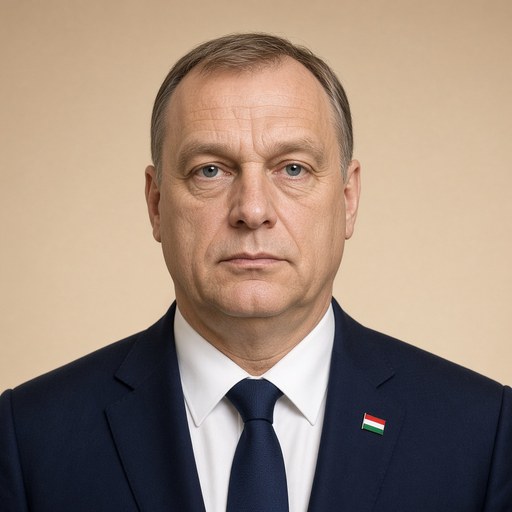
Speech by Viktor Orbán at the ceremonial opening of the section of the M4 motorway between Törökszentmiklós and Kisújszállás.
 Viktor Orbán · Prime Minister of Hungary
- Context
- Orbán spoke at the ceremonial opening of the M4 motorway section between Törökszentmiklós and Kisújszállás in Hungary on 22 December 2025.
- Main themes
- Motorway infrastructure development, M4 motorway opening, Great Plain regional development, Fidesz-KDNP government achievements, road network expansion, unemployment reduction, Hungarian economic development, truck transport regulation, regional political mandates, Cuman heritage and Nagykunság region
- Duration
- ~14 min
- Words
- 1,721
- Sentences
- 82
- Readability
- 60
- Grade
- 10.0
- Syntax
- 2.99
- Vocabulary
- 2.21
Translated from German
The broad sphere of national life a sentence belongs to. Every sentence has an Arena, so it is the denominator the other indices are read against.
Other82 sentences in 18 paragraphs
I warmly welcome you! Good day!
Everyone is talking, except for two people. One bears the entire responsibility because he built the road. If problems arise, please keep that in mind. János Lázár not only builds roads, he is also the biggest road repairman, and Strabag could tell you a lot about that. And here is Sándor Fazekas, who as Minister insisted that this road be included in the national road construction plan. It was a long time ago, perhaps you don’t remember it so well, but I remember that it was Sándor who looked at the proposal – Sándor, when was that? 2010? 2012? – which included the national road construction plan, and said: “Well, but what about us?” Because this was not planned here, everything else seemed more important, because at that time it was most important to reach the national border, the M3 and so on. That is why we are especially grateful to Sándor, our then Minister of Agriculture, for always insisting that this road never be taken off the agenda. I also learned from him the wisdom that it is a good choice when people go to vote on steaming asphalt. “But,” I said, “Sándor, there isn’t enough asphalt for the mandates we need.” This wisdom has since belonged to Sándor. And the truth is that it is good that we have finally completed this road, because here we have recently received all the mandates from you. For that, I want to thank you. And not just here, in this region, for the mandates of the two representatives behind me, but all the way down to the border, and up to Pest. That is generally fine. We need that now.
Ladies and gentlemen!
We have come together to fulfill a promise. We committed to building a highway, yes, even several roads in the Nagykunság, and today we are handing over the section between Törökszentmiklós and Kisújszállás. Of course, I say that we are fulfilling a promise, but in truth, we had hardly any other choice. In school, you learn history, and there you learn that you should not mess with the Cumans, so this road had to be built, whether we wanted it or not. The Cumans are strongly represented in the Hungarian government, they hold all kinds of ministerial positions, then the Cumans provide the president of the central bank, and since then there has been peace there as well, and finally, you have also given us the last regent from here, from Kenderes, and from time to time you also bless us with a Nobel Prize winner. This region is a great and rich reserve for Hungary.
Ladies and gentlemen!
We are the only political community – I am talking about Fidesz-KDNP – that has a program for the Great Plain. Partly because the Minister responsible for transport comes from Hódmezővásárhely, partly because I myself come from Mezőtúr on my mother’s side and my wife from Szolnok. So we have a program for the Great Plain, regardless of the reason. In 2010, the unemployment rate in this region was 12 percent, now it is 5 percent. Under the Sándor-Demján program, entrepreneurs from Jász-Nagykun-Szolnok County received 4.5 billion forints. We renovated the hospital in Karcag, completely refurbished it, and built a fantastic leisure center. Those were the smaller tasks. The really big expenses were for the two roads, because we are not just talking about one, although we are here today because of the M4, but the M44 was also very important, as this central part of the Great Plain would otherwise have remained a cut-off area. And there are still 60 kilometers of road left, from Kisújszállás to the missing stretch, about 60 kilometers, and that will also be built, but now we will realize that in a concession construction system.
Ladies and gentlemen!
Where there are roads, trucks and lorries also drive. Of course, everyone wants to pay as little as possible, so they avoid four-lane highways and motorways whenever possible. That is why we have decided that from January 1, 2026, trucks weighing more than 20 tons that come to Hungary and cross the country may only use motorways, to which one might say: “Well, if they exist,” but now they do exist, and there are conditions for that. In the last fifteen years, ladies and gentlemen, we have built so many motorways and highways that the domestic road network – of course in relation to the population – has reached the level of the most developed Western European countries. In 2010, the length of the highways in Hungary was 1,273 kilometers, and by 2025 it will increase to 2,000 kilometers – 35 kilometers are still missing, this is exactly what lies ahead of us. In addition, we have built a total of eight bridges over the Danube and the Tisza, so now 22 cities with county rights are accessible via highways. In total, this means that 90 percent of the Hungarian population lives within half an hour of a motorway. And if we can realize all our investments, this number will rise to 100 and the travel time will decrease from 30 to 20 minutes.
Ladies and gentlemen!
As my fellow representative F. Kovács has already mentioned, as soon as we reach Berettyóújfalu, provided that the Romanians on the other side also carry out the necessary work, it will be possible to drive directly onto the highways towards Nagyvárad–Kolozsvár. This means that even by the most cautious estimates, the distance between Budapest and Kolozsvár will be shortened by one to one and a half hours. Today is an important moment for the unification of the nation. Furthermore, ladies and gentlemen, we have more serious plans that concern the southern part of Eastern Hungary. If you look at the map, you will see that Eastern Hungary as such does not actually exist, as it actually consists of two parts: a northern and a southern part. We have gotten the northern part quite well in motion. If you are in the area of Debrecen and Nyíregyháza, you can see that there have been industrial investments and developments there, so slowly, what we never thought possible, people from Sopron will also come to Nyíregyháza to work. We still have to wait a little for that, but then the movement in the other direction will also begin: people will not only go to work from the east to the west, but also vice versa. And now that the roads are being built here, we can expect, and we will also do something for that, that large industrial investments will also be made here, which will open up similar development prospects as in the northern part of the Great Plain. The plan is to create an industrial region here, which we will call Debrecen–Nagyszalonta–Békéscsaba, a cross-border, large economic region, which is why we will also build our four-lane motorway Békéscsaba–Debrecen, which is already in the planning phase.
Ladies and gentlemen!
Moreover, everyone knows from history that the Nagykunság region and the surroundings of Karcag, Törökszentmiklós, Kisújszállás, and Szolnok played an important role when the Carpathian Basin was still a whole, forming an organic unit, when there was still the Hungary of Saint Stephen, one of the most important trade routes of ancient Hungary ran here.
Ladies and gentlemen!
For road construction, money is needed. Money is available when you do not allow it to be taken away from you. I mention this because I have just returned from Brussels, where a little glutton named Ukraine is currently devouring all the money. And the wise gentlemen in Brussels have decided to grant Ukraine a loan of 90 billion euros. Obviously in the hope that they will get it back with high interest. I said yesterday or whenever in Szeged that Tisza should win the election in the way the Ukrainians will repay these loans. If we could not stay out of this matter, because we could only fight our way out of this crazy idea from Brussels with great difficulty, if we could not stay out, then our share of this loan would have been 400 billion forints. 400 billion forints! This section of road that we are now handing over costs 170 billion forints, which is roughly the amount we would have had to transfer to Brussels, so essentially the entire construction cost of this motorway.
Ladies and gentlemen!
The situation is such that the money here in the Great Plain is better placed in the form of a modern road than in the shattered Donbass, in the pocket of a Ukrainian oligarch. Ladies and gentlemen, that is what the elections next year are also about. Since we are already talking about roads, which road we will take, we live in a democracy, the Hungarians can decide about that, and they do well to decide every four years in which direction we want to go. It is clear that we have two paths ahead of us. We can take the Brussels path, which means that our money will be taken away from here and used elsewhere, where others will benefit from it. The other option is that we stay here in Hungary, continue on the Hungarian path, and proceed as we have done in the last fifteen years, and then Hungary will develop, then Hungary will grow, and then Hungary will become stronger. For that, of course, we must retain all the mandates that have come from this region in the last four years. That is why I want to ask you to prepare and extend the mandates of the representatives, because without the Nagykunság and, more generally, without the Great Plain, no national government can be formed in Hungary. If the Cumans are with us, if the Nagykunság region is with us, if the Hungarian Great Plain is with us, then we will win this election, no matter what happens in Budapest. For that, I ask for your trust and support.
Looking ahead to the years ahead, I wish you all, all of you, that the dear God grants you much strength and health, a happy family, an understanding partner, many children, good neighbors, and work that brings benefit, meaning, and fruit!
I wish you all a blessed, peaceful Christmas and a happy New Year!
The original German. The tags above are read on the English translation's sentences.
Ich begrüße Sie herzlich! Guten Tag!
Alle reden, nur zwei Personen nicht. Der eine trägt die gesamte Verantwortung, denn er hat die Straße gebaut. Sollte es zu Problemen kommen, denken Sie bitte daran. János Lázár baut nicht nur Straßen, er ist auch der größte Straßenreparateur, darüber könnte Strabag lange berichten. Und hier ist auch Sándor Fazekas, der als Minister darauf bestand, dass diese Straße in den nationalen Straßenbauplan aufgenommen wird. Es ist schon lange her, vielleicht erinnern Sie sich nicht mehr so gut daran, aber ich erinnere mich, dass es Sándor war, der sich den Vorschlag angesehen hat – Sándor, wann war das? 2010? 2012? –, der den nationalen Straßenbauplan enthielt, und sagte: „Na gut, aber was wird aus uns?“ Denn hier war das nicht vorgesehen, alles andere schien wichtiger zu sein, denn damals war es am wichtigsten, die Landesgrenze zu erreichen, die M3 und so weiter. Deshalb sind wir Sándor, unserem damaligen Landwirtschaftsminister, besonders dankbar, dass er immer darauf bestanden hat, dass diese Straße nie von der Tagesordnung gestrichen wird. Außerdem habe ich von ihm die Weisheit gelernt, dass es eine gute Wahl ist, wenn die Menschen auf dampfendem Asphalt zur Wahl gehen. „Aber“, sagte ich, „Sándor, es gibt nicht so viel Asphalt, wie wir Mandate brauchen.“ Diese Weisheit gehört seitdem zu Sándor. Und die Wahrheit ist, dass es gut ist, dass wir diese Straße endlich fertiggestellt haben, denn hier haben wir in der letzten Zeit alle Mandate von Ihnen erhalten. Dafür möchte ich Ihnen danken. Und zwar nicht nur hier, in dieser Region, für die Mandate der beiden Abgeordneten hinter mir, sondern bis hinunter zur Grenze, und hinauf bis nach Pest. Das ist im Großen und Ganzen in Ordnung. Das brauchen wir auch jetzt.
Meine sehr geehrten Damen und Herren!
Wir sind zusammengekommen, um ein Versprechen einzulösen. Wir haben uns verpflichtet, eine Schnellstraße, ja sogar mehrere Straßen in die Nagykunság zu bauen, und heute übergeben wir den Abschnitt zwischen Törökszentmiklós und Kisújszállás. Natürlich sage ich, dass wir ein Versprechen einlösen, aber in Wahrheit hatten wir kaum eine andere Wahl. In der Schule lernt man Geschichte und dort lernt man, dass man sich mit den Kumanen nicht anlegen sollte, daher muss diese Straße, ob wir es wollten oder nicht, gebaut werden. Die Kumanen sind in der ungarischen Regierung stark vertreten, sie stellen alle möglichen Minister, dann stellen die Kumanen den Präsidenten der Zentralbank, seitdem herrscht dort auch Ruhe, und schließlich haben Sie uns auch den letzten Reichsverweser von hier, aus Kenderes, gegeben, und von Zeit zu Zeit beschenken Sie uns auch mit einem Nobelpreisträger. Diese Region ist eine große und reiche Reserve für Ungarn.
Meine sehr geehrten Damen und Herren!
Wir sind die einzige politische Gemeinschaft – ich spreche von der Fidesz-KDNP –, die ein Programm für die Tiefebene hat. Zum Teil, weil der für Verkehr zuständige Minister aus Hódmezővásárhely stammt, zum Teil, weil ich selbst mütterlicherseits aus Mezőtúr stamme und meine Frau aus Szolnok. Also haben wir ein Programm für die Tiefebene, egal aus welchem Grund. 2010 lag die Arbeitslosenquote in dieser Region bei 12 Prozent, jetzt liegt sie bei 5 Prozent. Im Rahmen des Sándor-Demján-Programms erhielten Unternehmer aus dem Komitat Jász-Nagykun-Szolnok 4,5 Milliarden Forint. Wir haben das Krankenhaus in Karcag renoviert, komplett saniert und ein fantastisches Freizeitzentrum gebaut. Das waren die kleineren Aufgaben. Die wirklich großen Ausgaben entfielen auf die beiden Straßen, denn wir sprechen nicht nur von einer, obwohl wir heute wegen der M4 hier sind, sondern auch die M44 war sehr wichtig, da dieser mittlere Teil der Tiefebene sonst ein abgeschnittenes Gebiet geblieben wäre. Und es sind noch 60 Kilometer Straße übrig, von Kisújszállás bis zur fehlenden Strecke sind es noch etwa 60 Kilometer, und die wird auch gebaut, aber jetzt werden wir das in einem Konzessionsbausystem realisieren.
Meine sehr geehrten Damen und Herren!
Wo es Straßen gibt, fahren auch Lastwagen und Lkw. Natürlich möchte jeder möglichst wenig bezahlen, deshalb meidet man nach Möglichkeit vierspurige Schnellstraßen und Autobahnen. Deshalb haben wir beschlossen, dass ab dem 1. Januar 2026 Lkw mit einem Gewicht von mehr als 20 Tonnen, die nach Ungarn kommen und das Land durchqueren, ausschließlich Autobahnen benutzen dürfen, worauf man sagen kann: „Nun, wenn es sie gibt“, aber jetzt gibt es sie, und dafür gibt es Bedingungen. In den letzten fünfzehn Jahren, meine sehr geehrten Damen und Herren, haben wir so viele Autobahnen und Schnellstraßen gebaut, dass das heimische Straßennetz – natürlich im Verhältnis zur Bevölkerungszahl – das Niveau der am weitesten entwickelten westeuropäischen Länder erreicht hat. Im Jahr 2010 betrug die Länge der Schnellstraßen in Ungarn 1.273 Kilometer, und bis 2025 wird sie auf 2.000 Kilometer ansteigen – 35 Kilometer fehlen noch, dies ist gerade das, was noch vor uns liegt. Darüber hinaus haben wir insgesamt acht Brücken über die Donau und die Theiß gebaut, sodass nun 22 Städte mit Komitatsrecht über Schnellstraßen erreichbar sind. Insgesamt bedeutet dies, dass 90 Prozent der ungarischen Bevölkerung innerhalb einer halben Autostunde von einer Autobahn entfernt wohnen. Und wenn wir alle unsere Investitionen realisieren können, wird diese Zahl auf 100 steigen und die Fahrzeit von 30 auf 20 Minuten sinken.
Meine sehr geehrten Damen und Herren!
Wie mein Mitabgeordneter F. Kovács bereits erwähnt hat, wird es, sobald wir Berettyóújfalu erreichen, vorausgesetzt, dass die Rumänen auf der anderen Seite ebenfalls die notwendigen Arbeiten durchführen, möglich sein, direkt auf die Schnellstraßen in Richtung Nagyvárad–Kolozsvár zu fahren. Das bedeutet, dass selbst nach den vorsichtigsten Schätzungen die Entfernung zwischen Budapest und Kolozsvár um eine bis eineinhalb Stunden verkürzt wird. Der heutige Tag ist ein wichtiger Moment für die Vereinigung der Nation. Darüber hinaus, meine sehr geehrten Damen und Herren, haben wir noch weitere ernsthafte Pläne, die den südlichen Teil Ostungarns betreffen. Wenn Sie sich die Karte ansehen, werden Sie feststellen, dass Ostungarn als solches natürlich nicht existiert, da es eigentlich aus zwei Teilen besteht: einem nördlichen und einem südlichen. Den nördlichen Teil haben wir ziemlich gut in Schwung gebracht. Wenn Sie dort in der Gegend von Debrecen und Nyíregyháza unterwegs sind, können Sie sehen, dass dort industrielle Investitionen und Entwicklungen stattgefunden haben, sodass langsam, was wir nie für möglich gehalten hätten, auch Menschen aus Sopron nach Nyíregyháza kommen werden, um dort zu arbeiten. Dafür müssen wir noch ein bisschen warten, aber dann wird auch die Bewegung in die andere Richtung einsetzen: Die Menschen werden nicht nur aus dem Osten in den Westen zur Arbeit gehen, sondern auch umgekehrt. Und nachdem hier jetzt die Straßen gebaut werden, können wir davon ausgehen, und wir werden dafür auch etwas tun, dass auch hier große Industrieinvestitionen getätigt werden, die ähnliche Entwicklungsperspektiven eröffnen wie im nördlichen Teil der Tiefebene. Der Plan sieht nämlich vor, hier eine Industrieregion zu schaffen, die wir Debrecen–Nagyszalonta–Békéscsaba nennen, eine grenzüberschreitende, große Wirtschaftsregion, weshalb wir auch unsere vierstreifige Autobahn Békéscsaba–Debrecen bauen werden, die sich bereits in der Planungsphase befindet.
Meine sehr geehrten Damen und Herren!
Außerdem weiß jeder aus der Geschichte, dass die Region Nagykunság und die Umgebung von Karcag, Törökszentmiklós, Kisújszállás und Szolnok eine wichtige Rolle spielten, als das Karpatenbecken noch ein Ganzes war, eine organische Einheit bildete, als es noch das Ungarn des Heiligen Stephan gab, verlief hier eine der wichtigsten Handelsrouten des alten Ungarn.
Meine sehr geehrten Damen und Herren!
Für den Straßenbau braucht man Geld. Geld hat man, wenn man nicht zulässt, dass es einem weggenommen wird. Ich erwähne das, weil ich gerade aus Brüssel zurückgekommen bin, wo ein kleiner Fresssack namens Ukraine gerade dabei ist, alles Geld zu verschlingen. Und die klugen Herren in Brüssel haben beschlossen, der Ukraine einen Kredit in Höhe von 90 Milliarden Euro zu gewähren. Offensichtlich in der Hoffnung, dass sie ihn mit hohen Zinsen zurückbekommen. Ich habe gestern oder wann auch immer in Szeged gesagt, dass Tisza die Wahl auf die Weise gewinnen soll, wie die Ukrainer diese Kredite zurückzahlen werden. Wenn wir uns nicht aus dieser Sache heraushalten könnten, weil wir uns nur mit großem Kampf aus dieser verrückten Idee Brüssels heraushalten konnten, wenn wir uns nicht heraushalten könnten, dann wäre unser Anteil an diesem Kredit 400 Milliarden Forint gewesen. 400 Milliarden Forint! Dieser Straßenabschnitt, den wir jetzt übergeben, kostet 170 Milliarden Forint, was in etwa dem Betrag entspricht, den wir Brüssel hätten überweisen müssen, also im Wesentlichen den gesamten Baukosten dieser Autobahn.
Meine sehr geehrten Damen und Herren!
Die Situation ist so, dass das Geld hier in der Tiefebene in Form einer modernen Straße besser aufgehoben ist als im zerschossenen Donbass, in der Hosentasche eines ukrainischen Oligarchen. Meine sehr geehrten Damen und Herren, darum geht es also auch bei den Wahlen im nächsten Jahr. Wenn wir schon von Straßen sprechen, welche Straße wir nehmen werden, leben wir in einer Demokratie, die Ungarn können darüber entscheiden, und sie tun gut daran, wenn sie alle vier Jahre entscheiden, in welche Richtung wir gehen wollen. Es ist klar, dass wir zwei Wege vor uns haben. Wir können den Brüsseler Weg einschlagen, was bedeutet, dass unser Geld von hier weggebracht und woanders verwendet wird, wo andere davon profitieren. Die andere Möglichkeit ist, dass wir hier in Ungarn bleiben, den ungarischen Weg weitergehen und so voranschreiten, wie wir es in den letzten fünfzehn Jahren getan haben, und dann wird sich Ungarn entwickeln, dann wird Ungarn wachsen, und dann wird Ungarn stärker werden. Dazu müssen wir natürlich alle Mandate behalten, die in den letzten vier Jahren aus dieser Region gekommen sind. Deshalb möchte ich Sie bitten, sich vorzubereiten und die Mandate der Abgeordneten zu verlängern, denn ohne die Nagykunság und, allgemeiner gesagt, ohne die Tiefebene kann in Ungarn keine nationale Regierung gebildet werden. Wenn die Kumanen mit uns sind, wenn die Region Nagykunság mit uns ist, wenn die ungarische Tiefebene mit uns ist, dann werden wir diese Wahl gewinnen, egal was in Budapest passiert. Dazu bitte ich Sie um Ihr Vertrauen und Ihre Unterstützung.
Mit Blick auf die vor uns liegenden Jahre wünsche ich Ihnen allen, Ihnen allen, dass der liebe Gott Ihnen viel Kraft und Gesundheit schenkt, Ihnen eine glückliche Familie, einen verständnisvollen Partner, viele Kinder, gute Nachbarn und eine Arbeit, die Nutzen, Sinn und Früchte bringt!
Ich wünsche Ihnen allen ein gesegnetes, friedliches Weihnachtsfest und ein glückliches neues Jahr!