




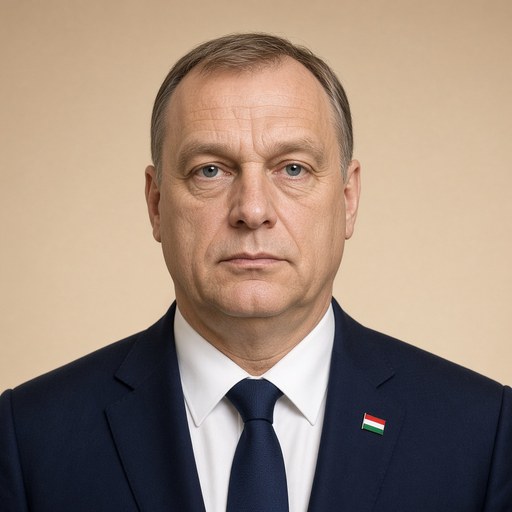
Viktor Orbán's festive speech on the 175th anniversary of the 1848/49 revolution and war of independence.
 Viktor Orbán · Prime Minister of Hungary
- Context
- Orbán addressed a crowd in Kiskőrös on March 15, 2023, commemorating the 175th anniversary of Hungary's 1848/49 revolution and the 200th birth anniversary of poet Sándor Petőfi.
- Main themes
- Hungarian national identity, 1848/49 revolution and war of independence, Sándor Petőfi's legacy, Hungarian freedom and independence, national self-esteem and dignity, Hungarian history and destiny, March 15 commemoration, Hungarian cultural and intellectual awakening, sacrifice and heroism, Hungarian unity
- Duration
- ~23 min
- Words
- 2,699
- Sentences
- 184
- Readability
- 59
- Grade
- 8.7
- Syntax
- 2.73
- Vocabulary
- 2.37
Translated from Hungarian
The broad sphere of national life a sentence belongs to. Every sentence has an Arena, so it is the denominator the other indices are read against.
Other184 sentences in 24 paragraphs
Good afternoon, dear people of Kiskőrös! I welcome those who have come from the surrounding area! Honorable Celebrating Hungarians around the world! Ladies and Gentlemen!
If a stranger looks at the life of Sándor Petőfi, who was born 200 years ago, they would hardly believe what they see. He is born in a small town several days' journey from the capital. At birth, he is so weak that he is bathed in spirit. He survives. He becomes a wandering actor, a jester. Then he rises to become the celebrated poet of the nation. In five years, he writes a thousand poems, creating international fame. He sparks a revolution that brings freedom to his homeland. He enlists as a soldier in the war of independence. At the age of 26, he falls to the weapon of the occupying forces. His own wish, expressed in verse, is fulfilled: he does not die in bed, among pillows, but on the battlefield of freedom. He falls on the battlefield without witnesses. By then, no one is left among those who saw his arrival into this earthly life. He departs as he came. He simply steps into the world of legends. A 26-year trajectory across the Hungarian sky, starting from deep Hungary and ending on the path of stars. A flash that his own nation follows and admires with bated breath. A foreigner would say: a mystery. An American film director would call it the Petőfi mystery. We, Hungarians, see no mystery here. Let us rather say: Hungarian fate. One of us who rises above us. The Hungarian finds it hard to accept such things, but now we gladly yield, for we know that even if we wanted to, we could hardly replicate it. Sándor Petőfi is our beloved son. Every Hungarian has known at least one line of his poetry since childhood. Therefore, it need not be said; we know without words: there is a little Petőfi in every Hungarian, and in Petőfi, there is every Hungarian.
Honorable Celebrants!
When Petőfi is born, Kölcsey is just finalizing the National Anthem. With the Anthem, he creates something eternal and simultaneously provides a program for the homeland.
“
This nation has already suffered for the past and the future,” and as the evangelist Luke continues: “therefore, straighten up and lift up your heads.” Regain our nation's self-esteem and restore its dignity. This is the program of the Hungarian nation for the next 25 years. And it will be so. 25 years after the Anthem, in 1848, Hungary is no longer the same country. A nation that lifts its head, stands tall, and looks confidently at the world of European peoples. Hungary begins to produce world-class masterpieces in science and literature in astonishing quantities. It channels its wild rivers, builds railways to Vác and Szolnok, constructs a stone bridge between Pest and Buda, launches steamships on Lake Balaton and the Danube, and creates a home for Hungarian science and culture. A country that is becoming beautiful and has a bright future ahead. To cover such a distance is a tremendous achievement, a great feat, true Hungarian virtue. All this is beautiful and good, and it might be enough for a citizen of Vienna or Berlin, but for us Hungarians, it is not enough. We know that there must still be a vocation here, one that stands above the everyday and gives a higher meaning to our finite lives. The restless Hungarian soul has asked and continues to ask: what would be that world-shaking deed, that soul-lifting mission, sursum corda, for which it was worth standing tall? Vörösmarty writes:
“
think boldly and greatly, and stake your life on it.”
But what would that be, and where should we set out to find it? What should we do with our regained self-esteem, our multiplied strength? This is a question that has emerged like a hidden spring for every awakening generation in Hungarian history, up to our own lives. Always in the language and fashion of the time, but always the same. As Szörényi and his companions sang: if only I knew where, but where, but where I am going. In the same way, Hungary in the mid-19th century awaited, searching for the word and the voice that would tell us where to set the course for our personal fate, and with it, for the homeland as well. This long-awaited, sought-after word, the sought-after voice, the directional gesture was given to the homeland by Petőfi. The word is clear, the voice is pure, the gesture was captivating. To rise, O Hungarians! Shall we be slaves or free? Long live free and independent Hungary! If they had done only this, they would already have a place in the great book of Hungarians. Glory to the March Youth!
Honorable Ladies and Gentlemen!
For someone who is not Hungarian, it is difficult to understand; they might even find it ridiculous that we recount the story of this day over and over again for 175 years, on March 15. They do not understand why we do not get tired of it? We do not get tired of it, and we will not, because it is a birthday. A great common birthday. And when the day of a person's birth arrives, the family gathers. And the moment comes when our mother and father recount the story of that day when we were born. Thus, the day of the birth of Hungarian freedom lives in our memory. This is why we tell the story of that rainy Wednesday again and again every year, when the March Youth set out. And that march, this massive procession of Hungarian freedom, sweeping away barriers, doubts, and the burdens left over from previous centuries, did not start from the Pilvax café, nor from the garden of the National Museum, but from here, Kiskőrös. This is why we have come here today, and this is why we pay our respects to the memory of the Petrovics family of Kiskőrös, which gave us Sándor Petőfi.
We tend to forget the parents of our great figures. Let us not do so. Let us bow our heads before old Petrovics, who, at the peak of his life, became a full member of the free Kiskun community. It took many years of honorable work to achieve this rank. It is not an easy thing around here. This is not a land for strangers. But he succeeded. And old Petrovics created a happy and joyful childhood for his two sons, and he passed on his hardworking patriotism to them. And God – perhaps as a reward – spared him the sorrow of having to mourn one son and see the other in forced labor. István, the younger Petőfi, was a brave man, rising to the rank of captain during the war of independence. During the reprisals, he was demoted and conscripted into the imperial army as a private, then sentenced to three years of trench work. They could not break him; he bore it with his head held high. And let us bow our heads before the memory of the mother, Mária Hrúz, who is called the most beloved mother by the Petőfi family’s tombstone, and who, as a Slovak woman, gave birth to the greatest Hungarian poet here, in this house. Glory to the Petrovics family!
Honorable Ladies and Gentlemen!
When two Hungarians meet, there is a good chance that within minutes they will have three opinions. It is as rare as a white raven when we all agree on something. Among these rare things is the agreement that Sándor Petőfi is the greatest Hungarian poet. It is peculiar that we agree on a literary question, even though the Hungarian lyric is filled with literary giants and great women. For a people as rational as we are, it is surprising, but there is no Hungarian life without literature. In us, Hungarians, love, joy, and sorrow ripen into verse and melody. Perhaps it is our language or our temperament, but we, Hungarians, poetically inhabit this Earth, where life often unfolds in a very prosaic manner. In every great poet, there is something that embodies a trait of the great Hungarian national spirit as a whole. Arany's brilliant simplicity, József Attila's spiritual struggles, Ady's self-accusing lashes, Babits's philosophical depth, Karinthy's thunderous black humor: this is all us. Yet, when we must name someone in whom we find all that we consider Hungarian fate, Hungarian genius, we name Sándor Petőfi. It is hard to say why this is so. Perhaps because freedom has its own language, a universal language. But there are French, German, Italian, or Polish dialects, and from this chorus, we, Hungarians, have not been left out, because Sándor Petőfi created the Hungarian dialect of freedom. Thus, we, Hungarians, became part of the free world. It may be an excusable bias to say that Hungarian is the most successful language of freedom, for Petőfi's language is understood everywhere in the world, translated into the languages of more than two hundred peoples across all five continents.
Honorable Ladies and Gentlemen! Honorable Celebrating Hungarians!
Petőfi burst into our midst like a sorcerer emerging from a tempest or a thorny wildflower breaking through the earth. He was not a man suited for military life. He had a fragile physique, but the real trouble was that he paid no heed to the rigorous regulations of military life. He probably still holds the world record for deeply offended ministers of war. He was not – by the standards of the time – suitable for marriage either. He was meant for Júlia Szendrey. Two charming eccentrics, the cigar-smoking, café-going, trouser-wearing, self-assured Hungarian woman and Petőfi, wearing a purple tailcoat, who kept a palm-sized sword, affectionately nicknamed guillotine, in his room. He was not an easy friend either. True, it is easy to befriend someone if our friend is perfect. He could rule like a Caesar, chastised those he considered willow poets, and condemned the laziness of talented poets. He could not stand critics and criticism at all. He wrote: “if there were no critics, I would hate horseradish sauce the most in the world.” He was a difficult man, exuding inner strength and confidence. Such a person, although others generally recognize his talent, is often rejected and excluded from their hearts. Sándor Petőfi, on the contrary: although they had reason to do so, they did not reject him, but embraced him in their hearts. God helped him; He did not allow his talent to turn into arrogance, nor his confidence into false self-assurance, hubris that shames the less talented with its superiority. This is a great grace and a great privilege for exceptionally talented people. Perhaps he received it from God because, although the clergy could not have liked him, after all, he was Lutheran, he never left the Christian spiritual realm. As a prophet of world freedom, he also knew that the triad of freedom, equality, and brotherhood is valid not instead of the command of faith, hope, and love, but alongside it. Neither resentment, nor unjust setbacks, nor political failures pushed him away from the Creator God to the destructive spirit, the great scatterer, as happens so often with many celebrities and world stars today.
He worked tirelessly. With the determination of a man who knows that Fate measures the years for him with a tight fist. He lived only 26 years, and of those 26, only five were truly devoted to creation. He wrote poetry as we, simple mortals, breathe air. He wrote in every genre. He wrote drama, novels, short stories, comic epics, and narrative poems, travelogues, and letters. He edited the Pesti Divatlap, then Életképek, while organizing Hungarian literary life and political resistance. Just five years, and yet Petőfi's oeuvre is complete. Not complete and whole in the way we think of a finished poetic career today. His oeuvre is made complete by the fact that he paid the homeland in full for all that he committed to in his verses. Although he died young, we envy him. Not because we wish for an early death for ourselves, but because we too would like to leave this world having fulfilled all our assigned duties.
Honorable Ladies and Gentlemen!
We marvel at and yearn for the fact that he created a world for himself that is clear and straightforward, where there is no gray area between things. In his world, there is no such thing as a life cobbled together from a little of this and a little of that. A sword can be forged from a chain, and a chain can be forged from a sword, but there is no such thing as a result that is a little sword and a little chain. And when we forget this, the clouds of his verses loom over us reproachfully and threateningly. He makes us feel: we have become unworthy. Not to him, not even to freedom, but most of all to ourselves. If we settle for less and something inferior than what we could be, we become unworthy of ourselves, for we are not just anyone; we are Hungarians. And to be born Hungarian means to bear a duty. To be worthy of our kind. Petőfi reads this to us every day. Either slavery or freedom – we can choose. He lived knowing that one day the final moment of decision would come. Not just as it comes in a person's personal life when we commit ourselves to the sacred bonds of faith, marriage, and love for our homeland. He knew that the moment of decision would come in the life of the nation as well. Therefore, it is the duty of a Hungarian patriot, Petőfi taught, to be ready, and when the moment comes, to fight. His belt should be girded, his sword drawn, and his horse saddled.
Honorable Celebrating Hungarians!
Just like us, Petőfi wanted to be a free and happy citizen of a free Hungary. He was a husband and a father. We can be sure that he would have preferred to live in the freedom he fought for rather than die for it. He could have chosen a secure, well-off, almost bourgeois life. He already had a spacious home, a beautiful wife, a first child, success, indeed the most successful poet, publishers lining up, lucrative contracts, and royalties. A beautiful, rich, rounded bourgeois life. We, the soft descendants of today, think he deserved to leave this world in bed, among pillows, holding Júlia's hand, growing old with dignity, as the nation's laurel-crowned poet, from Hungary, which had regained its glory and was celebrated worldwide. However, he made a different choice. He died as he sang: as an apostle of world freedom in the battle for Hungarian freedom. Perhaps he thought what we often say to calm our hearts troubled by the thought of premature death. No one lives a day shorter than what is ordained for them.
Honorable Ladies and Gentlemen! Celebrating Hungarians!
The great march of Hungarian freedom, although it has sometimes taken detours and occasionally found itself in dead ends over the past 200 years, continues today. And Sándor Petőfi is still with us in this march. We can be sure of this even when we do not see him. But from time to time, it seems as if we can see him, appearing before our eyes. Always at those moments when we become uncertain, when we hesitate. We see him rise up when foreigners want to tell Hungarians how to live. We see him confront the world's powers who want to assimilate Hungarians into a European superstate once again. We see him steering towards the 12 points, demanding peace. And if words do not help, we see him set out in our place, to die again for Hungarian freedom. We owe him that. Therefore, we will never allow the flag of freedom to be wrenched from the hands of Hungarians. We will not let it happen, and it will not succeed, because there is a little Petőfi in every Hungarian.
Long live Hungarian freedom, long live the homeland! God above us all, Hungary above all! Go Hungary, go Hungarians!
The original Hungarian. The tags above are read on the English translation's sentences.
Jó napot kívánok, kedves Kiskőrösiek! Köszöntöm a környékből érkezetteket! Tisztelt Ünneplő Magyarok szerte a nagyvilágban! Hölgyeim és Uraim!
Ha egy idegen rátekint a 200 éve született Petőfi Sándor életére, aligha hiszi el, amit lát. Születik a fővárostól többnapi járóföldre eső kisvárosban. Születésekor olyan gyenge, hogy spirituszban fürdetik. Megmarad. Lesz belőle vándorszínész, csepűrágó. Majd az ország ünnepelt költőjévé emelkedik. Öt év alatt ezer verset ír, nemzetközi hírnevet teremt. Kirobbant egy forradalmat, amely elhozza hazájának a szabadságot. Katonának áll a függetlenségi háborúban. 26 évesen a megszálló csapatok fegyverétől elesik. Beteljesedik rajta saját versbe szedett kívánsága: nem ágyban, párnák közt, hanem a szabadság harcmezején éri a halál. A csatatéren szemtanúk nélkül esik el. Ekkor már senki sem él azok közül, akik látták érkezését az evilági életbe. Ahogy jött, úgy távozik. Egyszerűen átlépett a legendák világába. Egy 26 éves röppálya a magyar égbolton, amely mély Magyarországból indul, és a csillagösvényen végződik. Egy villanás, amelyet saját nemzete lélegzetvisszafojtva követ és csodál. Egy külföldi azt mondaná: rejtély. Egy amerikai filmrendező pedig azt, hogy Petőfi-rejtély. Mi, magyarok semmiféle rejtélyt nem látunk itt. Magyar sors – mondjuk inkább. Közülünk való, aki fölénk emelkedik. A magyar nehezen fogadja el az ilyesmit, de most örömmel beadjuk a derekunkat, mert tudjuk, ha szeretnénk is, mi aligha tudnánk utána csinálni. Petőfi Sándor a mi szerelmetes fiunk. Minden magyar gyermekkora óta tud legalább egy verssort tőle. Ezért nem kell kimondani, szavak nélkül is tudjuk: minden magyarban van egy kis Petőfi, és Petőfiben ott van minden magyar.
Tisztelt Ünneplők!
Amikor Petőfi megszületik, Kölcsey éppen véglegezi a Himnuszt. A Himnusszal örökérvényűt alkot, és egyben programot ad a hazának.
„
Megbűnhődte már e nép a múltat s jövendőt,” és ahogy Lukács evangelista folytatja: „ezért egyenesedjetek fel és emeljétek fel a fejeteket.” Szerezzétek vissza nemzetünk önbecsülését, és állítsátok helyre önérzetét. Ez a magyar nemzet programja a következő 25 évre. S így is lesz. 25 évvel a Himnusz után 1848-ban Magyarország már nem ugyanaz az ország. Fejét felemelő, felegyenesedő nemzet, amely önbizalommal tekint szét az európai népek világában. Magyarország meghökkentő mennyiségben kezdte teremni a tudomány és az irodalom világszínvonalú remekműveit. Medret szabott vad folyóinknak, vasutat épített Vácig és Szolnokig, kőhidat húzott Pest és Buda közé, gőzhajókat indított el a Balatonon és a Dunán, otthont emelt a magyar tudománynak és kultúrának. Szép jövő előtt álló, csinosodó ország. Ekkora utat megtenni óriási teljesítmény, nagy bravúr, igazi magyar virtus. Ez mind szép és jó, és egy bécsi vagy berlini polgárnak talán elég is lenne, de nekünk, magyaroknak kevés. Mi tudjuk, hogy kell még itt lennie, mindig kell lennie egy hivatásnak, amely a hétköznapok felett áll, és magasabb rendű értelmet ad véges életünknek. A nyugtalan magyar lélek azt kérdezte és kérdezi azóta is: mi is volna az a világraszóló tett, lelket felemelő küldetés, sursum corda, amiért érdemes volt felegyenesednünk? Vörösmarty írja:
„
gondolj merészet és nagyot, és tedd rá éltedet
.”
De mi is volna az, s merre induljunk el, hogy megtaláljuk? Mit kezdjünk a visszanyert önbecsülésünkkel, megtöbbszörözött erőnkkel? Búvópatakként felbukkanó kérdése ez minden öntudatra ébredő nemzedéknek a magyar történelemben, fel, egészen a mi életünkig. Mindig a kor nyelvén és divatja szerint, de mindig ugyanaz. Ahogy Szörényiék énekelték: bár tudnám, hogy hova, de hova, de hova megyek. Ugyanígy várta a XIX. század közepének Magyarországa keresve a szót és keresve a hangot, amely elmondja, merre szabjunk irányt a saját személyes sorsunknak, s vele a hazának is. Ezt a várva várt, keresett szót, a keresett hangot, az iránykijelölő mozdulatot Petőfi adta meg a hazának. A szó egyértelmű, a hang tiszta, a mozdulat magával ragadó volt. Talpra magyar! Rabok legyünk vagy szabadok? Éljen a szabad és független Magyarország! Ha csak ennyit tettek volna, már helyük lenne a magyarok nagy könyvében. Dicsőség a márciusi ifjaknak!
Tisztelt Hölgyeim és Uraim!
Annak, aki nem magyar, nehéz megértenie, akár nevetségesnek is találhatja, hogy mi 175 éve, március 15-én újra és újra elmeséljük e nap történetét. Nem értik, miért nem ununk rá? Azért nem ununk rá, és nem is fogunk, mert ez egy születésnap. Egy nagy közös születésnap. És amikor eljön az ember születésének napja, összesereglik a család. És elérkezik a pillanat, amikor édesanyánk és édesapánk elmeséli annak a napnak a történetét, amikor világra jöttünk. Így él a mi emlékezetünkben a magyar szabadság születésének napja is. Ezért mondjuk el minden évben, újra és újra annak az esős szerdai napnak a történetét, amikor a márciusi ifjak nekiindultak. És az a menet, a magyar szabadságnak ez a hatalmas, korlátokat, kishitűséget, előző századokból itt maradt koloncokat elsöprő menete nem a Pilvax kávéháztól, nem is a Nemzeti Múzeum kertjéből indult el, hanem innen, Kiskőrösről. Ezért jöttünk ma ide, és ezért hajtunk fejet a kiskőrösi Petrovics család emléke előtt, amely Petőfi Sándort adta nekünk.
Hajlamosak vagyunk elfelejtkezni nagyjaink szüleiről. Mi ne tegyük. Hajtsunk fejet az öreg Petrovics előtt, aki élete csúcsán a szabad kiskunok közösségének teljes jogú tagja lett. Hosszú éveken át kellett becsülettel dolgozni, hogy valaki ezt a rangot elérje. Errefelé ez nem könnyű dolog. Nem idegennek való vidék. De neki sikerült. És az öreg Petrovics boldog és vidám gyermekkort teremtett két fiának, és az ő munkás hazaszeretetét tovább is adta nekik. S a Jóisten – talán jutalmul – megkímélte, hogy egyik fiát el kelljen siratnia, a másikat pedig kényszermunkán kelljen látnia. István, a fiatalabbik Petőfi, bátor ember volt, századosi rangig jutott a szabadságharc alatt. A megtorlás idején lefokozták, és közlegénynek sorozták be a császári seregbe, majd három év sáncmunkára ítélték. Megtörni nem tudták, emelt fővel viselte. És hajtsunk fejet az édesanya, Hrúz Mária emléke előtt, akit a Petőfi család síremléke a legszeretettebb anyának nevez, és aki egy szlovák asszonyként itt, ebben a házban vajúdva hozta világra a legnagyobb magyar költőt. Dicsőség a Petrovics családnak!
Tisztelt Hölgyeim és Uraim!
Ha két magyar összetalálkozik, jó esély van arra, hogy perceken belül három véleményen legyenek. Ritka, mint a fehér holló, amikor valamiben mindannyian egyetértünk. E ritka dolgok közé tartozik, hogy Petőfi Sándor a legnagyobb magyar költő. Különös, hogy éppen egy irodalmi kérdésben értünk egyet, holott a magyar lírában sorjáznak az írófejedelmek és a nagyasszonyok. Egy olyan józan nép esetében, mint mi vagyunk, meglepő, de irodalom nélkül nincs magyar élet. Bennünk, magyarokban verssé és dallá érik a szerelem, az öröm és a bánat. Talán a nyelv vagy a lelkialkatunk teszi, de mi, magyarok költőien lakozunk ezen a Földön, ahol gyakran nagyon is prózaian zajlik az élet. Minden nagy költőnkben van valami, ami megtestesít egy arc- és jellemvonást a nagy magyar néplélek egészéből. Arany zseniális egyszerűsége, József Attila lelki tusái, Ady önvádló ostorcsapásai, Babits bölcseleti mélysége, Karinthy fergeteges feketehumora: ez mind mi vagyunk. Mégis, amikor meg kell neveznünk valakit, akiben egyben találjuk mindazt, amit magyar sorsnak, magyar géniusznak tartunk, akkor Petőfi Sándort nevezzük meg. Nehéz megmondani, miért van ez így. Talán mert a szabadságnak saját nyelve, világnyelve van. De van francia, német, olasz vagy lengyel nyelvjárása, s ebből a kórusból mi, magyarok azért nem maradtunk ki, mert a szabadság magyar nyelvjárását Petőfi Sándor megteremtette. Így lettünk mi, magyarok a szabad világ részévé. Talán megbocsátható részrehajlás, ha azt mondjuk, hogy a magyar a szabadság legsikerültebb nyelve, mert Petőfi nyelvét a világon mindenhol értik, mind az öt földrészen, több mint kétszáz nép nyelvére fordították le.
Tisztelt Hölgyeim és Uraim! Tisztelt Ünneplő Magyarok!
Petőfi úgy toppant be közénk, mint egy fergetegből előlépő garabonciás vagy a földből kibúvó, tövises vadvirág. Nem volt katonának való ember. Törékeny testalkatú volt, de az igazi bajokat inkább az okozta, hogy semmit se adott a katonaélet rigorózus rendszabályaira. Valószínűleg mind a mai napig ő tartja a vérig sértett hadügyminiszterek világrekordját. Nem volt – az akkori világ fogalmai szerint – férjnek való sem. Szendrey Júliához való volt. Két elbűvölő különc, a szivarozó, kávézó, nadrágban járó, öntudatos magyar nő és a lila frakkot viselő Petőfi, aki egy tenyérnyi széles, guillotine-nak becézett pallost tartott a szobájában. Barátnak sem volt könnyű eset. Igaz, könnyű úgy barátkozni, ha a barátunk tökéletes. Tudott cézárként uralkodni, ostorozta, akit fűzfapoétának tartott, és kárhoztatta a tehetséges költők tunyaságát. A kritikusokat és a kritikát végképp nem szívelhette. Azt írta: „ha nem volnának kritikusok, a tormamártást utálnám a legjobban a világon.” Nehéz ember volt, áradt belőle a lelkierő és a magabiztosság. Az ilyen embert a többiek, általában bár tehetségét elismerik, inkább elutasítják, és kizárják a szívükből. Petőfi Sándort épp ellenkezőleg: bár okuk lett volna rá, nem elutasították, hanem a szívükbe zárták. A Jóisten megsegítette őt, nem engedte, hogy tehetségéből gőg, önbizalmából pedig hamis magabiztosság, hübrisz legyen, amely a kevésbé tehetségeseket megszégyeníti a fölényeskedésével. Nagy kegyelem és nagy kiváltság ez a kiemelkedően tehetséges emberek számára. Talán azért kaphatta a Jóistentől, mert bár a klérus nem szívelhette, elvégre evangélikus volt, de sosem hagyta el a szellemi világ keresztény erőterét. A világszabadság prófétájaként is tudta, hogy a szabadság, egyenlőség, testvériség hármasa nem a hit, remény, szeretet parancsa helyett, hanem amellett érvényes. Se a sértettség, se az igazságtalan hátratétel, se a politikai kudarcok nem sodorták át a teremtő Isten mellől a romboló szellem, a nagy szétdobáló mellé. Ahogy az manapság oly’ sok celebbel és világsztárral megtörténik.
Megállás nélkül dolgozott. Annak az embernek az elszántságával, aki tudja, a Sors szűk marokkal méri számára az éveket. Csak 26 évet élt, és ebből a 26-ból is mindössze öt adatott valódi alkotásra. Verset úgy írt, ahogyan mi, egyszerű halandók levegőt veszünk. Fordított valamennyi műnemben. Írt drámát, regényt, novellákat, vígeposzt és elbeszélő költeményt, útirajzokat és leveleket. Szerkesztette a Pesti Divatlapot, majd az Életképeket, és közben szervezte a magyar irodalmi életet és a politikai ellenállást. Csak öt év, és Petőfi életműve mégis teljes. Nem úgy kerek és egész, ahogy manapság egy befejezett költői pályára gondolunk. Az ő életművét az tette teljessé, hogy maradék nélkül megfizette a hazának mindazt, amire verseiben kötelezettséget vállalt. Bár korán halt meg, mégis irigyeljük őt. Nem azért, mert korai halált kívánunk magunknak, hanem azért, mert mi is úgy szeretnénk távozni a világból, hogy minden nekünk kirótt kötelességünket teljesítettük.
Tisztelt Hölgyeim és Uraim!
Ámulva és vágyakozva figyeljük azt is, hogy olyan világot teremtett magának, amely egyértelmű, egyenes, ahol a dolgok között nincs átmeneti szürkezóna. Az ő világában nincs olyan, hogy egy kicsit ebből, egy kicsit abból összerakott élet. Kardból lehet láncot, láncból lehet kardot kovácsolni, de olyan nincs, hogy a végeredmény egy kicsit kard meg egy kicsit lánc is legyen. S amikor megfeledkezünk erről, megrovóan és fenyegetően magasodik fölénk verseinek felhői közül. Érezteti velünk: méltatlanná váltunk. Nem hozzá, még csak nem is a szabadsághoz, de leginkább önmagunkhoz. Ha beérjük kevesebbel és hitványabbal, mint amik lehetnénk, méltatlanná válunk önmagunkhoz, hiszen mi nem akárkik, hanem magyarok vagyunk. S magyarnak születni kötelességet jelent. Méltónak lenni a fajtánkhoz. Petőfi ezt olvassa a fejünkre naponta. Vagy rabság, vagy szabadság – lehet választani. Úgy élt, hogy tudta, egyszer majd el fog jönni a döntés végső pillanata. Nemcsak úgy, ahogy eljön az ember személyes életében, amikor elkötelezzük magunkat a hit, a házasság és a hazaszeretet szent kötelékeivel. Ő tudta, hogy el fog jönni a döntés pillanata a nemzet életében is. Ezért egy magyar hazafinak az a dolga, tanította Petőfi, hogy készen álljon, s ha itt a pillanat, harcba szálljon. Dereka legyen felövezve, kardja kifenve, lova megabrakolva.
Tisztelt Ünneplő Magyarok!
Petőfi éppúgy, mint mi, mindannyian egy szabad Magyarország szabad és boldog polgára akart lenni. Férj volt és apa. Biztosak lehetünk abban, hogy ő is szívesebben élt volna a kivívott szabadságban, mintsem meghaljon érte. Választhatta volna a biztos, jómódú, már-már nagypolgári életet. Már megvolt a tágas otthon, a szép feleség, az első gyermek, sikeres, sőt a legsikeresebb költő, sorban álló kiadók, zsíros szerződések és jogdíjak. Szép, gazdag, kerek polgári élet. Mi, mai, elpuhult utódai úgy gondoljuk, megérdemelte volna, hogy ágyban, párnák közt, Júliája kezét fogva, tisztességben megőszülve, a nemzet koszorús költőjeként távozzon a dicsőségét visszanyert és világszerte megsüvegelt Magyarországból. Ő azonban másként döntött. Úgy halt meg, ahogy megénekelte: a világszabadság apostolaként a magyar szabadságért vívott csatában. Talán azt gondolhatta, amivel mi is csitítani szoktuk az idő előtti halál gondolata miatt nyugtalankodó szívünket. Senki nem él egy nappal sem rövidebb ideig, mint ahogy az rendelve van a számára.
Tisztelt Hölgyeim és Uraim! Ünneplő Magyarok!
A magyar szabadság hatalmas menete, bár tett néha vargabetűt, s olykor zsákutcába is tévedt az elmúlt 200 évben, ma is tart. És Petőfi Sándor ebben a menetben ma is itt van velünk. Ebben akkor is biztosak lehetünk, ha éppen nem látjuk őt. De időnként mintha látnánk is, felrémlik a szemünk előtt. Mindig akkor, amikor elbizonytalanodunk, amikor megtorpanunk. Látjuk, ahogy fellázad, amikor idegenek akarják megmondani a magyaroknak, hogyan éljenek. Látjuk, ahogy szembefordul a világ hatalmasaival, akik újra be akarják olvasztani a magyarokat egy európai szuperállamba. Látjuk, ahogy odakanyarítja a 12 pont elé, hogy legyen béke. S ha a szó nem segít, látjuk, ahogy elindul helyettünk, újra meghalni a magyar szabadságért. Tartozunk neki. Ezért sohasem fogjuk megengedni, hogy a szabadság zászlaját kicsavarják a magyarok kezéből. Nem fogjuk hagyni, és nem is fog sikerülni, mert minden magyarban van egy kis Petőfi.
Éljen a magyar szabadság, éljen a haza! A Jóisten mindannyiunk fölött, Magyarország mindenek előtt! Hajrá, Magyarország, hajrá, magyarok!