




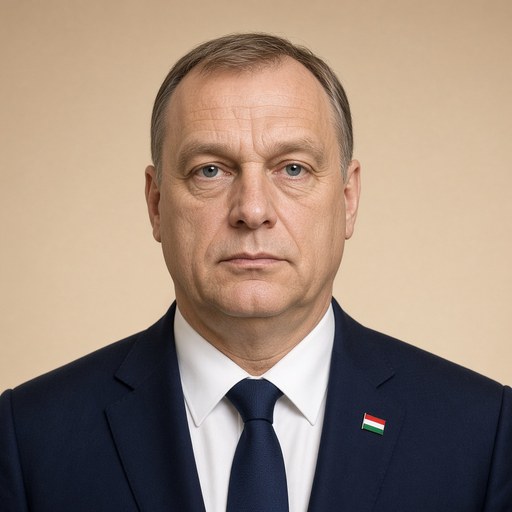
Viktor Orbán's laudation at the award ceremony of the Foundation for a Civic Hungary.
 Viktor Orbán · Prime Minister of Hungary
- Context
- Orbán delivered a laudation at the 20th award ceremony of the Foundation for a Civic Hungary, honoring János Martonyi on December 16, 2024.
- Main themes
- Civic Hungary, Foundation for a Civic Hungary award, János Martonyi, Hungarian right-wing political unity, post-communist political culture change, Fidesz history, civic community building, anti-communist legacy, Hungarian political history, Prize for a Civic Hungary
- Duration
- ~11 min
- Words
- 1,374
- Sentences
- 76
- Readability
- 60
- Grade
- 9.3
- Syntax
- 2.75
- Vocabulary
- 2.35
Translated from German
The broad sphere of national life a sentence belongs to. Every sentence has an Arena, so it is the denominator the other indices are read against.
Other76 sentences in 7 paragraphs
Dear Presidents and their spouses! Dear Mr. Speaker of Parliament! Dear János Martonyi and Rozál Rábai! Ladies and gentlemen! My dear friends!
From János Martonyi, I learned the wisdom of life that "the first sign of idiocy is when someone says how long they have been doing something." I can translate this into my own language in this way: Routine kills. That is the difference between the mindset of a lawyer and that of a politician in the castle, while the essence remains the same. This idea of János eventually became one of the fundamental principles of Fidesz. It is not in itself an argument that someone has been doing something for a long time. I mention this also because we are awarding the Prize for a Civic Hungary for the twentieth consecutive time. But the value of the prize is not determined by the number of years. Traditions are important, but what this prize means here and now is even more important. And here and today, dear friends, we are doing nothing less than finally honoring someone without whom we would not be here today. The Foundation for a Civic Hungary would not be here, the public would not be here, and the successes of the right in the last thirty years would certainly not have happened. Thirty years ago, it was 1994. That was the year when we received the worst blows in our history. The Hungarian right was in ruins. Three small parties with a few percent sat in Parliament, in contrast to a monstrous coalition of Socialists and Liberals who quickly joined them. There was the MDF, which was orphaned after the death of József Antall, there were the Christian Democrats, and there were us, young Democrats, who were not exactly in the best shape. It was clear that we were weak individually and that we needed to unite as one. I remember sitting with János Martonyi and a few of us in a small pub near Batthyány Square to discuss how to move forward. The rest is already history. The right came together, won the next elections, and is still the leading force in Hungary today. But on that day, something else happened, and that was primarily thanks to János. He told us, the young politicians of that time, that this was about a much greater task than just pooling forces. We must build a civic Hungary, we must reshape public life in Hungary, we must free the country from the communist reflexes that would repeatedly pull it back into the swamp of the left. We must build not just a party, but also a community, a community that can serve as a stable foundation for a new political era. With this insight, János Martonyi was ahead of his time. What János called innovative back then is today trivial. Winning elections is one thing, but changing the political culture is the real task. We know the rest of the story. First, the Association of Hungarian Civic Cooperation was founded, then the Foundation for a Civic Hungary, later the Civic Circles, and so on and so forth. In 1998, we only won the election. Thanks to the philosophy and work of János, we also changed the culture after 2010. The country has truly freed itself from the old socialist reflexes, we have reshaped the institutions, we have given Hungary a new constitution, we have built a civic Hungary. We thank you, János Martonyi!
Ladies and gentlemen!
János Martonyi comes from a genuine, highly educated family, one of the great legal dynasties of Szeged, alongside the families Trócsányi and Sulyok. Members of such families were put to a hard test in the 20th century. The ravages of the communists destroyed the environment that made this patriotic way of life, which takes responsibility for oneself and the community, possible. Back then, the communists wanted to convince Hungarians that we were not capable of shaping our own lives; they wanted to rob people of the conviction that we could advance with talent and hard work, that it was worth taking responsibility for our families and ourselves. They wanted to impose the idea on us that the nation has no value, that there is no God, and that the homeland, like everything else, is for sale. In this respect, these old communists are not so different from today's progressive liberals, but that is a topic for another speech. In the dark years of communist rule, it was families like the Martonyi family that preserved the civic ideals. János told me how important it was for his father to learn Western languages even in the darkest years of the dictatorship, that one should not immerse oneself in the narrow horizons of the dictatorship, that one should also follow world events from behind the Iron Curtain. The reflexes of civic existence must be preserved, for if there is ever to be a free Hungary, they will be very much needed. This has proven to be so true that we also drew on these reflexes when founding the Foundation for a Civic Hungary and the Association of Hungarian Civic Cooperation.
Ladies and gentlemen! Dear János!
But the intellectuals of our time, if they are Hungarian, bear a different burden that has nothing to do with communism. A Hungarian cannot escape public life, no matter how much they might wish to. A Hungarian is characterized by the fact that they must enter the political stage for their principles and ideals. They can only assert their principles and values by fighting for them. János Martonyi could not escape this fate. I know very well that although his heart was always devoted to the teaching profession and a career as a lawyer, as an international lawyer, he found his way into politics from time to time – to our great fortune. Thus, he first became Secretary of State in the Antall government and then Foreign Minister in the Fidesz government. As a politician, as Foreign Minister, he also fought for the values and principles he brought from home. He placed his open reflexes towards the civic world in the service of his homeland. He was convinced that national existence and European identity are not only compatible but also mutually dependent. And although we had debates about where the boundaries between the two lie and how they can be reconciled, we somehow always managed to overcome the difficulties. The task is not easy. How difficult the matter is is shown by the fact that a French ambassador who served with us once noted the fact of János's birth in Kolozsvár. Encouraged by this, he asked him whether he did not originally belong to the Romanian nation. For the correct answer, one does not need a doctorate, but only knowledge of the stronger expressions of the vernacular, but the synthesis of nationality and European identity is a much more difficult intellectual task here in Central Europe. Popularity is already too little; indeed, more than a dissertation is required, most likely the work of a lifetime. And János Martonyi did not shy away from it. Throughout his life, he maintained the view that the essence of European integration lies in the preservation of national identity and that therefore integration without the strengthening of nations is not possible. He made this doctrine the official policy of Hungary for Europe. His work is fundamentally aligned with the nation-building efforts of István Széchenyi and Gyula Andrássy; he has defined Hungary's place in the world and brought Hungary, which had been pushed to the periphery, back into the ranks of educated and respected nations. As Foreign Minister, he made an invaluable contribution to Hungary's accession to the EU and to the integration of the country into the West. He was the one who led our country's first EU Council Presidency and always found time for his heartfelt concerns: international law and teaching. His work is not only an example for us but also a challenge. After János Martonyi, it became the guiding principle. I am convinced that today's award is in the best possible hands with János Martonyi, who has done everything possible to make Hungary a civic, sovereign, and respected country in the world.
Thank you!
The original German. The tags above are read on the English translation's sentences.
Sehr geehrte Herren Staatspräsidenten und ihre Gemahlinnen! Sehr geehrter Herr Parlamentspräsident! Lieber János Martonyi und Rozál Rábai! Sehr geehrte Damen und Herren! Meine lieben Freunde!
Von János Martonyi habe ich die Lebensweisheit gelernt, dass „das erste Zeichen der Verblödung ist, wenn jemand sagt, wie lange er etwas schon tut“. Ich kann dies in meine eigene Sprache auf die Weise übersetzen: Routine tötet. Das ist der Unterschied zwischen der Denkweise eines Anwalts und eines Politikers in der Burg, während das Wesentliche dasselbe ist. Diese Idee von János wurde schließlich zu einem der Grundprinzipien des Fidesz. Es ist an sich kein Argument, dass jemand etwas schon lange tut. Ich erwähne dies auch deshalb, weil wir den Preis für ein Bürgerliches Ungarn nun schon zum zwanzigsten Mal in Folge vergeben. Aber der Wert des Preises wird nicht durch die Anzahl der Jahre bestimmt. Traditionen sind wichtig, aber noch wichtiger ist, was dieser Preis hier und jetzt bedeutet. Und hier und heute, liebe Freunde, tun wir nichts weniger, als endlich jemanden zu ehren, ohne den wir heute nicht hier wären. Die Stiftung für ein Bürgerliches Ungarn wäre nicht hier, die Öffentlichkeit wäre nicht hier, und die Erfolge der Rechten in den letzten dreißig Jahren wären sicherlich ausgeblieben. Vor dreißig Jahren war das Jahr 1994. Das war das Jahr, in dem wir die schlimmsten Schläge in unserer Geschichte erhielten. Die ungarische Rechte lag in Trümmern. Drei kleine Parteien mit wenigen Prozent saßen im Parlament, im Gegensatz zu einer monströsen Koalition aus Sozialisten und Liberalen, die sich ihnen rasch angeschlossen hatten. Es gab das MDF, das nach dem Tod von József Antall verwaist war, es gab die Christdemokraten, und es gab uns, junge Demokraten, die nicht gerade im besten Zustand waren. Es war klar, dass wir einzeln schwach waren und dass wir uns zu einer Einheit zusammenschließen mussten. Ich erinnere mich, wie ich mich mit János Martonyi und einigen von uns in einer kleinen Kneipe unweit des Batthyány-Platzes zusammensetzte, um zu besprechen, wie es weitergehen sollte. Der Rest ist bereits Geschichte. Die Rechte kam zusammen, gewann die nächsten Wahlen und ist auch heute die führende Kraft in Ungarn. Aber an diesem Tag geschah noch etwas anderes, und das war vor allem János zu verdanken. Er sagte uns, den jungen Politikern von damals, dass es hier um eine viel größere Aufgabe geht, als nur die Kräfte zu bündeln. Wir müssen ein bürgerliches Ungarn aufbauen, wir müssen das öffentliche Leben Ungarns umgestalten, wir müssen das Land von den kommunistischen Reflexen befreien, die es immer wieder in den Sumpf der Linken zurückziehen würden. Wir müssen nicht nur eine Partei, sondern auch eine Gemeinschaft aufbauen, eine Gemeinschaft, die als stabiles Fundament für eine neue politische Ära dienen kann. Mit dieser Einsicht war János Martonyi seiner Zeit voraus. Was János damals als neuartig bezeichnete, ist heute trivial. Wahlen zu gewinnen ist eine Sache, aber die politische Kultur zu verändern ist die eigentliche Aufgabe. Den Rest der Geschichte kennen wir. Zuerst wurde der Verein der Ungarischen Bürgerlichen Zusammenarbeit gegründet, dann die Stiftung für ein Bürgerliches Ungarn, später die Bürgerkreise, und so weiter und so fort. 1998 haben wir nur die Wahl gewonnen. Dank der Philosophie und der Arbeit von János haben wir nach 2010 auch die Kultur verändert. Das Land hat sich wirklich von den alten sozialistischen Reflexen befreit, wir haben die Institutionen umgestaltet, wir haben Ungarn ein neues Grundgesetz gegeben, wir haben das bürgerliche Ungarn aufgebaut. Wir danken Dir, János Martonyi!
Meine sehr geehrten Damen und Herren!
János Martonyi stammt aus einer echten, hochgebildeten Familie, einer der großen Szegeder Juristendynastien, zusammen mit den Familien Trócsányi und Sulyok. Die Mitglieder solcher Familien wurden im 20. Jahrhundert auf eine harte Probe gestellt. Das Wüten der Kommunisten hat das Umfeld, das diese patriotische Lebensweise, die Verantwortung für sich selbst und die Gemeinschaft übernimmt, überhaupt erst möglich macht, vernichtet. Damals wollten die Kommunisten den Ungarn weismachen, dass wir nicht in der Lage sind, unser Leben selbst zu gestalten, sie wollten die Menschen der Überzeugung berauben, dass wir mit Talent und Fleiß weiterkommen, dass es sich lohnt, Verantwortung für unsere Familien und uns selbst zu übernehmen. Sie wollten uns den Gedanken aufzwingen, dass die Nation keinen Wert hat, dass es keinen Gott gibt und dass die Heimat, wie alles andere auch, zu verkaufen ist. In dieser Hinsicht unterscheiden sich diese alten Kommunisten gar nicht so sehr von den progressiven Liberalen von heute, aber das ist das Thema für eine andere Rede. In den dunklen Jahren der kommunistischen Herrschaft waren es Familien wie die Martonyi-Familie, die die bürgerlichen Ideale bewahrten. János erzählte mir, wie wichtig es für seinen Vater war, auch in den dunkelsten Jahren der Diktatur westliche Sprachen zu lernen, dass man nicht in die engen Horizonte der Diktatur eintauchen sollte, dass man auch das Weltgeschehen von hinter dem Eisernen Vorhang aus verfolgen sollte. Die Reflexe der bürgerlichen Existenz müssen bewahrt werden, denn wenn es jemals ein freies Ungarn geben soll, werden sie sehr benötigt werden. Das hat sich so sehr bewahrheitet, dass wir auch bei der Gründung der Stiftung für ein Bürgerliches Ungarn und des Vereins der Ungarischen Bürgerlichen Zusammenarbeit auf diese Reflexe zurückgegriffen haben.
Meine sehr geehrten Damen und Herren! Lieber János!
Aber die Intellektuellen unserer Zeit, wenn sie Ungarn sind, haben eine andere Last zu tragen, die nichts mit dem Kommunismus zu tun hat. Ein Ungar kann sich dem öffentlichen Leben nicht entziehen, so sehr er es sich auch wünschen mag. Ein Ungar zeichnet sich dadurch aus, dass er für seine Prinzipien und Ideale die politische Bühne betreten muss. Er kann seine Prinzipien und Werte nur durchsetzen, wenn er für sie kämpft. János Martonyi konnte diesem Schicksal nicht entgehen. Ich weiß sehr wohl, dass er, obwohl sein Herz immer dem Lehrerkatheder und einer Karriere als Jurist, als internationaler Anwalt, zugetan war, von Zeit zu Zeit zur Politik fand – zu unserem großen Glück. So wurde er zunächst Staatssekretär in der Regierung Antall und dann Außenminister in der Fidesz-Regierung. Als Politiker, als Außenminister, kämpfte er auch für die Werte und Prinzipien, die er von Zuhause mitgebracht hatte. Er stellte seine der bürgerlichen Welt gegenüber aufgeschlossenen Reflexe in den Dienst seiner Heimat. Er war davon überzeugt, dass nationale Existenz und Europäertum nicht nur miteinander vereinbar sind, sondern sich auch gegenseitig bedingen. Und obwohl es zwischen uns Debatten darüber gab, wo die Grenzen zwischen beiden liegen und wie sie miteinander in Einklang gebracht werden können, haben wir es irgendwie immer geschafft, die Schwierigkeiten zu überwinden. Die Aufgabe ist nicht einfach. Wie schwierig die Angelegenheit ist, zeigt die Tatsache, dass ein französischer Botschafter, der bei uns Dienst tat, einmal die Tatsache der Geburt von János in Kolozsvár bemerkte. Dadurch ermutigt, fragte er ihn, ob er denn nicht doch ursprünglich der rumänischen Nation angehöre. Für die richtige Antwort braucht man keinen Doktortitel, sondern nur die Kenntnis der stärkeren Ausdrücke der Volkssprache, aber die Synthese von Nationalität und Europäertum ist hier, in Mitteleuropa, eine viel schwierigere intellektuelle Aufgabe. Die Volkstümlichkeit ist da schon zu wenig, ja mehr als eine Dissertation ist erforderlich, am ehesten die Arbeit eines ganzen Lebens. Und János Martonyi hat sich nicht davor gescheut. Sein ganzes Leben lang vertrat er die Auffassung, dass das Wesen der europäischen Integration in der Wahrung der nationalen Identität besteht und daher eine Integration ohne die Stärkung der Nationen nicht möglich ist. Er machte diese Doktrin zur offiziellen Politik Ungarns für Europa. Sein Wirken ist wesentlich mit dem Landesaufbau durch István Széchenyi und Gyula Andrássy eins, er hat Ungarns Platz in der Welt abgesteckt und das an die Peripherie gedrängte Ungarn wieder in die Reihen der gebildeten und angesehenen Nationen zurückgeführt. Als Außenminister leistete er einen unschätzbaren Beitrag zum Beitritt Ungarns zur EU und zur Integration des Landes in den Westen. Er war es, der die erste EU-Ratspräsidentschaft unseres Landes leitete und dabei immer Zeit für seine Herzensangelegenheiten fand: das internationale Recht und die Lehre. Seine Arbeit ist für uns nicht nur ein Beispiel, sondern auch eine Herausforderung. Nach János Martonyi wurde sie zur Richtschnur. Ich bin überzeugt, dass die heutige Auszeichnung bei János Martonyi in die bestmöglichen Hände gelangt, der alles, was möglich war, getan hat, um Ungarn zu einem bürgerlichen, souveränen und in der Welt geachteten Land zu machen.
Dank dafür!