




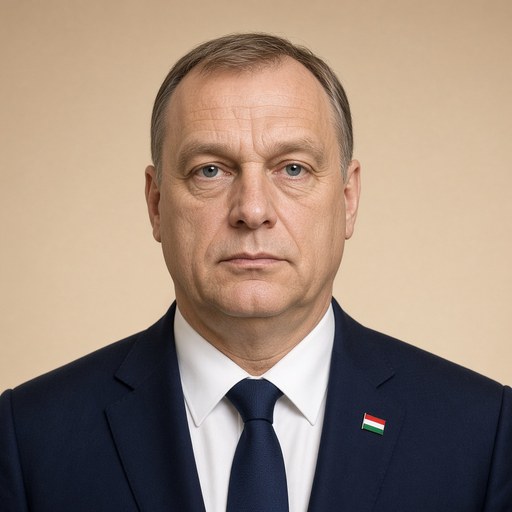
Speech by Prime Minister Viktor Orbán at the opening ceremony for the new permanent exhibition at the Museum of Ethnography
 Viktor Orbán · Prime Minister of Hungary
- Context
- Orbán addressed guests at the opening of the new permanent exhibition at Budapest's Museum of Ethnography, part of the Városliget urban regeneration project, on 10 October 2024.
- Main themes
- Hungarian folk culture and ethnography, Museum of Ethnography permanent exhibition, Városliget regeneration and Liget Budapest Project, Hungarian national identity and traditions, cultural heritage preservation, Hungarian material culture, architectural achievement, resistance to change and national survival, government cultural investment
- Duration
- ~9 min
- Words
- 1,075
- Sentences
- 68
- Readability
- 58
- Grade
- 9.1
- Syntax
- 2.73
- Vocabulary
- 2.21
The broad sphere of national life a sentence belongs to. Every sentence has an Arena, so it is the denominator the other indices are read against.
Other68 sentences in 11 paragraphs
Ladies and Gentlemen,
When we were here two and a half years ago, few of us could have imagined that not only would we like this building so much, but that the whole world would see it as beautiful. As we have just heard from the Director General, since 2022 the building of the Ethnographic Museum has received no fewer than twelve international awards. It has received award after award in Switzerland, the Netherlands, China, Singapore, Germany, Italy and France, and it has even received admiring reviews on the other side of “the Pond”. Around the world buildings are built to wide acclaim, which makes everyone happy, but one’s heart is doubly glad when a great building is the work of a Hungarian – in this case Marcel Ferencz. Without him we would not be standing here today. We thank him and congratulate him on the awards.
Ladies and Gentlemen,
This museum handover is an integral part of our efforts to regenerate the whole of the City Park [Városliget]. We believe that Városliget is not only a public park, but also a pilgrimage site for Hungarian national culture. János Arany – perhaps the greatest exponent of the Hungarian language – was a frequent visitor here. He wrote that “the Liget’s path stinks like carrion, it is surrounded by ruined palaces, and within it beggars, crime and misery appear on every corner.” Like all men of good taste, Arany was perturbed by the shabby, dilapidated state of his beloved park. It seemed that this park was coming to the end of its days. Twenty years ago, it was again in a shocking condition. The City of Budapest was unable – or perhaps unwilling – to improve its condition, so the Government had to step in. So we decided to create order and renew it. After all, it is not appropriate for a country that is constantly – even spectacularly – developing and strengthening to have such a threadbare and run-down large park. So we launched the Liget Budapest Project. This was perfect – except for its name. We do not know why we called it a project, but perhaps it is because it is a modern cultural development – and certainly one of the most significant, largest and highest-quality in Europe. The country has been enriched by the construction of cultural venues on a scale not seen since 1896. We designed it, we completed it, and we have made it a success. Let us remind ourselves that we have also achieved this against a headwind. But we are past that now, so we do not need to harp on about it here, but somewhere else. Let us note that, looking at the composition of the new City Assembly, Budapest Council should have occupied itself with the city’s affairs, rather than fighting with the Government.
Ladies and Gentlemen,
The good cause finally won, and with it the whole of Hungary has won. The renewal of the Liget is moving forward with great momentum. Now a new permanent exhibition has been created here in the Ethnographic Museum. This is what we are celebrating today. Now it is not only the exterior that can receive awards, but also the interior. From today, with this permanent exhibition, the Ethnographic Museum can finally fulfil its calling. It provides a place for the artefacts of Hungarian folk culture. The prophecy of Ferenc Sebő, our generation’s great, prophetic folk music researcher and father of the Hungarian táncház [folk “dance house”] movement, made a prediction which many of us remember to this day: “Tradition need not be healed, for it is not sick, nor is it to be guarded, for it is not a prisoner; our traditions can only be survive if we live them.” I think that in Europe’s current situation it is not an exaggeration to add to this the idea that we Hungarians can only survive if we live our culture and our traditions.
The world is undergoing huge changes. Innovations in technology are turning our lives upside down. Every day millions of people are setting off to find new homes. There is upheaval and wars. A bloody war is raging in a country neighbouring us. Everything is in a state of change. And for us Hungarians change is a challenge. First of all, we have to decide which changes are good for us and therefore need to be supported, and which are harmful and therefore need to be resisted. We must weigh these up. We must weigh them up, and for this we need a stable, Archimedean point. The Archimedean point for Hungarian life and the Hungarian future is Hungarian culture – including material culture. Our objects tell us what kind of people we are. When we look at the artefacts of Hungarians from olden times, we see a world of wonder. Antique men’s shaving mirrors, the rear sides of which depict fighting outlaws, demonstrating life’s eternal struggle. Antique women’s bonnets with floral motifs symbolising both ephemerality and continuity. Antique maidens’ hope chests, decorated with tulips representing women, and upturned hearts representing men. This is marriage: a mother is a woman and a father is a man. Objects from a healthy Hungarian world, where things were still in their natural place.
Ladies and Gentlemen, Dear Friends,
If a nation loses its folk culture, it loses the ability to judge what is right and what is wrong. It becomes confused, it does not know what is harmful to it and what is beneficial. And then come confused ideas, truths turned upside down and absurd reasoning – for example, that the family is not a community of one man and one woman, but an infinite variety of conceptual configurations. Or that diversity has value – even if it breeds crime and terror. Or that in order to live in peace we must therefore wage a hopeless war. I could continue listing such exasperating, sick fantasies. This week I had the pleasure of engaging in a debate in Strasbourg; and, believe me, the situation is serious. We should thank God that here things are still in their place, that common sense is still operational, and there is still a prevailing order that has seeped into our modern lives from folk culture.
Ladies and Gentlemen,
Today we are strengthening the order that preserves Hungarian identity. This is another watch-post. In a world-class museum we have opened a world-class exhibition. We give thanks for it.