




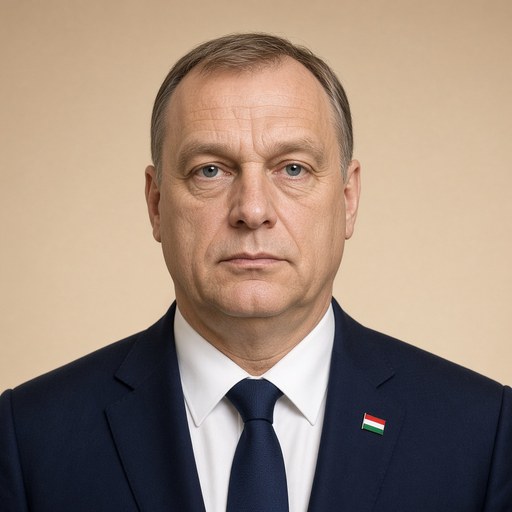
Speech by Viktor Orbán at the opening event of the Hungarian Chamber of Commerce and Industry
 Viktor Orbán · Prime Minister of Hungary
- Context
- Orbán addressed the opening event of the Hungarian Chamber of Commerce and Industry on 8 March 2025, outlining government priorities and cooperation with the Chamber's new leadership.
- Main themes
- Government-business relations, Hungarian Chamber of Commerce and Industry, EU regulation implementation, economic policy, corporate tax and VAT, job creation, capital and credit programs, year of breakthroughs, Széchenyi Card, Chamber leadership cooperation
- Duration
- ~59 min
- Words
- 7,051
- Sentences
- 290
- Readability
- 52
- Grade
- 11.9
- Syntax
- 3.08
- Vocabulary
- 2.05
Translated from German
The broad sphere of national life a sentence belongs to. Every sentence has an Arena, so it is the denominator the other indices are read against.
Other290 sentences in 35 paragraphs
I would like to welcome you and especially the new leadership of the Chamber.
At the end of the speech, I was startled – when I listened to the Minister of Finance, excuse me, the President of the Central Bank, or it could have been, but I heard something I have never heard before: the expression "patient central bank policy." I wonder what that means in terms of lending, but we will probably not find that out now, but only in the discussions after the conference.
Before I go into my remarks, I would like, if you allow me, to respond to three points raised by my predecessors. The first is that we are in the right place. Few know it, but I want to tell you that there are many more cultural and economic events in this institution than sports events. This shows that when one can take off the blinders of political stupidity and look at the matter itself, economic promotion measures like the construction of this stadium make sense. One does not like to admit one's mistakes; that is just how humans are made, but here I must unfortunately admit a mistake. When looking at the visitor numbers, the stadium is too small; a larger one should have been built.
The President, President Elek Nagy, spoke before me about adopting the standards of the European Union. Here, I would like to ask the Chamber for help. The state is not able to adopt EU regulations to an appropriate extent and pace. It is not worth setting such expectations for us. I try to impose such demands on my staff, on the bureaucrats, but I fail, and I must admit that I will continue to fail. Because for those whose task it is to implement the regulations of the European Union, there is only one criterion: to implement them as quickly and as completely as possible, and I cannot offer them a counter-proposal, because then they do not know what their task is and what they are being paid for. The well-known phenomenon that EU regulations are implemented faster than necessary and deeper than necessary can only be prevented if there is another actor interested in a meaningful, planned, and sufficient implementation. That could be the Chamber. If you, the policymakers, do not support us from here, the logic will always prevail to adopt the rules as quickly and as completely as possible, even if this does not seem sensible and beneficial for the Hungarian economy as a whole or for certain segments of it. Therefore, I ask you, Mr. President, to support us in the other direction so that we can choose a different approach when deciding on the depth and timing of the implementation of EU regulations.
And finally, the President concluded by saying that we – to quote Öcsi Puskás – must play beautiful, offensive football. I would like to inform those present that there will be no shortage of that. This is a year of breakthroughs, and breakthroughs can only be achieved through attack. I remember a scene in the locker room of the parliamentary team when our late colleague Jenő Lasztovicza announced the lineup for the match against the English Parliament. I look at the lineup; everyone is a forward. I say, "Jenő, who will defend here?" And Jenő says, "Well, the opponent!" So if one wants to imagine the year 2025 as the Hungarian government intends, one must imagine the year in some way like that.
What I have to say is: Thank you for the invitation, dear Mr. President, and now that the Chamber has a new leadership, the most important topic I must address is how the relationship between the government and the new Chamber leadership will be. We can best understand this by looking at how it was. Before 2010, before the elections of 2010, we concluded the first significant agreement between the future governing party and the then world of Hungarian entrepreneurs. At that time, VOSZ was still at the center of this agreement, and Sándor Demján finalized this agreement before the election. Routine counts for a lot. There were five points in the agreement. We publicly shook hands on a podium and pledged that we would fulfill these five commitments and that the entrepreneurs would support the government and the future governing party.
We fulfilled four of the five points. The first point was: "We will reduce the tax burden on companies to the regional level within four years." Before 2010, this was much higher. Today, we have the lowest corporate tax and the third-lowest VAT in the Union, so, as the Minister of Finance, the Minister of Economy would say: checked off. The second agreement was to launch public capital and credit programs. Nothing else was mentioned by my predecessors. We also have a large program named after Mr. Demján worth 1,400 billion Forint. And the Minister of Economy already spoke earlier about the Széchenyi Card and the government's support for it. Our third agreement was the creation of one million new jobs over ten years. At that time, this was a matter that caused general amusement. I was not laughed at; I was not laughed at because of Sándor Demján, not because of me, so it was more a matter of public mockery; no one believed that it was possible, and yet we could all see from the numbers that it happened. And finally, our fourth agreement was that 50% of EU funds should go to small and medium-sized enterprises. I can give you an average figure for the last five years: 51 out of 100 Forint of EU funds have gone to SMEs in the last five years. So four out of five goals have been achieved, one has not. It would have been better if we had fulfilled all five, but if we want to speak honestly with each other, we must also ask the question of who of us has achieved more in relation. We promised to fulfill five out of five, and you promised to support us. I think if four out of five entrepreneurs support us, we are even. I fear that is not yet the case, so we can return to the fifth point later.
Ladies and gentlemen!
The second era is associated with President László Parragh. At that time, we also made agreements with each other. These were as follows. The Hungarian economy should grow above the average of the European Union – checked off. The investment rate should be above 25 percent – here one or two years of deviation may be forgivable, but essentially it has happened. Unemployment should be below 4 percent – that is the point where we are staggering. Let the government pursue an outward investment policy and support capital exports – we can say that our capital exports have doubled since 2010; that is a success. I can only absolve the Hungarian entrepreneurs who are successful at home from the accusation that they enjoy an advantage due to state support, who take the risk of going abroad and proving themselves there. Because if someone is competitive abroad, they will naturally also be successful at home because they are competitive and have a good track record. I therefore explicitly encourage all those who want to continue to work well with the government in the future to go abroad and prove their competitiveness there, and in doing so, they also give us political support. And our sixth agreement with László Parragh was that there should be a significant reduction in corporate taxes. Since 2010, the tax burden has decreased by 6%, so I think we have kept our agreements from that time.
How will it continue with the new leadership? From my remarks, it is clear that the new leadership of the Chamber could not have found a better partner. In the business world, we tend to fulfill the agreements we make with each other excellently, and we are ready to do so. This was also the theme of the meeting before this conference, where I understood what the President expects from us. That is what he also spoke about here. The tone was not quite the same; in closed circles, a stronger language is allowed. The President is calling for a simplification of taxes and a reduction of bureaucracy, and he sees a form of tax reduction in tax simplification. I think we can agree on that. I would like to point out that the Hungarian government is ready to make an agreement with the new leadership of the Chamber, as we did with the previous ones, and that the agreements should consist of clear, achievable points, and that we should set a deadline for that. I propose that the matters we agree on now should be completed by July 1, and that this agreement should also include tax simplification, tax reductions, and a reduction of bureaucracy.
Ladies and gentlemen!
What I can tell you about future Hungarian economic policy is that its philosophical foundations, its essential elements, will not change. So you can expect what we have known in the last fifteen years in terms of economic, strategic, and political orientation. We are and will remain a government of tax reductions. There are all kinds of rankings that help assess tax systems internationally. In the rankings of the Tax Foundation – which we pay the most attention to – we have the seventh most competitive tax system among developed countries. It is legitimate to ask why we are not number one; we need to work on that. You have seen from the recent announcements, especially from the lifelong exemption from income tax for mothers with children, that the government has essentially introduced an element into the tax system that will determine the tax system in the long term, let us be clear about that. One cannot simply jump in and out of that. So we will have a tax system that is based on a threefold combination. The tax system must provide incentives for work, incentives for starting families, and for raising children, all with low taxes and tax benefits. Work, family, and taxes will be combined in this solution. We are now introducing this; it is beginning; we have already started moving in this direction with the family tax credits, but the structure of the tax system will not be changed by the introduction of the lifelong tax credit because one cannot take the lifelong tax credit away from those who have once received it. Everyone who knows politics knows exactly that this is the case, and that is why this is the tax system you should expect in the long term.
The second thing that is important for our predictability is that job creation will be the most important thing. We are not going back to the socialist economic model, and we do not want to bring back a social, aid-based economic system through the distribution of budgets, especially not through the distribution of budgets that do not exist. We think explicitly in a work-based system, and we want to reward, recognize, and appreciate performance, so job creation will continue to be one of our most important goals. I do not agree with those who say that we have run out of Hungarian labor in Hungary. According to our analysis, there are still about 300,000 people, Hungarian citizens, who can be employed. Of course, this requires training, a more regionally balanced economic policy, and many other things, but there are still at least 300,000 of our fellow citizens who would like to work but have not yet found the opportunity to do so.
The third pillar of economic policy that will remain constant in the coming period is the support for businesses. Earlier, in order to avoid a later communication skirmish with the Minister of Economy, you simply referred to the fact that the 320 billion Forints you received through the Széchenyi Card would also suffice for many other things. The lifelong exemption from income tax for mothers of three, for example, is worth about 150 billion Forints per year. With the Széchenyi Card, we are providing businesses with 320 billion. I would just like to point out that this is a very clear decision by a government, with serious political consequences, whether to distribute such a large sum according to a social, leftist approach or to give it instead to support businesses, so that you too can be in a better position with 320 billion Forints and can operate the economy. This is a question of the choice of values. I am convinced that if we do not appreciate entrepreneurs and businesses, if we do not recognize them, if we do not support them, if we do not make it clear that, since we live in a private economy, it is they who drive the entire economy, not the state apparatus and not politics, if we do not make this clear, the efficiency and economic power of the country will begin to decline. Therefore, the government will continue to support businesses and appreciate the work of Hungarian entrepreneurs. To show how true this is, we have had three years of war behind us, and in 2021, compared to the last year before the war, we pumped an additional 400 billion Forints into the economy during the three years of war to support businesses, especially small and medium-sized enterprises. We plan that this year, when we talk about breakthroughs, this will also apply to businesses. Compared to 2024, we will pump 1,730 billion Forints more into the Hungarian economy, primarily through entrepreneurs, especially small and medium-sized enterprises, an increase of almost 50 percent.
You can also count on the government's investment promotion policy as a permanent element. There is, of course, a technological change, as has already been said by more knowledgeable people before me, and I would just like to point out that we cannot be successful if we do not keep pace with the technological change taking place in the world. It is more than just digitization; it is digitization, but it is more than that, and that is one of the reasons, alongside various other economic considerations, why we cannot forgo foreign investments in Hungary. We need to bring in foreign capital investments that support the Hungarian economy in this technological change. There are many different aspects to consider when we give foreign companies opportunities in Hungary, and I will not list them all here, from job creation to the issue of territorial proportionality, but one of the most important aspects will be the technological approach in the future. Foreign investments that help the Hungarian economy make technological changes are particularly welcome. By the way, the share of foreign capital that is deposited and active here is the second highest in the region or perhaps in Europe, with only the Czechs ahead of us in this ranking. We have 55%, so 55% of foreign direct investments in Hungary as a percentage of total GDP, and the Czechs have a slightly higher value, which puts us in second place.
And finally, since the President of the Central Bank has spoken about the patient, mysterious, patient central bank policy, a few words must also be said about the issue of financial responsibility. The Minister of Economy had the full authority to say what he has just said here, namely how far we can go. Therefore, we must not give up the aspect, no matter what happens in the world, that after deducting debt service, the budget must be balanced. That is the scope of action that the Minister of Economy has. If our primary deficit also goes into negative territory, it could lead to financial instability in the country, which we cannot afford. So if patience is to be understood as this matter of the governor, so that the government does not act hastily but understands that there is a scope of action it has, and beyond that, it does not, then that could be the measure we need to keep in mind. I would also like to draw your attention to something that I hardly notice in public discussion and that may not even be known to you, namely that Hungary has had a government in the last fifteen years that has reduced the budget deficit in every election year. Our opponents claim the opposite, but there is no factual basis for that. The fact is that Hungary has had a government that has reduced the budget deficit in the years 2014, 2018, and 2022 – elections or not. This clearly shows that we are committed to budget discipline and cannot yield on this point, and I do not want to either.
If you allow me, I would like to say a few words on a topic that several of you have raised here, but it is not inappropriate to follow up on, and that is the development of the international environment, especially since I have just returned from the witch's kitchen. That was the topic of Thursday in Brussels, and therefore I can perhaps provide you with the information that will help you not only understand the world but also adjust your own calculations. First, I would like to reiterate that I had good reasons to veto the document on Ukraine signed by the other 26 countries of the European Union and to remove Hungary from this document. In this document, which of course no one has read but everyone is talking about, it is actually about sending more weapons to Ukraine in the near future and sending more money from Europe to Ukraine through weapons and beyond. Hungary has fought for three years to stay out of the war. For three years, we have not sent weapons and for three years we have not sent money to Ukraine. Now that the Americans are finally in our position, it would have been more than a mistake to give up this national position; it would have been a culpable act. For three years, we have resisted international aggression so that we do not drift into war. We have not sent weapons and have not given money, only for humanitarian purposes. It would be a mistake to give this up at the last moment, no matter how great the pressure is, and therefore I ask you to support the Hungarian government so that we can maintain our peace-friendly position. In the three years of war, the Hungarian economy has lost 20 billion euros. That is the loss of the Hungarian economy. If there is a country that has an interest in ending the war as quickly as possible, if possible by tomorrow morning, if there is a country that has a real interest in this, it is Hungary, because losing 20 billion euros in three years is a very significant blood loss for such a large economy as Hungary's. And we should be glad that finally someone else besides us and a great power with significantly more weight than us, the United States, is saying the same thing as we are. And let us not succumb to the European siren song of sending more weapons and more money, but let us defend ourselves and stay out. Those who criticize the government here at home for not signing this agreement with 26 countries are actually saying that we should send more weapons and more money to Ukraine. That is a mistake; let us not take this position, let us not drift into this war.
What happens after the war? That may be the most important question in the international environment. First of all, we do not need to worry about the security of Hungary, because after the war, NATO will still exist, and Hungary is a member of NATO, and the owners of the two largest NATO armies, the United States and Turkey, are Hungary's two closest allies. So those who are worried about the security of Hungary do not know what they are talking about, because as long as NATO exists and Hungary maintains close relations with both the United States and Turkey, we are at the center of NATO, and through NATO and of course through our own Hungarian army, we can guarantee the security of the country. So there will be military security. This uncertainty factor can be safely excluded; it is not worth including it in your calculations, not even in your economic calculations.
The second thing that will certainly happen after the war is the strategic alliance between the United States and Hungary. It is already politically established, and we are in the process of giving it an economic form. Our Foreign Minister was just in Washington, and there will be a Hungarian-American economic cooperation package that will be a great help to the Hungarian economy. This is good for us, even if in the meantime there is a tariff war, which Hungary will of course pay for, like every other country in the European Union. We do not yet know how big this will be, but we can be sure that it will exist. Not only because of what can be read in the economic press, that the Americans want to reduce their trade imbalance and their disadvantage towards Europeans, at least to reduce their losses or gain an advantage, but also because of what the Minister has said, that this is the best way for everyone to understand that it is best to invest in the United States because then they do not have to pay these tariffs. That is why the large German companies are rethinking their own investments head over heels and making large investments in the United States instead of in their own country, Germany. We need a package with the Americans that can limit or reduce these impacts on Hungarian territory to zero. We have the opportunity to do this, as we do not have a double taxation agreement, because the previous US government terminated it as a punishment, and we are negotiating its renewal, and there will also be other economic elements that will be able to compensate for the loss here in Hungary at the national economic level, both in monetary and real economic terms, caused by the tariffs imposed by the Americans against Europe.
What else will there be? Sooner or later, there will also be a policy of the European Union, because the fact that my predecessors were able to recognize the intentions of all political actors in the world, with the exception of the European Union, is no coincidence. It is not an indication of the limited capacity of the speakers, but an indication of the situation. I can report this to you firsthand, as we discussed it on Thursday. Even if the criticism we make of the leadership of the Union may be justified – and you know that I am not stingy in this regard – we must also consider, for the sake of fairness, that changes are required here to an extent that has not been seen in the last twenty or thirty years. The European Union must therefore do something that contradicts the logic of its previous way of working, and I am not sure whether it will be able to make this change. In this context, the Minister of Economy, when he wanted to describe this phenomenon before me, used the term "developing state," as the member states of the European Union and thus the entire European Union must transition from fiscal conservatism to the logic of a developing state, and that is the term he used. It is a suitable term to describe the essence of the problem. The core of the problem is, to put it simply, that the most important rule of the European Union so far has been that the budget deficits of member states must be below 3%, period. Anyone who deviates from this will be punished according to a predetermined system of sanctions. We see that our competitors do not do this, and we have heard figures that they have not done so for decades, and now the moment has come for the European Union to face the consequences arising from this.
Since Germany is the strongest state in the Union, the economic philosophy of the European Union is, if not entirely, then certainly to a decisive extent determined by the Germans. The prevailing economic philosophy in Germany is therefore also the prevailing economic philosophy in the European Union. From my professional perspective, it is a bit more acute than that, because the coalition patterns that work in Germany tend to also work in Brussels, but that may be less your problem. The Germans are faced with a difficult decision. We have talked about this in the past; I do not know if it is justified, but they are certainly on the verge of a decision to abandon classic German budgetary discipline. Let’s speak plainly! The plan that I was able to learn about on Thursday is not 500 billion euros, as we have seen here, but an 800 billion euro German economic package, which is to be spent on expanding infrastructure, whatever that may mean, and on increasing military capabilities. Let’s set aside the political implications of that. I mention it only because it is also exciting, and anyone who is interested should think about it. It is about the rearmament of Germany in the middle of Europe. There will be a German army. It will be the largest in Europe, it will be larger than all the others, and the industrial base that they want to build with this money will also be far larger than all the others. We have not seen anything like this since World War II. Whether the Americans and the Russians will allow this remains to be seen. We do not know what their stance is. At the moment, there is still confusion here. This is a new plan from Germany. The reactions of third parties to this challenge are only superficially known so far. What we can say for sure is that the Russians have no means to prevent this, the Americans have the means if they want to intervene, especially through the exchange rate of the dollar to the euro. Anyway, let’s set that aside for the moment. What we know is that the Germans have made a decision: an 800 billion euro package, fresh money for the economy. This is not Brussels money, because the Brussels figures are never true; they are lies, or how should I say, exaggerations, because in Brussels they do not say, we put this much money on the table and then we have this here, but they put some amount of money down, we do not know exactly how much, that will move a certain amount through various financial transactions, and that sum they give. But this is not fresh money; it is already a credit set in motion by fresh money, it is securities, guarantees, and resources made accessible by other means. But that is not what the Germans are talking about; the Germans are talking about real money, 800 billion euros that are on the table, from which loans, securities, and so on can then be created, so that the amount that actually flows into the German economy is not 800 billion euros, but will be much more due to the multiplier effect of the financial instruments. Whether it is good for Germany in the medium term that Germany is rearming, that there is again a large German army, that Germany is abandoning the debt brake and borrowing an enormous amount of money because it does not have the money, so the 800 billion euros are not there, it has to be taken as a loan beforehand and put on the table, which will then be used as collateral for further loans. Whether this is good for Germany and whether it is good for us in the medium term, I cannot tell you, because there are both opportunities and dangers on the table. Whether it will be good in the short term, I can tell you. In the short term, it will be very, very good, and in the short term, there could not be better news for the Hungarian economy. Because if the correlation holds, with which we may all be familiar in this room, how and in what way the Hungarian economy is connected to the German economy, and if money flows into the German economy and the German economy experiences economic growth and a corresponding upswing, this will almost immediately be reflected in the Hungarian economy through a certain rapid transmission system and boost the performance of the Hungarian economy. Again: I have no answer as to whether what will happen when the Germans become a heavily indebted country is strategically and medium-term good, but I am quite sure that it is good in the short term for you and for the entire Hungarian economy. You know the Germans: when they do something, they do it seriously. Even if they do the right thing, even if they do the wrong thing. They take it seriously here as well, and I mention this now only so that I can dispel any reservations someone may have about the quality of Hungarian democracy. Because to abolish this debt rule, a two-thirds majority in the German Parliament is required. As you know, there were elections there last week. There are a number of negotiations about forming a government with a plan to finish by Easter, which will somehow have a majority, but not a two-thirds majority. So how do you want to get rid of the debt brake, which can only be achieved with a two-thirds majority? By convening the failed, ousted Bundestag for a final session, in which the majority of the current parliament, that is, the governing majority of the now outgoing parliament, and the future large governing party CDU together form a two-thirds majority, and the already ousted parliament of the German citizens decides with a two-thirds majority to abolish the debt brake. That is the situation! It is legal because it is possible under the German Basic Law. And we do not want to interfere in that, but we expect more restraint when it comes to the rule of law and when Hungary is discussed. I am convinced that this will happen in Germany. The consequence for the European Union is: If my thesis is correct that the German economic philosophy determines the economic philosophy of the European Union, then the 3% rule will also be broken by the European Union. The previous rule that each member state of the European Union can only afford a deficit of 3% will therefore also belong to the past for us.
There are several points that are suitable for a breakthrough, probably two. The first is that the costs for defense spending do not have to be added to the 3% to a certain extent, so let’s say we spend 2%, the situation will not be so good, but for the sake of simplicity, let’s calculate that if we do not have to add these 2% to the budget deficit, our 3% deficit could rise to 5% if we decide so. That is one of the breakthrough points. The other is that the Union wants to borrow huge amounts of money after the huge debates that still lie ahead of us, wants to borrow money and wants to burden the entire European Union with German debts. The Hungarian constitution does not allow us to support this, and it states that such borrowing, i.e., borrowing outside the current seven-year budget – the RRF was an example of this, if you remember – requires the approval of two-thirds of the Hungarian Parliament. So we will have debates in the coming months about what should happen with Hungary’s participation in these programs if Brussels takes this path and wants to boost the European economy with all kinds of credit programs. We will have to discuss that.
And one more thing the European Union wants: it wants to keep Ukraine alive. That is, it has been decided without our involvement, but with implications for us, that the 800,000 strong Ukrainian army, which the Ukrainian president, who is also present, wants to increase to a million after the war and has announced that Ukraine cannot finance this with a single penny, must be financed by Europe, because the Americans have announced that they will not participate in this. The European Union is now trying to take on the financing of a million-strong army outside its own territory. We must finance the Ukrainian state, because the Ukrainian state cannot finance itself. Everyone remembers that Ukraine was on the brink of collapse before the war. The European Union therefore wants to finance the functioning of the Ukrainian state while simultaneously wanting to rearm, and it wants to provide European funds for this, and as compensation for the fact that the Ukrainians were not admitted to NATO, it wants to put them on the fast track to the European Union. I was previously uncertain about how to assess a decision in Brussels or in Germany, but I am sure that this decision in Brussels will destroy the European economy, and therefore it must not happen. Where we have a decisive say, that is in the membership in the EU; the other financial instruments can be created without us, but not the membership in the EU. And now, as the negotiation process regarding Ukraine's membership in the European Union has entered the substantive phase and we have established the forms and framework to a certain extent, we must now clarify whether we want to take on the financial burden associated with it or not. And this question is so serious that it can determine the fate of Hungary in the medium and long term. Therefore, it is important that we know the opinion of everyone, including yours, and I would like to invite all members of the Chamber of Commerce and their staff to participate in the opinion-expressing referendum; you should take this question seriously, examine it, and express your opinion.
Ladies and gentlemen!
So it is about the question of how the Hungarian strategy will look in the coming period in the international environment I mentioned, based on the strategic foundations that I initially referred to as elements of resilience. The Hungarian strategy is therefore based on the following idea. There must be no isolationism of any kind. This is positively expressed as economic neutrality. Regardless of which way the wind blows or how the lightning strikes, it is in the interest of the Hungarian economy to maintain the best possible economic relations with the USA, China, the EU, and Russia. And we must not accept any ideological or political constraints, because then we find ourselves, as you see, right in the middle of a trade war from which we cannot find a way out. That is why it is good to create the greatest possible leeway from the outset and to build as reasonable relations as possible with everyone, from the USA to the Russians, based on economic neutrality. This means that we must not get into the situation that the European Union has maneuvered itself into. Today, the European Union is an isolated actor in the world economy. It is at war or at least in a serious political dispute with the United States of America. It has just adopted a document that it has drafted against the peace initiative of the USA, in open conflict with the United States on the issue of the war. It is isolating itself from China because the Union itself has taken tax and customs initiatives, thus creating a conflict with China. And since the beginning of the war, it has isolated itself from Russia through sanctions, especially in the energy sector. Today, the Union is an isolated entity in the world. It is in conflict with America, China, and Russia. They are isolated. Hungary is not part of that; we have the best possible relations with the United States, with Russia, and with China. So when we talk about isolation, that applies to the Union, not to Hungary.
The second element of the Hungarian strategy for the near future is peace. I have already spoken about this; I will not repeat it. We cannot endure three more years of losses of 20 billion euros for the Hungarian economy, so we need peace.
The third point is the tax reduction, which I have also already spoken about, and in the longer term, we are now also cementing the Hungarian tax system, which connects family, work, and tax reduction.
The next pillar of the strategy is the Demján-Sándor Program, and I would like to ask the chamber to help us with its implementation. We have developed a framework, but as I said, the economy is not run by the government, nor by the Minister of Economy, painfully, nor by the President of the Central Bank, and even more painfully, not by the Prime Minister; the economy is actually driven by the economic actors, the entrepreneurs, by you. It is pointless for us to announce a Sándor-Demján Program if you do not help us implement it in a way that is best for the entrepreneurs. We urgently ask you to get involved.
And finally, the funds from the European Union will come, they are coming even now. The agricultural funds from the European Union are coming, the cohesion funds from the European Union are coming and will also come in the next period. There will be points where we will have to fight for another tranche or another amount of money, but we know these points, we know when they will come, and our negotiating positions are set. So we will have access to every cent of EU funds, just as we have access to them today, because EU funds are flowing continuously, both from the cohesion fund and from the EU's Common Agricultural Policy.
All in all, I can tell you that this is the situation, that this is our strategy, that this is the year of breakthrough that we have set for ourselves. You have heard, you have seen, you know best that there is a lot of money in the Hungarian economy, a lot of money in the companies, a lot of money in the households, and there is an enormous lending capacity in the banks. The challenge is to move this money this year and to use it in a meaningful way for economic growth and productivity. This is feasible. We have the competent people for it, we have the programs, and I very much hope that you have the appointed and elected leaders with whom we can carry out this process of creating economic dynamism.
All in all, I would like to add just this much, not to bore you, but just to show you that I am not just talking aimlessly when I speak of a lot of money. Currently, there are 4,682 state investments in Hungary. The value of these investments amounts to 12.5 trillion forints. There are 2,949 projects under construction worth almost 6,000 billion forints. 1,733 are in planning. Thirteen priority construction projects are underway. Ten major road construction projects worth 1,270 billion forints are under construction. In the field of railway construction – what I am talking about does not include the construction of the Budapest-Belgrade railway line – there are 29 projects worth 754 billion forints under construction.
It is also important to know that we will not give up on the development of Budapest, as the economic weight of Budapest is crucial for the national economy, but I must also add that the previous proportions cannot be maintained. It looks like Budapest is at 165-167% of the EU's development level. Enormous investments are currently being made in the city, of which I would like to mention just a few. The railway project of the southern bypass. The Péter Pázmány University, we are talking about several hundred billion forints here. The renovation of Buda Castle, to name just a few, and the tram lines that are newly connecting to the transport network. So there are large development programs in Budapest, but apart from the ongoing ones, we cannot currently launch new programs in Budapest for the obvious reasons mentioned here, and we need to direct the funds available for development towards rural objectives based on regional development and mobilize them in the interest of opening up the rural areas. These are huge numbers. I expect that just as we have succeeded in putting the eastern part of the country on an industrially innovative, powerful, and dynamic course that will soon catch up with the most developed regions of the country in the west, we will be able to do the same work with the southern regions of the country, where we have the biggest problems, both in Transdanubia and in the Great Plain. We will concentrate these development resources there, and then the strategy I have presented to you here will not only be implemented, but it will be implemented in a way that is fair to the country.
Dear Mr. President Elek Nagy.
Thank you for the invitation. Elek, I thank you for the opportunity to have a discussion today. Thank you for the prospect of an agreement. I would like to point out once again that I hope we can achieve this by July; July 1 is the deadline, the halfway point in government and budget policy, and if you want to achieve something this year, Mr. President, if you want to achieve something, dear Elek, then the agreement must be reached one or two months before July so that we can realize it by the end of the legislative period in July. Regarding tax simplification, tax reduction, and bureaucracy reduction, the government is 100 percent at the chamber's disposal.
Thank you for listening to me.
The original German. The tags above are read on the English translation's sentences.
Ich möchte Sie und insbesondere die neue Führung der Kammer begrüßen.
Hier am Ende der Rede war ich erschrocken – als ich dem Finanzminister, Verzeihung, dem Notenbankpräsidenten zuhörte, oder hätte es sein können, aber ich habe etwas gehört, was ich noch nie zuvor gehört habe: den Ausdruck „geduldige Zentralbankpolitik“. Ich frage mich, was das in Bezug auf die Kreditvergabe bedeutet, aber das werden wir wahrscheinlich nicht jetzt herausfinden, sondern erst in den Diskussionen nach der Konferenz.
Bevor ich auf meine Ausführungen eingehe, möchte ich, wenn Sie gestatten, auf drei Punkte reagieren, die von meinen Vorrednern angesprochen wurden. Der erste ist, dass wir am richtigen Ort sind. Nur wenige wissen es, aber ich möchte Ihnen sagen, dass es in dieser Einrichtung viel mehr kulturelle und wirtschaftliche Veranstaltungen gibt als Sportveranstaltungen. Das zeigt, dass, wenn man die Scheuklappen der politischen Dummheit ablegen kann und die Sache selbst betrachtet, Wirtschaftsförderungsmaßnahmen wie der Bau dieses Stadions sinnvoll sind. Man gibt seine Fehler nicht gerne zu, der Mensch ist halt so gemacht, aber hier muss ich leider einen Fehler zugeben. Wenn man sich die Besucherzahlen anschaut, dann ist das Stadion zu klein, man hätte ein größeres bauen müssen.
Der Präsident, Präsident Elek Nagy, hat vor mir über die Übernahme der Normen der Europäischen Union gesprochen. Hier möchte ich die Kammer um Hilfe bitten. Der Staat ist nicht in der Lage, die EU-Vorschriften in einem angemessenen Umfang und Tempo zu übernehmen. Es lohnt sich nicht, solche Erwartungen an uns zu stellen. Ich versuche, solche Forderungen an meine Mitarbeiter, an die Bürokraten zu stellen, aber ich scheitere, und ich muss zugeben, dass ich weiterhin scheitern werde. Denn für diejenigen, deren Aufgabe es ist, die Vorschriften der Europäischen Union umzusetzen, gibt es nur ein Kriterium: sie so schnell und so vollständig wie möglich umzusetzen, und ich kann ihnen keinen Gegenvorschlag machen, denn dann wissen sie nicht, was ihre Aufgabe ist und wofür sie bezahlt werden. Das bekannte Phänomen, dass EU-Vorschriften schneller als nötig und tiefer als nötig umgesetzt werden, kann also nur verhindert werden, wenn es einen weiteren Akteur gibt, der an einer sinnvollen, planmäßigen und ausreichenden Umsetzung interessiert ist. Das könnte die Kammer sein. Wenn Sie uns, die politischen Entscheidungsträger, nicht von hier aus unterstützen, wird sich immer die Logik durchsetzen, die Regeln so schnell und so vollständig wie möglich zu übernehmen, auch wenn dies für die ungarische Wirtschaft insgesamt oder für bestimmte Segmente davon nicht sinnvoll und vorteilhaft erscheint. Deshalb bitte ich Sie, Herr Präsident, uns in die andere Richtung zu unterstützen, damit wir bei der Entscheidung über die Tiefe und den Zeitpunkt der Umsetzung von EU-Vorschriften einen anderen Ansatz wählen.
Und schließlich sagte der Herr Präsident abschließend, dass wir – um Öcsi Puskás zu zitieren – einen schönen, offensiven Fußball spielen müssen. Ich möchte den Anwesenden mitteilen, dass es daran nicht mangeln wird. Dies ist ein Jahr der Durchbrüche, und Durchbrüche kann man nur durch Angriff erzielen. Ich erinnere mich an eine Szene in der Umkleidekabine der Parlamentsmannschaft, als unser verstorbener Kollege Jenő Lasztovicza die Mannschaftsaufstellung für das Spiel gegen das englische Parlament bekannt gab. Ich schaue mir die Aufstellung an, jeder ist ein Stürmer. Ich sage: „Jenő, wer wird hier verteidigen?“ Und Jenő sagt: „Na, der Gegner!“ Wenn man sich also das Jahr 2025 so vorstellen will, wie es die ungarische Regierung beabsichtigt, muss man sich das Jahr in irgend so einer Weise vorstellen.
Was ich zu sagen habe: Vielen Dank für die Einladung, sehr geehrter Herr Präsident, und jetzt, wo die Kammer eine neue Führung hat, ist das wichtigste Thema, über das ich sprechen muss, wie die Beziehung zwischen der Regierung und der neuen Kammerführung sein wird. Wir können das am besten verstehen, wenn wir uns anschauen, wie es war. Vor 2010, vor den Wahlen 2010, schlossen wir das erste bedeutende Abkommen zwischen der zukünftigen Regierungspartei und der damaligen Welt der ungarischen Unternehmer. Damals stand der VOSZ noch im Mittelpunkt dieser Vereinbarung, und Sándor Demján hat diese Vereinbarung noch vor der Wahl unter Dach und Fach gebracht. Die Routine zählt viel. Es gab fünf Punkte in der Vereinbarung. Wir haben uns damals öffentlich auf einem Podium die Hände geschüttelt und zugesagt, dass wir diese fünf Verpflichtungen erfüllen und die Unternehmer die Regierung und die künftige Regierungspartei unterstützen werden.
Vier der fünf Punkte haben wir erfüllt. Der erste Punkt lautete: „Wir werden die Steuerlast für Unternehmen innerhalb von vier Jahren auf das regionale Niveau senken.“ Vor 2010 war diese viel höher. Heute haben wir die niedrigste Körperschaftssteuer und die drittniedrigste Mehrwertsteuer in der Union, also, wie der Finanzminister, der Wirtschaftsminister, sagen würde: abgehakt. Die zweite Vereinbarung bestand darin, öffentliche Kapital- und Kreditprogramme aufzulegen. Nichts anderes wurde von meinen Vorrednern erwähnt. Wir haben auch ein großes Programm in Höhe von 1.400 Milliarden Forint nach Herrn Demján selbst benannt. Und der Wirtschaftsminister hat bereits vorhin über die Széchenyi-Karte und die Unterstützung der Regierung dafür gesprochen. Unsere dritte Vereinbarung war die Schaffung von einer Million neuer Arbeitsplätze über zehn Jahre. Das war damals eine Angelegenheit, die allgemeine Heiterkeit hervorrief. Ich wurde nicht ausgelacht, ich wurde nicht wegen Sándor Demján ausgelacht, nicht wegen mir, es war also eher eine Sache des öffentlichen Spotts, niemand hat geglaubt, dass das möglich ist, und doch wir konnten alle an den Zahlen sehen, dass es passiert ist. Und schließlich war unsere vierte Vereinbarung, dass 50 % der EU-Gelder an kleine und mittlere Unternehmen gehen sollten. Ich kann Ihnen einen Durchschnittswert für die letzten fünf Jahre nennen: 51 von 100 Forint an EU-Geldern sind in den letzten fünf Jahren an KMU gegangen. Vier von fünf Zielen sind also erreicht worden, eines nicht. Es wäre natürlich besser gewesen, wenn wir alle fünf erfüllt hätten, aber wenn wir ehrlich miteinander reden wollen, müssen wir auch die Frage stellen, wer von uns beiden im Verhältnis mehr geleistet hat. Wir haben versprochen, fünf von fünf zu erfüllen, und Sie haben versprochen, uns zu unterstützen. Ich denke, wenn vier von fünf Unternehmern uns unterstützen, sind wir quitt. Ich fürchte, das ist noch nicht der Fall, also können wir später auf den fünften Punkt zurückkommen.
Meine sehr geehrten Damen und Herren!
Die zweite Ära ist mit Präsident László Parragh verbunden. Auch damals haben wir miteinander Abkommen geschlossen. Diese lauteten wie folgt. Die ungarische Wirtschaft sollte über dem Durchschnitt der Europäischen Union wachsen – abgehakt. Die Investitionsquote sollte über 25 Prozent liegen – hier sind vielleicht ein oder zwei Jahre Abweichung verzeihlich, aber im Wesentlichen ist es geschehen. Die Arbeitslosigkeit sollte unter 4 Prozent liegen – das ist der Punkt, an dem wir taumeln. Lassen Sie die Regierung eine Investitionspolitik nach außen betreiben und den Kapitalexport unterstützen – wir können sagen, dass sich unsere Kapitalexporte seit 2010 verdoppelt haben, das ist ein Erfolg. Ich kann immer nur die ungarischen Unternehmer, die zu Hause erfolgreich sind, von dem Vorwurf entlasten, dass sie wegen der staatlichen Unterstützung einen Vorteil genießen, die es auf sich nehmen, ins Ausland zu gehen und sich dort beweisen. Denn wenn jemand im Ausland wettbewerbsfähig ist, dann wird er natürlich auch im Inland erfolgreich sein, weil er wettbewerbsfähig ist und eine gute Erfolgsbilanz hat. Ich ermutige daher ausdrücklich alle, die auch in Zukunft gut mit der Regierung zusammenarbeiten wollen, ins Ausland zu gehen und dort ihre Wettbewerbsfähigkeit unter Beweis zu stellen, und damit geben sie uns auch politische Unterstützung. Und unsere sechste Vereinbarung mit László Parragh war, dass es eine deutliche Senkung der Unternehmenssteuern geben sollte. Seit 2010 ist die Steuerlast um 6 % gesunken, daher denke ich, dass wir unsere Vereinbarungen aus dieser Zeit eingehalten haben.
Wie wird es mit der neuen Führung weitergehen? Aus meinen Ausführungen geht hervor, dass die neue Führung der Kammer keinen besseren Partner hätte finden können. In der Geschäftswelt neigen wir dazu, die Vereinbarungen, die wir miteinander treffen, in hervorragender Weise zu erfüllen, und wir sind bereit, dies zu tun. Dies war auch das Thema des Treffens vor dieser Konferenz, bei dem ich verstanden habe, was der Präsident von uns verlangt. Das ist es, worüber er auch hier gesprochen hat. Der Ton war nicht ganz derselbe; in geschlossenen Kreisen ist eine stärkere Sprache erlaubt. Der Präsident fordert sozusagen eine Steuervereinfachung und einen Bürokratieabbau, und eine Form der Steuersenkung sieht er in der Steuervereinfachung. Ich denke, da können wir uns einigen. Ich möchte darauf hinweisen, dass die ungarische Regierung bereit ist, mit der neuen Führung der Kammer eine Vereinbarung zu treffen, wie wir es mit den vorherigen getan haben, und dass die Vereinbarungen aus klaren, erreichbaren Punkten bestehen sollten, und dass wir dafür eine Frist setzen sollten. Ich schlage vor, dass die Dinge, auf die wir uns jetzt einigen, bis zum 1. Juli erledigt sein sollten, und dass diese Vereinbarung auch Steuervereinfachung, Steuersenkungen und Bürokratieabbau beinhalten sollte.
Meine sehr geehrten Damen und Herren!
Was ich Ihnen über die künftige ungarische Wirtschaftspolitik sagen kann, ist, dass sich ihre philosophischen Grundlagen, ihre wesentlichsten Elemente, nicht ändern werden. Man kann also das erwarten, was wir in den letzten fünfzehn Jahren an wirtschaftlicher, strategischer und politischer Orientierung gekannt haben. Wir sind und bleiben also eine Regierung der Steuersenkungen. Es gibt alle möglichen Rankings, die helfen, die Steuersysteme international zu beurteilen. In den Rankings der Tax Foundation – auf die wir am meisten achten – haben wir das siebtwettbewerbsfähigste Steuersystem unter den entwickelten Ländern. Es ist legitim, zu fragen, warum wir nicht die Nummer eins sind, daran müssen wir arbeiten. Sie haben an den jüngsten Ankündigungen gesehen, insbesondere an der lebenslangen Befreiung von der Einkommenssteuer für Mütter mit Kindern, dass die Regierung im Wesentlichen ein Element in das Steuersystem eingeführt hat, das das Steuersystem auf längere Sicht bestimmen wird, lassen Sie uns das ganz klar sagen. Man kann also da nicht einfach hinein- und herausspringen. Wir werden also ein Steuersystem haben, das auf einer dreifachen Kombination beruht. Das Steuersystem muss Anreize zur Arbeit, Anreize zur Familiengründung und zur Kindererziehung bieten, und das alles mit niedrigen Steuern und Steuervergünstigungen. Arbeit, Familie und Steuern werden in dieser Lösung miteinander kombiniert. Wir führen dies jetzt ein, es beginnt, wir haben mit den Familiensteuergutschriften bereits begonnen, uns in diese Richtung zu bewegen, aber die Struktur des Steuersystems wird durch die Einführung der lebenslangen Steuergutschrift nicht verändert, denn man kann die lebenslange Steuergutschrift nicht denen wegnehmen, die sie einmal erhalten haben. Jeder, der die Politik kennt, weiß genau, dass dies der Fall ist, und deshalb ist dies das Steuersystem, auf das Sie sich längerfristig einstellen sollten.
Das Zweite, was für unsere Berechenbarkeit wichtig ist, ist, dass die Schaffung von Arbeitsplätzen das Wichtigste sein wird. Wir gehen also nicht zurück zur sozialistischen Wirtschaftsweise, und wir wollen nicht durch die Verteilung von Budgets, vor allem nicht durch die Verteilung von Budgets, die es nicht gibt, ein soziales, auf Hilfe basierendes Wirtschaftssystem zurückbringen. Wir denken ausgesprochen in einem arbeitsbasierten System, und wir wollen Leistung belohnen, anerkennen und wertschätzen, so dass die Schaffung von Arbeitsplätzen weiterhin eines unserer wichtigsten Ziele sein wird. Ich stimme nicht mit denen überein, die sagen, dass uns in Ungarn die ungarischen Arbeitskräfte ausgegangen sind. Unserer Analyse zufolge gibt es in Ungarn immer noch etwa 300.000 Menschen, ungarische Staatsbürger, die beschäftigt werden können. Natürlich bedarf es dazu einer Ausbildung, einer regional ausgewogeneren Wirtschaftspolitik und vieler anderer Dinge, aber es gibt immer noch mindestens 300.000 unserer Mitbürger, die gerne arbeiten würden, aber noch nicht die Möglichkeit dazu gefunden zu haben scheinen.
Der dritte Pfeiler der Wirtschaftspolitik, der in der kommenden Zeit konstant bleiben wird, ist die Unterstützung der Unternehmen. Sie haben vorhin, um ein späteres Kommunikationsgeplänkel mit dem Wirtschaftsminister zu vermeiden, einfach nur darauf verwiesen, dass die 320 Milliarden Forint, die Sie durch die Széchenyi-Karte erhalten haben, für viele andere Dinge auch noch reichen würden. Die lebenslange Befreiung von der Einkommenssteuer für dreifache Mütter ist zum Beispiel etwa 150 Milliarden Forint pro Jahr wert. Mit der Széchenyi-Karte geben wir den Unternehmen 320 Milliarden. Ich möchte nur darauf hinweisen, dass es sich hier um eine ganz klare Entscheidung einer Regierung handelt, mit schwerwiegenden politischen Folgen, ob sie eine so große Summe nach einem sozialen, linken Ansatz verteilen soll oder ob sie sie stattdessen zur Unterstützung der Unternehmen geben soll, damit auch Sie mit 320 Milliarden Forint besser dastehen und die Wirtschaft betreiben können. Das ist eine Frage der Wahl der Werte. Ich bin davon überzeugt, dass, wenn wir die Unternehmer und die Unternehmen nicht wertschätzen, wenn wir sie nicht anerkennen, wenn wir sie nicht unterstützen, wenn wir nicht deutlich machen, dass, da wir in einer Privatwirtschaft leben, sie es sind, die die gesamte Wirtschaft leiten, nicht der Staatsapparat und nicht die Politik, wenn wir das nicht deutlich machen, werden die Effizienz und die Wirtschaftskraft des Landes zu sinken beginnen. Deshalb wird die Regierung auch weiterhin die Unternehmen unterstützen und die Arbeit der ungarischen Unternehmer schätzen. Um zu zeigen, wie sehr dies zutrifft, haben wir drei Kriegsjahre hinter uns, und im Jahr 2021 haben wir im Vergleich zum letzten Jahr vor dem Krieg während der drei Kriegsjahre 400 Milliarden Forint zusätzlich in die Wirtschaft gepumpt, um die Unternehmen, insbesondere die kleinen und mittleren Unternehmen, zu unterstützen. Wir planen, dass dieses Jahr, wenn wir von Durchbrüchen sprechen, dies auch für die Unternehmen gilt. Im Vergleich zu 2024 werden wir 1.730 Milliarden Forint mehr Geld in die ungarische Wirtschaft pumpen, und zwar über die Unternehmer, vor allem über die kleinen und mittleren Unternehmen, eine Steigerung von fast 50 Prozent.
Ebenso können Sie auf die Politik der Investitionsförderung durch die Regierung als dauerhaftes Element zählen. Es gibt natürlich einen technologischen Wandel, wie schon von sachkundigeren Leuten vor mir gesagt wurde, und ich möchte nur darauf hinweisen, dass wir nicht erfolgreich sein können, wenn wir nicht mit dem technologischen Wandel, der sich in der Welt vollzieht, Schritt halten. Es ist mehr als die Digitalisierung, es ist die Digitalisierung, aber es ist mehr als das, und das ist einer der Gründe, neben verschiedenen anderen wirtschaftlichen Erwägungen, warum wir nicht auf ausländische Investitionen in Ungarn verzichten können. Wir müssen die ausländischen Kapitalinvestitionen, die die ungarische Wirtschaft bei diesem technologischen Wandel unterstützen, ins Land holen. Es gibt viele verschiedene Aspekte, die zu berücksichtigen sind, wenn wir ausländischen Unternehmen Möglichkeiten in Ungarn geben, und ich werde sie hier nicht alle aufzählen, von der Schaffung von Arbeitsplätzen bis zur Frage der territorialen Verhältnismäßigkeit, aber einer der wichtigsten Aspekte wird in Zukunft der technologische Ansatz sein. Ausländische Investitionen, die der ungarischen Wirtschaft helfen, technologische Veränderungen vorzunehmen, sind besonders willkommen. Übrigens ist der Anteil des ausländischen Kapitals, das hier deponiert und tätig ist, im Verhältnis zum GDP der zweithöchste in der Region oder vielleicht in Europa, nur die Tschechen stehen in dieser Rangfolge vor uns. Wir haben 55 %, also 55 % der ausländischen Direktinvestitionen in Ungarn als Prozentsatz des Gesamt-GDP, und die Tschechen haben einen etwas höheren Wert, womit wir an zweiter Stelle stehen.
Und schließlich, da der Präsident der Zentralbank von der geduldigen, geheimnisvollen, geduldigen Zentralbankpolitik gesprochen hat, müssen auch ein paar Worte zur Frage der finanziellen Verantwortung gesagt werden. Der Wirtschaftsminister hatte die volle Autorität, das zu sagen, was er hier gerade gesagt hat, nämlich wie weit wir gehen können. Wir dürfen also nicht den Aspekt aufgeben, was auch immer in der Welt geschieht, dass nach Abzug des Schuldendienstes der Haushalt ausgeglichen sein muss. Das ist der Handlungsspielraum, den der Wirtschaftsminister hat. Wenn unser Primärdefizit auch in den negativen Bereich geht, könnte das zu einer finanziellen Instabilität im Lande führen, die wir uns nicht leisten können. Wenn also Geduld als diese Sache des Gouverneurs zu verstehen ist, damit die Regierung nicht überstürzt handelt, sondern versteht, dass es einen Spielraum gibt, den sie hat, und darüber hinaus nicht, dann könnte das die Maßnahme sein, die wir im Auge behalten müssen. Ich möchte Sie auch auf etwas aufmerksam machen, das ich in der öffentlichen Diskussion kaum wahrnehme und das vielleicht nicht einmal Ihnen bekannt ist, nämlich dass Ungarn in den letzten fünfzehn Jahren eine Regierung hatte, die in jedem Jahr einer Wahl, also in jedem Wahljahr, das Haushaltsdefizit reduziert hat. Unsere Gegner behaupten das Gegenteil, aber dafür gibt es keine faktische Grundlage. Tatsache ist also, dass Ungarn eine Regierung hatte, die das Haushaltsdefizit in den Jahren 2014, 2018 und 2022 gesenkt hat – Wahlen hin oder her. Das zeigt deutlich, dass wir uns der Haushaltsdisziplin verpflichtet fühlen und in diesem Punkt nicht nachgeben können und ich das auch nicht will.
Wenn Sie mir gestatten, möchte ich ein paar Worte zu einem Thema sagen, das von mehreren von Ihnen hier angesprochen wurde, aber es ist nicht unangemessen, daran anzuknüpfen, und das ist die Entwicklung des internationalen Umfelds, vor allem, weil ich gerade aus der Hexenküche zurückgekommen bin. Das war das Thema des Donnerstags in Brüssel, und deshalb kann ich Ihnen vielleicht die Informationen geben, die Ihnen helfen, nicht nur die Welt zu verstehen, sondern auch Ihre eigenen Berechnungen anzupassen. Zunächst möchte ich wiederholen, dass ich gute Gründe hatte, mein Veto gegen das von den anderen 26 Ländern der Europäischen Union unterzeichnete Dokument zur Ukraine einzulegen und Ungarn aus diesem Dokument herauszunehmen. In diesem Dokument, das natürlich niemand gelesen hat, über das aber alle reden, geht es eigentlich darum, in der nächsten Zeit mehr Waffen in die Ukraine zu schicken und mehr Geld aus Europa über Waffen und auch darüber hinaus in die Ukraine zu schicken. Ungarn hat drei Jahre lang gekämpft, um sich aus dem Krieg herauszuhalten. Drei Jahre lang haben wir keine Waffen und drei Jahre lang kein Geld in die Ukraine geschickt. Jetzt, wo die Amerikaner endlich in unserer Position sind, wäre es mehr als ein Fehler gewesen, diese nationale Position aufzugeben, es wäre eine schuldhafte Tat gewesen. Drei Jahre lang haben wir uns gegen die internationale Aggression gewehrt, damit wir nicht in den Krieg hineindriften. Wir haben keine Waffen geschickt und kein Geld gegeben, nur für humanitäre Zwecke. Es wäre ein Fehler, dies im letzten Moment aufzugeben, egal wie groß der Druck ist, und deshalb bitte ich Sie, die ungarische Regierung dabei zu unterstützen, damit wir an unserer friedensfreundlichen Position festhalten können. In den drei Jahren des Krieges hat die ungarische Wirtschaft 20 Milliarden Euro verloren. Das ist der Verlust der ungarischen Volkswirtschaft. Wenn es ein Land gibt, das ein Interesse daran hat, dass der Krieg so schnell wie möglich beendet wird, wenn möglich schon morgen früh, wenn es ein Land gibt, das ein wirkliches Interesse daran hat, dann ist es Ungarn, denn 20 Milliarden Euro in drei Jahren zu verlieren ist für eine so große Volkswirtschaft wie die ungarische ein sehr großer Blutverlust. Und wir sollten froh sein, dass endlich jemand anderes als wir und eine Großmacht mit einem wesentlich größeren Gewicht als wir, die Vereinigten Staaten, das Gleiche sagen wie wir. Und lassen Sie uns nicht dem europäischen Sirenengesang nachgeben, mehr Waffen und mehr Geld zu schicken, sondern verteidigen wir uns und halten uns raus. Diejenigen, die die Regierung hier zu Hause kritisieren, weil wir dieses Abkommen mit 26 Ländern nicht unterzeichnet haben, sagen in Wirklichkeit, dass wir mehr Waffen und mehr Geld in die Ukraine schicken sollten. Das ist ein Fehler, lassen Sie uns diese Position nicht einnehmen, lassen Sie uns nicht in diesen Krieg hineindriften.
Was geschieht nach dem Krieg? Das ist vielleicht die wichtigste Frage im internationalen Umfeld. Zunächst einmal brauchen wir uns keine Sorgen um die Sicherheit Ungarns zu machen, denn nach dem Krieg wird es immer noch die NATO geben, und Ungarn ist Mitglied der NATO, und die Besitzer der beiden größten NATO-Armeen, die Vereinigten Staaten und die Türkei, sind die beiden engsten Verbündeten Ungarns. Wer sich also Sorgen um die Sicherheit Ungarns macht, weiß nicht, wovon er spricht, denn solange es die NATO gibt und Ungarn enge Beziehungen sowohl zu den Vereinigten Staaten als auch zur Türkei unterhält, befinden wir uns im Zentrum der NATO, und durch die NATO und natürlich durch unsere eigene ungarische Armee können wir die Sicherheit des Landes garantieren. Es wird also eine militärische Sicherheit geben. Diesen Unsicherheitsfaktor kann man getrost ausschalten, es lohnt sich nicht in Ihren Kalkulationen, auch nicht in Ihren wirtschaftlichen Kalkulationen diesen miteinzubeziehen.
Das zweite, was nach dem Krieg mit Sicherheit eintreten wird, ist die strategische Allianz zwischen den Vereinigten Staaten und Ungarn. Sie ist politisch bereits etabliert, und wir sind dabei, ihr eine wirtschaftliche Form zu geben. Unser Außenminister war gerade in Washington, und es wird ein ungarisch-amerikanisches Wirtschaftskooperationspaket geben, das für die ungarische Wirtschaft eine große Hilfe sein wird. Das ist gut für uns, auch wenn es in der Zwischenzeit einen Zollkrieg gibt, auf den Ungarn natürlich draufzahlen wird, wie jedes andere Land der Europäischen Union auch. Wir wissen noch nicht, wie groß dieser sein wird, aber wir können sicher sein, dass es ihn geben wird. Nicht nur wegen dem, was man in der Wirtschaftspresse lesen kann, dass die Amerikaner ihr Handelsungleichgewicht und ihre Benachteiligung gegenüber den Europäern abbauen wollen, zumindest ihre Verluste verringern oder einen Vorteil erlangen wollen, sondern auch wegen dem, was der Herr Minister gesagt hat, dass dies der beste Weg ist, damit alle verstehen, dass es am besten ist, in den Vereinigten Staaten zu investieren, weil sie dann diese Zölle nicht zahlen müssen. Das ist der Grund, warum die großen deutschen Unternehmen ihre eigenen Investitionen Hals über Kopf überdenken und große Investitionen in den Vereinigten Staaten tätigen, anstatt in ihrem eigenen Land, in Deutschland. Wir brauchen ein Paket mit den Amerikanern, das diese Auswirkungen auf das ungarische Territorium begrenzt oder auf Null reduzieren kann. Wir haben die Möglichkeit, dies zu tun, da wir zum Beispiel kein Doppelbesteuerungsabkommen haben, weil die vorherige US-Regierung es als Strafe aufgekündigt hat, und wir verhandeln über seinen Neuabschluss, und es wird auch andere wirtschaftliche Elemente geben, die in der Lage sein werden, den Verlust hier in Ungarn auf nationaler wirtschaftlicher Ebene zu kompensieren, sowohl in monetärer als auch in realwirtschaftlicher Hinsicht, der durch die von den Amerikanern gegen Europa erhobenen Zölle entsteht.
Was wird es noch geben? Früher oder später wird es auch eine Politik der Europäischen Union geben, denn die Tatsache, dass meine Vorredner in der Lage waren, die Absichten aller politischen Akteure der Welt, mit Ausnahme der Europäischen Union, zu erkennen, ist kein Zufall. Es ist kein Hinweis auf die begrenzte Kapazität der Redner, sondern ein Hinweis auf die Situation. Ich kann Ihnen dies aus erster Hand berichten, denn wir haben am Donnerstag darüber gesprochen. Auch wenn die Kritik, die wir an der Führung der Union üben, vielleicht berechtigt ist – und Sie wissen, dass ich in dieser Hinsicht nicht geizig zu sein pflege –, müssen wir der Fairness halber auch bedenken, dass hier Veränderungen in einem Ausmaß erforderlich sind, wie es sie in den letzten zwanzig oder dreißig Jahren nicht gegeben hat. Die Europäische Union muss also etwas tun, was der Logik ihrer bisherigen Arbeitsweise zuwiderläuft, und ich bin mir nicht sicher, ob sie in der Lage sein wird, diesen Wandel zu vollziehen. In diesem Zusammenhang hat der Herr Wirtschaftsminister, als er vor mir dieses Phänomen schildern wollte, den Begriff „entwickelnder Staat“ verwendet, wie die Mitgliedstaaten der Europäischen Union und damit die gesamte Europäische Union von einem fiskalischen Konservatismus zur Logik eines entwickelnden Staates übergehen müssen, und das ist der Begriff, den er verwendet hat. Es ist ein geeigneter Begriff, um das Wesen des Problems zu beschreiben. Der Kern des Problems ist, um es einfacher auszudrücken, dass die wichtigste Regel der Europäischen Union bisher war, dass die Haushaltsdefizite der Mitgliedstaaten unter 3 % liegen müssen, Punkt. Wer davon abweicht, wird nach einem vorher festgelegten System von Sanktionen bestraft. Wir sehen, dass unsere Mitwettbewerber nicht das tun, und wir haben Zahlen gehört, dass sie das seit Jahrzehnten nicht tun, und jetzt ist der Moment gekommen, wo die Europäische Union den daraus entspringenden Konsequenzen ins Auge sehen muss.
Da Deutschland der stärkste Staat in der Union ist, wird die Wirtschaftsphilosophie der Europäischen Union, wenn nicht ganz, so doch in entscheidendem Maße von den Deutschen bestimmt. Die Wirtschaftsphilosophie, die in Deutschland vorherrscht, ist also auch die Wirtschaftsphilosophie, die in der Europäischen Union vorherrscht. Aus meiner beruflichen Sicht ist es ein wenig verschärfter als das, denn die Koalitionsmuster, die in Deutschland funktionieren, neigen dazu, auch in Brüssel zu funktionieren, Klammern zu, aber das ist vielleicht weniger Ihr Problem. Die Deutschen stehen vor einer schwierigen Entscheidung. Wir haben hier in der Vergangenheit darüber gesprochen, ich weiß nicht, ob es gerechtfertigt ist, aber sie stehen sicherlich kurz vor einer Entscheidung, die klassische deutsche Haushaltsdisziplin aufzugeben. Lassen Sie uns Klartext reden! Der Plan, den ich am Donnerstag kennenlernen konnte, ist nicht 500 Milliarden Euro, wie wir hier gesehen haben, sondern ein 800 Milliarden Euro schweres deutsches Volkswirtschaftspaket, welche 800 Milliarden Euro für den Ausbau der Infrastruktur, was auch immer das heißen mag, und für die Erhöhung der militärischen Fähigkeiten ausgegeben werden sollen. Lassen wir einmal die politischen Implikationen dessen beiseite. Ich erwähne es nur, weil es auch spannend ist, und jeder, der dazu Lust hat, sollte darüber nachdenken. Es geht um die Wiederaufrüstung Deutschlands mitten in Europa. Es wird eine deutsche Armee geben. Sie wird die größte in Europa sein, sie wird größer sein als alle anderen, und die industrielle Basis, die sie mit diesem Geld aufbauen wollen, wird auch weit größer sein als alle anderen. So etwas haben wir seit dem Zweiten Weltkrieg nicht mehr gesehen. Ob die Amerikaner und die Russen das zulassen werden, darauf gibt es im Moment noch keine Antwort. Wir wissen nicht, wie ihre Haltung ist. Im Moment herrscht hier noch Verwirrung. Es handelt sich um einen neuen Plan Deutschlands. Die Reaktionen der dritten Akteure auf diese Herausforderung sind bisher nur oberflächlich bekannt. Was wir mit Sicherheit sagen können, ist, dass die Russen keine Mittel haben, dies zu verhindern, die Amerikaner haben die Mittel, wenn sie sich einmischen wollen, vor allem durch den Wechselkurs des Dollars zum Euro, Klammer zu. Wie auch immer, lassen wir das für den Moment beiseite. Was wir wissen, ist, dass die Deutschen eine Entscheidung getroffen haben: 800 Milliarden Euro Paket, frisches Geld für die Wirtschaft. Das ist kein Brüsseler Geld, denn die Brüsseler Zahlen sind nie wahr, sie sind Lügen, oder wie soll ich sagen, Übertreibungen, denn in Brüssel sagt man nicht, wir legen so viel Geld auf den Tisch und dann haben wir das hier, sondern sie legen irgendeine Menge an Geld hin, wir wissen nicht genau wie viel, das wird durch verschiedene Finanztransaktionen einen bestimmten Betrag bewegen, und diese Summe geben sie an. Aber das ist kein frisches Geld, das ist bereits ein durch frisches Geld in Bewegung gesetzter Kredit, das sind Sicherheiten, Garantien und durch andere Mittel zugänglich gemachte Ressourcen. Aber das ist nicht das, worüber die Deutschen reden, die Deutschen reden über echtes Geld, 800 Milliarden Euro, die auf dem Tisch liegen, aus denen dann Kredite, Sicherheiten und so weiter geschaffen werden können, so dass der Betrag, der tatsächlich in die deutsche Wirtschaft fließt, nicht 800 Milliarden Euro beträgt, sondern durch den Multiplikatoreffekt der Finanzinstrumente viel mehr sein wird. Ob es mittelfristig gut ist, dass Deutschland wieder aufgerüstet wird, dass es wieder eine große deutsche Armee gibt, dass Deutschland die Schuldenbremse aufgibt und sich enorm viel Geld leiht, weil es das Geld nicht hat, also die 800 Milliarden Euro nicht da sind, es muss jetzt vorher als Kredit aufgenommen und auf den Tisch gelegt werden, der dann als Sicherheit für weitere Kredite verwendet wird. Ob das also gut für Deutschland ist und ob das mittelfristig gut für uns ist, kann ich Ihnen nicht sagen, denn es sind sowohl Chancen als auch Gefahren auf dem Tisch. Ob es auf kurze Sicht gut sein wird, kann ich Ihnen sagen. Kurzfristig wird es sehr, sehr gut sein, und kurzfristig könnte es keine besseren Nachrichten für die ungarische Wirtschaft geben. Denn wenn die Korrelation stimmt, mit der wir vielleicht alle in diesem Raum vertraut sind, wie und auf welche Weise die ungarische Wirtschaft mit der deutschen Wirtschaft verbunden ist, und wenn Geld in die deutsche Wirtschaft fließt und die deutsche Wirtschaft ein Wirtschaftswachstum und einen entsprechenden Aufschwung erfährt, wird sich dies über ein gewisses schnelles Übertragungssystem fast sofort in der ungarischen Wirtschaft widerspiegeln und die Leistung der ungarischen Wirtschaft ankurbeln. Noch einmal: Ich habe keine Antwort darauf, ob das, was passieren wird, wenn die Deutschen ein verschuldetes Land werden, strategisch und mittelfristig gut ist, aber ich bin mir ziemlich sicher, dass es kurzfristig für Sie und für die gesamte ungarische Volkswirtschaft gut ist. Sie kennen die Deutschen: Wenn sie etwas tun, dann tun sie es ernsthaft. Auch wenn sie das Richtige tun, auch wenn sie das Falsche tun. Auch hier machen sie es ernst, und ich erwähne das jetzt nur, damit ich, falls jemand Vorbehalte gegen die Qualität der ungarischen Demokratie hat, diese ausräumen kann. Denn um diese Schuldenregel abzuschaffen, ist eine Zweidrittelmehrheit im deutschen Parlament erforderlich. Wie Sie wissen, gab es dort letzte Woche Wahlen. Es gibt eine Reihe von Verhandlungen über die Bildung einer Regierung mit einem Plan, sie bis Ostern zu beenden, die irgendwie eine Mehrheit haben wird, aber keine Zweidrittelmehrheit. Wie will man also die Schuldenbremse loswerden, was nur mit einer Zweidrittelmehrheit zu erreichen ist? Indem man den gescheiterten, abgewählten Bundestag zu einer letzten Sitzung einberuft, in der die Mehrheit des jetzigen Parlaments, also die Regierungsmehrheit des jetzt auslaufenden Parlaments, und die künftige große Regierungspartei CDU zusammen eine Zweidrittelmehrheit bilden, und das bereits von den deutschen Bürgern abgewählte Parlament mit Zweidrittelmehrheit die Abschaffung der Schuldenbremse beschließt. Das ist die Situation! Sie ist legal, weil sie nach dem deutschen Grundgesetz möglich ist. Und da wollen wir uns nicht einmischen, sondern uns zurückhalten, aber wir erwarten mehr Zurückhaltung, wenn es um Rechtsstaatlichkeit geht und wenn über Ungarn gesprochen wird. Davon bin ich überzeugt, dass das in Deutschland passieren wird. Die Konsequenz für die Europäische Union ist: Wenn meine These stimmt, dass die deutsche Wirtschaftsphilosophie die Wirtschaftsphilosophie der Europäischen Union bestimmt, dann wird die 3 %-Regel auch von der Europäischen Union gebrochen werden. Die bisherige Regel, dass sich jeder Mitgliedstaat der Europäischen Union nur ein Defizit von 3 % leisten kann, wird also auch für uns der Vergangenheit angehören.
Es gibt mehrere Punkte, die für den Durchbruch geeignet sind, wahrscheinlich zwei. Der erste ist, dass die Kosten für die Verteidigungsausgaben bis zu einem gewissen Grad nicht zu den 3 % hinzugerechnet werden müssen, also sagen wir, wir geben 2 % aus, die Situation wird nicht so gut sein, aber lassen Sie uns der Einfachheit halber damit rechnen, dass, wenn wir diese 2 % nicht zum Haushaltsdefizit hinzurechnen müssen, unser 3 %-Defizit auf 5 % steigen könnte, wenn wir uns so entscheiden. Das ist einer der Durchbruchspunkte. Der andere ist, dass die Union nach den riesigen Debatten, die noch vor uns liegen, riesige Geldbeträge leihen will, Geld leihen will und nach den deutschen Schulden die gesamte Europäische Union verschulden will. Die ungarische Verfassung erlaubt uns nicht, dies zu unterstützen, und sie besagt, dass eine solche Kreditaufnahme, d.h. eine Kreditaufnahme außerhalb des laufenden Siebenjahreshaushalts – die RRF war ein Beispiel dafür, wenn Sie sich erinnern – die Zustimmung von zwei Dritteln des ungarischen Parlaments erfordert. Wir werden also in den kommenden Monaten Debatten darüber führen, was mit Ungarns Beteiligung an diesen Programmen geschehen soll, wenn Brüssel diesen Weg einschlägt und die europäische Wirtschaft mit allen möglichen Kreditprogrammen ankurbeln will. Das werden wir dann diskutieren müssen.
Und noch etwas will die Europäische Union: Sie will die Ukraine am Leben erhalten. Das heißt, es ist ohne unsere Beteiligung, aber mit Auswirkungen auf uns beschlossen worden, dass die 800. 000 Mann starke ukrainische Armee, die der ukrainische Präsident, der auch anwesend ist, nach dem Krieg auf eine Million aufstocken will und angekündigt hat, dass die Ukraine das nicht mit einem einzigen Pfennig finanzieren kann, von Europa finanziert werden muss, weil die Amerikaner angekündigt haben, dass sie sich nicht daran beteiligen werden. Die Europäische Union versucht nun also, die Finanzierung einer Millionenarmee außerhalb ihres eigenen Territoriums zu übernehmen. Wir müssen den ukrainischen Staat finanzieren, denn der ukrainische Staat kann sich nicht selbst finanzieren. Jeder erinnert sich, dass die Ukraine vor dem Krieg am Rande des Zusammenbruchs stand. Die Europäische Union will also das Funktionieren des ukrainischen Staates finanzieren, während sie sich gleichzeitig aufrüsten will, und sie will dafür europäische Mittel bereitstellen, und als Ausgleich dafür, dass die Ukrainer nicht in die NATO aufgenommen wurden, will sie sie auf die Überholspur in die Europäische Union bringen. Ich war mir vorher unsicher, wie ich eine Entscheidung in Brüssel oder in Deutschland beurteilen soll, aber ich bin mir sicher, dass diese Entscheidung in Brüssel die europäische Wirtschaft zerstören wird, und deshalb darf das nicht passieren. Dort, wo wir ein entscheidendes Mitspracherecht haben, das ist bei der Mitgliedschaft in der EU, die anderen finanztechnischen Instrumente können ohne uns geschaffen werden, aber die Mitgliedschaft in der EU nicht. Und jetzt, wo der Verhandlungsprozess über die Mitgliedschaft der Ukraine in der Europäischen Union in die inhaltliche Phase eingetreten ist und wir die Formen und den Rahmen so weit festgelegt haben, müssen wir jetzt deutlich machen, ob wir die finanzielle Last, die damit verbunden ist, auf uns nehmen wollen oder nicht. Und diese Frage ist so schwerwiegend, dass sie mittel- und langfristig über das Schicksal Ungarns entscheiden kann. Deshalb ist es wichtig, dass wir die Meinung aller kennen, auch die Ihre, und ich möchte daher alle Mitglieder der Industrie- und Handelskammer und ihre Mitarbeiter zur Teilnahme an der meinungsäußernden Volksabstimmung auffordern, Sie sollen diese Frage ernstnehmen, prüfen und ihre Meinung äußern.
Meine sehr geehrten Damen und Herren!
Es geht also um die Frage, wie die ungarische Strategie in der kommenden Periode in dem von mir erwähnten internationalen Umfeld aussehen wird, und zwar auf der Grundlage der strategischen Grundlagen, die ich eingangs als Elemente der Beständigkeit erwähnt habe. Die ungarische Strategie basiert also auf der folgenden Idee. Es darf kein Isolationismus irgendwelcher Art betrieben werden. Dies wird positiv ausgedrückt als wirtschaftliche Neutralität. Unabhängig davon, aus welcher Richtung der Wind weht oder wie der Blitz einschlägt, liegt es im Interesse der ungarischen Wirtschaft, die bestmöglichen wirtschaftlichen Beziehungen zu den USA, China, der EU und Russland zu unterhalten. Und dabei dürfen wir keine ideologischen oder politischen Zwänge akzeptieren, denn dann geraten wir, wie Sie sehen, mitten in einen Zollkrieg, aus dem wir keinen Ausweg finden. Deshalb ist es gut, sich von vornherein den größtmöglichen Spielraum zu verschaffen und mit allen, von den USA bis zu den Russen, möglichst vernünftige Beziehungen auf der Basis wirtschaftlicher Neutralität aufzubauen. Das bedeutet, dass wir nicht in die Situation geraten dürfen, in die sich die Europäische Union manövriert hat. Heute ist die Europäische Union ein isolierter Akteur in der Weltwirtschaft. Sie befindet sich im Krieg oder zumindest in einem ernsten politischen Streit mit den Vereinigten Staaten von Amerika. Sie hat gerade ein Dokument angenommen, das sie gegen die Friedensinitiative der USA verfasst hat, in offenem Konflikt mit den Vereinigten Staaten in der Frage des Krieges. Sie isoliert sich von China, weil die Union selbst Steuer- und Zollinitiativen ergriffen hat und damit einen Konflikt mit China. Und sie hat sich seit Beginn des Krieges durch Sanktionen, insbesondere im Energiebereich, von Russland isoliert. Heute ist die Union ein isoliertes Gebilde in der Welt. Sie befindet sich im Konflikt mit Amerika, China und Russland. Sie sind isoliert. Ungarn gehört nicht dazu, wir haben die bestmöglichen Beziehungen zu den Vereinigten Staaten, zu Russland und zu China. Wenn wir also von Isolation sprechen, dann gilt das für die Union, nicht für Ungarn.
Das zweite Element der ungarischen Strategie für die nächste Zeit ist der Frieden. Darüber habe ich bereits gesprochen, ich werde es nicht wiederholen. Wir können nicht drei weitere Jahre mit Verlusten von 20 Milliarden Euro für die ungarische Wirtschaft ertragen, also brauchen wir Frieden.
Der dritte Punkt ist die Steuersenkung, über die ich ebenfalls bereits gesprochen habe, und längerfristig zementieren wir jetzt auch das ungarische Steuersystem, das Familie, Arbeit und Steuersenkung miteinander verbindet.
Die nächste Säule der Strategie ist das Demján-Sándor-Programm, und ich möchte hier die Kammer bitten, uns bei der Umsetzung zu helfen. Wir haben einen Rahmen entwickelt, aber wie ich schon sagte, die Wirtschaft wird nicht von der Regierung am Laufen gehalten, auch nicht vom Wirtschaftsminister, schmerzlich, auch nicht vom Notenbankpräsidenten der Zentralbank, und noch schmerzlicher, auch nicht vom Ministerpräsidenten, die Wirtschaft wird in Wirklichkeit von den Wirtschaftsakteuren, den Unternehmern, von Ihnen betrieben. Es ist sinnlos, wenn wir ein Sándor-Demján-Programm ankündigen, wenn Sie uns nicht helfen, es so umzusetzen, dass es für die Unternehmer am besten ist. Wir bitten Sie dringend, sich daran zu beteiligen.
Und schließlich werden die Mittel der Europäischen Union kommen, sie kommen auch jetzt. Die Agrargelder der Europäischen Union kommen, die Kohäsionsgelder der Europäischen Union kommen und werden auch in der nächsten Periode kommen. Es wird Punkte geben, an denen wir um eine weitere Tranche oder einen weiteren Geldbetrag kämpfen müssen, aber wir kennen diese Punkte, wir wissen, wann sie kommen werden, und unsere Verhandlungspositionen sind festgelegt. Wir werden also Zugang zu jedem Cent der EU-Mittel haben, so wie wir heute Zugang zu ihnen haben, denn die EU-Mittel fließen ständig, sowohl aus dem Kohäsionsfonds als auch aus der Gemeinsamen Agrarpolitik der EU.
Alles in allem kann ich Ihnen also sagen, dass dies die Situation ist, dass dies unsere Strategie ist, dass dies das Jahr des Durchbruchs ist, den wir uns vorgenommen haben. Sie haben gehört, Sie haben gesehen, Sie wissen am besten, dass es in der ungarischen Wirtschaft viel Geld gibt, viel Geld in den Unternehmen, viel Geld in den Haushalten, und es gibt eine enorme Kreditvergabekapazität in den Banken. Die Herausforderung besteht darin, dieses Geld in diesem Jahr zu bewegen und es auf sinnvolle Weise für Wirtschaftswachstum und Produktivität einzusetzen. Das ist machbar. Wir haben die kompetenten Leute dafür, wir haben die Programme, und ich hoffe sehr, dass Sie die ernannten und gewählten Führungspersönlichkeiten haben, mit denen wir diesen Prozess der Schaffung einer wirtschaftlichen Dynamik durchführen können.
Alles in allem möchte ich vielleicht noch so viel hinzufügen, nicht um Sie zu langweilen, sondern nur um Ihnen zu zeigen, dass ich nicht nur so dahinrede, wenn ich von viel Geld spreche. In Ungarn gibt es derzeit 4.682 staatliche Investitionen. Der Wert dieser Investitionen beläuft sich auf 12,5 tausend Milliarden Forint. Im Bau befinden sich 2.949 Projekte im Wert von fast 6.000 Milliarden Forint. In Planung sind 1.733. Dreizehn vorrangige Hochbauprojekte sind im Gange. Zehn große Straßenbauprojekte im Wert von 1.270 Milliarden Forint befinden sich im Bau. Im Bereich des Eisenbahnbaus – wovon ich spreche beinhaltet nicht den Bau der Eisenbahnlinie Budapest-Belgrad – befinden sich 29 Projekte im Wert von 754 Milliarden Forint im Bau.
Es ist auch wichtig zu wissen, dass wir die Entwicklung Budapests nicht aufgeben werden, denn das wirtschaftliche Gewicht Budapests ist entscheidend für die nationale Wirtschaft, aber ich muss auch hinzufügen, dass die bisherigen Proportionen nicht beibehalten werden können. Es sieht also so aus, dass Budapest bei 165-167% des Entwicklungsgrades der EU liegt. In der Stadt werden gegenwärtig enorme Investitionen getätigt, von denen ich nur einige nennen möchte. Das Eisenbahnprojekt der Südumgehung. Die Péter Pázmány Universität, wir sprechen hier von mehreren hundert Milliarden Forint. Die Renovierung der Budaer Burg, um nur einige zu nennen, und die sich ans Verkehrsnetz neu anschließenden Straßenbahnlinien. Es gibt also große Entwicklungsprogramme in Budapest, aber abgesehen von den laufenden können wir in Budapest aus den hier genannten offensichtlichen Gründen derzeit keine neuen Programme auflegen, und wir müssen die für die Entwicklung zur Verfügung stehenden Mittel auf der Grundlage der regionalen Entwicklung auf ländliche Ziele ausrichten und sie im Interesse des Aufschließens des ländlichen Raums mobilisieren. Das sind riesige Zahlen. Ich erwarte, dass wir, so wie es uns gelungen ist, den östlichen Teil des Landes auf einen industriell innovativen, kraftvollen und dynamischen Kurs zu bringen, der bald zu den am weitesten entwickelten Regionen des Landes im Westen aufschließen wird, die gleiche Arbeit mit den südlichen Regionen des Landes leisten können, wo wir die größten Probleme haben, sowohl in Transdanubien als auch in der Tiefebene. Wir werden diese Entwicklungsressourcen dorthin konzentrieren, und dann wird die Strategie, die ich Ihnen hier vorgestellt habe, nicht nur umgesetzt werden, sondern sie wird auf eine Weise umgesetzt werden, die für das Land gerecht ist.
Sehr geehrter Herr Präsident Elek Nagy.
Vielen Dank für die Einladung. Elek, ich danke für die Gelegenheit, heute eine Unterredung zu führen. Vielen Dank, dass sich eine Einigung abzeichnet. Ich möchte noch einmal darauf aufmerksam machen, dass ich mir wünsche, dass wir das bis Juli erreichen können, der 1. Juli ist der Stichtag, der Halbjahrestag in der Regierungs- und Haushaltspolitik, und wenn Sie in diesem Jahr etwas erreichen wollen, Herr Präsident, wenn Ihr etwas erreichen wollt, lieber Elek, dann muss die Einigung ein oder zwei Monate vor Juli geschlossen werden, damit wir sie bis zum Ende der Legislaturperiode im Juli verwirklichen können. Was die Steuervereinfachung, die Steuersenkung, den Bürokratieabbau angeht, so steht die Regierung der Kammer zu 100 Prozent zur Verfügung.
Vielen Dank, dass Sie mich angehört haben.