




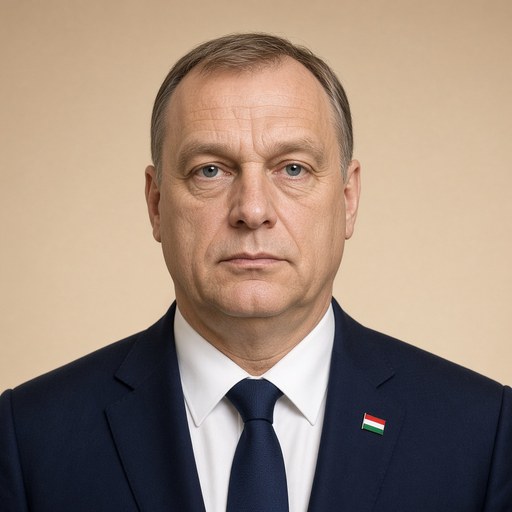
Viktor Orbán's speech at the re-consecration ceremony of St. Michael's Cathedral.
 Viktor Orbán · Prime Minister of Hungary
- Context
- Orbán spoke at the re-consecration ceremony of St. Michael's Cathedral in Veszprém, Hungary, celebrating its restoration and Hungary's Christian heritage.
- Main themes
- Christian heritage and Hungarian identity, re-consecration of St. Michael's Cathedral, defense of Christianity in Europe, Hungarian constitutional protection of Christian culture, historical persecution of the church, church renewal and nation-building, opposition to anti-Christian forces, St. Stephen's founding decision, European secularization, Blessed Gizella and Veszprém history
- Duration
- ~9 min
- Words
- 1,097
- Sentences
- 60
- Readability
- 54
- Grade
- 10.0
- Syntax
- 2.90
- Vocabulary
- 2.32
Translated from Hungarian
The broad sphere of national life a sentence belongs to. Every sentence has an Arena, so it is the denominator the other indices are read against.
Other60 sentences in 10 paragraphs
Most Reverend Archbishop, Bishops! Ladies and Gentlemen! Dear Christian Brothers and Sisters of Veszprém!
As we celebrate together today in this holy place, within the walls of the Veszprém Cathedral, we are not merely consecrating a building anew, but returning to the cornerstone of our own past, the foundation of Hungarian history. This is a tangible truth, for within the walls of the St. Michael Cathedral lie the building stones laid by Blessed Gizella. The history of Hungary and the light of Christianity are not two separate threads, but the very fibers of the same fabric. From the very beginning, when St. Stephen had to make a great decision about the fate of our people that would last for centuries, the choice of Christianity was not just a religious shift, but a historical determination and a personal decision: to belong to the Christian world and to build the Hungarian state guided by the light of faith. There is an old saying still used in the homeland of Blessed Gizella: "leave the church in the middle of the village." This means something like not to overreach, not to undertake something for which we do not have enough strength. But its original meaning may be that we should not hand over to anyone else the responsibility that divine laws have entrusted to the church built in the village. A profound warning: we must not let go of the compass that Christianity has held for two thousand years. Numerous harmful and many perhaps naive efforts are directed today in Europe to replace what is old, to invent and define the principles and moral order in which we wish to live, and to push out those who represent the way of life of our ancestors and their associations from the village, that is, from the center of our lives.
In Hungary, over the past one and a half decades, we have done precisely the opposite. We have strengthened those communities whose values and way of life have repeatedly preserved and maintained Hungarian identity and Christian Hungarian life throughout history. Our Fundamental Law states: "The protection of Hungary's Christian culture is the duty of every state organ." There is still much to be done for this responsibility to take shape. But it is good to know and see that the church has been serving among us without interruption for a thousand years, whether the wind is at our back, against us, in calm, or in storms steering the ship of the church. This service has placed the Veszprém Cathedral in the center of the city and raised it above the city. This height helps us lift our hearts and our gaze to higher, nobler goals. Everything that does not touch the heavenly dimension is transient. What does touch it is not transient, but constant, indeed eternal, that is, of a higher order. And who would want their life to sink in the waters of transience? Therefore, let us find peace when we lift our gaze to the cathedral.
Ladies and Gentlemen!
These walls, these towers, these stones have witnessed glory when the power of faith gathered armies capable of defending the nation, and they have seen destruction when foreign powers ravaged our land. They have seen when the power of faith sustained the Hungarian people, and they have also seen when the message of the Gospel dissolved in the noise of the world. They have seen that in the 1950s, thirty priests of the Veszprém Diocese suffered imprisonment and internment, and even the bishop was interned. They have seen when the religious orders were dissolved and church social institutions were nationalized. They have seen when the seminary was closed in 1951. They have seen when the agents of the State Church Office appointed to the bishop's hall placed the church under political supervision, the infamous mustached bishops. The oppression of the nation went hand in hand with the persecution of the church. We must never forget this. The anti-church and anti-Christian forces must not be taken lightly. The half-crazed agitators against our churches, the violent Lenin boys of today, the bolshevik militias shouting at priests have reappeared in Hungarian politics. We must stand against them in time and stand by ourselves. We will not give an inch of space to the harassment and persecution of Christian communities in Hungary. Instead, we will continue our work of building churches and the nation. In the past decade, nearly four thousand churches have been renewed across the Carpathian Basin, and more than two hundred new Christian churches have been built. And we will not deviate from this path, as it should be: one hand with the sword, the other with the trowel.
It is painful, but in once Christian Europe, different winds are blowing today. The continent that was once a church-building culture has become a civilization of church demolishers. In Germany, over twenty-five years, five hundred and fifty churches have been emptied, of which one hundred sixty have been demolished, and only fifty new ones have been built in their place. In France, last year, 1,700 churches were closed all year, and about 5,000 buildings are threatened with demolition or sale. The situation is similar in the Netherlands and England as well. Thank God, here in Central Europe, different winds are blowing. Central Europe endures, rising again and again. Here, they still know that if Christianity is lost, so is the homeland. Here, they still know: there are things that cannot be joked about, that must not be risked, that cannot be experimented with. Migration, child-rearing, families, national sovereignty.
The Czechs voted yesterday, and from the results, I read that the Czechs are wise. We remember St. Adalbert, we remember the Czech warriors of John Hunyadi, and we remember that on the field of Mohács, five hundred years ago, Czech soldiers also defended Hungary and Europe from invading armies. We rejoice from the heart at the overwhelming victory of Czech patriots yesterday, and of course, we are relieved to see that we can count on another comrade in the battles in Brussels.
Honorable Ladies and Gentlemen! Most Reverend Archbishop! Dear Christian Brothers and Sisters of Veszprém!
On behalf of all of Hungary, I thank the people of Veszprém for this occasion, I thank them for their loyalty and diligence, and I offer the government's alliance for their future great and serious endeavors. Hungary has always benefited from the successes of the people of Veszprém. May it be so in the future as well!
God bless us all, Hungary above all! Go Hungary, go Hungarians!
The original Hungarian. The tags above are read on the English translation's sentences.
Főtisztelendő Érsek Úr, Püspök Urak! Hölgyeim és Uraim! Kedves Veszprémi Keresztény Testvérek!
Amikor ma együtt ünneplünk ezen a szent helyen, a veszprémi székesegyház falai között, nem pusztán egy épületet szentelünk újjá, hanem saját múltunk, magyar történelmünk alapkövéhez térünk vissza. Kézzelfogható igazság ez, hiszen a Szent Mihály főszékesegyház falaiban a mai napig ott vannak a Boldog Gizella alapította székesegyház építőkövei. Magyarország története és a kereszténység fénysugara nem két külön szál, hanem egyazon szövet fonalai. Már a kezdet kezdetén, amikor Szent Istvánnak népünk sorsáról kellett meghoznia nagy, évszázadokra szóló döntését, a kereszténység választása nemcsak vallási irányváltás volt, hanem történelmi elhatározás és személyes döntés: a keresztény világhoz tartozni és a hit fényétől vezettetve felépíteni a magyar államot. Van egy régi, Boldog Gizella szülőföldjén ma is használt mondás, így hangzik: „hagyd a templomot a falu közepén.” Ez valami olyasmit jelent, hogy ne essünk túlzásokba, ne vállalkozzunk olyasmire, amire nincs elegendő erőnk. De az eredeti értelme az lehet, hogy ne engedjük át senki másnak azt a felelősséget, amelyet az isteni törvények a faluban épített templomra ruháztak. Mély értelmű figyelmeztetés: az iránytűt, melyet kétezer éve a kereszténység tart a kezében, ne engedjük elvenni tőle. Számos ártó és sok, talán csak naiv törekvés irányul ma Európában arra, hogy leváltsuk azt, ami régi, hogy mi magunk találjuk ki és határozzuk meg az életelveket és erkölcsi rendet, melyben élni szeretnénk, és az elődeink életrendjét képviselőket és társulásaikat szorítsuk ki a falu, azaz életünk közepéből.
Magyarországon az elmúlt másfél évtizedben ennek éppen az ellenkezőjét tettük. Megerősítettük azokat a közösségeket, melyek értékrendje és életrendje a magyar történelemben újra és újra megtartotta és megőrizte a magyarságot, a keresztény magyar életet. Alaptörvényünk ezt mondja: „Magyarország keresztény kultúrájának védelme minden állami szerv kötelessége.” Van még mit tenni, hogy ez a felelősség testet öltsön. De jó tudni és látni, hogy az egyház ezer év óta szünet nélkül végzi közöttünk szolgálatát, akár hátszél fúj, akár ellenszél, akár szélcsend van, akár viharokban kell kormányozni az egyház hajóját. Ez a szolgálat helyezte a veszprémi székesegyházat a város közepére, s emelte a város fölé. Ez a magasság segít minket felemelni a szívünket, s a tekintetünket is magasra, magasabb rendű célokra emelni. Minden, ami nem érinti meg az égi dimenziót, múlandó. Ami pedig megérinti, nem az. Nem múlandó, hanem állandó, sőt örök, vagyis magasabb rendű. S ugyan ki akarná, hogy az élete elsüllyedjen a múlandóság vizében? Ezért érezzünk megnyugvást, ha tekintetünket a székesegyházra emeljük.
Hölgyeim és Uraim!
Ezek a falak, ezek a tornyok, ezek a kövek látták a dicsőséget, amikor a hit ereje a nemzetet megvédeni képes seregeket toborzott, és látták a pusztítást, amikor idegen hatalmak dúlták földünket. Látták, amikor a hit ereje éltette a magyarságot, és látták azt is, amikor a világ zajában feloldódott az Örömhír üzenete. Látták, hogy az ötvenes években a Veszprémi Egyházmegye harminc papja szenvedett börtönfogságot és internálást, sőt a főpásztort is internálták. Látták, amikor feloszlatták a szerzetesrendeket, és államosították az egyházi szociális intézményeket. Látták, amikor 1951-ben bezárták a szemináriumot is. Látták, amikor a püspöki aulába kinevezett Állami Egyházügyi Hivatal megbízottai, a rossz emlékű bajszos püspökök politikai felügyelet alá helyezték az egyházat. A nemzet elnyomása kéz a kézben járt az egyház nyomorgatásával. Ezt sohasem szabad elfelejtenünk. Az egyház- és keresztényellenes erőket nem szabad félvállról venni. Az egyházaink ellen agitáló félbolondok, a mai erőszakos Lenin-fiúk, a papokkal üvöltöző, felheccelt, bolsevik szabadcsapatok ismét feltünedeztek a magyar politikában. Időben ki kell állnunk ellenük és magunk mellett. Nem adunk egy négyzetcentiméternyi teret sem a keresztény közösségek zaklatásának és üldözésének Magyarországon. Helyette folytatjuk a templom- és nemzetépítő munkánkat. Az elmúlt évtizedben közel négyezer templom újult meg szerte a Kárpát-medencében, és több mint kétszáz új keresztény templomot építettünk. S erről az útról nem is fogunk letérni, ahogy kell: egyik kézben a kard, a másikban a vakolókanál.
Fájdalom, de az egykor keresztény Európában ma más szelek fújnak. A kontinens, amely egykor templomépítő kultúra volt, mára templomrombolók civilizációjává vált. Németországban huszonöt év alatt ötszázötven templom ürült ki, ezek közül százhatvanat le is bontottak, és csak ötven új épült helyettük. Franciaországban tavaly 1.700 templom volt egész évben zárva, és mintegy 5.000 épületet fenyeget a bontás vagy az eladás. Hasonló a helyzet a hollandusoknál és angolhonban is. Hála Istennek, itt, Közép-Európában még más szelek fújnak. Közép-Európa kitart, újra és újra talpra áll. Itt még tudják, ha elvész a kereszténység, oda a haza is. Itt még tudják: vannak dolgok, amelyeken nem lehet viccelődni, amiket nem szabad kockáztatni, amikkel nem lehet kísérletezni. Migráció, gyermeknevelés, családok, nemzeti szuverenitás.
A csehek tegnap választottak, és az eredményből azt olvasom ki, hogy a csehek észnél vannak. Mi emlékszünk Szent Adalbertre, emlékszünk Hunyadi János cseh harcosaira, és emlékszünk arra, hogy Mohács mezején ötszáz éve cseh katonák is védték Magyarországot és Európát a hódító seregektől. Szívből örülünk a cseh patrióták tegnapi elsöprő győzelmének, és persze megkönnyebbülve látjuk, hogy egy újabb bajtársra számíthatunk a brüsszeli ütközetekben.
Tisztelt Hölgyeim és Uraim! Főtisztelendő Érsek Úr! Kedves Veszprémi Keresztény Testvérek!
Egész Magyarország nevében köszönetet mondok a veszprémieknek a mai alkalomért, köszönetet mondok hűségükért és szorgalmukért, egyben felajánlom a kormány szövetségét jövendőbeli, nagy és komoly vállalkozásaikhoz. A veszprémiek sikereivel eddig Magyarország is mindig jól járt. Legyen így a jövőben is!
A Jóisten mindannyiunk felett, Magyarország mindenek előtt! Hajrá, Magyarország, hajrá, magyarok!