




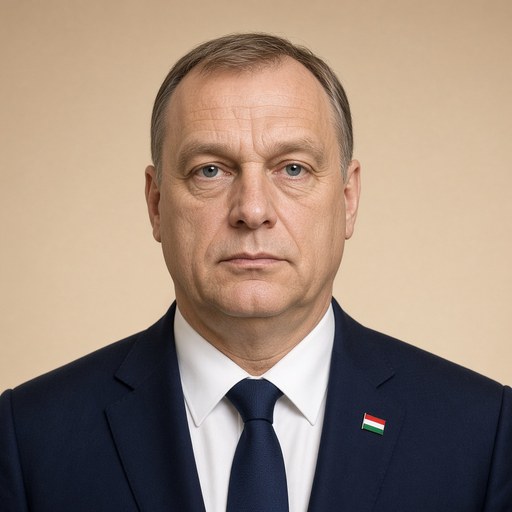
Speech by Viktor Orbán at the 17th Congress of the Democratic Alliance of Hungarians in Romania (RMDSZ)
 Viktor Orbán · Prime Minister of Hungary
- Context
- Orbán addressed the 17th Congress of the Democratic Alliance of Hungarians in Romania (RMDSZ) in Romania on October 10, 2025, marking the organization's 35th anniversary.
- Main themes
- Hungarian national identity, RMDSZ 35th anniversary, László Krasznahorkai Nobel Prize in Literature, Hungarian community in Transylvania, Hungarian-Romanian relations, national sovereignty and freedom, 2026 Hungarian elections, cultural unity of the Hungarian nation, RMDSZ as strategic actor, Hungarian achievements and legitimacy
- Duration
- ~9 min
- Words
- 1,049
- Sentences
- 70
- Readability
- 57
- Grade
- 8.9
- Syntax
- 2.74
- Vocabulary
- 2.19
Translated from French
The broad sphere of national life a sentence belongs to. Every sentence has an Arena, so it is the denominator the other indices are read against.
Other70 sentences in 13 paragraphs
Ladies and gentlemen, Prime Minister Bolojan, Prime Minister Boc, I will continue to call you that, because in Hungary, once you are Prime Minister, you remain one forever. Mr. President of the National Assembly, Mr. President Hunor Kelemen, ecclesiastical and lay dignitaries, dear Hungarian compatriots,
What a joy it is to be among you once again. Thank you for your invitation, and especially to you, Prime Minister Bolojan, for this opportunity to be together today.
I would like to start with great news: yesterday, a Hungarian received the Nobel Prize in Literature. In three years, this is already the third Hungarian Nobel Prize: after those in physics and medicine, here is the one in literature. Why start the day with this? Hungarians understand it without needing an explanation, but it may not be unnecessary to say it to our Romanian hosts. It is not trivial, as it helps to understand why the bond among the members of the Hungarian nation is so deep, and why Hungarians are such ardent patriots, whether they live in Hungary, Romania, Slovakia, or Serbia. Romanians surely know this, and Mr. Prime Minister Bolojan, who is from Nagyvárad (Oradea), certainly knows it: what unites the Hungarian nation is neither geography, nor state borders, nor even blood, but language, culture, history, and a common soul. Without literature, there is no Hungarian nation.
But this Nobel Prize has an even deeper significance for us. Mr. Prime Minister, dear Romanian friends, let me confide something to you: we, Hungarians, have a nightmare. Perhaps other peoples have one too. I do not know what the Romanian nightmare is, but I know the Hungarian one. In the Hungarian nightmare, the Good Lord appears and asks: "Who are you, and why?" In other words: why are you here, what is your reason for being in this world? And if we do not know how to answer this question, or if our answer is not strong enough, then the Good Lord strikes us from the book of nations. And on that day, our people disappear. Forever. We, Hungarians, are in a special position. We cannot boast of our size, nor of our number, nor of the power of our army, nor of our wealth. That is why it is difficult for us to give a good answer. Our only possible answer, the answer of Hungarians, lies in our achievements, in our merits. We must prove that we have given more to humanity than we have received from it. We, Hungarians, can say to the Lord: "Look, Lord, at the saints of the Árpád dynasty, look at our victory at Nándorfehérvár, look at István Széchenyi, János Neumann, Ferenc Puskás, our Olympic champions, and look, Lord, at our Nobel laureates." In other words, my dear friends, the Nobel Prize is, for Hungarians, a title of legitimacy to exist. That is why we must thank László Krasznahorkai, who, through his work, has just offered a few more decades of existence to the Hungarian nation. Thank you to him!
Mr. President Hunor Kelemen,
Thirty-five years is a long time in the life of a nation. Between the two world wars, only twenty years passed. Since the end of communism and the Soviet empire, thirty-five years have already gone by. When we started, and some of us are here who were there from the beginning, our only wealth was hope, and our only weapon was faith. In 2010, we reunited the Hungarian nation and gave everyone the opportunity to feel at home in their homeland. This is a great thing. But what we have accomplished will not maintain itself. The future does not belong to those who watch, but to those who act. It belongs to those who speak through their deeds and their work. Those who do not seize the opportunities of the future end up losing them. I want to tell you clearly and without beating around the bush: next year, we will not only decide the next Hungarian government, but also the future of the nation, the freedom of our homeland, and its sovereignty. And in April 2026, Hungary will need the Hungarians of Transylvania.
Dear participants of the Congress,
The Democratic Union of Hungarians in Romania is also celebrating its 35th anniversary. Long live it! It has proven that it is not size, but determination that gives a community its weight. The real question is not the size of the dog, but the strength of the fight within it. In Bucharest, the UDMR is the pillar of stability and common sense. In Budapest, a trustworthy partner. And in Brussels, the defender of Hungarian interests. That is why I tell you: the UDMR is not a minority organization, it is a strategic actor of the nation. The Hungarian community of Transylvania is living proof that a community lives as long as there are people who believe in it. And when you believe in it, victory always comes. The Hungarian community of Transylvania is strong: it works, educates, creates, builds, and wins victories. Every day, again and again, it triumphs.
Ladies and gentlemen,
From Budapest, we see things this way: it is in the common interest of Romania and Hungary that the Danube basin region remains stable, that the peoples living there do not trample on each other, but cooperate with one another. If our neighbors are strong and free, then we will also be stronger, freer. That is why we want to see Romania succeed, and we want to see Prime Minister Bolojan and his government succeed. Today, there is peace, coexistence, and cooperation among us. On our part, the support for Romania's accession to the Schengen area is proof of this. With a past like that shared by our two nations, peaceful coexistence is neither obvious nor fortuitous. It is a choice. A choice renewed every day. And to affirm this choice, we seek Romanian partners every day.
Mr. President Hunor Kelemen, ladies and gentlemen,
What we have built in thirty-five years constitutes the legacy of our generation. I wish you the courage to preserve what we have accomplished, the strength to continue what we have started, and the faith that our finest days are yet to come.
May God watch over us all, and may Hungary come first. Go Hungary, go Hungarians!
The original French. The tags above are read on the English translation's sentences.
Mesdames et Messieurs, Monsieur le Premier ministre Bolojan, Monsieur le Premier ministre Boc, je continuerai à vous appeler ainsi, car chez nous, en Hongrie, une fois que l’on est Premier ministre, on le reste pour toujours. Monsieur le Président de l’Assemblée nationale, Monsieur le Président Hunor Kelemen, Dignitaires ecclésiastiques et laïcs, Chers compatriotes hongrois,
Quel bonheur d’être à nouveau parmi vous. Merci de votre invitation, et tout particulièrement à vous, Monsieur le Premier ministre Bolojan, pour cette occasion d’être ensemble aujourd’hui.
Je voudrais commencer par une grande nouvelle : hier, un Hongrois a reçu le Prix Nobel de littérature. En trois ans, c’est déjà le troisième Prix Nobel hongrois : après ceux de physique et de médecine, voici celui de littérature. Pourquoi commencer la journée par cela ? Les Hongrois le comprennent sans qu’il soit besoin de l’expliquer, mais il n’est peut-être pas inutile de le dire à nos hôtes roumains. Ce n’est pas anodin, car cela aide à comprendre pourquoi le lien entre les membres de la nation hongroise est si profond, et pourquoi les Hongrois sont des patriotes si ardents, qu’ils vivent en Hongrie, en Roumanie, en Slovaquie ou en Serbie. Les Roumains le savent sans doute, et M. le Premier ministre Bolojan, qui est originaire de Nagyvárad (Oradea), le sait assurément, : ce qui unit la nation hongroise, ce n’est ni la géographie, ni les frontières de l’État, ni même le sang, mais la langue, la culture, l’histoire et une âme commune. Sans littérature, il n’y a pas de nation hongroise.
Mais ce Prix Nobel a, pour nous, une signification plus profonde encore. Monsieur le Premier ministre, chers amis roumains, laissez-moi vous confier quelque chose : nous, les Hongrois, avons un cauchemar. Peut-être que d’autres peuples en ont aussi. Je ne sais pas quel est celui des Roumains, mais je connais celui des Hongrois. Dans le cauchemar des Hongrois, le Bon Dieu apparaît et demande : « Qui êtes-vous, et pourquoi ? » Autrement dit : pourquoi êtes-vous là, quelle est votre raison d’être dans ce monde ? Et si nous ne savons pas répondre à cette question, ou si notre réponse n’est pas assez forte, alors le Bon Dieu nous raye du livre des nations. Et ce jour-là, notre peuple disparaît. À jamais. Nous, les Hongrois, sommes dans une position particulière. Nous ne pouvons pas nous prévaloir de notre taille, ni de notre nombre, ni de la puissance de notre armée, ni de notre richesse. C’est pourquoi il nous est difficile de donner une bonne réponse. Notre seule réponse possible, la réponse des Hongrois, réside dans notre accomplissement, dans nos mérites. Nous devons prouver que nous avons donné davantage à l’humanité que ce que nous en avons reçu. Nous, les Hongrois, pouvons dire au Seigneur : « Regarde, Seigneur, les saints de la dynastie des Árpád, regarde notre victoire de Nándorfehérvár, regarde István Széchenyi, János Neumann, Ferenc Puskás, nos champions olympiques, et regarde, Seigneur, nos lauréats du prix Nobel. » Autrement dit, mes chers amis, le prix Nobel est, pour les Hongrois, un titre de légitimité pour exister. C’est pourquoi nous devons remercier László Krasznahorkai, qui, par son œuvre, vient d’offrir quelques décennies supplémentaires d’existence à la nation hongroise. Merci à lui !
Monsieur le Président Hunor Kelemen,
Trente-cinq ans, c’est une longue période dans la vie d’une nation. Entre les deux guerres mondiales, il ne s’est écoulé que vingt ans. Depuis la fin du communisme et de l’empire soviétique, trente-cinq années se sont déjà passées. Quand nous avons commencé, et nous sommes ici quelques-uns à avoir été là dès le début, notre seule richesse était l’espérance, et notre seule arme, la foi. En 2010, nous avons réuni à nouveau la nation hongroise, et redonné à chacun la possibilité de se sentir chez lui dans sa patrie. C’est une grande chose. Mais ce que nous avons accompli ne se maintiendra pas de lui-même. L’avenir n’appartient pas à ceux qui regardent, mais à ceux qui agissent. Il appartient à ceux qui parlent par leurs actes et par leur travail. Celui qui ne saisit pas les opportunités de l’avenir finit par les perdre. Je veux vous le dire clairement et sans détour : l’année prochaine, nous ne déciderons pas seulement du prochain gouvernement hongrois, mais aussi de l’avenir de la nation, de la liberté de notre patrie et de sa souveraineté. Et en avril 2026, la Hongrie aura besoin des Hongrois de Transylvanie.
Chers participants du Congrès,
L’Union démocrate magyare de Roumanie fête, elle aussi, ses 35 ans. Longue vie à elle ! Elle a prouvé que ce n’est pas la taille, mais la détermination qui donne à une communauté son poids. La vraie question n’est pas la taille du chien, mais la force du combat qui est en lui. À Bucarest, l’UDMR est le pilier de la stabilité et du bon sens. À Budapest, un partenaire digne de confiance. Et à Bruxelles, le défenseur des intérêts hongrois. C’est pourquoi je vous le dis : l’UDMR n’est pas une organisation minoritaire, c’est un acteur stratégique de la nation. La communauté hongroise de Transylvanie est la preuve vivante qu’une communauté vit tant qu’il y a des gens pour croire en elle. Et quand on y croit, la victoire finit toujours par venir. La communauté hongroise de Transylvanie est forte : elle travaille, éduque, crée, bâtit, et remporte des victoires. Chaque jour, encore et encore, elle triomphe.
Mesdames et Messieurs,
Depuis Budapest, nous voyons les choses ainsi : il est dans l’intérêt commun de la Roumanie et de la Hongrie que la région du bassin du Danube reste stable, que les peuples qui y vivent ne se piétinent pas les uns les autres, mais coopèrent entre eux. Si nos voisins sont forts et libres, alors nous le serons aussi plus forts, plus libres. C’est pourquoi nous voulons voir la Roumanie réussir, et nous voulons voir réussir le Premier ministre Bolojan et son gouvernement. Aujourd’hui, il règne entre nous la paix, la coexistence et la coopération. De notre côté, le soutien apporté à l’adhésion de la Roumanie à l’espace Schengen en est la preuve. Avec un passé comme celui que partagent nos deux nations, la coexistence pacifique n’a rien d’évident, ni de fortuit. C’est un choix. Un choix renouvelé chaque jour. Et pour affirmer ce choix, nous cherchons des partenaires roumains, chaque jour.
Monsieur le Président Hunor Kelemen, Mesdames et Messieurs,
Ce que nous avons construit en trente-cinq ans constitue l’héritage de notre génération. Je vous souhaite le courage de préserver ce que nous avons accompli, la force de poursuivre ce que nous avons commencé, et la foi que nos plus beaux jours sont encore à venir.
Que Dieu veille sur nous tous, et que la Hongrie passe avant tout. Allez la Hongrie, allez les Hongrois !