




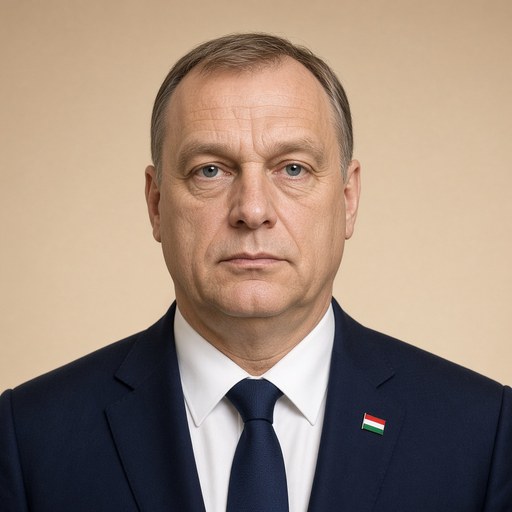
Speech by Viktor Orbán on the occasion of the awarding of the János Hunyadi Prize
 Viktor Orbán · Prime Minister of Hungary
- Context
- Orbán addressed a ceremony in Warsaw awarding the János Hunyadi Prize to Polish philosopher Ryszard Legutko on March 21, 2024.
- Main themes
- Tribute to Professor Ryszard Legutko, parallels between communism and progressive liberalism, European Union as autocratic tendency, Polish resistance movement and Solidarity, Hungarian anti-communist resistance, philosophy and historical prediction, Central European political identity, János Hunyadi Prize ceremony
- Duration
- ~23 min
- Words
- 2,808
- Sentences
- 122
- Readability
- 49
- Grade
- 12.0
- Syntax
- 3.10
- Vocabulary
- 2.30
Translated from German
The broad sphere of national life a sentence belongs to. Every sentence has an Arena, so it is the denominator the other indices are read against.
Other122 sentences in 24 paragraphs
Good evening, ladies and gentlemen! Honorable Prime Minister! Dear Beata! Esteemed Professor!
I have received permission to speak in Hungarian. So, if you allow me, I will speak Hungarian. A rare occasion for you to enjoy a wonderful language, which is rather a secret code than a language. Don’t try to learn it! I had two options when I accepted the invitation. One was to speak about János Hunyadi, the other was to speak about Professor Legutko, and I found the latter more exciting. Therefore, if you permit me, I will speak about what we owe to Professor Legutko, who, when you look closely – which he obviously does not like to do – is a very special person behind the title of Professor.
In European civilization, there is a popular notion that a philosopher can never predict the course of history, but can only try to find meaning in it afterwards. Hegel then added that the only thing we have learned from history is that we have learned nothing from it. The reason I chose Professor Legutko and not Hunyadi as the subject of today’s laudation is that he is proof that Hegel was wrong. And that is no small feat! He is the philosophy professor who has not only learned from history but has also predicted what will come with the help of history. And everything, ladies and gentlemen, that he has predicted has come to pass. If we were to ask him whether that makes him happy, he would probably say what the simple weather frog, who predicted the hail, would have said: He would have been happier if he had been wrong. But unfortunately, he was not wrong; the professor was essentially right about everything. It is as he predicted: the progressive liberals have indeed become like the communists and now pose a real threat to our freedom because they are trying to realize their own utopian fever dreams. As a former resistance fighter, Professor Legutko knew the inner logic of the communist ideal very well and had also experienced how all the world-saving promises of communism ended in oppression and dictatorship. Up to this point, that is not such a great achievement, but the professor recognized, when he got to know Western progressive liberalism, the same signs that we knew from communism. Unlike many of us, that did not surprise him, and unlike us, he was not surprised that after 1990 the old communists transformed into well-mannered liberals within minutes. Just as we owe him the realization that both communism and liberalism require the same ideological discipline. He was also the first to say that when he examined the workings of the European Union, he discovered these signs in it as well; he discovered the typical signs of the pursuit of political autocracy, he discovered that it transforms normal language into a new speak, and that EU politics, by blurring reality, does not speak about what is, but describes a dream world. And he also recognized the relentless hostility of progressive liberals towards anyone who has a different opinion as a similar sign. Perhaps he was able to recognize all this, unlike us, because he, although he is a philosopher, was never a cloistered scholar and never shied away from going out, and those who, like him, fought against the communists in the 1980s can more easily translate their experiences into philosophical insights than the cloistered scholars who do not have that opportunity.
In the 1980s, when I was still a student, I spent years studying the Polish resistance. I tried to understand what the Poles were doing. The Poles distinguished themselves from other Central European countries because, for example, in '56, when we rose up against the communists, or in '68, when the Czechs tried to push back communism in a Czech way, both attempts were not only suppressed but also liquidated. There was not the slightest remnant of resistance left, neither in Hungary nor in the Czech Republic. What caught my attention in the period after the Solidarity movement – I attended university in the early 1980s – was that it was the first resistance movement in Central Europe that, although crushed by a military dictatorship, was not liquidated. And I wanted to find out what the secret behind it was, why it could not be liquidated. And if it was not possible to crush it there, does that not mean that it is not far away when communism collapses and the Soviet Union disappears from our lives? I looked into this Polish crystal ball and understood from the example of the Poles that the reason why the Polish resistance could not be liquidated was that it was organized in a special and persistent way. And the fact that I can stand here today as the Prime Minister of Hungary and represent a political organization and party alongside my government that was founded back in the 1980s and fought against the communists, and successfully so, is intellectually due to the fact that we managed to understand the secret of the Poles, that we managed to understand the logic of resistance, the logic of organization, the unity of philosophy and action, of thought and deed, which is symbolized for all of us most worthily by Professor Legutko.
So I would like to personally thank you, Professor, on behalf of the Hungarian freedom fighters for your contribution to the freedom of Hungarians. You edited a samizdat. You founded discussion groups. We copied this in Hungary. Therefore, Professor, it is a personal honor for me to welcome you today.
Ladies and gentlemen.
After the professor recognized the patterns of communism in progressive liberalism, he did not keep this insight to himself. He is therefore not only the man who first saw this connection but also the man who first spoke about it. He spoke openly about it, which means that today we are not only welcoming a great mind and an active man here, but also a brave man, because speaking about the authoritarian tendencies inherent in liberalism in the 1990s required great courage, and I must say it still requires courage, I would say.
Ladies and gentlemen.
We did not understand this. I must also admit in this laudation that what the professor saw at the beginning of the 1990s was something that we Hungarians, and I personally, for example as a representative of the young, free generation of Hungarians, did not see. I did not understand what he was telling us back then. We thought, and I thought, that there are of course all kinds of disputes with the liberals, but that this actually corresponds to the free or freedom-loving tradition of the West. Of course, we argue with each other, but on fundamental issues, we are on the same line, on the same ground as the liberals, let’s say, on the issue of freedom. It was Professor Legutko who pointed out to us already in the 1990s that this is a serious mistake. It is not a debate between different freedom-loving ideologies within Western European culture, as it tends to appear; it is different, it is dangerous. Those with whom we argue even try to eliminate us. The professor experienced firsthand that there is a very thin line between pioneering, pioneering work, and heresy. All great founders of religions started as heretics. And then we saw in the professor a heretic, not a pioneer, but a heretic who said that he was speaking about something we thought was only in his head because the world was developing in a completely different direction. However, I must admit that Professor Legutko assessed the situation and history correctly.
When we joined the Union in 2004, we thought we had arrived and come home. We thought that the Union would be a guarantee of prosperity and also a guarantee of our national independence. We were in an euphoric mood, and we pushed aside the Legutko doubts, if I may say so. The already existing dispute between federalists and sovereignists was only superficially known to us. The truth is that it was not only our mood, the mood of EU accession, that led us to reject the professor's insights, but also our lack of knowledge, for he as a professor had a much deeper understanding of the debates within the European Union. He knew that the advocates of federalism would actually mean the dissolution of nation-states, the far-reaching elimination of national powers, and their control through the dictates of community policy. We only recognized this later, but we had to agree with the professor.
Perhaps there is an excuse for our late entry into Professor Legutko's camp. Perhaps our excuse lies in the fact that the debate between sovereignists and federalists was not always conducted as it is today when looking at the writings of the founding fathers. It was not always the case that federalists wanted to exclude political thought and political actors defending the foundations of the nation-state. I even suspect that the founders saw this tension as beneficial. The debate between federalists and nationalists, the sovereignists, is therefore not a bad thing, but a good thing, as it is a fruitful conflict, an intellectual and political debate that generates ambitions and inspiration, and it is indeed this debate that will continue to force specific EU solutions, as no side can wish for the other to disappear. In view of the fact that if the sovereignists defeat the federalists, then the cohesive force is gone, but if the federalists eliminate the sovereignists, then only another oppressive empire can be created. I believe this insight was still present in the minds of the founding fathers. Monnet writes about these two tendencies: “Instead of clashing with each other while looking each other in the eye, they prefer to influence each other. In this way, with the help of the other, they can discover what they did not know themselves, and they naturally arrive at a dialogue and then to a common action.” Why did we go wrong? Why was Professor Legutko right – even though the founding fathers themselves described the struggle between federalists and sovereignists as a truly productive conflict? Why did we go wrong when we thought that this was still the case or could be the case in modernity, several decades after the founding fathers? And why was the professor right when he said that this is no longer the case? Simple things unravel great mysteries.
The old federalists, ladies and gentlemen, Schumann, Monnet, de Gaspary, were good Catholic people. Here lies the problem! They knew the idea of Catholic universalism, which once made Europe great, and this Catholic universalism never included the abolition of nations, the establishment of utopias, or the creation of an authoritarian empire. But these old federalists, ladies and gentlemen, the great old buffaloes have moved on to the eternal hunting grounds. Today, it is no longer these people who represent federalism in the European Union; their place has been taken by progressive liberals, and as Professor Legutko has emphasized multiple times in his writings: They do not really care about the people in Europe. They are only interested in their own ideals, and their politics is also about enforcing these. If the price for implementing their ideals is the destruction of European industry and agriculture, then they will do it. If the price for their plans is the obliteration of the culture and past of Europe through illegal migration, then they will do that too, because the obliteration of the past is as self-evident to them as it was for the communists, who believed that the past must be erased once and for all.
Ladies and gentlemen, it is only part of the problem that those who advocate for a federalist position today differ from the federalist individuals among the Founding Fathers. There is another major problem, namely that the sovereign powers have been weakened. It is a significant issue that the British, who have always thought in terms of nation-states, have departed and left the representation of sovereignty to the Central Europeans. If you do a quick calculation, you will see that the Central Europeans do not have a blocking minority without the British. But the problem is even greater than that, because even this isolated Central Europe is not united, but shows a picture of division in the sovereignist-federalist debate; as if we cannot decide on which foot we should stand.
My esteemed ladies and gentlemen!
We Poles and Hungarians have always been united on the matter of sovereignty. For many years, we have been grinding the same mill with Professor Legutko. We knew what it meant when Báthory came, we knew what it meant when Sobieski came there, under Vienna, we knew what it meant when Father Bem came in our War of Independence in 1848/49 and became the greatest Hungarian military leader. Now, however, we are a bit perplexed regarding Poland. In Poland – I do not want to interfere in the affairs of the country that Professor Legutko is better acquainted with, but from here in Budapest, it seems that the Soros Empire has come to power in Poland, and that is the worst omen that a Hungarian can imagine.
We did not come here to talk about that, but I would like to remind everyone that there is a key sentence that can help understand everything that is happening today in Central Europe and thus also in Poland, which was written down in a very clear sentence by the intellectual founder of the Soros Empire, Mr. Popper, and that is the common intellectual basis of our current opponents. I will try to paraphrase it broadly. The credo, let us say, the liberal credo of Soros sounds like, I quote Popper: “Anyone who attributes a special value and historical mission to their own nation is fundamentally an enemy of the open society, and whether they know it or not, they are building a tyranny.” This is how we are seen today by the other side, and this is how we are treated.
My esteemed ladies and gentlemen!
We, who remain steadfast, believe, of course, that in the end, it will not be the Soros Empire and not the Brussels federalists, but the peoples who will win this struggle, and that the Popperian idea of the open society cannot take root in Central Europe. We will send it exactly where it belongs, to the dustbin of history, just as we sent the communists there. We have defeated the communists before, we have driven them out before, we know what it is about, we know how to do it, and we want to chase away the progressive liberals just the same.
My esteemed ladies and gentlemen!
For the first time in many decades, I feel that the sovereignist Central Europeans are not alone. I see a movement in Germany, in France, in Spain, and also in Portugal, and within a few years, forces standing on a national, conservative, sovereignist, and Christian basis have become dominant. Not to mention the Netherlands. Europe is giving a sign of life, defending itself, and making its voice heard. For a long time, I have not seen such a good opportunity for forces standing on a national, conservative, sovereignist, and Christian basis to become decisive in the European Union.
Unlike our opponents, we do not represent ideas, but the people in Europe, and we are the nightmare of the Brussels elites who oppress the people in Europe. Our optimism is also strengthened by this event today, because when the dark clouds gathered over Europe, there were always a few people who did not accept the situation, who fought, who struggled, and turned the tide of history. That was János Hunyadi, the namesake of today’s medal, that was Sobieski, but I could also mention El Cid or even Charles Martel.
And I would add to this list the name of Professor Legutko, whose education and worldview, worthy of a European scholar, are at a level unattainable for us, and who nevertheless has taken on the difficult task of fighting for his ideals, for his people, for the people in Europe, as a politician since 2000 and as a Member of the European Parliament since 2009, against the hordes of progressive liberal federalists. We have only one thing to do, my ladies and gentlemen, namely to stand by Professor Legutko. If Hunyadi were here with us today, he would say: Stand behind Professor Legutko, seize the opportunity, and win the election that lies ahead of us, that is – politically speaking – take Brussels.
God bless Professor Legutko! God protect Europe! It has been an honor for me to deliver the laudation for Professor Legutko.
Thank you very much for your attention!
The original German. The tags above are read on the English translation's sentences.
Guten Abend, meine sehr geehrten Damen und Herren! Verehrte Frau Ministerpräsidentin! Liebe Beata! Sehr geehrter Herr Professor!
Ich habe die Erlaubnis erhalten, auf Ungarisch zu sprechen. So, if you allow me, I will speak Hungarian. A rare occasion for you to enjoy a wonderful language, which is rather a secret code than a language. Don’t try to learn it! Ich hatte zwei Möglichkeiten, als ich die Einladung annahm. Die eine war, dass ich über János Hunyadi spreche, die andere, dass ich über Herrn Professor Legutko spreche, und ich fand die letztere spannender. Deshalb werde ich, wenn Sie mir gestatten, darüber sprechen, was wir Professor Legutko verdanken, der, wenn man ihn genau betrachtet – was er offensichtlich nicht sehr gern tut –, hinter dem Titel Professor ein ganz besonderer Mensch ist.
Es gibt in der europäischen Zivilisation die populäre Vorstellung, dass ein Philosoph niemals den Verlauf der Geschichte vorhersagen kann, sondern nur versuchen kann, im Nachhinein einen Sinn in ihr zu finden. Hegel fügte dann noch dem hinzu, dass das einzige, was wir aus der Geschichte gelernt haben, ist, dass wir nichts aus ihr gelernt haben. Der Grund, warum ich Professor Legutko und nicht Hunyadi als Adressaten der heutigen Laudatio ausgewählt habe, ist, dass er der Beweis dafür ist, dass Hegel sich geirrt hat. Und das ist keine Kleinigkeit! Er ist der Philosophieprofessor, der nicht nur aus der Geschichte gelernt hat, sondern auch mit Hilfe der Geschichte voraussagte, was kommen wird. Und alles, meine Damen und Herren, was er vorausgesagt hat, ist auch eingetreten. Wenn wir ihn fragen würden, ob ihn das glücklich macht, würde er wohl sagen, was der einfache Wetterfrosch, der den Hagel vorausgesagt hat, gesagt hätte: Er wäre glücklicher gewesen, wenn er sich geirrt hätte. Aber leider hat er sich nicht geirrt, der Professor hatte im Wesentlichen mit allem Recht. Es ist so, wie er vorausgesagt hat: Die fortschrittlichen Liberalen sind tatsächlich wie die Kommunisten geworden und stellen nun eine echte Bedrohung für unsere Freiheit dar, weil sie versuchen, ihre eigenen utopischen Fieberträume zu verwirklichen. Als ehemaliger Widerstandskämpfer kannte der Herr Professor die innere Logik des kommunistischen Ideals sehr gut und hatte auch erlebt, wie alle als welterlösend gedachten Versprechungen des Kommunismus in Unterdrückung und Diktatur endeten. Das ist bis an diesen Punkt keine so große Leistung, aber der Professor erkannte, als er den westlichen progressiven Liberalismus kennenlernte, die gleichen Zeichen, die wir vom Kommunismus kannten. Im Gegensatz zu vielen von uns hat ihn das nicht überrascht, und im Gegensatz zu uns war er nicht überrascht, dass nach 1990 die alten Kommunisten innerhalb weniger Minuten sich in wohlerzogene Liberale verwandelten. Genauso wie wir ihm die Erkenntnis zu verdanken haben, dass sowohl der Kommunismus als auch der Liberalismus die gleiche ideologische Disziplin erfordern. Er war es auch, der als erster sagte, dass er, als er die Funktionsweise der Europäischen Union untersuchte, diese Zeichen auch in ihr entdeckte, er entdeckte die typischen Zeichen des Strebens nach politischer Autokratie, er entdeckte, dass sie die normale Sprache in ein Neuprech umwandelt und dass die EU-Politik, indem sie die Realität verwischt, nicht über das spricht, was ist, sondern eine Traumwelt beschreibt. Und er erkannte auch die unerbittliche Feindseligkeit der fortschrittlichen Liberalen gegenüber jedem, der eine andere Meinung hat, als ein ähnliches Zeichen. Vielleicht konnte er all dies im Gegensatz zu uns erkennen, weil er, obwohl er Philosoph ist, nie ein Stubengelehrter war und sich nie gescheut hat, hinaus zu gehen, und diejenigen, die wie er in den 1980er Jahren gegen die Kommunisten gekämpft haben, können ihre Erfahrungen leichter in philosophische Erkenntnisse umsetzen als die Stubengelehrten, die diese Möglichkeit nicht haben.
In den achtziger Jahren, als ich noch Student war, verbrachte ich Jahre damit, den polnischen Widerstand zu studieren. Ich versuchte zu verstehen, was die Polen taten. Die Polen hoben sich von den anderen mitteleuropäischen Ländern ab, weil zum Beispiel 56, als wir uns gegen die Kommunisten auflehnten, oder 68, als die Tschechen versuchten, den Kommunismus auf tschechische Art und Weise zurückzudrängen, beide Versuche nicht nur unterdrückt, sondern auch liquidiert wurden. Es gab keinen kleinsten Rest des Widerstands mehr, weder in Ungarn noch in Tschechien. Was mich im Zeitraum nach der Solidarność-Bewegung – ich besuchte Anfang der 1980er Jahre die Universität – aufhorchen ließ, war, dass sie die erste Widerstandsbewegung in Mitteleuropa war, die zwar von einer Militärdiktatur zerschlagen, aber nicht liquidiert wurde. Und ich wollte herausfinden, was das Geheimnis dahinter war, warum sie nicht liquidiert werden konnte. Und wenn es dort nicht möglich war, sie zu zerschlagen, bedeutet das nicht, dass es nicht so weit weg ist, wenn der Kommunismus zusammenbricht und die Sowjetunion aus unserem Leben verschwindet? Ich habe in diese polnische Kristallkugel geschaut und am Beispiel der Polen verstanden, dass der Grund, warum der polnische Widerstand nicht liquidiert werden konnte, darin lag, dass er auf eine besondere und beharrliche Weise organisiert war. Und die Tatsache, dass ich heute hier als Ministerpräsident von Ungarn stehen kann und neben meiner Regierung eine politische Organisation und Partei vertrete, die bereits Ende der 80er Jahre gegründet wurde und gegen die Kommunisten gekämpft hat, und zwar erfolgreich, ist im intellektuellen Sinne dem zu verdanken, dass es uns gelungen ist, das Geheimnis der Polen zu verstehen, dass es uns gelungen ist, die Logik des Widerstands, die Logik der Organisation, die Einheit von Philosophie und Aktion, von Denken und Handeln zu verstehen, die für uns alle am würdigsten von Professor Legutko symbolisiert wird.
Also möchte ich im Namen der ungarischen Freiheitskämpfer Ihnen, Herr Professor, an dieser Stelle persönlich für Ihren Beitrag zur Freiheit der Ungarn danken. Sie haben einen Samisdat redigiert. Sie haben Diskussionsgruppen gegründet. Dies haben wir in Ungarn kopiert. Deshalb, Herr Professor, ist es mir eine persönliche Ehre, Sie heute begrüßen zu dürfen.
Meine sehr geehrten Damen und Herren.
Nachdem der Professor die Muster des Kommunismus im progressiven Liberalismus erkannt hatte, hat er diese Erkenntnis nicht für sich behalten. Er ist also nicht nur der Mann, der diesen Zusammenhang als erster gesehen hat, sondern auch der Mann, der als erster darüber gesprochen hat. Er hat offen darüber gesprochen, was bedeutet, dass wir heute nicht nur einen großen Geist und einen aktiven Mann hier begrüßen, sondern auch einen mutigen Mann, denn über die autoritären Tendenzen zu sprechen, die dem Liberalismus in den 1990er Jahren innewohnten, erforderte großen Mut, und ich muss sagen, es erfordert immer noch Mut, würde ich sagen.
Meine sehr geehrten Damen und Herren.
Wir haben das nicht verstanden. Ich muss in dieser Laudatio auch zugeben, dass das, was der Professor zu Beginn der neunziger Jahre gesehen hat, etwas war, was wir Ungarn, und ich persönlich zum Beispiel als Vertreter der jungen, freien Generation der Ungarn, nicht gesehen haben. Ich habe nicht verstanden, was er uns damals gesagt hat. Wir dachten, und ich dachte, dass es natürlich alle möglichen Auseinandersetzungen mit den Liberalen gibt, aber dass dies eigentlich der freien oder freiheitsliebenden Tradition des Westens entspricht. Natürlich streiten wir miteinander, aber in den grundsätzlichen Fragen sind wir mit den Liberalen, sagen wir mal, in der Frage der Freiheit, auf einer Linie, auf dem gleichen Boden. Es war Professor Legutko, der uns bereits in den neunziger Jahren darauf hingewiesen hat, dass dies ein schwerer Fehler ist. Es handelt sich nicht um eine Debatte zwischen verschiedenen freiheitsliebenden Ideologien innerhalb der westeuropäischen Kultur, wie sie vorzukommen pflegen; sie ist anders, sie ist gefährlich. Diejenigen, mit denen wir streiten, versuchen sogar, uns zu eliminieren. Der Professor hat am eigenen Leib erfahren, dass es einen sehr schmalen Grat zwischen Pionierarbeit, Pioniertum und Ketzerei gibt. Alle großen Religionsstifter haben als Ketzer angefangen. Und dann sahen wir in dem Professor einen Ketzer, keinen Pionier, sondern einen Ketzer, der sagte, dass er über etwas sprach, von dem wir dachten, dass es nur in seinem Kopf war, weil die Welt sich in eine ganz andere Richtung entwickelte. Ich muss jedoch zugeben, dass der Herr Professor die Situation und die Geschichte richtig eingeschätzt hat.
Als wir 2004 der Union beitraten, dachten wir, wir seien angekommen und nach Hause gekommen. Wir dachten, dass die Union ein Unterpfand des Wohlstands und auch eine Garantie für unsere nationale Unabhängigkeit sein würde. Wir waren in einer euphorischen Stimmung, und die Legutko-Zweifel, wenn ich das so sagen darf, schoben wir beiseite. Der schon damals existente Streit zwischen den Föderalisten und den Souveränisten war uns nur oberflächlich bekannt. Die Wahrheit ist also, dass es nicht nur unsere Stimmung, die Stimmung des EU-Beitritts, war, die uns die Einsichten des Professors ablehnen ließ, sondern auch unser Mangel an Wissen, denn er als Professor hatte eine viel tiefere Kenntnis der Debatten innerhalb der Europäischen Union. Er wusste, dass die Befürworter des Föderalismus in Wirklichkeit die Auflösung der Nationalstaaten, die weitestgehende Beseitigung der nationalen Befugnisse und ihre Kontrolle durch das Diktat der Gemeinschaftspolitik bedeuten würden. Wir haben das erst später erkannt, aber wir mussten dem Professor zustimmen.
Vielleicht gibt es eine Entschuldigung für unseren späten Eintritt in das Lager von Professor Legutko. Vielleicht liegt unsere Entschuldigung darin, dass die Debatte zwischen Souveränisten und Föderalisten nicht immer so geführt wurde, wie sie heute geführt wird, wenn man sich die Schriften der Gründerväter ansieht. Es war nicht immer so, dass die Föderalisten politisches Denken und politische Akteure, die die Grundlagen des Nationalstaates verteidigten, ausschalten wollten. Ich vermute sogar, dass die Gründer diese Spannung als vorteilhaft empfanden. Die Debatte zwischen den Föderalisten und den Nationalisten, den Souveränisten, ist also nichts Schlechtes, sondern etwas Gutes, denn sie ist ein fruchtbarer Konflikt, eine intellektuelle und politische Debatte, die Ambitionen und Inspiration hervorbringt, und es ist in der Tat diese Debatte, die weiterhin spezifische EU-Lösungen erzwingen wird, denn keine Seite kann wünschen, dass die andere verschwindet. Im Hinblick darauf, dass wenn die Souveränisten die Föderalisten besiegen, dann ist die kohäsive Kraft weg, wenn aber die Föderalisten die Souveränisten eliminieren, dann kann nur ein weiteres unterdrückendes Imperium geschaffen werden. Diese Einsicht war, so glaube ich, noch in den Köpfen der Gründerväter vorhanden. Monnet schreibt über diese beiden Tendenzen: „Anstatt einander gegenseitig ins Auge blickend zusammenzustoßen, lassen sie sich lieber gegenseitig voneinander beeinflussen. Auf diese Weise können sie mit Hilfe des anderen entdecken, was sie selbst nicht wussten, und sie gelangen ganz selbstverständlich zu einem Dialog und dann zu einem gemeinsamen Handeln.” Warum haben wir uns geirrt? Warum hatte Professor Legutko recht – obwohl die Gründerväter selbst den Kampf zwischen Föderalisten und Souveränisten als einen wirklich produktiven Konflikt beschrieben haben? Warum haben wir uns geirrt, als wir dachten, dass dies in der Moderne, einige Jahrzehnte nach den Gründervätern, immer noch der Fall ist oder sein könnte? Und warum hatte der Professor recht, als er meinte, dass dies nicht mehr der Fall ist? Einfache Dinge enträtseln große Geheimnisse.
Die alten Föderalisten, meine Damen und Herren, Schumann, Monnet, de Gaspary, waren gute katholische Menschen. Hier steckt das Problem! Sie kannten die Idee des katholischen Universalismus, der Europa einst groß gemacht hat, und dieser katholische Universalismus beinhaltete niemals die Abschaffung von Nationen, die Errichtung von Utopien oder die Schaffung eines autoritären Imperiums. Aber diese alten Föderalisten, meine Damen und Herren, die großen alten Büffel sind in die ewigen Jagdgründe weitergezogen. Heute sind es nicht mehr diese Leute, die den Föderalismus in der Europäischen Union vertreten, ihre Stelle haben fortschrittliche Liberale eingenommen, und wie der Herr Professor in seinen Schriften mehrfach betont hat: Sie interessieren sich nicht wirklich um die Menschen in Europa. Sie sind nur an ihren eigenen Idealen interessiert, und in ihrer Politik geht es auch darum, diese durchzusetzen. Wenn der Preis für die Umsetzung ihrer Ideale die Zerstörung der europäischen Industrie und Landwirtschaft ist, dann werden sie es tun. Wenn der Preis für ihre Pläne die Auslöschung der Kultur und der Vergangenheit Europas durch illegale Migration ist, dann werden sie auch das tun, denn die Auslöschung der Vergangenheit ist für sie so selbstverständlich wie für die Kommunisten, die glaubten, dass die Vergangenheit ein für alle Mal ausgelöscht werden muss.
Meine Damen und Herren, es ist nur ein Teil des Problems, dass die Leute, die heute für eine föderalistische Position eintreten, sich von den föderalistischen Leuten unter den Gründervätern unterscheiden. Es gibt noch ein weiteres großes Problem, und zwar, dass die souveränen Kräfte geschwächt wurden. Es ist ein großes Problem, dass die Briten, die immer in Nationalstaaten gedacht haben, weggegangen sind und die Vertretung des Souveränismus den Mitteleuropäern überlassen haben. Wenn Sie kurz nachrechnen, werden Sie sehen, dass die Mitteleuropäer ohne die Briten keine Sperrminorität haben. Aber das Problem ist noch größer als das, denn selbst dieses isolierte Mitteleuropa ist nicht geeint, sondern zeigt ein Bild der Spaltung in der souveränistisch-föderalistischen Debatte; als ob wir uns nicht entscheiden könnten, auf welchem Fuß wir stehen sollen.
Meine sehr verehrten Damen und Herren!
Wir Polen und Ungarn waren uns in der Angelegenheit der Souveränität immer einig. Seit vielen Jahren mahlen wir mit dem Herrn Professor in derselben Mühle. Wir wussten, was es bedeutete, als Báthory kam, wir wussten, was es bedeutete, als Sobieski dorthin kam, unter Wien, wir wussten, was es bedeutete, als Vater Bem in unserem Unabhängigkeitskrieg 1848/49 kam und der größte ungarische Heerführer wurde. Jetzt aber sind wir ein wenig ratlos, was Polen betrifft. In Polen – ich will mich nicht in die Angelegenheiten des Landes von Professor Legutko einmischen, mit dem er besser vertraut ist, aber von hier in Budapest aus sieht es so aus, als ob das Soros-Imperium in Polen – an die Macht gekommen ist, und das ist das schlimmste Omen, das sich ein Ungar vorstellen kann.
Wir sind nicht hierher gekommen, um darüber zu sprechen, aber ich möchte alle daran erinnern, dass es einen Schlüsselsatz gibt, mit dem man alles verstehen kann, was heute in Mitteleuropa und damit auch in Polen geschieht, und der vom intellektuellen Gründer des Soros-Imperiums, Herrn Popper, in einem sehr klaren Satz niedergeschrieben wurde, und das ist die gemeinsame intellektuelle Basis unserer heutigen Gegner. Ich werde versuchen, ihn im Großen und Ganzen widerzugeben. Das Credo, sagen wir, das liberale Credo von Soros klingt wie, ich zitiere Popper: „Jeder, der seiner eigenen Nation einen besonderen Wert und eine historische Mission zuschreibt, ist im Grunde ein Feind der offenen Gesellschaft, und ob er es weiß oder nicht, baut er eine Tyrannei auf.” So werden wir heute von der anderen Seite gesehen, und so werden wir behandelt.
Meine sehr verehrten Damen und Herren!
Wir, die wir standhaft bleiben, glauben natürlich, dass am Ende nicht das Soros-Imperium und nicht die Brüsseler Föderalisten, sondern die Völker diesen Kampf gewinnen werden, und dass die Poppersche Idee der offenen Gesellschaft in Mitteleuropa nicht Fuß fassen kann. Wir werden sie genau dorthin schicken, wo sie hingehören, auf den Müllhaufen der Geschichte, so wie wir die Kommunisten dorthin geschickt haben. Wir haben die Kommunisten schon einmal besiegt, wir haben sie schon einmal vertrieben, wir wissen, worum es geht, wir wissen, wie man es macht, und wir wollen die fortschrittlichen Liberalen genauso verjagen.
Meine sehr verehrten Damen und Herren!
Zum ersten Mal seit langen Jahrzehnten habe ich das Gefühl, dass die souveränistischen Mitteleuropäer nicht allein sind. Ich sehe eine Bewegung in Deutschland, in Frankreich, in Spanien und auch in Portugal, und innerhalb weniger Jahre sind auf nationaler, konservativer, souveränistischer und christlicher Grundlage stehende Kräfte dominant geworden. Ganz zu schweigen von den Niederlanden. Europa gibt ein Lebenszeichen von sich, verteidigt sich und verschafft sich Gehör. Seit langem habe ich keine so gute Gelegenheit mehr gesehen, dass auf nationaler, konservativer, souveränistischer und christlicher Grundlage stehende Kräfte in der Europäischen Union die bestimmend werden können.
Im Gegensatz zu unseren Gegnern vertreten wir keine Ideen, sondern die Menschen in Europa, und wir sind der Alptraum der Brüsseler, die die Menschen in Europa unterdrücken. Unser Optimismus wird auch durch dieses heutige Ereignis gestärkt, denn als sich die dunklen Wolken über Europa zusammenzogen, gab es immer ein paar Menschen, die die Situation nicht hinnahmen, die kämpften, die stritten und das Blatt der Geschichte wendeten. Das war János Hunyadi, der Namensgeber der heutigen Medaille, das war Sobieski, aber ich könnte auch El Cid oder sogar Karl Martell nennen.
Und ich würde dieser Liste den Namen von Professor Legutko hinzufügen, dessen Bildung und Weltanschauung, einem europäischen Gelehrten würdig, sich auf einem für für uns unerreichbaren Niveau befinden und der dennoch die schwierige Aufgabe übernommen hat, für seine Ideale, für sein Volk, für die Menschen in Europa zu kämpfen, als Politiker seit 2000 und als Europaabgeordneter seit 2009, gegen die Horden fortschrittlicher liberaler Föderalisten. Wir haben nur eines zu tun, meine Damen und Herren, nämlich uns an die Seite von Professor Legutko zu stellen. Wäre Hunyadi heute hier bei uns, würde er sagen: Stellt euch hinter Professor Legutko, nutzt die Chance und gewinnt die Wahl, die vor uns liegt, d.h. – politisch ausgedrückt – nehmt Brüssel ein.
Gott segne Professor Legutko! Gott schütze Europa! Es war mir eine Ehre, die Laudatio auf Professor Legutko halten zu dürfen.
Herzlichen Dank für Ihre Aufmerksamkeit!