




- Context
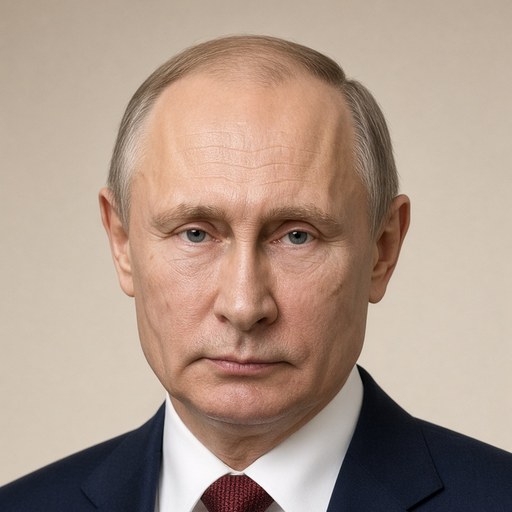
- Putin and Patriarch Kirill spoke at the unveiling of a monument to Prince Vladimir the Great in Moscow on Russia's Unity Day, November 4, 2016.
- Main themes
- Unity Day celebration, monument to Prince Vladimir the Great, Russian national identity, Orthodox Christianity and spiritual truth, civilisational identity, historical legacy of Kievan Rus, faith and political leadership, spiritual versus material values, unity of Slavic peoples
- Duration
- ~9 min
- Words
- 1,136
- Sentences
- 65
- Readability
- 55
- Grade
- 9.7
- Syntax
- 2.71
- Vocabulary
- 2.20
The broad sphere of national life a sentence belongs to. Every sentence has an Arena, so it is the denominator the other indices are read against.
Other65 sentences in 26 paragraphs
Dear friends,
Congratulations on Unity Day! I wish all Russian citizens success and wellbeing.
Patriarch Kirill Kirill Patriarch of Moscow and All Russia of Moscow and All Russia: Mr President, distinguished guests of this solemn ceremony,
Holy Prince Vladimir was very pragmatic in his choice of faith. He sent his ambassadors to understand how people serve God in different places. This is proof of the Prince’s profound sincerity, his aspiration to approach the most important issue – the choice of a faith – as honestly and impartially as possible.
We live in a world today where truths are being eroded. The relativity of the truth is the cult which many people now follow without even knowing it themselves. This is the quasi-religion of the present: everything has a right to exist, because there is no unshakable eternal truth.
If Vladimir thought the same way as many our contemporaries, he would have never made his choice. He would have either remained a pagan or become a Christian individually, without bringing Christianity to Rus. There would have been no Rus, no Russia, no Russian Orthodox power, no great Russian Empire, and no modern Russia.
But he was not seeking luxuriant church services or the spiritual comfort which religion often affords. He was seeking the Truth, with a capital T, and he discovered and loved the figure of Christ and came to know him in the Sacred Baptism as the light, truth and life.
Economic and political difficulties exist in every society. But the loss of spiritual identity condemns a country. It is doomed no matter how powerful it may have seemed. Therefore, choosing a faith for Vladimir was tantamount to choosing the destiny of the people he loved.
If Vladimir had no personal experience of love for Christ and was guided by exclusively political or other reasons, the people would not have believed him. Vladimir was not a political schemer, a cunning or two-faced person. He was always consistent and sincere – both when he made mistakes and did lawless things, and when he discovered the fullness of the truth in the Orthodox faith and became a saint.
This monument is a reminder to each person who beholds it: “Are you as sincere in your faith, in your love for the Fatherland and its people as Holy Prince Vladimir? Or do you want to distance yourself from everyone and everything for personal benefit and self-interest?”
But a Christian is someone who follows Christ always, not just when it is easy and convenient. The hearts of real followers of Christ cannot help but bleed for their family, city, country and the entire world. The greatest calamity of the present has nothing to do with economic or political crises, it is the acute, chronic shortage of love for each other, for our Creator and for all of his creations.
No one can revisit the choice of Prince Vladimir without destroying one’s own civilisational identity. To say that Vladimir did something wrong is to fall asleep in the shade of churches and wake up in the forest near a fire, not knowing how to read and write. Unfortunately, this choice is made by those who want to return to the debris of pagan ignorance and replace the light of the truth with the darkness of pre-Christian life.
Vladimir was known as the Fair Sun among his people, and only truly beloved figures are given such names. He was not afraid of abruptly changing the direction of society’s development because he loved the people and believed that he would be understood and followed.
He did not try to calculate all the risks and dangers of changing the faith, because this was not a tactical or a strategic decision for him, it was a decision about attaining the truth for himself and his people forever. And the truth is not accepted based on a calculation. In that case it ceases to be truth.
In his decisiveness, devotion to Christ and consistency in following the Gospels, Vladimir resembled the apostles, although there was a thousand-year gap between them.
If we think that today there are no choices left for us like the one Vladimir made, then we are sadly mistaken. Our choice might not be as colossal and notable but its consequences are no less so. Each day we choose who and what we live for, what we fill our lives with. This is a choice of faith on which not only our destiny, but the destiny of the whole world depends.
The monument to Prince Vladimir is a symbol of the unity of all peoples to whom he is father. These are the peoples of historic Rus who currently live within the borders of many countries.
A monument to a father can be anywhere his children live, there is nothing contradictory about it. But it is bad if the children forget they have the same father.
Head of the Solzhenitsyn Foundation Natalya Solzhenitsyn : Mr President, Your Holiness, friends,
The monument to Prince Vladimir is not just another landmark for our city that will attract people to pose for photographs against its background. It is also a challenge, a question addressed to each and every one of us: how do we look against his background?
The 20 th century was a century of great ordeals for Russia. Two world wars with a civil war, collectivisation and the GULAG in between. But the 21 st century does not spell quiet either.
Where can we draw strength not just to survive but to be worthy of our ancestors? Everybody says in unity and concord. But we should admit that after the stormy 20 th century and an uneasy transition to the 21 st century we do not have unity and concord on many vital issues.
The assessment of our past is among the major controversies. In this respect it would be appropriate to address Prince Vladimir, who is an example of the transformative power of Christianity still aflame throughout centuries. He looked back at his life, condemned what was wrong and dark in it, took everything good that was bestowed on him, and resolutely turned towards the light.
We should do that too. It means to respect our history, to take pride in our nation’s achievements, its heroes and its righteous. But it also means to have honesty and courage so as to condemn evil, not to justify it or to sweep its memory under the carpet away from view. We will not achieve purity in our house that way.
Vladimir’s Baptism of Rus gave it the faith that taught: God is in the truth, not in the power. Let us be adherents of this testament. Let us preserve the high traditions and pure spirit. The worthy future of our Fatherland depends on them.
<…>