




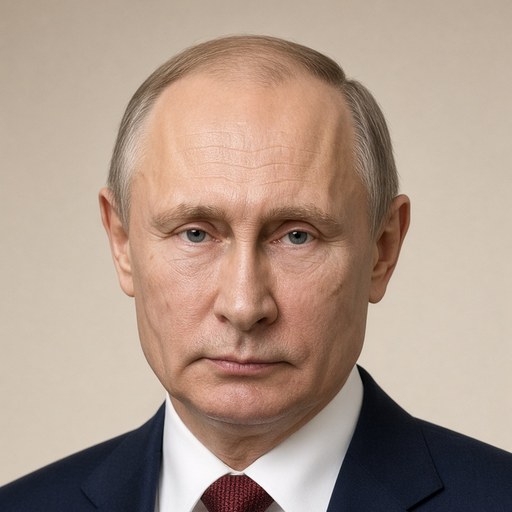
Speech at the celebration of Knowledge Day with students and teachers of the educational center for gifted children "Sirius"
 Vladimir Putin · President of Russia
- Context
- Putin addressed students and teachers at the Sirius educational center for gifted children on Knowledge Day, September 1, 2015, in Russia.
- Main themes
- Education and gifted youth, Russian historical traditions of enlightenment, science and knowledge, patriotism and national unity, personal development and life choices, Peter the Great and historical role models, Great Patriotic War and sacrifice, cultural and intellectual heritage, social consensus and state strength
- Duration
- ~22 min
- Words
- 2,699
- Sentences
- 129
- Readability
- 47
- Grade
- 11.8
- Syntax
- 3.03
- Vocabulary
- 2.15
Translated from Russian
The broad sphere of national life a sentence belongs to. Every sentence has an Arena, so it is the denominator the other indices are read against.
Other129 sentences in 28 paragraphs
Dear friends, I propose we start with perhaps the most difficult question, and that most difficult question is the choice of one's life path. Often, it takes considerable effort to understand what you truly want and what you are capable of. And the sooner this choice is made, the better, because you will simply have more time to accomplish things. After all, any successes, including scientific discoveries, economic, cultural, and sports achievements, are directly linked to talent, education, hard work, and perseverance.
In the history of our country, there has always been a focus on people who were not afraid to take on responsibility. Among them were many young, bold, and independent individuals. Such was Peter the Great and his like-minded associates, who determined a new vector for Russia's development. Peter was only 11 years old when he formed the so-called toy regiments, ostensibly as a form of entertainment, and at 16, he created what we would now call a shipbuilding laboratory on Lake Pleshcheyevo. But just a few years later, the toy regiments would grow into the victorious and unyielding Russian Guard, and a small flotilla would become the Russian Navy. Peter's young associates would become commanders, administrators, industrialists, building factories, shipyards, and engaging in science. Peter himself traveled almost all over Europe, sending capable young men, almost boys, there to see the diversity of the world and, upon returning, enriched with knowledge, skills, and impressions, to create a new, but their own country, not a copy of someone else's.
Russia became stronger thanks to those who sought to lead it forward, to multiply the achievements of their ancestors. Special importance has always been placed on the development of domestic science. In 1725, the Academy of Sciences and the first university were established in St. Petersburg, and 30 years later, Moscow University was founded, which accepted all young people without exception, regardless of their social class, as long as they were talented, wanted to learn, and contribute to their country.
A huge role in the enlightenment of Russia belongs to Mikhail Vasilyevich Lomonosov, who was not only an encyclopedic scholar, poet, historian, and artist, but also a zealous advocate and creator of the foundations and traditions of Russian science.
Much was done to strengthen the Fatherland during the era of Catherine the Great. She implemented numerous progressive reforms, including the establishment of the Russian school education system, the opening of the first public libraries, and 17 provincial printing houses. Books, magazines, and newspapers reached the provinces and played a huge role in spreading knowledge. Historian Nikolai Mikhailovich Karamzin wrote that the number of reading enthusiasts hardly grows as quickly in any other land as it does in Russia; even the poorest subscribe, and the illiterate wish to know what is being written.
It is no coincidence that I speak so extensively about the traditions of enlightenment in Russia. Science, education, culture, literature, our great Russian language create the solid foundation upon which a truly strong state is built.
Yes, there have been tragic pages in our domestic history. The lessons of turmoil, revolutions, and civil war warn us of how destructive any divisions can be for Russia, convincing us that only the unity of the people and social consensus can lead to success, ensure the independence of the state, and help repel any powerful and treacherous enemy.
When the question of defending the homeland arose, our entire nation rose up. From where did its colossal spiritual strength and willingness to sacrifice itself come? All of this arose from a sincere, heartfelt love for one's country. These feelings of patriotism are passed down from generation to generation, and you especially feel this acutely when the Day of Victory in the Great Patriotic War arrives on May 9: it is as if you can hear the hearts of all people beating in unison. Such powerful unity among veterans, their children, grandchildren, and now great-grandchildren is unprecedented. This year, the "Immortal Regiment" campaign united even more people: tens of thousands of your peers marched with portraits of their loved ones who defended the country from Nazism.
During the Great Patriotic War, even very young children and teenagers studied, worked in factories, fought in partisan units, ran to the front, and became sons of the regiment, working and achieving victory alongside adults. And despite the suffering and monstrous deprivations, they dreamed of the future. Thus, the great singer Galina Pavlovna Vishnevskaya experienced the blockade of Leningrad as a teenager. She recalled how, swollen from hunger, she was saved during that terrible time by the dream of performing on the opera stage. And many of you know what creative heights this outstanding woman achieved.
After the war, universities in the country were filled with veterans, who sought knowledge to become specialists and build a peaceful life. Among them was future Nobel Prize laureate Nikolai Gennadievich Basov, whose name is well known to students interested in physics, just as the name of academician Alexander Mikhailovich Prokhorov, who also fought in the war and became one of the founders of quantum electronics and laser physics. Today, the discoveries they made then are applied in medicine, industry, biology, and communication systems—practically everywhere. These were the greatest global achievements of our science, and such breakthroughs could only be made by brave, passionate individuals with deep knowledge.
Sergei Pavlovich Korolev designed his first airplane when he was 17 years old—many of those sitting here today are 17. He then became fascinated with the problem of jet propulsion, inspired by the ideas of the great Russian scientist Konstantin Eduardovich Tsiolkovsky, the founder of theoretical astronautics. At that time, many considered what he was trying to do to be something completely unserious, a fantasy. He had to literally push through misunderstanding, ridicule, and skepticism regarding his passion and plans. But just a few years later, Korolev would lead our space program, creating a unique team of scientists, designers, engineers, and workers. Together, they would realize the dream of all humanity—the first human flight into space. It was a grand event, and the whole world rejoiced. My peers and I were boys then, but the feeling of joy, excitement, and pride for our Motherland has stayed with us for life. When Sergei Pavlovich was asked why he was able to outpace his competitors from other countries, who were also talented people, in the space race, he replied, "Could I give up my dream to them?"
Breakthroughs in many fields occurred thanks to the strong positions of our fundamental science. Teams of mathematicians and physicists generated new ideas and made complex calculations. What at first seemed abstract and of little practical use later led to truly revolutionary technological changes and breakthroughs. By the way, the success of our rocket and atomic projects was called the result of the achievements of the three "K's": academicians Keldysh, Kurchatov, and Korolev. They were not only great scientists; their brilliant scientific developments were ultimately connected to solving large-scale practical problems. They possessed scientific foresight, the ability to identify the main issues, and a sense for the new—often at the intersection of different sciences.
Thus, as a mathematician, Mstislav Vsevolodovich Keldysh was able to see the potential for a major scientific breakthrough in the field of semiconductor physics. This research was led by a group of young scientists headed by future Nobel laureate Zhores Ivanovich Alferov. Keldysh's support played a decisive role in his fate, and Alferov's fundamental discoveries laid the foundation for modern mobile communication and telecommunications technologies. If I am mistaken in anything, Zhores Ivanovich will correct me; he should be here. Let's greet him.
Friends, each generation always faces its main tasks. Your parents and the older generation as a whole experienced a dramatic historical turning point—the formation of a new Russia. I think it is difficult for you today to even imagine the tension of the challenges, the complexity, and the dramatic nature of the problems of that time, even though it was quite recent. Radical changes affected the political and social structure, as well as the economic and social fabric. These changes had to be perceived, and the will and strength had to be found to actively engage in building a new life. Your parents, grandfathers, and grandmothers fulfilled this mission with honor. Today, many of them are still full of energy, continuing to work, strengthening the foundation that will always be a reliable support for you.
However, you will have to step onto new frontiers, solve more complex tasks, and respond to difficult, as they say now, challenges. And you must be ready for this. The strength and advantage of your generation lie in your open-mindedness, in your ability to think freely, and to propose unconventional solutions.
I will give just one example that gives us reason to be proud of our domestic defense industry—the creation of the latest Iskander missile system. A crucial control element for it was designed by young people who were not yet 30 years old. They organized their own team, took on responsibility, and said they were ready to tackle this task and get the job done. They were believed in, and they found their original solution, which no so-called adult research team could propose at that time.
Young people today boldly take on complex tasks and achieve tangible results in various fields: from unique developments in biology to groundbreaking inventions in medicine. They implement social projects, organize their own businesses, and work in production. It is very important that you also strive to apply your knowledge in practice: you design robots, create technologies for space, for the automotive and electronics industries, conduct complex chemical experiments and physical experiments.
It is also great that your generation understands the significance of sports in a person's life. Sports are back in fashion among young people, which is very good, very healthy. Engaging in physical education strengthens spirit and character, helps overcome difficult situations. And when our athletes compete to the end in international competitions, striving only for victory and defending the honor of Russia, it truly unites the entire country, the whole nation, and society, and we admire their courage and take pride in our country. We have many outstanding athletes here today; let’s greet them as well.
This feeling for the Motherland is natural, warm, as we often say—filial. It encompasses both a deep personal relationship and an awareness of the colossal significance of certain events and achievements. We rightfully take pride in the immense contribution of Russian composers, musicians, writers, and artists to the development of world civilization and culture. There is no need to list these outstanding names now: they are known, respected, and loved not only in our country but around the world. Through their creativity, they have glorified Russia and had a tremendous impact on the minds and hearts of people, on the formation of the domestic cultural and value environment. And this is very important, for only a society with clear moral guidelines, a firm spiritual position, and support is capable of creating and developing a harmonious society, capable of harmonious technological progress. Only such a society can turn the achievements of science to the benefit, rather than the detriment, of humanity.
Dear friends! I do not know how often you speak openly with your parents and teachers, but I am convinced that such conversations are indeed necessary, they are essential. We adults also need your support and your trust. It is very important to understand each other, including on issues that concern both the present day and the future of the country, and many difficulties and problems are easier to solve together, including in situations of moral choice. This choice has to be made constantly. In society and in friendship, a person is evaluated not so much by their career successes, achievements, or wealth, but by their actions, their level of culture, their decency, and their attitude towards family, children, parents, and friends. Everyone chooses how to act, what means to use to achieve the goals they set for themselves.
For my generation, all of this was of great importance; we also had what was called the street, the yard, a common home where we grew up with friends. We spent a lot of time in these, as we would say today, informal settings. Yes, there were many problems there as well, but it was there that qualities such as the ability to be friends, to help each other, and to distinguish between good and evil were nurtured. Treachery and betrayal were for us the most despicable, contemptible acts. We debated and discussed what was happening, primarily, of course, in schools, films, and the heroes of books.
Now life has undoubtedly changed radically, but true values always remain. These are honesty, patriotism, conscience, love, kindness, courage, dignity, responsiveness, responsibility, and a sense of duty. I am sure that all of this is important for you, as is how you can use your talent and the knowledge you have gained for the benefit of the Fatherland.
Many examples of your peers demonstrate the opportunities that Russia opens up for educated, goal-oriented, and extraordinary individuals. For instance, the student team from the National Research University of Information Technologies, Mechanics, and Optics in St. Petersburg has confidently won world programming championships for many years in a row. Moreover, the stars of the university stay at home in Russia after graduation, find jobs in domestic high-tech companies, create their own startups, or teach at their alma mater. This applies not only to those who realize their talents in technical and industrial fields but also to people in creative professions: there is now a lot of gifted, talented, and bright youth in Russian theaters, cinema, and literature. Yes, they travel a lot around the world, but the Motherland for all is one—Russia.
Dear friends, the question often arises: what will our Russia be like in 10–15 years? In any case, I am asked this constantly. I will say frankly, it depends primarily on you, on how you will live these years. We see you not as outside observers who will come to everything ready-made – no, we see you as direct participants in the construction of the future, the country in which you live and your children will live.
Today, the world is changing rapidly, competition is growing. If we draw a sports analogy, an increasing number of states are declaring their readiness to fight for championship titles. And the stakes in this historical match are very high: will we produce unique technologies ourselves, share breakthrough knowledge with the world, will we be able to make the environment safer and more comfortable for life, will we take pride in the achievements of domestic art, our sports records – or will we envy others' triumphs? And, finally, will we be able to respond to global civilizational challenges, ensure the leadership and sovereignty of our homeland? The answers to these questions are your agenda, your forward-looking plan.
Russia has repeatedly proven its leadership in science, art, and sports, primarily because people set grand goals for themselves, aspired to do the impossible, despite all difficulties, and strived for victory. It is essential to dream, to build ambitious plans, to achieve more, to do what no one has done before you. This is the most difficult thing, but this is what progress, development, and movement forward depend on.
Behind any victory, of course, there are many doubts, mistakes, and failures; this is absolutely normal and natural. It is important here not to retreat and not to give up, to never surrender. The main factor of success is faith in one's own abilities, faith in oneself. Each of you must find yourself, a worthy place in life. Only then will you become a united, well-coordinated, best team in the world. I am convinced that this will be the case. Behind you are your parents, teachers, mentors, your homeland – Russia. We will be there, we will help and admire your successes, we will work for you and together with you for Russia.
I believe in you, in the success of each of you. You can, you must, and you will win!
The original Russian. The tags above are read on the English translation's sentences.
Дорогие друзья, предлагаю начать, может быть, с самого сложного вопроса, и этот самый сложный вопрос – выбор жизненного пути. Зачастую нужно приложить немало усилий, чтобы понять, чего же ты сам хочешь, на что ты способен. И чем раньше состоится этот выбор, тем лучше, потому что просто больше успеешь сделать. Ведь любые успехи, в том числе научные открытия, экономические, культурные, спортивные достижения, напрямую связаны с талантом, образованием, трудом и упорством.
В истории нашей страны всегда делалась ставка на людей, которые не боялись брать на себя ответственность. Среди них было и немало молодых, дерзких, самостоятельных. Таким был и Пётр I, и его единомышленники, которые определили новый вектор развития России. Петру было всего 11 лет, когда он сформировал так называемые потешные полки, вроде бы как развлечение, а в 16 лет на Плещеевом озере создал, как бы сейчас сказали, лабораторию кораблестроения. Но спустя всего несколько лет из потешных полков вырастет победоносная и несгибаемая русская гвардия, а из небольшой флотилии – русский военный флот. Юные сподвижники Петра станут полководцами, администраторами, промышленниками, будут строить заводы, верфи, заниматься наукой. Пётр сам объездил почти всю Европу, отправлял туда способных юношей, почти мальчишек, чтобы они увидели разнообразие мира и, вернувшись, напитавшись знаниями, навыками, впечатлениями, создавали новую, но именно свою страну, а не копию какой‑то другой.
Россия становилась сильнее благодаря тем, кто стремился вести её вперёд, преумножать достижения предков. Особое значение всегда придавалось развитию отечественной науки. В 1725 году в Петербурге создаётся Академия наук и первый университет, а спустя 30 лет был основан Московский университет, куда принимали всех без исключения молодых людей, независимо от сословий, главное, чтобы они были талантливы, хотели учиться и приносить пользу своей стране.
Огромная роль в деле просвещения России принадлежит Михаилу Васильевичу Ломоносову, который был не только учёным-энциклопедистом, поэтом, историком и художником, он был и ревнителем, и создателем основ и традиций именно российской науки.
Многое было сделано для укрепления Отечества и в эпоху Екатерины II. Она провела множество прогрессивных реформ, в их числе создание российской системы школьного образования, открытие первых публичных библиотек, 17 губернских типографий. Книги, журналы, газеты пришли в провинцию, сыграли огромную роль в распространении знаний. Историк Николай Михайлович Карамзин писал, что число любителей чтения едва ли в какой земле так скоро возрастает, как в России, даже самые бедные подписываются, а безграмотные желают знать, что пишут.
Не случайно я так подробно говорю о традициях просвещения в России. Наука, образование, культура, литература, наш великий русский язык создают тот прочный фундамент, на котором строится по‑настоящему сильное государство.
Да, в отечественной истории были и трагические страницы. Уроки смут, революций, гражданской войны предупреждают, насколько губительны для России любые расколы, убеждают, что только единство народа и общественное согласие могут привести к успеху, обеспечить независимость государства, помочь дать отпор любому могущественному и вероломному врагу.
Когда вставал вопрос о защите родной земли, поднимался весь наш народ. Откуда бралась его исполинская духовная мощь, готовность жертвовать собой? Всё это возникало из искренней, идущей от сердца любви к своей стране. Эти чувства патриотизма передаются у нас из поколения в поколение, и это особенно остро понимаешь, когда наступает День Победы в Великой Отечественной войне, 9 Мая: словно слышишь, как сердца всех людей бьются в унисон. Такое мощное единство и ветеранов, их детей, внуков и уже правнуков беспрецедентно. В этом году всех ещё больше объединила акция «Бессмертный полк»: с портретами своих близких, защищавших страну от нацизма, шли десятки тысяч ваших ровесников.
В Великую Отечественную ещё совсем дети, подростки учились, трудились на заводах, воевали в партизанских отрядах, убегали на фронт и становились сыновьями полка, работали и добывали победу наравне со взрослыми. И, несмотря на страдания и чудовищные лишения, они мечтали о будущем. Так, великая певица Галина Павловна Вишневская подростком пережила блокаду Ленинграда. Она вспоминала, как её, опухшую от голода, в это страшное время спасла мечта – выступать на оперной сцене. И многие из вас знают, каких творческих высот достигла эта выдающаяся женщина.
После войны вузы страны были заполнены фронтовиками, они стремились к знаниям, чтобы стать специалистами и строить мирную жизнь. Среди них был и будущий лауреат Нобелевской премии Николай Геннадиевич Басов, его имя хорошо знакомо ребятам, которые увлекаются физикой, так же как и имя академика Александра Михайловича Прохорова, тоже прошедшего войну и ставшего одним из основоположников квантовой электроники и лазерной физики. Сегодня сделанные ими тогда открытия применяются в медицине, в промышленности, биологии, в системах связи – практически везде. Это были величайшие мировые достижения нашей науки, совершить такие прорывы могли только люди смелые, одержимые, обладавшие глубокими знаниями.
Сергей Павлович Королёв спроектировал свой первый самолёт, когда ему было 17 лет, – многим из сидящих сегодня здесь в зале 17 лет. Затем он увлёкся проблемой реактивного движения, идеями великого русского учёного Константина Эдуардовича Циолковского, основоположника теоретической космонавтики. Тогда многим казалось чем‑то абсолютно несерьёзным, фантастикой то, что он пытался делать. Ему пришлось буквально пробираться через непонимание, насмешки и скептическое отношение к своему увлечению, к своим планам. Но уже через несколько лет Королёв возглавит нашу космическую программу, создаст уникальную команду учёных, конструкторов, инженеров, рабочих. Вместе они воплотят в жизнь мечту всего человечества – первый полёт человека в космос. Это было грандиозное событие, весь мир ликовал. И я, и мои сверстники тогда были мальчишками, но чувство радости, восторга, гордости за свою Родину остались с нами на всю жизнь. Когда Сергея Павловича спросили, почему он сумел опередить в космической гонке своих конкурентов из других стран, тоже талантливых людей, он ответил: «Мог ли я уступить им свою мечту?»
Прорывы во многих отраслях состоялись благодаря сильным позициям нашей фундаментальной науки. Коллективы математиков и физиков генерировали новые идеи, делали сложнейшие расчёты. И то, что на первый взгляд казалось чем‑то отвлечённым от реальной жизни, малопригодным для использования на практике, позднее приводило к поистине революционным технологическим изменениям и прорывам. Кстати, успех нашего ракетного и атомного проектов называли результатом достижений трёх «К»: академиков Келдыша, Курчатова, Королёва. Они были не только великими учёными, их гениальные научные разработки в конечном итоге были связаны с решением масштабных практических задач, они обладали научным предвидением, умением выделять главное, чувствовать новое – и нередко на стыке разных наук.
Так, будучи математиком, Мстислав Всеволодович Келдыш смог увидеть перспективу крупного научного открытия в области физики полупроводников. Эти разработки вела группа молодых учёных во главе с будущим Нобелевским лауреатом Жоресом Ивановичем Алфёровым. Поддержка Келдыша сыграла в его судьбе определяющую роль, а фундаментальные открытия Алфёрова легли в основу технологий современной мобильной связи и телекоммуникаций. Если я в чём‑то ошибаюсь, то Жорес Иванович меня поправит, он должен быть здесь. Поприветствуем его. (Аплодисменты.)
Друзья, перед каждым поколением всегда стоят свои главные задачи. На долю ваших родителей и в целом старшего поколения выпал крутой исторический перелом – становление новой России. Думаю, сегодня вам трудно даже представить всю напряжённость вызовов, сложность, драматичность проблем того времени, хотя это было совсем недавно. Кардинальные перемены коснулись тогда и политического, общественного устройства, экономического, социального укладов. Эти изменения надо было суметь воспринять, найти волю, силы, чтобы активно включиться в строительство новой жизни. Ваши родители, дедушки, бабушки с честью выполнили эту миссию. Сегодня многие из них по‑прежнему полны сил, продолжают трудиться, укрепляя фундамент, который всегда будет для вас надёжной опорой.
Однако вам предстоит выйти уже на другие рубежи, решать более сложные задачи, отвечать на непростые, как сейчас говорят, вызовы. И вы должны быть к этому готовы. Сила, преимущество вашего поколения – в незашоренности, в способности мыслить свободно, предлагать нестандартные решения.
Приведу только один пример, который даёт нам основания гордиться отечественной оборонной промышленностью, – это создание новейшей ракетной системы «Искандер». Важнейший элемент управления для неё сконструировали молодые люди, которым не было и 30 лет. Они сами организовали свою команду, взяли на себя ответственность и сказали, что готовы справиться с этой задачей, сделать дело. В них поверили, они нашли своё оригинальное решение, которое не смог предложить тогда ни один так называемый взрослый исследовательский коллектив.
Молодые сегодня смело берутся за сложные задачи и достигают ощутимых результатов в самых разных областях: от уникальных разработок в биологии – до прорывных изобретений в медицине. Они реализуют социальные проекты, организуют свой бизнес, трудятся на производстве. Очень важно, что вы тоже стремитесь применять свои знания на практике: конструируете роботов, создаёте технологии для космоса, для автомобильной и электронной промышленности, проводите сложные химические опыты и физические эксперименты.
Отлично и то, что ваше поколение хорошо понимает значимость спорта в жизни человека. Спорт снова в моде у молодёжи, это очень хорошо, очень здорово. Занятия физкультурой закаляют дух и характер, помогают преодолевать трудные ситуации. А когда наши спортсмены на международных соревнованиях борются до конца, стремятся только к победе, отстаивают честь России, это действительно сплачивает всю страну, весь народ, всё общество, и мы восхищаемся их мужеством, гордимся своей страной. У нас сегодня здесь много выдающихся спортсменов, давайте их тоже поприветствуем. (Аплодисменты.)
Это чувство к Родине – естественное, тёплое, как у нас часто говорят – сыновье. В нём сконцентрировано и глубокое личное отношение, и осознание колоссальной значимости тех или иных событий и достижений. Мы по праву гордимся огромным вкладом российских композиторов, музыкантов, писателей, художников в развитие мировой цивилизации и культуры. Перечислять сейчас эти выдающиеся имена нет нужды: они известны, почитаемы, любимы не только в нашей стране – во всём мире. Своим творчеством они прославили Россию, оказали огромное влияние на умы и сердца людей, на формирование отечественной культурной и ценностной среды. И это очень важно, ведь только общество с чёткими нравственными ориентирами, твёрдой духовной позицией и опорой способно к созданию и развитию гармоничного общества, способно к гармоничному технологическому прогрессу. Только такое общество может обратить достижения науки во благо, а не во вред человеку.
Дорогие друзья! Не знаю, насколько часто вы говорите по душам с вашими родителями, педагогами, но, убеждён, такой разговор, конечно, нужен, он необходим. Нам, взрослым, тоже ведь нужны и ваша поддержка, и ваше доверие. Очень важно понимать друг друга, в том числе и в вопросах, которые касаются и сегодняшнего дня, и будущего страны, а многие трудности, проблемы легче решать вместе, в том числе и в ситуациях морального выбора. Его приходится делать постоянно. И в обществе, и в дружбе человека оценивают не столько по его карьерным успехам, достижениям или богатству, сколько по его поступкам, по уровню культуры, по порядочности, по отношению к семье, к детям, к родителям, к друзьям. Каждый выбирает, как ему поступить, какими средствами достигать цели, которые он перед собой ставит.
Для моего поколения всё это имело большое значение, у нас было ещё то, что называлось улицей, двором, общим домом, где мы с друзьями росли. Мы много времени проводили на этих, как бы сегодня сказали, неформальных площадках. Да, проблем там было тоже очень много, достаточно, но там воспитывались такие качества, как умение дружить, помогать друг другу, различать добро и зло. Подлость и предательство были для нас самым последним, презираемым делом. Мы спорили, обсуждали происходящее, прежде всего, конечно, в школах, фильмы, героев книг.
Сейчас жизнь, безусловно, кардинально изменилась, но истинные ценности – они всегда остаются. Это честность, патриотизм, совесть, любовь, доброта, мужество, достоинство, отзывчивость, ответственность и чувство долга. Уверен, что всё это важно и для вас, как и то, с какой пользой для Отечества вы сможете реализовать свой талант, использовать полученные знания.
Многие примеры ваших сверстников говорят о том, какие возможности открывает Россия для людей образованных, целеустремлённых и неординарных. Так, студенческая команда [Санкт-Петербургского] национального исследовательского университета информационных технологий, механики и оптики уже много лет подряд уверенно побеждает на чемпионатах мира по программированию. При этом звёзды университета остаются после окончания вуза дома, в России, устраиваются на работу в отечественные высокотехнологичные компании, создают свои стартапы или преподают в родном университете. Это касается не только тех, кто реализует свои таланты в технической, производственной сфере, но и людей творческих профессий: в российских театрах, в кинематографе, литературе сейчас очень много одарённой, талантливой, яркой молодёжи. Да, они много гастролируют по миру, но Родина для всех одна – Россия.
Дорогие друзья, часто звучит вопрос: какой будет наша Россия через 10–15 лет? Во всяком случае мне его задают постоянно. Скажу прямо, это зависит прежде всего от вас, от того, как вы проживёте эти годы. Мы видим в вас не сторонних наблюдателей, которые придут на всё готовенькое, – нет, мы видим в вас непосредственных участников строительства будущего, страны, в которой живёте вы и будут жить ваши дети.
Сегодня мир стремительно меняется, растёт конкуренция. Если провести спортивную аналогию, о своей готовности бороться за чемпионские титулы заявляет всё большее количество государств. И ставки в этом историческом матче очень высоки: будем ли мы сами производить уникальные технологии, делиться с миром прорывными знаниями, сможем ли мы сделать окружающую среду безопаснее и комфортнее для жизни, будем ли гордиться достижениями отечественного искусства, нашими спортивными рекордами – или будем завидовать чужим триумфам. И, наконец, сможем ли ответить на глобальные цивилизационные вызовы, обеспечить лидерство и суверенитет родной державы. Ответы на эти вопросы – ваша повестка дня, ваш перспективный план.
Россия не раз доказывала своё лидерство в науке, искусстве, спорте, и, в первую очередь, потому, что люди ставили перед собой грандиозные цели, стремились делать невозможное, несмотря на все сложности, шли к победе. Надо обязательно мечтать, строить амбициозные планы, добиваться большего, делать то, что до вас не сделал никто. Это самое трудное, но на этом держится прогресс, развитие, движение вперёд.
За любой победой, конечно, стоит немало сомнений, ошибок и неудач, это абсолютно нормально, естественно. Здесь важно не отступить и не опустить руки, никогда не сдаваться. Главный фактор успеха – это вера в собственные силы, вера в себя. Каждый из вас должен найти себя, достойное место в жизни. Только тогда вы станете сплочённой, хорошо сыгранной, лучшей в мире командой. Я убеждён, так оно и будет. За вашими плечами ваши родители, учителя, наставники, ваша Родина – Россия. Мы будем рядом, будем помогать и восхищаться вашими успехами, будем работать для вас и вместе с вами для России.
Я верю в вас, в успех каждого из вас. Вы можете, обязаны и будете побеждать!