





- Context
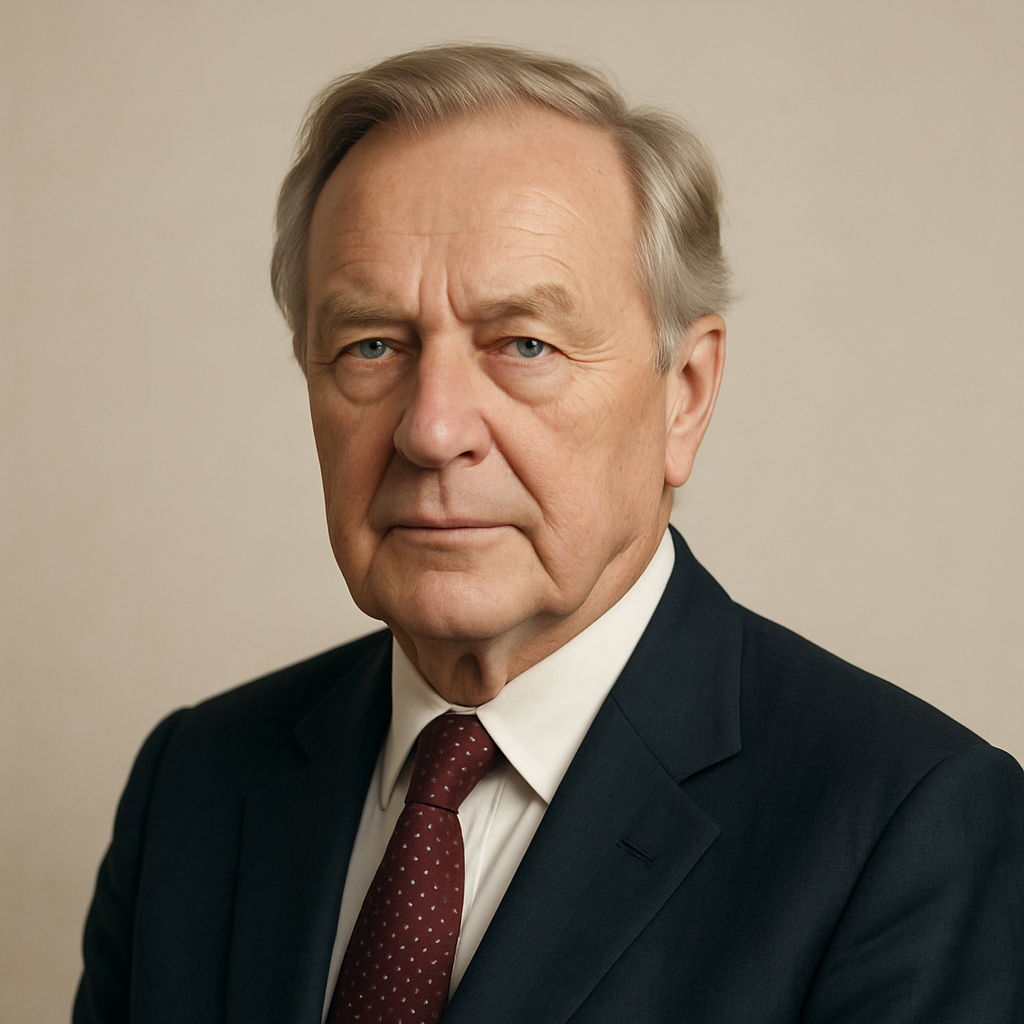
- Volker Rühe delivered a speech at the Munich Security Conference on 15 February 1995, addressing security issues in post-Cold War Europe.
- Main themes
- New European security order, transatlantic partnership, NATO expansion, European Union enlargement, Bundeswehr restructuring, Euro-Atlantic relations, strategic partnership with Russia
- Duration
- ~25 min
- Words
- 3,058
- Sentences
- 180
- Readability
- 26
- Grade
- 13.8
- Syntax
- 2.78
- Vocabulary
- 2.29
The broad sphere of national life a sentence belongs to. Every sentence has an Arena, so it is the denominator the other indices are read against.
Other180 sentences in 60 paragraphs
Minister of Defense of the Federal Republic of Germany
Volker Rühe dedicated his address to the 32nd Munich Conference on Security Policy to his vision of a new European security order which should include Russia.
Never has Henry Kissinger’s 1965 observation been more relevant than today: “History teaches that the greater the changes in the political environment, the greater the efforts required to ensure the cohesion of a community of states.” The challenges we face today are different from those during the Cold War. While the risk of a major war between East and West has vanished, instability is increasing across Europe’s eastern and southern periphery. Simultaneously, global interconnectedness and interdependence are intensifying.
The internationalization of economics and politics continues to grow, and economic strength and technological innovation are becoming decisive factors in the international system, now assuming strategic significance. This development affects North America and Europe equally. The demanding task of reconstruction in Central and Eastern Europe and the stability-promoting integration of these regions into Euro-Atlantic processes can only be achieved with active American support. In light of Eastern Europe’s instability, we need America’s strategic backing.
Russia’s size and potential transcend European dimensions in every sense, particularly if the country regains its strength. Europe has a vital interest in strategic stability, which cannot be achieved without America. Stability in Europe was, is, and will remain unattainable without the United States. Europe’s interest in American involvement aligns with America’s interest in engaging in and for Europe. There are solid political, strategic, and economic reasons for this partnership.
While many Americans are captivated by the economic dynamism of the Pacific region, Europe remains of paramount economic importance to the U.S. The figures speak for themselves: recent annual direct investments between the U.S. and Europe have amounted to approximately $500 billion, more than half of the total volume on both sides. By comparison, U.S. investments in the Pacific region lag far behind. Over 12 million American jobs depend on exports to Europe and the operations of over 4,000 European firms in the U.S.
The transatlantic economic interdependence reveals two things: first, how crucial each region is to the other’s strength and prosperity; and second, how neither partner can afford to go it alone. Partnership with and presence in Europe are indispensable for the U.S., not only for economic reasons but also for strategic ones. U.S. troops stationed in Europe are instruments of power projection and are geographically close to regions of vital interest to America.
Neither the European Union nor the U.S. alone can stabilize our continent and its strategic environment. Only by pooling our strengths can we tackle the new challenges. The eastern and southern arcs of crisis on Europe’s periphery intersect in the geographic triangle of the Caucasus, the Balkans, and the Middle East. In these regions, deep-seated ethnic, religious, and nationalistic conflicts repeatedly erupt into open hostilities.
Germany is now surrounded only by allied or friendly nations. However, the distances to regional conflicts in our part of the world are short, and these conflicts all carry the risk of escalation and geographic expansion. It is therefore strategically insufficient to focus solely on crises in Bosnia, Chechnya, or Algeria without addressing their broader regional contexts in Eastern Europe and the Mediterranean.
The Mediterranean connects our continent with the nations and cultures of North Africa and the Middle East into a geopolitical macro-region. Here lie essential sources of resources for us. The success of the peace process in the Middle East opens up new opportunities for intensified economic cooperation, particularly for Europe. However, this shared interest in peace is repeatedly undermined by brutal acts of terrorism.
The Mediterranean region is a place where the societal and cultural contrasts of East and West clash, requiring both peacekeeping measures and the ability to manage political crises. Therefore, our political-strategic thinking must not only focus on Central and Eastern Europe. It must also consider all risks and opportunities essential to Europe’s future while aligning with shared vital European-American interests.
Partnership means acting together and sharing responsibility. Shared responsibility entails mutual political influence, regionally and globally. The unifying Europe is a political, economic, and strategic partner of the United States. Equal partnership is the key term for future relations between the U.S. and Europe. This was decisively set in motion at the NATO summit in January 1994. America supports the development of an independent European political identity.
NATO remains the only organization that can genuinely guarantee the security of its members. It also possesses the best prerequisites for effective crisis management in Europe. Moreover, the alliance serves as an essential driver of political change, having made the stabilization of Central and Eastern Europe a top strategic priority. However, the Atlantic Alliance must learn the necessary lessons from its engagement in Bosnia. It cannot merely function as the executor of others’ policies with unsatisfactory effectiveness.
In the future, NATO should act only under the mandate of the United Nations, provided all alliance partners equally accept the political objectives, there is a feasible military-operational concept, and NATO can deploy its forces and resources without hindrance. Only under these conditions can the alliance maintain the necessary international credibility and domestic acceptance on both sides of the Atlantic.
Together with NATO, the European Union forms the foundation of a lasting and just peace order on our continent. The European Union is a zone of stability unprecedented in history. Those who promote fashionable Euro-skepticism or backward-looking nationalism fail to recognize the progress we have achieved. The equal integration of nations has fostered a unique dynamic of peace and brought us one of the longest periods of peace in history. The institutional integration of Europe is thus far the most successful attempt to reconcile nations that have historically been rivals.
What we have gained in terms of stability and prosperity must now be preserved, further developed, and shared with others. Precisely because the situation in Europe and the world has become so dynamic, diverse, and complex, we must vigorously advance the process of European unification—now. France and Germany bear a particular responsibility in this regard. Given the challenges we face, we cannot afford to retreat into national or regional complacency, nor can we shy away from the task at hand. The Talmud says, “If not now, when?” and “If not us, who?”
We have three main tasks:
The expanding Union must maintain its internal balance.
The European Union must gain the capacity to act as a global player.
The Union must make Europe’s mission understandable to its citizens to gain acceptance.
Political identity grows from the ability of common institutions to master the future for mutual benefit. A positive European awareness will develop through the pragmatic evidence of the future European Union—or not at all. However, identity also stems from the awareness of a shared past and the will to build a common future. The sovereign nation-state is not obsolete. It remains the framework within which peoples organize themselves freely, under the rule of law and democracy, providing them with a sense of identity. The confident certainty of belonging to a nation is what first enables the freedom for European unification and diversity.
At the same time, however, the European level also requires state-like functions. Individual states can no longer provide security for their citizens on their own. The current challenges compel European nations to find themselves in a “system of shared sovereignty,” as recently articulated by the Austrian President. The future European Union will not be the same as the old Western European alliance, nor will it be a replica of the United States of America. It will be a unique political union, and it would be both unhistorical to dismiss this possibility and unwise not to work toward it.
Europeans must consolidate their strengths—for their survival and competitiveness. The economic integration of North America, the dynamism of the Asia-Pacific region, global population trends, Islamic fundamentalism, worldwide ecological issues, and cross-border crime leave us no alternative. Political union must follow economic integration. Bosnia is not evidence of the failure of a Common Foreign and Security Policy but rather proof of its urgent necessity.
This requires a common determination of shared interests, based on a consensus analysis of the current situation and its development. Until now, we have often allowed our respective immediate neighborhoods to dictate the main focus of our policies. Naturally, it is understandable that countries like Spain, France, and Italy focus primarily on North Africa or that Germany pays particular attention to its neighbors in Eastern Europe. However, stabilizing Central Europe is not a task that Germany can handle alone. Similarly, we cannot leave France, Spain, and other Mediterranean countries to address the region’s challenges alone.
The security and stability of Europe are indivisible, demanding that we all recognize we can only meet these challenges together. Recently, France and Germany have developed approaches to further European integration. Despite differences, I see a remarkable degree of agreement, which could significantly influence the discussion on Europe’s future shape. A path that balances sovereign nations with supranational integration in an intelligent way seems sensible to me.
The decision-making system of the European Union must become clearer and simpler as the Union grows larger and more diverse. We must achieve a clear delineation and distribution of competences between the EU and individual states. This should address the differentiated interests, potentials, and capabilities of nations without compromising the Union’s capacity to act.
The European Union is growing. The northern enlargement has been completed. For our eastern neighbors, we outlined the path to Union membership and the European security framework at the European Summit in Essen. With the admission of new members, the question of the security dimension of membership for new partners inevitably arises. It is inconceivable that future members of the European Union should have a lower security status than the existing members, who are simultaneously members of NATO. Therefore, the expansion of the European Union and NATO are inextricably linked in a logical relationship.
However, both the European Union and NATO would politically, economically, and strategically overextend themselves if they were to admit all potential candidates at once. We must also recognize that security policy prerequisites are likely to be met earlier than the economic standards. The interplay between the expansion of the European Union and the Atlantic Alliance has moved from conceptual considerations to a concrete stage. While the two processes are interconnected, their respective milestones must be defined independently.
The North Atlantic Council set an important new milestone in NATO’s expansion with its decisions on December 1, 1994. We can now systematically discuss rationales and modalities, creating the conditions to answer the questions of who can become a member and when. In the expansion process, it is essential to establish an appropriate balance with Russia. Stability in Europe can only be achieved with Russia, not against it. It is in the interest of all parties involved to uphold the goal of a strategic partnership between NATO and Russia as well as a political-economic partnership between the European Union and Russia.
NATO expansion and the development of a functioning political and strategic relationship between the Alliance and Russia are parallel processes with practical content. It must also be in Russia’s interest not to undermine this mutually beneficial approach. However, the basis of our relations with Russia remains the principles, agreements, and treaties we have all jointly recognized and signed since the Paris Charter. Russia’s intervention in Chechnya has deviated from these standards. International agreements have been violated. We owe it to ourselves and to a credible relationship with Russia to clearly call these actions by their name.
Clear communication both internally and externally, combined with a willingness to engage in dialog, are not contradictions but rather go hand in hand. We are guided by our responsibility to support reforms in Russia with long-term commitment.
Given the magnitude of future challenges, the differences in interests between the two major democratic and prosperous zones, Europe and North America, pale in comparison. Going forward, Europe and America should coordinate their foreign and security policy strategies more comprehensively than the current security cooperation framework within NATO, which has been primarily Europe-focused, allows. Europe and America need a new transatlantic agenda that encompasses the full spectrum of political, economic, and military-strategic issues.
This entails reaching an understanding on shared political objectives and strategies for addressing the fundamental questions of a complex world in a new era. As President Clinton aptly stated, America and Europe have “little to fear but much to gain.” In the global strategy of the United States, the Euro-Atlantic partnership must remain the foundation and core, reinvigorated with fresh impetus to leave no room for unilateral actions on either side of the Atlantic.
The shared strategic challenges necessitate collaboration, and the common foundation of values and interests makes this possible. The American-European partnership must evolve into a comprehensive problem-solving community. The old “transatlantic bargain” — an agreement of protection in exchange for influence — must be developed into a new, expanded “transatlantic contract.” It is essential to imbue the transatlantic partnership with vision and strategic substance for the future.
The ruling of the Federal Constitutional Court on the deployment of the Bundeswehr abroad has provided us with additional political room for maneuver. We can now act in full solidarity. In the future, German soldiers will be able to take on the same tasks and risks as their comrades in NATO and the WEU. For many years, our allies ensured security within our own country. Today, we are preparing to assist our allies in containing conflicts at their points of origin and preventing them from escalating into larger crises.
The Bundeswehr is being developed into an instrument that meets the demands of our time — capable of defending our country, responding to crises across the entire alliance territory, and serving the United Nations when humanity and peacekeeping call for it. Over the past year, we have set the conceptual framework for the further development of the Bundeswehr and established the key parameters for its size and structure. At the same time, the development of the Bundeswehr has been placed on a reliable budgetary foundation.
We are committed to maintaining universal conscription, which shapes the character of the Bundeswehr. In our democracy, national defense and conscription go hand in hand. Over the coming years, the Bundeswehr will be moderately reduced by 30,000 personnel, reaching a peacetime strength of 340,000 soldiers, including 50,000 in crisis response forces. Crisis response forces and main defense forces will be structurally interconnected to ensure the Bundeswehr maintains a healthy internal structure.
We are now prioritizing preparations for the most likely challenges we will face. Crisis response capabilities are being developed gradually, but we are swiftly establishing initial units that can be deployed immediately. Furthermore, through consistent rationalization, we are creating room for investments. The Bundeswehr now has legal certainty for its mission and a basis for planning confidence. This year, political decisions will determine its future structure. Over the next three to four years, the Bundeswehr will gradually transition to its new structure. Germany will retain modern and capable armed forces.
As we move forward, we will support our allies to the best of our ability when the alliance is called upon. We will also assist the United Nations when people in need require our solidarity. Each individual case will be carefully considered, but we will fulfill our responsibilities.
In doing so, we are guided by principles that align with our legal and moral values as well as our interests:
Our primary responsibility lies in Europe and its periphery.
Our commitment can only extend as far as our capabilities allow.
A central condition for the deployment of armed forces is its legitimacy under international law. A mandate from the United Nations is a prerequisite.
Germany will not act alone but only alongside friends and partners within the Euro-Atlantic community.
In principle, there is no region where Germany, due to its history, could not participate in peacekeeping missions with Blue Helmets. Historically and morally, there may be valid arguments for and against Bundeswehr involvement in peace missions in such regions. The decisive factor is whether we can genuinely provide assistance.
A peacekeeping mission only makes sense where German soldiers, under the mandate of the UN, have broad acceptance among all conflict parties.
For combat operations beyond national and alliance defense, there must be compelling reasons. The threat to Germany’s security, European stability, or international peace must be evident enough for the public to support such a deployment.
An indispensable requirement is a credible political concept that ensures lasting success and a precise military mandate that can be carried out within a clearly defined timeframe.
Europeans and Americans are facing a great task today. In a new era, we must and want to shape Euro-Atlantic relations to develop into a comprehensive partnership of equals. The foundation of the transatlantic relationship has changed. NATO, as the sole institutional basis, is no longer sufficient. With the Maastricht Treaty, the Euro-Atlantic community has not only changed qualitatively but has also expanded to include countries that are not or will not be NATO members. Economic and trade issues have so far been institutionally underdeveloped in Euro-American relations. However, the European Union and the United States still represent each other as the most important trading partners.
Close relations within the West are even more important as new fault lines in the international system emerge along cultural boundaries. The European Union and North America still represent the most important axis in global politics. The new challenges can only be successfully overcome together. We want a transatlantic economic and security community that is more than the sum of NATO and a Euro-American prosperity area. It could become the core and driving force of a northern stability zone that leads North America, the European Union, and Russia into a new, cooperative balance. We must hold on to this great goal, even if setbacks occur along the way.
Photo credit: dpa
Related Content
Chapter 3: Transition and Expansion (1990–1999) More
Chapter 3: Transition and Expansion (1990–1999)
Gerhard Stoltenberg (1990) Photo credit: Sven Simon/United Archives via Getty Images More
Gerhard Stoltenberg (1990)
Photo credit: Sven Simon/United Archives via Getty Images
William S. Cohen (1995) Photo credit: picture-alliance / dpa More
William S. Cohen (1995)
Photo credit: picture-alliance / dpa