





- Context
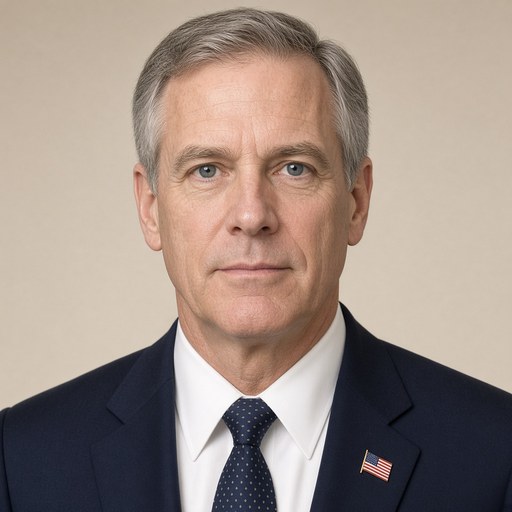
- William S. Cohen delivered a speech at the Munich Security Conference on 15 February 1995, addressing security challenges in the post-Cold War era.
- Main themes
- Erosion of NATO's military credibility, weaknesses of UN protection forces in Bosnia, ethnic conflicts and NATO expansion, American leadership in NATO, UNPROFOR mission credibility, arms embargo in Bosnia, humanitarian mission protection
- Duration
- ~6 min
- Words
- 660
- Sentences
- 38
- Readability
- 43
- Grade
- 10.9
- Syntax
- 2.48
- Vocabulary
- 2.55
The broad sphere of national life a sentence belongs to. Every sentence has an Arena, so it is the denominator the other indices are read against.
Other38 sentences in 23 paragraphs
Senator and Member of the House of Representatives of the United States of America (later Secretary of Defense)
Speaking at the 32nd Munich Conference on Security Policy, William S. Cohen underscored the erosion of NATO’s military credibility and the serious weaknesses of the UN protection forces in Bosnia and Herzegovina.
We have entered a new world of disorder and our inability to formulate coherent policies and strategies to deal with ethnic conflicts and the expansion of NATO membership has led to cross-Atlantic fear, confusion, incoherence, and recrimination — a state of affairs not unprecedented for the NATO alliance. I would like for the moment to offer a few observations on Bosnia to see whether the present is a prologue:
NATO cannot act unless America leads.
America will not lead unless it can persuade the American people that it is imperative for us to do so.
The conflict in Bosnia is not perceived to involve American interests that are vital. Rather, it is a quagmire where its inhabitants would rather dig fresh graves than bury old hatreds.
The European members of NATO were not willing to wade into the quicksands of ancient rivalries and engage in peacemaking operations so the responsibility was passed to the U.N., which has fewer divisions than the Pope and none of his moral authority.
As a result, we are all bearing witness to the decimation of a nation that was guaranteed protection under the U.N. Charter while the best we can offer is to seek to minimize the bloodshed by denying arms to the victims of aggression.
Our collective acquiescence to aggression may be the lesser of two evils — but it is nonetheless the participation in the evil of ethnic cleansing that we hoped might never again touch the European continent. We are hesitant to take more aggressive action because the consequences of our action cannot be predicted. The absence of predictability prevents the development of consensus: Should we do nothing militarily to stop Serbian aggression? Lift the arms embargo unilaterally if necessary and strike? Lift and get out of the way — if that is possible?
Time is running out on our Hamlet-like irresoluteness. Before the decision is made to lift the arms embargo, with all of its attendant uncertainties — including the fear of Americanizing the war on the part of some and the hope of doing so on the part of others — we should make an effort to establish the credibility of UNPROFOR’s mission and might.
New leadership is required. General Rose has departed. General Smith has taken his place. Mr. Akashi should be asked to resign immediately. When a no-fly zone or weapons exclusion zone has been declared, it should be enforced, not allowed to be violated with impunity.
No tribute or tolls should be paid by UNPROFOR forces to gain passage to help the victims of war. No tolerance should be granted for taking hostages or using them as human shields. If any harm should come to UNPROFOR forces, we should take out every major target that allows the Serbs to continue to wage war. That power should be disproportionate to the transgression and no area in Serbia ruled out of our bomb sites. UNPROFOR should be given the heavy armor necessary to protect its forces and achieve its humanitarian mission.
If we are unable to give UNPROFOR — whose troops are trapped in the layers of a disastrous dual command structure — the authority and firepower to achieve these ends, then we should remove the forces before the U.N.’s political impotence is allowed to corrode NATO’s military integrity and credibility any further than it has already done so.
Photo credit: picture-alliance / dpa
Related content
Chapter 3: Transition and Expansion (1990–1999) More
Chapter 3: Transition and Expansion (1990–1999)
Volker Rühe (1995) Photo credit: dpa More
Volker Rühe (1995)
Photo credit: dpa
Helmut Kohl (1996) Photo credit: picture-alliance / dpa More
Helmut Kohl (1996)
Photo credit: picture-alliance / dpa