




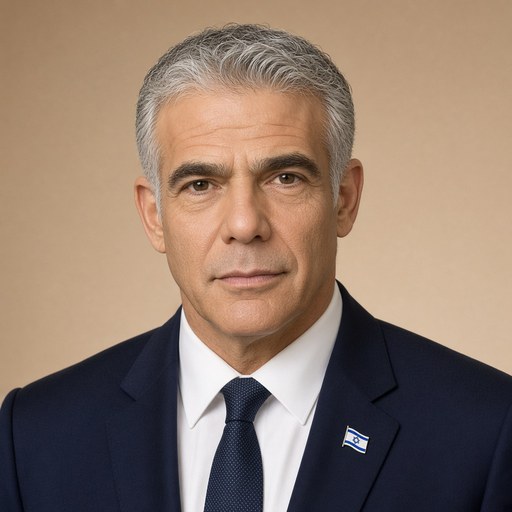
PM Yair Lapid Holds Discussion on Preparations in Order to Meet the Climate Change Crisis, including its Inherent Opportunities for Israel
 Yair Lapid · Prime Minister of Israel
- Context
- Lapid chaired a government discussion on Israel's preparations for climate change, addressing energy security, costs, and emissions reduction opportunities on August 31, 2022.
- Main themes
- Climate change preparedness, energy security, cost of living crisis, emissions reduction, Israeli clean technology, regional cooperation in the Middle East, global climate effort, economic opportunities from climate transition
- Duration
- ~2 min
- Words
- 240
- Sentences
- 8
- Readability
- 46
- Grade
- 14.3
- Syntax
- 3.33
- Vocabulary
- 2.03
The broad sphere of national life a sentence belongs to. Every sentence has an Arena, so it is the denominator the other indices are read against.
Other8 sentences in 5 paragraphs
The goal of this discussion is to see how we’re preparing, not only in regards to our own plans, but in the face of the fact that we have to internalize a reality that has changed since the first time we started discussing this, a little over a year ago.
Today, we are facing a triangle, each side of which is something that should be taken seriously: one side is the issue of energy security - knowing that we have diverse enough but also stable sources of energy for winter and summer to sustain industry, air conditioning and transportation. Air conditioning refers to the air conditioner in the classroom of children who must study.
The second side of the triangle is the costs crisis. People are much less open-minded towards the climate crisis from a certain level of harm to their pockets, and if we ignore this, we are faulty in our role because it is a part of the discussion.
The third side is reducing emissions, which was and remains our goal and something we need to address as part of the global effort, but also as a Israeli national effort.
Israeli technologies are going to be a key player in how we deal with the global climate crisis. We need to turn these opportunities into a lever for our regional dialogue with countries in the Middle East and, of course, for our ability to positively influence the world.