




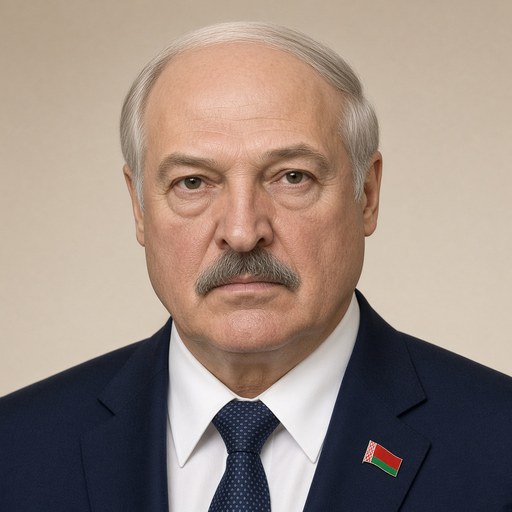
FRAGMENTS from the speech of the President of the Republic of Belarus during the presentation of the annual Address to the Parliament of the Republic of Belarus.
 Alexander Lukashenko · President of Belarus
- Context
- Lukashenko addressed the Belarusian National Assembly on April 16, 2002, delivering his annual constitutional Address outlining state priorities and reviewing the previous year's achievements.
- Main themes
- Annual presidential address to parliament, domestic development program, 2001 presidential election results, political stability, infrastructure development, external pressure and destabilization attempts, democracy and electoral legitimacy, foreign policy, economic progress, Belarus-Russia relations, national sovereignty
- Duration
- ~66 min
- Words
- 7,948
- Sentences
- 511
- Readability
- 56
- Grade
- 9.2
- Syntax
- 2.73
- Vocabulary
- 2.08
Translated from Russian
The broad sphere of national life a sentence belongs to. Every sentence has an Arena, so it is the denominator the other indices are read against.
Other511 sentences in 138 paragraphs
Dear members of the House of Representatives, members of the Council of the Republic of the National Assembly of the Republic of Belarus!
Today, in accordance with the Constitution, I present to you the Address of the Head of State. Legally addressed to Parliament, this document is essentially an appeal to all citizens, to the entire Belarusian people. It contains an assessment of the domestic and international situation of our state, outlines the current tasks facing the state, and reveals the ways to address them. You have the text of this document in your hands, esteemed parliamentarians.
In my speech, I will focus only on the most important issues that are of heightened interest in our society.
First, a general remark about the institution of the Address of the Head of State to Parliament. The form, content, and direction of this document, apart from traditions, are determined by the state of society. For example, the emotional address of U.S. President George W. Bush, interrupted by applause dozens of times, reflects the state of mobilization of American society in the face of the first external attack in the history of this country - the terrorist act of September 11, 2001.
The speech of my colleague Vladimir Vladimirovich Putin with his Address was eagerly awaited primarily because Russia is "in struggles" defining its development strategy. Russia is at a crossroads. And not only Russians, but everyone in the world is interested in where and by what path this power will go.
In our state, which has a clear, defined development program for the next five years and a perspective, the current Address of the Head of State is a working document that defines approaches to solving the problems facing society. One should not expect sensational revelations and sharp turns from it. The time for sensations and turns has passed.
Addressing you, esteemed parliamentarians, and all my fellow citizens, and the media, I want to emphasize once again: the course of our country, aimed at building a strong and prosperous Belarus and developing good-neighborly relations with foreign states, remains unshakable.
On the results of the past year
A year ago, speaking in this hall, I talked about the need to thwart the plans of influential forces abroad and their local lackeys to use the presidential elections to destabilize the situation in the state. Remember, they almost openly stated their desire to do with Belarus what was done with Yugoslavia.
The most important result of the past year, in my opinion, is that we stood firm and preserved the country, peace, and tranquility for the people. The year of the presidential elections did not become a year of conflicts and destabilization of our society.
Returning you to the events of last year, I want to remind you. The presidential elections, despite enormous external pressure and internal provocations, did not weaken constructive work, did not cause distortions in the management process, did not lead to failures in domestic and foreign policy. We passed this year calmly, confidently following the set course. Moreover, the presidential elections became for the authorities (this is the essence of democracy) a powerful stimulus for addressing issues affecting the interests of ordinary people.
For many residents of Polesie, Minsk Region, Vitebsk Region, and other regions, the year of the presidential elections is the year when natural gas came to their homes and enterprises. What could not be done in Soviet times, relying on the vast resources of the Union, we accomplished last year with our own efforts. The year of the presidential elections will go down in the history of our cities and villages for the schools, hospitals, roads, and many other things that will serve people for decades.
All this represents a striking contrast to countries where presidential campaigns are accompanied by severe conflicts, paralyzing the constructive activity of not only state bodies but also citizens.
I am very glad that my Address to you, esteemed deputies, took place today, after the presidential elections in the bastion of democracy. France is a country of the highest democracy, where even the most experienced, talented artist has no place to make a brushstroke. I think that many of you, who are so devoted to the principles of democracy, will find this a powerful lesson and teaching. In the bastion of democracy, one-third of the population voted as they deemed necessary.
We won not through electoral technologies, not through PR campaigns and other fuss, not through money (by the way, we hardly spent any), but through years of work for the benefit of the people. Voters, ordinary people supported the course that meets their interests and in the correctness of which they believed. And we have no right to betray the expectations of the people.
But people must also understand that the state cannot carry 10 million permanent residents and 2 million guests arriving in our state on its shoulders year after year. In our country, money, I emphasize once again, can be earned. Every year, up to 200 million tons of cargo moves from Western Europe to Russia through our country. And those who transport this cargo through our country pay. They pay for the roads, they pay at gas stations, they pay to those who wash cars, who clean, who maintain, who, in the end, sell what they want to sell on the roads. And people must understand that we need to gradually move away from relying solely on state support to earning this money. The money is lying on the surface; it just needs to be picked up. And those who want to do this today, those who want to earn today, rather than wait for favorable conditions, will have this money.
Yes, there is a part of the population - deep pensioners, disabled individuals, participants of the Great Patriotic War, those equated to them, and others, whom the state is obliged to support. We must support them.
On building an effective state.
I would like, esteemed colleagues, for the sense of responsibility that I feel towards my voters to be passed on to you and all state officials.
The authorities must raise their demands on themselves. This primarily means the need for targeted work to form an effective state with compact and responsive structures to the requests of citizens.
You, esteemed deputies, are well aware of the steps taken after the presidential elections to optimize the system of state administration. The number of officials at all levels has been reduced by 10 percent, or by three thousand people. Instead of 44 ministries and state committees, there are now 28.
......
The government and ministers must lead the work on reducing budget expenditures and optimizing the number of staff. The irrational expenditure of budgetary funds is largely related to the sluggishness and unwillingness of state organizations to seek opportunities to earn money.
Or let’s take the issue of budgetary support for public associations. The Belarusian state has traditionally provided financial support to more than 20 public organizations, including creative ones, since Soviet times. This seems to be a necessary and indisputable matter. But where did the budgetary money go? To maintain staff positions, that is, officials from the public. And the useful work of these associations for people and the state should be financed. For this, they must present and defend their program of activities for the year. And to all those who are interested in this matter today, I want to say unequivocally. Just as we begin the construction of a new facility, a program-estimate must be laid on the table: what you (youth, religious, and other organizations) will do, and whether it is needed by our state. If this program is needed by the state, will provide the corresponding, including financial, material effect, we will finance and support it. But indiscriminately, as they say, money will no longer be allocated to anyone.
Esteemed parliamentarians!
I would like to thank you for your constructive interaction with the government formed after the elections. To be more precise, for the fact that you, already seasoned in political experience, tolerate the flaws, and perhaps even shortcomings, that are characteristic of the formation stage of this government, at the first stage of its work.
I do not want to say that the previous government was bad. No, it tried as best as it could, but it was already evident that its resources were running out.
Our new economic team has, in my opinion, good potential that still needs to be realized. However, the beginning of the realization of this potential, Gennady Vasilyevich, has significantly dragged on under current conditions. Yes, many things are not going as we would like. Both I and many others, our society give you a discount in this regard. But I would not like to continue to take on, yes, probably, the Parliament, those functions that should belong to you. They belong to you! You must fully perform your duties according to these functions.
But we will talk about this later, discussing and analyzing the results of the first quarter of this year. As you know, this year we are introducing a practice - in terms of controlling the functioning of the executive branch - to hear the government quarterly.
On the main indicators of economic development.
All branches of power must work towards a common goal - a strong and prosperous country.
The benchmarks we need to reach have a specific numerical expression: by 2005, the gross domestic product must grow by 40 percent, and the average salary must increase by 2.5 times.
Many, including our supporters, find these tasks excessively ambitious.
What can be said here?
Yes, indeed, the bar has been set very high. And not only so-called post-Soviet, but also industrially developed European countries do not dare to aim for such high rates of GDP growth. But I believe in the potential of our state and believe that we will definitely reach these benchmarks. We simply must reach them - if we want to survive - provided we work hard every day. Well, it was like that five years ago when we met with many of you and set the task: to get closer, and by key indicators to reach the level of Soviet times. But if this had been said during the times of Vyacheslav Frantsevich Kebich, when the decline was horrific during the collapse of the Soviet Union, no one would have believed it, and they did not believe it when we planned these indicators. But we reached them in real terms. The other thing is that we did not learn to sell at a good price. And having reached this level, we do not have the effect we had before. That is another question. But it is very important and significant. In order to reach these indicators, this year we must make serious progress in all priority areas.
First, the export of Belarusian goods and services must grow by 6.5 percent over the year and amount to about 9 billion dollars.
The agro-industrial complex - this year its growth is projected at 3-4 percent. We need to produce 6.5 million tons of grain, more than 8 million tons of potatoes, more than 5 million tons of milk, and ensure a balance of the domestic food market at the national and regional levels;
housing - up to 3 million square meters must be built, and I remind you once again, at least 30 percent of the total volume must be in rural areas.
I will not disclose the technology for solving these tasks: the government, ministers, specialists in the sectors - qualified people, they know what, how, and when to do.
I just want to warn: the country, the people need results. Every completed or failed task has its author, whom people should know by face. I say this, addressing, among others, our media. The assessment of managerial personnel will be based solely on the final result.
On increasing the competitiveness of the Belarusian economy
Like it or not, Belarus is in the open and turbulent sea of the world market, where only the strongest survive. And those who, to put it in popular terms, "fold their wings," sink immediately. Moreover, I want you to understand that this turbulent world market is currently in a peak state, negatively for us. Today, in many of the largest countries, including in Europe and the United States of America - the main centers of economic development of our planet, there are both downturns and surges in production activity. And as a result - a terrible chaos. Everyone is trying to produce and sell to avoid falling. And this is shaking the market. And in this fever, it is many times more difficult for us with our fragile economy. We can maintain and expand our niche in the market of goods and services only if we can increase the competitiveness of our economy. First and foremost, by reducing costs.
All leaders and specialists need to turn their faces to the problem of reducing the cost of produced goods. If in Soviet times, due to the abundance of resources, increasing competitiveness, if one can say so, was a slogan, today competitiveness is a matter of survival for the Belarusian economy in the most direct sense of the word. And thus, the survival of both the state and society.
In every sector, we need to think about reducing costs, about the price competitiveness of Belarusian goods.
At the same time, I want to ask members of the government, ministers, and enterprise leaders: do you not see that your products (furniture, fabrics, shoes, and other light industry goods) are becoming uncompetitive in price not only in the Western market but also in our main Russian market?
We must set ourselves an incredibly difficult but necessary task: to reduce costs in industry by 20-25 percent, and in agriculture by at least 30 percent.
I have made my contribution to ensuring the competitiveness of Belarusian goods in terms of price as the Head of State. This month, our agreement with President of Russia Vladimir Vladimirovich Putin on equal prices for natural gas and equal tariffs for railway transportation was legally formalized with the relevant agreements. Starting from May 1 of this year, we will receive natural gas at the same price as in Russia, for one thousand cubic meters (approximately 22 dollars) when the world price is 100-130 dollars. You will transport your goods across the vast Russian market at domestic Russian railway tariffs. At the same time, I want to say to everyone: if someone tries to present this as some kind of tribute, a gift from the Russian state to the Belarusian people, that is not true. Even the Russian media have not made such statements this time. Yes, we will have an effect from this amounting to 0.5 billion dollars a year. With the growth of our production, we will have an even greater effect. But for this amount, even more than today, our state provides services to the Russian Federation, ranging from transportation to military-technical, scientific-technical, and defense services. So this is not a gift. After 1.5-2 years, we managed to negotiate with the Russian leaders that we should be placed, according to the Union Treaty, in equal conditions with the economic entities of the Russian Federation. And Russia recognized (Vladimir Vladimirovich told me this directly) that Belarus is the highest priority direction of action for the Russian Federation. For many reasons. You know them. And we, as a decent ally, have always been and will remain a reliable friend to the Russian people and the Russian state. In this regard, there are no changes in policy, and we will not allow any swings back and forth within this policy. Now it is up to the Government and enterprises. I want to tell you frankly: I will be watching how you use these unique conditions to expand exports, especially of those goods in the production of which natural gas serves as raw material. I hope that the Government has already begun the relevant organizational work. If we do not do this, then the reduction in energy prices and tariffs will indeed become a drug. You will live without effort and without changing anything, exhausting the remaining fixed assets from the Soviet era. By the way, we do not have much time. The Russians will constantly be raising their internal (and therefore for Belarus) prices to world levels. I fully understand that all of us, coming from a cost-based economy, are not used to counting resources, and it is difficult to restructure. It is difficult, but this knowledge must be mastered.
On encouraging business activity and the privatization of state enterprises
In order for Belarusian goods to be competitive not only in price but also in quality, investments are required. We need to modernize our production. The state has no free resources, and we must actively engage market mechanisms. I confirm once again: the state must and will support small and medium-sized entrepreneurship that corresponds to the national character of Belarusians, who are responsible and prudent, living off their labor. What we agreed upon at the meeting with Belarusian entrepreneurs is being implemented. I understand well: only an economically liberated person can move the economy forward. Simplifying bureaucratic procedures, the basis of all kinds of levies, remains a relevant task. Here, parliamentarians must have their say. But there will be no permissiveness. Rights and freedoms must be balanced with responsibility for violating the rules established by the state. The development of the Belarusian economy cannot be limited to stimulating small and medium-sized businesses (although, as I have already said, this is necessary and we will do it). Historically, Belarusian industry has been large enterprises. There is only one promising path - modernization and rearmament of large productions with the aim of producing competitive products of new generations. Look, the whole world is uniting into transnational corporations. So why should we today break, divide, and destroy our gigantic highly cooperative enterprises? We need to rely on them. And the state in its policy will primarily rely on these giants, which still feed and sustain us. For this, by the way, we need to attract huge investments, which is impossible without changing the form of ownership of enterprises.
Currently, our society's attention is focused on the privatization of enterprises in the petrochemical sector, and not only that. This is indeed an event. And not only for our country. The petrochemical complex of Belarus is operational and accounts for 30 percent of Belarusian exports. The investment attractiveness of this sector amounts to billions of dollars. Therefore, the simultaneous privatization of this complex is a significant phenomenon in the economic life of the entire European region.
But we must proceed from the fact that not only the petrochemical complex needs a change in ownership, but the entire economy of the country. This is the main path that the world is taking, and we cannot remain on the sidelines. However, we will do this calmly, without confining ourselves to specific annual or monthly schedules.
In our country, any investor will be welcomed, whether from the East or the West, as long as they come with clean (non-criminal) money. And they will work in Belarus according to our Belarusian rules, which, by the way, are compatible with international standards.
At recent meetings with the leaders of the largest Russian companies, I conveyed to them the principles and conditions that incoming investors must follow. These principles are also detailed in the text of the Address. I will name just a few: Privatization must lead to a radical increase in the efficiency of the enterprise's operations. The interests of workers must be protected during privatization. There should be no mass layoffs. All those who are released, by name, each person, if they wish, must be retrained and employed.
The social sphere of privatized enterprises must be preserved. We cannot destroy the social guarantees that society has created for workers over decades: housing, cultural and sports facilities, and so on, kindergartens and pioneer camps. On the contrary, these guarantees must be strengthened.
And when I talk to investors, I say: "Are you from Russia? Are you from the USA? Are you from Germany? Treat my Belarusian people as you treat your own people in your country - in terms of taxes, sponsorship, support, social sphere, and protection of your state. I do not demand more from you. How else? You come to our market, and you are going to enterprises that function normally.
Therefore, I have always told them that we are not in a hurry to carry out privatization. And the process that has begun does not mean that we will engage in "storming." At this stage, I pushed the government. Why? Because a step was taken, and then it stopped. And people think, well, they are probably waiting for good bribes. Nothing of the sort. The process is absolutely transparent and under control. I know these tendencies. There are also those who would like to warm their hands on this. What will happen for this? You know.
No one will profit from privatization. I know that all those millionaires from officials who suddenly became millionaires and billionaires in neighboring countries indeed profited from privatization. We must avoid this. Therefore, I made what some journalists called a sensational statement, that in the final version, before being approved by the Head of State, projects must be submitted to Parliament, which is natural, but they must also be presented to willing opposition members who have at least some understanding of the economy. They are also our citizens. Let them give their proposals and conclusions. Perhaps they will suggest something to the Head of State at the last stage: whether or not to proceed with this or that option of privatization.
Control from society will be comprehensive. There can be no secrets in this, but lobbying for the purpose of profit will also not be allowed. I want to calm my opponents with this. There will be privatization.
By the way, the inconsistency of our opposition is surprising. For seven years, you have been witnesses, shouting: "Let’s have privatization, let’s conduct privatization tomorrow!" Now, when we have started the process of privatization, they are shouting the opposite: "Either privatization or sovereignty. They are robbing!"
The exceptional role in this process will belong, esteemed parliamentarians, to you, the Parliament as a whole. You must create a reliable regulatory framework for privatization and investments, and evaluate the most important projects.
On the development of science, education, and culture
The most important tool for solving priority tasks and increasing the competitiveness of the Belarusian economy is science and education. It is precisely the understanding of the high role of the country's scientific potential that has dictated the decisions on reforming the National Academy of Sciences.
Budget funding for scientific research (especially in the fundamental sciences) will be at the appropriate level. But science (primarily applied) must also start to earn real income. The reform of the science sector has a clear and simple goal - to transform it into a productive force. The new leadership of the Academy of Sciences, its president, has been given all the powers and opportunities. Implement them. But results are needed.
The priority tasks in the field of education are high quality of teaching and educational work, reducing the academic load, and strengthening the health of schoolchildren, establishing quality nutrition in educational institutions, and updating the material and technical base of institutions.
Unfortunately, these tasks are being addressed slowly. Time is of the essence. The country needs a more advanced education system. And it is not just about expanding paid services. Changes of a substantive nature are needed.
The government, the Ministry of Education, figuratively speaking, must see the "front" of work and work proactively. It is not out of a good life that I am revisiting the issue of preparing textbooks in the humanities this week, and I am dealing with the structure of the Ministry. And I am doing this reluctantly because the leaders whose direct responsibility it is to solve these problems are neglecting them.
The National Assembly needs to supplement the Education Law with laws on higher education and vocational education.
Our society, dear comrades, is characterized by high spirituality and concern for the development of culture. Despite all the difficulties, we are finding significant funds for the reconstruction of the National Art Museum, the National Opera and Ballet Theater, the Museum of the Great Patriotic War, and several other facilities.
The construction of a knowledge repository, a cathedral of knowledge - the National Library - should become a phenomenon not only of the cultural life of the country. In terms of its architecture, including the surrounding landscape (we specifically kept this area of the city free; there have long been offers to build housing there for outrageous money), the building of the National Library at the entrance to Minsk via the Moscow Highway will become a decoration of our city. But the main thing is the content. The library will be equipped with the most modern technologies for storing and transmitting information. This will be a corresponding port where ships of knowledge will come. It will be connected by advanced means of communication with the largest libraries in the world and, at the same time, with the cities and regions of Belarus.
The National Library will become a symbol of a sovereign and enlightened Belarus. And we will build it as a whole country. Unfortunately, we have not yet conveyed the national significance of this project to the public. This year, we must at least start "digging the ground" at the construction site of this facility. If you will, in the name of revolution, but we must. And in 2005, the library must open, for the 78 million books that are currently cramped and leading a miserable existence, if that can be said about books, will perish. They are also alive.
Speaking of spirituality, I cannot fail to mention the construction of religious temples. The state treats all confessions to which its citizens belong equally. But this does not mean that we do not recognize the special role of Orthodoxy for the Belarusian people. In May, together with Patriarch Alexy II of Moscow and All Russia, we will open the House of Mercy - a unique complex that has no equal in Slavic states and indeed in states that profess Orthodoxy.
On a healthy lifestyle and healthcare
The health of our people is that invaluable resource without which the progressive development of society is impossible. And here, I would place the primary importance on instilling in every person the habit of a healthy lifestyle.
We have done and are doing a lot in this regard. But recently, this issue has started to take a back seat. Russia, taking us as an example, is elevating this problem to the state level, while our mass media do not even address the topic of a healthy lifestyle.
In assessing the significance of physical culture and sports for public development, we should take an example from industrially developed countries, such as America. There, a healthy lifestyle is a kind of cult.
And we all count how much could be bought and eaten with the money spent on sports facilities. We have built and will continue to build sports halls, football arenas, and running tracks. In short, everything that people need for everyday sports activities.
Understand, this is not just for me and not just for my children. And not just for your children. This is for all our children, including those we are trying to pull off the streets. They need to be occupied with something. At least occupied to the extent that they can serve as an example for others. Look, as soon as we turned our faces to sports, results appeared, as evidenced by the recent events on hockey and football fields. And people somehow started to get interested, children are ready to imitate their idols in this sphere. Only in this way can we pull people off the streets, so to speak, and make them healthy citizens. You can't achieve much through persuasion. Action is needed. And any action costs money. And I believe we should not be stingy with money for this. And I want you to know this and understand it. I am telling you this as your colleague. Believe me, for the facilities that are being built today, we are taking a drop from the budget. You approve the budget; did you find any line in it that allocates money for this construction? No.
We will build, but quickly, efficiently, inexpensively, and solidly. I can give you an example of the last facility where I worked during a Saturday cleanup with my colleagues and many volunteers. There we have, I believe, one private investor, a third from the city executive committee, and a third from a public organization - the Football Federation. So, it was divided into three, probably costing 2.5 million, each getting a third: the private investor, the public organization, and the state. Why not build on these principles? The state will benefit, people need it, and instead of 36 months, we will build it in 8.
Why so fast? Because with the current inflation, constant delays in construction lead to increased costs of the facilities. I paid a little more attention to construction because it should become one of the most important areas of our Government's activity. If a country does not build, it perishes. A country cannot live without creating something new. But today we need fewer production facilities; we have enough of them. We no longer need more schools and hospitals; we must put in order what we have, especially schools, because a demographic decline has begun. And we do not need more hospitals with the new forms of organization, if they can be managed by the new minister and the Ministry of Health.
We need to look at cultural and sports facilities and housing for people. That is where the construction industry should be directed.
I just spoke about healthcare, and I will not back down from my demand to radically improve the state of affairs in healthcare. We will bring medical care for the population to a qualitatively new level.
Work must proceed in two directions. The first is the rational use of budgetary funds allocated for healthcare (this is a huge amount of money, and no one intends to cut it).
There are significant reserves here, and I have spoken about them repeatedly: reducing costs through competitions, the cost of purchased medical equipment, medicines, and much more. The Government and the Ministry of Health must seek ways to effectively use the allocated funds on a daily basis, not from time to time and only at the direction of the President.
Budgetary medicine is primarily free medical care for citizens based on a certain, vitally necessary minimum. Addressing not so much to you, esteemed parliamentarians, but to the population, I want to say: free medicine in Belarus has been, is, and will be. And its quality will be higher than it is now, thanks to establishing basic order here.
But we must remember something else. Today we can only provide a certain set of necessary services for free. To put it simply, we cannot provide gold teeth with budgetary money; that must be paid for, so to speak.
This is the second direction: the development of paid medical services for those who have money. I have set the task: to attract non-budgetary funds to medicine this year in the amount of at least 30 percent of the sum allocated by the state.
We have excellent doctors. If someone needs to undergo an internship abroad, it must be done. And we are doing it. We need to purchase modern equipment and perform complex surgeries in our country. Then the money that goes abroad will stay here and work for our medicine, for our people.
The work of the Ministry of Health for 2002 will be evaluated based on the fulfillment of my directives, including attracting non-budgetary funds. But I warn you: getting carried away with paid medicine, you must not overlook the issues of free medical services for the majority of the population.
People do not want to put up with the fact that a system of petty bribery, gifts, and protectionism thrives in this sphere. Is it rare when a needy patient cannot get a place in a medical institution or receive proper treatment if he has not "thanked" certain doctors and their superiors?
On social policy.
The state’s social policy must be more carefully calibrated and weighed than ever.
Moreover, a new ideology of social policy is needed. People need to be clearly and unequivocally explained that their well-being will largely depend on their personal activity. On hard work, qualifications, and entrepreneurship.
A balanced policy will be pursued in the field of wages and population incomes.
The growth of wages in the real sector of the economy must be directly linked to enhancing its stimulating role in increasing labor efficiency.
The state is obliged to protect the working person. And it will do so. Including by establishing a minimum wage that the employer is obliged to pay the employee.
In this regard, I cannot help but mention the facts of delayed wage payments. I say directly: if someone thinks that our policy has changed, that people can be denied payment for their labor, they are greatly mistaken. What is earned must be paid in full and on time. May 9 is Victory Day, and May 5 is Easter. May 5 is the first stage, May 9 is the second, final stage. Settle with the people! I say this to the Prime Minister. And those ministers who are sitting behind him also hear this.
I have already spoken about benefits. And in this part, I will skip the discussions.
The new pension system must combine state guarantees and personal responsibility of citizens for their provision in old age. I ask you, esteemed deputies, to carefully consider the laws prepared in this regard. Carefully! Do not adopt them hastily. Work on them together with the Government. These are the laws "On the Basics of the Pension System in the Republic of Belarus," "On State Pension Insurance and State Insurance Pensions," "On State Pension Provision." These three fundamental draft laws need to be significantly worked on together. Moreover, in this regard, you are all specialists and know the topic well.
And for now, we should not destroy the old pension provision system. I fear that some members of the Government do not fully understand the full extent of responsibility for the facts of delayed pension payments that have already occurred today, which I just mentioned.
I believe this is unacceptable, and the state cannot allow this.
On the formation of civil society.
The program for building a strong country meets the interests of the overwhelming majority of the population and is the basis for consolidation and the building of civil society. The only thing is that everyone must realize and feel the significance of the idea of a strong and prosperous Belarus for themselves and their loved ones. We must reach the hearts and minds of everyone. And then the irreconcilable opposition will not lure anyone to their anti-social actions.
There can and should be different opinions and interests in society. I understand that. But I cannot understand people who, calling themselves patriots of the country, split and destroy our society, tarnish their country, cynically using any pretext.
Forgive me, but I will return to the recent events (the protest action on April 19). Three and a half hundred frozen people. Many ask: "What happened? How does the President assess this? What happened?" I will say simply: the people who provoked this got what they wanted. They wanted a picture, and they got it.
There are several reasons. I believe that the leadership of Russia cannot be unaware of what is happening on Russian channels. Western channels, at the behest of the Russians, briefly showed that day, while NTV and other channels have been spinning it to this day. And the first reason is the President's speech on "Freedom of Speech." This speech stirred Russia and revealed the true opponents of the Union (it turned out that way!), showed the true aspirations of the Belarusian people, showed who is currently holding back, both in large and small ways, the integration processes. In short, it had a strong resonance. Who is to blame? NTV. Today they are working it off, balancing the situation, showing what is happening with the ally and what is going on. We know this. But we have not spoken about it yet.
Secondly, our opposition saw what 500 million a year means - gas, transit, and other equal conditions for economic entities. They may not come to power at all because the worse it is for us, the better it is for them. And here it may be a little better, and they will not come to power! Therefore, on the eve of Bush's meeting with Vladimir Vladimirovich in Russia on May 23, they need to show pictures... And they have already written in the theses for him to demand from Putin to pressure Belarus because there the regime is abnormal: they vote for fascists, everything is bad there, there are no human rights, there is no democracy. Belarus must be crushed! But there must be pictures so that the whole world sees, and the United States, with all its embassies, hangers-on, and branches that are open here, must convey all the information through the State Department about what is happening with us.
This is the true price, so to speak, and these are our people doing this. What is this - will it be bad for me alone and for Parliament? No. This will primarily hit our people. Is this opposition? This is, as the people rightly called it, "frozen people," otherwise they cannot be called. And in general, how can one turn, for example, the Chernobyl tragedy into a tool for splitting society? This is completely illogical. Throughout history, disaster has united people on Belarusian soil. The people come together to overcome it with joint efforts. And look at what they are doing! A political show, a performance on human grief! Or take the situation with Kurapaty. Instead of calmly figuring out how best to commemorate those buried there, political speculation and illegal actions begin again.
People are buried in Kurapaty. In the 30s and 40s, Germans shot them, and others too, but people are buried there! And we must build a memorial that corresponds to the spirit of this place (including in Trostenets, the project is being developed), simple and understandable for people. A place for mourning and reflection, not for political dances on bones.
Belarus is our common home, and we must build it together. Then people will appreciate you too. There is work for everyone, including the opposition.
Speaking about the development of civil society, one cannot overlook the situation with trade unions. Trade unions are needed by people; they are needed by society. The attitude towards trade unions is a measure of the civilization of the state, and we will support trade unions that are engaged in their direct legal work of providing assistance and support to working people.
But no state can allow a trade union structure to directly act as a political party, a kind of fighting squad in the hands of people eager for power, as happened last year.
On strengthening legality and law and order.
In our country, law enforcement agencies will be strengthened. The demands that time places on them are very high. They must ensure a sharp reduction in crime in the country in the shortest possible time. And not through manipulation of statistics.
Comprehensive measures must be taken to improve the personnel composition of law enforcement agencies. All factors for reducing crime must be engaged, and this work must be carried out with broad public support.
Particular attention must be paid to combating extremism. Any facts of this extremely dangerous phenomenon must be resolutely suppressed.
A problem of particular importance is the external security of the country. The Government, the State Secretariat of the Security Council, and the Ministry of Defense must multiply efforts to practically implement the provisions of the recently adopted conceptual decisions on building the Armed Forces of the country.
In the near future, Parliament will consider a block of laws concerning the planning, interaction, and joint use of the Armed Forces and other troops.
On foreign policy priorities. Our foreign policy will continue to be based on the principle of multi-vectorism.
The strategic commitment to strengthening the union with Russia remains our unchanged priority. This year has been marked by significant progress in creating equal conditions for economic entities of the two countries, as I mentioned. The next step is to resolve issues of indirect taxation in mutual trade.
I recently had two conversations with Mikhail Mikhailovich Kasyanov. He has already informed me on his initiative about two agreements that will soon be presented to us with Vladimir Vladimirovich, most likely in St. Petersburg. This is several hundred million more for our country's budget.
We will discuss measures regarding the political component of our Union in detail at the upcoming meeting with Vladimir Vladimirovich.
All steps, esteemed parliamentarians, will be taken with the most active participation of the parliaments of both countries.
I just want to say a few words about the Union Treaty, about the union relations, and the Constitution of our Union. It is precisely from the decision that the heads of state of Russia and Belarus make today that the further pace of building the Union State will depend.
Today, all those who are developing the Constitution of the Union have, so to speak, come up against the heads of state. They must today, having made up their minds, say how they see the prospects of this process and the final outcome. We must articulate the goals, what we want to see as a result of building the union of Belarus and Russia.
We have two months. Today, the lawyers of Vladimir Vladimirovich and our Belarusian colleagues are working on specific proposals. We must address the issues that currently exist at the level of heads of state. That is why such a meeting in St. Petersburg is planned. I will definitely inform you and the people of Belarus about the results of this meeting, where the main principles of building our Union will be discussed. But, I emphasize once again, we will not do this without parliamentarians, and we will not proceed without them. Because the commission working on the draft Constitutional Act includes deputies as well.
Based on common economic and foreign policy interests, and ensuring collective security, cooperation with the countries of the Commonwealth of Independent States will develop. Belarus intends to continue actively supporting positive trends of diverse, multi-speed integration within the Commonwealth.
First and foremost, within the framework of the Eurasian Economic Community, the formation of a real customs union and a single economic space, and the implementation of a coordinated customs and tariff policy.
As for the western vector, not everything depends on us here. Our western partners are currently focusing all their attention on the advisory and monitoring group of the OSCE in Belarus.
When we agreed to establish the KNG (this may be news for some, but I will say: today the time has come), there was an understanding that it would be with us until the presidential elections were held.
And all this time we have shown extreme restraint, although the KNG under Mr. Vike was addressing only one task, not provided for by any mandate - the overthrow of the current government. And all this time we have shown, I repeat, not just restraint; we have endured, gritting our teeth. We were provoked, remember, on the eve of the presidential elections, to actually throw them out. But we held on. Together with the overwhelming majority of deputies, you, the parliamentarians, we endured and won this battle.
The elections took place. The political situation in Belarus is stable. The mandate of the KNG must be thoroughly reviewed, at a minimum. The OSCE leadership needs to be consistent. After all, similar structures have left the Baltic states, even though the number of discriminated, powerless people there has remained in the hundreds of thousands.
Within the framework of a balanced multi-vector policy, we intend to increase various forms and types of interaction with states from all regions of the world. This applies to both OSCE members and the OSCE as a whole. We are ready to cooperate with the OSCE. But it should be remembered that our country also pays membership fees to the OSCE. The OSCE budget is formed from these membership fees. Then these officials, who work there, should manage those states that pay the fees. How can they behave here? We are not setting a hard and sharp question. The mandate has expired, and the legislation has been adjusted. We will no longer regulate and change the legislation that they observed. We have already changed everything. Remember those round tables; anyone who wanted participated, and the elections for the Parliament and the President have already been held. What is there to change? We have already regulated and edited everything. That's it. Period. What are you here for? We have already done this, and the elections have passed. We are not even raising the question, as others have done, of them leaving, because there is nothing for them to do here.
Yes, today there is a new situation. Let's sit down at the table and discuss: what problems do you want to observe in Belarus? And for this, we will provide you with the appropriate powers on our land: after all, we are the hosts here. You will receive the corresponding mandate. And we will write this down with points and commas, so as not to reap the consequences, as we have done in recent years. But we need to come to an agreement. And a new advisory and monitoring group should be formed for this. They tell us: "No." They are again sending a bunch of officials, again these Vikes in square, or maybe in cube. But we do not know them.
But we are already experienced. In this case, we did not learn from the mistakes of others, but from our own. So why step on the rake a second time? Let's sit down at the negotiating table, define the powers, and determine the scope of issues. If you want to observe, by all means, come and observe. Will anything really change? But you must respect us. We are the hosts on this land, not some foreigners. And probably, the OSCE, the European Parliament, and the European Council already have places to apply their efforts there. Recent events testify to this.
We are not closing the country to anyone, including the OSCE. But we will not put the cart before the horse. I think this is the right approach.
.........
I am confident that this year, through our joint efforts, we will ensure the fulfillment of the responsible tasks facing the country and make significant progress on the path to building a strong and prosperous state.
Thank you for your attention.
The original Russian. The tags above are read on the English translation's sentences.
Уважаемые депутаты Палаты представителей, члены Совета Республики Национального собрания Республики Беларусь!
Сегодня в соответствии с Конституцией вам представляется Послание Главы государства. Юридически адресованный Парламенту этот документ по существу является обращением ко всем гражданам, ко всему белорусскому народу. В нем содержится оценка внутриполитического и международного положения нашего государства, определяются стоящие перед государством текущие задачи и раскрываются пути их решения. Текст этого документа у вас, уважаемые парламентарии, на руках.
В своем же выступлении я остановлюсь только на наиболее важных и вызывающих повышенный интерес в нашем обществе проблемах.
Вначале одно замечание общего характера об институте Послания Главы государства Парламенту. Форма, содержание и направленность этого документа помимо традиций определяются состоянием общества. К примеру, эмоциональное послание Президента США Буша-младшего, несколько десятков раз прерванное овациями, отражает состояние мобилизованности американского общества перед лицом первого в истории этой страны нападения извне - террористического акта 11 сентября 2001 года.
Выступление моего коллеги Владимира Владимировича Путина с Посланием ожидалось с нетерпением прежде всего потому, что Россия "в бореньях" определяет стратегию своего развития. Россия на распутье. И не только россиян, всех в мире интересует: куда и каким путем пойдет эта держава.
В нашем же государстве, имеющем ясную, четкую программу развития на ближайшее пятилетие и перспективу, нынешнее Послание Главы государства это рабочий документ, определяющий подходы к решению стоящих перед обществом проблем. От него не следует ожидать сенсационных откровений и крутых поворотов. Время сенсаций и поворотов прошло.
Обращаясь к вам, уважаемые парламентарии, и ко всем своим согражданам, средствам массовой информации, хочу еще раз подчеркнуть: курс нашей страны, направленный на построение сильной и процветающей Беларуси и развитие добрососедских отношений с зарубежными государствами, остается незыблемым.
Об итогах прошлого года
Год назад, выступая в этом зале, я говорил о необходимости сорвать планы влиятельных сил за рубежом и их доморощенных прихлебателей использовать президентские выборы для дестабилизации ситуации в государстве. Вспомните, они почти в открытую заявляли о желании сделать с Беларусью то же самое, что было сделано с Югославией.
Важнейший итог года прошлого состоит, на мой взгляд, в том, что мы выстояли и сохранили страну, мир и спокойствие для людей. Год президентских выборов не стал годом конфликтов и дестабилизации нашего общества.
Возвращая вас к событиям прошлого года, хочу напомнить. Президентские выборы, несмотря на огромное внешнее давление и внутренние провокации, не ослабили созидательной работы, не вызвали перекосов в управленческом процессе, не привели к провалам во внутренней и внешней политике. Мы прошли этот год спокойно, уверенно следуя по намеченному курсу. Более того, президентские выборы стали для власти (в этом и состоит суть демократии) мощнейшим стимулом для решения вопросов, затрагивающих интересы простых людей.
Для многих жителей Полесья, Минщины, Витебщины и других регионов год президентских выборов - это год прихода в их дома и на предприятия природного газа. То, что не смогли сделать в советское время, опираясь на огромные ресурсы Союза, мы сделали в прошлом году собственными силами. Год президентских выборов войдет в историю наших городов и сел введенными в строй школами, больницами, дорогами и многим другим, что десятилетиями будет служить людям.
Все это представляет собой разительный контраст со странами, где президентские кампании сопровождаются тяжелейшими конфликтами, парализуют созидательную активность не только государственных органов, но и граждан.
Я очень рад, что мое Послание вам, уважаемые депутаты, состоялось именно сегодня, после президентских выборов в оплоте демократии. Франция - это страна высочайшей демократии, где самому опытному, талантливому художнику даже кистью мазнуть негде. Я думаю, что многим из вас, которые так преданы принципам демократии, -- это сильнейший урок и наука. В оплоте демократии третья часть населения проголосовала так, как она сочла нужным.
Мы же выиграли не за счет предвыборных технологий, не за счет пиар-акций и прочей суеты, не за счет денег (их, кстати говоря, с нашей стороны почти не было потрачено), а за счет многолетней работы на благо людей. Избиратели, простые люди поддержали курс, который отвечает их интересам и в правильность которого они поверили. И мы не имеем права обмануть ожидания людей.
Но и люди должны понимать, что государство не может 10 млн. постоянно проживающих и 2 млн. ежедневно прибывающих в наше государство гостей нести из года в год на плечах. В нашей стране деньги, подчеркиваю в который раз, заработать можно. Через нашу страну ежегодно из Западной Европы только в Россию передвигается до 200 млн.тонн груза. И тот, кто везет этот груз через нашу страну, платит. Платит за дороги, платит на бензозаправках, платит тем, кто моет машины, кто чистит, кто ухаживает, кто на дорогах, в конце концов, продает то, что он хочет продать. И люди должны понимать, что надо потихонечку двигаться от надежд только на обеспечение со стороны государства на зарабатывание этих денег. Деньги лежат на поверхности, их только надо взять. И те, кто сегодня хочет это сделать, те, кто хочет сегодня заработать, а не ждет с моря погоды, тот эти деньги имеет.
Да, есть часть людей - глубокие пенсионеры, инвалиды, участники Великой Отечественной войны, приравненные к ним и другие, которых государство обязано поддерживать. Мы их и должны поддерживать.
О строительстве эффективного государства.
Я хотел бы, уважаемые товарищи, чтобы то чувство ответственности, которое я испытываю по отношению к своим избирателям, передалось и вам, и всем государственным служащим.
Власть должна повысить требовательность к себе. Это прежде всего означает необходимость целенаправленной работы по формированию эффективного государства с компактными и оперативно реагирующими на запросы граждан структурами.
О предпринятых после президентских выборов шагах по оптимизации системы государственного управления вы, уважаемые депутаты, хорошо знаете. Численность чиновников всех уровней сокращена, на 10 процентов, или на три тысячи человек. Вместо 44 министерств и государственных комитетов осталось 28.
......
Правительство, министры должны возглавить работу по сокращению бюджетных расходов, оптимизации численности аппарата. Нерациональное расходование бюджетных средств во многом связано с неповоротливостью и нежеланием государственных организаций искать возможности для зарабатывания денег.
Или возьмем вопрос о бюджетной поддержке общественных объединений. Белорусское государство еще с советских времен традиционно оказывало финансовую поддержку более чем 20 общественным организациям, включая и творческие. Дело, казалось бы, нужное и бесспорное. Но куда шли бюджетные деньги? На содержание штатных должностей, то есть чиновников от общественности. А финансироваться должна полезная для людей и государства работа этих объединений. Для этого они должны представлять и защищать программу своей деятельности на год. И всем тем, кто сегодня в этом вопросе заинтересован, хочу сказать однозначно. Так же, как мы начинаем строительство нового объекта, на стол должна быть положена программа-смета: что ты будешь (молодежная, религиозная и прочая организация) делать, и надо ли это нашему государству. Если эта программа нужна государству, даст соответствующий, в том числе финансовый, материальный, эффект, мы ее профинансируем и поддержим. Но огулом, как в народе говорят, чохом, деньги больше выделяться никому не будут.
Уважаемые парламентарии!
Я хотел бы поблагодарить вас за конструктивное взаимодействие со сформированным после выборов Правительством. Точнее сказать, за то, что вы, уже умудренные опытом политики, практики, терпите огрехи, а, может быть, и недостатки, которые характерны на стадии формирования этого Правительства, на первой стадии работы этого Правительства.
Не хочу сказать, что прежнее Правительство было плохим. Нет, оно старалось, как могло, но уже было очевидно, что его ресурс на исходе.
Наш новый экономический штаб обладает, на мой взгляд, хорошим потенциалом, который еще предстоит реализовать. Но вот начало реализации этого потенциала, Геннадий Васильевич, существенно в нынешних условиях затянулось. Да, многое пока не получается, как хотелось бы. И я, и многие другие, наше общество делают в этом плане вам скидку. Но мне не хотелось бы и в дальнейшем брать на себя, да, наверное, и Парламенту, те функции, которые должны быть присущи вам. Они вам присущи! Вы должны в полном объеме, согласно этим функциям исполнять свои обязанности.
Но об этом мы еще поговорим, рассуждая и анализируя итоги I квартала этого года. Как вы знаете, в этом году мы вводим практику -- в плане контроля функционирования исполнительной ветви власти -- заслушивание Правительства ежеквартально.
Об основных показателях экономического развития.
Все ветви власти должны работать на единую цель - сильную и процветающую страну.
Рубежи, на которые нам надо выходить, имеют и конкретное цифровое выражение: к 2005 году валовой внутренний продукт должен вырасти на 40 процентов, средняя зарплата - в 2,5 раза.
Многие, в том числе и наши сторонники, находят эти задачи чрезмерно амбициозными.
Что тут можно сказать?
Да, действительно, планка поднята очень высоко. И не только так называемые постсоветские, но и промышленно развитые европейские государства не осмеливаются замахиваться на столь высокие темпы роста валового внутреннего продукта. Но я верю в потенциал нашего государства и считаю, что на эти рубежи мы обязательно выйдем. Мы просто обязаны выйти -- если хотим выжить -- при условии упорной, повседневной работы. Ну, было же так пять лет назад, когда со многими из вас мы встречались и ставили задачу: приблизиться, а по основным показателям выйти на уровень советских времен. Но если бы об этом начали говорить во времена Вячеслава Францевича Кебича, когда падение было кошмарным в период развала Советского Союза, , никто бы не поверил, да не и верили тогда, когда мы с вами планировали эти показатели. Но мы в натуральном выражении на них вышли. Другое дело, что продавать не научились по хорошей цене. И выйдя на этот уровень, не имеем того эффекта, который имели прежде. Это другой вопрос. Но очень важный и существенный. Для того, чтобы выйти на эти показатели, в нынешнем году мыдолжны серьезно продвинуться вперед по всем приоритетным направлениям.
Во-первых, экспорт белорусских товаров и услуг за год должен вырасти на 6,5 процента и составить около 9 миллиардов долларов.
Агропромышленный комплекс - в текущем году предусмотрен его прирост на 3-4 процента. Предстоит произвести 6,5 миллиона тонн зерна, больше 8 миллионов тонн картофеля, больше 5 миллионов тонн молока и обеспечить баланс внутреннего рынка продовольствия на национальном и региональном уровнях;
жилье - должно быть построено до 3 миллионов квадратных метров, причем, я еще раз напоминаю, на селе не менее 30 процентов от общего объема.
Я не буду раскрывать технологию решения этих задач: Правительство, министры, специалисты в отраслях - люди квалифицированные, они знают что, как и когда делать.
Хочу только предупредить: стране, народу нужен результат. У каждого сделанного или проваленного дела есть свой автор, которого люди должны знать в лицо. Я это говорю, обращаясь в том числе и к нашим средствам массовой информации. Оценка управленческих кадров будет только по конечному результату.
О повышении конкурентоспособности белорусской экономики
Нравится нам это или нет, но Беларусь находится в открытом и бушующем море мирового рынка, где выживает только сильнейший. А кто, говоря народным языком, "складывает ласты", тонет немедленно. Тем более, я хочу, чтобы вы понимали, что этот бушующий мировой рынок сегодня находится в пиковом состоянии, в отрицательном плане для нас. Сегодня во многих крупнейших государствах, в том числе в Европе и Соединенных Штатах Америки - основных центрах экономического развития нашей планеты, наметились то спады, то всплески производственной активности. А в результате -? страшный хаос. Каждый пытается произвести и продать, чтобы не свалиться. И это лихорадит рынок. И в этой лихорадке нам с неокрепшей экономикой во много крат сложнее. Мы можем удержать и расширить свою нишу на рынке товаров и услуг, только если сможем повысить конкурентоспособность своей экономики. Прежде всего за счет снижения издержек.
Всем руководителям, специалистам надо повернуться лицом к проблеме снижения себестоимости производимой продукции. Если в советское время, благодаря изобилию ресурсов, повышение конкурентоспособности, если можно так сказать, было лозунгом, то сегодня конкурентоспособность - это вопрос выживания белорусской экономики в самом прямом значении этого слова. А значит, выживания и государства, и общества.
На каждом участке надо думать о снижении издержек, о ценовой конкурентоспособности белорусских товаров.
При этом я хочу спросить членов Правительства, министров, руководителей предприятий: неужели вы не видите, что ваша продукция (мебель, ткани, обувь и другие товары легкой промышленности) становится неконкурентоспособной по цене не только на западном, но и на нашем основном, российском рынке?
Надо поставить перед собой неимоверно трудную, но необходимую задачу: снизить затраты в промышленности на 20 - 25 процентов, а в сельском хозяйстве как минимум на 30 процентов.
Свой вклад в обеспечение конкурентоспособности белорусских товаров по цене как Глава государства я внес. В этом месяце наша с Президентом России Владимиром Владимировичем Путиным договоренность о равных ценах на природный газ и равных тарифах на железнодорожные перевозки была юридически закреплена соответствующими соглашениями. С 1 мая этого года мы будем получать природный газ по цене, как в России, за одну тысячу кубометров (примерно это 22 доллара) при мировой цене 100-130 долларов. Вы будете возить свои грузы по бескрайнему российскому рынку по внутрироссийским железнодорожным тарифам. При этом я хочу сказать всем: если кто-то это пытается представить как какую-то дань, подарок российского государства белорусскому народу, это неправда. Даже российские средства массовой информации на сей раз таких заявлений не делали. Да, мы будем иметь от этого эффект, равный 0,5 миллиарда долларов в год. При росте нашего производства мы будем иметь еще больший эффект. Но на эту сумму, даже большую на сегодняшний день, наше с вами государство оказывает услуги Российской Федерации, начиная от транспортных и заканчивая военно-техническими, научно-техническими и оборонными. Так что это не подарок. Нам все-таки спустя 1,5-2 года удалось договориться с российскими руководителями о том, что мы должны быть поставлены, согласно Союзному договору, в равные условия с субъектами хозяйствования Российской Федерации. И Россия признала (Владимир Владимирович это мне прямо сказал), что Беларусь является найприоритетнейшим направлением действий Российской Федерации. По многим причинам. Вы их знаете. И мы как порядочный союзник всегда были и останемся надежным другом для российского народа, для российского государства. В этом плане никаких изменений политики не наблюдается, и мы не допустим шараханья из стороны в сторону в рамках этой политики. Теперь дело за Правительством и предприятиями. Я откровенно вам хочу сказать: я посмотрю, как эти уникальные условия вы используете для расширения экспорта, особенно тех товаров, в производстве которых природный газ служит сырьем. Я надеюсь, что Правительство уже приступило к соответствующей организаторской работе. Если этого не делать, то снижение цен на энергоносители и тарифов, действительно, станет наркотиком. Будете жить, не напрягаясь и ничего не меняя, добивая оставшиеся от советских времен основные фонды. У нас, кстати, не так много времени. Россияне постоянно будут подтягивать свои внутренние (а значит, и для Беларуси) цены до мировых. Я прекрасно понимаю, что всем нам, выходцам из затратной экономики, не привыкшим считать ресурсы, трудно перестроиться. Трудно, но эту науку надо осваивать.
О поощрении деловой активности и об акционировании государственных предприятий
Для того чтобы белорусские товары были конкурентоспособными не только по цене, но и по качеству, требуются инвестиции. Нужна модернизация нашего производства. Свободных ресурсов у государства нет, и мы активнее должны подключать рыночные механизмы. Еще раз подтверждаю: государство должно и будет поддерживать среднее и малое предпринимательство, отвечающее национальному характеру белоруса, ответственного и осмотрительного, живущего своим трудом. То, о чем мы договорились на встрече с белорусскими предпринимателями, реализуется. Я хорошо понимаю: двигать вперед экономику может только экономически раскрепощенный человек. Упрощение бюрократических процедур, этой основы всякого рода поборов, остается актуальной задачей. Здесь свое веское слово должны сказать и парламентарии. Но и вседозволенности не будет. Права и свободы должны уравновешиваться ответственностью за нарушение установленных государством правил. Развитие белорусской экономики не может сводиться только к стимулированию малого и среднего бизнеса (хотя это, как я уже сказал, надо и будем делать). Исторически сложилось так, что белорусская промышленность - это крупные предприятия. Есть только один перспективный путь - модернизация и перевооружение крупных производств с целью выпуска конкурентоспособной продукции новых поколений. Посмотрите, весь мир объединяется в транснациональные корпорации. Так зачем же нам наши гигантские высококооперированные предприятия сегодня ломать, делить и рушить. На них нужно опираться. И государство в своей политике будет опираться прежде всего на эти гиганты, которые до сих пор нас кормят и содержат. Для этого, кстати, надо привлекать огромные инвестиции, что без изменения формы собственности предприятий сделать невозможно.
Сейчас внимание нашего общества сфокусировано на акционировании предприятий нефтехимии, и не только. Это действительно событие. И не только для нашей страны. Нефтехимический комплекс Беларуси находится в рабочем состоянии и обеспечивает 30 процентов белорусского экспорта. Инвестиционная привлекательность этой сферы составляет миллиарды долларов. Поэтому одновременное акционирование этого комплекса - масштабное явление в экономической жизни всего европейского региона.
Но мы должны исходить из того, что в изменении формы собственности нуждается не только нефтехимический комплекс, но и вся экономика страны. Это магистральный путь, которым идет мир, и мы не можем оставаться на обочине. Однако делать это будем спокойно, не зажимая себя в конкретные годовые или месячные графики.
В нашей стране будет приветствоваться любой инвестор как с Востока, так и с Запада, главное, чтобы он был с чистыми (не криминальными) деньгами. И работать он будет в Беларуси по нашим, белорусским правилам, совместимым, к слову, с международными стандартами.
На недавних встречах с руководителями крупнейших российских компаний я довел до них принципы и условия, которым должны следовать приходящие к нам инвесторы. Эти принципы так же подробно изложены в тексте Послания. Назову только некоторые: Акционирование должно привести к кардинальному повышению эффективности работы предприятия. Интересы человека труда при приватизации должны быть защищены. Массовых увольнений быть не должно. Все, кто высвобождается, по списку, персонально каждый человек, если он этого хочет, должен быть переобучен и трудоустроен.
Социальная сфера акционируемых предприятий должна быть сохранена. Нельзя разрушать те социальные гарантии, которые человеку труда общество создавало десятилетиями: жилье, дворцы и дома культуры, спортивные, культурные объекты и так далее, детские садики и пионерские лагеря. Наоборот, эти гарантии надо упрочить.
И когда я разговариваю с инвесторами, я говорю: "Вы из России? Вы из США? Вы из Германии? Относитесь к моему белорусскому народу так, как вы относитесь в своей стране, к своему народу - по налогам, по спонсорской помощи, по поддержке, по социальной сфере, по защите своего государства. Я большего от вас не требую. А как иначе? Вы приходите на наш рынок и вы идете сегодня на предприятия, которые нормально функционируют.
Поэтому я им всегда говорил, что мы не торопимся проводить приватизацию. И тот процесс, который начался, не означает, что мы будет "штурмовщиной" заниматься. На этом этапе я подталкивал правительство. Почему? Потому что шаг сделали и остановились. И люди думают, ну, наверное, ждут хороших взяток. Ничего подобного. Процесс абсолютно прозрачный и находится под контролем. Я знаю эти тенденции. Есть и такие, которые бы хотели на этом руки погреть. Что будет за это? Знаете.
Наживаться за счет приватизации никто не будет. Я знаю, что все те миллионеры от чиновников, которые стали вдруг миллионерами и миллиардерами в соседних государствах, они действительно наживались на приватизации. Мы должны этого избежать. Поэтому я сделал, как некоторые журналисты назвали, в неком роде сенсационное заявление, что в конечном варианте до утверждения Главой государства проекты должны поступить в Парламент, что естественно, но они должны быть представлены желающим оппозиционерам, которые мало-мальски разбираются в экономике. Они тоже наши граждане. Пусть они дадут свои предложения и заключения. Может, они что-то подскажут на последнем этапе Главе государства: можно или нельзя идти на этот или тот вариант приватизации.
Контроль со стороны общества будет всеобъемлющий. Тайны в этом быть никакой не может, но и лоббирование с целью нажиться никому позволено тоже не будет. Я хочу этим самым успокоить и своих оппонентов. Будет и приватизация.
Кстати, непоследовательность нашей оппозиции удивляет. Семь лет вы были свидетелями, кричали: "даеш прыватызацыю, заутра правесці прыватызацыю!" Сейчас, когда приступили к акционированию, кричат обратное: "или приватизация, или суверенитет. Грабят!"
Исключительная роль в этом процессе будет принадлежать, уважаемые парламентарии, вам, Парламенту в целом. Вы должны создавать надежную нормативную базу для приватизации и инвестиций, давать оценку наиболее важным проектам.
О развитии науки, образования и культуры
Важнейший инструмент решения приоритетных задач, повышения конкурентоспособности белорусской экономики - наука и образование. Именно пониманием высокой роли научного потенциала страны продиктованы решения о реформировании Национальной академии наук.
Бюджетное финансирование научных исследований (особенно фундаментальных наук) будет на должном уровне. Но и наука (прежде всего прикладная) должна начать по настоящему зарабатывать. Реформирование сферы науки имеет ясную и простую цель - превращение ее в производительную силу. Новому руководству Академии наук, ее президенту даны все полномочия и возможности. Реализуйте их. Но нужен результат.
Приоритетные задачи в области образования - высокое качество обучения и воспитательной работы, снижение учебной нагрузки и укрепление здоровья школьников, налаживание в учебных заведениях качественного питания, обновление материально-технической базы учреждений.
Решаются они, к сожалению, медленно. Время не терпит. Стране нужна более совершенная система образования. И дело не только в расширении платных услуг. Нужны изменения содержательного характера.
Правительство, Министерство образования, образно говоря, должны видеть "фронт" работ и работать инициативно. Не от хорошей жизни на этой неделе я повторно рассматриваю вопрос о подготовке учебников гуманитарного цикла, разбираюсь со структурой Министерства. И занимаюсь этим вынужденно, потому что руководители, чья прямая обязанность решать эти проблемы, их упускают.
Национальному собранию Закон об образовании нужно дополнить законами о высшем и о профессионально-техническом образовании.
Нашему обществу, уважаемые товарищи, присущи высокая духовность и забота о развитии культуры. Несмотря на все трудности, мы находим большие деньги на реконструкцию Национального художественного музея, Национального театра оперы и балета, Музея Великой Отечественной войны и ряда других объектов.
Явлением не только культурной жизни страны должно стать строительство хранилища знаний, собора знаний - Национальной библиотеки. По своей архитектуре, включая и окружающий ландшафт (мы специально сохраняли этот район города свободным, там уже давно за бешенные деньги предлагали построить жилье), здание Национальной библиотеки при въезде по Московскому шоссе в Минск станет украшением нашего города. Но главное - содержание. Библиотека будет оснащена самыми современными технологиями хранения и передачи информации. Это будет соответствующий порт, куда будут приходить корабли знаний. Она будет связана передовыми средствами коммуникации с крупнейшими библиотеками мира и, одновременно, с городами и районами Беларуси.
Национальная библиотека станет символом суверенной и просвещенной Беларуси. И строить ее будем всей страной. Пока, к сожалению, мы не довели до общественности национальную значимость этого проекта. В нынешнем году мы обязательно должны начать хотя бы "копать землю" на месте строительства этого объекта. Если хотите, именем революции, но должны. И в 2005 году библиотека должна открыться, ибо погибнут те 78 миллионов книг, которые сегодня ютятся и влачат жалкое существование, если это можно сказать о книгах. Они тоже живые.
Говоря о духовности, не могу не сказать и о строительстве религиозных храмов. Государство равно относится ко всем конфессиям, к которым принадлежат его граждане. Но это не означает, что мы не осознаем особой роли православия для белорусского народа. В мае мы вместе с Патриархом Московским и всея Руси Алексием II откроем Дом милосердия - уникальнейший комплекс, которому нет равных в славянских государствах и вообще в государствах, исповедующих православие.
О здоровом образе жизни и здравоохранении
Здоровье наших людей - это тот бесценный ресурс, без которого невозможно поступательное развитие общества. И здесь на первое место я бы поставил привитие каждому человеку привычки к здоровому образу жизни.
Мы много в этом смысле сделали и делаем. Но в последнее время этот вопрос стал уходить на второй план. Россия, взяв с нас пример, выводит эту проблему на государственный уровень, а в наших средствах массовой информации нет даже адресного освещения тематики здорового образа жизни.
В оценке значимости физической культуры и спорта для общественного развития мы должны брать пример с промышленно развитых стран, с той же Америки. Там здоровый образ жизни - это своего рода культ.
А мы все считаем, сколько можно было бы купить и поесть на деньги, потраченные на спортивные сооружения. Строили и будем строить и спортивные залы, и футбольные манежи, и беговые дорожки. Словом, все то, что нужно людям для повседневного занятия спортом.
Поймите, это не мне и не только моим детям. И не только вашим детям. Это всем нашим детям, в том числе и тем, которых мы пытаемся вытянуть с улицы. Их же чем-то надо занять. Ну хотя бы занять в такой степени, чтобы был пример для других. Посмотрите, как только повернулись лицом к спорту, и результаты появились, о чем свидетельствуют последние события на хоккейных, футбольных площадках. И народ как-то потянулся, интерес появился, детишки готовы подражать своим кумирам в этой сфере. Только так мы можем вытянуть людей с улиц, образно говоря, и сделать их здоровыми гражданами. Уговорами много не сделать. К разговору нужно дело. А любое дело стоит денег. И я считаю, на это денег жалеть не надо. И хочу, чтобы вы знали это и понимали. Это я вам говорю как своим коллегам. Поверьте, что на те сооружения, которые сегодня строятся, мы из бюджета берем каплю. Вы утверждаете бюджет, вы там хоть в одной строке нашли деньги на это строительство? Нет.
Строить будем, но быстро, качественно, недорого и добротно. Могу привести вам в пример последний объект, на котором я работал на субботнике со своими коллегами, многими желающими. Там у нас, по-моему, один частный инвестор, треть у горисполкома и треть у общественной организации - Федерации футбола. Вот на три поделили, наверное, 2,5 миллиона будет стоить, каждому по трети: частник, общественная организация и государство. Ну почему не строить на этих принципах? В государстве останется, людям надо, и вместо 36 месяцев построим за 8.
Почему так быстро? Потому что при нынешней инфляции постоянное затягивание строительства -- это удорожание объектов. Я строительству уделил несколько больше внимания потому, что строительство должно стать одним из важнейших направлений деятельности нашего Правительства. Если страна не строит, она погибает. Страна, не создавая нового, жить не может. Но сегодня нам надо меньше производственных объектов, их у нас хватает. Нам больше не надо школ и больниц, мы привести должны в порядок то, что есть, особенно школы, потому что наметился демографический спад. И больниц нам больше не надо при новых формах организации дела, если их осилят новый министр и Министерство здравоохранения.
Нам надо посмотреть на объекты культуры, спорта и на жилье для людей. Вот куда должна быть повернута строительная отрасль.
Я только что сказал о здравоохранении, я не отступлю от своего требования кардинально улучшить состояние дел в здравоохранении. Мы выведем медицинское обслуживание населения на качественно новый уровень.
Работа должна идти по двум направлениям. Первое - рациональное использование бюджетных средств, выделяемых на здравоохранение (это огромные деньги, и их никто сокращать не собирается).
Резервы здесь большие, и о них я неоднократно говорил: удешевление за счет конкурсов, стоимости закупаемого медицинского оборудования, лекарств и многое другое. Правительство, Министерство здравоохранения должны искать пути эффективного использования выделенных средств повседневно, а не время от времени и то по указаниям Президента.
Бюджетная медицина - это, в основном, бесплатное медицинское обслуживание граждан по определенному, жизненно необходимому минимуму. Обращаясь уже не столько к вам, уважаемые парламентарии, сколько к населению, хочу сказать: бесплатная медицина в Беларуси была, есть и будет. И качество ее будет выше, чем сейчас, за счет наведения здесь элементарного порядка.
Но надо помнить о другом. Мы сегодня бесплатно можем оказывать только определенный набор необходимых услуг. Говоря упрощенно, за бюджетные деньги золотые зубы мы вставлять не можем, за это надо платить, образно говоря.
Это и есть второе направление: развитие платных медицинских услуг для тех, у кого есть деньги. Мною поставлена задача: привлечь в медицину в этом году внебюджетные средства в размере не менее 30 процентов от суммы, выделяемой государством.
У нас прекрасные врачи. Если надо кому-то пройти стажировку за рубежом, это надо сделать. И мы это делаем. Нужно закупить современное оборудование и проводить сложные операции в нашей стране. Тогда деньги, которые уходят за границу, останутся здесь и будут работать на нашу медицину, на наших людей.
Работа Минздрава за 2002 год будет оцениваться в зависимости от выполнения моих установок, в том числе и по привлечению внебюджетных средств. Но предупреждаю: увлекшись платной медициной, вы не должны упускать вопросы бесплатных медицинских услуг основной массе населения.
Люди не хотят мириться с тем, что в этой сфере процветает система мелкого взяточничества, подношений и протекционизма. Разве редкость, когда нуждающийся больной не может получить места в лечебном учреждении или должным образом долечиться, если он не "отблагодарил" некоторых врачей и их начальников?
О социальной политике.
Социальная политика государства должна быть как никогда тщательно выверенной и взвешенной.
Более того, нужна новая идеология социальной политики. Людям необходимо четко и однозначно объяснять, что их благополучие в решающей мере будет зависеть от их личной активности. От трудолюбия, квалификации и предприимчивости.
В стране будет проводиться сбалансированная политика в сфере оплаты труда и доходов населения.
Рост заработной платы в реальном секторе экономики должен быть напрямую связан с усилением ее стимулирующей роли в повышении эффективности труда.
Человека труда государство обязано защищать. И будет это делать. В том числе путем установления минимума зарплаты, который наниматель обязан выплачивать работнику.
В этой связи не могу не сказать о фактах задержки выплаты заработной платы. Прямо говорю: если кто-то считает, что наша политика изменилась, что людям можно не платить за их труд, тот крепко ошибается. Заработанное должно выплачиваться полностью и своевременно. 9 Мая День Победы, а 5 мая Пасха. 5 мая - первый этап, 9 Мая - второй, окончательный этап. Рассчитайтесь с людьми! Я это говорю в адрес Премьер-министра. И те министры, которые сидят у него за спиной, тоже это слышат.
О льготах я уже сказал. И в этой части опускаю рассуждения.
Новая пенсионная система должна сочетать государственные гарантии и личную ответственность граждан за свое обеспечение в старости. Я прошу, уважаемые депутаты, внимательно рассмотреть подготовленные в этой связи законы. Внимательно! Не принимайте их слету. Поработайте над ними вместе с Правительством. Это законы "Об основах пенсионной системы в Республике Беларусь", "О государственном пенсионном страховании и государственных страховых пенсиях", "О государственном пенсионном обеспечении". Эти три основополагающих законопроекта надо существенно вместе нам проработать. Тем более, в этом плане вы все специалисты и хорошо знаете тему.
А пока не надо разрушать старую систему пенсионного обеспечения. Боюсь, что некоторые члены Правительства не совсем ясно представляют всю полноту ответственности за имевшие место факты задержки выплаты пенсий уже сегодня, о чем я только что говорил.
Я считаю, что это недопустимо, и государство на это пойти не может.
О формировании гражданского общества.
Программа построения сильной страны отвечает интересам подавляющего большинства населения и является основой консолидации, построения гражданского общества. Дело только в том, чтобы каждый осознал, почувствовал значимость идеи сильной и процветающей Беларуси для него самого и его близких. Мы должны достучаться до сердца и разума каждого. И тогда непримиримая оппозиция никого не заманит на свои антиобщественные акции.
В обществе могут и должны быть разные мнения, разные интересы. Это я понимаю. Но я не могу понять людей, которые, называя себя патриотами страны, раскалывают, разрушают наше общество, порочат свою страну, цинично используя любой повод.
Извините меня, но я вернусь к последним событиям (акция протеста 19 апреля). Три с половиной сотни отмороженных людей. Многие спрашивают: "А что же произошло? Как это оценивает Президент? Что случилось?" Скажу просто: люди, которые это спровоцировали, что хотели, то и получили. Они хотели получить картинку, они ее получили.
Причин несколько. Я считаю, что руководство России не может не знать, что творится на российских каналах. Западные каналы с подачи российских мельком показали тот день, а НТВ и другие каналы раскручивают до сего дня. И вот первая причина - выступление Президента в "Свободе слова". Это выступление всколыхнуло Россию и показало истинных противников Союза (так получилось!), показало истинные устремления белорусского народа, показало, кто сегодня сдерживает, и в большом объеме, и в малом, интеграционные процессы. Словом, имело сильный резонанс. Кто виноват? НТВ. Сегодня отрабатывают, уравновешивая ситуацию, показывая, какие дела у союзника и что происходит. Мы это знаем. Но об этом пока не говорили.
Второе. Наша оппозиция увидела, что такое 500 млн. в год - газ, транзиты и Прочее, равные условия для субъектов хозяйствования. А могут же вообще к власти не прийти, потому что чем хуже у нас, тем лучше у них. А тут же может быть хоть чуть-чуть, но лучше, и к власти не придут! Поэтому накануне встречи Буша с Владимиром Владимировичем в России 23 мая надо показать картинки .... И ему уже в тезисы вписали, чтобы он потребовал от Путина придавить Беларусь, потому что там режим ненормальный: там за фашистов голосуют, там все плохо, там нет прав человека, нет никакой демократии. Надо задавить Беларусь! Но надо же картинки, чтобы весь мир увидел, а Соединенные Штаты посольствами этими всеми, прихлебателями, отделениями, которые здесь открыты, должны передать всю информацию через Госдеп, что у нас происходит.
Вот истинная цена, так сказать, и это наши люди делают. Это что -- мне будет в результате одному плохо и Парламенту? Нет. Это прежде всего ударит по нашим людям. Это что, оппозиция? Это, правильно народ назвал, "отморозки", иначе их не назовешь. И вообще, как можно превращать, допустим, чернобыльскую трагедию в инструмент раскола общества? Это вообще не поддается логическому объяснению. Испокон веков на белорусской земле беда сплачивает людей. Народ объединяется, чтобы ее преодолеть общими усилиями. А посмотрите, что они делают! Политическое шоу, представление на людском горе! Или возьмите ситуацию с Куропатами. Вместо того, чтобы спокойно разобраться, подумать, как лучше увековечить память тех, кто там захоронен, опять начинаются политические спекуляции и противоправные действия.
В Куропатах похоронены люди. В 30-е, 40-е годы, немцы расстреляли, еще кто-то, но там похоронены люди! И мы должны построить отвечающий духу этого места (в том числе в Тростенце, идет разработка этого проекта), простой и понятный для людей мемориал. Место для печали и раздумий, а не политических танцев на костях.
Беларусь - наш общий дом, и его нам вместе строить. Тогда и вас люди оценят. Работа для каждого, оппозиционера в том числе, найдется.
Говоря о развитии гражданского общества, нельзя умолчать о ситуации с профсоюзами. Профсоюзы нужны людям, они нужны обществу. Отношение к профсоюзам ? показатель цивилизованности государства, и мы будем поддерживать профсоюзы, занимающиеся своим прямым делом по закону - оказанием помощи и поддержки трудовому человеку.
Но ни одно государство не может допустить того, чтобы профсоюзная структура напрямую выступала в качестве политической партии, своего рода боевого отряда в руках людей, рвущихся к власти, как у нас случилось в прошлом году.
Об укреплении законности и правопорядка
В нашей стране будут укрепляться правоохранительные органы. Требования, которые время предъявляет к ним, очень высоки. Они обязаны в кратчайшее время обеспечить резкое снижение преступности в стране. И не за счет манипуляций со статистикой.
Следует принять исчерпывающие меры по улучшению кадрового состава правоохранительных органов. Надо задействовать все факторы снижения преступности, вести эту работу при широкой поддержке общественности.
Особое внимание должно быть уделено борьбе с экстремизмом. Надо решительно пресекать любые факты этого крайне опасного явления.
Проблема особой важности - внешняя безопасность страны. Правительству, Государственному секретариату Совета Безопасности, Минобороны надо умножить усилия по практической реализации положений недавно принятых концептуальных решений по строительству Вооруженных Сил страны.
Парламенту в ближайшей перспективе предстоит рассмотреть блок законов, касающихся планирования, взаимодействия и совместного применения Вооруженных Сил и других войск.
О внешнеполитических приоритетах. Наша внешняя политика по-прежнему будет основываться на принципе многовекторности.
Стратегическая установка на укрепление союза с Россией остается нашим неизменным приоритетом. Этот год ознаменовался важнейшими подвижками в создании равных условий для хозяйствующих субъектов двух стран, о чем я говорил. На очереди решение проблем косвенного налогообложения во взаимной торговле.
У меня недавно состоялось два разговора с Михаилом Михайловичем Касьяновым. Он уже по своей инициативе меня проинформировал о двух соглашениях, которые будут в ближайшее время нам с Владимиром Владимировичем, скорее всего в СанктПетербурге, представлены. Это еще несколько сот миллионов бюджету нашей страны.
Меры по политической составляющей нашего Союза мы детально обсудим на предстоящей встрече с Владимиром Владимировичем.
Все шаги, уважаемые парламентарии, будут делаться при активнейшем участии парламентов двух стран.
Я просто хочу сказать два слова о Союзном договоре, о союзных отношениях и Конституции нашего Союза. Именно от того, какое решение примут главы государств России и Беларуси сегодня, будут зависеть дальнейшие темпы строительства Союзного государства.
Сегодня все, кто разрабатывает Конституцию Союза, уперлись, если можно так сказать, в глав государств. Они должны сегодня, определившись, сказать, как они видят перспективы этого процесса и конечный итог. Мы должны сказать о целях, что мы хотим увидеть в результате строительства союза Беларуси и России.
У нас два месяца. Сегодня юристы Владимира Владимировича и наши белорусские работают над конкретными предложениями. Мы должны снять те вопросы, которые сегодня существуют на уровне глав государств. Поэтому такая встреча в Питере и намечена. Я вас и народ Беларуси обязательно проинформирую по результатам этой встречи, на которой будут обсуждены основные принципы строительства нашего Союза. Но, еще раз подчеркиваю, без парламентариев мы это не делаем и делать не будем. Потому что в той комиссии, которая работает над проектом Конституционного Акта, участвуют и депутаты.
На основе общих экономических, внешнеполитических интересов, обеспечения коллективной безопасности будет развиваться сотрудничество со странами Содружества Независимых Государств. Беларусь намерена и впредь активно поддерживать позитивные тенденции разноформатной, разноскоростной интеграции в рамках Содружества.
В первую очередь - в рамках Евразийского экономического сообщества формирование реального таможенного союза и единого экономического пространства, проведение согласованной таможенно-тарифной политики.
Что касается западного вектора, то здесь не все зависит от нас. Так, сейчас наши западные партнеры сфокусировали все внимание на консультативно-наблюдательной группе ОБСЕ в Беларуси.
Когда мы соглашались на учреждение КНГ (может, это для кого-то новость, но скажу: сегодня пришло время), было понимание, что она будет у нас до проведения президентских выборов.
И все это время мы проявляли крайнюю сдержанность, хотя КНГ при господине Вике решала только одну, не предусмотренную никаким мандатом задачу - свержение действующей власти. И все это время мы проявляли, еще раз говорю, не просто сдержанность, мы, сжав зубы, терпели. Нас провоцировали, помните, накануне президентских выборов, чтобы мы их действительно вышвырнули. Но мы выдержали. Вместе с подавляющим большинством депутатов, вами, парламентариями, выдержали и выиграли эту бойню.
Выборы состоялись. Политическая ситуация в Беларуси стабильна. Мандат КНГ, как минимум, должен быть основательно пересмотрен. Руководству ОБСЕ надо быть последовательным. Ведь ушли аналогичные структуры из прибалтийских стран, хотя там количество дискриминируемых, бесправных людей как исчислялось сотнями тысяч, так и осталось.
В рамках сбалансированной политики многовекторности мы намерены наращивать разнообразные формы и виды взаимодействия с государствами всех регионов мира. Это касается и членов ОБСЕ, и ОБСЕ в целом. Мы готовы сотрудничать с ОБСЕ. Но надо помнить, что членские взносы в ОБСЕ платит и наша страна. На эти членские взносы формируется бюджет ОБСЕ. Потом эти вики и прочие чиновники, которые там работают, должны руководить теми государствами, которые платят взносы. Таким образом себя здесь вести? Мы не ставим жестко и резко вопрос. И мандат закончился, и законодательство откорректировали. Мы уже не будем то законодательство регулировать и менять, которое они наблюдали. Мы уже все поменяли. Помните, эти круглые столы, кто хотел, участвовал, уже и выборы провели Парламента и Президента. Что менять? Уже отрегулировали, отредактировали. Все. Точка. Ради чего вы приехали? Уже это сделали, и выборы прошли. Мы даже сейчас не ставим вопрос, как это сделали другие, о том, чтобы они уходили, потому что здесь делать нечего.
Да, сегодня новая ситуация. Давайте сядем за стол и будем обсуждать: какие проблемы вы хотите наблюдать в Беларуси? И под это мы вам предоставим соответствующие полномочия на нашей земле: мы же здесь хозяева. Вы получите соответствующий мандат. И это мы пропишем с точками и запятыми, чтобы не пожинать плоды, как это мы делали последние годы. Но надо договориться. И под это должна быть сформирована новая консультативно-наблюдательная группа. Они нам говорят: "Нет". Они опять направляют кучу чиновников, опять этих виков в квадрате, а может быть, в кубе. Но мы их не знаем.
Но мы уже опытные. Мы в данном случае не на ошибках других учились, а на собственных. Так зачем второй раз наступать на грабли? Садимся за стол переговоров, определяем полномочия, определяем круг вопросов. Хотите наблюдать, ради Бога, приезжайте и наблюдайте. Неужели что-то изменится? Но вы должны нас уважать. Мы хозяева на этой земле, а не кто-то из иностранцев. Да и, наверное, ОБСЕ, Европарламенту, Евросовету есть уже где приложить силы и там. Последние события об этом свидетельствуют.
Мы не закрываем страну ни для какого, в том числе и для ОБСЕ. Но телегу впереди лошади больше ставить не будем. Думаю, это правильный подход.
.........
Я уверен, что в этом году совместным трудом мы обеспечим выполнение стоящих перед страной ответственных задач и сделаем значительный шаг вперед по пути построения сильного и процветающего государства.
Благодарю вас за внимание.