




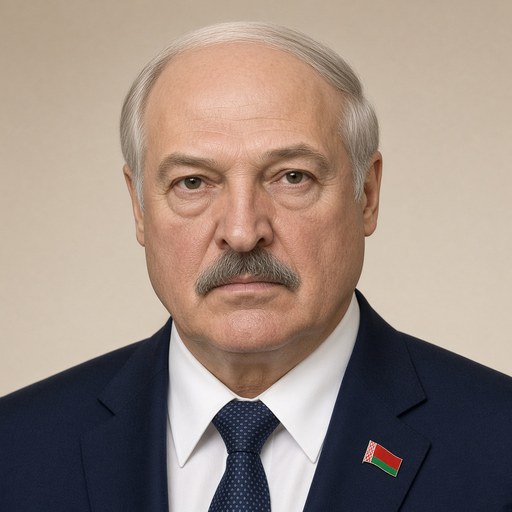
THESIS of the speech by the President of the Republic of Belarus A.G. Lukashenko at the opening of the second joint meeting of the Coordination Council of Prosecutors General, the Council of Ministers of Internal Affairs, the Council of Heads of Security Agencies and Special Services, the Council of Commanders.
 Alexander Lukashenko · President of Belarus
- Context
- Lukashenko addressed the second joint meeting of CIS law enforcement and security councils in Minsk on January 29, 2002, urging coordinated action against terrorism and organized crime.
- Main themes
- Combating international terrorism, organized crime, CIS law enforcement cooperation, drug trafficking, transnational criminal groups, harmonization of national legislation, collective security, September 11 aftermath, border and customs control, CIS Anti-Terrorism Center, information exchange, migration flows
- Duration
- ~12 min
- Words
- 1,442
- Sentences
- 58
- Readability
- 34
- Grade
- 14.7
- Syntax
- 2.89
- Vocabulary
- 2.31
Translated from Russian
The broad sphere of national life a sentence belongs to. Every sentence has an Arena, so it is the denominator the other indices are read against.
Other58 sentences in 33 paragraphs
Dear comrades!
Dear friends!
On behalf of the leadership of the country and the entire Belarusian people, I warmly welcome you, the plenipotentiary representatives of the Commonwealth countries participating in the second joint meeting of the Coordination Council of Prosecutors General, the Council of Ministers of Internal Affairs, the Council of Heads of Security and Special Services, the Council of Commanders of Border Troops, and the Council of Heads of Customs Services, on the hospitable Belarusian land!
First of all, I would like to express my gratitude to the Heads of State of the CIS member countries for understanding the importance of holding collective meetings of the leaders of law enforcement and security structures of our states in order to develop a common strategy to combat international terrorism and organized crime.
Dear comrades!
Your joint meeting on the relevance and timeliness of the issues planned for discussion goes far beyond an ordinary event. The new challenges of our time impose special requirements on each Commonwealth state to strengthen both national and collective security.
That is why the Council of Heads of State has considered and adopted documents aimed at improving the legal framework for the interaction of law enforcement agencies of the Commonwealth states at almost every meeting.
In line with these decisions, your agencies have established a mechanism for conducting coordinated operational and preventive measures and special operations to take preventive actions against acts of terrorism and to curb the activities of transnational criminal groups. Work has been done to create specialized databases and organize information exchange. Cooperation has developed in the areas of training and upgrading the qualifications of personnel in educational institutions and training centers of the CIS member states.
At the same time, a restraining factor in the development of interaction among law enforcement agencies is the insufficiently dynamic process of harmonizing national legislations of the CIS member states in the field of combating crime.
Dear comrades!
There are events that sharply accelerate the course of history, forcing public consciousness to cover in a matter of days the distance that would previously have taken years to traverse in terms of understanding the problem. Such an unprecedentedly brutal and cynical event, which claimed the lives of thousands of innocent people, was the terrorist attacks of September 11, 2001, in New York, Washington, and Pennsylvania. The fanatics could not be stopped by modern air defense systems equipped with the latest weapons, well-trained special units, or the extensive intelligence structures of a power like the United States. The whole world saw that no state today can afford to ignore this problem or seriously hope to solve it alone, especially only through forceful methods.
In this regard, there is no doubt about the axiom that the threat of international terrorism can only be countered through coordinated measures carried out by the entire international community, not just by the countries that have suffered from the actions of terrorists. Extremely important in this aspect is the unanimous adoption on September 28, 2001, by the UN Security Council of Resolution No. 1373, which places terrorism and the countries that support it outside the world community.
I cannot help but note that, thanks to a collective approach to solving the most complex tasks, we in the Commonwealth of Independent States managed to assess the danger of the spread of international terrorism earlier than many others. Based on these assessments, the Heads of State of the CIS member countries signed the Treaty on Cooperation in Combating Terrorism in Minsk on June 4, 1999, and in 2000, the Program for Combating International Terrorism and Other Manifestations of Extremism for the period until 2003 was approved, and the Anti-Terrorism Center was established.
Dear comrades!
In addition to increasing joint efforts to combat terrorism, the most careful attention should be paid to issues related to the fight against drug trafficking.
Over the past five years, there has been a sharp increase in the level of drug addiction in the territories of the Commonwealth member states, and an organized market of drug consumers has formed. According to experts, by 2010, the number of drug addicts, if no appropriate measures are taken, could reach 20-25 million people, of which up to 10 million could be HIV-infected.
The heightened interest of international drug cartels in the Commonwealth member states is due to both the peculiarities of their geographical location and the imperfection of the existing legislation, the "transparency" of internal borders, the presence of problems in organizing border and customs control, visa regimes, and the intensification of migration flows between the CIS member states.
For these reasons, it is extremely important that the problem of drug addiction remains constantly in the focus of the state authorities of the Commonwealth countries. From this perspective, a joint concept could be adopted to coordinate efforts in the fight against the illegal drug trade.
It is important to focus on adopting more pragmatic decisions at the inter-state, intergovernmental, and inter-agency levels. There is a need to move away from declarative provisions and statements, to implement effective measures for the realization of the existing treaty framework, and to form appropriate effective mechanisms for its implementation.
Dear participants of the meeting!
I am confident that I will not reveal a great secret if I assert that criminal communities largely shape the shadow economy.
Given this circumstance, the fight against economically motivated crimes and corruption must remain one of the priorities in the activities of law enforcement agencies of our Commonwealth states. Effective work will be facilitated by improving mutual information support in the interests of timely prevention, suppression, and investigation of this type of crime. In accordance with the demands of the time, it is necessary to continue creating legal and organizational foundations for combating crime in the field of high technologies, especially information technologies.
A breakthrough in the fight against international economic crime could be the Treaty on Combating Money Laundering and the Proceeds of Crime. In my opinion, this is a key issue for interaction today.
I believe that in the near future, at the meetings of the highest bodies of the CIS, the Treaty will be adopted. Therefore, it is important for you, in the course of your upcoming work, to determine the mechanisms for implementing its provisions.
I cannot fail to mention that illegal migration is becoming an increasingly serious international problem. Most Commonwealth states have found themselves on the routes of illegal migrants. The activities of the organizers of this type of criminal business have taken on a transnational character. In the territories of the CIS member states, according to various estimates, there are up to 2 million illegal migrants, the majority of whom are in Russia, Belarus, and Ukraine. The main flow of migrants is directed to us from those countries where military actions are taking place, where international drug trafficking and terrorist organizations operate, and where mass infectious diseases are common. At the same time, some of the "illegals" seek to stay for permanent or temporary residence and subsequently become involved in illegal activities.
Law enforcement agencies of our states are working to curb illegal migration. At the same time, some issues of interaction have not yet been resolved. In particular, it is necessary to legally regulate the procedure for readmission.
Dear comrades!
I have only touched on some of the pressing problems facing us today. At the same time, I want to once again express my confidence that only by uniting our efforts can we reliably protect our citizens from the negative manifestations of modernity, as well as serve as a solid foundation for strengthening the Commonwealth of Independent States and enhancing the effectiveness of its institutions.
It is very important that at today’s joint meeting, based on agreed principles and a unified concept, specific documents are adopted that contribute to the development of organizational forms of interaction in the fight against crime, international terrorism, and other manifestations of extremism.
Given the high level of representation of each of the Commonwealth countries, as well as the visible effectiveness of the work of the joint meetings of your councils, I would like to wish you to meet in such a composition more often, at least once every two years. The Republic of Belarus is ready to provide all the necessary conditions for such meetings.
In concluding my speech, allow me to wish you fruitful cooperation and complete mutual understanding in your professional activities in the interests of all the states participating in the Commonwealth. By developing coordinated measures, you have a wonderful opportunity to detail them within the councils that will take place tomorrow.
President
of the Republic of Belarus A.G. Lukashenko
The original Russian. The tags above are read on the English translation's sentences.
Уважаемые товарищи!
Дорогие друзья!
От имени руководства страны, всего белорусского народа сердечно приветствую Вас, полномочных представителей стран Содружества - участников второго совместного заседания Координационного совета генеральных прокуроров, Совета министров внутренних дел, Совета руководителей органов безопасности и спецслужб, Совета командующих пограничными войсками и Совета руководителей таможенных служб, на гостеприимной белорусской земле!
В первую очередь я хотел бы выразить признательность Главам государств - участников СНГ за понимание важности проведения коллективных встреч руководителей правоохранительных и силовых структур наших государств в целях выработки общей стратегии по противодействию международному терроризму и организованной преступности.
Уважаемые товарищи!
Ваше совместное заседание по актуальности и своевременности запланированных к рассмотрению вопросов выходит далеко за рамки рядового события. Новые вызовы времени выдвигают перед каждым государством Содружества особые требования к укреплению как национальной, так и коллективной безопасности.
Именно поэтому Совет глав государств практически на каждом заседании рассматривал и принимал документы, направленные на совершенствование правовой основы взаимодействия правоохранительных органов государств Содружества.
В развитие данных решений вашими ведомствами налажен механизм проведения согласованных оперативно-профилактических мероприятий и специальных операций по принятию превентивных мер против актов терроризма и пресечению деятельности транснациональных преступных группировок. Проведена работа по формированию специализированных банков данных и организации обмена информацией. Получило развитие сотрудничество в вопросах подготовки и повышения квалификации кадров в учебных заведениях и учебных центрах государств - участников СНГ.
Вместе с тем сдерживающим фактором в развитии взаимодействия правоохранительных органов является недостаточно динамичный процесс сближения национальных законодательств государств - участников СНГ в сфере борьбы с преступностью.
Уважаемые товарищи!
Есть события, которые резко ускоряют ход истории, заставляют общественное сознание по глубине понимания проблемы за считанные дни проходить дистанцию, на которую раньше уходили бы годы. Таким беспрецедентным по жестокости и цинизму событием, унесшим жизни тысяч ни в чем не повинных людей, стали террористические акты 11 сентября 2001 года в Нью-Йорке, Вашингтоне и Пенсильвании. Фанатиков не смогли остановить современные системы ПВО, оснащенные новейшим оружием, хорошо подготовленные спецподразделения, разветвленные структуры разведслужб такой державы, как США. Весь мир увидел, что ни одно государство сегодня не может позволить себе игнорировать эту проблему либо всерьез рассчитывать на ее решение в одиночку, тем более только силовыми методами.
В связи с этим не вызывает сомнений аксиома, что противостоять угрозе международного терроризма можно лишь путем проведения скоординированных мер, осуществляемых всем международным сообществом, а не только странами, которые пострадали от действий террористов. Крайне важным в этом аспекте является единогласное принятие 28 сентября 2001 года Советом Безопасности ООН резолюции № 1373, которая ставит терроризм и поддерживающие его страны вне мирового сообщества.
Не могу не отметить, что, благодаря коллективному подходу к решению наиболее сложных задач, нам в Содружестве Независимых Государств удалось раньше многих оценить опасность распространения международного терроризма. Основываясь на этих оценках, Главами государств - участников СНГ 4 июня 1999 года в г.Минске был подписан Договор о сотрудничестве в борьбе с терроризмом, в 2000 году утверждена Программа по борьбе с международным терроризмом и иными проявлениями экстремизма на период до 2003 года, создан Антитеррористический центр.
Уважаемые товарищи!
Помимо наращивания совместных усилий в противодействии терроризму, самое пристальное внимание следует уделить вопросам борьбы с наркобизнесом.
За последние пять лет на территории государств - участников Содружества произошел резкий скачок уровня наркомании, сформировался организованный рынок потребителей наркотиков. По оценкам специалистов, к 2010 году число наркоманов при непринятии соответствующих мер может составить 20-25 миллионов человек, из них ВИЧ-инфицированных - до 10 миллионов.
Повышенный интерес международного наркокартеля к государствам - участникам Содружества обусловливается как особенностями их географического положения, так и несовершенством действующего законодательства, "прозрачностью" внутренних границ, наличием проблем в организации пограничного и таможенного контроля, визового режима и усилением миграционных потоков между государствами - участниками СНГ.
По этим причинам крайне важно, чтобы проблема наркомании постоянно оставалась в поле зрения органов государственной власти стран Содружества. С этой точки зрения можно было бы принять совместную концепцию для координации усилий в борьбе с незаконным оборотом наркотиков.
Важно сосредоточиться на принятии более прагматичных решений межгосударственного, межправительственного и межведомственного уровня. Необходимы отход от декларативных положений и заявлений, осуществление действенных мер для реализации уже существующей договорной базы, формирование соответствующих эффективных механизмов по ее реализации.
Уважаемые участники заседания!
Уверен, не открою большого секрета, если позволю себе высказать утверждение, что преступные сообщества во многом формируют теневую экономику.
Учитывая данное обстоятельство, борьба с преступлениями экономической направленности и коррупцией должна оставаться одним из приоритетов в деятельности правоохранительных органов государств нашего Содружества. Результативной работе будет способствовать улучшение взаимного информационного обеспечения в интересах своевременного предотвращения, пресечения и расследования данного вида преступлений. В соответствии с требованием времени необходимо продолжить создание правовых и организационных основ борьбы с преступностью в сфере высоких технологий, особенно информационных.
Прорывом в борьбе с международной экономической преступностью может явиться Договор о противодействии отмыванию грязных денег и доходов. На мой взгляд, сегодня это ключевой вопрос взаимодействия.
В ближайшее время на заседаниях высших органов СНГ, я думаю, Договор будет принят. Поэтому вам в ходе предстоящей работы важно определить механизмы выполнения его положений.
Не могу не остановиться и на том, что все более серьезной международной проблемой становится незаконная миграция. Большинство государств Содружества оказались на маршрутах незаконных мигрантов. Деятельность организаторов этого преступного вида бизнеса стала носить транснациональный характер. На территориях государств - участников СНГ, по различным оценкам, находится до 2 миллионов незаконных мигрантов, из них большая часть - в России, Беларуси и Украине. Основной поток мигрантов направляется к нам из тех стран, где идут военные действия, действуют международная наркомафия и террористические организации, нередки массовые инфекционные заболевания. При этом часть "нелегалов" стремится остаться на постоянное или временное жительство и в последующем вовлекается в противоправную деятельность.
Правоохранительные органы наших государств проводят работу по пресечению незаконной миграции. Вместе с тем некоторые вопросы взаимодействия еще не решены. В частности, необходимо законодательно урегулировать процедуру реадмиссии.
Уважаемые товарищи!
Я остановился лишь на некоторых актуальных проблемах, стоящих сегодня перед нами. Вместе с тем хочу еще раз выразить уверенность, что только объединение усилий позволит надежно защитить наших граждан от негативных проявлений современности, а также послужит прочным фундаментом укрепления Содружества Независимых Государств и повышения эффективности деятельности его институтов.
Очень важно, чтобы на сегодняшнем совместном заседании на основе согласованных принципов и единой концепции были приняты конкретные документы, способствующие развитию организационных форм взаимодействия в борьбе с преступностью, с международным терроризмом и иными проявлениями экстремизма.
Учитывая высокий уровень представительства каждой из стран Содружества, а также зримую эффективность работы совместных заседаний ваших советов, хотел бы пожелать вам встречаться в таком составе чаще, хотя бы раз в 2 года. Республика Беларусь готова предоставить все необходимые для подобного рода встреч условия.
Завершая свое выступление, позвольте пожелать вам плодотворной совместной работы и полного взаимопонимания в сфере вашей профессиональной деятельности в интересах всех государств - участников Содружества. Выработав скоординирован- ные меры, вы имеете прекрасную возможность по их детальному наполнению в рамках советов, которые состоятся завтра.
Президент
Республики Беларусь А.Г.Лукашенко