




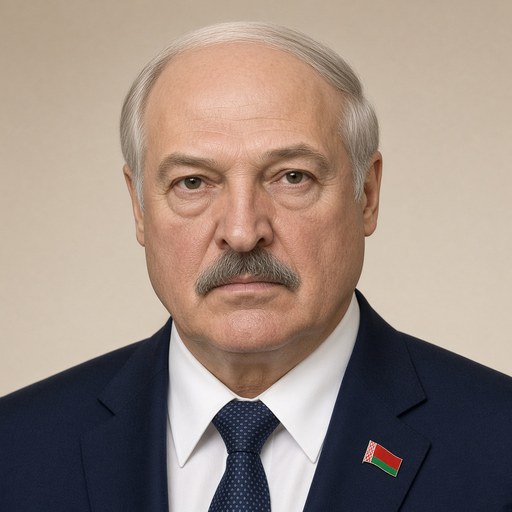
The speech of the President of Belarus at the solemn assembly dedicated to Independence Day.
 Alexander Lukashenko · President of Belarus
- Context
- Lukashenko addressed a solemn assembly in Minsk on the eve of Belarus's Independence Day on July 3, 2012, commemorating liberation from Nazi occupation.
- Main themes
- Belarusian independence, Great Patriotic War legacy, national identity, World War II victory, sovereignty and statehood, anti-Nazism, partisan resistance, post-Soviet nation-building, national character, criticism of nationalism, founding of the Republic of Belarus
- Duration
- ~37 min
- Words
- 4,395
- Sentences
- 271
- Readability
- 56
- Grade
- 9.4
- Syntax
- 2.80
- Vocabulary
- 2.10
Translated from Russian
The broad sphere of national life a sentence belongs to. Every sentence has an Arena, so it is the denominator the other indices are read against.
Other271 sentences in 169 paragraphs
Dear friends!
Tomorrow we celebrate the main holiday of our country – Independence Day, a holiday that has become a true symbol of our young statehood.
The history of our land is a difficult and long, almost thousand-year journey to freedom and independence.
Freedom and Independence have always come at a high cost. They must be paid for with a steep price.
Dozens of nations around the world have gained their independence with weapons in hand, going through long years of national liberation wars.
Fortunately, our state – the Republic of Belarus – was formed peacefully, without bloodshed, wars, or revolutions.
Perhaps there is historical justice in this. Because we paid our price – a terrible price, measured in human lives – half a century earlier, during the Great Patriotic War.
At that time, we won freedom not only for ourselves, but also for all of Europe. The victory in that war radically changed the entire world, giving it a new quality. The Western division of peoples into savage, barbaric, and civilized has gone into history. Today's China, India, and the Arab world became independent thanks to that, our Victory. Many nations gained the opportunity to choose their own path of development.
And that is why we celebrate our Independence Day on July 3 – on the day when our capital, proud Minsk, became free, and the predatory Nazi swastika on the House of Government was crushed to dust.
Since then, the victory in the Great Patriotic War and the independence of our Motherland have been forever linked to each other.
In that war, Belarusians carried a special mission.
After all, it was not just a military clash of different peoples and countries. The meaning of the global battle against Nazism is much deeper and more powerful.
For the first time in human history, evil did not hide its face. The darkest primitive instincts were proclaimed as valor.
Blind reverence for power, unquestioning obedience, hatred of culture and intellect – this is what was to become the morality of the new Aryan order.
Humanity was shown the path to slavery. Evil was striving for world domination, unabashed and unhidden.
Europe fell at the feet of the victor.
This was a turning point not only in world history but also in our national history.
Here, it was no longer about statehood. The question was horrifying in its simplicity: would the Belarusians survive physically? Or would they forever vanish without a trace in countless "burned villages"?
Left by the regular army, Belarus did not submit to the enemy. The partisan republic opened a second front long before the Allies landed in Normandy.
This front blazed in the enemy's rear. The forefront became Belarusian cities and villages. Not only men took up arms, but also women and small children.
And we survived. We endured, and we won.
And today, on the eve of our main state holiday, I want to bow low to the heroes – our veterans, those people thanks to whom we are alive, the Belarusian nation is alive, and Belarus is alive. A special bow to those who fell and did not return from that brutal slaughter.
Thanks to you, the forces of good and light triumphed. And let the years pass, but we, our children, grandchildren, and great-grandchildren will remember forever: it is in that great Victory that the roots of our Freedom and Independence lie.
After the war, Belarus became a founding country of the United Nations.
And we must not forget that the prerequisites for the foundation of our statehood appeared already in Soviet times. At that time, the basis of our industry was created, national science emerged, and national culture and education developed. And this is precisely the foundation of independence and sovereignty of any state.
The collapse of the USSR was met by Belarusians with anxiety and without any jubilation.
This vividly manifested our national character. A Belarusian by nature is a creator: he loves to build, he does not like to destroy.
In the 1990s, the word "independence" was bent in every way. Everyone liked it, but, as life showed, few understood its meaning.
The new statehood in the first years had a paper, declarative nature – it needed to be filled with content.
What would Belarusian independence be like? No one knew the answer.
However, there was no shortage of projects. Our so-called national figures behaved the loudest. They proposed, or rather imposed, their vision of independence on society.
These visions were primitive, but at that time many found their project to be almost the only possible one.
A narrow national state, locked within its borders, with the dominance of the so-called indigenous, titular nation. A state that erects barriers and consciously degrades itself to the level of a provincial backwater. That, in fact, was all that was proposed.
The idea that there could be another concept of independence was rejected outright.
People were forced to choose: either "independence" according to the templates of our nationalists, or dissolution in the eastern empire and loss of sovereignty. There was no third option.
The "national figures" loudly proclaimed themselves as the new force and the future of Belarus.
But, as it turned out, their entire "project for the future" was entirely taken from the past. The ideologists of Belarusian nationalism did not understand that by the end of the 20th century, the concept of a narrow national state had hopelessly become outdated.
Especially strange these archaic thoughts looked against the backdrop of the nationalists' alleged commitment to the pan-European idea. By that time, Europe had long sent the model of a narrow national state into the historical archive, betting on openness and integration.
All this showed the intellectual weakness of these "national ideologists," the narrowness of their cultural and historical outlook.
They tried to offer our nation ideas that had long been passed in world history. They did not understand that it was foolish at the beginning of the third millennium to build a state according to the templates of the 19th century.
Persisting in their delusions, the so-called national movement was actually pulling the young country backward.
And before us, to whom in the 1990s, that is, to you, the people entrusted their fate, stood a task of unprecedented complexity: to find that concept of independence that would meet the requirements of the new 21st century.
Perhaps most of our people did not contemplate these things at a subtle theoretical level. But the natural wisdom of Belarusians clearly suggested to them: in a world that is becoming increasingly global and interconnected, it is impossible to live behind a deaf national fence, and it is better to start building a common home with those with whom you have been familiar for centuries.
In the end, we made our historical choice in favor of a new type of independence, striving not for isolation, but for integration and openness.
We broke the vicious circle and rejected the alternative – "either lock ourselves within national borders or become a Northwestern edge." For us, this was unacceptable.
We perhaps intuitively felt that there is another path, and it is quite real. Real, first of all, because the world around us has changed.
Because the very concepts of independence and sovereignty have undergone radical changes due to globalization.
Because the interdependence of countries has increased immensely. Even the greatest powers in the modern world are extremely constrained in their actions and must take their partners into account.
Because isolation is a dead end, integration is progress.
Today all this is obvious. But back then, in the 1990s, very few understood that integration and independence are not contradictions, but, on the contrary, complement and strengthen each other.
Many former Soviet republics severed ties with Russia, with each other, knocking on European and American doors, hoping for a warm and generous welcome.
Many years passed before they understood: they would not be let beyond the hallway.
It can be said that God enlightened us, and we went, yes, we went our own way. For the first time in our history, we began to build our own independent state while simultaneously restoring the broken ties with Russia and other Soviet republics.
And to this day, there are many who believe that these directions of our policy exclude each other.
It is interesting to observe how two themes constantly coexist in the opposition press: Lukashenko is surrendering sovereignty to Russia, and Lukashenko does not want to give anything to Russia in Belarus.
And for both, the same publications often write, and sometimes the same authors.
Once again, the discussion was revived in connection with the grand project of creating a common Euro-Asian space. Once again, there were talks about surrendering sovereignty, losing independence, and other similar things.
And I think that today, on the eve of Independence Day, it is necessary to clarify all the points in this extremely important topic for society.
The independence of a state is never absolute. This is an axiom. There has never been such a thing, not even in ancient times. And it is all the more impossible today, when dependence between countries has increased exponentially.
Even the rivalry between states is undergoing colossal changes: it is no longer a war of annihilation, but cautious competition based on dozens and hundreds of compromises.
Look at the two largest economies in the world, the two empires – the United States of America and the People's Republic of China. By the logic of yesterday, the United States should have closed access to Chinese goods in its market and collapsed Chinese exports, while China, in turn, should have thrown billions, trillions of dollars, which they have, and collapsed the American currency.
But no one even has such thoughts.
The world increasingly resembles a glass house, in which one careless sharp movement can collapse both the walls and the roof at the same time.
But any compromise between countries is always a concession of something of your own in exchange for something important for your state.
These compromises have always existed throughout human history. But today they permeate literally everything – from agreements within the framework of the World Trade Organization (WTO), where even the largest powers in the world submit themselves to common rules, to the European Union, within which countries simply sacrifice a significant part of their economic and political sovereignty.
On the other hand, the independence of a state is not an end in itself, existing for its own sake; it is one of the powerful means to achieve the main goal – a happy and safe life for the people of that state.
Note how Europeans, despite all the difficulties, cling to the idea of integration.
The recent elections in Greece showed: despite all the disappointments and despair, the majority of Greeks do not wish to isolate themselves from the world and from Europe with a national fence.
They are ready to make sacrifices, understanding that integration will pay off these sacrifices.
This is a lesson for us: apart is always worse, together is better.
I foresee a very deep crisis in the European Union. But I am absolutely confident that in Europe they will do everything to save the idea of integration. And they have already begun to do so.
Because integration is the main road of modern civilization, and there is simply no other way for us, or for other peoples.
However, when entering into various unions or integration associations, we must not only look at how many rights, powers, sovereignty, or anything else we will have left, but at what it will bring to our people, our nation, each person.
And if some compromise, some union is needed for this, then we must undoubtedly go for it.
Everything must be done for the person and in the name of the person.
But at the same time, we must remember the immutable truth: any price has its limit. And there are basic, fundamental things that cannot be sacrificed under any circumstances, and no state that wants to be sovereign and independent will make those sacrifices!
We will never compromise our statehood. We will do everything to preserve the hard-won independence.
Not claiming what is not ours, we will not give up an inch of our land.
Nothing will force us to sacrifice the hard-won freedom of our people.
And one more thing. Only we, the people of Belarus, will determine our fate and our path of development! Nowhere – neither in the East, nor in the West, nor in the North, nor in the South – are there forces that will make us submit and kneel.
It is these principles of state policy that I, as President, share and apply absolutely to all spheres.
It seems to me that we all should have a correct understanding not only of the essence of our Belarusian independence but also, so to speak, the philosophy of the new Eurasian space.
In this regard, there are also many misconceptions.
Many believe that by creating the Eurasian Union, the politicians of our countries are oriented towards the past.
They say that for Kazakhstan, the idea of Eurasianism is something like a reincarnation of the steppe empire of Genghis Khan, for Moscow – the revival of the empire of Russian tsars, and for Belarus – a return to a renewed USSR.
In this same vein are the discussions that the new Eurasian association allegedly seeks to become some kind of aggressive center of power, will be a counterbalance to someone, a barrier, or something like that.
In reality, all supporters of this association are inspired by completely different ideas.
Look at the vast continent of Eurasia. Two powerful economic poles are forming in the West and East – the European Union and the East Asian region, which includes two colossal countries – China and Japan.
As if geography itself dictates to us that connecting links should appear between the poles, or better yet, a link. And therefore, a unified Eurasian space is a powerful, global, but only the first step.
It is being formed by us not to create a closed market, not to confront anyone, not to isolate, but for further integration with the European Union in the West and dynamic Asian economies in the East.
And this fundamentally distinguishes the new Eurasian project from well-known historical analogies – the Mongol Empire, the Russian Empire, and the Soviet Union.
Just as in the case of our independence, the Eurasian project is inspired not by the past, but by the future.
It is being created not as a new edition of old empires, but as an integration association of the 21st century.
This means that it will not have the familiar metropolises and colonies from our history textbooks; it will have equality of rights and opportunities. And if anyone tries to give it a different character, Belarus will always oppose this.
Dear friends!
For us, Belarusians, the right to determine our own destiny has always been, is, and will be sacred.
Unfortunately, for centuries we have been deprived of this right. Neither in the Polish-Lithuanian principalities and kingdoms nor in the Romanov Empire were Belarusians masters of their own fate.
And therefore, it is extremely important for us today and in the future to build our own lives.
The true meaning of our independence is that it has given us the opportunity to build what is now called the Belarusian model.
It would be foolish to claim that we invented the bicycle and created some unique model.
The idea of strong, stable power, as well as the idea of a social state, is not new; they were invented long before us.
Thanks to strong power, the so-called Asian Tigers made a powerful economic leap. And the social state model has been successfully implemented in many European countries.
These examples are well known, and we are not pioneers.
But one thing is certain: Belarus has solved the problem that faced dozens of former socialist countries at the end of the last century – the problem of transitioning from a distributive economy to a market economy – in its own, unique way.
The formulas for transition were more or less known to everyone. What was unclear was how to ensure that ordinary people would suffer as little as possible.
And here, each country went its own way.
Practically all – both in Eastern Europe and in the former Soviet republics – preferred to take the path of shock reforms.
Some were less radical, some more so, but in any case, all threw their peoples into the depths of the market without supporting or protecting the people.
The uniqueness of the Belarusian model and the Belarusian path lay in the fact that we refused to subject our people to such harsh trials. We tried to transition to a new market economy gradually, without shock, without upheaval, and with minimal losses.
In the mid-90s, this task seemed insurmountable. But together we proved that it is possible.
One could say that the Belarusian path turned out to be the most humane of all possible paths.
And this has yielded certain results.
If we take the period since 1995, by the end of last year, 2011, we managed to almost triple the country's gross domestic product. Triple!
The volume of foreign trade during this time increased more than eightfold.
Over the years of independence, we have invested more than 140 billion dollars into fixed capital. I would note that this is the 7th highest figure in the world! And we have more than 200 countries. This is what we have invested in roads, in enterprises, in new technologies; that is, this is money invested in the future, in development, not squandered or taken offshore.
Belarus leads among the CIS countries in housing construction. Over the years of independence, about 85 million square meters of housing have been built. Such rates were not even seen during the Soviet period.
In just the last five years, one million people have improved their living conditions.
With a population that is 0.1 percent of the world total, our country accounts for one-third of the world market for dump trucks, over 15 percent of potash fertilizers, almost 4 percent of butter, more than three percent of milk, and over two percent of the world market for tractors.
At the same time, over the years of independence, we have almost increased grain production by one and a half times.
In terms of the quality of education, healthcare, and social capital, Belarus occupies a very honorable place in global rankings – from 20th to 30th. I emphasize: among 200 countries in the world.
And these data are not ours; they are from international organizations.
All these facts point to one thing: by choosing our path, the Belarusian path, we refused to sacrifice the individual – this is the deep essence of our historical choice in the 90s.
And today, it is independence that gives us the opportunity to follow the course that meets the interests of the ordinary, average Belarusian.
We have confirmed that the basic principles we have adhered to since the 90s are effective even in our time.
We still need strong and honest power.
Thanks to it, we have created a state, ensured peace and security in the country, and developed our economy.
Thanks to strong power, we live by the law, not by concepts.
Thanks to strong power, we can live and work peacefully, walk the streets.
We still need a social state.
Thanks to it, we have provided everyone with jobs, built thousands of houses, and protected budget workers, youth, pensioners, and the disabled.
And despite any problems, our state will always protect the ordinary person.
We still need justice.
Thanks to it, we have prevented a split in society, where some have yachts in Miami while others rummage through garbage.
In Belarus, everything has been, is, and will be fair. We did not allow the people's property to be taken apart, and we will not allow it in the future. I am forced to make this statement because I increasingly read and hear that tomorrow, tomorrow, tomorrow, everything that belongs to the Belarusian people will be divided. There are already lists of who gets what: who gets BelAZ, who gets MAZ, who gets the Potash Company, who gets MTZ, and who gets something else. Everything is already written down. This will never happen. Remember: as long as I am President, this will never happen.
My dear friends! Learn to read these authors. There is one criterion; I look at these "clean writings" through it. They, having come to power, will do as they write. Remember this! And maybe I will not be here, but you should approach the assessment of such national-level figures or "нацыянальнага ўзроўню, як яны сябе называюць" from this perspective.
Dear friends!
I increasingly, especially when I leave the country for a while and return, read or hear with surprise that here, Lukashenko is forever, this is eternal. And even the apologist of our great state, who once stood at the helm, is worried. There is very little time left to live, forgive me, Lord, for this, I thought, but still suffers that Lukashenko, having seized power, will not go anywhere and will pass power on to his heirs.
For the umpteenth time, I say, not justifying myself before you: my children have had enough of the presidency with their father. There can be no transfer of power by inheritance.
Understand one simple thing: today we are talking about sovereignty and independence.
I am a person who is relatively modest and never say that it is thanks to you that I have the honor of being the first President of this independent state, your President – I remember everything. Many years have passed, but I remember how Lukashenko brought the people to power. How much fighting there was. How many forecasts and how many opportunities there were to plunge the country into chaos.
I promised myself then. I am the first President; there will be others after me, and I must ensure that no one wants to act dishonestly. If I behave dishonestly, if I act like many oligarchs around our country, then every President after me will have the temptation to repeat this.
As the first President, your President, I simply cannot allow myself this. And if you hear somewhere that Lukashenko has billions, that he has stolen, that he has taken out, – consider that they will act the same way when they come to power.
Remember, our country is an island of honesty and justice. This is not only how I assess it. This is not only how you assess it. It is assessed this way thousands of kilometers away from our borders. And we must not, under any circumstances, I first of all, spoil this image of an honest and decent country.
Sooner or later, this main capital will bring us the wealth and prosperity we dream of today. Honesty and justice above all – this is the slogan of state power in the Republic of Belarus.
Dear friends!
We are certainly not bound by any dogmas or theories.
The global economic crisis shows that there are no universal recipes for prosperity, unfortunately. The world is changing rapidly, and even the most advanced countries do not always manage to adapt to these changes.
Not everything depends on us. The global rules of the game are dictated by the largest world players. And countries like Belarus often have to pay for their mistakes. But there is no other way. We must learn to play by the rules that, unfortunately, exist today.
And still, in all our plans, actions, and thoughts, the guiding principle for us will be common sense and honesty towards each other.
After all, it is precisely this that has allowed us to build a young independent Belarus – a state that we will always be proud of.
Just before Independence Day, we opened the Museum of Modern Belarusian Statehood.
It symbolically represents our recent historical path. It seems that only a few years have passed, but there is much to remember and show to others.
Today, our young people can feel deep respect not only for the memory of their ancestors but also for the deeds of their fathers and grandfathers – for what we have created together in the last two decades.
The most important thing is that we have our own country. A country that we built. A country in which the first generation born in independent Belarus has already grown up.
We all need to remember: independence has not only an economic but also a spiritual dimension.
Love for the Motherland, the readiness to help and defend it – these are not economic or accounting categories.
You cannot balance and translate sincere feelings into indicators. This is a state of mind and soul.
In modern civilization, the concept of patriotism is undergoing severe tests.
In ancient times, patriotism was, to some extent, a natural concept. A person was tied to their land in the most direct sense of the word.
If they lost it, they could not feed themselves. If enemies came to their land, they were killed, and their families were sold into slavery.
In those conditions, defending one's native land was a condition for survival.
Now everything is different.
All paths and opportunities are open to a person. One can calmly leave their country and settle thousands of miles away from home.
Means of communication and transportation make travel easier and more enjoyable. The globalization of the economy gives a person a huge choice for applying their efforts.
All these processes will only intensify in the future.
And patriotic feelings will have fewer purely material, pragmatic foundations. And then everything will depend entirely on a person's consciousness, their upbringing, their inner culture, and the strength of their spirit.
If our new generations preserve within themselves a part of the living, sincere feeling for their native land – a feeling based not on pragmatic calculations but coming from the soul, from the heart, from the deep genetic memory of their ancestors – only then will our beloved and native Belarus thrive!
Happy upcoming holiday to you, dear friends!
Happy Independence Day!
The original Russian. The tags above are read on the English translation's sentences.
Дорогие друзья!
Завтра мы отмечаем главный праздник страны – День Независимости, праздник, ставший подлинным символом нашей молодой государственности.
История нашей земли – это трудный и долгий, почти тысячелетний, путь к свободе и независимости.
Свобода и Независимость всегда стоят дорого. За них надо платить высокую цену.
Десятки наций мира добыли свою независимость с оружием в руках, пройдя через долгие годы национально-освободительной войны.
К счастью, наше государство – Республика Беларусь – образовалось мирно, без крови, войн и революций.
Быть может, в этом есть историческая справедливость. Потому что свою цену – страшную цену, измеренную в человеческих жизнях, – мы заплатили на полвека раньше, в годы Великой Отечественной войны.
Тогда мы добыли свободу не только для себя, да и не только для всей Европы. Победа в той войне радикально изменила весь мир, придала ему новое качество. Западное деление народов на дикие, варварские и цивилизованные ушло в историю. Сегодняшние Китай, Индия, арабский мир стали независимыми благодаря именно той, нашей Победе. У многих народов появилась возможность выбирать собственный путь развития.
И потому праздник нашей Независимости мы отмечаем 3 июля – в день, когда наша столица гордый Минск стал свободным, а хищная нацистская свастика на Доме правительства была повержена в прах.
С тех пор Победа в Великой Отечественной и независимость нашей Родины навеки связаны друг с другом.
В той войне белорусы несли особую миссию.
Ведь это было не просто военное столкновение разных народов и стран. Смысл мировой битвы с нацизмом гораздо глубже, мощнее.
Впервые в человеческой истории зло не скрывало своего облика. Самые темные первобытные инстинкты были провозглашены доблестью.
Слепое преклонение перед силой, беспрекословное подчинение, ненависть к культуре и интеллекту – вот что должно было стать моралью нового арийского порядка.
Человечеству указали дорогу к рабству. Зло рвалось к мировому господству, не стесняясь и не пряча себя.
Европа пала к ногам победителя.
Это был переломный момент не только мировой, но и нашей национальной истории.
Здесь речь шла уже не о государственности. Вопрос был ужасен в своей простоте: выживут ли белорусы физически? Или навеки сгинут без следа в бесчисленных хатынских ”вогненных вёсках“?
Оставленная регулярной армией Беларусь не покорилась врагу. Республика-партизанка открыла второй фронт задолго до высадки союзников в Нормандии.
Фронт этот пылал в тылу врага. Передовой стали белорусские города и села. За оружие взялись не только мужики, но и женщины, и малые дети.
И мы выжили. Мы выстояли, и мы победили.
И сегодня, накануне нашего главного государственного праздника, я хочу прежде всего низко поклониться героям – нашим ветеранам, тем людям, благодаря которым живы мы, жива белорусская нация и жива Беларусь. Особый поклон павшим и не вернувшимся с той жестокой бойни.
Благодаря вам победили силы добра и света. И пусть уходят годы, но мы, наши дети, внуки и правнуки запомним навек: именно в той великой Победе истоки нашей Свободы и Независимости.
После войны Беларусь стала страной – основательницей Организации Объединенных Наций.
И нельзя забывать, что предпосылки основы нашей государственности появились уже в советское время. Тогда была создана база нашей промышленности, появилась национальная наука, развивалась национальная культура и образование. А именно это – фундамент независимости и суверенитета любого государства.
Распад СССР был встречен белорусами с тревогой и безо всякого ликования.
В этом ярко проявился наш национальный характер. Белорус по своей природе – созидатель: он любит строить, он не любит разрушать.
В 90-е годы 20-го века слово ”незалежнасць“ склоняли на все лады. Всем оно нравилось, но, как показала жизнь, мало кто понимал его смысл.
Новая государственность в первые годы носила бумажный, декларативный характер – ее предстояло наполнить содержанием.
Какой будет белорусская независимость? Ответа не знал никто.
Впрочем, в прожектерах не было недостатка. Наиболее шумно вели себя наши так называемые национальные деятели. Они предлагали, а точнее, навязывали обществу свое представление о независимости.
Представления эти были примитивны, но в ту пору многим их проект казался чуть ли не единственно возможным.
Узконациональное государство, запертое в своих границах, с доминированием так называемой коренной, титульной нации. Государство, воздвигающее барьеры и сознательно низводящее само себя до уровня провинциального захолустья. Вот, собственно, и все, что предлагалось.
Мысль о том, что может быть и иная концепция независимости, отвергалась с порога.
Людям навязывался выбор: или ”незалежнасць“ по лекалам наших националистов, или растворение в восточной империи и утрата суверенитета. Третьего не дано.
”Нацыянальныя дзеячы“ шумно провозглашали себя новой силой и будущим Беларуси.
Но, как оказалось, весь их ”проект будущего“ был целиком взят из прошлого. Идеологи белорусского национализма не понимали, что в конце 20-го века концепция узкого национального государства безнад е жно устарела.
Особенно странно эти архаичные мысли выглядели на фоне якобы приверженности националистов панъевропейской идее. К этому времени Европа давно отправила в исторический архив модель узконационального государства, сделав ставку на открытость и интеграцию.
Все это показывало интеллектуальную слабость этих ”национальных идеологов“, узость их культурно-исторического кругозора.
Они пытались предложить нашей нации идеи, давно пройденные в мировой истории. Они не понимали, что глупо в начале третьего тысячелетия строить государство по лекалам 19-го века.
Упорствуя в своих заблуждениях, так называемое национальное движение фактически тянуло молодую страну назад.
И перед нами, кому в 90-е годы , то есть вам, народ доверил свою судьбу, стояла задача невиданной сложности: найти ту концепцию независимости, которая отвечала бы требованиям нового, 21-го века.
Возможно, большинством наших людей все эти вещи и не осмысливались на тонком теоретическом уровне. Но природная мудрость белорусов ясно подсказывала им: в мире, который становится все глобальнее и теснее, невозможно жить за глухим национальным забором, а общий дом лучше начинать строить с теми, с кем ты уже знаком не один век.
В итоге свой исторический выбор мы сделали в пользу независимости нового типа, стремящейся не к изоляции, а к интеграции, открытости.
Мы разорвали порочный круг и отвергли альтернативу – ”или запереться в национальных границах, или стать Северо-Западным краем“. Для нас это было не приемлемо.
Мы, возможно, интуитивно почувствовали, что есть некий другой путь, и он вполне реален. Реален, прежде всего, потому, что изменился мир вокруг нас.
Потому что сами понятия независимости и суверенитета подверглись коренному изменению вследствие глобализации.
Потому что взаимозависимость стран возросла неимоверно. Даже величайшие державы в современном мире крайне скованы в своих действиях и вынуждены считаться с партнерами.
Потому что изоляция – это тупик, интеграция – прогресс.
Сегодня все это очевидно. Но тогда, в 90-е, очень немногие понимали, что интеграция и независимость не являются противоречием, а, наоборот, дополняют и укрепляют друг друга.
Многие бывшие советские республики рвали связи с Россией, друг с другом, стучались кто в европейские, кто в американские двери, рассчитывая на теплый и щедрый прием.
Прошло много лет, прежде чем они поняли: дальше прихожей все равно не пустят.
Можно сказать, Бог нас вразумил, и мы пошли, да-да, пошли своим путем. Мы впервые в нашей истории начали строить свое, независимое государство и одновременно восстанавливать порушенные связи с Россией, другими советскими республиками.
И до сих пор немало тех, кто полагает, что эти направления нашей политики взаимоисключают друг друга.
Интересно наблюдать, как в оппозиционной прессе постоянно соседствуют две темы: Лукашенко сдает суверенитет России и Лукашенко не хочет ничего отдавать России в Беларуси.
И о первом, и о втором часто пишут одни и те же издания, а иногда одни и те же авторы.
Очередной раз дискуссия оживилась в связи с грандиозным проектом создания общего евро-азиатского пространства. Вновь заговорили о сдаче суверенитета, утрате независимости и прочих похожих вещах.
И я думаю, что сегодня, в канун Дня Независимости, необходимо расставить все точки над і в этой крайне важной для общества теме.
Независимость государства никогда не бывает абсолютной. Это же аксиома. Такого не было даже в древности. И тем более это невозможно сегодня, когда зависимость между странами возросла на порядок.
Даже соперничество между государствами претерпевает колоссальные изменения: это уже не война на уничтожение, а осторожная конкуренция, основанная на десятках и сотнях компромиссов.
Посмотрите на две крупнейшие экономики мира, две империи – Соединенные Штаты Америки и Китайскую Народную Республику. По логике вчерашнего дня Соедин е нным Штатам надо было бы перекрыть доступ китайских товаров на свой рынок и обрушить китайский экспорт, а Китаю, в свою очередь, выбросить миллиарды долларов, триллионы долларов, которые у них есть, и обрушить американскую валюту.
Но ни у кого даже не возникает подобных мыслей.
Мир все больше напоминает стеклянный дом, в котором одно неосторожное резкое движение может обрушить и стены, и крышу одновременно.
Но любой компромисс между странами – это всегда уступка чего-то своего в обмен на нечто важное для твоего государства.
Эти компромиссы существовали всегда, на протяжении всей человеческой истории. Но сегодня они пронизали собой буквально все – от соглашений в рамках Всемирной торговой организации (ВТО), где даже крупнейшие державы мира подчиняют себя общим правилам, до Евросоюза, в рамках которого страны просто жертвуют весьма значительной частью своего как экономического, так и политического суверенитета.
С другой стороны, независимость государства – это не самоцель, существующая ради себя самой, это одно из мощных средств для достижения главного – счастливой и безопасной жизни людей того или иного государства.
Обратите внимание, как европейцы, несмотря на все трудности, держатся за идею интеграции.
Недавние выборы в Греции показали: невзирая на все разочарования и отчаяние, большинство греков не желают отгораживаться от мира и от Европы национальным забором.
Они готовы идти на жертвы, понимая, что интеграция все равно окупит эти жертвы.
Это урок и для нас: порознь всегда хуже, вместе – лучше.
Я предвижу очень глубокий кризис Европейского союза. Но абсолютно уверен, что в Европе сделают все для спасения идеи интеграции. И они уже начали это делать.
Потому что интеграция – это столбовая дорога современной цивилизации, и иного пути у нас, да и у других народов, просто нет.
Однако, вступая в те или иные союзы либо интеграционные объединения, мы должны смотреть не только на то, сколько у нас останется прав, полномочий, суверенитета или еще чего-то, а на то, что это принес е т нашим людям, нашему народу, каждому человеку.
И если для этого нужен какой-то компромисс, какой-то союз, то мы, безусловно, должны идти на него.
Все должно делаться для человека и во имя человека.
Но при этом мы должны помнить непреложную истину: любая цена имеет свой предел. И есть базовые, фундаментальные вещи, которыми пожертвовать ни в коем случае нельзя, и ни одно государство, которое хочет быть суверенным и независимым, на эти жертвы не пойдет!
Мы никогда не поступимся своей государственностью. Сделаем все, чтобы сберечь с таким трудом обретенную независимость.
Не претендуя на чужое, не отдадим ни пяди своей земли.
Ничто не заставит нас принести в жертву выстраданную поколениями свободу нашего народа.
И еще. Только мы сами, народ Беларуси, будем определять свою судьбу и свой путь развития! Нигде – ни на Востоке, ни на Западе, ни на Севере, ни на Юге – нет тех сил, которые заставят нас подчиниться и стать на колени. (Аплодисменты)
Именно эти принципы государственной политики я как Президент разделяю и распространяю абсолютно на все сферы.
Как мне кажется, у нас у всех должно быть правильное понимание не только сути нашей белорусской независимости, но и, скажем так, философии нового евразийского пространства.
В этой связи также есть масса заблуждений.
Многие полагают, что, создавая евразийский союз, политики наших стран ориентированы в прошлое.
Мол, для Казахстана идея евразийства – это нечто вроде реинкарнации степной империи Чингисхана, для Москвы – возрождение империи русских царей, а для Беларуси – возврат в подновленный СССР.
В этом же ряду стоят рассуждения о том, что новое евразийское объединение якобы стремится стать каким-то агрессивным центром силы, будет кому-то противовесом, заслоном или еще чем-нибудь в таком роде.
На самом деле все сторонники этого объединения вдохновляются совершенно иными идеями.
Посмотрите на огромный континент Евразии. На Западе и Востоке формируются два мощнейших экономических полюса – Евросоюз и восточноазиатский регион, включающий две колоссальные страны – Китай и Японию.
Как будто бы сама география диктует нам, чтобы между полюсами появились связующие звенья, а лучше звено. И поэтому единое евразийское пространство – это мощный, глобальный, но только первый шаг.
Оно формируется нами не для создания закрытого рынка, не для противостояния с кем-либо, не для изоляции, а для дальнейшей интеграции с Евросоюзом на Западе и динамичными азиатскими экономиками на Востоке.
И именно это принципиально отличает новый евразийский проект от известных исторических аналогий – Монгольского ханства, Российской империи и Советского Союза.
Так же, как и в случае нашей независимости, евразийский проект вдохновляется не прошлым, а будущим.
Он созда е тся не как новое издание старых империй, а как интеграционное объединение 21-го века.
Это значит, что в нем не будет привычных нам по учебникам истории метрополии и колоний, в нем будет равенство прав и возможностей. И если кто-либо попытается придать ему иной характер, то Беларусь всегда этому воспротивится.
Дорогие друзья!
Для нас, белорусов, право самим распоряжаться своей судьбой всегда было, есть и будет священным.
К сожалению, веками мы были лишены этого права. Ни в польско-литовских княжествах и королевствах, ни в романовской империи белорусы не были хозяевами своей судьбы.
И поэтому для нас исключительно важно сегодня и впредь самим строить свою жизнь.
Подлинный смысл нашей независимости в том, что именно она дала нам возможность построить то, что сегодня называется белорусской моделью.
Глупо было бы утверждать, что мы изобрели велосипед и создали какую-то уникальную модель.
Идея сильной, прочной власти, так же, как и идея социального государства, – не новы: они были изобретены задолго до нас.
Благодаря сильной власти мощный экономический рывок совершили так называемые азиатские тигры. А модель социального государства успешно осуществлена во многих европейских странах.
Эти примеры известны, и мы не являемся первопроходцами.
Но одно несомненно: Беларусь по-своему, непохожим ни на кого образом решила проблему, стоявшую в конце прошлого века перед десятками бывших социалистических стран, – проблему перехода от распределительной экономики к рыночной.
Формулы перехода были более-менее известны всем. Не ясно было другое: как сделать так, чтобы простые люди если и пострадают, то минимальным образом.
И вот тут каждая страна шла своим путем.
Практически все – как в Восточной Европе, так и в бывших советских республиках – предпочли идти путем шоковых реформ.
У кого-то они были менее радикальными, у кого-то более, но так или иначе все бросили свои народы в пучину рынка, не поддержав и не защитив людей.
Уникальность белорусской модели и белорусского пути состояла в том, что мы отказались подвергать наших людей таким суровым испытаниям. Мы попытались перейти к новой рыночной экономике постепенно, без шока, без потрясений и с минимальными потерями.
В середине 90-х годов эта задача казалась нерешаемой. Но все вместе мы доказали, что это возможно.
Можно сказать, что белорусский путь оказался самым гуманным из всех возможных.
И это дало определенные результаты.
Если брать период с 1995 года, то по итогам прошлого, 2011-го, года нам удалось практически утроить валовой внутренний продукт страны. Утроить!
Объем внешней торговли за это же время вырос более чем в 8 раз.
За годы независимости в основной капитал мы инвестировали более 140 миллиардов долларов. Замечу, что это 7-й показатель в мире! А у нас больше 200 стран. Это то, что мы вложили в дороги, в предприятия, в новые технологии, то есть это деньги, вложенные в будущее, в развитие, а не проеденные или выведенные в оффшоры.
Беларусь лидирует среди стран СНГ по вводу жилья. За годы независимости построено около 85 миллионов квадратных метров жилой площади. Таких темпов не было даже в советский период.
Только за последние пять лет миллион человек улучшили свои жилищные условия.
При численности населения в 0,1 процента от мирового на долю нашей страны приходится треть мирового рынка карьерных самосвалов, свыше 15 процентов – калийных удобрений, почти 4 процента – сливочного масла, более тр е х процентов – молока, свыше двух процентов – мирового рынка тракторов.
Одновременно за годы независимости мы практически в полтора раза увеличили производство зерна.
По качеству образования, здравоохранения и социального капитала Беларусь занимает очень почетное место в мировых рейтингах – с 20-го по 30-е. Подчеркиваю: среди 200 стран мира.
И это данные не наши, это данные международных организаций.
Все эти факты говорят об одном: выбирая свой путь, белорусский путь, мы отказались пожертвовать человеком – вот в чем глубинная суть нашего исторического выбора в 90-е годы.
И сегодня именно независимость дает нам возможность идти тем курсом, который отвечает интересам простого, обычного белоруса.
Мы убедились, что базовые принципы, которых мы придерживались еще с 90-х годов, действенны и в наше время.
Нам по-прежнему нужна сильная и честная власть.
Благодаря ей мы создали государство, обеспечили мир и безопасность в стране, развили нашу экономику.
Благодаря сильной власти мы живем по закону, а не по понятиям.
Благодаря сильной власти у нас можно спокойно жить и трудиться, ходить по улицам.
Нам по-прежнему нужно социальное государство.
Благодаря ему мы дали всем работу, построили тысячи домов, защитили бюджетников, молодежь, пенсионеров и инвалидов.
И, несмотря на любые проблемы, наше государство всегда защитит простого человека.
Нам по-прежнему нужна справедливость.
Благодаря ей мы не допустили раскола общества, когда у одних яхты на Майами, а другие бродят по помойкам.
В Беларуси все было, есть и будет честно. Мы не дали растащить народную собственность и не дадим этого сделать впредь. Я вынужден сделать это заявление, потому что все чаще и чаще читаю и слышу о том, что вот завтра-завтра-завтра поделят все, что есть у белорусского народа. Уже списки есть, что кому: кому БелАЗ, кому МАЗ, кому Калийную компанию, кому МТЗ, кому еще что-то. Уже все-все прописано. Этому не бывать никогда. Запомните: пока я Президент, этого никогда не будет. (Аплодисменты)
Дорогие мои друзья! Научитесь читать этих авторов. Критерий один, я именно с ним смотрю на эти ”чистописания“. Это они, придя к власти, сделают так, как они пишут. Помните это! И меня, может быть, не будет, но именно с этих позиций вы подходите при оценке подобных деятелей национального уровня или ”нацыянальнага ўзроўню, як яны сябе называюць“.
Дорогие друзья!
Я все больше и больше, особенно когда уезжаю на какое-то время из страны, возвращаюсь, с удивлением читаю или слышу о том, что вот тут вот Лукашенко – это навсегда, это навечно. И даже апологет нашего великого государства, некогда стоявший у руля, бедный забеспокоился. Жить-то осталось совсем немного, прости меня, Господь, за это, я так подумал, но все равно страдает, что Лукашенко, захватив власть, никуда не уйдет, отдаст власть по наследству.
В который раз говорю, не оправдываясь перед вами: мои дети президентства наелись при своем отце. Никакой передачи власти по наследству быть не может.
Поймите одну простую вещь: мы сегодня говорим о суверенитете и независимости.
Я человек, вроде бы, относительно скромный и никогда не говорю, что мне благодаря вам выпала честь быть в этом независимом государстве первым Президентом, вашим Президентом – я все помню. Прошло уже немало лет, но я помню, как Лукашенко привел народ к власти. Сколько было драки. Сколько было прогнозов и сколько было возможностей окунуть страну в хаос.
Я тогда сам себе пообещал. Я первый Президент, после меня будут другие, и я должен сделать так, чтобы никому не захотелось поступить нечестно. Если я буду себя вести нечестно, если я себя буду вести, как многие олигархи вокруг нашей страны, – у каждого Президента после меня будет соблазн повторить это.
Как первый Президент, ваш Президент, я себе просто не могу этого позволить. И если вы где-то слышите о том, что у Лукашенко миллиарды, что он накрал, что он вывез, увез, – считайте, что они так и будут поступать, когда придут к власти.
Запомните, наша страна – островок честности и справедливости. Так не только я оцениваю ее. Не только вы ее так оцениваете. Ее так оценивают далеко за тысячи километров от наших границ. И мы ни в коем случае, я прежде всего, не должны испортить этот имидж честной и порядочной страны.
Рано или поздно этот главный капитал принесет нам и те богатства, и процветание, о которых мы сегодня мечтаем. Честность и справедливость прежде всего – это лозунг государственной власти в Республике Беларусь. (Аплодисменты)
Дорогие друзья!
Мы, конечно же, при этом не скованы никакими догмами и теориями.
Мировой экономический кризис показывает, что универсальных рецептов благосостояния, увы, не существует. Мир стремительно меняется, и даже самые, казалось бы, продвинутые страны не всегда успевают адаптироваться к этим изменениям.
Не все зависит от нас. Глобальные правила игры диктуют крупнейшие мировые игроки. И такие страны, как Беларусь, часто должны расплачиваться за их ошибки. Но иного не дано. Надо учиться играть по тем правилам, которые, к сожалению, сегодня есть.
И по-прежнему во всех наших планах, делах и помыслах ориентиром для нас будет здравый смысл и честность по отношению друг к другу.
Ведь именно это позволило нам построить молодую независимую Беларусь – государство, которым мы всегда будем гордиться.
Буквально накануне Дня Независимости мы открыли Музей современной белорусской государственности.
В нем символично представлен наш с вами недавний исторический путь. Казалось бы, прошло немного лет, а ведь есть что вспомнить и показать другим людям.
Сегодня наши молодые люди могут испытывать глубокое уважение не только к памяти предков, но и к делам своих отцов и дедов – к тому, что создали мы с вами в последние два десятилетия.
Самое главное – у нас есть своя страна. Страна, которую построили мы. Страна, в которой уже выросло первое поколение, родившееся в независимой Беларуси.
Нам всем надо помнить: независимость имеет не только экономическое, но и духовное измерение.
Любовь к Родине, готовность помочь ей и защитить ее – это не экономические и не бухгалтерские категории.
Под искренним чувством нельзя подвести баланс и перевести в показатели. Это состояние ума и души.
В современной цивилизации понятие патриотизма подвергается жестоким испытаниям.
В древние времена патриотизм в определенной степени был естественным понятием. Человек был привязан к своей земле в самом прямом смысле этого слова.
Если он ее терял, то не мог себя прокормить. Если в его край приходили враги, то его убивали, а семью продавали в рабство.
В тех условиях защита родной земли была условием выживания.
Сейчас все по-иному.
Перед человеком открыты все пути и возможности. Из своей страны можно спокойно уехать и устроиться за тысячи верст от родины.
Средства общения и передвижения делают путешествия все более легкими и приятными. Глобализация экономики дает человеку огромный выбор для применения своих сил.
Все эти процессы в будущем лишь будут усиливаться.
И у патриотического чувства будет все меньше чисто материальных, прагматических основ. И тогда все целиком и полностью будет зависеть от сознания человека, от его воспитания, от внутренней культуры, от крепости духа.
Если наши новые поколения сохранят в себе частицу живого, искреннего чувства к родной земле – чувства, основанного не на прагматических расчетах, а идущего от души, от сердца, от глубокой генетической памяти предков, – именно тогда будет процветать наша любимая и родная Беларусь!
С наступающим праздником вас, дорогие друзья!
С Днем Независимости! (Аплодисменты)