




- Context
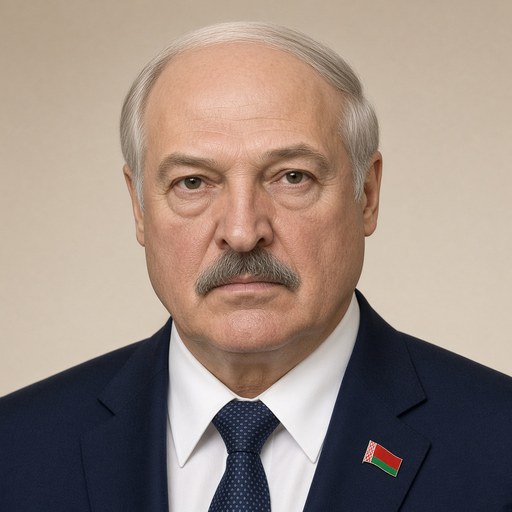
- Lukashenko addressed the UN Summit on Sustainable Development in New York on September 27, 2015, criticizing Western interventionism and calling for a multipolar world.
- Main themes
- Sustainable development, peace and security, multipolar world order, Western interventionism, geopolitical crises, Belarus's achievements, Millennium Development Goals, global terrorism and conflict, Ukrainian crisis, trust and international dialogue, hegemony and sanctions, humanitarian responsibility
- Duration
- ~11 min
- Words
- 1,338
- Sentences
- 100
- Readability
- 57
- Grade
- 8.6
- Syntax
- 2.52
- Vocabulary
- 2.10
Translated from Russian
The broad sphere of national life a sentence belongs to. Every sentence has an Arena, so it is the denominator the other indices are read against.
Other100 sentences in 34 paragraphs
Mr. Chairman,
Ladies and gentlemen,
Sustainable development in any country is impossible without peace and security. This undeniable truth has been fully experienced by the Belarusian people in their own fate. In the last century, Belarus became the site of the bloodiest battles of two world wars.
Therefore, we attach particular importance to preventing military conflicts and threats to human life.
Having lost a third of its population in the war against fascism, Belarus rose from the ashes and cherishes peace and harmony in society, striving to ensure the well-being of its people and the stable development of the state.
Over the years of sovereign existence, our country has honorably fulfilled those Millennium Goals related to the eradication of hunger and poverty, achieving 100% literacy, gender equality, social and political stability, and preventing discrimination based on national and religious grounds. We have no maternal mortality, and our child mortality rate is the lowest in the world. This is democracy, not what our Western teachers are trying to impose on us.
Unfortunately, this cannot be said about our planet as a whole. The world has come to the Summit, unfortunately, divided and more fragmented than ever in the last three decades. The planet is shaken by numerous armed conflicts and terrorist acts. It is sad that the rise of global threats does not find an adequate response.
We have still not managed to restore the balance of power that was lost with the collapse of the Soviet Union. No balance of power means no peace and no stability. This is a systemic crisis. In any system, if power is singular, it acts uncontrollably, striving only for its own prosperity and solving problems at the expense of others.
The policy of hegemony and national egoism leads to the widespread use of pressure, sanctions, restrictions, and military actions. As a result, we lose trust in each other.
An example of open political rudeness, lies, and crimes against humanity is evident. Let us recall recent facts. Under the pretext of the presence of nuclear weapons in Iraq, well-known states decided to democratize Iraq. And where is that nuclear weapon? Where is democracy in Iraq? Why was the President of Iraq killed? Where is that country, and what is the future of the Iraqi people? Has life become better for people in this state? No.
You, the guilty ones, will say that you made a mistake and should stop. But again, no, you went further. You started with Tunisia and ended with Libya. The scenario is the same. You crucified President Gaddafi, destroying the state. Has life become better in Libya? No. And where is Libya as a cohesive state? Gentlemen, perhaps it is enough? No. You rushed into Syria. The question is: why? Why are you killing people? Why are you overthrowing the sitting President? What did he do to you? Moreover, in the slaughter in this country, you are erasing the first traces of our civilization. Tell the world community what you want and what you are striving for. Just like in this case from this podium of the United Nations General Assembly.
The Ukrainian crisis. If we do not stop the bloodshed in Europe, the fratricidal slaughter, and allow the escalation of this conflict, it will be hot for the entire civilized world. Forgive me, we are taking another step towards a global conflict, and possibly a new world war, already in the center of the civilized and advanced world. Did we not understand, entering the new millennium, how fragile peace and human civilization are?
I say this not to list well-known events, but to lead the powerful of this world to one thought. It is clear. Today, there is no power that would stop you. But the heads of states committing sacrilege are all believers, many even pray publicly. But the Lord sees everything. And He is just. And if He gets angry and punishes the guilty? You, your peoples, who will suffer innocently for your adventures.
I think we need to stop. We need to help the people of poor countries to dress, heal, and receive education. Feed the hungry, save children from death, and you will be rewarded.
But mutual alienation is characteristic not only of large countries. Many even lack the desire to understand the traditions, culture, and beliefs of other peoples.
It is evident that restoring balance is a long path to a multipolar world. We will get closer to this goal if we act, rather than passively wait.
It is necessary to recognize in practice that we are all different and that each people, each country has the right to choose its own path of development. It is precisely in our diversity that the guarantee of common progress and the success of each lies.
Such an approach will help restore trust in our international life. But for this, it is necessary to meet and engage in dialogue, to negotiate, to find opportunities for constructive interaction. And having agreed, to act.
History teaches that any state claiming sole leadership without regard for the interests of others is ultimately doomed to failure and destruction. Any advantage at the expense of someone else is short-lived and harmful.
It is no coincidence that popular wisdom says: you cannot build happiness on someone else's misfortune.
The modern world is experiencing a crisis of responsibility. Because selfish interests and short-term benefits prevail in many decision-making processes. The actions of a number of states on the international stage often do not take into account the specific realities and characteristics of other countries and societies.
I am sure that if it were different, there would not be hundreds of thousands of human casualties in Iraq, Libya, Syria, and other countries from which streams of refugees fleeing war have poured. The emergence of the Islamic State would not have been allowed. There would be no outbreaks of terrorism in Europe and civil war in Ukraine. The list of these "would not have been" can go on for a long time. And it is important to talk about this today because in these states, these peoples will not understand us when we talk and are talking today about development, because millions and billions of people today in the world are not thinking about development—they are just trying to survive from morning till night.
Today, we need responsible politicians capable of acting globally, strategically, ready to make decisions in the interests of the entire world community, and to compromise for the common good.
Mr. Chairman,
Being in the United Nations, I cannot help but touch upon the crisis of international structures.
Overall, there is a feeling that their role lately has been reduced to being a place for disputes between states, and often a means of pressure on individual countries that have displeased the powerful of this world.
Look at the enormous number of resolutions adopted in the UN. But does voting on them influence the resolution of conflicts? Does it serve to consolidate the world community? Do these resolutions improve the lives of peoples?
Let us be honest: "They do not improve!" They voted and divided into our side and your side. As a result, even more distrust and division.
I am deeply convinced that the UN should not be used to demonstrate someone’s power. This weakens the Organization, destroys trust in it, and contradicts its very nature and purpose.
It is not surprising that traditional international structures play an insufficient role in both preventing and resolving conflicts.
We must put an end to this vicious practice. The UN should be a forum for cooperation, not confrontation between states.
Only mutual understanding and responsibility, awareness of the diversity of the world community, and the restoration of trust will help us all unite, ensure peace and security. Find effective responses to global challenges and threats.
The practical result of our efforts will be the sustainable development of all states and the increased role of the United Nations in world politics.
Thank you for your attention.
The original Russian. The tags above are read on the English translation's sentences.
Уважаемый господин Председатель!
Дамы и господа!
Устойчивое развитие любой страны невозможно без мира и безопасности. Эту непреложную истину белорусский народ сполна познал на своей судьбе. В минувшем веке Беларусь стала местом самых кровопролитных сражений двух мировых войн.
Поэтому мы придаем особое значение предотвращению военных конфликтов и угрозы жизни людей.
Потеряв в войне с фашизмом треть населения, Беларусь возродилась из пепла и свято бережет мир и согласие в обществе, стремится обеспечить благополучие народа и стабильное развитие государства.
За годы суверенного существования наша страна с честью выполнила те цели тысячелетия, которые связаны с ликвидацией голода и нищеты, достижением стопроцентной грамотности населения, равенства мужчин и женщин, социально-политической стабильности, c недопущением дискриминации по национальным, религиозным признакам. У нас нет материнской смертности, детская смертность - самая низкая в мире. Именно это и есть демократия, а не то, что пытаются насадить нам наши западные учителя.
К сожалению, этого нельзя сказать о нашей планете в целом. Мир пришел к Саммиту, к сожалению, разобщенным, разделенным как никогда за последние три десятилетия. Планету сотрясают многочисленные вооруженные конфликты, террористические акты. Печально то, что рост глобальных угроз не находит адекватного ответа.
Нам до сих пор не удалось восстановить тот баланс сил, который был утерян с распадом Советского Союза. Нет баланса сил - нет мира и нет стабильности. Это системный кризис. В любой системе сила, если она является единственной, действует бесконтрольно, стремится только к своему процветанию и решению проблем за счет других.
Политика гегемонизма, национального эгоизма приводит к широкому использованию давления, санкций, ограничений и военным акциям. Как результат - мы теряем доверие друг к другу.
Пример открытого политического хамства, лжи и преступлений против человечности на поверхности. Давайте вспомним недавние факты. Под предлогом наличия ядерного оружия в Ираке известные государства решили демократизировать Ирак. И где это ядерное оружие? Где демократия в Ираке? Зачем убили Президента Ирака? Где вообще та страна и какое будущее иракского народа? На территории этого государства стало людям жить лучше? Нет.
Вы, виновные, скажете, что ошиблись, надо бы остановиться. Но опять же нет, пошли дальше. Начали с Туниса и закончили Ливией. Сценарий тот же. Распяли Президента Каддафи, уничтожив государство. В Ливии стало лучше? Нет. И где это Ливия вообще как целостное государство? Господа, может быть, хватит? Нет. Рванули в Сирию. Спрашивается: зачем? Зачем вы убиваете людей? Зачем свергаете действующего Президента? Чем он вам не угодил? Более того, бойней в этой стране вы стираете первые следы нашей с вами цивилизации. Скажите мировому сообществу, чего вы хотите и к чему вы стремитесь. Как раз под случай с этой трибуны Генеральной ассамблеи ООН.
Украинский кризис. Если не остановим кровопролитие в Европе, братоубийственную бойню, допустим эскалацию этого конфликта - жарко будет всему цивилизованному миру. Простите меня, сделаем еще одни шаг к глобальному конфликту, а возможно, к новой мировой войне, уже в центре цивилизованного и продвинутого мира. Неужели, вступив в новое тысячелетие, мы так и не поняли, как хрупок мир и человеческая цивилизация?
Я это сказал не для того, чтобы перечислить известные события, а чтобы сильных мира сего подвести к одной мысли. Понятно. Сегодня нет той силы, которая бы вас остановила. Но ведь главы государств, совершающих кощунства, все верующие, даже многие публично молятся. Но господь же видит все. И он справедлив. А если разозлится и накажет виновных? Вас, ваши народы, которые пострадают безвинно за ваши авантюры.
Думаю, надо остановиться. Надо помочь людям бедных стран одеться, вылечиться, получить образование. Накормите голодных, спасите от гибели детей, и вам воздастся.
Но взаимное отчуждение характерно не только для крупных стран. У многих даже нет желания понять традиции, культуру, убеждения других народов.
Очевидно, что восстановление баланса - это долгий путь к многополярному миру. Мы приблизимся к этой цели, если будем действовать, а не пассивно выжидать.
Необходимо на деле признать, что мы все разные и что каждый народ, каждая страна имеет право на выбор своего пути развития. Именно в нашем многообразии - залог общего прогресса и успеха каждого.
Такой подход позволит восстановить доверие в нашей международной жизни. Но для этого необходимо встречаться и вести диалог, договариваться, находить возможность конструктивного взаимодействия. А договорившись, действовать.
История учит тому, что любое государство, претендующее на единоличное лидерство без оглядки на интересы других, в конечном итоге обречено само на провал и гибель. Всякое преимущество за счет кого-то недолговечно и ущербно.
Не зря народная мудрость гласит: счастье на чужой беде не построишь.
Современный мир испытывает кризис ответственности. Потому что эгоистические интересы и сиюминутные выгоды главенствуют при принятии многих решений. Действия ряда государств на международной арене часто не учитывают конкретную реальность и особенности других стран и обществ.
Уверен, будь по-другому - не было бы сотен тысяч людских жертв в Ираке, Ливии, Сирии и других странах, откуда хлынули потоки беженцев, спасающихся от войны. Не допустили бы появления Исламского государства. Не было бы вспышек терроризма в Европе и гражданской войны в Украине. Список этих "не было бы" можно продолжать долго. И важно сегодня об этом говорить, потому что в этих государствах, эти народы не поймут нас, когда мы будем говорить и говорим сегодня о развитии, потому что миллионам и миллиардам людей сегодня в мире не до развития - им бы с утра до вечера дожить.
Сегодня нужны ответственные политики, способные действовать глобально, стратегически, готовые принимать решения в интересах всего мирового сообщества, идти на компромисс ради общего блага.
Господин Председатель!
Находясь в Организации Объединенных Наций, не могу не затронуть кризис международных структур.
В целом возникает ощущение, что их роль в последнее время сводится к тому, чтобы быть местом споров между государствами, а зачастую и средством давления на отдельные страны, которые чем-то не угодили сильным мира сего.
Посмотрите на огромное количество резолюций, принимаемых в ООН. Но разве голосование по ним влияет на разрешение конфликтов? Разве оно служит консолидации мирового сообщества? Разве эти резолюции улучшают жизнь народов?
Давайте честно скажем: "Не улучшают!". Проголосовали и разделились на наших и ваших. В итоге еще больше недоверия и разобщенности.
Глубоко убежден, что ООН не должна использоваться для демонстрации чьей-то силы. Это ослабляет Организацию, разрушает доверие к ней, противоречит самой ее природе и предназначению.
Неудивительно, что традиционные международные структуры играют недостаточную роль как в предотвращении, так и в урегулировании конфликтов.
Надо положить конец этой порочной практике. ООН должна быть форумом сотрудничества, а не конфронтации государств.
Только взаимопонимание и ответственность, осознание многообразия мирового сообщества, восстановление доверия помогут всем нам объединиться, обеспечить мир и безопасность. Найти эффективные ответы на глобальные вызовы и угрозы.
Практическим результатом наших усилий станет устойчивое развитие всех государств и повышение роли Организации Объединенных Наций в мировой политике.
Благодарю за внимание.