




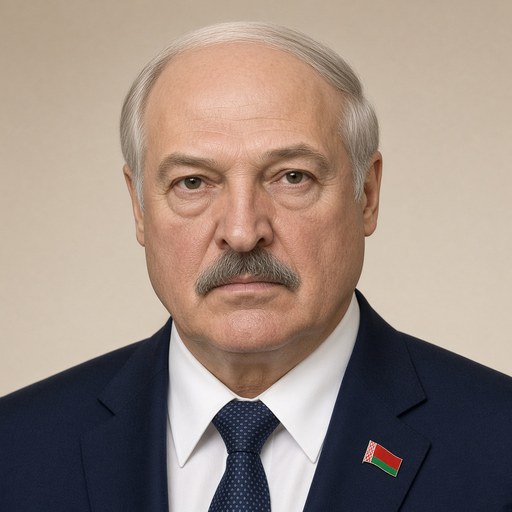
The speech of President A.G. Lukashenko at the VII Congress of the Federation of Trade Unions of Belarus.
 Alexander Lukashenko · President of Belarus
- Context
- Lukashenko addressed the VII Congress of the Federation of Trade Unions of Belarus on May 22, 2015, emphasizing unions as the backbone of Belarusian civil society and labor policy.
- Main themes
- Trade unions, civil society, labor relations, collective agreements, social partnership, economic difficulties, worker protections, state ideology, Belarusian social organizations, opposition parties, economic crisis among trading partners
- Duration
- ~84 min
- Words
- 10,012
- Sentences
- 661
- Readability
- 64
- Grade
- 8.0
- Syntax
- 2.73
- Vocabulary
- 1.97
Translated from Russian
The broad sphere of national life a sentence belongs to. Every sentence has an Arena, so it is the denominator the other indices are read against.
Other661 sentences in 120 paragraphs
Dear delegates, esteemed guests, dear comrades!
First of all, I want to thank everyone who proposed my candidacy for election as a delegate to this congress.
I must say that even if you had not elected me as a delegate, I would still have come to your congress.
But you will understand why shortly.
The congress of the Federation of Trade Unions plays an important role in the life of our state. It is the most mass and authoritative public organization in the country. It unites more than 90 percent of the economically active population of Belarus — approximately 4 million 100 thousand people!
Trade unions have been and remain one of the main pillars of our civil society.
You have probably heard this for a long time, when we were actively reproached for supposedly having no civil society at all. And the main contenders for this role were our "homegrown" parties, or as they are called in the people, "parties." Mostly of an opposition nature, not even opposition, but of the "fifth column." At that time, I formulated the thesis that civil society in the country has always existed, exists now, and will continue to exist. And the main pillars of this civil society, alongside trade unions, which are the most mass and primary support of our society, are our youth organization — the Belarusian Republican Youth Union, our veterans' organization, and our women's organization. What are these if not pillars? Are they not as numerous as our so-called parties?
In fact, no one knows how many members our parties have, just so you know. And when some of them, for example, nominate their candidates according to the law during parliamentary elections or elsewhere, I will tell you frankly, none of them comply with the law. But we turn a blind eye to them. Because these are mostly opposition so-called parties, and it is better not to touch them. The result of their activities is clear anyway. And during the parliamentary campaign I mentioned, the result is also predictable. Not because Lukashenko is suppressing them and the authorities are fighting against them, but because, as the classic said, they are too far from the people.
That is why I had to come to this congress, because you, I say for the third time in my opening remarks, are the main support of our state.
I just told our trade union chairman that you are the party of our workers. If you want, as before, the Communist Party of our workers. You are the main conduit of state ideas. And you should care about everything! Whether it is enshrined in law by the state or not.
It is you who must take on part of the enormous work that our country will have to carry out in the near future.
It should be noted that we have a clear system of regulating labor relations. At its core is the General Agreement between the Government, the employers' association, and the trade unions.
To protect and ensure the social guarantees of workers, ongoing work is being done to develop and strengthen social partnership at all levels.
Much has been said here about collective agreements. Yes, the General Agreement of the Government, employers, and trade unions must comply with the Constitution and laws, and collective agreements must comply as well. But let’s agree: your main guideline, so that you do not clash with local leaders, trade union activists, so that you are not just empty defenders of workers' interests, the main signal for trade unions, the main guideline when concluding collective agreements should be the General Agreement.
Leaders at the top have agreed with employers and the Government, and you need to follow this path. Why do I raise this issue? Because you constantly turn to me, from the grassroots to Mikhail Sergeyevich (M.S. Orda — Chairman of the Federation of Trade Unions — Ed.): give, help, and so on. So let me focus on this General Agreement, we will work it out, we will work out the main directions, and this will already be your main document and the main signal on how to act. And no one has the right to violate the General Agreement — neither the leader nor the trade unions at the local level, not only according to the law, according to the articles, but also in spirit.
As you know, Belarus is a country with an open economy. It is strongly influenced by external factors. Currently, we are experiencing certain difficulties, primarily related to the crisis that has arisen among our main trading partners. And, of course, their problems have inevitably affected domestic enterprises.
Nevertheless, we have experience working under such conditions. I have already mentioned this more than once.
A key moment during problematic periods in our history was the preservation of production and labor collectives. The Belarusian experience of overcoming economic decline was, in essence, unique. In the USA and Western Europe, mass layoffs were noted. Hundreds of thousands of people suddenly lost their jobs. But we stood firm then, and we will cope now!
And you know, many criticized me back then, saying there was excessive employment, that I was keeping them there, not firing them, and so on. Back then and now, I have said and will continue to say that crises come and go. And when recovery begins after a crisis, when demand for your products increases, you will not have anyone to create this product, this output. And then, we were right, and those who threw people out onto the street, there were few of them, later painfully wandered around the country in search of specialists — they do not just appear out of nowhere. Therefore, you see my attitude towards this. I will continue to visit enterprises, especially the problematic ones. And the thesis will be one: whatever it takes, we must preserve labor collectives. And if we are to speak frankly, we have not really strained ourselves to address and solve this problem. So we will have to strain ourselves in the near future, everyone will have to strain.
We talk a lot about crises. And you know, the most terrible thing in this crisis is the crisis in our heads and our minds. As soon as people hear on the radio, on television, read, and we say "crisis, crisis," they throw up their hands and many begin to expect — a purely psychological moment. But everyone forgets that in these crisis times, those who act will find themselves on top in the post-crisis period. And in general, this crisis is not so terrible. We produce normal products, of appropriate quality and price, although there are problems, I have already mentioned this, the main thing is to sell it. And we need to look for where to sell it. This is because we have not managed to diversify our exports. And we still remain in Russia, Ukraine, Kazakhstan, and with our neighbors.
We talked about the "distant arc," remember that definition in our foreign policy. But politically, we have only managed to outline this "distant arc." From Venezuela, Ecuador through the Middle East, Africa, Pakistan to China, but practically we have done little. Frankly speaking, we have not had time. And you probably see our current active actions starting with the People's Republic of China.
I closely monitor the media as part of my work, and even Russia is concerned: how is this possible? The leader of China, something that has never happened in history, came to Belarus for three days. Today, a huge production facility of the most advanced global companies is being built. "Great Stone" — this is not only Chinese enterprises, by the way, one of our enterprises is also registered there. But there is one requirement: no yesterday's products, no yesterday's generation of goods. Please come and produce.
Nothing from yesterday is allowed there. No one will produce yesterday's products there. This was my strict condition. And the visit of the Chinese leader. We were there, he was genuinely impressed. And strict instructions followed to all the companies that were there, to all the subordinates he has, to immediately begin active work on construction.
The Russians calculated yesterday. To be honest, I missed this moment, and they announced that the most advanced industrial cluster is being created near Minsk, which will have about a million jobs. Whether this is true or not, I do not know. They have set their sights too high. But this indicates that the Russians are looking at this project with envy. And I am glad that they evaluate it this way. It means we did something right. It means we did not make a mistake, although at times I doubted whether it was necessary to do this.
But the fact that China has paid attention to Belarus, in this case, that China has promised that we will buy — they said directly — we will buy all your products that are competitive in the Chinese market, this is a fact. This indicates that we are continuing to diversify our exports. Without supplying products to new markets, we will always be tumbling.
Yes, Russia is a fraternal, native country to us, our state, our people live there, not just very similar, but just like us. But we cannot depend on one market. We cannot. We need to be present in many markets, and then we will be safer.
Therefore, this is the main problem, and we are solving it. In the near future, we will have a large delegation coming from Georgia, China to us. The Indian president is arriving in the next few weeks. We will visit Pakistan with a large delegation to secure the implementation of our products and other areas of our cooperation.
Recently, we have been criticized: oh, and so on. But I must say, we are lacking in some areas. But you cannot blame the Government today, the heads of ministries, for the fact that no one is acting in this direction. They are acting.
And I must tell you, looking ahead, a good push in this regard, as they say in the people, a good, so to speak, means of stimulation — Decree No. 5.
You talk about the decree, that yes, we need to protect workers and so on. This is absolutely correct. But the main idea of Decree No. 5 is to make leaders work. Our leaders have become too slack — I want to do it, I don’t want to do it, I will be fired, there are some private structures registered under someone, someone’s children, someone else in private structures, I won’t disappear. If they are removed from public service, they appear literally shortly thereafter in another organization. And, as a rule, in a good managerial position.
So Decree No. 5 closes this loophole. It will be impossible for a leader to calmly appear in some new organization without the consent of the relevant structures.
But in order to "tilt" the leader, he must be given the corresponding rights. Therefore, my requirement was: the leader must have, especially at this time, certain strict rights in relation to his employee.
Here Mikhail Sergeyevich (M.S. Orda — Ed.) spoke about Japan. A good example. But there, of course, this is not our style; there, a worker will not speak out against his boss.
I remember my visit to Japan during the Olympics back in my young presidential years. And an interesting conversation happened, I still remember it — with specialists, top specialists, managers. They told me: you know, why do you envy us, it seems to be working for us, but not for you?
I said, "Well, why?"
Because you have 99 smart people with their own opinions for every hundred workers, and one fool. And we, they say, have one smart person, and 99 act in the given direction, as the leader says.
This is very important: production discipline, and at its core lies technological discipline. Without this discipline, no leader will achieve anything. And I saw this. Even in the last years of the existence of the Soviet Union, when I had to work as a leader, the leader found himself bound, powerless, and began to engage in populism. But the leader in production is a king, a god, and a military commander. Therefore, we gave him certain rights, but the main thing is that this decree forces the leader to work. He has no way out, practically none. I also ask you not to take offense at me, because the time is such. If we want to preserve the country, if we want to preserve ourselves and our children in production, so that we can earn some money for our families — we must strain ourselves. We are not overly strained in Belarus, I often say, even in this difficult time, those who want to work will always earn. Always. Why? Because today the situation has developed in such a way that through Belarus, from the vast East to the vast West, technology flies, walks, and moves. Provide a service to this person. It is not necessary to develop some roadside service; if you provide a service, you will earn money, if it comes to that. We need to strain ourselves, we need to move. Perhaps, mentally, Belarusians are not very agile, but once they turn around, they move forward. It is time, comrades, my dear, to turn around. And look for ways to earn that penny, because without it, alas, happiness is not in sight. And this is our main task today, these are the fundamental moments of economic development. And the main among them is to ensure the competitiveness of Belarusian goods in foreign markets. And for this, what is needed? First — to increase labor productivity, second — to ensure high quality of goods and services. I have said that in terms of price and quality, we can still compete with the West, because our energy resources are cheaper and so on, so the price can be lower. But it will not always be like this. And there are certain claims regarding quality, so today, when I raise the issue of preserving labor collectives, I demand the highest quality from everyone. I am simply ashamed when I, as a promoter, go abroad and offer the same Chinese, others: take our products, and in response I hear — we took it, but the quality is not right. This should not be the case. It is unacceptable to produce low-quality goods. There will be serious accountability for this. Furthermore, serious attention must be paid to reducing costs and saving resources, but at the core of this lies the personal responsibility of leaders, managers, and the motivation of each at their workplace. Therefore, speaking about the work of trade unions at the present stage, it should be noted that you need to take a more active part in solving tasks of state importance.
First of all, this is monitoring labor relations. This has already been mentioned today; it is one of the main areas of your activity. And in general, you are adopting a five-year program today; I can tell you what I once told our youth: define these 5-6 areas and act. But do not repeat the state bodies or other public organizations. Let these be 5-6 areas today; tomorrow you will add one, two, or three more areas, and in this way, you will find your place in this society. The same goes for you: you should define in this program simply and clearly, without being overly complicated; you are not only doing it for yourselves, but for those whose interests you are protecting, for these four million people and perhaps even more, this program. Therefore, you should define the main areas, but do not duplicate others. And act. There is no need, as it was in Soviet times, I remember, I worked for 7 years as the head of a primary trade union organization. We only received signals from the district party committee: write this down, add that, we created huge projects of resolutions.
Read, programs. And they were never implemented. Therefore, it is necessary to determine the main areas. It is easier for you. You have crystallized these areas through your life. And you must follow this path.
In the process of overcoming negative phenomena in the economy, situations may arise where part-time work schedules or forced vacations are established at certain enterprises. The trade unions must have an uncompromising position on such actions. You must ensure that everything guaranteed to workers by labor legislation, in the development of this collective agreement, is necessarily fulfilled.
At the center of all our policies will always be the working person. The state for the people is not a slogan, but a guide to action. Our political system, which guarantees peace and order, and the economic model, which provides the opportunity to work and earn, is created precisely for the person. We have created a powerful social system: accessible medicine, education, housing, reliable social protection. This will continue in the future. All transformations, all new solutions and approaches are primarily aimed at ensuring social justice, protecting and supporting the working person. This is the main meaning and essence of the Belarusian socio-economic model, and we will never deviate from these principles.
On the other hand, you need to monitor the fulfillment of contractual relations and the workers themselves. This is, of course, difficult; I know this myself. On the one hand, as you say — the employer, the manager; on the other hand — the labor collective, whose interests you must protect. This labor collective elected you. Moreover, I was in a more complicated situation. Well, we, the majority of primary leaders, have been working for a long time; compromises or not, we are somehow elected, well, in agreement, let’s say. I was elected as an opposition figure; the workers simply chose me. And whether I wanted to or not, I had to maneuver and be more on their side, but, being the deputy director, I was a leader. And that’s when I felt what it was like to be an ordinary trade union leader, the head of a primary organization. You have to maneuver, and I had to maneuver. But I always put the problem of justice at the forefront. And we agreed with the workers: if it is fair, I will defend you wherever, however, even if I get fired — but I will defend you. If it is fair. If it is unfair, I will not defend you. And we then agreed: I cannot defend drunks and slackers, idlers. The working person — we must do everything to protect them; there are no problems here. There is no need to wait for any laws. If you see that a woman with a three-year-old child or a child who has not yet turned four has no other income and wants to work, a normal person, you must protect her to the last. To the last. And God forbid, I learn of this fact; it is easy to reach me — either through the media, or through an assistant, or directly. Report it — and the strictest measures will be taken. Why? We are often reproached, and I am reproached: we do not have a main fighter for human rights. An ombudsman, or whatever they call it. And Mikhail Sergeyevich (M.S. Orda — Ed. note) has told me more than once about this: we need it, we need it. I have always told them: the main ombudsman in Belarus, the fighter for human rights, must be the President. No other leaders of any structures will ever solve this problem.
And this is indeed my main problem, my main task, and I will adhere to this. I say this not because we have presidential elections coming up. It is not about that. It should simply be this way. This is the main concern and the main work, I believe, of any president, because he is elected by the people; he must protect their interests. But be objective and fair. If the people are right — consider that I will be at the forefront, including with weapons, defending your interests. If you are wrong — you know, I will not hesitate. I have said it directly to you, and I will say it to your face: if four hundred thousand people are hanging around unknown where, unregistered, then there are quite a few idlers among them.
Despite the election campaign, and I was warned: maybe not now, maybe later... I say: no, we must be honest; let’s make these decisions about idlers now, because this has been a chronic disease of our society since Soviet times. Someone works and sees that the slacker does nothing, yet lives like cheese in butter — as people say. It should not be like that: go and work. If you do not work — pay. Because education, healthcare, and other things, unlike in any other country in the world, do not cost us that much. It is generally, you could say, free for the person. If we had introduced paid medical services, at least like in our Russia, God forbid in Ukraine, then all your salaries and those of the workers would have gone only to healthcare and medical assistance. We did not do that. True, there is another extreme; a person has stopped valuing their health.
But nevertheless, the problem is that everyone must participate in the activities of the state, including financially, in solidarity. Take security. Take beauty and cleanliness, which everyone admires: oh, how good we are. But this costs money — both security and beauty. And here you cannot reproach me that we have some kind of crooks, corrupt officials, or state servants who divided the money you pay.
So you know, state servants today are offended, like in no other country. And I am to blame; I am to blame for this, but I ask them: let’s not do this before the elections, neither raise salaries nor monetary allowances, and so on; there are difficulties for the workers; let’s endure as well. And people endure — state servants. These very officials, whom many do not like, but understand that without this official, without a person in uniform, the state cannot exist. Therefore, it must be honest and fair. I have always adhered to these human postulates. I ask you to adhere to these postulates as well.
On the other hand, I have already said, not all workers want to work; some do not want to work in their minds, but still do, because they understand: tomorrow they will either be fired or will not receive their salaries at all, or will receive a small amount. And some simply do not want to work. And they do everything to evade this work. Moreover, drunkenness, slackness, disorganization. What, do we not have this in production? And trade unions must see this and give an adequate assessment. This is what I was talking about, especially in primary organizations.
Trade union organizations must participate in solving pressing problems within the framework of the activities of the structures in which they are present. Or, for example, supervisory councils. This can be said to be your domain. You must speak your word here, and a very weighty word.
On your shoulders lies not only public work but also real tasks of monitoring labor productivity, its conditions, and responsibility for results.
It is necessary to actively engage in processes of quality control of products, as I mentioned, timely payment of wages, and even finding new markets for sales, unloading the same warehouses. This is the salary of people. Under no circumstances should we save on people. Everything they have earned must be paid in full and on time. If it does not work out — the manager, together with the trade union leaders, should crawl on their knees before these workers and ask them to make some changes and concessions. Our people are literate, they understand, they will help, they will endure. But under no circumstances should decisions be made in the office with a hatchet. You chopped it off without seeing what the consequences of your decision will be; it should not be like that. And here trade unions must keep a close eye on such things in production. We need not only to see this but also to act actively. This is the real protection of the interests of labor collectives.
The right to work is one of the fundamental rights of citizens.
In independent Belarus, we have preserved this right for our people. And it is not only about the fact that it is enshrined in the Constitution.
All social and economic policy in our country is subordinated to achieving this goal. We have sometimes done the impossible to ensure that the right to work does not remain on paper but is realized in life.
Preserving jobs is a constant and key requirement for any manager. It does not matter whether it is a private or state owner.
Our common priority goal is to prevent people from being laid off from enterprises due to some difficult situations in the economy. And here the role of trade unions is very significant.
Today, the problem of workforce reduction is relevant worldwide. Not all employers prioritize the interests of those they have given jobs. The fates of people are often sacrificed to the interests of profit and efficiency.
But this is why there is a system of checks and balances in the form of trade union organizations. It is they who, acting strictly within the law, must prevent unjustified layoffs.
It is clear that it is necessary to act from the position of common sense here. New technologies are rapidly developing, and some job functions naturally disappear — they are simply taken over by machines. But then the freed workers need to find new applications, and this should involve not only the authorities, especially local ones; first and foremost, it is the concern of the manager. If you lay off a person, do it humanely, talk to them, find them a place in this enterprise. It must be understood that this person has been going to this enterprise for years, and some for decades. They have a peculiar mindset and way of life. If we throw them out tomorrow, we will lose this person. They will either die, or worse, some of them will become criminals, will go down the path of offenses, and then how much money will we have to spend on this? A lot. Therefore, if you lay off a person for objective reasons, find them a job at this enterprise. If it does not work out, together with the authorities, under the control of trade unions and together with trade unions, help this person in life so that they are not thrown onto the sidelines of this life.
Trade unions, by the way, together with employment centers could take on the responsibility for their retraining.
And in general, look in your five-year program, find your place in relations with employment centers. It would be good if you become the main actor there. And not only will you conduct retraining of workers, but you will also take serious control over the activities of these employment centers.
Thirdly, the private sector of the economy in Belarus is constantly growing. Foreign investors are coming to us, joint ventures and branches of large foreign corporations are being created. Our compatriots work there. And they have every right to protect their interests.
Therefore, it is necessary to use international experience in your work as well. Perhaps the registration of a private enterprise, especially a foreign one, should occur simultaneously with the creation of a trade union cell. In addition, during restructuring, privatization, or change of ownership in the organization, the trade union must be preserved.
Attention should also be paid to the non-state sector of the economy from another perspective. Here, labor legislation requirements are often violated.
Managers of some companies and firms, in pursuit of profit, do not pay due attention to working conditions, production life, and medical care. They often hinder the creation of primary trade union organizations. Avoiding formalizing contractual relations with the worker, they pay salaries "in envelopes."
The consequence of this is the deprivation of a person’s legal right to social support and the formation of guaranteed pension provision. Andrei Vladimirovich (A.V. Kobyakov — Prime Minister — Ed. note), let’s agree that by the middle of next year, in all labor collectives — regardless of the form of ownership, private, state, or mixed labor organization — there should be trade union organizations. This must be done by law. It must be done, let’s write it into the law, and let’s not hide our heads in the sand like ostriches. I am saying this not for populism because I came to the congress. Even Mikhail Sergeyevich (M.S. Orda — Ed. note) has already mentioned this problem three times in our conversations.
I told the head of our trade unions, I think you will support him today at the congress, and I warned him: "You write to me directly who does not want the creation of these trade union organizations. We know how to influence them." And we will do this democratically. I emphasize again: we will do this very democratically, as they do in Turkey, Denmark, the Netherlands, the United Kingdom, Germany. We know how to do this; we are experienced people, so it is better to talk to us nicely and understand that you came to the country to work; it is better to throw yourself forward — you will find a way back later, as the people say. Otherwise, they come here and start to act, our big bosses are afraid to take bribes; you cannot buy them with bribes. And it must be understood that if the Head of State says that the main thing is the people, then this people must be the main one in this country, and first of all for foreigners who come here. Try to come to America and not fulfill not just a point of law, but even miss a comma. And you will be thrown out of there in full democracy. Therefore, by the middle of next year, trade unions should not raise the issue at large meetings in the presence of the President that they are having difficulties in creating primary organizations in private enterprises, joint-stock companies, and so on. If you work on Belarusian soil, and our person works there, then there must be an organization that will protect him. These must be our trade unions. I am told that we have good experience. Take OAO "Amkodor," which became a private organization. Probably, it is one of your best organizations, even though it is private. There, the collective agreement has been preserved, and so on. Or LLC "Evrotorg," as your leader reported to me. Yes, there was some misunderstanding somewhere, but now you are creating trade union organizations there. This is how we will act, and there should be no opposition or obstacles here. I think the private sector will hear me today from this congress.
An important aspect of labor relations is the observance of labor discipline by employees. Unfortunately, year after year, we are forced to return to the shameful topic of alcoholism in the workplace. Why? This worries me, and probably you too. The percentage of accidents at work remains high. In 2014, almost 150 people died at work, and practically every fifth of them was in an intoxicated state. To be precise, every fourth. Is this normal? This is not normal!
We must fight this harmful habit together. Enterprise leaders and trade union committees need to conduct widespread preventive work, including increasing collective responsibility. Drunkards and slackers have no place in enterprises!
Facts of covering up the guilty are still being revealed. However, by turning a blind eye to them, colleagues and immediate supervisors put the lives and health of people at risk.
Another problem is the attempts by the management of some enterprises to hide workplace injuries to avoid paying the victims the compensation they are entitled to.
As I have been informed, the technical labor inspection of the Federation of Trade Unions has identified 17 episodes hidden from investigation over the past five years. Seventeen. A drop in the ocean; this means you are working poorly. There are significantly more. I am sure there are such cases in every enterprise. Therefore, you need to be more decisive, especially since, as I understand, there are released people working there who receive a salary.
At the request of the inspection, 31 workplace accidents with fatal outcomes have been reclassified from non-productive to productive. An investigation has been conducted for each case. But it must be noted that such facts are unacceptable in the future. And we need to increase the responsibility of managers for such cases. Then there will be fewer of them.
Safe working conditions are something that must undoubtedly be created in any workplace. Let's be clear: sometimes this is neglected due to negligence and carelessness, sometimes because they want to save money. But when it comes to the life and health of people, saving money is absolutely unacceptable.
Trade union committees must carefully monitor this. And they should monitor it formally. You have all the legal opportunities for this.
The social orientation of the trade union movement remains significant.
The business of trade unions is to be close to a person and extend a helping hand in any life situation.
All of you and we cannot cover everyone, nor is it necessary, because it breeds dependency. But in our lives, there are cases, and there are quite a few, when a person is, well, completely hopeless, as people say. When it is very difficult for him, when he simply needs to lean on someone's shoulder. And not just lean, he needs to talk to someone. He needs to vent. And he can only do this with an authoritative person.
Therefore, in trade unions, the leaders of primary organizations, members of trade union committees, especially in places where you directly contact people, must be very authoritative, influential people, so that a person is drawn to them, so that he can come, open his soul, vent, and if you can, together with the management, hearing him, provide him with help and support. This will be the most important thing in your work, this humanity.
You know, it is easier to be useful and "great," popular, providing all kinds of help to everyone than to provide specific help to a specific person. We need to remember this.
You are called to reach out to everyone: to help in solving the issue of allocating a place in a kindergarten for a child, vouchers to a children's health camp, to assist in sanatorium-resort treatment for workers — all of this is your direct tasks.
I know that in the city of Gomel, the trade union of trade workers has taken patronage over four children whose mother has died. Two years after her death, the children were left without a father, only with their grandmother. The trade union did not abandon this family: it supports and helps in solving problems, rejoices in the successes of the growing children.
But this is one family. Probably, we do not have many such families, but they exist. Find these families. Provide them with support. If you do not have the means for this, the state will always find support for such families. Where there is a child and an elderly person, this is our task, this is our problem. We must definitely extend a helping hand to them.
It is necessary to further develop targeted social projects. Such as the charity campaign "Trade Unions — for Children." You can conduct similar campaigns; initiate them. Let's do this together, with the youth, with the state.
Pay attention to young specialists, those who just came to the labor collectives yesterday. This has already been mentioned. It may seem to us now, well, what is there, he came and came, here is a hammer, an axe, a machine — go and work.
No. There is also a head, brains, psychology. And the more talented a person is, the more vulnerable he is. And it was rightly said here — his path to production should go through the party committee. But they are no longer there. Therefore, you have remained there as the only party of defenders. And you should care about this young person.
Take him after work, during lunch break, before work, guide him through production, tell him, talk to him, and say: reach out if you find it difficult somewhere. If you just want to talk, then also take the initiative to approach him once more, and in a month this person will become a full-fledged member of the labor collective.
And to enter this labor collective — it does not matter who he is, a journalist, an artist, or an ordinary worker — to enter this labor collective, he will not need six months or a year; one month will be enough.
This is the essence of mentorship, when you assign someone to this young person, as it was said before, simply offering him a person who will always meet him and guide him into the labor collective. It is very important — pay attention to the youth, especially since it is the Year of Youth. Special care should also be given to labor veterans. We must not forget those who have worked honestly for many years and are now enjoying their well-deserved rest. You know, I am glad that in our country, almost all labor collectives have maintained their attitude towards labor veterans. No matter how difficult it is — on holidays, at some celebrations of the labor collective, veterans of labor will definitely be invited. And I am pleased to hear when a leader says: "Well, he is not coming today. This labor veteran has done a lot, he is ill, we will go to him." For a person, perhaps, it is not material assistance, nor the gift you bring, nor the flowers that are important, but your human attention. We do not understand this now, we do not realize it, because we have not been in this situation. But we will definitely be in this situation. Unfortunately, we are not getting younger; we are approaching that age, so remember the veterans. We will remember the veterans, and our children will remember us when we become veterans. Therefore, pay special attention to this human factor.
This year is marked by the celebration of the 70th anniversary of the Great Victory. I am hinting that I had simply instructed the previous leadership of the trade unions: take the Mound of Glory, this will be your Mound, and look: today the Mound of Glory, which was built by the whole country, the great Soviet Union, has become the mound of the trade unions. You did not ask anyone about this. But the people decided so. Because you treated this monument with soul. And it is very right that you gathered at this mound yesterday; it has been built, recreated in fact, modernized by your hands and with your financial resources. Thank you for this.
Dear comrades! Our life and peaceful labor, unity, tranquility, and order largely depend on what is happening in the world. And first of all — with our neighbors. We made a completely conscious choice in favor of strengthening our union with Russia, creating the Eurasian Economic Union. Today we are expanding the geography of cooperation and have brought it to a new level of comprehensive strategic partnership with the People's Republic of China. With other major players in the world. Belarus is always open to everyone — both to the East and to the West. Hence our principled international position, which consists of the readiness to develop relations across the entire spectrum of promising directions. But only on the principles of mutual respect, mutual benefit, and equality.
Sometimes in dialogue with the West, we have to face bias and subjectivity. Therefore, the Federation of Trade Unions should work to strengthen the positive image of the country abroad. We need to defend our positions, convey accurate information to international labor organizations. Any attempts to undermine unity, sow discord between countries must receive an immediate, strong rebuff, and here you simply have no right to remain on the sidelines as observers. Here is a fresh example. I want to say this for the first time, as I had to deal with it late last night and this morning. Well, it would seem: these Ukrainian events in this region, in the world should have taught not many, but everyone, how fragile peace is, how it must be cherished. We need to look at the main thing; we need to solve this problem, including in Ukraine and in other states. No. They gathered... "Eastern Partnership." So what? In every document, to brand Russia with shame, not directly but indirectly, somewhere like this, like that, and so on. We have always been categorically against the "Eastern Partnership" being against someone. If the European Union wants to cooperate with us through the "Eastern Partnership," let's do it. But Russia does not participate in the "Eastern Partnership." Why should we bash it without Russia? Including there for Crimea and so on. No, it is necessary to squeeze this into the final declaration, to push it and to speak out against Russia. And they are offended at us for not supporting this. This is my principled position. The "Eastern Partnership" and other organizations should not be directed against anyone. We must defend and protect our interests there. Why should we be against Russia? Moreover, we have become this place of peace in Ukraine. Here, the leaders of world powers gathered to stop the war. It worked. Maybe for now, maybe, God forbid, of course, but nevertheless, today thousands of people are not dying in those cauldrons. We are told: let's speak out together against Russia. This contradicts our internal convictions and the current state here. Don't the leading Western powers, including Germany, France, and so on, see this? And this must be stopped. Under no circumstances should we try to stir things up and accuse someone today when this world is very fragile. First, we need to solve the problem, and then we will figure out who is right and who is wrong. No, they are trying to drag Belarus into this; let's write here that this is annexation, that this is this, that is that — and everyone is silent. We cannot support such a position. We cannot! Because the main thing is not to accuse someone today. There are already enough accusations. We need to give peace to this country and our people — our brothers live there. No, we are being dragged into this. It would seem, I emphasize again, this war has taught everyone that we need to be very careful, we need to be cautious, we need to solve the main problem. Therefore, we are almost becoming outcasts in the "Eastern Partnership" today. But we are acting gradually, calmly in the direction that we have long indicated. We do not want to get involved in any adventures. We want peace to come from our land as well. This is the essence of our policy. But this indicates that even here, someone is itching to make things uneasy and unstable. Therefore, we must keep our ears open; we cannot relax and constantly say: you know, we are calm, we are clean, we are neat, we can go out on the street with a child in the evening. You know, this is a reality today, this is a blessing. But if we do not value and support this, it will not last forever; it will soon go away.
Therefore, we all must fight for White Russia, for this purity, for our safety, for the safety of our children. The world is very unstable, and it is not just unstable at our doorstep; it is already unstable within us. Wars and revolutions destroy everything — the economy, security, well-being, and most importantly — the hopes for the future, the hopes of our children. We have repeatedly seen this in recent years through examples from both distant and nearby countries.
The trade union activists are in the thick of the workforce. You are with the people every day. And you must tell the people the truth — explain to them the real reasons for the difficulties, do not allow false information to confuse them, engage in a direct, sincere dialogue with the workers.
It is encouraging that today the Federation of Trade Unions is on the path of open dialogue with republican and local authorities, as well as employer associations.
Legislators and the Government must continue to listen to the opinions of trade unions. This will allow us to catch problems in law-making in a timely manner and prevent social tension. We must ensure that information never reaches the President from the leadership of the trade unions stating that their opinion was not heard when creating some regulatory legal act. This is completely pointless. This is wrong; it should not be like this. If we assign trade unions, as well as other organizations, but primarily trade unions, a central place in our society, then we must hear them, we must listen to them.
The other matter is that as a result of compromises, discussions, and negotiations, something will be accepted, and something will be rejected, but the organization will understand that it means something if it is heard up there. And in this will lie its necessity and usefulness to our society.
It is necessary to continue working towards creating normal working and living conditions for our people.
The most important thing is that in this difficult time we have preserved peace and order on our land. We have not allowed anyone to provoke conflict and explode the situation from within.
In this, trade unions have played a significant role, confirming their high status in our society and earning the trust of the people.
I wish all the delegates of the seventh congress, the ordinary members of trade union organizations, first of all, happiness, health, and success in their professional activities.
Peace and goodness to you and your teams!
I am not finished yet. It would probably be wrong if I spoke as I intended and did not respond to your remarks or questions. Well, I have already expressed my opinion on your program during my speech. Do not turn too much. Determine the directions that are currently with the trade unions so that you can say at any moment, if you wake up at night, the directions of your activities.
And the results. There is no need to chase after mass, documents, and events. I think you are acting accordingly in this regard.
You mentioned that non-union members enjoy benefits just like union members; I mean, a collective agreement has been concluded, the main directions, support, and so on are outlined, and he stands aside and looks at this. We will solve this problem. I have already spoken about this with your leaders, our leader.
Let’s solve this problem in a way that is fair. Well, let’s give a person an alternative; we should not pull him into the trade unions. If you do not want to be in the trade unions — that’s fine. But if you want to benefit from the fruits of these negotiations, the work of the trade union organization, and the employers, you must participate in solidarity and bear responsibility. Perhaps this will encourage him to become a member of the trade unions. But, dear friends, this must be your mass, active work in this direction, not just a matter of whether you want to or not — out you go. No, talk, explain, and only then make a decision. Everything that is needed, Andrei Vladimirovich (A.V. Kobyakov — Ed.), and Alexander Nikolaevich (A.N. Kosinets — Head of the Presidential Administration — Ed.), everything that is needed from the state side, we must accept immediately.
You spoke about young specialists, pregnant and non-pregnant individuals, sick leave, and so on. In this regard, I will tell you frankly, the Minister of Labor reported to me that this is a bit of an overreach on the part of the trade unions. This is a rare case. I said: well, if it is rare, then we should support them. If it is a rare case, as the minister says, then there is no need to get involved and create a problem out of nothing. Therefore, Andrei Vladimirovich, we need to look at solving this problem.
I think you know this problem, as I instructed you to meet and discuss it. If I say there is such a problem, it needs to be solved; if it is a trifle, as the minister reported to me, then do not get involved with it. Why create these problems out of nothing when we already have enough of them today?
We should protect those who want to work. But at the core of this position must be fairness. Do it fairly. You cannot write everything in the laws. But we are people; we are Slavs; we understand what is fair, so act fairly if there is a lack of a certain law or regulatory legal act.
Regarding safety regulations in private enterprises, which may be worse, well, perhaps it is also because we are still absent in many private organizations. In all private firms, as I have already said, there should be trade union organizations, and we will create them, no matter what it costs us; it will cost us nothing, I guarantee you that.
There was a very good proposal; the Minister of Education is present here, to involve youth and schoolchildren in visiting shrines. You know, a good proposal was made, but you should be at the forefront of this with the Komsomol. But first and foremost, the Ministry of Education should be responsible for this. It is simple for me in this regard. My son is finishing elementary school, and I know how it happens there. Fortunately, they sometimes go on trips. I tried to dissuade them: “Well, don’t go to Slutsk to the ‘Slutsk Belts’ factory; children who have finished the 3rd grade will not find it very interesting. They are not yet mature enough for this.” No, they went 150 km away, and we barely brought those children home — some were sleeping, some were hungry. That’s where they should be at the shrines. But I will say more. Not to settle scores with my child. One day he comes home, and I see a pioneer tie hanging on the chair in the morning. I say, “What’s the occasion at school? They never offered to wear ties.” But earlier I criticized the school. If they accepted him into the pioneers, then they should pay some attention to this symbolism. You see, there is some teacher or director who holds different opinions, but if you come to work in a state school — adhere to these rules. Moreover, we are not offering nonsense to the children. He says, “No, they will photograph us here,” — they put on the tie. Well, that’s fine, but maybe we should take a serious look at this even on ordinary days, as we once wore these ties. It is quite beautiful. To which my son says, “Listen, Dad, why have we never held any events as pioneers?” I say, “Well, you are studying; that is your main thing.” — “Don’t tell me that; we are all studying; why don’t we go to people’s homes and help them?” He heard something there, gathered it in pieces, and whispers in my ear: “Why?” And why? That is the question... Now about Saturday: we agreed; this is not an ordinary day; it is a half-holiday, you could say. Take labor lessons, physical education, these events; you can go, spend time collectively and usefully. So that there is some cohesion in the class. We do not have that. We need to work on this; this is our education. And if this child spends time at the Victory Monument, at the stela, in the museum, at the Mound of Glory, by the tank that I pass by every day, he will be told why this tank stands on the pedestal today, that people died there liberating this city, this little village where you live and study. Then there will be no need to “patriotically educate” them. Then there will be no need to invent something, some ideas; he will be our person. But we have stopped doing this. We had a good experience in the Soviet Union; we have forgotten about it, which is bad. Let’s return to our roots.
I am very glad that we are together in the presidential elections. But our presidential elections have not started yet. Do this calmly. Everyone has their own brains. Each of you has conviction. Work! Do it beautifully; do not impose your thoughts on anyone, and what you do together with me and the Belarusian people — I welcome that! Therefore, the main thing for us is not to be elected in the elections but to come to these elections with dignity. And for it to be dignified and for you not to be ashamed, and especially for me, I feel this very painfully. I told all the leaders, both the head of the Government and the ministers and the heads of enterprises: you know, we have been “rocked” here. There was a storm; people will go on vacation, but they will return in August. On September 1, the children will go to school; all enterprises must work, and during this time you must find money and, most importantly, where to sell the products you will create. Only then will people understand us. Yes, it is difficult; we are “groaning” here; it is not easy for them, but they will see that we have stepped over our limits and done the main thing for them — instilled hope that they will work at this enterprise tomorrow. And that they will receive a small salary, but will receive it while maintaining prices, and in some places even a rollback in prices for the main products that a person consumes today. Therefore, I earnestly ask you to engage in this work together with the authorities. We must preserve the labor collectives and give people hope, confidence that tomorrow will be no worse than yesterday. In difficult times, as you said, we must be close to the person. And to be close to the person — we must give him work and the opportunity to earn.
The enterprises, you said correctly, should not discard social facilities and the social sphere. This is my principle. I very rarely sign documents to transfer any social facility to the city, the village council, and so on. Very rarely. I believe that a normal leader will never transfer his sanatorium or sports facilities anywhere if he cares about his labor collective. He will also go and run around with a ball together with trade union activists and workers. The authority will only increase from this. Therefore, you are absolutely right: we should not rush and go along with leaders who supposedly want to save on cost items by discarding social facilities. Under no circumstances.
As for Decree No. 5. I have already said that neither I nor those who prepared this decree claim exclusivity, that they are the smartest and have developed the optimal version of the document. No. Therefore, it has been instructed, including during the report of your leader, our trade unions, that you will get involved; you will be my main researcher of this decree. It needs to be monitored. The deadline is by the end of the year. The Presidential Administration collects all comments; if we see together with you that this decree needs to be adjusted in some way, we will definitely adjust it. There is no need to rush; the main thing is not to hurry. Yes, I see; I am being reported that there are some problems. But they are not catastrophic. They do not break the fates of people. And by the end of the year, we will adjust this document. But believe me, it needs to be preserved; it must. Because by preserving this socialist approach in the economy and in our lives, we have given too much freedom to certain individuals who either work but, as we said, do not bear social responsibility, do not care for the state, or are just loafing around. Therefore, we must act in this direction. After all, 400,000 people who were “hanging around” somewhere — that is not a small number for us.
You spoke about the housing problem. We have created, I dare say, the most modern system for providing people with housing. The question is one — in funds. The more there are, the more money there will be for housing construction. I have already said that large families and our military personnel — this is priority number one. A military person, because he cannot earn money anywhere else like he can in his service, but the salary is not serious enough for them to build their own housing. In all states, these are special people; at any moment, they pick up a gun and go forward, facing death. Therefore, we must provide for them accordingly. We are not as rich, for example, as Russia or other countries that have resources, where they can sell something and get a lot of money to throw at housing. But they see that, as far as we can, we are building one house, ten houses somewhere.
Large families — because we need people. The country will be safe if there is a population. We should not have a declining population. There should be growth. And we have gradually reached this. We need to support birth rates. But we should not give birth to dependents either. If you have three or five children, you went into this consciously; you must understand that it is your primary duty to raise these children. But we must also remember that this is one of our priorities.
Furthermore, there is probably a distortion — we, as before, especially in the countryside, and even in the city: well, what about a medic, a teacher, similar budget professions — this is the last priority... We have also bent the stick here. But without a medic and without a teacher, there will be nothing in society; there will be no life.
Therefore, we will pay serious attention to this. But the system is built; it should not be broken. If there are more funds, I promise you that these funds will be directed primarily to housing. This has always been a priority. Remember? Exports, housing, food. Food — we have resolved. The housing provision system — we created it, and it was moving well when we were richer. Exports — it remains the most important priority because it is our currency.
Dear friends!
Thank you once again for electing me as a delegate to the congress. You must be assured; you must remember that I know very well, from my life, what trade union and Komsomol work is. I know that it is useful, that it is necessary. And I will always support any of your good initiatives aimed at supporting our people.
Thank you.
The original Russian. The tags above are read on the English translation's sentences.
Уважаемые делегаты, уважаемые гости, дорогие товарищи!
Прежде всего я хочу поблагодарить всех тех, кто предложил мою кандидатуру к избранию делегатом нынешнего съезда.
Должен сказать, что, если бы даже вы меня делегатом не избрали, я все равно на ваш съезд обязательно бы пришел.
(Аплодисменты.)
Но вы сейчас поймете почему.
Съезд Федерации профсоюзов играет важную роль в жизни нашего государства. Это самая массовая и авторитетная общественная организация страны. Она объединяет в своих рядах более 90 процентов экономически активного населения Беларуси — примерно 4 миллиона 100 тысяч человек!
Профсоюзы были и остаются одной из основных опор нашего гражданского общества.
Вы, наверное, давно уже слышали об этом, когда нас активно когда–то упрекали в том, что у нас якобы вообще нет гражданского общества. И на эту роль претендовали в основном наши «доморощенные» партии, или, как в народе их называют, партейки. В основном оппозиционного толка, даже не оппозиционного, а «пятой колонны». Тогда мной был сформулирован тезис о том, что гражданское общество в стране всегда существовало, существует и теперь. И основными опорами этого гражданского общества наряду с профсоюзами, а это самая массовая и основная опора нашего общества, являются наша молодежная организация — Белорусский республиканский союз молодежи, наша ветеранская организация и наша женская организация. Чем это не опоры? Они что, по численности меньше, чем наши так называемые партии?
Вообще–то о наших партиях никто не знает, какая их численность, чтобы вы знали. И когда некоторые из них, допустим, на парламентских выборах или где–то выдвигают согласно закону своих кандидатов, то, скажу вам откровенно, никто из них не выполняет закон. Но мы уж закрываем на них глаза. Потому что это в основном оппозиционные так называемые партии, и их лучше не трогать. Все равно результат их деятельности понятен. И в процессе парламентской кампании, о которой я сказал, результат тоже предсказуем. Не потому, что вот Лукашенко их душит и власть против них борется, а потому что уж слишком, как говорил классик, они далеки от народа.
Вот почему я обязан был приехать и прийти на этот съезд, потому что вы, в третий раз говорю в своем вступлении, являетесь основной опорой нашего государства.
Я только что сказал нашему председателю профсоюзов о том, что вы — партия наших трудящихся. Хотите, как раньше, — компартия наших трудящихся. Вы являетесь основным проводником государственных идей. И вам должно быть до всего дело! Закреплено это государством в законах или нет.
(Аплодисменты.)
Именно вы должны взять на себя часть той огромной работы, которую предстоит в ближайшем будущем выполнить нашей стране.
Необходимо отметить, что у нас выстроена четкая система регулирования трудовых отношений. В ее основе — Генеральное соглашение между Правительством, объединением нанимателей и профсоюзами.
Для защиты и обеспечения социальных гарантий трудящихся ведется постоянная работа по развитию и укреплению социального партнерства на всех уровнях.
Здесь много говорили о колдоговорах. Да, и Генеральное соглашение Правительства, нанимателей и профсоюзов должно соответствовать Конституции и законам, и коллективные договоры должны соответствовать. Но давайте договоримся: ваш главный ориентир, чтобы вы не боролись с руководителями на местах, профсоюзные активисты, чтобы вы не были голословными защитниками интересов трудящихся, главным сигналом для профсоюзов, ориентиром главным при заключении колдоговоров должно стать Генеральное соглашение.
Лидеры наверху договорились с нанимателями и Правительством, вам надо следовать в этом русле. Почему я так ставлю вопрос, потому что вы ко мне постоянно обращаетесь, от первичек до Михаила Сергеевича (М.С.Орда. — председатель ФПБ. — Прим. ред. ): дайте, помогите и так далее. Так давайте я лучше обращу главное внимание на это Генеральное соглашение, мы там его отработаем, основные направления отработаем, и это уже будет для вас основной документ и главный сигнал, как действовать. И никто не имеет права нарушить Генеральное соглашение — ни руководитель, ни профсоюзы на местах не только по закону, по статьям, но и по духу.
Как известно, Беларусь — страна с открытой экономикой. На нее оказывают сильное влияние внешние факторы. В настоящее время мы испытываем определенные трудности, связанные прежде всего с кризисом, возникшим у наших основных торговых партнеров. И, конечно, их проблемы неизбежно затронули отечественные предприятия.
Тем не менее у нас есть опыт работы в таких условиях. Я уже об этом говорил не единожды.
Ключевым моментом проблемных периодов развития нашей истории было сохранение производств и трудовых коллективов. Белорусский опыт преодоления экономического спада, по сути, был уникальным. В США, Западной Европе отмечались массовые сокращения. Сотни тысяч людей в одночасье лишились работы. Но мы выстояли тогда, справимся и сейчас!
И вы знаете, меня многие критиковали тогда, вот излишняя численность, занятость излишняя, он их держит там, не увольняет и так далее и тому подобное. Тогда и теперь я говорю и говорил, что кризисы приходят и уходят. И когда после кризиса начнется восстановление, когда на вашу продукцию пойдет спрос, у вас не будет, кому создавать этот товар, эту продукцию. И тогда, мы оказались правы, и тот, кто выкинул на улицу людей, таких было немного, они потом болезненно метались по стране в поисках специалистов — они на ровном месте не рождаются. Поэтому вы видите мое отношение к этому. Я и впредь буду посещать предприятия и прежде всего проблемные. И тезис будет один, чего бы нам ни стоило сохранить трудовые коллективы. А если уже откровенно говорить, не очень–то мы и напрягались, чтобы заняться и решить эту проблему. Так вот придется в ближайшее время напрячься, напрячься всем.
Мы очень много говорим о кризисах. И вы знаете, самое страшное в этом кризисе — это кризис в нашей голове и наших мозгах. Как только люди, которые слышат по радио, телевидению, читают да еще мы говорим «кризис, кризис», они опускают руки и начинают многие ожидать — чисто психологический момент. Но все забывают, что в эти кризисные времена тот, кто действует, тот окажется на коне в посткризисный период. И вообще, не такой уж страшный этот кризис. Продукцию мы создаем нормальную, по качеству, цене соответствующую, хотя есть проблемы, я уже об этом говорил, главное — ее продать. И надо искать, где продать. Это потому, что мы не успели диверсифицировать наш экспорт. И по–прежнему остались в России, Украине, Казахстане, у наших соседей.
Мы говорили о «дальней дуге», помните такое определение во внешней нашей политике. Но только политически успели обозначить эту «дальнюю дугу». От Венесуэлы, Эквадора через Ближний Восток, Африку, Пакистан на Китай, а практически мы мало чего сделали. Откровенно говоря, не успели. И вы, наверное, видите сегодняшние наши активные действия начиная с Китайской Народной Республики.
Я вот внимательно отслеживаю в силу своей работы средства массовой информации, даже Россия озаботилась: ну как так. Лидер Китая, никогда такого в истории не было, приехал аж на три дня в Беларусь. Сегодня строится огромное производство самых передовых мировых компаний. «Великий камень» — это не только китайские предприятия, кстати, там и наше одно из предприятий зарегистрировано. Но требование одно: космос, новое поколение товаров, новое поколение продукции. Пожалуйста, приходите, производите.
Всё вчерашнего дня там не пропускается. Никто там производить продукцию вчерашнего дня не будет. Это было мое жесткое условие. И приезд лидера Китая. Мы побывали там, он вообще был восхищен. И последовали жесткие поручения всем компаниям, которые были, всем подчиненным, которые у него есть, немедленно начать активную работу по строительству.
Россияне вчера подсчитали. Я, честно говоря, упустил этот момент, и заявили о том, что под Минском создается самый передовой промышленный кластер, в котором будет около миллиона рабочих мест. Это так или нет, я не знаю. Слишком уж много замахнулись. Но это говорит о том, что россияне с завистью смотрят на этот проект. И я рад, что они так оценивают. Значит, мы где–то поступили правильно. Значит, мы не ошиблись, хотя порой и сомневался, надо или не надо это делать.
Но то, что Китай обратил внимание на Беларусь, в данном случае, то, что Китай пообещал, что мы купим — напрямую сказали — купим у вас всю вашу продукцию, конкурентоспособную на китайском рынке, это факт. Это говорит о том, что мы продолжаем диверсификацию нашего экспорта. Без поставок продукции на новые рынки мы все время будем кувыркаться.
Да, Россия — это братская, родная нам страна, наше государство, наши люди там, в конце концов, живут, не то что очень похожие, а такие, как мы. Но нельзя зависеть от одного рынка. Нельзя. Надо, чтобы мы присутствовали на многих рынках, и тогда мы будем в большей безопасности.
Поэтому вот это главная проблема, и мы ее решаем. В ближайшее время нам предстоит большой десант после Грузии, Китая к нам. Индийский президент прилетает в ближайшие несколько недель. Мы нанесем визит в Пакистан большим десантом для того, чтобы застолбить там реализацию нашей продукции и другие направления нашего сотрудничества.
Нас в последнее время критикуют: ах, ох и так далее. Но должен сказать, мы в чем–то недорабатываем. Но нельзя упрекнуть сегодня и Правительство, руководителей министерств, что в этом направлении никто не действует. Действует.
И должен вам сказать, забегая вперед, хорошая пуга в этом плане, по народному говоря, хорошее, так сказать, средство подстегивания — Декрет № 5.
Вы вот говорите о декрете, что да, надо защитить трудящихся и так далее. Это абсолютно правильно. Но Декрет № 5, его основная идея — заставить руководителей работать. У нас слишком разболтались руководители — хочу делаю, хочу не делаю, выгонят, там где–то у меня структурки частные, под кого–то зарегистрированы, у кого–то детки, у кого–то еще кто–то в частных структурах, не пропаду. Выдворили с государственной службы, он возникает буквально через некоторое время в другой организации. И, как правило, на хорошем руководящем месте.
Так вот Декрет № 5 закрывает эту дыру. Невозможно будет руководителю спокойно объявиться в какой–то новой организации без согласия соответствующих структур.
Но для того, чтобы «наклонить» руководителя, ему надо дать соответствующие права. Поэтому было мое требование: руководитель должен обладать, особенно в это время, определенными жесткими правами по отношению к своему работнику.
Здесь Михаил Сергеевич (М.С.Орда. — Прим. ред. ) говорил о Японии. Хороший пример. Но там, конечно, это не наш стиль, там рабочий своему начальнику слова не скажет поперек.
Я помню свой визит в Японию во время Олимпиады еще в мои президентские молодые годы. И интересный просто произошел разговор, до сих пор его помню — со специалистами, крупными специалистами, менеджерами. Они мне говорят: вы знаете, почему вы нам завидуете, у нас вроде получается, а у вас нет?
Я говорю: «Ну и почему?»
Потому что у вас на сотню работников 99 человек умных со своим мнением, один дурак. А у нас, говорит, один умный, а 99 действуют в заданном направлении, так, как говорит руководитель.
Это очень важно: производственная дисциплина, а в основе ее лежит технологическая дисциплина. Не будет этой дисциплины — ни один руководитель ничего не сделает. И я это увидел. Даже в последние годы существования Советского Союза, когда мне приходилось работать руководителем, руководитель оказался повязан, бесправен, а еще популизмом начали заниматься. А руководитель на производстве царь, бог и воинский начальник. Поэтому мы ему дали определенные права, но главное — этот декрет заставляет работать руководителя. У него нет путей отхода, фактически нет. Я прошу тоже не обижаться на меня, потому что время такое. Хотим сохранить страну, хотим сохранить себя и своих детей в производстве, чтобы какую–то копейку могли заработать для своей семьи — должны напрягаться. Не перенапряжены мы, в Беларуси, я часто говорю, даже в это время сложное, кто хочет работать, тот всегда заработает. Всегда. Почему? Потому что сегодня так сложилась ситуация, что через Беларусь с огромного Востока на огромный Запад технологический летают, ходят, перемещаются. Окажи ему услугу, окажи этому человеку услугу. Необязательно придорожный какой–то сервис развивать, окажешь услугу — получишь деньги, если уж на то пошло. Надо напрягаться, надо шевелиться. Наверное, ментально белорусы не очень разворотливые, но уже если развернутся, значит, идут. Пора, товарищи, дорогие мои, разворачиваться. И смотреть на то, как заработать эту копейку, потому что без нее, увы, счастья не видать. И это — главная для нас задача на сегодняшний день, это основополагающие моменты развития экономики. И главное среди них — обеспечить конкурентоспособность белорусских товаров на внешних рынках. И для этого что надо? Первое — повысить производительность труда, второе — обеспечить высокое качество товаров и услуг. Я говорил, что ценой, качеством мы еще можем конкурировать с Западом, потому что энергоносители у нас подешевле и прочее, прочее, значит, цена может быть и пониже. Но всегда так не будет. И есть определенные претензии к качеству, поэтому сегодня, когда я ставлю вопрос о сохранении трудовых коллективов, я жесточайшим образом от всех требую повышения качества. Мне просто стыдно, когда я, как толкач, еду за границу и предлагаю тем же китайцам, другим: возьмите нашу продукцию, а в ответ я слышу — вот мы взяли, а качество не то. Вот этого быть не должно. Нельзя производить некачественный товар, нельзя. За это будет серьезный спрос. Далее, нужно серьезное внимание обратить на уменьшение издержек и экономию ресурсов, но в основе этого лежит персональная ответственность руководителей, начальников и мотивация каждого на своем рабочем месте. Поэтому, говоря о работе профсоюзов на современном этапе, следует отметить, что вам необходимо принимать более активное участие в решении задач государственной важности.
Во–первых, это мониторинг трудовых отношений. Об этом уже сегодня было сказано, это одно из основных направлений вашей деятельности. И вообще вы принимаете сегодня пятилетнюю программу, я вам могу сказать то, что когда–то сказал нашей молодежи: определите этих 5 — 6 направлений и действуйте. Но только не повторяйте ни государственные органы, ни другие общественные организации. Пусть эти будут 5 — 6 направлений сегодня, завтра вы добавите еще одно, два, три направления и таким образом вы найдете свое место в этом обществе. То же самое и у вас: вы определите в этой программе просто и понятно, незаумно, вы же не только для себя ее делаете, вы делаете для тех, чьи интересы защищаете, для этих четырех с лишним миллионов человек, а может быть, даже и больше, эту программу. Поэтому вы определите основные направления, но не дублируйте другие. И действуйте. Не надо, как это раньше в советские времена было, я же помню, я 7 лет работал руководителем профсоюзной первички. Нам только из райкома партии шли сигналы: вот это туда запишите, это добавьте, мы создавали огромные проекты постановлений.
Читай, программы. И никогда их не выполняли. Поэтому надо определиться по основным направлениям. Вам проще. Вы эти направления выкристаллизовали своей жизнью. И надо следовать этим путем.
В процессе преодоления негативных явлений в экономике допускаются ситуации, когда на отдельных предприятиях устанавливаются режимы неполного рабочего дня или недели и предоставляются вынужденные отпуска. К таким действиям у профсоюзов должна быть непримиримая позиция. Вы должны следить за тем, чтобы все, что гарантировано работникам по трудовому законодательству, в развитие этого коллективным договором, непременно выполнялось.
В центре всей нашей политики всегда будет человек труда. Государство для народа — не лозунг, а руководство к действию. Именно для человека создана наша политическая система, гарантирующая мир и порядок, экономическая модель, обеспечивающая возможность работать и зарабатывать. Мы создали мощную социальную систему: доступную медицину, образование, жилье, надежную социальную защиту. Так будет и впредь. Все преобразования, все новые решения и подходы прежде всего направлены на обеспечение социальной справедливости, защиту и поддержку трудящегося. В этом главный смысл и суть белорусской социально–экономической модели, и от этих принципов мы никогда не отступим.
С другой стороны, вам нужно следить за выполнением договорных отношений и самими работниками. Это, конечно, сложно, я сам по себе это знаю. С одной стороны, как вы говорите — наниматель, руководитель, с другой стороны — трудовой коллектив, интересы которых ты должен защищать. Он тебя избрал, этот трудовой коллектив. Более того, я был в более сложной ситуации. Ладно мы, большинство руководителей первичек, долго работаем, компромиссы не компромиссы, ну как–то избираем, ну согласованно, скажем. Меня же избрали как оппозиционера, вот просто взяли рабочие и избрали. И мне хочешь не хочешь приходилось вертеться и больше быть на их стороне, но, будучи заместителем директора, я был руководителем. И вот тогда я почувствовал, что такое быть рядовым профсоюзным лидером, руководителем первички. Надо вертеться, и приходилось вертеться. Но я всегда во главу угла ставил проблему справедливости. И мы договорились с рабочими: справедливо — я буду защищать где бы то ни было, как бы ни было, пусть меня даже выгонят с работы, — но я буду вас защищать. Если это справедливо. Если несправедливо, я вас не защищаю. И мы тогда договорились: пьяниц и разгильдяев, тунеядцев я никак не могу защищать. Трудового человека — мы должны сделать все, чтобы его защитить, здесь нет никаких проблем. Не надо ждать никаких законов. Если вы видите, что женщину, у которой три годика ребенку или четырех не исполнилось, других доходов нет, и она хочет работать, нормальный человек, надо ее защищать до последнего. До последнего. И не дай бог, мне станет известен этот факт, а до меня легко достучаться — или через средства массовой информации, или через помощника, или напрямую. Доложите — и меры будут приняты жесточайшие. Почему? Нас часто упрекают, и меня: у нас нет борца главного за права человека. Омбудсмен, да или как–то его там называют. И Михаил Сергеевич (М.С.Орда. — Прим. ред. ) мне раньше об этом не единожды говорил: вот надо, надо. Я им всегда говорил: главный омбудсмен в Беларуси, борец за права человека должен быть Президент. Никакие другие руководители каких–то структур никогда не решат эту проблему. (Аплодисменты.)
И это действительно главная моя проблема, главная моя задача, и я этого буду придерживаться. Это я говорю не потому, что у нас скоро президентские выборы. Не в этом дело. Просто так должно быть. Это главная забота и главная работа, я считаю, любого президента, потому что его избирает народ, он должен его интересы защищать. Но быть объективным и справедливым. Народ прав — считайте, что я буду идти в первых рядах, в том числе с оружием защищая ваши интересы. Если вы не правы — вы знаете, у меня не заржавеет. Я прямо говорил и вам скажу в глаза: если четыреста тысяч человек неизвестно где болтаются, не зарегистрированы, то там немало тунеядцев.
Несмотря на предвыборную кампанию, а меня предупреждали: может, не сейчас, может, потом... Я говорю: нет, надо быть честным, давайте сейчас принимать эти решения по тунеядцам, потому что это еще с советских времен хроническая болезнь нашего общества. Кто–то работает и видит, что разгильдяй ничего не делает, а живет как сыр в масле катается — в народе так говорят. Так быть не должно: иди и работай. Не работаешь — плати. Потому что образование, здравоохранение и прочее, как ни в одной другой стране мира, у нас столько не стоит. Оно вообще, можно сказать, для человека бесплатно. Если бы мы ввели платное медицинское обслуживание, хотя бы как в нашей России, не дай бог в Украине, то вся ваша зарплата и работников ушла бы только на здравоохранение и медицинскую помощь. Мы же этого не сделали. Правда, другая крайность, человек перестал ценить свое здоровье.
Но тем не менее проблема в том, что каждый должен солидарно участвовать в мероприятиях государства, в том числе и финансово. А возьмите безопасность. А возьмите красоту и чистоту, от которой все ахают и охают: ах, как у нас хорошо. Но ведь это стоит денег — и безопасность, и красота. И тут вы меня не упрекнете, что у нас какие–то там жулики–коррупционеры или госслужащие, чиновники эти деньги поделили, которые вы платите.
Чтобы вы знали, госслужащие сегодня у нас обижены, как ни в какой другой стране. И я виноват, я виноват в этом, но их прошу: давайте перед выборами этого делать не будем, ни повышать зарплаты, ни денежные довольствия и так далее, сложности есть у трудящихся, давайте и мы потерпим. И люди терпят — государственные служащие. Эти самые чиновники, которых многие не любят, но понимают, что без этого чиновника, без человека в погонах существовать государство не может. Поэтому должно быть честно и справедливо. Этих постулатов я всегда придерживался человеческих. Прошу и вас придерживаться этих постулатов.
С другой стороны, я уже сказал, у нас работники не все хотят работать, но одни в мозгах не хотят работать, но все равно делают, потому что понимают: завтра или выгонят, или вообще зарплаты не получишь, или получишь маленькую. А часть их просто работать не хотят. И делают все, чтобы увильнуть от этой работы. Более того, пьянство, разгильдяйство, неорганизованность. Что, у нас на производстве этого нет? И профсоюзы должны это видеть и давать адекватную оценку. Это то, о чем я говорил, особенно в первичках.
Профсоюзные организации должны участвовать в решении насущных проблем в рамках деятельности тех структур, в которых они присутствуют. Или, допустим, наблюдательные советы. Это, можно сказать, ваша епархия. Вы должны здесь свое слово говорить и очень веское слово.
На ваших плечах не только общественная работа, но и реальные задачи по контролю за производительностью труда, его условиями, ответственность за результаты.
Необходимо активно включиться и в процессы контроля качества продукции, о чем я сказал, своевременной выплаты заработной платы и даже поиска новых рынков сбыта, разгрузки тех же складов. Это зарплата людей. Ни в коем случае нельзя экономить на людях. Все, что ими заработано, тем не менее должно быть выплачено полностью и в срок. Если не получается — руководитель вместе с профсоюзными лидерами ползайте на коленях перед этими трудящимися и просите их, чтобы сделать какие–то изменения и отступления. У нас люди грамотные, понимают, помогут, потерпят. Но ни в коем случае нельзя в кабинете рубить топором. Рубанул, не видя, какие будут последствия от твоего решения, так быть не должно. И вот тут профсоюзы должны зорко смотреть на производстве за подобными вещами. Необходимо нам не только это видеть, но и активно действовать. Это и есть реальная защита интересов трудовых коллективов.
Право на труд — одно из фундаментальных прав граждан.
В независимой Беларуси мы сберегли это право для наших людей. И дело не только в том, что оно записано в Конституции.
Вся социально–экономическая политика в нашей стране подчинена достижению этой цели. Мы делали порой невозможное для того, чтобы право на труд не осталось на бумаге, а было реализовано в жизни.
Сохранение рабочих мест — постоянное и ключевое требование к любому руководителю. Не имеет значения, частник это или государственный собственник.
Наша общая первоочередная цель — не допустить, чтобы из–за каких–то сложных ситуаций в экономике людей увольняли с предприятий. И здесь весьма значима роль профсоюзов.
Сегодня во всем мире актуальна проблема сокращения работников. Не все наниматели ставят во главу угла интересы тех, кому они дали работу. Судьбы людей часто приносят в жертву интересам прибыли и эффективности.
Но для этого и существует система сдержек и противовесов в лице профсоюзных организаций. Именно они, действуя строго в рамках закона, должны не допустить необоснованного сокращения людей.
Понятно, что здесь необходимо действовать с позиций здравого смысла. Стремительно развиваются новые технологии, и некоторые рабочие функции исчезают естественным образом — их просто начинают выполнять машины. Но тогда освободившимся работникам нужно найти новое применение, и в этом должны участвовать не только органы власти, местные в частности, прежде всего это забота руководителя. Сократил человека, по–человечески, переговорив с ним, найди ему место на этом предприятии. Надо понимать, что этот человек годами, а некоторые десятилетиями ходят на это предприятие на работу. У них своеобразное мышление и образ жизни. Если мы завтра его выкинем, мы потеряем этого человека. Он или умрет, или, еще хуже, часть из них станут преступниками, станут на путь правонарушений, и тогда сколько нам придется затратить на это денежных средств? Очень много. Поэтому сократил человека в силу объективных причин, найди ему работу на этом предприятии. Не получается, вместе с органами власти, под контролем профсоюзов и вместе с профсоюзами помоги этому человеку в жизни, чтобы он не был выброшен на задворки этой самой жизни.
Профсоюзы, кстати, совместно с центрами занятости могли бы взять на себя заботу по их переподготовке.
И вообще, посмотрите в своей программе на пятилетку, найдите свое место во взаимоотношениях с центрами занятости. Будет неплохо, если вы будете там главным действующим лицом. И не только будете вести переподготовку трудящихся, но и возьмете под серьезный контроль деятельность этих самых центров занятости.
В–третьих, частный сектор экономики в Беларуси постоянно растет. К нам приходят иностранные инвесторы, создаются совместные предприятия и филиалы крупных зарубежных корпораций. На них трудятся наши соотечественники. И они имеют полное право на защиту своих интересов.
Поэтому и в вашей работе необходимо использовать международный опыт. Возможно, регистрация частного предприятия, особенно иностранного, должна происходить с одновременным созданием профсоюзной ячейки. Кроме того, при реструктуризации, приватизации или смене собственника в организации обязан сохраняться профсоюз.
Следует обратить внимание на негосударственный сектор экономики и с другой стороны. Здесь нередко нарушаются требования законодательства о труде.
Руководители некоторых компаний и фирм в погоне за прибылью не уделяют должного внимания условиям работы, производственному быту, медицинскому обслуживанию. Зачастую препятствуют созданию первичных профсоюзных организаций. Уходя от оформления договорных отношений с работником, выплачивают зарплаты «в конвертах».
Следствие этого — лишение человека законного права на социальную поддержку и формирование гарантированного пенсионного обеспечения. Андрей Владимирович (А.В.Кобяков — Премьер–министр. — Прим. ред. ), давайте договоримся так, к середине будущего года во всех трудовых коллективах — не важно какой формы собственности, частные, государственные или там смешанная организация труда — должны быть профсоюзные организации. Надо это законом сделать. Надо это сделать, в законе прописать, давайте пропишем и не будем прятать как страусы голову в песок. Я это говорю не для популизма, потому что на съезд пришел. Даже Михаил Сергеевич (М.С.Орда. — Прим. ред. ) трижды уже упомянул в наших разговорах, что мы не единожды касались этой проблемы.
Я сказал руководителю наших профсоюзов, думаю, что вы его поддержите сегодня на съезде, и я его предупредил: «Вы мне напрямую напишите, кто не хочет создания этих профсоюзных организаций. Мы знаем, как на них воздействовать». И мы это сделаем демократично. Еще раз подчеркиваю: мы это сделаем очень демократично, так как это делают в Турции, Дании, Голландии, Великобритании, Германии. Мы это умеем делать, мы люди опытные, поэтому с нами лучше по–хорошему говорить и понимать, что пришел в страну работать, лучше вперед брось — сзади потом найдешь, как в народе говорят. А то приходят и тут начинают орудовать, у нас взятки большие начальники боятся брать, их взятками не купишь. И надо понимать, если Глава государства говорит, что главное — это народ, значит, этот народ должен быть главным в этой стране, и прежде всего для иностранцев, которые сюда приходят. Попробуйте в Америку прийти и не выполнить не то что пункт закона, хоть одну запятую пропустить. И ты вылетишь оттуда при полной демократии. Поэтому вот к середине будущего года профсоюзы не должны ставить вопрос на больших совещаниях в присутствии Президента о том, что у них что–то не получается по созданию первичек в частных организациях, акционерных обществах и прочее. На белорусской земле работаешь, работает там наш человек, значит, должна быть организация, которая его будет защищать. Это должны быть наши профсоюзы. Мне говорят, что у нас есть неплохой опыт. Возьмите ОАО «Амкодор», стал частной организацией. Наверное, это одна из лучших у вас организаций, хотя и частник. Там и коллективный договор сохранился и так далее. Или ООО «Евроторг», как мне докладывал ваш руководитель. Да, где–то непонимание какое–то было, а сейчас там создаете профсоюзные организации. Вот таким образом мы будем действовать, и никакого противодействия и препятствия здесь быть не должно. Я думаю, частники меня сегодня услышат с этого съезда.
Важным моментом в трудовых отношениях является соблюдение работниками трудовой дисциплины. К сожалению, из года в год мы вынуждены возвращаться к постыдной теме пьянства на рабочих местах. Почему? Меня это беспокоит, наверное, и вас тоже. По–прежнему высок процент несчастных случаев на производстве. В 2014 году почти 150 человек погибли на производстве, и каждый практически пятый из них — в нетрезвом состоянии. А если точно, то каждый четвертый. Это нормально? Это ненормально!
Бороться с этой пагубной привычкой надо сообща. Руководителям предприятий, профсоюзным комитетам необходимо проводить повсеместную профилактическую работу, в том числе повышая коллективную ответственность. Пьяницам и разгильдяям не место на предприятиях!
До сих пор выявляются факты покрывательства провинившегося. Однако, закрывая глаза на них, коллеги и непосредственный начальник подвергают риску жизнь и здоровье людей.
Еще одной проблемой являются попытки руководства некоторых предприятий скрыть производственные травмы, чтобы не выплачивать пострадавшим положенные компенсации.
Как мне докладывали, технической инспекцией труда Федерации профсоюзов за последние пять лет были выявлены 17 скрытых от расследования эпизодов. 17. Капля в море, это значит — вы работаете плохо. Их значительно больше. Это на каждом предприятии, я уверен, есть. Поэтому вам надо быть более решительными, тем более там работают, как я понимаю, освобожденные люди, которые получают заработную плату.
По требованию инспекции переоформлен с непроизводственных в производственные 31 несчастный случай со смертельным исходом. По каждому случаю проведена проверка. Но надо иметь в виду, что такие факты впредь недопустимы. И нам надо повышать ответственность руководителей за подобные случаи. Тогда их будет меньше.
Безопасные условия труда — это то, что безусловно должно быть создано на любом рабочем месте. Скажем прямо: иногда этим пренебрегают из–за нерадивости и беспечности, иногда потому, что хотят сэкономить. Но если речь идет о жизни и здоровье людей, то экономия совершенно недопустима.
Тщательно следить за этим должны профсоюзные комитеты. Причем следить неформально. Все правовые возможности у вас для этого есть.
Значимой остается социальная направленность деятельности профсоюзного движения.
Дело профсоюзов — быть рядом с человеком и протянуть ему руку помощи в любой жизненной ситуации.
Все вы и мы не охватим, да и не нужно, потому что порождаем иждивенчество. Но в нашей жизни есть случаи, их тоже немало, когда человек, ну безнадега полная, как в народе говорят. Когда ему очень трудно, когда, ну просто ему нужно опереться на чье–то плечо. И даже не опереться, ему нужно с кем–то поговорить. Ему нужно выговориться. А сделать это он может только с авторитетным человеком.
Поэтому в профсоюзах руководителями первичек, членами профсоюзных комитетов, особенно на местах, где вы контактируете непосредственно с людьми, должны быть очень авторитетные, влиятельные люди, чтобы человека к нему тянуло, чтобы он мог прийти, открыть свою душу, выговориться, и если вы можете, вместе с руководством, услышав его, оказать ему помощь и поддержку. Это будет самое главное в вашей работе, вот эта человечность.
Знаете, быть полезным и «великим», популярным, оказывая всякую помощь всем, проще, чем оказать конкретную помощь конкретному человеку. Это надо нам помнить.
Вы призваны дойти до каждого: помочь в решении вопроса выделения места в детском саду ребенку, путевки в детский оздоровительный лагерь, оказать содействие в санаторно–курортном лечении трудящихся — все это ваши непосредственные задачи.
Мне известно, что в городе Гомеле профсоюз работников торговли взял шефство над четырьмя детьми, у которых умерла мать. Через два года после ее смерти дети остались без отца, только с бабушкой. Профсоюз не оставил эту семью: поддерживает и помогает в решении проблем, радуется успехам подрастающих деток.
Но это одна семья. Наверное, у нас не очень много таких, но они есть. Найдите эти семьи. Окажите им поддержку. Если у вас нет для этого средств, государство всегда таким семьям найдет поддержку. Там, где ребенок и старик, это наша задача, это наша проблема. Мы им должны обязательно протянуть руку помощи. (Аплодисменты.)
Необходимо дальше развивать и целевые социальные проекты. Такие, как благотворительная акция «Профсоюзы — детям». Вы можете проводить подобные акции, инициируйте. Давайте вместе, с молодежью, с государством это делать.
Обратите внимание на молодых специалистов, тех, кто только вчера пришел в трудовые коллективы. Об этом уже говорили. Это нам сейчас кажется, ну чего там, ну пришел и пришел, вот тебе молоток, топор, станок — иди и работай.
Нет. Есть еще и голова, мозги, психология. И чем талантливее человек, тем он более уязвим. И правильно здесь было сказано — дорога его на производство должна лежать через партийный комитет. Но их уже нет. Поэтому вы там остались как единственная партия защитников. И у вас душа должна болеть за этого молодого человека.
Возьмите его после работы, в обеденный перерыв, до работы, проведите за руку по производству, расскажите ему, поговорите и скажите: обращайся, если тебе где–то сложно будет. Если просто хочешь поговорить, да и сам инициативно подойди лишний раз к нему, глядишь — за месяц этот человек станет полноправным членом трудового коллектива.
И для того, чтобы войти в этот трудовой коллектив — не важно, кто он, журналист, артист или обычный рабочий — чтобы войти в этот трудовой коллектив, ему не понадобится полгода или год, достаточно будет одного месяца.
В этом суть и наставничества, когда вы за этим молодым человеком закрепляете, как раньше говорили, ну просто ему предлагаете человека, который всегда с ним встретится и введет его за руку в трудовой коллектив. Очень важно — обратите внимание на молодежь, тем более что Год молодежи. Особая забота должна быть и о ветеранах труда. Нельзя забывать о тех, кто честно трудился многие годы и сегодня находится на заслуженном отдыхе. Вы знаете, я рад, что в нашей стране практически все трудовые коллективы сохранили свое отношение к ветеранам труда. Как бы ни было сложно — на праздники, на какие–то торжества трудового коллектива обязательно пригласят ветеранов труда. И мне приятно слушать, когда руководитель говорит: «Ну вот он не ходит сегодня. Этот ветеран труда многое сделал, заболел, мы к нему придем». Человеку, может быть, и не материальная помощь, и не тот подарок, который вы принесете, и цветы важны, а важно ваше человеческое внимание. Мы этого не понимаем, вот сейчас, не осознаем, потому что мы в этой ситуации не были. Но мы обязательно в этой ситуации будем. Мы, к сожалению, не молодеем, мы идем к этому возрасту, поэтому помните о ветеранах. Мы будем помнить о ветеранах, будут наши дети помнить о нас, когда мы станем ветеранами. Поэтому уделите особое внимание этому человеческому фактору.
Нынешний год проходит под знаком празднования 70–летия Великой Победы. Я клоню к тому, что еще прошлому руководству профсоюзов я просто поручил: возьмите Курган Славы, вот этот будет ваш Курган, и смотрите: сегодня уже Курган Славы, который строила вся страна, великий Советский Союз, стал курганом профсоюзов. Вы ж никого не просили об этом. Но народ так решил. Потому что вы с душой отнеслись к этому памятнику. И очень правильно, что вы вчера собрались у этого кургана, он построен, воссоздан фактически, модернизирован вашими руками и за ваши денежные средства. Спасибо вам за это. (Аплодисменты.)
Уважаемые товарищи! Наша жизнь и мирный труд и единство, спокойствие и порядок во многом зависят от того, что происходит в мире. И в первую очередь — у наших соседей. Мы сделали абсолютно осознанный выбор в пользу укрепления нашего союза с Россией, создания Евразийского экономического союза. Сегодня мы расширяем географию сотрудничества и вывели ее на новый уровень всестороннего стратегического партнерства с Китайской Народной Республикой. Другими крупными игроками в мире. Беларусь всегда открыта для всех — и для Востока, и для Запада. Отсюда и наша принципиальная международная позиция, которая заключается в готовности развивать отношения по всему спектру перспективных направлений. Но только на принципах взаимного уважения, взаимной выгоды и равенства.
Порой в диалоге с Западом приходится сталкиваться с предвзятостью и тенденциозностью. Поэтому Федерации профсоюзов надлежит работать на укрепление положительного имиджа страны за рубежом. Нужно отстаивать наши позиции, доводить достоверную информацию в международные организации труда. Любые попытки разрушить единство, посеять раздоры между странами должны получать немедленный, жесткий отпор, и тут вы просто не имеете права оставаться в стороне в позиции наблюдателей. Вот свежий пример. Я впервые об этом хочу сказать, поскольку пришлось вчера поздно вечером и сегодня утром этим заниматься. Ну казалось бы: вот эти украинские события в этом регионе, в мире должны были не многих, а всех научить, как хрупок мир, как надо беречь этот мир. Надо смотреть на главное, надо решать эту проблему в том числе и в Украине, и в других государствах. Нет. Собрались... «Восточное партнерство». Ну и что? В каждом документе клеймить позором Россию, не прямо так косвенно, где–то так, сяк и так далее. Мы категорически, всегда были против того, чтобы «Восточное партнерство» было против кого–то. Если Евросоюз хочет с нами сотрудничать через «Восточное партнерство», давайте будем это делать. Но Россия не участвует в «Восточном партнерстве». Почему заочно без России мы ее должны дубасить? В том числе там за Крым и так далее. Нет, в итоговую декларацию надо это втиснуть, впереть и выступить против России. И на нас обижаются, что мы это не поддержали. Это моя принципиальная позиция. «Восточное партнерство», другие организации не должны быть направлены против кого–то. Мы там должны отстаивать, защищать свои интересы. Почему мы должны быть против России? Более того, мы же явились вот этим местом мира в Украине. Здесь собрались руководители мировых держав, чтобы остановить войну. Удалось. Может, пока, может быть, не дай бог, конечно, но тем не менее сегодня тысячи людей в котлах этих не гибнут. Нам говорят: давайте выступим вместе против России. Это противоречит нашим внутренним убеждениям и состоянию нынешнему здесь. Разве этого не видят западные ведущие державы, в том числе Германия, Франция и так далее? И это надо остановить. Ни в коем случае нельзя сегодня, когда этот мир очень хрупкий, пытаться чего–то там наворотить и кого–то обвинить. Сначала надо проблему решить, а потом уже будем разбираться, кто прав, а кто виноват. Нет, пытаются втянуть Беларусь, давайте мы вот тут запишем, что это аннексия, что это то, это другое — и все молчат. Мы не можем поддержать такую позицию. Не можем! Потому что главное — не обвинить сегодня кого–то. Уже хватает этих обвинений. Надо мир подарить этой стране и нашим людям — наши братья там живут. Нет, нас в это затягивают. Казалось бы, еще раз подчеркиваю, всех эта война научила, надо быть очень осторожными, надо быть аккуратными, надо решать главную проблему. Поэтому мы в «Восточном партнерстве» чуть ли не изгоями сегодня оказываемся. Но мы действуем постепенно, спокойно в том русле, как это было обозначено нами давно. Мы не хотим ввязываться ни в какие авантюры. Мы хотим, чтобы в том числе и от нашей земли исходил мир. В этом суть нашей политики. Но это говорит о том, что даже здесь у кого–то очень чешутся руки и, может быть, другие места, чтобы здесь было неспокойно и нестабильно. Поэтому ухо востро надо держать, нельзя расслабляться и постоянно говорить: знаете, у нас спокойно, у нас чисто, у нас аккуратно, у нас на улицу можно с ребенком вечером выйти. Знаете, это данность сегодня, это благо. Но если мы это ценить и поддерживать не будем, это не навсегда, это скоро уйдет.
Поэтому мы все должны бороться за Белую Русь, за эту чистоту, за безопасность нашу, за безопасность наших детей. Мир очень нестабилен, и он уже нестабилен не просто у нашего порога, а он уже у нас нестабилен. Войны и революции уничтожают все — и экономику, и безопасность, и благополучие, и главное — надежды на будущее, наших детей надежды. Мы многократно убедились в этом в последние годы на примерах и дальних, и ближних стран.
Профсоюзный актив находится в гуще трудовых коллективов. Вы каждый день рядом с людьми. И вы должны говорить людям правду — объяснять им реальные причины трудностей, не позволять лживой информации сбить их с толку, вести прямой, искренний диалог с трудящимися.
Отрадно, что сегодня Федерация профсоюзов идет по пути открытого разговора с республиканскими и местными органами власти, объединениями нанимателей.
Законодателям и Правительству необходимо и в дальнейшем прислушиваться к мнению профсоюзов. Это позволит вовремя уловить проблемы в нормотворчестве и не допустить социальной напряженности. Надо сделать так, чтобы никогда до Президента не доходила информация от руководства профсоюзов, что, создавая какой–то нормативный правовой акт, их мнение не услышали. Это бестолково полностью. Это неправильно, так быть не должно. Если мы отводим профсоюзам, как и другим организациям, но прежде всего профсоюзам, основное место в нашем обществе, так слышать надо их, слушать надо. (Аплодисменты.)
Другое дело, что в итоге компромиссов, разговоров, переговоров, что–то будет принято, что–то отвергнуто, но организация поймет, что она что–то значит, если ее слышат там, наверху. И в этом будет ее нужность и полезность нашему обществу.
Необходимо продолжать работу, направленную на создание нормальных условий труда и жизни наших людей.
Самое важное, что в это непростое время мы сохранили мир и порядок на нашей земле. Не позволили никому спровоцировать конфликт и взорвать обстановку изнутри.
В этом значимую роль сыграли и профсоюзы, подтвердившие свой высокий статус в нашем обществе и заслужившие доверие народа.
Я желаю всем делегатам седьмого съезда, рядовым членам профсоюзных организаций прежде всего счастья, здоровья, успехов в профессиональной деятельности.
Мира и добра вам и вашим коллективам!
Я еще не закончил. Наверное, будет неправильно, если я выступил так, как и наметил выступить, и не ответил на ваши замечания или вопросы. Ну о вашей программе я уже высказался в ходе своего выступления. Не ворочайте много. Определитесь по тем направлениям, которые сегодня за профсоюзами, чтобы вы могли в любой момент сказать, проснулись ночью и перечислили направления вашей деятельности.
И результаты. Не надо гнаться за массовостью, документами и мероприятиями. Я думаю, вы в этом отношении так и поступаете.
Вы говорили о том, что нечлены профсоюзов пользуются благами, как члены профсоюзов, я имею в виду договор заключили коллективный, прописаны основные направления, поддержки и так далее, а он стоит в стороне и посматривает на это. Мы эту проблему решим. Я уже вашим руководителям, нашему руководителю об этом говорил.
Давайте эту проблему решим так, чтобы было справедливо. Ну дадим человеку альтернативу, мы его в профсоюзы не должны тянуть, не хочешь быть в профсоюзах — не надо. Но ты хочешь, чтобы благами этих переговоров, работы, плодами работы профсоюзной организации, нанимателей ты мог пользоваться — солидарно участвуй в этом, неси ответственность. Может быть, его это и подтолкнет быть членом профсоюзов. Но, уважаемые друзья, это должна быть ваша массовая, активная работа в этом направлении, не просто, а хочешь не хочешь — вон. Нет, поговорите, объясните и только потом примите решение. Все, что надо, Андрей Владимирович (А.В.Кобяков. — Прим. ред. ) и Александр Николаевич (А.Н.Косинец — Глава Администрации Президента. — Прим. ред. ), все, что надо со стороны государства, мы должны принять немедленно.
Вы говорили о молодых специалистах, беременных не беременных и так далее, больничные, об этом речь шла. В этом отношении, я вам скажу откровенно, министр труда мне докладывала, что ну это немножко перебор со стороны профсоюзов. Это редкий случай. Я говорю: ну если редкий, так надо их и поддержать. Если редкий случай, как говорит министр, то тогда и нечего связываться и создавать проблему на ровном месте. Поэтому, Андрей Владимирович, надо посмотреть на решение этой проблемы.
Я думаю, вы знаете эту проблему, поскольку я поручал, чтобы вы встретились, обсудили. Если я говорю, есть такая проблема, ее надо решать, если это мелочь, как министр мне докладывал, ну не связывайтесь с ней. Зачем на ровном месте эти проблемы рождать, у нас и так их сегодня достаточно.
Защищать следует тех, кто хочет работать. Но в основе вот этой вашей позиции должна быть справедливость. Делайте справедливо. В законах все не пропишешь. Но мы–то люди, мы же славяне, мы же понимаем, что такое справедливо, поэтому поступайте справедливо, если не хватает того или иного закона и нормативного правового акта.
По поводу техники безопасности на частных предприятиях, что там хуже, ну, может быть, и потому, что мы там пока еще во многих частных организациях отсутствуем. Во всех частных фирмах, я уже говорил, должны быть профсоюзные организации, и мы их создадим, чего бы нам это ни стоило, а нам это ничего не будет стоить, это я вам гарантирую.
Очень хорошее было предложение, министр образования здесь присутствует, привлечение молодежи и школьников к посещению святынь. Вы знаете, внесли хорошее предложение, но вы с комсомолом должны быть во главе этого. Но прежде всего за это отвечать должно Министерство образования. Мне в этом плане просто. У меня сын начальную школу оканчивает, и я знаю, как там происходит. Благо иногда ездят. Я пытался их отговорить: «Ну не едьте вы в Слуцк на фабрику «Слуцкие пояса», 3 класса дети окончили, это им будет не очень. Они еще не созрели для этого». Нет, поехали за 150 км, еле привезли домой этих детей — кто спал, кто голодный. Вот святыни — там они должны быть. Но скажу больше. Не для того, чтобы с моим ребенком счеты сводили. Он однажды приходит, смотрю — галстук пионерский висит на стульчике утром. Я говорю: «Что за событие в школе? Никогда галстуки не предлагали надевать». Но раньше я покритиковал школу. Если в пионеры приняли, так надо же как–то уделять этой символике внимание. Видите ли, там учитель какой–то или директор других мнений придерживается, но если вы пришли в государственную школу работать — придерживайтесь этих правил. Тем более мы же глупости не предлагаем детям. Говорит: «Нет, вот тут будут фотографировать нас», — галстук одели. Ну хорошо, но, может быть, надо посмотреть на это серьезно и в обычные дни, как мы с вами когда–то галстуки эти носили. Это вполне красиво. На что мне сын говорит: «Слушай, папа, а почему это мы ни разу не проводили никаких мероприятий как пионеры?» Я говорю: «Ну вот, ты учишься, это главное твое». — «Ты мне это не рассказывай, все мы учимся, почему мы не ходим по домам, не помогаем людям?» Где–то услышал там, по «кускам» собрал воедино и мне на ухо шепчет: «Почему?» А почему? Это же вопрос... Теперь о субботе: мы же договаривались, это не обычный день, это полувыходной, можно сказать. Возьмите уроки труда, физической культуры, вот эти мероприятия, можно поехать, пойти провести время коллективно и с пользой. Для того, чтобы в классе сплоченность какая–то была. Этого же у нас нет. Этим надо заниматься, это и есть наше воспитание. И если этот ребенок побудет у памятника Победы, у стелы, в музее, на Кургане Славы, у танка, мимо которого я каждый день проезжаю, ему расскажут, почему этот танк на пьедестале сегодня стоит, что там погибли люди, освобождая вот этот город, деревеньку, где ты живешь и учишься. Тогда их не надо будет «патриотически воспитывать». Тогда не надо будет что–то выдумывать, какие–то идеи, он будет нашим человеком. Но мы это перестали делать. У нас был хороший опыт Советского Союза, мы о нем забыли, это плохо. Давайте возвращаться к истокам.
Я очень рад, что на президентских выборах мы вместе. Но у нас президентские выборы не начались. Делайте это спокойно. У каждого есть свои мозги. У каждого у вас убежденность. Работайте! Делайте это красиво, никому не навязывайте своих мыслей, а то, что вы со мной вместе с белорусским народом — я это приветствую! Поэтому главное для нас — не избраться на выборах, а достойно прийти к этим выборам. А чтобы достойно было и вам не было стыдно, а тем более мне, я это очень болезненно переживаю. Я руководителям всем сказал, и руководителю Правительства, и министрам, и руководителям предприятий: вы знаете «болтануло» нас тут. Заштормило, люди в отпуска пойдут, но они же в августе вернутся. 1 сентября детки в школу пойдут, все предприятия должны работать, и вы должны за это время найти деньги и, самое главное, куда продать продукцию, которую вы создадите. Вот тогда люди нас поймут. Да, сложно, трудно, мы тут «стонем», им нелегко, но они будут видеть, что мы через не могу перешагнули и сделали главное для них —вселили надежду, что они на этом предприятии и завтра будут работать. И что они пусть и небольшую зарплату, но будут получать при сохранении цен, а кое–где и откате цен на основные продукты, которые человек сегодня потребляет. Поэтому я вас убедительно прошу заняться вместе с органами власти этой работой. Мы должны сохранить трудовые коллективы и дать человеку надежду, уверенность в том, что завтрашний день у него будет не хуже, чем вчерашний. В трудную минуту, вы сами сказали, надо быть рядом с человеком. А быть рядом с человеком — надо дать ему работу и возможность зарабатывать.
Предприятия, вы сказали правильно, не должны сбрасывать социальные объекты и социальную сферу. Это мой принцип. Я очень редко подписываю документы о том, чтобы какой–то социальный объект передать городу, сельскому совету и так далее. Очень редко. Я считаю, что нормальный руководитель никогда ни свой санаторий, ни спортивные объекты никуда передавать не будет, если он болеет за свой трудовой коллектив. Да и сам пойдет и побегает с мячом вместе с профсоюзными активистами и трудящимися. Авторитет только от этого будет выше. Поэтому вы абсолютно правы: не следует торопиться и идти навстречу руководителям, которые якобы хотят сэкономить по статьям себестоимости, сбросив социальные объекты. Ни в коем случае.
Что касается Декрета № 5. Я уже об этом сказал, ни я, ни те, кто готовил этот декрет, не претендуют на исключительность, что они самые умные и выработали оптимальный вариант документа. Нет. Поэтому поручено, в том числе и при докладе вашего руководителя, наших профсоюзов, что вы подключитесь, вы для меня будете главным исследователем этого декрета. Надо его мониторить. Срок — до конца года. Администрация Президента собирает все замечания, если мы увидим вместе с вами, что этот декрет надо в чем–то подкорректировать, мы обязательно его подкорректируем. Торопиться, главное, не нужно. Да, я вижу, мне докладывают о том, что есть какие–то проблемы. Но они некатастрофичны. Они судьбы людей не ломают. И мы к концу года откорректируем наш этот документ. Но, поверьте, его надо сохранить, надо. Потому что, сохранив вот этот социалистический подход в экономике и в нашей жизни, мы слишком много дали вольницы отдельным людям, которые или работают, но, как мы говорили, не несут социальной нагрузки, не радеют за государство или же вообще бездельничают. Поэтому в этом направлении мы должны действовать. Все–таки 400 тысяч человек, которые «шалтай–болтай» где–то были — это для нас немало.
Вы говорили о жилищной проблеме. У нас создана, я рискну сказать, самая современная система обеспечения людей жильем. Вопрос в одном — в средствах. Будет больше — будет больше денег на жилищное строительство. Я уже говорил, многодетные и слуги наши военные — это вопрос номер один, это приоритет номер один. Военный человек потому, что он нигде больше денег не заработает, как на своей службе, но денежное довольствие не такое у нас серьезное, чтобы они могли сами жилье построить. Во всех государствах это особые люди, в любой момент ружье — и вперед, пошел на смерть. Поэтому мы их должны соответственно обеспечивать. Мы не так богаты, допустим, как Россия или другие страны, которые обладают ресурсами, где–то продал, море денег получил, бросил на жилье. Но они видят, что по мере нашей возможности так–сяк по одному дому, по десять домов где–то мы строим.
Многодетные — потому что нужны люди. Страна тогда будет в безопасности, если будет население. У нас не должно быть падающего населения. Прирост должен быть. И мы потихонечку практически на это вышли. Надо поддерживать рождаемость. Но тоже иждивенцев не рожать. Если у тебя трое или пятеро детей, ты на это шел сознательно, ты должен понимать, что это твоя первейшая обязанность — воспитать этих детей. Но и мы должны свято помнить, что это — один из наших приоритетов.
Дальше, наверное, есть перекос — мы, как прежде, особенно на селе, да и в городе: ну что там, медик, учитель, аналогичные профессии бюджетные — это в последнюю очередь... Мы тут тоже перегнули палку. А ведь без медика и без учителя ничего не будет в обществе, в жизни не будет.
Поэтому на это мы обратим серьезное внимание. Но система выстроена, ее ломать не надо. Будет больше средств — я вам обещаю, что эти средства будут направлены прежде всего на жилье. Это всегда было приоритетом. Помните? Экспорт, жилье, продовольствие. Продовольствие — решили. Систему жилищного обеспечения — создали, и она неплохо у нас двигалась, когда богаче были. Экспорт — пока остается важнейшим приоритетом, потому что это есть наша валюта.
Уважаемые друзья!
Спасибо вам еще раз за то, что вы меня избрали делегатом съезда. Вы должны быть уверены, вы должны помнить, что я очень хорошо знаю, из своей жизни знаю, что такое профсоюзная, комсомольская работа. Знаю, что она полезна, что она нужна. И я всегда буду поддерживать всякие ваши добрые инициативы, направленные на поддержку наших людей.
Спасибо.
(Аплодисменты.)