




- Context
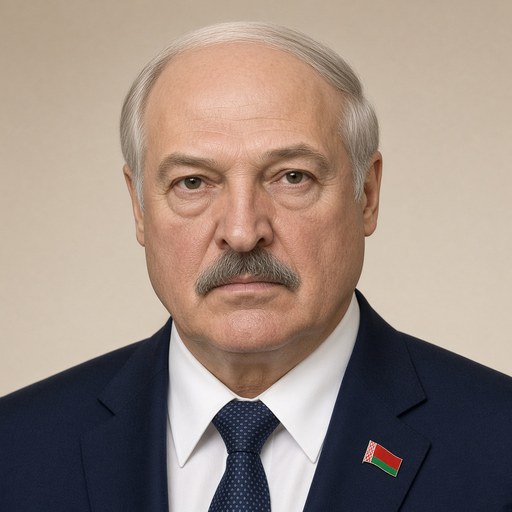
- Lukashenko addressed the Supreme Eurasian Economic Council session in Astana on May 31, 2016, urging deeper EEU integration and elimination of trade barriers.
- Main themes
- Eurasian Economic Union integration, trade barriers and exemptions, internal trade turnover decline, energy market unification, oil and gas common market, industrial cooperation, macroeconomic policy, EEU external relations, common medications market, EEU relationship with EU and China, barrier-free economic environment
- Duration
- ~6 min
- Words
- 662
- Sentences
- 37
- Readability
- 48
- Grade
- 11.0
- Syntax
- 3.09
- Vocabulary
- 2.19
The broad sphere of national life a sentence belongs to. Every sentence has an Arena, so it is the denominator the other indices are read against.
Other37 sentences in 10 paragraphs
“It is essential to eliminate internal exemptions and restrictions in mutual trade. No matter how our union is being developed (initially there was the Customs Union, then the Single Economic Space, and, finally, the Eurasian Economic Union), the number of these exemptions and restrictions has not changed. There are about 600 exemptions and restrictions,” Aleksandr Lukashenko said.
Equal economic conditions for the member states of the EEU and a barrier-free environment have not been created yet. Besides, after the signing of the EEU Treaty the internal trade turnover has been falling. In 2012 and 2013, it made up $65 billion; in 2015, it was just $45 billion. “Perhaps, not all provisions of the treaty meet the current situation in the economy and our expectations,” the Belarusian head of state said.
The initiative to work out a mechanism of the EEU’s operation in terms when a member state applies unilateral measures of protecting the market in relation to third countries has not been implemented.
Aleksandr Lukashenko reminded that the participants of the Eurasian Intergovernmental Council meeting which took place in September 2015 adopted the main guidelines of industrial cooperation. The sides approved of the parameters of concerted measures to support national manufacturers, outlined the milestones of interaction in bolstering manufacturing export. “Now it is needed to step up efforts to fulfill the tasks that we have set,” the Belarusian President emphasized.
Apart from that, the EEU has done the first steps to promote integration in the energy sector. A concept of formation of the common electric energy market has been developed and approved. At the current session in Astana the sides also discussed plans regarding gas, oil and oil products. “However, the way from conceiving the concept to reaching the goal can be very long sometimes. And we are the reason for it. Therefore, the Eurasian Economic Commission needs to step up efforts in this field and take comprehensive measures to implement these projects,” the President of Belarus believes.
The Belarusian leader also said that the plans to create a common market of medications and medical substances have been discussed for a long time. However, we have not made much progress here yet.
Many items on the agenda of the Astana summit are related to determining the Eurasian Economic Union’s position in the global economy. Aleksandr Lukashenko stressed that for the sake of a confident dialogue with external partners the Eurasian Economic Union should set up a highly developed common market of its own. “We should be strong on our own. We should enhance the union by all means. Then it will be easier for us to talk to the European Union, China, and other parties. Then we will be strong and will present a joint stance. There is nothing of that for now. But without it the Eurasian Economic Union will not be able to effectively pursue the domestic policy and the foreign one,” the Belarusian head of state is convinced.
The participants of the session discussed a dozen and a half issues. The heads of state approved of the concept to establish common oil and oil products markets. In accordance with the concept, power generating companies of the member states will get a nondiscriminatory access to the oil infrastructure of partners. They will be able to purchase oil and oil products without quantitative restrictions at the market price (which will be also formed in the process of stock trading) and without export duties. The presidents approved the main guidelines of the macroeconomic policy of the Eurasian Economic Union member states for 2016-2017. The document is an anticrisis one. It specifies the most important short-term and medium-term tasks that the economies of our countries face.
The session also focused on the enhancement of economic relations between the EEU, other countries and key integration associations. These include the European Union, China, Cambodia, Vietnam, and Serbia.
The presidents also discussed other issues connected with the operation of the Eurasian Economic Union and its agencies.