




Haiti — Statement to the General Debate of the 81st Session of the United Nations General Assembly (2026)
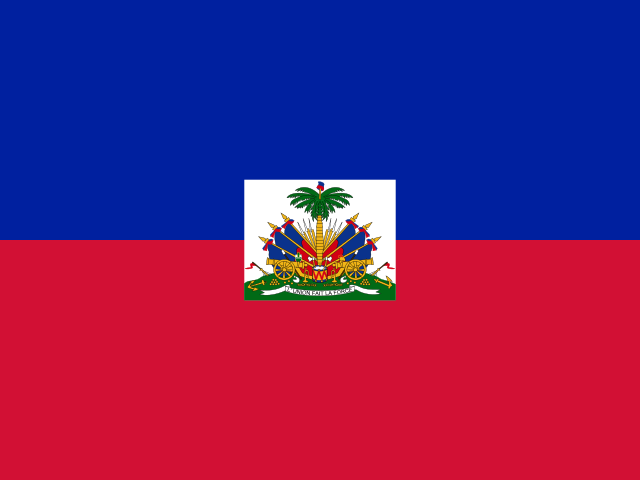 Alix Didier Fils-Aimé · Prime Minister
- Context
- Fils-Aimé addressed the General Debate of the 81st UN General Assembly at United Nations Headquarters in New York on September 25, 2026, appealing for full deployment of the Gang Suppression Force, elections and a shift from aid to investment.
- Main themes
- Haiti's security crisis, Gang Suppression Force deployment, illicit arms and ammunition trafficking, police and army recruitment and training, fight against impunity and judicial reform, elections and end of the transition, shift from aid to investment, HOPE/HELP trade preferences, climate injustice for small states, migrants' dignity and border protection, independence debt and Franco-Haitian historians' commission, Toussaint Louverture and the tree of liberty
- Duration
- ~24 min
- Words
- 2,841
- Sentences
- 188
- Readability
- 46
- Grade
- 10.6
- Syntax
- 2.53
- Vocabulary
- 2.21
UN General Assembly Translated from French Source: gadebate.un.org ↗
The broad sphere of national life a sentence belongs to. Every sentence has an Arena, so it is the denominator the other indices are read against.
Other188 sentences in 124 paragraphs
Mr. President of the General Assembly,
Mr. Secretary-General,
Heads of State and Government,
Ministers,
Permanent Representatives,
Distinguished Delegates,
People of Haiti,
In taking the floor before this General Assembly, I feel the weight of History. More than 80 years ago, in the aftermath of a war that had plunged the world into chaos, Haiti, a founding member of the United Nations, joined with the nations of the world in placing its bet on peace, dialogue and respect for human dignity.
Today, as deadly crises and conflicts multiply, as the climate emergency intensifies, and as new fractures threaten the stability of Haiti and of the world, that founding bet is once again being put to the test.
It is imperative that, in the face of the crises striking Haiti as well as those upending so many regions of the world, nations stand together around what is essential: peace, security, and the well-being of all peoples. That is the whole meaning of the theme that brings us together this year.
Mr. President,
I congratulate you on your election to the presidency of the General Assembly. I also wish to pay tribute to the Secretary-General, Mr. António Guterres, for his constant commitment to peace. I hold a moving memory of his visit to Port-au-Prince on 16 June 2026, a powerful testimony of his solidarity with the Haitian people.
In the difficult hours our country is going through, Haiti wishes to express its gratitude to all the partners and friends who continue to stand by its side.
In this regard, I would like to commend the commitment of the United Nations system, and most particularly that of the Security Council, as well as that of the Organization of American States, CARICOM and the European Union, whose support remains more essential than ever.
I pay special tribute to the brotherly peoples who, by contributing to the Gang Suppression Force and supporting its full deployment, have chosen to share with us the burden of the fight for peace and security.
Haiti will forget neither their solidarity nor their sacrifices.
I also wish to highlight the privileged partnership of the United States of America,
- the decisive support of Canada,
- the valuable assistance of partners such as France, Chile and Mexico in modernizing our national security capabilities,
- as well as the Dominican Republic's openness to dialogue and its advocacy for a lasting resolution of the Haitian crisis. Finally, we express our gratitude to BINUH, to the agencies, funds and programmes present on the ground, and to all our multilateral partners for their constant commitment alongside the Haitian people. Mr. President,
Before this august Assembly, I carry the voice of a people who engraved their name in the annals of History by daring to accomplish the unthinkable: breaking the chains of slavery and giving birth, on a land won through sacrifice, sweat and blood, to the world's first free Black Republic.
This epic is eternal proof that no empire is more powerful than a people's thirst for freedom.
How can we forget the fate and the hidden tears of Toussaint Louverture? Brutally torn from his native land, thrown into the icy solitude of a cell at Fort de Joux, deprivation and humiliation got the better of Toussaint Louverture. But his fight for freedom lived on through Dessalines, Christophe, Pétion, and all the other founding fathers and mothers.
Toussaint Louverture had foretold it:
"In overthrowing me, you have cut down in Saint-Domingue only the trunk of the tree of liberty; it will spring up again from its roots, for they are deep and numerous." The tree has sprung up again.
It has grown.
It has crossed the centuries.
And it will pursue its destiny.
And even if, today, criminal violence threatens its roots and seeks to rob our children of the fruits of this so dearly won freedom, Haiti resists.
Haiti is Standing.
She is standing because peoples born of light never surrender before the forces of chaos.
She is standing because peoples born of sacrifice know the price of freedom, peace and security.
Haiti knows, having learned it in her own flesh, that these conquests are never definitively secured and that, when they are threatened, one must have the courage to defend them.
That is the fight Haiti is waging today. And that is why she calls on the world, not to save her, but to stand by her side while she takes her destiny back into her own hands.
Mr. President,
Today I carry the voice of Haiti, but also that of those peoples whom our world too often asks to bear the weight of crises they did not create. For small States like Haiti, the bill for climate disruption has become unbearable.
It is a profound injustice that those who have historically contributed the least to it are nonetheless among those who pay the heaviest price, often to the detriment of their own development.
The resources devoted to adaptation and resilience must match these challenges. No people should have to choose between responding to emergencies and financing its development. Access to capital, markets and technology must be more equitable. Our international financial architecture must evolve to better respond to the needs and realities of the most vulnerable countries.
Artificial intelligence opens immense possibilities, but without rules or ethical safeguards, it risks deepening divides. Technology must remain an instrument of shared progress, in the service of humanity. We must remain the masters of technology and never its subjects. And no people must be left behind.
We must also keep the promise of a world where no one is condemned to hunger, deprived of care, displaced by war or a victim of exclusion and discrimination. This same demand for dignity must guide the way we look at migration. For behind the statistics and the debates, there are women, children and men who carry with them a story, talents, hopes and, sometimes, the weight of exile.
For generations, Haitian women and men settled abroad have contributed to the societies that welcome them. From this rostrum, I wish to express our gratitude to the countries that open their doors to them and foster their integration. Haiti has been a land of welcome, of refuge and of hope. We are working for it to become so again: a country where one can stay, return, live and build one's future in dignity.
But I also wish to forcefully reaffirm our commitment to respect for the dignity and fundamental rights of all migrants. Whatever their situation, no circumstance could justify their dignity being trampled upon.
Protecting a border and respecting human dignity are not opposed: they must go hand in hand.
A border can and must be protected, without human dignity ever being sacrificed.
The fate of migrants calls us to shared responsibility and lasting responses. For crises that are allowed to drag on fuel displacement and forced migration. Such is the case with the security crisis in Haiti, which has caused the exodus of thousands of Haitians. The response to this crisis, in Haiti, lies in restoring security, stability and economic recovery. The 3 priorities of my government.
Mr. President,
The Republic of Haiti remains deeply attached to multilateralism and to the capacity of nations to join forces when urgency demands it.
At a time when the United Nations must deliver concrete results for all, Haiti can become a model of successful international cooperation, proof of what we can accomplish together, respecting the will of nations and around a vision carried by the country itself.
For, however complex it may be, the Haitian crisis is not insurmountable. We are at a decisive moment. This moment can no longer accommodate half-measures, partially honored commitments or responses too timid in the face of the scale of the threat.
The massacres, the bereaved families, the women who are victims of abominable violence, the children deprived of their innocence and the communities driven from their homes must challenge us. Above all, they must move us to act. I wish here to honor the memory of all the victims of this violence. Their loss imposes on us a duty of justice.
I also pay tribute to the police officers and soldiers, Haitian, Kenyan and nationals of other nations, who fell in the service of Haiti. Through their courage, they have written, with the ink of their blood, a page of our fight for security and peace. Haiti will never forget their sacrifice.
For them, for their families, for these twelve million women, men and children…
Children who ask only to grow up. To dream. To live in peace.
We cannot resign ourselves to seeing the dead and wounded become mere figures in our reports.
We must act. Because in Haiti, today, one more victim is one victim too many.
And Haiti is already acting.
We have made the choice to strengthen the operational capabilities of our national security forces, because Haiti's security must, in the long run, rest on the capabilities of the Haitian State.
We are recruiting. We are training. We are strengthening.
Through the P4000 Programme, we are continuing the training of 4,000 police officers. More than 2,000 have already been trained, and a new cohort is due to graduate from the Police Academy next November.
At the same time, more than 1,500 new soldiers have already been trained, and we are putting in place a programme aimed at training 15,000 new soldiers over the next three years. We have also increased the investment budget of our two security forces.
Our objective is not only to respond to today's crisis. It is to build the capabilities that will allow Haiti tomorrow to ensure its own security, fully and sustainably.
It is regrettable that the Force, called upon to temporarily support these efforts, is not yet fully operational and has still not reached, on the ground, the planned strength of 5,500 members.
That is why, from this rostrum, we insist on the need to renew the mandate of the Gang Suppression Force and for its full deployment, with the personnel, equipment and resources necessary to accomplish its mission.
The experience of the Multinational Security Support Mission must serve as a lesson to us: a mandate is not enough. Personnel are needed. Equipment is needed. Resources are needed. And the determination to see it through to the end is needed.
But there is another security issue that must challenge us collectively: the illicit trafficking of arms and ammunition.
The weapons that kill Haitians, that sow terror in our neighborhoods and cut down innocent lives are not produced in Haiti.
They arrive through transnational criminal networks that fuel insecurity, strengthen the gangs' capacity for action and threaten the stability of our entire region.
As long as this trafficking prospers, violence will find the means to perpetuate itself. Dismantling it is a shared responsibility.
We must therefore go beyond advocacy on behalf of Haiti. The security of the island also depends on effective control of the border.
Mr. President,
Impunity is another face of insecurity. We must fight it with the same determination.
That is why we have established two specialized judicial units to strengthen the fight against impunity, financial crime, mass crimes and sexual violence.
On 1 January 2027, with the entry into force of our new Penal Code and Code of Criminal Procedure, Haiti will take a historic step in the modernization of its justice system.
For it is not enough to arrest those who terrorize the population. They must be tried. Justice must be done.
At the same time, we have reactivated the National Commission for Disarmament, Dismantlement and Reintegration, and launched the Haiti Peace Dividend Fund, which I invite our partners to support.
It is imperative to take away violence's capacity to recruit, by offering our young people credible alternatives and genuine opportunities.
That is where security and development meet and must move forward together. One cannot be lasting without the other.
Mr. President,
Emergency aid has saved lives. Haiti is grateful for it.
But the lasting well-being of a people cannot remain indefinitely dependent on aid and charity.
We cannot ask security alone to bear the weight of peace. Economic recovery must be its other pillar.
That is why we welcome the decision of President Donald Trump's administration to extend the HOPE/HELP trade preferences until 2028. We are deeply grateful for this gesture of friendship, which constitutes an important step for the recovery of our economy, and we call for a ten-year extension.
We also express our gratitude to the United Kingdom for the Developing Countries Trading Scheme (DCTS) and call on more countries to put in place similar mechanisms, capable of transforming market access into trade and investment opportunities.
Haiti needs investment to build its future.
That is why, Today, Haiti calls for a paradigm shift. Moving from aid to investment.
From assistance to production.
From dependence to partnership.
And progressively transforming the resources mobilized to manage the crisis into investments capable of creating lasting jobs and opportunities, particularly for our young people and our women.
For when we no longer hear the sound of weapons, we must hear the sound of peace:
engines starting up again, construction sites resuming, markets coming alive, women starting businesses, young people working, the laughter of children at play, and our streets recovering the rhythm of our music and of life. Those who have had the privilege of knowing Haiti know what country exists behind the images of crisis: a welcoming and hospitable people, a vibrant culture, unique flavors, magnificent beaches and a heritage of exceptional richness.
We must recreate the conditions for the world to come to Haiti, discover it, invest in it, do business in it, stay in it and come back to it.
That too is what the peace we want, that we must, and that we will, build looks like.
Mr. President
Security, for which the international community must remain fully mobilized at our side, must also allow us to honor the second major commitment of the Government I lead: giving the Haitian people back their voice through elections.
I am of that generation which knew dictatorship, which had placed so much hope in democracy after 1987, but which too often saw those hopes collide with political instability and repeated transitions.
It is to break this cycle that I agreed to serve my country with the conviction that:
- this transition must come to an end,
- and it will come to an end …… through a ballot, at the polls!
That is why we have launched the electoral process, in accordance with the National Pact for Stability and the Organization of Elections, the fruit of a broad consensus within the political class.
Today, the necessary resources are mobilized;
registration centers are open;
citizens are registering;
political parties and groups have been approved, and candidates are completing the formalities necessary for their participation in the vote. We want free, credible, inclusive elections with integrity.
The participation of women is encouraged, and young people are called upon to take their full place as voters, candidates and actors in our democracy. In addition, measures have been taken to preserve the integrity of the process. Violence, criminal networks, illicit financing and those who support them must find no path to the ballot box.
For these elections do not concern only the next government. They concern the future of Haiti.
And that future bears, first and foremost, the face of our youth.
Mr. President,
The Haitian crisis is also one of the most painful expressions of the fractures of our time.
This chaos is not an accident of history: it has its roots in centuries of injustice, of which the independence debt remains the heaviest burden.
That is why we welcome the work of the joint Haitian-French commission of historians and await the publication of its report with great attention.
Mr. President,
Yesterday, our ancestors wrested freedom from the darkness of servitude; today, our generation will wrest peace from the shadows of violence.
We will restore security to our communities, a voice to our people and hope to our youth.
The challenges are immense, but our will is greater still.
We proved to the world that freedom was possible; tomorrow we will demonstrate to it that peace is built, is defended and will triumph over fatalism. More than two centuries ago, Haiti told the world that a people could break its chains.
Today, from this rostrum, Haiti tells the world that a people can also break the cycle of violence, of transition and of dependence. Our security will rest durably on our own institutions.
And our development will move from aid to investment, from dependence to partnership, from emergency to prosperity.
The tree of liberty of which Toussaint spoke is still standing. It is now up to our generation to give it the fruits of peace.
It is our responsibility.
It is our duty.
It is our promise to our children.
It is our rendezvous with History.
Long live the Republic of Haiti.
I thank you.
The original French. The tags above are read on the English translation's sentences.
Monsieur le Président de l’Assemblée générale,
Monsieur le Secrétaire général,
Mesdames, Messieurs les chefs d’État et de gouvernement,
Mesdames, Messieurs les Ministres ;
Mesdames, Messieurs les Représentants Permanents,
Distingués Délégués,
Peuple Haïtien,
En prenant la parole à cette Assemblée générale, je mesure le poids de l’Histoire. Il y a plus de 80 ans, au lendemain d’une guerre qui avait plongé le monde dans le chaos, Haïti, membre fondateur des Nations Unies, s’unissait aux nations du monde pour faire le pari de la paix, du dialogue et du respect de la dignité humaine.
Aujourd’hui, alors que les crises et conflits meurtriers se multiplient, que l’urgence climatique s’intensifie, que de nouvelles fractures menacent la stabilité d’Haïti et du monde, ce pari fondateur est de nouveau mis à l’épreuve.
Il est impératif que, face aux crises qui frappent Haïti comme à celles qui bouleversent tant de régions du monde, les nations fassent front commun autour de l’essentiel : la paix, la sécurité, et le bien-être de tous les peuples. C’est tout le sens du thème qui nous rassemble cette année.
Monsieur le Président,
Je vous félicite pour votre élection à la présidence de l’Assemblée générale. Je tiens également à saluer le Secrétaire général, Monsieur António Guterres, pour son engagement constant en faveur de la paix. Je garde un souvenir ému de sa visite à Port-au-Prince, le 16 juin 2026, un témoignage fort de sa solidarité envers le peuple haïtien.
Dans les heures difficiles que traverse notre pays, Haïti tient à exprimer sa reconnaissance à tous les partenaires et amis qui continuent de se tenir à ses côtés.
Je voudrais, à cet égard, saluer l’engagement du système des Nations Unies, et tout particulièrement celui du Conseil de sécurité, ainsi que celui de l’Organisation des États américains, de la CARICOM et de l’Union européenne, dont le soutien demeure plus que jamais essentiel.
Je rends un hommage particulier aux peuples frères qui, en contribuant à la Force de Répression des Gangs et en soutenant son plein déploiement, ont choisi de partager avec nous le poids du combat pour la paix et la sécurité.
Haïti n’oubliera ni leur solidarité ni leurs sacrifices.
Je veux également souligner le partenariat privilégié des États-Unis d’Amérique,
- l’appui déterminant du Canada,
- le précieux accompagnement de partenaires tels que la France, le Chili et le Mexique dans la modernisation de nos capacités nationales de sécurité,
- de même que l’ouverture de la République dominicaine au dialogue et son plaidoyer en faveur d’une résolution durable de la crise haïtienne. Enfin, nous exprimons notre reconnaissance au BINUH, aux agences, fonds et programmes présents sur le terrain, ainsi qu’à l’ensemble de nos partenaires multilatéraux pour leur engagement constant aux côtés du peuple haïtien. Monsieur le Président,
Devant cette auguste Assemblée, je porte la voix d’un peuple qui a gravé son nom dans les annales de l’Histoire en osant accomplir l’impensable : briser les chaînes de l’esclavage et faire naître, sur une terre conquise par le sacrifice, la sueur et le sang, la première République noire libre du monde.
Cette épopée est la preuve éternelle qu’aucun empire n’est plus puissant que la soif de liberté d’un peuple.
Comment oublier le destin et les larmes cachées de Toussaint Louverture ? Arraché brutalement à sa terre natale, jeté dans la solitude glaciale d'un cachot au Fort de Joux, la privation et l’humiliation ont eu raison de Toussaint Louverture. Mais son combat pour la liberté est resté vivant à travers Dessalines, Christophe, Pétion, et tous les autres pères et mères fondateurs.
Toussaint Louverture l’avait prédit :
« En me renversant, on n’a abattu à Saint-Domingue que le tronc de l’arbre de la liberté ; il repoussera par ses racines, car elles sont profondes et nombreuses » L’arbre a repoussé.
Il a grandi.
Il a traversé les siècles.
Et il poursuivra son destin.
Et même si, aujourd’hui, la violence criminelle menace ses racines et cherche à dérober à nos enfants les fruits de cette liberté si chèrement conquise, Haïti résiste.
Haiti est Debout.
Elle est debout parce que les peuples nés de la lumière n’abdiquent jamais devant les forces du chaos.
Elle est debout parce que les peuples nés du sacrifice savent le prix de la liberté, de la paix et de la sécurité.
Haïti sait, pour l’avoir appris dans sa propre chair, que ces conquêtes ne sont jamais définitivement acquises et que, lorsqu’elles sont menacées, il faut avoir le courage de les défendre.
C’est le combat qu’Haïti mène aujourd’hui. Et c’est pourquoi elle appelle le monde, non pas à la sauver, mais à se tenir à ses côtés pendant qu’elle reprend en main son destin.
Monsieur le Président,
Je porte aujourd’hui la voix d’Haïti, mais aussi celle de ces peuples auxquels notre monde demande trop souvent de supporter le poids de crises qu’ils n’ont pas créées. Pour les petits États comme Haïti, la facture du dérèglement climatique est devenue insoutenable.
C’est une injustice profonde que ceux qui y ont historiquement le moins contribué soient pourtant parmi ceux qui en paient le prix le plus lourd, souvent au détriment de leur propre développement.
Les moyens consacrés à l’adaptation et à la résilience doivent être à la hauteur de ces défis. Aucun peuple ne devrait avoir à choisir entre répondre à l’urgence et financer son développement. L’accès au capital, aux marchés et aux technologies doit être plus équitable. Notre architecture financière internationale doit évoluer pour mieux répondre aux besoins et aux réalités des pays les plus vulnérables.
L’intelligence artificielle ouvre des possibilités immenses, mais sans règles ni garde-fous éthiques, elle risque d’accentuer les fractures. La technologie doit demeurer un instrument de progrès partagé, au service de l’humanité. Nous devons rester les maîtres de la technologie et jamais les sujets. Et aucun peuple ne doit être laissé de côté.
Nous devons aussi tenir la promesse d’un monde où nul n’est condamné à la faim, privé de soins, déplacé par la guerre ou victime d’exclusion et de discriminations. Cette même exigence de dignité doit guider notre regard sur les migrations. Car, derrière les statistiques et les débats, il y a des femmes, des enfants et des hommes qui portent avec eux une histoire, des talents, des espérances et, parfois, le poids de l’exil.
Depuis des générations, les Haïtiennes et les Haïtiens établis à l’étranger contribuent aux sociétés qui les accueillent. À cette tribune, je tiens à exprimer notre gratitude aux pays qui leur ouvrent leurs portes et favorisent leur intégration. Haïti a été une terre d’accueil, de refuge et d’espérance. Nous travaillons pour qu’elle le redevienne : un pays où l’on puisse rester, revenir, vivre et construire son avenir dans la dignité.
Mais je veux aussi rappeler avec force notre attachement au respect de la dignité et des droits fondamentaux de tous les migrants. Quelle que soit leur situation, aucune circonstance ne saurait justifier que leur dignité soit bafouée.
La protection d’une frontière et le respect de la dignité humaine ne s’opposent pas : ils doivent aller de pair.
Une frontière peut et doit être protégée, sans jamais que la dignité humaine ne soit sacrifiée.
Le destin des migrants nous appelle à une responsabilité partagée et à des réponses durables. Car les crises que l’on laisse durer nourrissent les déplacements et les migrations contraintes. C’est le cas avec la crise sécuritaire en Haïti qui a provoqué l’exode de milliers d’Haïtiens. La réponse à cette crise passe, en Haïti, par le rétablissement de la sécurité, la stabilité et la relance économique. Les 3 priorités de mon gouvernement.
Monsieur le Président,
La République d’Haïti demeure profondément attachée au multilatéralisme et à la capacité des nations à unir leurs forces lorsque l’urgence l’exige.
À un moment où les Nations Unies doivent produire des résultats concrets pour tous, Haïti peut devenir un modèle de réussite de la coopération internationale, la preuve de ce que nous pouvons accomplir ensemble, dans le respect de la volonté des nations et autour d’une vision portée par le pays lui-même.
Car, aussi complexe soit-elle, la crise haïtienne n’est pas insurmontable. Nous sommes à un moment décisif. Ce moment ne peut plus s’accommoder de demi-mesures, d’engagements partiellement honorés ou de réponses trop timides face à l’ampleur de la menace.
Les massacres, les familles endeuillées, les femmes victimes de violences abominables, les enfants privés de leur innocence et les communautés chassées de leurs foyers doivent nous interpeller. Ils doivent surtout nous porter à agir. Je veux ici saluer la mémoire de toutes les victimes de cette violence. Leur perte nous impose un devoir de justice.
Je rends aussi hommage aux policiers et aux soldats, haïtiens, kényans et aux ressortissants des autres nations tombés au service d’Haïti. Par leur courage, ils ont écrit, avec l’encre de leur sang, une page de notre combat pour la sécurité et la paix. Haïti n’oubliera jamais leur sacrifice.
Pour eux, pour leurs familles, pour ces douze millions de femmes, d’hommes et d’enfants…
Des enfants qui ne demandent qu’à grandir. À rêver. À vivre en paix.
Nous ne pouvons nous résigner à voir les morts et les blessés devenir de simples chiffres dans nos rapports.
Nous devons agir. Parce qu’en Haïti, aujourd’hui, une victime de plus est une victime de trop.
Et Haïti agit déjà.
Nous avons fait le choix de renforcer les capacités opérationnelles de nos forces nationales de sécurité, car la sécurité d’Haïti doit, à terme, reposer sur les capacités de l’État haïtien.
Nous recrutons. Nous formons. Nous renforçons.
À travers le Programme P4000, nous poursuivons la formation de 4 000 policiers. Plus de 2 000 ont déjà été formés, et une nouvelle cohorte doit sortir de l’Académie de police en novembre prochain.
Parallèlement, plus de 1 500 nouveaux soldats ont déjà été formés, et nous mettons en place un programme visant à former 15 000 nouveaux soldats au cours des trois prochaines années. Nous avons également augmenté le budget d’investissement de nos deux forces de sécurité.
Notre objectif n’est pas seulement de répondre à la crise d’aujourd’hui. Il est de construire les capacités qui permettront demain à Haïti d’assurer elle-même, pleinement et durablement, sa sécurité.
Il est regrettable que la Force, appelée à soutenir temporairement ces efforts, ne soit pas encore pleinement opérationnelle et n’ait toujours pas atteint, sur le terrain, l’effectif prévu de 5 500 membres.
C’est pourquoi, à cette tribune, nous insistons sur la nécessité du renouvellement du mandat de la Force de Répression des Gangs et de son plein déploiement, avec les effectifs, les équipements et les moyens nécessaires à l’accomplissement de sa mission.
L’expérience de la Mission multinationale d’appui à la sécurité doit nous servir de leçon : un mandat ne suffit pas. Il faut les effectifs. Il faut les équipements. Il faut les moyens. Et il faut la détermination d’aller jusqu’au bout.
Mais il est un autre enjeu sécuritaire qui doit nous interpeller collectivement : le trafic illicite d’armes et de munitions.
Les armes qui tuent les Haïtiens, qui sèment la terreur dans nos quartiers et fauchent des vies innocentes ne sont pas produites en Haïti.
Elles arrivent par des filières criminelles transnationales qui alimentent l’insécurité, renforcent la capacité d’action des gangs et menacent la stabilité de toute notre région.
Tant que ces trafics prospéreront, la violence trouvera les moyens de se perpétuer. Leur démantèlement est une responsabilité partagée.
Il faut donc aller au-delà des plaidoyers en faveur d’Haïti. La sécurité de l’île passe aussi par le contrôle effectif de la frontière.
Monsieur le Président,
L’impunité est un autre visage de l’insécurité. Nous devons la combattre avec la même détermination.
C’est pourquoi nous avons institué deux pôles judiciaires spécialisés pour renforcer la lutte contre l’impunité, la criminalité financière, les crimes de masse et les violences sexuelles.
Le 1er janvier 2027, avec l’entrée en vigueur de nos nouveaux Codes pénal et de procédure pénale, Haïti franchira une étape historique dans la modernisation de sa justice.
Car il ne suffit pas d’arrêter ceux qui terrorisent la population. Il faut les juger. Il faut que justice soit rendue.
Dans le même temps, nous avons réactivé la Commission nationale de désarmement, de démantèlement et de réinsertion, et lancé le Fonds pour les dividendes de la paix en Haïti, que j’invite nos partenaires à soutenir.
Il est impératif d’enlever à la violence sa capacité de recruter, en offrant à nos jeunes des alternatives crédibles et de véritables opportunités.
C’est là que sécurité et développement se rejoignent et doivent avancer de concert. L’un ne peut être durable sans l’autre.
Monsieur le Président,
L’aide d’urgence a sauvé des vies. Haïti en est reconnaissante.
Mais le bien-être durable d’un peuple ne peut rester indéfiniment suspendu à l’aide et à la charité.
Nous ne pouvons pas demander à la sécurité seule de porter le poids de la paix. La relance économique doit en être l’autre pilier.
C’est pourquoi nous accueillons favorablement la décision de l’administration du Président Donald Trump de prolonger jusqu’en 2028 les préférences commerciales HOPE/HELP. Nous sommes profondément reconnaissants de ce geste d’amitié, qui constitue une étape importante pour la relance de notre économie, et nous appelons à une prolongation de dix ans.
Nous exprimons également notre reconnaissance envers le Royaume-Uni pour le Developing Countries Trading Scheme (DCTS) et appelons davantage de pays à mettre en place des mécanismes similaires, capables de transformer l’accès aux marchés en opportunités de commerce et d’investissement.
Haïti a besoin d’investissement pour construire son avenir.
C’est pourquoi, Aujourd’hui, Haïti appelle à un changement de paradigme Passer de l’aide à l’investissement.
De l’assistance à la production.
De la dépendance au partenariat.
Et transformer progressivement les ressources mobilisées pour gérer la crise en investissements capables de créer des emplois et des opportunités durables, notamment pour nos jeunes et nos femmes.
Car lorsque nous n’entendrons plus le bruit des armes, il faudra entendre le son de la paix :
les moteurs qui redémarrent, les chantiers qui reprennent, les marchés qui s’animent, les femmes qui entreprennent, les jeunes qui travaillent, les rires des enfants qui jouent, et nos rues qui retrouvent le rythme de notre musique et de la vie. Ceux qui ont eu le privilège de connaître Haïti savent quel pays existe derrière les images de crise : un peuple accueillant et hospitalier, une culture vibrante, des saveurs uniques, des plages magnifiques et un patrimoine d’une richesse exceptionnelle.
Nous devons recréer les conditions pour que le monde vienne en Haïti, la découvre, y investisse, y entreprenne, y séjourne et y revienne.
Voilà aussi à quoi ressemble la paix que nous voulons, que devons, et que nous allons, construire.
Monsieur le Président
La sécurité, pour laquelle la communauté internationale doit rester pleinement mobilisée à nos côtés, doit aussi nous permettre d’honorer le deuxième engagement majeur du Gouvernement que je dirige : rendre la parole au peuple haïtien par les élections.
Je suis de cette génération qui a connu la dictature, qui avait placé tant d’espoirs dans la démocratie d’après 1987, mais qui a trop souvent vu ces espoirs se heurter à l’instabilité politique et aux transitions à répétition.
C’est pour rompre ce cycle que j’ai accepté de servir mon pays avec la conviction que :
- cette transition doit prendre fin,
- et elle prendra fin …… par un bulletin de vote, dans les urnes !
C’est pourquoi, nous avons engagé le processus électoral, dans le respect du Pacte national pour la stabilité et l’organisation des élections, fruit d’un large consensus au sein de la classe politique.
Aujourd’hui, les ressources nécessaires sont mobilisées ;
les centres d’inscription sont ouverts ;
les citoyennes et les citoyens s’inscrivent ;
les partis et groupements politiques ont été agréés, et les candidates et candidats accomplissent les formalités nécessaires à leur participation au scrutin. Nous voulons des élections libres, crédibles, inclusives et intègres.
La participation des femmes est encouragée, et les jeunes sont appelés à y prendre pleinement leur place comme électeurs, candidats et acteurs de notre démocratie. En outre, des dispositions ont été prises pour préserver l’intégrité du processus. La violence, les réseaux criminels, les financements illicites et ceux qui les soutiennent ne doivent trouver aucune voie d’accès aux urnes.
Car ces élections ne concernent pas seulement le prochain gouvernement. Elles concernent l’avenir d’Haïti.
Et cet avenir porte d’abord le visage de notre jeunesse.
Monsieur le Président,
La crise haïtienne est aussi l’une des expressions les plus douloureuses des fractures de notre époque.
Ce chaos n’est pas un accident de l’histoire : il plonge ses racines dans des siècles d’injustices, dont la dette de l’indépendance demeure le fardeau le plus lourd.
C’est pourquoi nous saluons les travaux de la commission mixte d’historiens haïtiano-française et attendons avec une grande attention la publication de son rapport.
Monsieur le Président,
Hier, nos ancêtres ont arraché la liberté aux ténèbres de la servitude ; aujourd’hui, notre génération arrachera la paix aux ombres de la violence.
Nous rendrons la sécurité à nos communautés, la parole à notre peuple et l’espoir à notre jeunesse.
Les défis sont immenses, mais notre volonté est plus grande encore.
Nous avons prouvé au monde que la liberté était possible ; nous lui démontrerons demain que la paix se construit, se défend et triomphera de la fatalité. Il y a plus de deux siècles, Haïti a dit au monde qu’un peuple pouvait briser ses chaînes.
Aujourd’hui, du haut de cette tribune, Haïti dit au monde qu’un peuple peut aussi briser le cycle de la violence, de la transition et de la dépendance. Notre sécurité reposera durablement sur nos propres institutions.
Et notre développement passera de l’aide à l’investissement, de la dépendance au partenariat, de l’urgence à la prospérité.
L’arbre de la liberté dont parlait Toussaint est toujours debout. À notre génération, désormais, de lui donner les fruits de la paix.
C’est notre responsabilité.
C’est notre devoir.
C’est notre promesse à nos enfants.
C’est notre rendez-vous avec l’Histoire.
Vive la République d’Haïti.
Je vous remercie.