




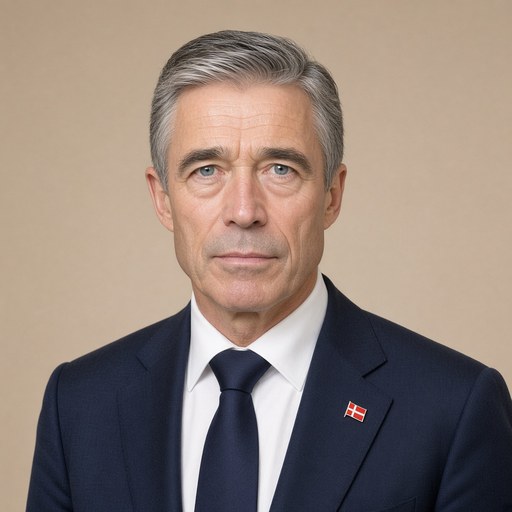
Prime Minister Anders Fogh Rasmussen's Constitutional Speech 2008 - Skamlingsbanken and Ejer Bavnehøj
 Anders Fogh Rasmussen · Prime Minister of Denmark
- Context
- Rasmussen delivered a constitutional speech on Denmark's Constitution Day 2008 at Skamlingsbanken and Ejer Bavnehøj, marking the 100th anniversary of women's voting rights.
- Main themes
- Danish constitution and democracy, women's suffrage centenary, the Enlightenment and liberal values, freedom of expression and human rights, liberal political tradition, terrorism and threats to free societies, separation of church and state, equality between women and men, Danish democratic heritage, rule of law
- Duration
- ~29 min
- Words
- 3,463
- Sentences
- 239
- Readability
- 48
- Grade
- 10.0
- Syntax
- 2.52
- Vocabulary
- 2.18
Translated from Danish
The broad sphere of national life a sentence belongs to. Every sentence has an Arena, so it is the denominator the other indices are read against.
Other239 sentences in 110 paragraphs
Denmark, as is well known, received its free constitution on June 5, 1849. The Constitution of 1849 was part of a larger European development. The great liberal revolutions turned Europe upside down at that time. Absolute monarchy had to give way to the citizens' rights to freedom.
But popular government did not find its final form right away. And the rights to freedom were not a given for everyone from the very beginning. Among other things, the right to vote in the first many years after 1849 was reserved for men.
For liberals, it is a fundamental value that everyone should have equal opportunities.
That everyone should have a chance to create a good life for themselves.
That the individual person's abilities and talents are more important than class and position.
Therefore, it is not surprising that it was a liberal who became one of the front-line fighters in the struggle for women's equal rights and participation.
The liberal Frederik Bajer, together with his wife Mathilde Bajer, founded the organization Danish Women's Society in 1871. Frederik Bajer was elected to the Folketing in 1872 and fought for many years as an elected representative for women's rights.
In 1886, Frederik Bajer proposed for the first time the right to vote for women in the then municipal councils. The proposal was met with loud laughter and shouts, so order had to be called in the Folketing.
Since then, Frederik Bajer presented one bill after another regarding women's access to vote in the municipal councils, even though he was constantly subjected to mockery and scorn from the ruling Right politicians.
Count Christian Rosenkrantz Scheel gave Frederik Bajer's proposal these words in 1887: "Giving women municipal voting rights will only be the first step towards leading her onto a slippery slope. It will end with her entering the national political campaign and becoming eligible for the Folketing, and I do not believe that any of us men, who truly respect women, could wish for her to be included."
That speaks for itself.
Therefore, it was a historic event when women finally gained the right to vote and stand for election in municipal elections in 1908.
This year, we can mark the 100th anniversary of women's voting rights and their entry into political life.
With the constitutional amendment in 1915, women finally gained the right to vote and stand for election to the Folketing and Landsting. Women took their rightful place in popular government.
The Danish popular government has continued its development and renewal. And now Denmark has been crowned the world champion in democracy.
According to the World Bank, Denmark ranks at the very top internationally measured by, among other things, freedom of expression, freedom of assembly, and the presence of free and independent media.
We can be proud of that.
* * *
Denmark's constitution from 1849 was a product of the European Enlightenment. The Enlightenment was a period in the 18th century marked by strong upheavals. Natural science, enlightenment, and philosophy gained ground and provided different explanations of nature and society than those upheld by the church. The church and religion lost credibility and ground.
Knowledge and reason were placed above religion and outdated folk beliefs. Central to the Enlightenment was the belief in human abilities, the belief that enlightened people can make rational choices for the good of society.
The bourgeoisie was on the rise and demanded a share in power. Thus, the Enlightenment culminated in demands for the abolition of absolute monarchy, freedom, popular government, human rights, and a drastic reduction of the church's power over social life.
The Enlightenment has shaped Europe for better and for worse. One of the more brutal consequences was the bloody French Revolution. But it is largely thanks to the Enlightenment that Europe developed an economic and technological leadership position in the world over the following centuries.
Because liberation from religious dogmas and outdated folk beliefs created space for bold new thinking. Because enlightenment and science gave birth to new knowledge and buried outdated notions. Because the belief in the independent, mature, and free individual replaced the oppressed individual, who was under the guardianship of oppressive authorities and traditions.
Through winding paths, the Enlightenment led to the Europe we know - with personal freedoms, including freedom of expression, private property rights, and equality between women and men, popular government, rule of law, separation of powers, and limitation of the church's and religion's power in society.
But freedom and fundamental values are under pressure in these years. The terrorist attacks on the USA on September 11, 2001, were attacks by religious fanatics on the culture and way of life that characterize our free societies.
The terrorist attack on the Danish embassy in Pakistan is the latest in a series of senseless attacks with horrific consequences for innocent victims.
In many countries - including in Europe - people have been killed or threatened for exercising their right and freedom to express themselves on religious issues in the form of books, films, and drawings.
They have stood firm on the principles and values that are the foundation of our free societies: Political freedom, equality for all, popular government, free press, freedom of expression, critical thinking, and a critical approach to information, ideas, and beliefs.
It is these common values that we must fight for. We must unite with all like-minded individuals in defense of freedom rights. We must speak with one voice with greater strength in the fight for freedom and peace in the world. We must stand firm together in the fight against terror.
Here, Europe has a significant role to play.
* * *
Recently, a very broad majority in the Folketing said yes to the EU's new treaty, the Lisbon Treaty. We did this because the treaty provides a new and better framework for cooperation among EU countries.
It will be easier and more efficient to make decisions in the EU. There will be more democracy and transparency in the EU. We improve the EU's ability to speak with one voice on the international stage. Thus, we Europeans will gain more influence in the world.
And above all, we will have a better opportunity to solve the major challenges that we can only solve together.
Combating international terrorism. Combating organized crime, human trafficking, and drug trafficking across borders. Combating illegal immigration.
Preventing man-made climate change. And improving the environment.
Strengthening Europe's competitiveness and ability to create new jobs.
The EU has been the driving force in reuniting the Europe that was divided after World War II. And the EU is today the crucial framework for cooperation among European countries.
So far, 27 countries are part of the cooperation. More are knocking on the door to join. And the new members are determined to join the cooperation as strongly as possible.
The new Lisbon Treaty creates a stable framework for EU cooperation for a long time to come.
But at the same time, the treaty means that the Danish exceptions will increasingly hinder Denmark's influence and interests. The Danish exceptions are preserved unchanged in the Lisbon Treaty. But the impact of the Danish exceptions will be greater in the new treaty than they are today.
It will increasingly be a problem that Denmark has had exceptions from EU cooperation since 1993. That we are not fully and completely part of the EU.
It is thought-provoking that three new member countries are now more strongly involved in the cooperation than Denmark. These are Slovenia, Cyprus, and Malta, all of which are part of the common currency. They have only been in the EU for four years. They are smaller countries than Denmark. But they have a more central location.
It is beyond doubt that Denmark must join the euro to be at the heart of Europe.
It is not so much about the economy. Economically, Denmark is doing quite well outside the euro. We have a strong economy and meet all the conditions to be part of the euro.
When things are going so well, it is partly because we conduct economic policy as if we were in the euro. But we have no influence on the policies that are decided in the eurozone, which we then follow.
It is a poor representation of Danish interests.
There is a need for stronger cooperation to resolve crises and conflicts - both within and outside Europe. In recent years, EU countries have strengthened cooperation on military operations to create and secure peace in Europe and Africa. And in the coming years, this cooperation will be further strengthened.
As a result of the exception, Denmark has not been able to participate in ensuring peace in Macedonia and Bosnia. We could not help ensure the stability in Congo that made it possible to hold elections. And we cannot protect refugees from Sudan seeking shelter in neighboring Chad.
The majority of operations have been initiated at the request of the UN. The EU treaty places great emphasis on the EU's cooperation with the UN. Denmark can call on the EU to make an effort in the UN, but then we are prevented from participating in the EU due to the exception. And we have no influence on which tasks the EU should undertake.
Denmark is a strong advocate for closer cooperation between the EU and NATO. But due to the exception, we have limited influence in strengthening that cooperation.
A concrete example of the practical difficulties regarding NATO cooperation can be seen in Bosnia and Kosovo. The EU has a force in Bosnia. NATO has a force in Kosovo. The two forces have promised each other mutual assistance in case of difficulties. But Denmark has had to inform that Danish personnel in Kosovo cannot assist the EU force in Bosnia because Danish forces would then come under EU command.
It can be stated very clearly: The Danish exception from the EU's defense cooperation is out of step with the present. And it is utterly foolish that Denmark is excluded from participating in peacekeeping operations that the EU is responsible for and that the UN has requested.
Defense cooperation in the EU will be further strengthened in the coming years. Among other things, France has sent very positive signals about a parallel strengthening of cooperation in the EU and NATO. This is entirely in line with Danish policy. The EU and NATO are partners and should strengthen cooperation.
Defense cooperation in the EU takes place in such a way that each individual country decides for itself whether it wants to participate in a military operation. But today, Denmark is automatically excluded.
If we were to lift the exception, then the government and the Folketing could decide from case to case whether Denmark should contribute personnel or equipment to work for peace and democracy in the world.
Therefore, it is the government's clear view that we should remove the exception from the EU's defense and security policy cooperation.
The new Lisbon Treaty means that the EU can strengthen the fight against terrorism, human trafficking, and other cross-border crime in the coming years. These are issues that also top the list of areas that Danes want the EU to cooperate more on.
So far, Denmark has been able to participate in quite a bit of legal cooperation. But with the Lisbon Treaty, that will change significantly. We will increasingly slide out of cooperation on criminal law and police matters. This will happen as early as January 1, 2009, if the Lisbon Treaty comes into force as expected.
Terror and organized crime, such as human trafficking and child pornography, know no borders. When Danish police officers need to solve cases of child pornography, they need effective cooperation with police in other countries. It is detrimental that Denmark cannot be at the forefront in the fight against serious international crime.
Denmark has received a special agreement with the other EU countries, which means that we can choose which parts of legal cooperation we want to be part of in the future.
In practice, this means that we can choose to be fully involved in the cooperation to combat terrorism, human trafficking, and child pornography. We can also participate in cooperation on tightened border control. And combating illegal immigration. At the same time, we can choose to stay out of the common rules on, for example, family reunification.
In other words: We can be fully involved in legal cooperation to combat terror and crime while continuing a firm and fair immigration policy.
In other words, we have received an opt-in arrangement. A very favorable opt-in arrangement. This opt-in arrangement can be implemented if the population votes yes in a referendum.
A removal of the Danish exceptions will require a referendum. Now we must consider over the summer when and how we best approach this matter. The crucial thing will be to give the population a fair chance to take a stance on the exceptions.
Both Denmark, Europe, and the world have changed a lot since we introduced the exceptions 15 years ago. Time has passed the exceptions by. They harm Denmark.
So, in Denmark's interest, we should be fully and completely involved in EU cooperation.
* * *
Denmark is one of the freest countries in the world. And recently, the magazine "The Economist" named us the second most peaceful country in the world. The most peaceful is Iceland.
The British philosopher Thomas Hobbes concluded three centuries ago that we must choose between being a peaceful or a free society. We cannot have both.
How is it then possible that Denmark is both one of the world's freest and one of the world's most peaceful countries?
The answer is that we have developed a community that unites us as a people. A cohesion that, like an invisible bond, binds us together as Danes across differences in opinions and ways of life.
Recently, there has been a lively debate about whether Denmark is a multicultural society. It is a debate worth taking seriously. For it concerns where Denmark should move towards.
But it is also a debate marked by significant ambiguity about what the term "multicultural" entails.
On the one hand, it is quite obvious that Denmark is a society with a diversity of opinions, beliefs, and cultures. And if the word "multicultural" merely covers this factual reality, then it is a self-evident truth that everyone should acknowledge.
But there are circles that use the word "multicultural" or "multicultural" in a more far-reaching sense. For them, a multicultural society is an ideological concept. A perception of society that is based on Denmark being a society of diverse parallel cultures. A notion of a society where different cultural communities live their separate lives side by side.
Such a society would threaten the cohesion in Denmark. It would become a fragmented society. A Denmark of parallel societies. A Denmark of separate subcultures. Multicultural, yes. But a multicultural ghetto-Denmark.
We need a Denmark with freedom for diversity. But not a society with an exemption from duty and responsibility towards the common good.
Freedom must go hand in hand with a community that holds us together as a people and a nation.
My proposal for such a common denominator is language, history, and a shared view of some fundamental principles for the organization of society.
The Danish language as a binding agent in Denmark is self-evident.
History means far more than we realize. All our victories and defeats over time contribute to shaping our self-perception as Danes.
The historical event that has probably influenced Denmark the most is the Reformation. For the Reformation, so to speak, put the church and religion in their place in society.
On a human level, it ended the buying of indulgences and good deeds as the path to eternal salvation. And on a societal level, it laid the groundwork for the crucial distinction between politics and religion.
It greatly contributes to cohesion that there is a broad attitude among the Danish population that religion is a private matter. That religion is subordinate to the laws and rules of society. And that religion can and should withstand critical debate - like all other matters in society.
For the far-reaching freedom of expression is another of the cornerstones upon which the community in Denmark is built. A valuable common trait in the Danish attitude towards society is the desire and willingness to subject all authorities, all established truths, and all ingrained habits and notions to critical debate. This anti-authoritarian attitude has greatly contributed to progress and development.
The popular community around folk high schools, the cooperative movement, and the labor movement has also influenced our view of education, enlightenment, community life, and democracy. And they have founded the broad perception that there should not be too great a divide between people. Perhaps most succinctly expressed in Grundtvig's verses: "And then you have wealth, we have come far, when few have too much, and fewer have too little."
In this way, we have secured a society with strong cohesion. Where there are no great social tensions.
And finally, it is a firm attitude in Denmark that all people have equal worth, and that women and men therefore should have equal opportunities and rights.
The distinction between politics and religion. A far-reaching freedom of expression. Equality between women and men. And the absence of great social divides. These are some of the common principles that unite the Danish people across other differences in opinion.
Denmark is today the society in the world where we have the most trust in each other. And where there is the most trust in the institutions of society. Mutual trust is an important factor for community in a society. And trust is built on the fact that we know each other and the fundamental attitudes that influence our behavior.
Such a community is important. For it creates a strong society. A society with strong cohesion.
And we must make an effort to ensure that the immigrants who come to Denmark become part of that community. Learn to speak the language, learn about the history and culture, learn the fundamental principles upon which Danish democracy is built, get jobs, become participants in sports clubs, community life, and other activities that promote mutual understanding and shape peaceful coexistence in Danish society.
But it also requires that we ourselves are aware of the common values. That we are proud of them. That we dare to stand by them.
If we fall into a culturally relativistic mindset, where all values and opinions are equally valid, they also become irrelevant. And then we cannot expect that the new Danes will be inspired by what we stand for.
That is why we say no to a multicultural ghetto society.
That is why we say yes to a society with multiple cultures that meet and create the community that binds us together as a people.
* * *
Based on a strong awareness of being Danish, of the Danish language, history, and culture, we can meet the world with openness and vision.
We may be ourselves. But we must never be ourselves enough.
And we Danes are precisely open, outgoing, and liberal-minded.
A study of Europeans' attitudes towards globalization shows that we Danes are clearly number one in Europe in terms of the proportion of the population that is positive about globalization.
We do not fear globalization. We benefit from it.
And when looking at the developments in recent years, Danes have become significantly more enthusiastic about globalization.
Also regarding the EU, we Danes are among the most positive in Europe.
The vast majority of Danes believe that we have benefited from our EU membership. We are happy for the freedoms and opportunities that the EU helps to secure for us. We are happy for our community with other European countries. And we actively take advantage of the opportunities to travel, study, and work all over Europe.
In a globalized world, we need a strong community among the countries of Europe. To defend our ideals of freedom, which are under increasing pressure. To promote our interests in the world. And to address the major challenges in the fight against terrorism, organized crime, and illegal immigration. In the fight for better climate, environment, and consumer protection. And in the effort to ensure continued employment, prosperity, and welfare in Europe.
We Danes must influence the development in Europe as strongly as possible. Safeguard our interests as strongly as possible. Set an agenda as strongly as possible.
We have much to offer Europe. And we must stand together to protect, strengthen, and develop our common values.
We must be fully and completely involved in the EU. We must be at the heart of Europe. That is where we belong.
The original Danish. The tags above are read on the English translation's sentences.
Danmark fik som bekendt sin frie forfatning den 5. juni 1849. Grundloven af 1849 var en del af en større europæisk udvikling. De store liberale revolutioner vendte op og ned på datidens Europa. Enevælden måtte vige for borgernes frihedsrettigheder.
Men folkestyret fandt ikke sin endelige form lige med det samme. Og frihedsrettighederne var ikke en selvfølge for alle lige fra begyndelsen. Blandt andet var valgretten i de første mange år efter 1849 forbeholdt mænd.
For liberale er det en grundlæggende værdi, at alle skal have lige muligheder.
At alle skal have en chance for at skabe sig et godt liv.
At det enkelte menneskes evner og talent er vigtigere end stand og position.
Derfor er det heller ikke overraskende, at det var en liberal, der blev én af frontkæmperne i kampen for kvindernes ligeret og medbestemmelse.
Venstremanden Frederik Bajer stiftede sammen med hustruen Mathilde Bajer organisationen Dansk Kvindesamfund i 1871. Frederik Bajer blev valgt til Folketinget i 1872 og kæmpede de næste mange år som folkevalgt for kvindernes rettigheder.
I 1886 fremsatte Frederik Bajer for første gang forslag om valgret til kvinder til de daværende kommunalråd. Forslaget blev modtaget med høj latter og tilråb, så der måtte kaldes til orden i Folketinget.
Siden fremsatte Frederik Bajer det ene lovforslag efter det andet om kvinders adgang til at stemme til kommunalrådene. Selvom han hele tiden blev udsat for hån og spot fra de herskende Højre politikere.
Greve Christian Rosenkrantz Scheel gav i 1887 Frederik Bajers forslag disse ord med på vejen: 'Det at give kvinden kommunal valgret vil kun være det første skridt til at føre hende ind på en glidebane. Det vil ende med, at hun kommer ind i den landspolitiske valgkamp og bliver valgbar til Folketinget, og det tror jeg ikke, nogen af os mænd, som har virkelig respekt for kvinden, kunne ønske, at hun kommer med til.'
Det taler vist for sig selv.
Derfor var det en historisk begivenhed, da kvinderne langt om længe fik stemme- og valgret til kommunalvalg i 1908.
Det er altså i år, at vi kan markere 100 året for kvinders valgret og for kvindernes indtog i det politiske liv.
Med grundlovsændringen i 1915 fik kvinderne endelig stemme- og valgret til Folketinget og Landstinget. Kvinderne indtog deres retmæssige plads i folkestyret.
Det danske folkestyre har fortsat sin udvikling og fornyelse. Og nu er Danmark blevet kåret til verdensmester i demokrati.
Ifølge Verdensbanken ligger Danmark helt i top internationalt målt på blandt andet ytringsfrihed, forsamlingsfrihed og tilstedeværelsen af frie og uafhængige medier.
Det kan vi godt tillade os at være stolte over.
* * *
Danmarks grundlov fra 1849 var et produkt af den europæiske oplysningstid. Oplysningstiden var en periode i 1700-tallet med stærke brydninger. Naturvidenskab, oplysning og filosofi vandt frem og gav andre forklaringer på natur og samfund end dem, som kirken havde stået for. Kirke og religion mistede troværdighed og terræn.
Viden og fornuft blev sat over religion og forældet folketro. Centralt for Oplysningstiden var troen på menneskets evner, troen på, at oplyste mennesker kan træffe rationelle valg til samfundets bedste.
Borgerskabet var i fremvækst og stillede krav om del i magten. Så Oplysningstiden mundede ud i krav om enevældens afskaffelse, frihed, folkestyre, menneskerettigheder og drastisk reduktion af kirkens magt over samfundslivet.
Oplysningstiden har præget Europa på godt og ondt. Én af de mere brutale konsekvenser var den blodige franske revolution. Men det er i høj grad takket være Oplysningstiden, at Europa over de følgende par århundreder udviklede en økonomisk og teknologisk førerposition i verden.
Fordi frigørelsen fra religiøse dogmer og fortidig folketro gav rum til dristig nytænkning. Fordi oplysning og videnskab fødte ny erkendelse og begravede forældede forestillinger. Fordi troen på det selvstændige, myndige og frie menneske afløste det kuede menneske, der var under formynderskab af undertrykkende autoriteter og traditioner.
Ad krogede omveje førte Oplysningstiden til det Europa, vi kender - med personlige frihedsrettigheder, bl.a. ytringsfriheden, den private ejendomsret og ligestilling mellem kvinder og mænd, folkestyre, retsstat, magtens tredeling og begrænsning af kirkens og religionens magt i samfundet.
Men frihed og grundlæggende værdier er under pres i disse år. Terrorangrebene på USA den 11. september 2001 var religiøse fanatikeres angreb på den kultur og livsform, som præger vore frie samfund.
Terrorangrebet på den danske ambassade i Pakistan er det seneste af en række meningsløse angreb med uhyrlige konsekvenser for uskyldige ofre.
I mange lande – også i Europa - er mennesker blevet dræbt eller truet på livet for at udnytte deres ret og frihed til at ytre sig om religiøse emner i form af bøger, film og tegninger.
De har stået fast på de principper og værdier, som er fundamentet for vore frie samfund: Politisk frihed, ligeret for alle, folkestyre, fri presse, ytringsfrihed, kritisk tænkning og kritisk tilgang til informationer, idéer og tro.
Det er disse fælles værdier, vi skal kæmpe for. Vi skal med alle ligesindede være fælles i forsvaret for frihedsrettighederne. Vi skal med større styrke tale med én stemme i kampen for frihed og fred i verden. Vi skal med fasthed stå sammen i kampen mod terror.
Her har Europa en stor rolle at spille.
* * *
For nylig sagde et meget bredt flertal i Folketinget ja til EU’s nye traktat, Lissabon-traktaten. Det gjorde vi, fordi traktaten giver en ny og bedre ramme om samarbejdet mellem EU-landene.
Det bliver nemmere og mere effektivt at træffe beslutninger i EU. Der bliver mere demokrati og åbenhed i EU. Vi forbedrer EU’s evne til at tale med én stemme på den internationale scene. Dermed vil vi europæere få mere indflydelse i verden.
Og frem for alt får vi bedre mulighed for at løse de store udfordringer, som vi kun kan løse i fællesskab.
Bekæmpelse af international terror. Bekæmpelse af organiseret kriminalitet, menneskehandel og narko over landegrænserne. Bekæmpelse af illegal indvandring.
Forebyggelse af menneskeskabte klimaforandringer. Og forbedring af miljøet.
Styrkelse af Europas konkurrenceevne og evne til at skabe nye jobs.
EU har været den drivende kraft i at få genforenet det Europa, som blev delt efter Anden Verdenskrig. Og EU er i dag den altafgørende ramme om samarbejdet mellem Europas lande.
Foreløbig er 27 lande med i samarbejdet. Flere banker på for at være med. Og de nye medlemmer satser målbevidst på at komme stærkest muligt med i samarbejdet.
Den nye Lissabon-traktat skaber en stabil ramme for EU-samarbejdet i lang tid fremover.
Men samtidig betyder traktaten, at de danske undtagelser i endnu større grad vil hæmme Danmarks indflydelse og interesser. De danske undtagelser er bevaret uændrede i Lissabon-traktaten. Men virkningen af de danske undtagelser bliver større i den nye traktat, end de er i dag.
Det bliver i stigende grad et problem, at Danmark siden 1993 har haft undtagelser fra EU-samarbejdet. At vi ikke er fuldt og helt med i EU.
Det er tankevækkende, at tre nye medlemslande nu er stærkere med i samarbejdet end Danmark. Det er Slovenien, Cypern og Malta, som alle er med i den fælles valuta. De har kun været med i EU i fire år. De er mindre lande end Danmark. Men de har en mere central placering.
Det er hævet over enhver tvivl, at Danmark skal med i euroen for at være med i hjertet af Europa.
Det handler ikke så meget om økonomi. Økonomisk klarer Danmark sig jo meget godt uden for euroen. Vi har en stærk økonomi og opfylder alle betingelser for at være med i euroen.
Når det går så godt, er det blandt andet, fordi vi fører økonomisk politik, som om vi var med i euroen. Men vi er uden indflydelse på den politik, som bliver besluttet i euro-zonen, og som vi derefter følger.
Det er en ringe varetagelse af danske interesser.
Der er brug for et stærkere samarbejde om at løse kriser og konflikter – både i og uden for Europa. I de senere år har EU-landene styrket samarbejdet om militære operationer for at skabe og sikre fred i Europa og Afrika. Og i de kommende år vil dette samarbejde blive yderligere forstærket.
Som følge af undtagelsen har Danmark ikke kunnet deltage i at sikre fred i Makedonien og Bosnien. Vi kunne heller ikke hjælpe med at sikre den stabilitet i Congo, der gjorde det muligt at gennemføre valg. Og vi kan ikke beskytte flygtninge fra Sudan, som søger ly i nabolandet Tchad.
Hovedparten af operationerne er iværksat på opfordring af FN. EU-traktaten lægger netop stor vægt på EU’s samarbejde med FN. Danmark kan i FN opfordre EU til at yde en indsats, men derefter er vi i EU forhindret i at deltage på grund af undtagelsen. Og vi er uden indflydelse på, hvilke opgaver EU bør påtage sig.
Danmark er en stærk fortaler for et tættere samarbejde mellem EU og NATO. Men på grund af undtagelsen har vi begrænset indflydelse på at styrke det samarbejde.
Et konkret eksempel på de praktiske vanskeligheder i forhold til NATO-samarbejdet ser vi i Bosnien og Kosovo. EU har en styrke i Bosnien. NATO har en styrke i Kosovo. De to styrker har lovet hinanden gensidig bistand i tilfælde af vanskeligheder. Men Danmark har måttet meddele, at dansk personel i Kosovo ikke kan hjælpe EU-styrken i Bosnien, fordi danske styrker herved ville komme under EU-kommando.
Det kan siges meget klart: Den danske undtagelse fra EU’s forsvarssamarbejde er ude af trit med nutiden. Og det er helt tåbeligt, at Danmark er afskåret fra at deltage i fredsbevarende operationer, som EU står for, og som FN har bedt om.
Forsvarssamarbejdet i EU vil blive yderligere styrket i de kommende år. Bl.a. er Frankrig kommet med meget positive signaler om en parallel styrkelse af samarbejdet i EU og NATO. Det er helt i tråd med dansk politik. EU og NATO er partnere og skal styrke samarbejdet.
Forsvarssamarbejdet i EU foregår på den måde, at hvert enkelt land selv bestemmer, om det ønsker at være med i en militær operation. Men i dag er Danmark udelukket per automatik.
Hvis vi derimod ophæver undtagelsen, så vil regering og Folketing fra sag til sag kunne beslutte, om Danmark skal bidrage med mandskab eller materiel til at arbejde for fred og demokrati ude i verden.
Derfor er det regeringens klare opfattelse, at vi bør fjerne undtagelsen fra EU’s forsvars- og sikkerhedspolitiske samarbejde.
Den nye Lissabon-traktat betyder, at EU i de kommende år kan styrke kampen mod terror, kvindehandel og anden grænseoverskridende kriminalitet. Det er emner, der også topper listen over, hvilke områder danskerne ønsker, at EU skal samarbejde mere om.
Hidtil har Danmark kunnet deltage i ganske meget af retssamarbejdet. Men med Lissabon-traktaten ændrer det sig betydeligt. Vi kommer til at glide mere og mere ud af samarbejdet om strafferet og politi. Det vil ske allerede fra 1. januar 2009, hvis Lissabon-traktaten træder i kraft som forventet.
Terror og organiseret kriminalitet, som fx kvindehandel og børneporno, kender ingen grænser. Når danske politifolk skal opklare sager om børneporno, så har de brug for et effektivt samarbejde med politiet i andre lande. Det er skadeligt, at Danmark ikke kan være med helt fremme i kampen mod den hårde internationale kriminalitet.
Danmark har fået en særlig aftale med de øvrige EU-lande, som indebærer, at vi fremover selv kan vælge, hvilke dele af retssamarbejdet, vi vil være med i.
I praksis betyder det, at vi fx kan vælge at være fuldt og helt med i samarbejdet om at bekæmpe terrorisme, menneskehandel og børnepornografi. Vi kan også være med i samarbejdet om skærpet grænsekontrol. Og bekæmpelse af ulovlig indvandring. Samtidig med, at vi kan vælge at holde os uden for de fælles regler om fx familiesammenføring.
Altså: Vi kan være fuldt og helt med i retssamarbejdet om at bekæmpe terror og kriminalitet og samtidig videreføre den faste og fair udlændingepolitik.
Med andre ord har vi fået en tilvalgsordning. En meget favorabel tilvalgsordning. Denne tilvalgsordning kan vi indføre, hvis befolkningen siger ja ved en folkeafstemning.
En fjernelse af de danske undtagelser vil kræve folkeafstemning. Nu skal vi hen over sommeren overveje, hvornår og hvordan vi bedst griber den sag an. Det afgørende vil være, at vi giver befolkningen en fair chance for at tage stilling til undtagelserne.
Både Danmark, Europa og verden har ændret sig meget, siden vi indførte undtagelserne for 15 år siden. Tiden er løbet fra undtagelserne. De skader Danmark.
Så i Danmarks interesse bør vi fuldt og helt med i EU-samarbejdet.
* * *
Danmark er ét af verdens frieste lande. Og for nylig kårede magasinet ”The Economist” os til at være verdens næstmest fredelige land i verden. Det fredeligste er Island.
Den britiske filosof Thomas Hobbes konkluderede for tre århundreder siden, at vi må vælge mellem enten at være et fredeligt eller et frit samfund. Vi kan ikke få begge dele.
Hvordan kan det så lade sig gøre, at Danmark både er ét af verdens frieste og ét af verdens fredeligste lande?
Svaret er, at vi har udviklet et fællesskab, der forener os som folk. En sammenhængskraft, der som et usynligt bånd binder os sammen som danskere på tværs af forskelle i holdninger og levevis.
På det seneste har der været en livlig debat om, hvorvidt Danmark er et flerkulturelt samfund. Det er en debat, som er værd at tage alvorligt. For den handler om, hvor Danmark skal bevæge sig hen.
Men det er også en debat, som er præget af betydelig uklarhed om, hvad der ligger i ordet ”flerkulturel”.
På den ene side er det ret åbenbart, at Danmark er et samfund med en mangfoldighed af holdninger, tro og kulturer. Og hvis ordet, ”flerkulturel” blot dækker over denne faktiske kendsgerning, ja, så er det en selvfølgelighed, som alle bør erkende.
Men der er kredse, som bruger ordet, ”flerkulturel” eller ”multikulturel” i en mere vidtgående betydning. For dem er et multikulturelt samfund et ideologisk begreb. En samfundsopfattelse, som bygger på, at Danmark skal være et samfund af mangfoldige parallelle kulturer. En forestilling om et samfund, hvor forskellige kultursamfund lever hver deres adskilte liv side om side.
Et sådant samfund vil true sammenhængskraften i Danmark. Det vil blive et opsplittet samfund. Et Danmark af parallelsamfund. Et Danmark af adskilte subkulturer. Flerkulturelt, ja. Men et flerkulturelt ghetto-Danmark.
Vi skal have et Danmark med frihed til forskellighed. Men ikke et samfund med en fritagelse fra pligt og ansvar over for det fælles.
Friheden skal gå hånd i hånd med et fællesskab, der holder os sammen som folk og nation.
Mit bud på en sådan fællesnævner er sproget, historien og et fælles syn på nogle grundprincipper for samfundets indretning.
Det danske sprog som bindemiddel i Danmark giver sig selv.
Historien betyder langt mere, end vi selv aner. Alle vore sejre og nederlag i tidens løb er med til at forme vores selvopfattelse som danskere.
Dén historiske enkeltbegivenhed, som nok har påvirket Danmark mest, er reformationen. For reformationen satte så at sige kirken og religionen på plads i samfundet.
På det menneskelige plan slut med afladskøb og gode gerninger som vejen til evig frelse. Og på det samfundsmæssige plan blev grunden lagt til den helt afgørende sondring mellem politik og religion.
Det bidrager i høj grad til sammenhængskraften, at der i den brede danske befolkning er den grundholdning, at religion er en privat sag. At religion er underordnet samfundets love og regler. Og at religion kan og skal tåle kritisk debat - som alle andre forhold i samfundet.
For den vidtgående ytringsfrihed er en anden af de grundpiller, som fællesskabet i Danmark bygger på. Et værdifuldt fællestræk i danskernes holdning til samfundet er ønsket om og lysten til at sætte alle autoriteter, alle etablerede sandheder og alle indgroede vaner og forestillinger til kritisk debat. Denne anti-autoritære indstilling har i høj grad bidraget til fremskridt og udvikling.
Det folkelige fællesskab om højskoler, andelsbevægelse og arbejderbevægelse har også påvirket vores syn på uddannelse, oplysning, foreningsliv og folkestyre. Og de har grundlagt den brede opfattelse af, at der ikke bør være for store skel mellem mennesker. Nok kortest udtrykt i Grundtvigs strofer: ”Og da har i rigdom, vi drevet det vidt, når få har for meget, og færre for lidt”.
På den måde har vi sikret et samfund med en stærk sammenhængskraft. Hvor der ikke er store sociale spændinger.
Og endelig er det en fast grundholdning i Danmark, at mennesker har lige værd, og at kvinder og mænd derfor skal have lige muligheder og rettigheder.
Sondringen mellem politik og religion. En vidtgående ytringsfrihed. Ligestilling mellem kvinder og mænd. Og fraværet af store sociale skel. Det er nogle af de fælles principper, der samler det danske folk på tværs af holdningsforskelle i øvrigt.
Danmark er i dag det samfund i verden, hvor vi har mest tillid til hinanden. Og hvor der er mest tillid til samfundets institutioner. Gensidig tillid er en vigtig faktor for fællesskabet i et samfund. Og tillid bygger på, at vi kender hinanden og de grundholdninger, som påvirker vores adfærd.
Det er vigtigt med et sådant fællesskab. For det giver et stærkt samfund. Et samfund med en stærk sammenhængskraft.
Og vi må gøre os umage med at sikre, at de indvandrere, som kommer til Danmark, bliver en del af det fællesskab. Lærer at tale sproget, lærer om historien og kulturen, lærer de grundprincipper, som det danske folkestyre bygger på, får arbejde, bliver deltagere i sportsklubber, foreningsliv og andre aktiviteter, som er med til at fremme den gensidige forståelse og forme det fredelige samkvem i det danske samfund.
Men det kræver også, at vi selv er bevidste om de fælles værdier. At vi er stolte af dem. At vi tør stå ved dem.
Hvis vi forfalder til en kulturrelativistisk tankegang, hvor alle værdier og holdninger er lige gyldige, så bliver de også ligegyldige. Og så kan vi ikke forvente, at de nye danskere skal blive grebet af begejstring over det, vi står for.
Derfor siger vi nej til et flerkulturelt ghettosamfund.
Derfor siger vi ja til et samfund med flere kulturer, der mødes og skaber det fællesskab, der binder os sammen som folk.
* * *
Med afsæt i en stærk bevidsthed om det at være dansk, om dansk sprog, historie og kultur kan vi møde verden med åbenhed og udsyn.
Vi må gerne være os selv. Men vi må aldrig være os selv nok.
Og vi danskere er netop åbne, udadvendte og frisindede.
En undersøgelse af europæernes holdning til globalisering viser, at vi danskere er klart nummer ét i Europa målt på andelen af befolkningen, der er positive over for globalisering.
Vi frygter ikke globaliseringen. Vi drager fordel af den.
Og når man ser på udviklingen de seneste år, så er danskerne blevet markant mere begejstrede for globaliseringen.
Også når det gælder EU, er vi danskere blandt de mest positive i Europa.
Langt de fleste danskere mener, at vi har haft fordel af vores EU-medlemskab. Vi er glade for de frihedsgrader og muligheder, som EU er med til at sikre os. Vi er glade for vort fællesskab med de andre europæiske lande. Og vi benytter flittigt mulighederne for at rejse, studere og arbejde overalt i Europa.
I en globaliseret verden behøver vi et stærkt fællesskab mellem Europas lande. For at forsvare vore frihedsidealer, der er under stigende pres. For at fremme vore interesser i verden. Og for at løse de store udfordringer i kampen mod terror, organiseret kriminalitet og illegal indvandring. I kampen for bedre klima, miljø og forbrugerbeskyttelse. Og i indsatsen for at sikre fortsat beskæftigelse, velstand og velfærd i Europa.
Vi danskere skal stærkest muligt præge udviklingen i Europa. Stærkest muligt varetage vore interesser. Stærkest muligt sætte en dagsorden.
Vi har meget at give Europa. Og vi må stå sammen om at beskytte, styrke og udvikle vore fælles værdier.
Vi skal være fuldt og helt med i EU. Vi skal være med i hjertet af Europa. Det er der, vi hører til.