




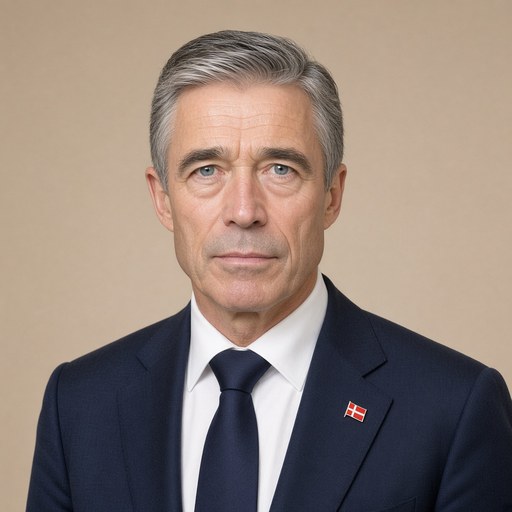
Prime Minister Anders Fogh Rasmussen's speech at the opening of the exhibition "Danish Prime Ministers - in the satirical line of cartoonists" on May 16, 2008.
 Anders Fogh Rasmussen · Prime Minister of Denmark
- Context
- Rasmussen spoke at the opening of an exhibition on Danish prime ministers in political cartoons at the Museum of Danish Cartooning on May 16, 2008.
- Main themes
- Political satire and cartooning, Danish democratic tradition, freedom of expression, history of Danish cartoons, caricature as political commentary, Museum of Danish Cartooning, Danish prime ministers in art, humor and self-deprecation in politics
- Duration
- ~8 min
- Words
- 950
- Sentences
- 73
- Readability
- 57
- Grade
- 8.4
- Syntax
- 2.58
- Vocabulary
- 2.38
Translated from Danish
The broad sphere of national life a sentence belongs to. Every sentence has an Arena, so it is the denominator the other indices are read against.
Other73 sentences in 29 paragraphs
Thank you for the invitation to be here today and to open the exhibition on Danish prime ministers in the satirical line of cartoonists.
The exhibition is made possible thanks to the Museum of Danish Cartooning and your great work in collecting Danish cartoons. As Erland Kolding Nielsen mentioned, this is a task that has now been rewarded with the transfer of the Parliament's large collection of drawings. Congratulations on that!
You are making a tremendous effort to preserve and promote knowledge of a special part of Danish culture and an important part of the Danish democratic debate.
The Danish tradition of political satirical drawings goes back more than 150 years. The satirical cartoons were born alongside freedom and popular government.
In the mid-1800s, there was political growth in Europe, including in Denmark. In 1849, we received the constitution and thus the guarantee of freedom of expression. This allowed the satirical line to flourish.
Democracy unleashed the particular satirical irreverence that has since characterized Danish cartooning. From the Corsaren of the 1840s to today.
We have a lineage of outstanding cartoonists. Artists whose works are known by all Danes.
Cartoons reach a very wide audience. And precisely for that reason, the drawings are such a strong and vital symbol of Danish culture. And of our freedom, open-mindedness, and popular government.
The caricature is a living and indispensable part of a free democracy. The satire inherent in caricature is an important element in free debate. Often a humorous contribution with a sting against the authorities. The caricature is therefore an expression of the freedom of speech that we value and protect.
That is why cartoons have also found a place in Christiansborg. Here, they adorn both the Snapstinget and several of the corridors. And I am glad that they will continue to do so, even though the entire large archive of drawings has been transferred to the museum today.
There are foreign guests who are surprised that the Parliament is adorned with satirical drawings of politicians. But for us, it is natural. They are part of the democracy that we are proud of. And make no mistake, most politicians consider it an acknowledgment to be skewered by cartoonists.
* * *
So what is it that a good cartoon can do? Well, first and foremost, the drawing is a viewpoint. A good drawing can be more impactful and opinion-forming than a wordy editorial.
A good cartoon hits the mark in its time and also survives in the long term. It is remembered.
A good drawing is engaged in society and politics. And measured by engagement, Danish cartooning has never been better than today.
I have had the privilege of sneaking a peek at the exhibition's more than 200 drawings – together with Anker Jørgensen and Poul Schlüter. Steffen Heiberg gave us an excellent introduction.
But beyond that, it was very much about the joy of reunion. For we politicians are eager fans of cartoons.
One of the encouraging aspects of reading the newspaper is the caricatures. It is healthy to start the day with a laugh. Especially when it is intelligent humor that also gives rise to reflection. And it is most fun when the satire goes beyond oneself.
The cartoonists create icons. They can shape contemporary perceptions of politicians. Bo Bojesen even assigned roles to politicians and brought them onto his stage. The politicians of the Liberal Party were cast as Vikings. Accompanied by text in saga form. And I believe there was no place where Bo Bojesen's Liberal Vikings were laughed at louder than in the Liberal Party's office.
There is a story about a Jutland parliamentary candidate – a Liberal – who spoke at a voter meeting sometime in the 1960s. Then someone from the audience asked: "Who actually draws the Liberal Party?" And there was no hesitation in the answer: "That’s Bo Bojesen."
I admire the cartoonists for their ability to capture a person's special traits and characteristics in just a few strokes. In my younger days in politics, I naively believed that I would escape the satire cartoonists. For the simple reason that I could not see any particular characteristics in myself that the cartoonists could use.
I have since understood from several cartoonists that their work has become easier since I became Prime Minister.
Berlingske's Jens Hage once said in an interview that he liked to draw me because I have such "a well-defined face." You see, I had not thought about that until he said it.
Jens Hage added: "On the other hand, it is difficult to draw Helle Thorning Schmidt. She is too beautiful." So I can just be glad that I do not have that problem.
Roald Als also thinks I am easy to draw. He has probably also gotten the practice by now.
Roald Als has stated, I quote: "He is easy to draw. His nose is small, and his mouth is very large, and the piece from the end of the nose to the beginning of the mouth is very long. There is something Neanderthal about him, and that is fortunate when you want to draw him as a Stone Age man."
One could say that Roald Als has made a powerful contribution to what is called "branding" in marketing language. I owe Roald Als much thanks for his valuable contribution to my path toward the Prime Minister's Office.
And thus, a big thank you to all the brilliant cartoonists who over time have followed and commented on Danish politics in caricature. Thank you to the organizers of the exhibition. And enjoy a special piece of Danish history in the satirical line of cartoonists.
I hereby declare the exhibition open.
The original Danish. The tags above are read on the English translation's sentences.
Tak for invitationen til at være med i dag og åbne udstillingen om danske statsministre i bladtegnernes satiriske streg.
Udstillingen er mulig takket være Museet for Dansk Bladtegning og jeres store arbejde med at indsamle danske bladtegninger. Som Erland Kolding Nielsen fortalte, er det et arbejde, der nu er blevet belønnet med overdragelsen af Folketingets store samling af tegninger. Til lykke med det!
I gør en kæmpe indsats for at bevare og for at udbrede kendskabet til en særlig del af dansk kultur og en vigtig del af den danske demokratiske debat.
Den danske tradition for politiske satiriske tegninger går mere end 150 år tilbage. De satiriske bladtegninger blev født sammen med frihed og folkestyre.
I midten af 1800-tallet var der politisk grøde i Europa, også i Danmark. I 1849 fik vi grundloven og dermed sikring af ytringsfriheden. Det gav frit løb for den satiriske streg.
Demokratiet frisatte den særlige satiriske respektløshed, som siden har kendetegnet dansk bladtegning. Fra 1840’ernes Corsaren og frem til i dag.
Vi har en kongerække af fremragende tegnere. Kunstnere, hvis værker er kendt af alle danskere.
Bladtegningerne når meget bredt ud. Og netop derfor er tegningerne et så stærkt og livskraftigt symbol på dansk kultur. Og på vores frihed, frisind og folkestyre.
Karikaturtegningen er en levende og uundværlig del af et frit folkestyre. Den satire, som ligger i karikaturtegningen er et vigtigt led i den frie debat. Oftest et humoristisk indslag med brod mod autoriteterne. Karikaturtegningen er derfor en udfoldelse af ytringsfriheden, som vi værdsætter og værner om.
Derfor har bladtegningerne da også fået plads på Christiansborg. Her pryder de både Snapstinget og flere af gangene. Og jeg er glad for, at det bliver de ved med, selvom hele det store arkiv af tegninger er overdraget til museet i dag.
Der er udenlandske gæster, som studser over at Folketinget er prydet med satiriske tegninger af politikere. Men for os er det naturligt. De er en del af det demokrati, som vi er stolte af. Og tag ikke fejl af, at de fleste politikere betragter det som en anerkendelse at blive spiddet af bladtegnerne.
* * *
Hvad er det så, den gode bladtegning kan? Jo først og fremmest er tegningen et synspunkt. Den gode tegning kan være mere slagkraftig og opinionsdannende end en ordrig lederspalte.
Den gode bladtegning rammer plet i sin samtid og overlever også på længere sigt. Den bliver husket.
Den gode tegning er engageret i samfund og politik. Og målt på engagement har dansk bladtegning aldrig haft det bedre end i dag.
Jeg har jo fået lov til at smugkigge på udstillingens mere end 200 tegninger – sammen med Anker Jørgensen og Poul Schlüter. Steffen Heiberg gav os en glimrende introduktion.
Men derudover var der jo i høj grad tale om gensynets glæde. For vi politikere er ivrige fans af bladtegninger.
Ét af de opmuntrende træk ved avislæsning er karikaturtegningerne. Det er sundt at starte dagen med et grin. Især når det er intelligent humor, der også giver anledning til eftertanke. Og det er allersjovest, når satiren går ud over én selv.
Tegnerne skaber ikoner. De kan præge samtidens opfattelse af politikerne. Bo Bojesen tildelte ligefrem politikerne roller og hev dem ind på sin scene. Venstres politikere fik rollerne som vikinger. Ledsaget af tekst i sagaform. Og jeg tror ikke, der noget sted blev grinet højere af Bo Bojesens venstrevikinger end i Venstres partikontor.
Der går en historie om en jysk folketingskandidat – en venstremand – der talte på et vælgermøde engang i 60’erne. Så blev der spurgt fra salen: ”Hvem tegner egentlig Venstre?” Og der var ingen tøven i svaret: ”Det gør Bo Bojesen”.
Jeg beundrer tegnerne for deres evne til at få et menneskes særlig træk og kendetegn frem i få streger. I mine unge dage i politik troede jeg naivt, at jeg ville undslippe satiretegnerne. Af den enkle grund, at jeg ikke kunne se særlige kendetegn ved mig selv, som tegnerne kunne bruge.
Jeg har så kunnet forstå på flere tegnere, at deres arbejde er blevet lettere, efter at jeg er blevet statsminister.
Berlingskes Jens Hage sagde engang i et interview, at han så godt kunne lide at tegne mig, fordi jeg har sådan ”et godt kantet ansigt”. Se, det havde jeg jo ikke tænkt over, før han sagde det.
Jens Hage tilføjede: ”Derimod er det svært at tegne Helle Thorning Schmidt. Hun er for smuk”. Så kan jeg jo bare glæde mig over, at jeg ikke har det problem.
Roald Als synes også, jeg er nem at tegne. Nu har han vel også fået øvelsen efterhånden.
Roald Als har udtalt, jeg citerer: ”Han er nem at tegne. Hans næse er lille, og hans mund er meget stor, og stykket, fra næsen slutter, til munden begynder, er meget langt. Der er noget neandertal over ham, og det er heldigt, når man gerne vil tegne ham som stenaldermand.”
Man kan vel sige, at Roald Als har ydet et kraftfuldt bidrag til det, der i markedsføringssproget hedder ”branding”. Jeg skylder Roald Als megen tak for hans værdifulde bidrag til min vej frem mod Statsministeriet.
Og dermed også en stor tak til alle de geniale tegnere, som i tidens løb har fulgt og kommenteret dansk politik i karikatur. Tak til udstillingens arrangører. Og god fornøjelse til alle jer andre. Nyd et særligt stykke Danmarkshistorie i bladtegnernes satiriske streg.
Jeg erklærer hermed udstillingen for åbnet.