




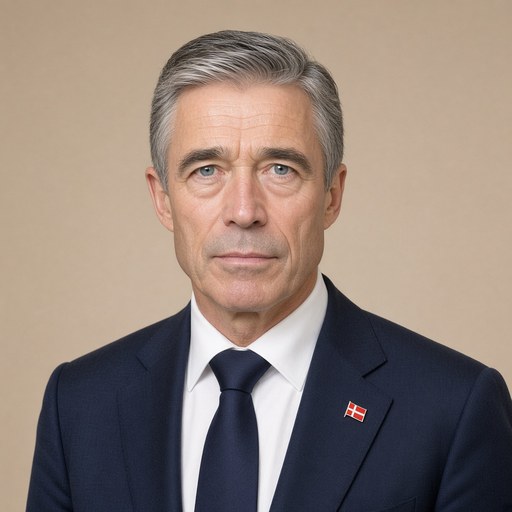
Debate meeting in the Council for International Development Cooperation on January 11, 2006 "Globalization - a way out of poverty?” Speech by Prime Minister Anders Fogh Rasmussen
 Anders Fogh Rasmussen · Prime Minister of Denmark
- Context
- Rasmussen addressed the Danish Council for International Development Cooperation on January 11, 2006, discussing how globalization can help Africa escape poverty.
- Main themes
- Globalization and poverty reduction, Africa's development challenges, economic growth and market access, good governance, private sector development, education and health, sustainable environment, Danish development policy, Asian economic success as model, international development cooperation
- Duration
- ~29 min
- Words
- 3,520
- Sentences
- 274
- Readability
- 50
- Grade
- 9.2
- Syntax
- 2.53
- Vocabulary
- 2.05
Translated from Danish
The broad sphere of national life a sentence belongs to. Every sentence has an Arena, so it is the denominator the other indices are read against.
Other274 sentences in 89 paragraphs
Let me begin by thanking Holger Bernt Hansen and the members of the Council for International Development Cooperation for the invitation to speak about poverty in developing countries and the opportunities that globalization provides. It is a welcome opportunity to pick up the threads after my visit to Africa last autumn.
Globalization is often referred to as dangerous. Some fear that globalization may undermine job creation opportunities. But I see globalization as an opportunity for growth and job creation – also in developing countries.
The question posed for today's meeting is whether globalization provides a way out of poverty? In my view, there is no doubt that the answer is "yes." Globalization is the best card poor countries have for a better future. To achieve the things we in Denmark take for granted. Freedom and democracy. Food on the table and health. A proper education. All these things require resources to be available.
Globalization can provide poor countries with those opportunities. But the benefits do not come by themselves. Targeted action is needed. It is partly based on this realization that we in Denmark have established a Globalization Council. We know that even one of the world's richest countries cannot rest on its laurels.
It goes without saying that the way forward – starting from an African context of deep poverty – is not simple or straightforward. A special effort is required.
But developments in other parts of the world show that it is possible. Despite the difficulties, the previously very poor Asian countries have made great strides over the last few decades. Globalization has been one of the driving forces behind economic development in, for example, China. A development that has lifted over 400 million Chinese out of absolute poverty. We have seen the same development in other Asian countries, primarily India and Vietnam.
But an entire continent still lags far behind. That is Africa. In my presentation today, I would therefore like to put Africa at the center. And start from the question of how Africa can benefit positively from globalization and escape poverty.
Africa has not yet managed to reap the benefits of globalization. Bringing Africa along will be one of the absolute biggest challenges of the next decade.
During my trip to Africa, I saw many examples of great need. But also a pronounced will for change. At a school in Pemba, Mozambique, I asked the eighth-grade children what they wanted to be when they grew up. Some wanted to be nurses. Others teachers. And one wanted to be a minister. There was great courage for life – and a willingness to take responsibility. There was hope and faith in the future.
It was also positive to meet a new generation of African leaders who want change. Who are ready to break with the political theories of the past. And who actively seek solutions to African problems.
With a strong will for change, Africa can experience development and progress. And here, globalization is an important card.
The government has placed Africa at the center with a comprehensive Africa strategy from 2005. And globalization is precisely the theme of the government's development policy priorities for 2006-2010. Priorities that specifically aim for developing countries to benefit from increased globalization.
Today, I will focus particularly on three points that I see as crucial, and where targeted efforts must be made if Africa is to seize the opportunities of globalization:
First: economic growth and better market access.
Second: good governance.
And third: a healthier and better-educated population and a sustainable environment.
Let me take them in that order.
* * *
First: If Africa is to reach the UN goal of halving poverty by 2015, then higher economic growth and better market access are an absolute necessity.
During my visit to Africa, I was in Tanzania. A country in positive development. Tanzania today has an income of about 300 USD per capita. And a growth rate of about 5 percent per year per capita. That is very high by African standards. But it is not enough.
If growth rises to 7% per year per capita – then income will quadruple over 20 years. Tanzania would be much better off. It would be an impressive development. But Tanzania would still be a poor country. A country with an income of only about 1200 USD per capita.
In comparison, the average income of a Dane is over 30,000 USD. This comparison shows that the challenge in Africa is enormous and long-term. And it requires a long-term effort to solve the problems.
Economic growth is a very concrete matter for a poor African family. It is the prerequisite for putting bread on the table. For keeping illness at bay – and for providing children with a proper education.
If Africa is to experience lasting economic growth, it is crucial that better conditions are created for the private sector. Private initiative must be allowed to flourish. There is much to be done here.
The business climate in many African countries today is characterized by bureaucracy and slow procedures. It is a reality that is very far from the one we know in Denmark.
Let me give a couple of examples:
The World Bank has calculated that it takes an average of 4 days to start a business in Denmark. In comparison, it takes 85 days in Ghana and 135 days in Burkina Faso.
In Denmark, it costs virtually nothing to navigate the bureaucracy associated with starting a business. In Ghana, it costs nearly 90 percent of an average Ghanaian's annual income. In Burkina Faso, it costs a full 150 percent of an annual income.
This is hardly something that promotes private initiative. Instead, it promotes what one might call a large "informal" economy. The African countries must bear a crucial responsibility for change themselves. But we can support them. And we must support them. This is an area the government prioritizes very highly. Not least within the framework of our business and agricultural programs.
Danish aid aims, among other things, to give private initiative a chance. We must especially focus on ensuring better opportunities for women. They represent a significant positive resource – which unfortunately often has not been fully utilized.
In Tanzania, I saw how even with very modest means, women can be helped by giving them access to small loans. This promotes the importance of women in general and their contribution to the economy. And it does not take many aid dollars to get several hundred women started in crafts and trade.
I also visited a small savings bank run by enterprising women. And where all the customers were women. Here, there was admirable and effective management of the savings bank. It was both good business and good development. And women were behind it all. I left Africa with a clear impression that African women are a real driving force that can kickstart African growth.
I also experienced that there is no lack of ingenuity and drive among farmers. In the Iringa region, I met what I would call an enterprising farmer. The man's drive and determination were impressive, his land was fertile, and the whole family was hardworking. But prices and the market were not favorable to the family. They could not sell their goods at a reasonable price.
This brings me to the importance of international trade. For poor developing countries cannot develop without greater trade.
It is often emphasized that when it comes to free trade, we in the rich part of the world must give access to our markets for the poor part of the world. We must do that. And I will return to that in a moment.
But let me say it outright. It would primarily be a significant contribution to growth if developing countries opened their markets more to each other. To remove tariffs and trade barriers between individual developing countries.
In Africa, there are high tariff rates, requirements for import licenses, slow customs processing, and cumbersome procedures. Therefore, much can be gained if developing countries open their economies and promote free trade among themselves. According to the World Bank, developing countries could gain USD 142 billion from a full liberalization of international agricultural trade. The vast majority of the gains – about 114 billion – could be realized as a result of reforms in the developing countries themselves.
We must keep our focus on the rich countries. But we must also focus significantly on internal trade between developing countries. The fact is that south-south trade is at least as important as north-south.
At the same time, we in the rich countries must also bear our responsibility. It is almost hypocritical to give aid with one hand and keep poor countries out of our markets with the other. Today, about 280 billion USD is spent on agricultural subsidies. That is far more than is spent on development aid. And it prevents poor countries from reaping the full benefits of globalization.
This also underscores that the Doha Round in the WTO must be concluded as soon as possible and with a clear focus on developing countries. The World Bank has calculated that a result of the negotiations that particularly aims at increased development could reduce the number of poor people in the world by about 8 percent by 2015. That corresponds to 140 million men, women, and children – and half of them will live in Africa.
A significant outcome of the WTO Ministerial Conference in Hong Kong a little over a month ago was precisely a development package. The goal is for developing countries to be able to take greater advantage of the liberalizations of the world market that hopefully will be adopted by the end of this year.
The Danish position is clear. Denmark must continue to push for the EU to be a global leader in ensuring free trade in the world.
In Hong Kong, we agreed to give the least developed countries duty-free and quota-free market access by 2008. First for 97 percent of all products, but with the ambition to extend it to all products as soon as possible.
It is a great negotiating result, but it is not enough. Because it will not cover all countries in Africa. Therefore, I will advocate that all countries in Africa south of the Sahara be offered duty-free and quota-free market access.
Stable economic growth in Africa is also our best defense against new conflicts breaking out or old ones re-emerging. The many recurring conflicts in Africa bear a large part of the blame for the continent's difficulties. A good economy is a prerequisite for development, peace, and security. We know this from Europe. The same applies to Africa.
Better market access will be an important step. But it will not be enough for Africa. Because many countries are so poor that they simply have almost nothing to sell.
The government intends to increase our trade-related aid if other countries follow suit. This will concretely help developing countries build their trade capacity.
The idea behind the Danish effort is that African countries should have both markets to trade in and goods to trade with. When free trade prevails, poverty will be pushed back. Long-term economic growth in Africa can only happen if countries are given the opportunity to earn their own money.
This leads me to my second point. Good governance and an effective effort against corruption.
* * *
Good governance is absolutely crucial in a global economy. For investments to move freely across borders. Corrupt and politically fragile countries with weak institutions rarely attract many foreign investments.
The Africa Commission, launched by Tony Blair in February 2004, clearly found that good governance is the key to development. Without good governance, other reforms will only have limited effect.
Here, there is again no doubt that a central responsibility rests on the African countries themselves. Good governance and an effective effort against corruption can only be lifted by a responsible government.
Denmark is one of the least corrupt countries in the world. This gives us a strong status, which we must use to demand good governance in the countries that receive development aid.
Unfortunately, there are many myths that diminish the importance of good governance and the fight against corruption. Many of these myths have been debunked by the World Bank in a new study.
One of the myths is that the importance of good governance and corruption is overrated. This can be flatly rejected. The World Bank estimates that there are transactions worth 1000 billion USD globally each year that are tainted by corruption. Not only in poor countries but also in our part of the world. A large portion of that money is lost. In other words, there are significant funds to be recovered through better governance.
And corruption hits the poorest countries and the poorest people the hardest. Both rich and poor must pay a high price – without getting anything in return. And it is almost a disaster if one is poor and already has to struggle for survival.
Another myth is that good governance is a luxury – which only rich countries can afford. This is completely misleading and promotes passivity. Both Botswana and Chile have been able to strengthen their governance – without having first entered the ranks of the rich countries. It does not take generations to improve a country's governance and combat corruption.
There must be great consistency in the fight against corruption. There is also in Danish aid. It is simply based on a zero-tolerance principle. The rules are defined in advance – both for ourselves and for others.
But that does not mean that we should immediately rush out and terminate cooperation with a country if corrupt practices are discovered. We must crack down on the specific corrupt act. The crucial thing is that the country demonstrates its willingness to combat corruption. And there must, of course, be consequences if that willingness turns out not to be present.
I will say it simply: Corruption is one of the worst enemies of development. Poverty and corruption are often closely linked. And Africa faces great challenges in combating this enemy. Danish aid must support the democratic forces in Africa in combating corruption. In promoting good governance. And thereby participating in globalization and leveraging the benefits that can come from globalization.
I was struck when I discussed budget support in Maputo with the female Prime Minister of Mozambique. She was – not surprisingly – a strong advocate for delegating as much responsibility for the country's development to her own government and its priorities. But she also had a very clear understanding that it is a prerequisite for her government to combat corruption. That is also why the fight against corruption is so important.
An effective effort against corruption will free up resources. They can instead be used for productive investments in infrastructure, education, health, and the environment.
And that brings me to my third point. For if Africa is to become an integral part of the global marketplace, it will require a massive effort to strengthen education, health, and the environment.
* * *
There is no doubt that a healthier and better-educated population is a prerequisite for Africa to fully benefit from globalization in the long term. The same goes for the environment. If the environment is overlooked, the efforts against poverty will not be effective.
Environmental degradation hits the poorest the hardest. For people living in great distress, considerations for the environment often come after considerations for other basic life needs. One cannot blame them for that. It merely underscores that economic growth is an important prerequisite for doing more for the environment. Greater prosperity provides more freedom to invest in a better environment. We know this from our own development as well.
Increased integration of developing countries into the global economy will depend on raising the level of development on all fronts. Here, Danish development aid makes a significant difference. This applies not only to business development. It also applies to basic education, gender equality, health, and the environment. The government has allocated significant funds for health, education, and the environment in its development policy priorities for 2006-2010.
Why are these three areas important? Here are the hard facts illustrative:
Health is fundamentally essential for human well-being. Therefore, combating diseases is crucial. And it is not uncommon in Africa for up to 15-20 percent of the population to live with HIV/AIDS.
A sustainable environment is closely linked to health and stable development. But in certain parts of Africa, more than 40 percent may lack access to clean drinking water.
Finally, education should ideally form the basis for greater economic growth and the ability to compete in the global market. But in Africa, it is not unusual for 30-40 percent of a population never to complete primary school. Additionally, particularly girls are taken out of school at an early age.
Although economic growth and good governance are prerequisites for development in Africa, it is also true that Africa needs our development aid.
Denmark must contribute to providing African countries with opportunities. We must provide long-term aid that can help ensure that globalization has a positive effect on health, education, and the environment in Africa.
I will not go into detail about the many different Danish initiatives in these three areas. But let me just highlight one area where we have made a particularly strong effort. It concerns the fight against the spread of HIV/AIDS. Our aid in 2005 was over 500 million kroner. This demonstrates that the fight against HIV/AIDS is an absolute top priority in Danish aid.
Africa is severely affected by AIDS. The disease threatens to undermine development opportunities in entire societies. Alarming figures show that up to 75 percent of young people living with HIV are women. If we are to combat this unfortunate development, we must ensure that young women can protect themselves against HIV infection.
There should be no doubt that we from the Danish side will stand by our responsibility. The government will continue to make a massive effort, and we will focus on the groups that are most vulnerable. Aid for HIV/AIDS is one of the areas where the Copenhagen Consensus found that the most is achieved for each aid kroner. The government has followed this up by increasing Danish aid to this area.
* * *
The challenge is great in Africa. Greater than in any other part of the world. But globalization holds opportunities - also for Africa. The positive stories from the Asian countries can be repeated in Africa. But Africa's own will is absolutely crucial. To combat poverty. To take action against corruption. And to ensure good governance.
We can provide help for self-help, and we can push for giving developing countries the best possible framework to participate in the global economy.
In the government platform, we have included a guarantee that Danish aid will be at least 0.8 percent of Danish gross national income. The guarantee is a future-proofing of Danish development engagement. If growth continues in Denmark, it will add more than 1 billion kroner to Danish development aid in 2007-2009.
Let me conclude by highlighting the government's decision to choose Mali as a new program cooperation country in Africa. This is a binding decision that expresses a long-term commitment of around 3 billion kroner over the next 15-20 years.
The choice of a country in Africa south of the Sahara is one of the concrete ways we intend to use an increasing share of our development aid for long-term poverty alleviation in Africa. This is a commitment that underscores Denmark's position as one of the countries that provides the most aid per capita to the African continent. This commitment will also be reflected in a significant strengthening of Danish cooperation with Niger.
Denmark is an important player in development policy. But we are a small country in the big picture. And a coordinated international effort is therefore necessary.
Closer cooperation, regional stability, and more free trade among African countries are also crucial for Africa's success in the global competition. The regional African organizations will be central pieces for a stable and prosperous Africa. This is especially true for the African Union, which is a significant actor when it comes to Africa's global challenges.
I am therefore pleased to conclude my presentation by announcing that the Chairperson of the African Union Commission, Alpha Oumar Konaré, will visit Denmark at my invitation in May. This will take place in connection with a conference in Copenhagen, which I will also attend.
The intention is not to set new goals for Africa. The conference should help maintain political focus on the continent. It should strengthen Danish cooperation with the African Union. And it should contribute to creating action and uncovering concrete solutions to the challenges in Africa.
The conference should emphasize that when it comes to development in Africa, more words are not enough. More action is needed.
With those words, I thank you for your attention – and I look forward to your questions.
The original Danish. The tags above are read on the English translation's sentences.
Lad mig indlede med at takke Holger Bernt Hansen og medlemmerne af Rådet for Internationalt Udviklingssamarbejde for invitationen til at tale om fattigdommen i udviklingslande og de muligheder, som globaliseringen giver. Det er en kærkommen lejlighed til at samle trådene op efter mit besøg i Afrika sidste efterår.
Globalisering omtales ofte som farlig. Nogle frygter, at globaliseringen kan underminere mulighederne for jobskabelse. Men jeg ser globaliseringen som en mulighed for vækst og jobskabelse – også i udviklingslandene.
Spørgsmålet der er stillet til mødet i dag er, om globaliseringen giver en vej ud af fattigdom? I mine øjne er der derfor ingen tvivl om, at svaret er ”ja”. Globaliseringen er det bedste kort fattige lande har for en bedre fremtid. For at kunne opnå de ting vi i Danmark tager for givet. Frihed og demokrati. Mad på bordet og sundhed. En ordentlig skolegang. Alle de ting kræver ressourcer til rådighed.
Globaliseringen kan give de fattige lande de muligheder. Men fordelene kommer ikke af sig selv. Der er behov for målrettet handling. Det er bl.a. på baggrund af den erkendelse, at vi i Danmark har nedsat et Globaliseringsråd. Vi ved, at selv et af verdens rigeste lande ikke kan hvile på laurbærrene.
Det siger sig selv, at vejen frem - med et afrikansk udgangspunkt i dyb fattigdom - naturligvis ikke er enkel eller ligetil. Der kræves en særlig indsats.
Men udviklingen i andre dele af verden viser, at det er muligt. På trods af vanskelighederne har de tidligere meget fattige asiatiske lande gjort store fremskridt gennem de sidste årtier. Globaliseringen har været en af de drivende kræfter for den økonomiske udvikling i f.eks. Kina. En udvikling som har løftet over 400 mio. kinesere ud af absolut fattigdom. Samme udvikling har vi set i andre asiatiske lande. Først og fremmest Indien og Vietnam.
Men et helt kontinent halter stadig langt bagefter. Det er Afrika. I mit oplæg i dag vil jeg derfor gerne sætte Afrika i centrum. Og tage afsæt i spørgsmålet om, hvordan Afrika kan få positivt udbytte af globaliseringen og komme ud af fattigdommen.
Afrika har endnu ikke formået at høste globaliseringens fordele. At få Afrika med vil være én af det næste årtis absolut største udfordringer.
Under min rejse til Afrika så jeg mange eksempler på stor nød. Men også en udtalt vilje til forandring. På en skole i Pemba i Mozambique spurgte jeg børnene i 8. klasse, hvad de ville være, når de blev voksne. Nogle ville være sygeplejersker. Andre lærere. Og én ville være minister. Der var stort mod på livet – og vilje til at tage ansvar. Der var håb og tro på fremtiden.
Det var også positivt at møde en ny generation af afrikanske ledere, der ønsker forandring. Der er klar til at gøre op med tidligere tiders politiske teorier. Og som aktivt søger løsninger på de afrikanske problemer.
Med en stærk vilje til forandring kan Afrika opleve udvikling og fremgang. Og her er globaliseringen et vigtigt kort.
Regeringen har sat Afrika i centrum med en samlet Afrika-strategi fra 2005. Og globaliseringen er netop temaet for regeringens udviklingspolitiske prioriteter for 2006-2010. Prioriteter som helt konkret tager sigte på, at udviklingslandene skal kunne drage udbytte af en øget globalisering.
Jeg vil i dag koncentrere mig særligt om tre punkter, jeg ser som helt afgørende, og hvor der skal sættes en målrettet indsats ind, hvis Afrika skal gribe globaliseringens muligheder:
For det første: økonomisk vækst og bedre markedsadgang.
For det andet: god regeringsførelse.
Og for det tredje: en sundere og bedre uddannet befolkning og et bæredygtigt miljø.
Lad mig tage dem i den rækkefølge.
* * *
For det første: Hvis Afrika skal nå FN’s mål om at halvere fattigdom i 2015, så er højere økonomisk vækst og bedre markedsadgang en absolut nødvendighed.
Under mit besøg i Afrika var jeg i Tanzania. Et land i positiv udvikling. Tanzania har i dag har en indkomst på cirka 300 USD per indbygger. Og en vækst på ca. 5 pct. om året per indbygger. Det er meget højt efter afrikansk standard. Men det er ikke nok.
Hvis væksten stiger til 7% om året per indbygger - så vil indkomsten blive firdoblet over 20 år. Tanzania vil blive langt bedre stillet. Det ville være en imponerende udvikling. Men Tanzania ville stadig være et fattigt land. Et land med en indkomst på kun cirka 1200 USD per indbygger.
Til sammenligning er den gennemsnitlige danskers indkomst over 30.000 USD. Denne sammenligning fortæller, at udfordringen i Afrika er enorm og langsigtet. Og det kræver en langsigtet indsats for at løse problemerne.
Økonomisk vækst er en meget konkret størrelse for en fattig afrikansk familie. Det er forudsætningen for at få brød på bordet. For at kunne holde sygdom fra døren - og for at kunne give børnene en ordentlig skolegang.
Hvis Afrika skal opleve varig økonomisk vækst er det helt afgørende, at der skabes bedre vilkår for den private sektor. Det private initiativ skal have lov at blomstre. Her er der meget at gøre.
Erhvervsklimaet i mange afrikanske lande er i dag præget af bureaukrati og langsommelige procedurer. Det er en virkelighed, som er meget langt fra den vi kender i Danmark.
Lad mig give et par eksempler:
Verdensbanken har opgjort, at det gennemsnitlig tager 4 dage at starte en virksomhed i Danmark. Til sammenligning tager det 85 dage i Ghana og 135 dage i Burkino Faso.
I Danmark koster det stort set ikke noget at komme igennem bureaukratiet, der er forbundet med at starte en virksomhed. I Ghana koster det knap 90 pct. af en gennemsnitlig ghanesers årlige indkomst. I Burkina Faso koster det hele 150 pct. af en årsindkomst.
Det er ikke just noget, som fremmer privat initiativ. Det fremmer derimod hvad man kan kalde en stor ”uformel” økonomi. De afrikanske lande må selv bære et afgørende ansvar for forandring. Men vi kan støtte dem. Og vi skal støtte dem. Det er et område regeringen prioriterer meget højt. Ikke mindst inden for rammerne af vores erhvervs- og landbrugsprogrammer.
Den danske bistand sigter bl.a. på at give det private initiativ en chance. Vi skal ikke mindst have et stærkt fokus på at sikre bedre muligheder for kvinder. De udgør en betydelig positiv ressource – som desværre tit ikke er kommet til sin fulde ret.
I Tanzania så jeg, hvordan man selv med meget beskedne midler kan hjælpe kvinderne ved at give dem adgang til små lån. Det fremmer kvindernes betydning generelt og deres bidrag til samfundsøkonomien. Og det er ikke mange bistandskroner, der skal til for at sætte flere hundrede kvinder i gang med håndværk og handel.
Jeg besøgte desuden en lille sparekasse, der blev ledet af handlekraftige kvinder. Og hvor kunderne alle var kvinder. Her blev der udvist en beundringsværdig og effektiv ledelse af sparekassen. Det var både god forretning og god udvikling. Og der stod kvinder bag det hele. Jeg forlod Afrika med et klart indtryk af, at de afrikanske kvinder er en virkelig drivkraft, der kan sætte afrikansk vækst i gang.
Jeg oplevede også, at der ikke mangler opfindsomhed og virketrang hos bønderne. I Iringa-området mødte jeg, hvad jeg vil kalde en driftig bonde. Mandens virketrang og gå på mod var imponerende, hans jord var frugtbar og hele familien flittig. Men priserne og markedet var ikke venligt stemt over for familien. De kunne ikke afsætte deres varer til en fornuftig pris.
Det bringer mig til betydningen af international handel. For fattige udviklingslande kan ikke udvikle sig uden større samhandel.
Det understreges ofte, at når det gælder frihandel, skal vi i den rige del af verden give adgang til vore markeder for den fattige del af verden. Det skal vi også. Og det vil jeg komme tilbage til om et øjeblik.
Men lad mig sige det lige ud. Det vil først og fremmest være et stort bidrag til vækst, at udviklingslandene åbner deres markeder mere for hinanden. At fjerne told- og handelsbarrierer imellem de enkelte udviklingslande.
I Afrika er der høje toldsatser, krav om importlicenser, langsom toldbehandling og besværlige procedurer. Der kan derfor vindes rigtig meget, hvis udviklingslande åbner deres økonomier og fremmer frihandel mellem hinanden. Ifølge Verdensbanken vil udviklingslandene kunne vinde USD 142 mia. ved en fuld liberalisering af den internationale landbrugshandel. Langt den største del af gevinsten – ca. 114 mia. – vil kunne hentes som følge af reformer i udviklingslandene selv.
Vi skal holde fokus på de rige lande. Men vi skal i høj grad også fokusere på den interne handel mellem udviklingslandene. Kendsgerningen er, at syd-syd handel er mindst lige så vigtig som nord-syd.
Samtidig skal vi i de rige lande også bære vores ansvar. Det er nærmest hyklerisk at give bistand med den ene hånd og holde fattige lande uden for vores markeder med den anden. Der bruges i dag cirka 280 mia. USD på landbrugssubsidier. Det er langt mere, end der bruges på udviklingsbistand. Og det hindrer de fattige lande i at få de fulde gevinster ved globaliseringen.
Det understreger også, at Doha Runden i WTO skal afsluttes hurtigst muligt og med et klart fokus på udviklingslandene. Verdensbanken har udregnet, at et resultat af forhandlingerne, der tager særligt sigte på øget udvikling, vil kunne reducere antallet af fattige i verden med omkring 8 pct. i 2015. Det svarer til 140 mio. mænd, kvinder og børn - og halvdelen af dem vil bo i Afrika.
Et væsentligt resultat af WTO’s Ministerkonference i Hongkong for en lille måned siden var netop en udviklingspakke. Målet er, at udviklingslandene i højere grad kan udnytte de liberaliseringer af verdensmarkedet, der forhåbentlig vil kunne vedtages inden udgangen af i år.
Den danske position er klar. Danmark skal blive ved med at presse på for, at EU skal være ledende globalt for at sikre frihandel i verden.
I Hongkong blev vi enige om, at give de mindst udviklede lande told- og kvotefri markedsadgang inden 2008. Først for 97 procent af alle produkter, men med ambition om at udstrække det til alle produkter snarest muligt.
Det er et flot forhandlingsresultat, men det er ikke nok. For det vil ikke omfatte alle lande i Afrika. Derfor vil jeg slå et slag for, at alle lande i Afrika syd for Sahara bliver tilbudt told- og kvotefri markedsadgang.
En stabil økonomisk vækst i Afrika er samtidig vores bedste værn mod, at nye konflikter bryder ud eller at gamle får lov at genopstå. De mange tilbagevendende konflikter i Afrika bærer en stor del af skylden for kontinentets vanskeligheder. God økonomi er en forudsætning for udvikling, fred og sikkerhed. Det ved vi fra Europa. Det samme gælder for Afrika.
En bedre markedsadgang vil være et vigtigt skridt. Men det vil ikke være nok for Afrika. Fordi mange lande er så fattige, at de simpelthen næsten ikke har noget at sælge.
Regeringen agter at forhøje vores handelsrelaterede bistand, hvis andre lande vil følge trop. Det vil helt konkret hjælpe udviklingslandene med at opbygge deres handelskapacitet.
Tanken bag den danske indsats er, at de afrikanske lande både skal have nogle markeder at handle på og nogle varer at handle med. Når den frie handel vinder frem, så bliver fattigdommen trængt tilbage. Langsigtet økonomisk vækst i Afrika kan kun ske, hvis landene får mulighed for at tjene deres egne penge.
Det leder mig til mit andet punkt. God regeringsførelse og en effektiv indsats mod korruption.
* * *
God regeringsførelse er helt afgørende i en global økonomi. For at investeringer flyttes frit over landegrænser. Korrupte og politisk skrøbelige lande med svage institutioner tiltrækker sjældent mange udenlandske investeringer.
Afrika-kommissionen, der blev lanceret af Tony Blair i februar 2004, fandt klart, at god regeringsførelse er nøglen til udvikling. Uden god regeringsførelse, vil andre reformer kun have begrænset virkning.
Her er der igen ikke tvivl om, at et centralt ansvar hviler på de afrikanske lande selv. God regeringsførelse og en effektiv indsats mod korruption kan selvsagt kun løftes af en ansvarlig regering.
Danmark er et af de mindst korrupte lande i verden. Det giver os en stærk status, som vi skal bruge til at kræve god regeringsførelse i de lande, der modtager udviklingsbistand.
Der er desværre mange myter, der mindsker betydningen af god regeringsførelse og bekæmpelse af korruption. Mange af disse myter er blevet tilbagevist af Verdensbanken i et nyt studie.
En af myterne er, at betydningen af god regeringsførelse og korruption er overvurderet. Det kan blankt afvises. Verdensbanken skønner, at der på verdensplan årligt er transaktioner for 1000 mia. USD, som er betændt af korruption. Ikke kun i fattige lande, men også i vores del af verden. En stor del af de penge går tabt. Der er med andre ord betydelige midler at hente ind gennem bedre regeringsførelse.
Og korruption rammer de fattigste lande og de fattigste mennesker hårdest. Rig og fattig skal begge betale en høj pris – uden at få noget til gengæld. Og det er nærmest en katastrofe, hvis man er fattig og i forvejen må kæmpe for sin overlevelse.
En anden myte er, at god regeringsførelse er en luksus – som kun rige lande har råd til. Det er helt misvisende og fremmer passivitet. Både Botswana og Chile har kunnet styrke deres regeringsførelse – uden at de forinden var trådt ind i de rige landes rækker. Det tager altså ikke generationer at forbedre et lands regeringsførelse og komme korruptionen til livs.
Der skal være stor konsekvens i kampen mod korruption. Det er der også i den danske bistand. Den er simpelthen baseret på et nul tolerance princip. Reglerne er defineret på forhånd – både for os selv og andre.
Men det betyder ikke, at vi med det samme skal fare ud og afvikle samarbejdet med et land, hvis der bliver konstateret brodne kar. Vi skal slå ned på den konkrete korrupte handling. Det afgørende er, at landet demonstrerer sin vilje til at bekæmpe korruption. Og det skal selvfølgelig have konsekvenser, hvis viljen så reelt viser sig ikke at være til stede.
Jeg vil sige det enkelt: Korruptionen er en af udviklingens værste fjender. Fattigdom og korruption hænger ofte tæt sammen. Og Afrika står over for store udfordringer med at bekæmpe denne fjende. Dansk bistand skal støtte de demokratiske kræfter i Afrika med at komme korruptionen til livs. Med at fremme god regeringsførelse. Og dermed at tage del i globaliseringen og udnytte fordelene, der kan være ved globaliseringen.
Det gjorde indtryk på mig, da jeg i Maputo diskuterede budgetstøtte med den kvindelige premierminister for Mozambique. Hun var – ikke overraskende – en varm fortaler for at overlade mest muligt ansvar for landets udvikling til hendes egen regering og dens prioriteter. Men hun havde også en meget klar forståelse af, at det er en forudsætning, at hendes regering kommer korruptionen til livs. Også derfor er bekæmpelse af korruption så vigtig.
En effektiv indsats mod korruption vil frigive ressourcer. De kan i stedet blive anvendt til produktive investeringer i infrastruktur, uddannelse, sundhed og miljø.
Og det bringer mig til mit tredje punkt. For hvis Afrika skal blive en integreret del af den globale markedsplads, så vil det netop kræve en massiv indsats for at styrke uddannelse, sundhed og miljø.
* * *
Der er ikke tvivl om, at en sundere og bedre uddannet befolkning er en forudsætning for, at Afrika kan få fuld glæde af globaliseringen på lang sigt. Det samme gælder for miljøet. Hvis miljøet bliver overset, vil indsatsen mod fattigdom ikke være effektiv.
Nedslidningen af miljøet rammer de fattigste hårdest. For mennesker, der lever i stor nød, kommer hensyn til miljøet ofte bagefter hensyn til andre basale livsbehov. Det kan man ikke fortænke dem i. Det understreger blot, at økonomisk vækst er en vigtig forudsætning for at gøre mere for miljøet. En højere velstand giver større frihed til at investere i et bedre miljø. Det ved vi også fra vores egen udvikling.
En øget integration af udviklingslandene i den globale økonomi vil afhænge af, at udviklingsniveauet hæves på alle fronter. Her gør dansk udviklingsbistand en stor forskel. Det gælder ikke kun erhvervsudvikling. Det gælder også grunduddannelse, ligestilling mellem kønnene, sundhed og miljø. Regeringen har i sine udviklingspolitiske prioriteter for 2006-2010 netop afsat betydelige midler til sundhed, uddannelse og miljø.
Hvorfor er disse tre områder vigtige? Her er de hårde facts illustrative:
Sundheden er helt grundlæggende for menneskelig trivsel. Derfor er bekæmpelse af sygdomme helt afgørende. Og det er ikke ualmindeligt i Afrika, at op mod 15-20 pct. af befolkningen lever med hiv/aids.
Et bæredygtigt miljø hænger tæt sammen med sundheden og en stabil udvikling. Men i visse dele af Afrika kan mere end 40 pct. mangle adgang til rent drikkevand.
Endelig skal uddannelse gerne danne basis for større økonomisk vækst og mulighed for at klare sig i den globale konkurrence. Men i Afrika er det ikke usædvanligt, at 30-40 pct. af en befolkning aldrig gennemfører grundskolen. Hertil kommer, at særligt pigerne bliver taget ud af skolen i en tidlig alder.
Selv om økonomisk vækst og god regeringsførelse er forudsætninger for udvikling i Afrika, så er det også rigtigt, at Afrika har brug for vores udviklingsbistand.
Danmark skal bidrage til at give afrikanske lande muligheder. Vi skal yde langsigtet bistand, som kan bidrage til at give globaliseringen positiv effekt for sundhed, uddannelse og miljø i Afrika.
Jeg skal ikke gå i dybden med de mange forskellige danske indsatser på disse tre områder. Men lad mig nøjes med at fremhæve et sted, hvor vi fra dansk side har sat særligt stærkt ind. Det drejer sig om kampen mod spredning af hiv/aids. Her var vores bistand i 2005 på over 1⁄2 mia. kr. Det vidner om, at indsatsen mod hiv/aids er en absolut topprioritet i den danske bistand.
Afrika er meget hårdt ramt af aids. Sygdommen truer med at underminere udviklingsmulighederne i hele samfund. Skræmmende tal viser, at op mod 75 pct. af unge hiv smittede er kvinder. Hvis vi skal bekæmpe den ulykkelige udvikling må vi sikre, at de unge kvinder kan beskytte sig mod hiv smitte.
Her skal der ikke være tvivl om, at vi fra dansk side vil stå ved vores ansvar. Regeringen vil fortsat sætte massivt ind og vi vil fokusere på de grupper, som er mest udsat. Bistanden til hiv/aids er et af de områder, hvor Copenhagen Consensus fandt, at der bliver opnået mest for hver bistandskrone. Det har regeringen fulgt op på ved at øge den danske bistand til dette område.
* * *
Udfordringen er stor i Afrika. Større end i nogen anden del af verden. Men globaliseringen rummer muligheder - også for Afrika. De positive historier fra de asiatiske lande kan gentage sig i Afrika. Men Afrikas egen vilje er helt afgørende. Til at bekæmpe fattigdom. Til at sætte ind mod korruption. Og til at sikre god regeringsførelse.
Vi kan give hjælp til selvhjælp, og vi kan presse på for at give udviklingslandene de bedst mulige rammer for at deltage i den globale økonomi.
I regeringsgrundlaget har vi lagt en garanti ind om, at den danske bistand vil være på mindst 0,8 pct. af den danske bruttonationalindkomst. Garantien er en fremtidssikring af det danske udviklingsengagement. Holder væksten i Danmark, vil det i 2007-2009 tilføre mere end 1 mia. kr. til den danske udviklingsbistand.
Lad mig afslutningsvis fremhæve regeringens beslutning om at vælge Mali, som et nyt programsamarbejdsland i Afrika. Det er en forpligtende beslutning, der udtrykker et langsigtet engagement i størrelsesorden 3 mia. kr. over de næste 15-20 år.
Valget af et land i Afrika Syd for Sahara er en af de konkrete måder vi har tænkt os at anvende en stigende andel af vores ulandsbevillinger til langsigtet fattigdomsbekæmpelse i Afrika. Der er tale om et engagement, som understreger Danmarks position som et af de lande, der giver absolut mest bistand per indbygger til det afrikanske kontinent. Dette engagement vil også afspejles i, at det danske samarbejde med Niger styrkes væsentligt.
Danmark er en vigtig udviklingspolitisk spiller. Men vi er et lille land i det store billede. Og en samlet international indsats er derfor nødvendig.
Et tættere samarbejde, regional stabilitet og mere frihandel mellem de afrikanske lande er også afgørende for Afrikas succes i den globale konkurrence. De regionale afrikanske organisationer vil være centrale brikker for et stabilt og fremgangsrigt Afrika. Det gælder ikke mindst den Afrikanske Union, der er en væsentlig aktør, når det gælder Afrikas globale udfordringer.
Jeg er derfor glad for at kunne runde mit oplæg af med at annoncere, at formanden for den Afrikanske Unions Kommission, Alpha Oumar Konaré, på min invitation vil besøge Danmark i maj. Det vil ske i forbindelse med afholdelsen af en konference i København, hvor jeg selv vil deltage.
Hensigten er ikke at opstille nye mål for Afrika. Konferencen skal være med til at fastholde politisk fokus på kontinentet. Den skal styrke det danske samarbejde med den Afrikanske Union. Og den skal bidrage til at skabe handling og afdække konkrete løsninger på udfordringerne i Afrika.
Konferencen skal understrege, at når det gælder udvikling i Afrika er det ikke nok med flere ord. Der er brug for mere handling.
Med de ord siger jeg tak for opmærksomheden – og ser frem til jeres spørgsmål.