




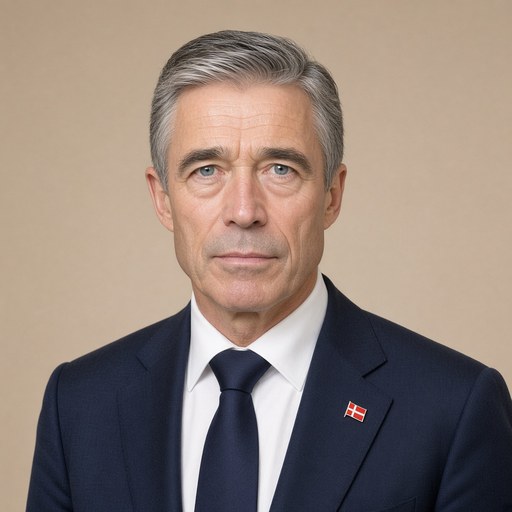
The Prime Minister's speech at VL-Døgn, January 25, 2006.
 Anders Fogh Rasmussen · Prime Minister of Denmark
- Context
- Rasmussen addressed business leaders at VL-Døgnet on January 25, 2006, discussing globalization's opportunities and Denmark's strategy for maintaining global competitiveness.
- Main themes
- Globalization opportunities for Denmark, education reform, knowledge society, innovation and entrepreneurship, Danish competitiveness, welfare state sustainability, labor market flexibility, research and strategy, social cohesion, globalization council
- Duration
- ~22 min
- Words
- 2,673
- Sentences
- 260
- Readability
- 51
- Grade
- 8.4
- Syntax
- 2.37
- Vocabulary
- 2.07
Translated from Danish
The broad sphere of national life a sentence belongs to. Every sentence has an Arena, so it is the denominator the other indices are read against.
Other260 sentences in 79 paragraphs
Thank you for the invitation to speak at VL-Døgnet. I understand that the event has record participation this year. That is impressive. And I could hear from Jørgen Ørstrøm Møller's introduction that you have gone through many interesting presentations.
I am also pleased to have the opportunity to join your discussion on globalization and its consequences. A discussion that is very significant. For you as business leaders. For the individual Dane. And for the entire Danish society.
Globalization is primarily about opportunities. There is far too often a focus on the threats posed by globalization. But development will not send us into an abyss. On the contrary.
Globalization opens new opportunities for Denmark. Opportunities to reach new markets. To increase prosperity. To create better jobs. Opportunities to take part in and influence an exciting and dynamic international development.
But opportunities do not become reality by themselves. We must prepare ourselves to meet them. Otherwise, we may find it very difficult to maintain Denmark's position as one of the world's richest countries. And there will be a risk that especially the unskilled will be left behind.
Therefore, we must equip Danish society. The Danish business community. And the individual citizen. So that we can seize the opportunities.
And we have an exceptional starting point for doing so. Denmark is one of the world's richest countries. We have a flexible labor market combined with a secure welfare state. We have one of Europe's strongest economies. Unemployment has fallen by more than 40,000 people in two years. Several international assessments give Denmark top marks. The Economist has named Denmark as having the world's best business climate.
Denmark is a surplus nation. With a surplus in public finances. A surplus in the balance of payments. And we are in the process of paying off our foreign debt. So that should be resolved in a couple of years.
Things are going well in Denmark. And it is precisely when things are going best that we must make the decisions that are crucial for our future. Now is the time to make good times sustainable.
Therefore, the government has set ambitious goals for Denmark:
Denmark must have world-class education
We must be a leading knowledge society
We must be a leading entrepreneurial society
We must be a leading innovative society
These are the four pillars that together will ensure world-class competitiveness. And ensure that we can maintain a Denmark with strong social cohesion. A Denmark where everyone participates in development. A Denmark where everyone shares in the progress.
The government's goals are very ambitious. Meeting them will require extensive reforms. Especially in education and research. Therefore, the government will publish a comprehensive strategy for Denmark in the global economy at the end of March. A strategy with ambitious and concrete proposals within the four pillars.
To advise the government on the strategy, we have established a broadly composed Globalization Council. We are in full swing with discussions with the council. In my speech today, I will share our thoughts. And what the main lines of the government's strategy will be within the four pillars.
* * *
The first pillar is world-class education. Education lays the foundation for how we fare in the global economy. All Danes should have the opportunity to educate themselves and utilize their abilities and talents. This creates a dynamic and prosperous society. And a society that is cohesive.
Therefore, it is concerning that Denmark is falling behind in the education race.
One in six children leaves primary school without being able to read properly. One in five never obtains a secondary education. And while my own generation ranks in the top 5 in the world in terms of the proportion with higher education, our children's generation is down to 14th place.
We must do better. There is a need for reforms throughout the education system.
The government will focus on primary schools and give the academic level a significant boost. Danish children must be among the best in the world in reading, mathematics, natural sciences, and English.
We will introduce evaluations and tests. So that teachers, parents, and students can keep track of how things are going. And ensure that everyone learns what they need to know.
We will reform teacher education. Teachers must specialize much more than they do today. This will lead to better teaching. It will produce more skilled students.
The renewal in primary schools must be driven by strong school leadership. In Danish schools, there is a somewhat ambivalent attitude towards leadership. There is a need for a "cultural revolution" in the teachers' lounge.
It is the government's goal that all young people should have an education after primary school. This places great demands – not least on vocational education. There must be good offers for everyone. And employers must live up to their share of the responsibility. And ensure internships for all.
Danes must be prepared to educate themselves throughout their lives. The need for further education is greatest among the unskilled and those who have difficulties with reading and arithmetic. For they are under great pressure in globalization. At the same time, these are the groups that participate the least in adult and further education. Here, the labor market partners have a significant responsibility to enhance efforts. The government will meet with labor market partners on February 21 to discuss how we can strengthen adult and further education. We will build on the work of the Tripartite Committee on VEU.
More people must pursue higher education. The government's goal is that at least half of young people should obtain a higher education by 2015. Today, it is only 4 out of 10.
The quality of education must be world-class. Therefore, all programs must be assessed according to international standards. Only programs that meet the established requirements can receive public funding.
Education must be international. Many more young people should have the opportunity to study in another country. This is simply necessary in a globalized world.
Therefore, the government proposes a new study abroad scholarship. Danish students should be able to receive funding for tuition fees if they are admitted to a foreign university or a school of good quality. The students should be able to take the money that the Danish university would have received in funding if they had studied in Denmark.
Today, 3,400 Danish young people complete an entire education abroad. I expect that the study abroad scholarships will lead to a significant increase in that number.
Conversely, we need to attract smart minds from other countries to Denmark. Our universities must be able to compete internationally. There should be more subjects and programs in English. And we need special super professorships that can attract the best international researchers.
The government will implement reforms throughout the education system. We will ensure world-class education. Both for talents and for the broader population. We will ensure that more are educated to be able to do more.
* * *
We must invest in research and development. This is the second pillar of the government's strategy. New knowledge is our future security.
In Denmark, we spend 2.6 percent of GDP on research. This is in line with the average for wealthy countries and is comparable to the USA and South Korea. This is good. But it is not good enough.
We must increase our spending to at least 3 percent of GDP on research by 2010. Of this, public research must reach 1 percent of GDP by 2010. This is the government's goal. And we will achieve it.
That is a lot of money. But it is not a blank check. We must ensure that we get quality for our money. That we achieve world-class research. Therefore, the government proposes a comprehensive reform of all public research. The main principle of the reform is quality. Quality must henceforth be the absolute guiding principle for the distribution of all research funds. High quality must be rewarded. Poor quality must have consequences.
Today, universities receive two-thirds of their funding as so-called base funds. These are funds that are allocated each year in the budget to individual universities, completely independent of whether the universities perform well or poorly.
We will change that. We will appoint an international panel to assess the quality of universities. Those universities that perform well should be rewarded. Those that do not should receive less funding. This should encourage everyone to improve.
At the same time, we will sharpen the direct competition for research funds. Today, one-third of the funds are distributed in open competition. By 2010, it should be half. This will ensure that the money goes to the best researchers and the best research environments.
There is also a need for universities to open up more to the business community and society. The knowledge of universities is primarily spread in society by universities educating skilled individuals who are employed everywhere and use what they have learned. But it is also important that universities have a clear incentive to more directly translate research into business. There must be a short and strong chain from the researcher's idea to its application in society.
That is not the case today. Danish universities sell 4-5 patents per 1,000 researchers each year. In the USA, the figure is 20 patents per 1,000 researchers. More than four times as much. The government proposes that universities set concrete goals for knowledge dissemination. For example, for how many patents they sell. Or for collaborations with private companies. And their work on knowledge dissemination should have an impact on how much funding they receive for research.
Public research is an important foundation for society. But it is a misunderstanding to believe that there must always be public money in research. If that were the case, we would not have Novo Nordisk. It is largely through private research that knowledge translates into growth and jobs.
Private research has grown in recent years, aided by low interest rates and a good economy. But we need even more private research. The goal is for the private sector to spend at least 2 percent of GDP on research by 2010.
That goal must be achieved by businesses. I cannot guarantee, as I can for public research, that we will reach the target. But I can guarantee that the government will provide the best framework for you to achieve your goals. That is the division of labor.
The public sector's most important role is to provide sufficient and highly qualified labor. Skilled employees are the foundation for businesses to conduct research and development. In Denmark, only about 1 percent obtain a doctoral degree. In Finland, the proportion is just under 2 percent, and in Sweden, just under 3 percent.
The government will double the number of PhD scholarships and industrial PhDs. There should especially be an increase in the fields of natural sciences, engineering, IT, and health sciences.
Groundbreaking research and development must lay the foundation for Denmark to become a leading knowledge society.
* * *
Denmark must be a leading entrepreneurial country. This is the third pillar. Entrepreneurs are important for the dynamism of society. To challenge established businesses. The Globalization Council discussed entrepreneurs at our meeting last week.
Denmark is on par with the best entrepreneurial countries when it comes to starting new businesses. But far too few of the new businesses create growth. Only about 5 percent of Danish entrepreneurs quickly achieve high growth in revenue or employment within the first few years – that is, develop into what we call "growth entrepreneurs." In leading entrepreneurial countries, the figure is three times as many.
We must correct this. The government will strengthen the advice available to entrepreneurs. We will enhance access to venture capital.
And we will lay the foundation for a strong culture of independence already in primary and secondary schools. Not by adding new subjects to the curriculum. But by working innovatively in all subjects. And by focusing on entrepreneurship during theme days and in business games or competitions. This is how it is done, for example, in the USA. Students should meet other role models. And gain insight into how the business world operates.
In vocational education and higher education, young people should learn concretely about how to start a business. And an elite course in entrepreneurship should be created.
We need to create a completely different attitude and mentality in Denmark. We need to change what it means to be successful. We need to recognize successful entrepreneurs.
* * *
Denmark must be a leading innovative society. This is the fourth pillar of the government's strategy.
An innovative society is a competitive society. Fair and sharp competition is probably the single factor that can contribute the most to innovation. Sharp competition means that businesses are pressured by consumers and other companies to perform at their very best. To generate new ideas. To deliver high quality and a wide range of goods and services. At competitive prices.
Today, Danish prices are 6 percent above the rest of Europe. This is a sign that competition is not sharp enough in the private sector.
The public sector must also compete. Public institutions must be better at using the market. We have implemented a municipal reform, which is a significant step towards a more efficient and innovative public sector.
An innovative society is an open society. But Denmark is not sufficiently open to the outside world.
We have one of the world's most competitive economies. Yet we are only mid-field in the EU when measured by direct investments relative to GDP.
And the vast majority of Danish exports go to EU countries. Although it is the markets outside Europe that will grow very strongly in the future. In 40 years, Brazil, China, Russia, and India will likely account for more of the global economy than the G6 countries do today. Danish companies must establish a foothold in the new growth markets.
An innovative society is also a society where it pays off to make an effort. Many expect me to say something about taxes. The government has already implemented tax cuts on labor income of approximately 10 billion DKK in 2004. And the government's stance on taxation is crystal clear. It is carved in stone in the government platform.
Provided that the economic room is created, the government will further lower taxes on labor income. We will develop a multi-year plan for that.
We must find ways to gradually reduce taxes on work. It is a solid strategy that yields results over a longer period. And it is the healthy and responsible way to conduct politics.
* * *
The government will present an ambitious strategy for Denmark in the global economy. We will take action across the board from primary school to research. The government will lay the framework. But it is a national task to fill in the framework.
Business leaders play an important role.
Firstly, you have a shared responsibility for many of the concrete initiatives I have mentioned. For good vocational education. For adult and continuing education efforts. For collaborating with public research. For conducting research and development yourselves. For using the good times to invest in the future.
Secondly, you are crucial when we need to influence attitudes and mentality. Here, you must be role models.
Globalization raises questions about Denmark's development many years into the future. Therefore, it is essential that all parts of Danish society contribute to formulating the answers. That is why the Globalization Council is also broadly composed of people from trade unions, business, education, and research.
And that is why the entire process regarding the council is also completely open. All the material we send to the council will simultaneously be available on our website. So there you can keep track of everything.
I want a broad and open debate about Denmark in the global economy. That is the modern way to conduct politics.
Together, we must prepare Denmark for globalization.
Thank you for your attention.
The original Danish. The tags above are read on the English translation's sentences.
Tak for invitationen til at tale på VL-Døgnet. Jeg har forstået, at arrangementet har rekorddeltagelse i år. Det er flot. Og jeg kunne høre af Jørgen Ørstrøm Møllers indledning, at I har været gennem mange interessante indlæg.
Jeg er glad for også selv at få mulighed for at være med i jeres diskussion om globaliseringen og dens konsekvenser. En diskussion, som er meget væsentlig. For jer som erhvervsledere. For den enkelte dansker. Og for hele det danske samfund.
Globaliseringen handler først og fremmest om muligheder. Der bliver alt for ofte fokuseret på truslerne ved globaliseringen. Men udviklingen vil jo ikke sende os ned i en afgrund. Tværtimod.
Globaliseringen åbner nye muligheder for Danmark. Muligheder for at nå nye markeder. For at øge velstanden. For at få bedre jobs. Muligheder for at tage del i og påvirke en spændende og dynamisk international udvikling.
Men mulighederne bliver ikke til virkelighed af sig selv. Vi skal ruste os til at møde dem. Ellers kan vi få meget svært ved at fastholde Danmarks position som et af verdens rigeste lande. Og der vil være risiko for, at især de ufaglærte bliver hægtet af.
Derfor skal vi ruste det danske samfund. Det danske erhvervsliv. Og den enkelte borger. Så vi kan gribe mulighederne.
Og det har vi et enestående udgangspunkt for at gøre. Danmark er et af verdens rigeste lande. Vi har et fleksibelt arbejdsmarked kombineret med et trygt velfærdssamfund. Vi har en af Europas stærkeste økonomier. Ledigheden er faldet med mere end 40.000 personer på to år. Flere internationale vurderinger giver Danmark topkarakter. The Economist har kåret Danmark til at have verdens bedste erhvervsklima.
Danmark er en overskudsnation. Med overskud på de offentlige finanser. Overskud på betalingsbalancen. Og udlandsgælden er vi i fuld gang med at betale af på. Så den skulle være ude af verden om et par år.
Det går godt i Danmark. Og det er jo netop, når det går allerbedst, at vi skal træffe de beslutninger, som er afgørende for vores fremtid. Det er nu, vi skal gøre gode tider langtidsholdbare.
Derfor har regeringen sat ambitiøse mål for Danmark:
Danmark skal have uddannelser i verdensklasse
Vi skal være et førende vidensamfund
Vi skal være et førende iværksættersamfund
Vi skal være et førende innovativt samfund
Det er de fire søjler, der til sammen skal sikre konkurrencekraft i verdensklasse. Og sikre at vi kan bevare et Danmark med en stærk sammenhængskraft. Et Danmark, hvor alle tager del i udviklingen. Et Danmark, hvor alle får del i fremgangen.
Regeringens mål er meget ambitiøse. Når vi skal indfri dem, vil det kræve omfattende reformer. Især inden for uddannelse og forskning. Derfor vil regeringen i slutningen af marts offentliggøre en samlet strategi for Danmark i den globale økonomi. En strategi med ambitiøse og konkrete forslag inden for de fire søjler.
Til at rådgive regeringen om strategien har vi nedsat et bredt sammensat Globaliseringsråd. Vi er i fuld gang med drøftelserne med rådet. I mit indlæg i dag vil jeg fortælle om, hvilke tanker vi gør os. Og hvad der bliver hovedlinierne i regeringens strategi inden for de fire søjler.
* * *
Den første søjle er uddannelse i verdensklasse. Uddannelserne lægger fundamentet for, hvordan vi klarer os i den globale økonomi. Alle danskere skal have mulighed for at uddanne sig og bruge evner og talenter. Det giver et dynamisk og fremgangsrigt samfund. Og et samfund, som hænger sammen.
Derfor er det bekymrende, at Danmark sakker bagefter i uddannelseskapløbet.
Hver sjette barn går ud af folkeskolen uden at kunne læse ordentligt. Hver femte får aldrig en ungdomsuddannelse. Og hvor min egen generation ligger i top-5 i verden målt på andel med videregående uddannelse, så er vores børns generation nede på en 14. plads.
Det skal vi gøre bedre. Der er behov for reformer gennem hele uddannelses-systemet.
Regeringen vil sætte ind i folkeskolen og give det faglige niveau et gevaldigt løft. Danske børn skal være blandt de bedste i verden til læsning, matematik, naturfag og engelsk.
Vi vil indføre evalueringer og test. Så lærere, forældre og elever kan følge med i, hvordan det går. Og sørge for, at alle lærer det, de har brug for.
Vi vil reformere læreruddannelsen. Lærerne skal specialisere sig langt stærkere end i dag. Det giver bedre undervisning. Det giver dygtigere elever.
Fornyelsen i folkeskolen skal drives frem af en stærk skoleledelse. I de danske skoler er der en noget ambivalent holdning til ledelse. Der er behov for en ”kulturrevolution” på lærerværelset.
Det er regeringens mål, at alle unge skal have en uddannelse efter folkeskolen. Det stiller store krav – ikke mindst til erhvervsuddannelserne. Der skal være gode tilbud til alle. Og arbejdsgiverne skal leve op til deres del af ansvaret. Og sørge for praktikpladser til alle.
Danskerne må være parate til at uddanne sig gennem hele livet. Behovet for efteruddannelse er størst hos de ufaglærte og hos dem, der har problemer med at læse og regne. For de er under et stort pres i globaliseringen. Samtidig er det de grupper, der deltager mindst i voksen- og efteruddannelse. Her har arbejdsmarkedets parter et stort ansvar for at løfte indsatsen. Regeringen vil den 21. februar mødes med arbejdsmarkedets parter for at drøfte, hvordan vi styrker voksen- og efteruddannelserne. Vi vil tage udgangspunkt i arbejdet fra Trepartsudvalget om VEU.
Flere skal tage en videregående uddannelse. Det er regeringens mål, at mindst hver anden skal tage en videregående uddannelse i 2015. I dag er det kun 4 ud af 10.
Kvaliteten af uddannelserne skal være i verdensklasse. Derfor skal alle uddannelser vurderes efter internationale standarder. Kun uddannelser, der lever op til de fastsatte krav, kan få offentlige tilskud.
Uddannelserne skal være internationale. Mange flere unge skal have mulighed for at uddanne sig i et andet land. Det er simpelthen nødvendigt i en globaliseret verden.
Derfor foreslår regeringen er nyt udlandsstipendium. Danske studerende skal kunne få tilskud til studieafgifter, hvis de optages på et udenlandsk universitet eller en skole af god kvalitet. De studerende skal kunne tage de penge med, som det danske universitet ville have fået i tilskud, hvis de havde læst i Danmark.
I dag tager 3.400 danske unge en hel uddannelse i udlandet. Jeg forventer, at udlandsstipendierne vil betyde en kraftig forøgelse af det tal.
Omvendt skal vi have de kloge hoveder fra andre lande til Danmark. Vores universiteter skal kunne stå distancen internationalt. Der skal være flere fag og uddannelser på engelsk. Og vi skal have særlige superprofessorater, der kan tiltrække de bedste internationale forskere.
Regeringen vil sætte ind med reformer gennem hele uddannelsessystemet. Vi vil sikre uddannelser i verdensklasse. Både for talenterne og for bredden. Vi vil sikre, at flere bliver uddannet til at kunne mere.
* * *
Vi skal satse på forskning og udvikling. Det er den anden søjle i regeringens strategi. Ny viden er vores fremtidssikring.
I Danmark bruger vi 2,6 procent af bruttonationalproduktet på forskning. Det svarer til gennemsnittet for de rige lande og er på linie med USA og Sydkorea. Det er godt. Men det er ikke godt nok.
Vi skal op på at bruge mindst 3 procent af bruttonationalproduktet til forskning i 2010. Heraf skal den offentlige forskning i 2010 op på 1 procent af bruttonationalproduktet. Det er regeringens mål. Og det når vi.
Det er mange penge. Men det er ikke nogen blankocheck. Vi skal sikre, at vi får kvalitet for pengene. At vi får forskning i verdensklasse. Derfor foreslår regeringen en gennemgribende reform af hele den offentlige forskning. Hovedprincippet i reformen er kvalitet. Kvalitet skal fremover være det absolut bærende princip for fordelingen af alle forskningsmidler. Høj kvalitet skal belønnes. Dårlig kvalitet skal have konsekvenser.
I dag får universiteterne 2/3 af deres bevillinger som såkaldte basismidler. Det er penge, som hvert år gives på finansloven til de enkelte universiteter. Helt uafhængigt af, om universiteterne gør det godt eller skidt.
Det vil vi lave om. Vi vil sætte et internationalt dommerpanel til at vurdere universiteternes kvalitet. De universiteter, som løser deres opgave godt, skal belønnes. De, der ikke gør det, skal have færre penge. Det skal få alle til at stramme sig an.
Samtidig skal vil vi skærpe den direkte konkurrence om forskningsmidlerne. I dag er det 1/3 af midlerne, der fordeles i åben konkurrence. I 2010 skal det være halvdelen. Det skal sikre, at pengene går til de bedste forskere og de bedste forskningsmiljøer.
Der er også behov for, at universiteterne åbner sig mere mod erhvervslivet og samfundet. Universiteternes viden bliver først og fremmest spredt ud i samfundet, ved at universiteterne uddanner dygtige folk, der bliver ansat rundt omkring og bruger det, de har lært. Men det er også vigtigt, at universiteterne har en klar tilskyndelse til mere direkte at omsætte forskning til forretning. Der skal være en kort og stærk kæde fra forskerens ide til nyttiggørelse i samfundet.
Det er der ikke i dag. Danske universiteter sælger hvert år 4-5 patenter per 1.000 forskere. I USA er tallet 20 patenter per 1.000 forskere. Mere end fire gange så meget. Regeringen foreslår, at universiteterne skal opstille helt konkrete mål for videnspredning. Fx for hvor mange patenter de sælger. Eller for samarbejder med private virksomheder. Og deres arbejde med videnspredning skal have betydning for, hvor mange penge de får til at forske.
Den offentlige forskning er et vigtigt fundament for samfundet. Men det er en misforståelse at tro, at der altid skal være offentlige penge i forskning. Hvis det var tilfældet, ville vi ikke have Novo Nordisk. Det er i høj grad gennem den private forskning, at viden bliver til vækst og arbejdspladser.
Den private forskning er vokset de senere år. Hjulpet på vej af en lav rente og en god samfundsøkonomi. Men vi skal have endnu mere privat forskning. Målsætningen er, at den private sektor bruger mindst 2 procent af bruttonational-produktet på forskning i 2010.
Den målsætning skal jo nås af virksomhederne. Jeg kan ikke på samme måde som for den offentlige forskning garantere, at vi når målet. Men jeg kan garantere, at regeringen vil levere de bedste rammer for, at I andre kan nå i mål. Det er arbejdsdelingen.
Det offentliges vigtigste rolle er at levere tilstrækkelig og højtkvalificeret arbejdskraft. Dygtige medarbejdere er fundamentet for, at virksomhederne kan forske og udvikle. I Danmark får kun omkring 1 procent en forskeruddannelse. I Finland er andelen knap 2 procent og i Sverige knap 3 procent.
Regeringen vil fordoble antallet af ph.d.-stipendier og erhvervs-ph.d.er. Der skal især ske en stigning inden for naturvidenskab, teknik, IT og sundhedsvidenskab.
Banebrydende forskning og udvikling skal lægge fundamentet for, at Danmark kan blive et førende vidensamfund.
* * *
Danmark skal være et førende iværksætterland. Det er den tredje søjle. Iværksættere er vigtige for samfundets dynamik. For at udfordre det etablerede erhvervsliv. Globaliseringsrådet drøftede iværksættere på vores møde i sidste uge.
Danmark er på niveau med de bedste iværksætterlande, når det gælder start af nye virksomheder. Men alt for få af de nye virksomheder skaber vækst. Kun ca. 5 pct. af de danske iværksættere får hurtigt en høj vækst i omsætningen eller beskæftigelsen inden for de første år - dvs. udvikler sig til det, vi kalder ”vækstiværksættere”. I de førende iværksætterlande er det tre gange så mange.
Det skal vi rette op på. Regeringen vil styrke rådgivningen af iværksættere. Vi vil styrke adgangen til risikovillig kapital.
Og så vil vi lægge fundamentet for en stærk selvstændighedskultur allerede i folkeskolen og gymnasiet. Ikke ved at sætte nye fag på skemaet. Men ved at arbejde innovativt i alle fag. Og ved at sætte fokus på iværksætteri på temadage og i virksomhedsspil eller konkurrencer. Sådan gør man fx i USA. Eleverne skal møde andre rollemodeller. Og få indblik i, hvordan erhvervslivet arbejder.
På erhvervsuddannelserne og de videregående uddannelser skal de unge kunne lære helt konkret om, hvordan man starter virksomhed. Og der skal laves et elitekursus i iværksætteri.
Vi skal skabe en helt anden holdning og mentalitet i Danmark. Vi skal ændre på, hvad det vil sige at have succes. Vi skal anerkende succesrige igangsættere.
* * *
Danmark skal være et førende innovativt samfund. Det er den fjerde søjle i regeringens strategi.
Et innovativt samfund er et konkurrerende samfund. En fair og skarp konkurrence er nok den enkeltfaktor, der kan bidrage allermest til innovation. Skarp konkurrence betyder, at virksomhederne presses af forbrugerne og af andre virksomheder til at yde deres allerbedste. Til at få nye ideer. Til at levere en høj kvalitet og et bredt udbud af varer og tjenester. Til konkurrencedygtige priser.
I dag ligger de danske priser 6 procent over resten af Europa. Det er et tegn på, at konkurrencen ikke er skarp nok i den private sektor.
Den offentlige sektor skal også konkurrere. De offentlige institutioner skal være bedre til at bruge markedet. Vi har gennemført en kommunalreform, som er et betydeligt skridt mod en mere effektiv og innovativ offentlig sektor.
Et innovativt samfund er et åbent samfund. Men Danmark er ikke tilstrækkeligt åben over for udlandet.
Vi har en af verdens mest konkurrencedygtige økonomier. Alligevel ligger vi kun midt i feltet i EU målt på direkte investeringer i forhold til bruttonationalproduktet.
Og langt den største del af dansk eksport sker til EU-landene. Selvom det er markederne uden for Europa, der vil vokse rigtig stærkt i fremtiden. Om 40 år vil Brasilien, Kina, Rusland og Indien formentlig fylde mere i verdensøkonomien end G6 landene gør i dag. Danske virksomheder skal have fodfæste på de nye vækstmarkeder.
Et innovativt samfund er også et samfund, hvor det kan betale sig at gøre en indsats. Der er mange, der forventer, at jeg siger noget om skat. Regeringen har allerede i 2004 gennemført lettelser af skatten på arbejdsindkomst på ca. 10 mia. kr. Og regeringens linie på skatteområdet er helt klar. Den står hugget i granit i regeringsgrundlaget.
Forudsat at det økonomiske råderum er tilvejebragt, vil regeringen sænke skatten på arbejdsindkomst yderligere. Det vil vi udarbejde en flerårig plan for.
Vi skal finde veje til gradvist at sænke skat på arbejde. Det er en solid strategi, som giver resultater over en længere årrække. Og det er den sunde og ansvarlige måde at føre politik på.
* * *
Regeringen vil komme med en ambitiøs strategi for Danmark i den globale økonomi. Vi vil sætte ind hele vejen rundt fra folkeskole til forskning. Regeringen vil lægge rammen. Men det er en national opgave at fylde rammen ud.
I erhvervsledere spiller en vigtig rolle.
For det første har I et medansvar for mange af de konkrete initiativer, jeg har nævnt. For gode erhvervsuddannelser. For voksen- og efteruddannelsesindsatsen. For at samarbejde med den offentlige forskning. For selv at forske og udvikle. For at bruge de gode tider til at investere i fremtiden.
For det andet er I helt afgørende, når vi skal påvirke holdninger og mentalitet. Her må I være rollemodeller.
Globaliseringen rejser spørgsmål om Danmarks udvikling mange år frem i tiden. Derfor er det afgørende, at alle dele af det danske samfund er med til at formulere svarene. Derfor er Globaliseringsrådet også bredt sammensat med folk fra fagforeninger, erhvervsliv, uddannelse og forskning.
Og derfor er hele processen om rådet også pivåben. Alt det materiale, vi sender til rådet, kommer samtidig på vores hjemmeside. Så dér kan I følge med i det hele.
Jeg ønsker en bred og åben debat om Danmark i den globale økonomi. Det er den moderne måde at føre politik på.
Vi skal i fællesskab ruste Danmark til globaliseringen.
Tak for ordet.