




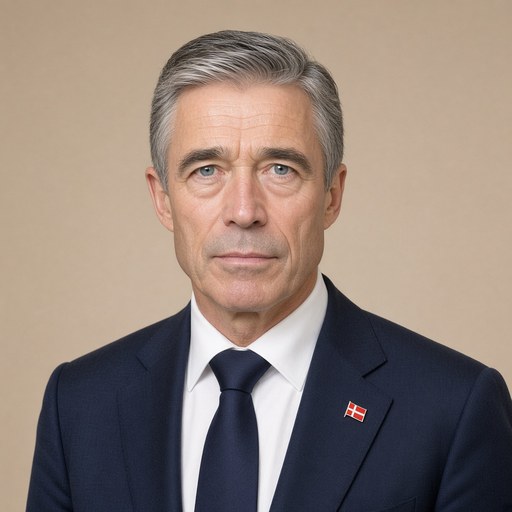
Prime Minister Anders Fogh Rasmussen's remarks at the presentation of the proposal "The Future of Prosperity and Welfare" on April 4, 2006.
 Anders Fogh Rasmussen · Prime Minister of Denmark
- Context
- Rasmussen presented the government's long-term welfare and prosperity reform plan at a press conference in Copenhagen on April 4, 2006.
- Main themes
- Welfare reform, long-term economic planning, investments in Denmark's future, employment growth, aging population challenge, globalization and international competition, research and development funding, education reform, adult and continuing education, entrepreneurship, fiscal sustainability, labor market participation
- Duration
- ~18 min
- Words
- 2,203
- Sentences
- 102
- Readability
- 54
- Grade
- 11.0
- Syntax
- 3.02
- Vocabulary
- 1.90
Translated from Danish
The broad sphere of national life a sentence belongs to. Every sentence has an Arena, so it is the denominator the other indices are read against.
Other102 sentences in 23 paragraphs
Welcome to the press conference.
The government will today present its long-term plan for investments in Denmark's future and changes to our welfare system.
It is an ambitious plan but also a realistic plan. It is an ambitious plan that increases the economic scope of society by around 24 billion DKK. It is an ambitious plan that will eventually increase employment by 150,000. And it is an ambitious plan that provides economic sustainability in Danish society – both in the short term and in the long term. But at the same time, it is a realistic plan, which I believe has a good chance of being implemented.
This is one of the best-prepared political projects in recent times. Over two years ago, the government established a Welfare Commission to prepare for this. About a year ago, the government set up a Globalization Council, which has also provided its input on investments in Denmark's future. And likewise, about a year ago, we initiated, together with the labor market partners, the preparation of a reform of adult and continuing education in Denmark. And now the time has come to tie these three elements together into a comprehensive plan that will provide financial resources for massive investments in Danish society – and equip Danish society to meet future challenges. If we succeed in this task, it will truly place Denmark in an absolute leading position when it comes to preparing for the future.
Denmark is already a role model in terms of preparing for the future, but this will further strengthen that leading position.
Our starting point is good and strong. We have a very strong economy with good employment and falling unemployment. We have a surplus. We are paying off debt – yes, the foreign debt is now gone. So the starting point is good, and therefore some may ask: Well, if things are going so well and there is a surplus, why on earth is it necessary to implement changes in the welfare system? And the answer is: We must do this because we are facing new challenges in the coming years. Both some internal challenges in Denmark and some external challenges that are coming to us from the outside world. The internal challenge is that we are getting more and more elderly people, and there are fewer and fewer in the working-age population. And at the same time, we are living longer. And the latter is absolutely positive, but it does mean that in the coming years there will be increasingly greater expenses for various forms of elderly care and for hospitals and so on. And therefore, we must already now address the task of being able to finance this in the future.
If we do nothing, the surpluses we currently have will, in a few years, turn into deficits. And that is the challenge we face, which is the internal challenge.
Then there is the external challenge. This is the one where Danish society is subjected to increasingly tougher international competition from China, India, and other countries with lower costs. And we need to be better at handling that competition and ensuring employment in Denmark in the future, and that requires investments in Denmark's future.
What we are now proposing is to provide an answer to both the internal challenge and the external challenge with changes to our welfare system. Changes that mean we will generate funds for investments in Denmark's future. Funds that will be invested in making Denmark better at bringing new ideas to fruition through more research and development. Funds that will be invested in making us better at translating these new ideas into new jobs through the establishment of new companies and the expansion of existing ones. And funds that will be invested in better education in Denmark, so that we become better at handling the new jobs that will be created to replace the old ones that are being phased out. And importantly, funds to ensure that we can also have educational opportunities throughout life, recognizing that it is not enough to get a good education when you are young. As society constantly changes, there must also be opportunities to change paths later in life.
All of this requires money. And the plan that the government is presenting today generates a pool of funds that will be gradually built up and will amount to 13 billion DKK by 2015, which we will invest in Denmark's future. Funds that mean that in 2010 we will have public research and development corresponding to one percent of the country's production. Funds that mean we can finance that all young people receive a youth education. Funds that can finance that half of a youth cohort receives a higher education. Funds that will allow us to provide better adult and continuing education for all active members of the labor market. And funds for entrepreneurship – that is, the establishment of new companies.
Such a massive effort has not been seen before.
We will generate the funds through efforts in two major areas. Firstly, by ensuring that we have more active years in the labor market, and secondly, by getting more immigrants into work. More active years in the labor market means, first and foremost, that young people should move through the education system a bit faster and thus also enter the labor market a bit faster. Today, it is the case that for higher education, there is actually a delay of about four years compared to if young people went through without delays – if they took the fastest route, there is a delay of four years today. We want to shorten that, and the plan we are presenting reduces this delay by almost a year.
I would like to emphasize that it is the government's view that there should still be opportunities for young people to go out and work after their studies, to travel, to change studies if they gain a better understanding of what they want. It is not always a blessing to just breeze through. But a delay of four years is too much. And it is important that we find the right balance, and therefore we are proposing various initiatives that will shorten this delay. We say that the main rule should be – for higher education – that you complete your education by the age of 25. So young people should get out into the labor market faster. And at the other end of the scale, older individuals should stay a bit longer in the labor market.
The government proposes that we gradually raise the age at which we normally retire from working life. For those aged 50 and over, there will be no changes. The changes that will be discussed will apply to those under 50. This means that the changes the government proposes will first take effect on January 1, 2017. From that point, we will gradually raise the early retirement age from 60 to 63 years, so that by 2021, the early retirement age will be 63 years. And we will raise the age for the state pension by two years from the current 65 to 67 years, so that by 2025, the state pension age will be 67 years – as it was throughout the period from 1957 to 2003. This means that in the future, according to the government's proposal, there will be a four-year early retirement period, where there has previously been a five-year early retirement.
But the government's plan also means that there will be ample time to adjust to the new rules, as they will not take effect until January 1, 2017, and will only apply to those under 50, so there will be time to adapt to the new rules.
The second track we are pursuing to generate funds for future investments is that we need to get more immigrants into work. The government's goal is to have 25,000 more immigrants in work by 2010.
One of the initiatives we are proposing is a new, special wage subsidy scheme – a particularly favorable wage subsidy scheme – for the employment of immigrants in companies. And this can be linked to so-called mentors – that is, employees in individual companies who help a newly hired immigrant settle into the company – helping them to be trained.
And we are proposing that the municipalities with the most unemployed immigrants can receive some funds to hire a corps of so-called job consultants, whose task will be to go out and engage with unemployed immigrants and help them get into a company and be employed there, where some of the company's employees can receive a bonus for helping to train them. We call it a hands-on integration effort because we want to go out and help individual immigrants get into companies in a much more direct way. We believe that it is such completely untraditional means that are needed to improve employment for immigrants here in Denmark.
In this context, we are proposing an immigration policy where it becomes easier to come to Denmark and get work if you have the qualifications for it, and it becomes harder to come to Denmark if you do not have the qualifications. I would like to emphasize that Denmark should continue to be a nation that is open to the outside world. We want more foreigners in Denmark who have the qualifications to enrich society and help drive it forward. And therefore, we are actively seeking to attract qualified foreigners, as demanded by the business community. We also want those foreigners who wish to reunite with family here in the country to have better conditions for succeeding in Denmark. They should know more about Denmark before they decide to settle here. They should be able to speak some Danish, which enables them to integrate more quickly and become part of Danish society. So we want more foreigners with qualifications and fewer who neither have qualifications nor the prerequisites to succeed here in Danish society.
The plan we are presenting here is the most comprehensive reform presented in recent times, but at the same time, it involves gentle adjustments that give individuals time to adapt when it comes to retirement from the labor market. It is a plan that provides sustainability in both the short term and the long term. There are funds for investments in the future. We generate these through various initiatives in the labor market by getting more immigrants into work and by ensuring that young people move through their education more quickly. There are funds to finance the increasing expenses in the future for elderly care, hospitals, and so on, and we finance this by gradually raising the retirement age slightly. And finally, we make Danish society robust against future increases in life expectancy by proposing that after 2025, the retirement age should be continuously raised in line with increasing life expectancy.
So this is a plan that secures resources for Denmark's future, which ensures a society with strong cohesion, where we ensure education – youth education – for all, where we ensure that there are offers of adult and continuing education for those active in the labor market, where we make an extra effort to get immigrants into jobs. And it is a plan where changes in Danish society go hand in hand with security, because there will be ample time to adapt to the new rules.
The task we face is regarded by the government as a national task. We have a good economic starting point. It has been thoroughly prepared, and we are now proposing broad cooperation with the parties in the Folketing. We hope that the negotiations can conclude with a very broad agreement on changes to the Danish welfare system and investments in Denmark's future. The negotiations will start already this week, and we hope that we can reach a result within the next month and a half.
I know that it can be difficult to understand why we need to implement a major change to the welfare state when we have just paid off the foreign debt and have a huge surplus in the state budget and historically low unemployment. And the easiest thing for the government would also be to close our eyes and enjoy the fact that things are going extraordinarily well in Denmark here and now. But that would also be irresponsible towards all groups in society. For what we are now proposing – the changes we are now proposing – ensures that we can maintain our prosperity and progress throughout society for the benefit of all. So what we must choose is whether we want to make gentle reforms now, or whether we just want to push the problems ahead of us and ultimately be forced to choose between dramatic reductions in welfare or tax increases. And I would like to say that for the government, the choice is simple. We believe that the most responsible thing is to tackle the challenges in good time. We want to act now so that Denmark continues to be a wealthy society and a society that holds together. A society where everyone is included.
The original Danish. The tags above are read on the English translation's sentences.
Velkommen til pressemødet.
Regeringen vil i dag præsentere sin langsigtede plan for investeringer i Danmarks fremtid og ændringer i vores velfærdssystem.
Det er en ambitiøs plan men også en realistisk plan. Det er en ambitiøs plan, som øger samfundets økonomiske råderum med omkring 24 mia. kr. Det er en ambitiøs plan, som på sigt øger beskæftigelsen med 150.000. Og det er en ambitiøs plan, som giver økonomisk holdbarhed i det danske samfund – både på kort sigt og på lang sigt. Men samtidig er det en realistisk plan, som jeg giver en god chance for at kunne blive gennemført.
Det er et af de bedst forberedte politiske projekter i nyere tid. For over to år siden nedsatte regeringen en Velfærdskommission, der skulle forberede det her. For et års tid siden nedsatte regeringen et Globaliseringsråd, som også har givet sit bud på investeringer i Danmarks fremtid. Og ligeledes for et års tid siden igangsatte vi sammen med arbejdsmarkedets parter forberedelse af en reform af voksen- og efteruddannelsen i Danmark. Og nu er tiden kommet til at binde disse tre ting sammen til en omfattende plan, som vil give økonomiske midler til massive investeringer i Danmarks samfund – og ruste det danske samfund til at klare fremtidens udfordringer. Og lykkes den opgave, så vil det virkelig for alvor bringe Danmark i en absolut førerposition, når det gælder at ruste sig til fremtiden.
I forvejen er Danmark en rollemodel med hensyn til at forberede sig på fremtiden, men det her vil yderligere forstærke den førerposition.
Vores udgangspunkt er godt og stærkt. Vi har en rigtig stærk økonomi med god beskæftigelse og faldende arbejdsløshed. Vi har overskud. Vi afvikler gæld – ja, udlandsgælden er nu væk. Så udgangspunktet er godt, så derfor vil nogle spørge: Jamen, når det nu går så godt, og der er overskud, hvorfor i alverden er det så nødvendigt at gennemføre ændringer i velfærdssystemet. Og svaret er: Jo, det er vi nødt til, fordi der venter os nogle nye udfordringer i løbet af de kommende år. Både nogle indre udfordringer i Danmark og nogle ydre udfordringer, der kommer til os fra omverdenen. Den indre udfordring er, at vi bliver stadig flere ældre, og der bliver stadig færre i de erhvervsaktive år. Og samtidig lever vi længere. Og det sidste er absolut positivt, men det betyder selvfølgelig, at der i de kommende år vil blive stadig større udgifter til forskellige former for ældrepleje og til sygehuse og så videre. Og derfor er vi nødt til allerede nu at tage fat på den opgave at kunne finansiere det i fremtiden.
Hvis ikke vi foretager os noget, så vil de overskud, vi har i øjeblikket, i løbet af nogle år blive vendt til underskud. Og det er den udfordring, vi står overfor, som er den indre udfordring.
Så er der den ydre udfordring. Det er den, der består i, at det danske samfund bliver udsat for en stadig skrappere international konkurrence fra Kina, Indien og andre lande med lavere omkostninger. Og der skal vi være bedre til at klare den konkurrence og sikre beskæftigelsen i Danmark i fremtiden, og det kræver investeringer i Danmarks fremtid.
Det vi nu lægger op til, er at give et svar på både den indre udfordring og den ydre udfordring med ændringer i vores velfærdssystem. Ændringer som betyder, at vi skaffer penge frem til investeringer i Danmarks fremtid. Penge som bliver investeret i, at vi i Danmark bliver bedre til at få nye ideer gennem mere forskning og udvikling. Penge der bliver investeret i, at vi bliver bedre til at få disse nye ideer omsat til nye arbejdspladser gennem start af nye virksomheder og udvidelse af eksisterende. Og penge der bliver investeret i bedre uddannelse i Danmark, sådan at vi bliver bedre til at klare de nye jobs, der bliver oprettet til erstatning for de gamle, der bliver nedlagt. Og vel at mærke penge til at vi også kan have uddannelsestilbud hele livet igennem i erkendelse af, at det er ikke nok at få en god uddannelse, når man er ung. Sådan som samfundet hele tiden forandrer sig, så skal der også være mulighed for, at man kan skifte bane senere i tilværelsen.
Alt det kræver penge. Og den plan, som regeringen i dag præsenterer, skaffer en pulje penge frem, som bygges gradvist op og i 2015 vil udgøre 13 mia. kr., som vi vil investere i Danmarks fremtid. Penge som betyder, at vi i 2010 har offentlig forskning og udvikling svarende til én procent af landets produktion. Penge som betyder, at vi kan finansiere, at alle unge får en ungdomsuddannelse. Penge som kan finansiere, at halvdelen af en ungdomsårgang får en videregående uddannelse. Penge til at vi kan give bedre voksen- og efteruddannelse til alle aktive på arbejdsmarkedet. Og penge til iværksætteri – altså start af nye virksomheder.
En sådan massiv indsats er ikke set før.
Vi skaffer pengene ved en indsats på to store områder. Dels ved at vi skal fremover være flere aktive år på arbejdsmarkedet og dels ved, at vi skal have flere indvandrere i arbejde. Flere aktive år på arbejdsmarkedet er for det første, at de unge skal lidt hurtigere igennem uddannelsessystemet og dermed også lidt hurtigere ud på arbejdsmarkedet. I dag er det sådan, at for de videregående uddannelser, der er der faktisk en forsinkelse på omkring fire år i forhold til, hvis de unge gik igennem uden forsinkelser – hvis de tog den hurtigste vej, så er der en forsinkelse på fire år i dag. Det vil vi gerne korte ned, og den plan, vi lægger frem, afkorter denne forsinkelse med knap et års tid.
Jeg vil gerne understrege, at det er regeringens opfattelse, at der også fremover skal være mulighed for, at unge mennesker kan tage ud og arbejde efter studierne, kan tage ud at rejse, kan skifte studie, hvis de bliver klogere på, hvad de gerne vil. Det er ikke altid lykken, at man bare lige suser lige igennem. Men en forsinkelse på fire år er for meget. Og der gælder det om, at vi finder den rette balance, og derfor lægger vi op til forskellige initiativer, der korter den forsinkelse ned. Vi siger, at hovedreglen skal være – for videregående uddannelser – at man er færdig med sin uddannelse, når man er 25 år. Så de unge skal altså hurtigere ud på arbejdsmarkedet. Og i den anden ende af skalaen skal de ældre så blive lidt længere tid på arbejdsmarkedet.
Regeringen lægger op til, at vi gradvis forhøjer alderen, hvor vi normalt trækker os tilbage fra arbejdslivet. For dem, der er 50 år og derover, sker der ingen ændringer. De ændringer, der bliver tale om, gælder altså for dem, der er under 50. Det betyder, at de ændringer, regeringen lægger op til, først træder i kraft den 1. januar 2017. Fra det tidspunkt af forhøjer vi gradvist alderen for efterløn fra 60 til 63 år, således at når vi når frem til 2021, så er efterlønsalderen 63 år. Og vi forhøjer alderen for folkepension med to år fra de nuværende 65 til 67 år, således at når vi når frem til 2025, så er folkepensionsalderen 67 år - som den jo i øvrigt var i hele perioden fra 1957 til 2003. Det betyder, at fremover bliver der efter regeringens forslag tale om fireårs efterløn, hvor der hidtil har været 5 års efterløn.
Men regeringens plan betyder også, at der bliver god tid til at indrette sig på de nye regler, for de træder altså først i kraft den 1. januar 2017, gælder kun for dem under 50 år, så man kan altså nå at indrette sig på de nye regler.
Det andet spor, vi forfølger for at skaffe penge til investeringer i fremtiden, det er, at vi skal have flere indvandrere i arbejde. Regeringens mål er, at frem mod 2010 skal vi have 25.000 flere indvandrere i arbejde.
Ét af de initiativer, vi stiller forslag om, er en ny, særlig løntilskudsordning – særlig gunstig løntilskudsordning – til ansættelse af indvandrere i virksomhederne. Og til det kan knyttes såkaldte mentorer – det vil sige medarbejdere i de enkelte virksomheder, som hjælper med at få en nyansat indvandrer til at falde til rette på virksomheden – hjælper vedkommende med at blive oplært.
Og vi stiller et forslag om, at de kommuner, der har flest ledige indvandrere, kan få nogle penge til at ansætte et korps af såkaldte jobkonsulenter, hvis opgave bliver at gå ud og tage fat i ledige indvandrere og hjælpe dem med at komme ind på en virksomhed og blive ansat der, hvor der så er nogle af virksomhedens medarbejdere, der kan få en bonus for at hjælpe med at oplære de pågældende. Vi kalder det en håndholdt integrationsindsats, fordi vi simpelthen meget mere direkte vil gå ud og hjælpe de enkelte indvandrere med at komme ind i virksomhederne. Vi mener, at det er sådanne helt utraditionelle midler, der skal til for at få en forbedring af beskæftigelsen for indvandrere her i Danmark.
Vi lægger i den forbindelse op til en indvandrerpolitik, hvor det bliver lettere at komme til Danmark og få arbejde, hvis man har kvalifikationerne til det, og det bliver sværere at komme til Danmark, hvis man ikke har kvalifikationerne. Jeg vil gerne understrege, at Danmark skal fortsat være en nation, der er åben overfor omverdenen. Vi vil gerne have flere udlændinge til Danmark, der har kvalifikationer til at berige samfundet og medvirke til at drive det fremad. Og derfor søger vi målrettet at tiltrække kvalificerede udlændinge, som blandt andet erhvervslivet efterspørger. Vi ønsker også, at de udlændinge, som ønsker familiesammenføring her i landet, har bedre forudsætninger for at klare sig i Danmark. De skal vide mere om Danmark, før de træffer beslutning om at bosætte sig her. De skal kunne lidt dansk, der gør dem i stand til hurtigere at blive integrerede og blive en del af det danske samfund. Så vi ønsker altså flere udlændinge med kvalifikationer og færre, der hverken har kvalifikationer eller forudsætninger for at klare sig her i det danske samfund.
Den plan, vi lægger frem her, er den mest omfattende reform, der er præsenteret i nyere tid, men samtidig er det nænsomme justeringer, der giver den enkelte tid til at indrette sig, når det gælder tilbagetrækning på arbejdsmarkedet. Det er en plan, som giver holdbarhed på både kort sigt og lang sigt. Der er penge til investeringer i fremtiden. Dem skaffer vi ved forskellige initiativer på arbejdsmarkedsområdet ved at skaffe flere indvandrere i arbejde og ved, at de unge kommer hurtigere igennem uddannelser. Der er penge til at finansiere, at der bliver flere udgifter i fremtiden til ældrepleje, sygehuse og så videre, og det finansierer vi ved, at vi gradvis forhøjer tilbagetrækningsalderen en smule. Og endelig så gør vi det danske samfund robust overfor fremtidige stigninger i levetiden ved, at vi foreslår, at efter 2025 skal tilbagetrækningsalderen løbende forhøjes i takt med, at levetiden bliver højere.
Så det er altså en plan, der sikrer midler til Danmarks fremtid, som sikrer et samfund med en stærk sammenhængskraft, hvor vi sikrer uddannelse – ungdomsuddannelse – til alle, hvor vi sikrer, at der til de aktive på arbejdsmarkedet, er tilbud om voksen- og efteruddannelse, hvor vi gør en ekstra indsats for at få indvandrere i job. Og det er en plan, hvor forandringer i det danske samfund går hånd i hånd med tryghed, fordi der bliver god tid til at indrette sig på de nye regler.
Den opgave, vi står overfor, betragter regeringen som en national opgave. Vi har et godt økonomisk udgangspunkt. Den er forberedt grundigt, og vi lægger nu op til et bredt samarbejde med partierne i Folketinget. Vi håber, at forhandlingerne kan slutte med en meget bred aftale om ændringer i det danske velfærdssystem og investeringer i Danmarks fremtid. Forhandlingerne starter allerede i denne uge, og vi håber, at vi kan nå et resultat indenfor den næste halvanden måneds tid.
Jeg ved godt, at det kan være svært at forstå, hvorfor vi skal gennemføre en stor ændring af velfærdssamfundet, når vi netop har afbetalt udlandsgælden og har et kæmpe overskud på statens budget og en historisk lav arbejdsløshed. Og det letteste for regeringen ville da også være at lukke øjnene og så nyde, at det går ualmindelig godt i Danmark her og nu. Men det ville også være uansvarligt overfor alle grupper i samfundet. For det vi nu lægger op til – de ændringer vi nu lægger op til - sikrer, at vi kan fastholde vores velstand og fremdrift i hele samfundet til glæde for alle. Så det vi skal vælge er, om vi vil lave nænsomme reformer nu, eller om vi bare vil skubbe problemerne foran os og så til sidst blive tvunget til at vælge mellem dramatiske forringelser af velfærden eller skattestigninger. Og der vil jeg gerne sige, at for regeringen er valget enkelt. Vi mener, at det mest ansvarlige er, at vi takler udfordringerne i god tid. Vi vil handle nu, så Danmark fortsat bliver et rigt samfund og et samfund, der hænger sammen. Et samfund hvor alle er med.