




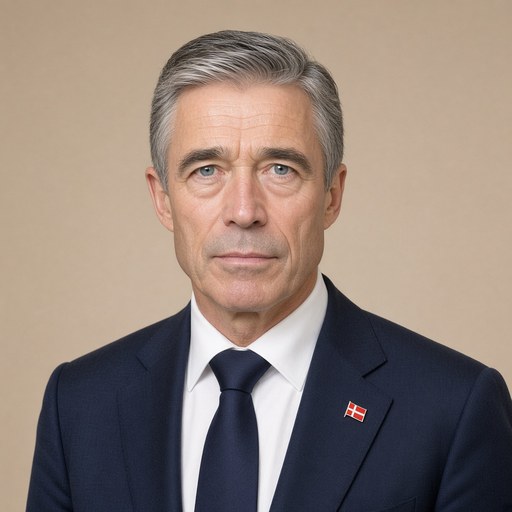
Prime Minister Anders Fogh Rasmussen's speech at the Industry's Annual Day "The New World Order - The Political Challenge"
 Anders Fogh Rasmussen · Prime Minister of Denmark
- Context
- Rasmussen addressed Danish industry leaders at the Industry's Annual Day in the Bella Center on September 30, 2003, outlining Denmark's foreign policy amid global change.
- Main themes
- New world order, US dominance and unipolarity, transatlantic relations, Denmark's foreign policy, multilateralism and UN reform, international terrorism, Iraq engagement, EU-US cooperation, North-South relations, European integration, global stability, root causes of terrorism
- Duration
- ~29 min
- Words
- 3,443
- Sentences
- 264
- Readability
- 53
- Grade
- 9.0
- Syntax
- 2.45
- Vocabulary
- 2.16
Translated from Danish
The broad sphere of national life a sentence belongs to. Every sentence has an Arena, so it is the denominator the other indices are read against.
Other264 sentences in 102 paragraphs
September 30, Bella Center
The spoken word is valid
Thank you for the invitation to speak here today on the occasion of the Industry's annual day.
The theme for the anniversary is well chosen. The world is changing. Old structures are being broken down. Unforeseen and drastic events are leaving their clear and lasting marks on daily life. This is not "Business as Usual."
The changes demand a response from all of us, both countries and businesses. But the changes primarily create new opportunities that we must learn to exploit.
To manage this task, we must consistently confront the period in which Denmark sailed under a flag of convenience in relation to the challenges of the global community.
We must take a stand. We must declare our colors. We must dare to think, say, and act accordingly.
I will focus on three fundamental themes for Denmark's foreign policy engagement. The dominant role of the USA, the relationship between the North and the South, and the development of the European community.
* * *
1. The unipolar world
The USA is today the dominant superpower in the world. This applies militarily, economically, and culturally. These are the fundamental global realities.
Surrounding the USA, we have a number of regional power centers. The EU is an example of such a regional power center. The EU has global reach economically, but not militarily. Russia is a regional power center, primarily due to its possession of nuclear weapons. China has significant geostrategic importance. And Japan has great economic power.
To ensure stability in the new world order, it is crucial that the USA and the regional power centers can and will cooperate to solve the major global challenges—whether it is the environment and poverty, terrorism and threats of war, or ensuring continued economic growth.
It is in the EU's interest to develop closely in cooperation with the USA. We should not define ourselves in opposition to the USA. That would not only be wrong and dangerous, but also historically ignorant and lacking perspective.
Only with strong transatlantic ties can we solve the common challenges. We may occasionally disagree on the means, but we share the fundamental values.
This does not mean that Europe is or must be in absolute agreement with the Americans on everything. The disagreements between the EU and the USA are numerous. Let me mention three specific areas: The International Criminal Court, trade policy, and the entire climate debate. In these areas, the EU must of course defend its interests and viewpoints against the USA.
But amid the disagreements, it is important to hold on to the fact that what unites us across the Atlantic is far stronger than what divides us.
Denmark's active engagement in Iraq should be seen in this light. We must stand firm, and we must fight for the fundamental democratic values. We must express our positions. We must dare to put action behind words when a brutal dictator like Saddam Hussein shows complete contempt for the UN and refuses to meet reasonable and clear demands from the global community.
But we have just seen the UN paralyzed by disagreement among the dominant powers. If the new world order is to function, both the USA and the regional powers must adhere to a set of rules of conduct for their mutual behavior. There is a need for a code of conduct.
I will outline such a code of conduct in four points:
1. The USA must continue to commit to multilateralism. There is no doubt that the USA has the necessary economic and military power to solve its problems on its own. But it is in the USA's own interest to secure political and moral support for its policies. We must support the Americans in these efforts.
2. The great powers must cooperate to ensure that the UN Security Council is able to make decisions. Stagnation leads to paralysis.
3. The regional powers should take greater responsibility in cooperation with the USA. In the case of the EU, we must become better at resolving regional conflicts. For example, in the Balkans. China and Japan should do the same regarding North Korea. The EU should also provide more assistance in Iraq and the Middle East. If the USA is to bear the burden of resolving all the world's regional conflicts alone, there is a risk that the USA will become overburdened.
4. And finally, the USA should become better at sharing its enormous resources and expertise to address "soft" international problems such as the environment, poverty, etc.
* * *
The terrorist attack on September 11, 2001, showed that international terrorism poses the greatest and most dangerous security threat of our time. We must purposefully and firmly combat the terrorists. But we must also combat the root causes of terrorism.
Some say that terrorism arises from poverty. That is far too simplistic. Terrorism primarily stems from political and religious fanaticism. But fanaticism and extremism are fueled by political, economic, and social oppression. We see this, among other places, in the Middle East.
To create more peace and stability in the Middle East, it is essential to promote democratic development in the Arab countries. It is necessary to improve their educational systems, particularly with an emphasis on secular, non-religious programs, to develop a well-functioning social system, to ensure women's rights and opportunities to participate in the labor market and public life, to ensure free access to news and information, to develop solid democratic institutions and rule of law with respect for human rights, and to stimulate the development of small and medium-sized enterprises and generally create a foundation for a market economy and free trade.
We must work together with the Arab countries to promote such development in the Middle East. Here, the EU has an important role to play.
2. The North-South issue
Unfortunately, we have experienced some years marked by stagnation in the global economy.
The downturn affects all countries. But it particularly impacts the poorest parts of the world. And it is precisely these areas that are potentially sources of instability.
A freer world trade with open economies is a prerequisite for development. All efforts to help developing countries get started will be futile if they do not have the opportunity to sell their goods on the world market.
Free trade
We must therefore open our markets. This is especially true for the products that the poorest countries can produce best. This includes food and textiles. It is a necessary first step to strengthen the opportunities for developing countries. But it is also very important that developing countries open their markets to each other.
Protectionism and trade barriers lead to stagnation. Free trade and open markets lead to dynamism and growth. Free trade means that poor countries have the chance to earn their own money. Increased prosperity in developing countries leads to increased demand for goods from rich countries. In this way, it is a win-win situation. Everyone benefits from free trade.
Protectionism protects the inefficient. Therefore, protectionism leads to fewer investments and less innovation, lower productivity, and thus lower wages than otherwise. Protectionism raises the cost of goods and hits the poor in all countries. Protectionism is a vicious circle that drags the world economy deeper into quicksand.
Therefore, it was particularly regrettable that the WTO negotiations in Cancun broke down. But we must not give up for that reason. The efforts must continue.
There is no other way forward than more liberalized world trade.
It is my expectation that the negotiations in the WTO context will be able to resume and be brought to a conclusion. Whether this can be achieved before the deadline of January 1, 2005, remains to be seen. Denmark will push for this with our EU partners.
Johannesburg
A freer world trade is a necessary step. But it is only a first step, and it cannot stand alone.
One of the biggest problems in the world is the lack of clean drinking water and sanitation. 2 million people die annually. And half a billion people suffer serious illnesses every year.
The same applies to the spread of infectious diseases such as AIDS, malaria, etc., which have severe consequences in individual societies. HIV and AIDS threaten to pull the rug out from under the poor world's opportunities.
It is quite fundamentally very difficult to imagine how a society can develop if there is a lack of clean drinking water and sanitation or if an ever-increasing proportion of the population suffers from an infectious disease with little hope of survival.
The Johannesburg summit a little over a year ago emphasized the close connection between environmental and development issues. This has been said before on many festive occasions. But now the time has come to deliver on the promises. It is in everyone's interest. The goal is to halve the number of people without access to water and sanitation by 2015. This could prove to be one of the best investments we ever make.
In the fight against infectious diseases, the goal is initially to stop and reverse the development of diseases that threaten humanity by 2015.
In this context, it is encouraging that an agreement has now been reached in the WTO context that allows developing countries access to cheap medicine to combat diseases such as HIV/AIDS, malaria, and tuberculosis.
3) Denmark in a strong, expanded EU
And then there is our own affiliation with the EU.
The EU is facing a fundamental change in connection with the expansion to 25 member states. Familiar working methods and alliance patterns will change. There will be significantly greater competition for influence.
Danish influence will increasingly go through the EU. It is therefore in Denmark's interest that the EU is strengthened. A strengthened EU will be able to act internationally and shape the world based on the values that the EU is built upon. This applies both politically and economically.
After the expansion from 15 to 25 members, we need a new set of rules for the EU. Therefore, there is a need for the new treaty that the EU convention has drafted a good proposal for.
From the Danish side, we will participate actively, engaged, and constructively in the upcoming intergovernmental conference. The government has a large political majority behind its negotiating mandate, which ensures Denmark the best possible basis for exerting influence.
The question of the Danish exceptions is central to the current debate. And rightly so. It is an important and complicated matter that requires careful consideration.
The government's position is well known. We want the exceptions removed. They are not in Denmark's interest. And they limit our opportunities to pursue an active European policy. But the exceptions can only be lifted by the Danish population through a referendum.
For me, it is crucial that we approach this issue in a fair and proper manner. The population must know where it stands and where it has the politicians. There must be full transparency about the process.
No one should doubt that the government participates in the intergovernmental conference with full respect for the Danish exceptions. The exceptions will be transferred to the new treaty. This requires a consequential adjustment in the protocol on the reservations attached to the treaty. This adjustment is agreed upon by the government with the Social Democrats, the Socialist People's Party, the Radicals, and the Christian People's Party.
This means: When the negotiations on the new treaty are concluded, there will be a proposal for a treaty including the Danish exceptions. Adjusted in a form that covers the same and precisely what was originally intended.
There will be no fiddling. There will be no botanizing. The exceptions will stand clear and pure in the new treaty. And this treaty, including the Danish exceptions, will be put to the population in a referendum.
There will thus be an opportunity to say "yes" or "no" to the new treaty, including the known and existing exceptions.
But as the scope of the Danish exceptions grows quite significantly, it is reasonable that the population is given the opportunity to take a stand on the Danish exceptions—when the time is right.
The crucial thing is that the population is given a fair and proper opportunity to take a stand on both the treaty and the reservations.
It is in this light that the government would like to give the population the opportunity to take a stand on a changed formulation, a modernization of the legal reservation.
Specifically, we propose a model where, from the Danish side, decisions will be made on a case-by-case basis. If we wish to participate in the adoption of a legal act, we will inform the other countries. Then we will vote on the legal act, and we will be covered by the common rules. If we wish to opt out, we are also free to do so. The Folketing will decide on a case-by-case basis.
The United Kingdom and Ireland already have such an arrangement regarding asylum and immigration. The model is referred to in English as an "opt-in" arrangement because it is a matter of free choice. In Danish, it can be termed a "choice arrangement."
I would like to emphasize that what we have proposed is not a change to the reservation in connection with the intergovernmental conference. There is therefore no question of negotiating away the current reservation. But it creates the possibility for us to choose to change the reservation through a referendum.
I will say very openly that the proposal resolves a dilemma. The proposal allows Denmark to participate in EU cooperation on combating terrorism, organized crime, human trafficking, etc. At the same time, it allows us to maintain the current immigration policy. It is, in some respects, stricter than the common EU rules.
I made it clear at a very early stage that the government does not intend to relax immigration policy. It remains firm. And it has broad support in the population.
The proposal should be seen as an expression of the government's desire to give the population as much freedom as possible. To be able to maintain the current strict immigration policy. And at the same time to be able to participate in cooperation on combating cross-border crime.
The current formulation of the reservation does not allow for these two considerations to be met. The government's proposal does. It gives the Danish population the opportunity for a free choice.
Let me conclude with a few words about the themes and timing for an upcoming referendum.
There are some who continue to insist that the government should put everything on one card and call for a so-called "big bang" referendum. That is to say: Negotiate away the Danish exceptions and then ask the population to say "yes" or "no" to the treaty without the Danish exceptions.
The philosophy is as follows: Now the Danes must decide whether they are in or out of the EU cooperation. If we are in, then we must be fully in, without exceptions. Otherwise, we must leave the EU.
I disagree with that approach.
Fundamentally, it is undemocratic. We have the reservations we have because the population did not wish to participate fully and completely. But the population simultaneously said that it wants Denmark to be part of the EU.
We do not solve that dilemma by putting a gun to the population's head and saying either/or. I certainly will not do that.
And I believe it is entirely legitimate to meet the population halfway when it comes to immigration policy. Because of the existing reservation, we have not been at the table to decide the rules that the EU has now adopted.
If Denmark had been involved, we could have made it a condition for joining that we were allowed to continue with our strict rules regarding, among other things, family reunification. Now Denmark had no influence. And that means that the common rules do not meet all our demands.
Common rules can be an advantage. But when you have not been involved in establishing them, you must have the freedom to assess whether they meet legitimate national wishes and needs.
The common EU rules regarding, among other things, immigration do not meet all points. Therefore, the government cannot recommend the abolition of the legal reservation. That is why we propose a change to the legal reservation. A change that means that the Parliament can decide from case to case whether Denmark should participate in legal cooperation.
That is why I have also made it clear. There will be no "big bang" vote. That would be to gamble with the constitutional treaty and thus with Denmark's continued EU membership.
In general, there will be no threats and pressure in the upcoming referendum. The population must be able to fairly and properly assess both the new treaty and the Danish exceptions. We should not threaten with either falling pork prices, rising unemployment, or explosive interest rate increases. We must convince the Danes that we belong in the new Europe.
There are two options for this decision. Either it can happen on the same day that we are already scheduled to vote on the new treaty. Or we can postpone the decision on the exceptions to a later date.
It is too early to settle on the right model. We can do that better when we know the outcome of the negotiations on the new treaty.
* * *
Denmark is well equipped for the new world order. We are in a good position when it comes to utilizing new technologies and new knowledge. But we must become even better.
We are working to create the right frameworks and conditions for this development. But ultimately, it is the companies themselves that must take on the challenge.
The government will ensure improved competitiveness. We have introduced a tax freeze. From next year, we will begin a gradual reduction of the tax on labor income. We have eased and will continue to ease the administrative burdens on businesses. We are pursuing a stable fiscal policy that supports the fixed exchange rate and the record low interest rate. We are improving education. We are allocating more money for research. Based on the new Ministry of Science, Technology and Development, we will focus heavily on Denmark as a knowledge society in the coming years.
So the stage is set. The rest is up to you.
Companies must significantly expand research and development. Increase investments and exploit opportunities internationally.
There are two specific areas where I see exciting opportunities for certain parts of the business community. One opportunity is to engage in new partnerships regarding clean drinking water, which will be created in the wake of the agreements from the Johannesburg summit.
To strengthen the private sector's participation in development cooperation, an initial fund of 20 million kroner per year has been established. The purpose is to stimulate the establishment of partnerships with public authorities and businesses in developing countries.
The second opportunity is to make environmental investments within the framework of the follow-up to the Kyoto agreement, also known as joint implementation. The EU's quota directive will come into effect from 2005. The purpose of the directive is to contribute to the EU's fulfillment of the CO2 reduction commitment from Kyoto.
In 2003, the government allocated 130 million kroner for projects under Joint Implementation. The initiative aims to achieve the most environmental benefit for the money.
With these two opportunities, I have touched on a theme that I believe will become stronger and stronger in the coming years. Namely, the social engagement of companies.
I would like to emphasize: Responsible corporate management must first and foremost ensure that customers receive the demanded products in proper quality, delivered on time and at a competitive price. That is primarily what customers want.
But even on this point, it is not "business as usual." The coming years will present a new agenda. An agenda where the environment, working conditions, employee relations, and social issues will play a larger role. For customers. But also for the opportunities to attract qualified employees. The employees of the future will not only want to earn a decent salary. They will also want to identify with the company's goals and ethics.
In that sense, business and politics will move along parallel tracks in the coming years. Values will play an increasing role.
A successful policy must be based on clear values, clear goals, and consistent action.
A successful company must also be based on clear values, clear goals, and consistent action.
Those who understand this will be the winners of the future.
The original Danish. The tags above are read on the English translation's sentences.
30. september, Bella Centeret
Det talte ord gælder
Tak for invitationen til at tale her i dag på Industriens årsdag.
Temaet for årsdagen er velvalgt. Verden er under forandring. Gamle strukturer brydes ned. Uforudsete og drastiske begivenheder sætter sine tydelige og vedvarende præg på dagligdagen. Der er ikke tale om ”Business as Usual”.
Forandringerne stiller krav til os alle sammen, lande såvel som virksomheder. Men forandringerne skaber først og fremmest nye muligheder som vi skal forstå at udnytte.
For at magte den opgave skal vi gøre konsekvent op med den periode, hvor Danmark sejlede under bekvemmelighedsflag i forhold til verdenssamfundets udfordringer.
Vi skal tage stilling. Vi skal bekende kulør. Vi skal turde mene, sige og handle derefter.
Jeg vil fokusere på tre grundlæggende temaer for Danmarks udenrigspolitiske engagement. USA's dominerende rolle, forholdet mellem nord og syd og udviklingen af det europæiske fællesskab.
* * *
1. Den unipolære verden
USA er i dag den dominerende stormagt i verden. Det gælder militært, økonomisk og kulturelt. Sådan er de helt grundlæggende globale realiteter.
Rundt om USA har vi så en række regionale magtcentre. EU er et eksempel på et sådant regionalt magtcenter. EU har global rækkevidde økonomisk, men ikke militært. Rusland er et regionalt magtcenter, først og fremmest som følge af besiddelsen af nukleare våben. Kina har stor geostrategisk betydning. Og Japan har stor økonomisk magt.
For at sikre stabilitet i den nye verdensorden er det afgørende, at USA og de regionale magtcentre kan og vil samarbejde om at løse de store globale udfordringer – hvad enten det er miljø og fattigdom, terror og krigstrusler eller at sikre fortsat økonomisk vækst.
Det er i EU’s interesse at udvikle sig i tæt samarbejde med USA. Vi skal ikke definere os i modsætning til USA. Det vil ikke bare være forkert og farligt, men også historieløst og perspektivløst.
Kun med stærke transatlantiske forbindelser kan vi løse de fælles udfordringer. Det kan godt være, vi engang imellem er uenige om midlerne, men vi deler de grundlæggende værdier.
Det betyder ikke, at Europa er eller absolut
skal
være enige med amerikanerne om alt. Uenighederne mellem EU og USA er talrige. Lad mig nævne tre konkrete områder: Den Internationale Straffedomstol, handelspolitik og hele klimadebatten. Der skal EU selvfølgelig forsvare sine interesser og synspunkter over for USA.
Men midt i uenighederne er det altså vigtigt at holde fast i, at det, der samler på tværs af Atlanten, er langt stærkere end det, der skiller.
Danmarks aktive engagement i Irak skal ses i dette lys. Vi skal stå ved, og vi skal kæmpe for de grundlæggende demokratiske værdier. Vi skal markere vores holdninger. Vi skal turde sætte handling bag ord, når en grusom diktator som Saddam Hussein udviser fuldstændig foragt for FN og nægter at opfylde rimelige og klare krav fra verdenssamfundet.
Men vi har netop set FN være lammet af uenighed mellem de dominerende magter. Hvis den nye verdensorden skal fungere, må såvel USA som de regionale magter følge et sæt spilleregler for den indbyrdes adfærd. Der er behov for en adfærdskodeks.
Jeg vil stille en sådan adfærdskodeks op i fire punkter:
1. USA skal fortsat bekende sig til multilateralisme. Der er ingen tvivl om, at USA har den nødvendige økonomiske og militære magt til selv at løse sine problemer. Men det er i USA’s egen interesse at sikre en politisk og moralsk opbakning til sin politik. Vi skal støtte amerikanerne i disse bestræbelser.
2. De store magter skal samarbejde for at sikre, at FN’s Sikkerhedsråd er i stand til at træffe beslutninger. Stilstand fører til lammelse.
3. De regionale magter bør tage større ansvar i samarbejdet med USA. I EU's tilfælde skal vi blive bedre til at løse regionale konflikter. Som f.eks. på Balkan. Det bør Kina og Japan gøre i forhold til Nordkorea. EU burde også hjælpe mere i Irak og Mellemøsten. Hvis USA alene skal tage løsningen alle verdens regionale konflikter på sine skuldre, er der risiko for, at USA bliver overbebyrdet.
4. Og endelig bør USA blive bedre til at dele af sine enorme ressourcer og ekspertise også til at løse de ”bløde” internationale problemer som miljø, fattigdom mv.
* * *
Terrorangrebet den 11. september 2001 viste, at den internationale terror udgør vor tids største og farligste sikkerhedstrussel. Vi skal målbevidst og med fast hånd bekæmpe terroristerne. Men vi skal også bekæmpe roden til terror.
Nogle siger, at terrorisme udspringer af fattigdom. Det er alt for simpelt. Terrorisme kommer først og fremmest af politisk og religiøs fanatisme. Men fanatisme og ekstremisme får næring af politisk, økonomisk og social undertrykkelse. Det ser vi bl.a. i Mellemøsten.
For at skabe mere fred og stabilitet i Mellemøsten er det helt nødvendigt at fremme en demokratisk udvikling i de arabiske lande. Det er nødvendigt
at
forbedre deres uddannelsessystemer, navnlig med vægt på verdslige, ikke-religiøse programmer,
at
udvikle et velfungerende socialt system,
at
sikre kvinders rettigheder og muligheder for at deltage på arbejdsmarkedet og i det offentlige liv,
at
sikre fri adgang til nyheder og information,
at
udvikle solide demokratiske institutioner og retsstater med respekt for menneskerettigheder,
at
stimulere udvikling af små og mellemstore virksomheder og i det hele taget skabe grundlag for markedsøkonomi og fri handel.
Vi skal i samarbejde med de arabiske lande fremme en sådan udvikling i Mellemøsten. Her har EU en vigtig rolle at spille.
2. Nord-syd problemstillingen
Vi har desværre oplevet nogle år præget af afmatning i den globale økonomi.
Tilbageslaget rammer alle lande. Men det rammer i særlig grad de fattigste dele af verden. Og det er netop de områder, der potentielt er kilder til ustabilitet.
En friere verdenshandel med åbne økonomier er en forudsætning for udvikling. Alle bestræbelser på at hjælpe udviklingslandene i gang vil være nytteløse, hvis ikke de får mulighed for at sælge deres varer på verdensmarkedet.
Frihandel
Vi skal derfor åbne vore markeder. Det gælder i særlig grad for de produkter, som de fattigste lande bedst kan producere. Det gælder fødevarer og tekstiler. Det er et nødvendigt første skridt for at styrke udviklingslandenes muligheder. Men det er i høj grad også vigtigt, at ulandene åbner deres markeder for hinanden.
Protektionisme og handelsbarrierer fører til stagnation. Frihandel og åbne markeder fører til dynamik og vækst. Frihandel betyder, at de fattige lande får chancen for at tjene deres egne penge. Øget velstand i udviklingslandene fører til øget efterspørgsel efter varer fra de rige lande. På den måde er det en win-win-situation. Alle vinder på frihandel.
Protektionisme beskytter de ineffektive. Protektionisme fører derfor til færre investeringer og mindre fornyelse, ringere produktivitet og dermed lavere løn end ellers. Protektionisme fordyrer varerne og rammer de fattige i alle lande. Protektionisme er en ond cirkel, som trækker verdensøkonomien stadig dybere ned i kviksand.
Derfor var det ekstra sørgeligt, at WTO-forhandlingerne i Cancun brød sammen. Men vi må ikke give op af den grund. Bestræbelserne må fortsætte.
Der er ingen anden vej frem end mere liberaliseret verdenshandel.
Det er min forventning, at forhandlingerne i WTO sammenhæng vil kunne genoptages og bringes til afslutning. Om det kan nås inden tidsfristen 1/1-2005 må tiden vise. Danmark vil presse på i forhold til vore EU-partnere.
Johannesborg
En friere verdenshandel er et nødvendigt skridt. Men det er kun et første skridt, og det kan ikke stå alene.
Et af de største problemer overhovedet i verden er manglen på rent drikkevand og sanitet. 2 millioner mennesker dør årligt. Og 1⁄2 mia. mennesker får alvorlige sygdomme hvert år.
Det samme gælder spredningen af smitsomme sygdomme som AIDS, malaria mv. som har voldsomme konsekvenser i det enkelte samfund. HIV og AIDS truer med at rive tæppet væk under den fattige verdens muligheder.
Det er helt banalt meget vanskeligt at forestille sig, hvordan et samfund skal udvikles, hvis der er mangel på rent drikkevand og sanitet eller hvis en stadig stigende andel af befolkningen lider af en smitsom sygdom med ringe håb for overlevelse.
Johannesborg-topmødet for godt et år siden understregede den tætte sammenhæng mellem miljø- og udviklingsproblemer. Det har været sagt før ved mange festlige lejligheder. Men nu er tidspunktet kommet til at levere på løfterne. Det er i alles interesse. Målsætningen er at halvere antallet af personer uden adgang til vand og sanitet inden 2015. Det kan vise sig at være en af de bedste investeringer, vi nogen sinde foretager os.
I kampen mod smitsomme sygdomme er målsætningen i første omgang inden 2015 at standse og vende udviklingen af sygdomme der truer menneskeheden.
Det er i den forbindelse glædeligt, at der i WTO sammenhæng nu er blevet indgået en aftale, der giver udviklingslande mulighed for billig medicin til bekæmpelse af sygdomme som HIV/AIDS, malaria og tuberkulose.
3) Danmark i et stærkt, udvidet EU
Og så er der vort eget tilhørsforhold til EU.
EU står foran en fundamental ændring i forbindelsen med udvidelsen til 25 medlemslande. Kendte arbejdsformer og alliancemønstre vil ændre sig. Der bliver væsentlig større konkurrence om indflydelse.
Dansk indflydelse vil i stadig stigende grad gå igennem EU. Det er derfor i dansk interesse, at EU bliver styrket. Et styrket EU vil kunne optræde internationalt og præge verden på grundlag af de værdier, som EU bygger på. Det gælder både politisk og økonomisk.
Efter udvidelsen fra 15 til 25 medlemmer behøver vi et nyt sæt spilleregler for EU. Derfor er der brug for den nye traktat som EU-konventet har udarbejdet et godt udkast til.
Fra dansk side vil vi deltage aktivt, engageret og konstruktivt i den forestående regeringskonference. Regeringen har et stort politisk flertal bag sit forhandlingsgrundlag og det sikrer Danmark det bedst mulige grundlag for at øve indflydelse
Spørgsmålet om de danske undtagelser står centralt i den aktuelle debat. Og med god grund. Det er en vigtig og kompliceret sag, hvor vi skal tænke os godt om.
Regeringens holdning er velkendt. Vi ønsker undtagelserne fjernet. De er ikke i Danmarks interesse. Og de begrænser vore muligheder for at føre en aktiv europapolitik. Men undtagelserne kan alene ophæves af den danske befolkning ved folkeafstemning.
For mig er det helt afgørende, at vi griber dette spørgsmål an på en fair og ordentlig måde. Befolkningen skal vide, hvor den står, og hvor den har politikerne. Der skal være fuld åbenhed om processen.
Ingen skal være i tvivl om, at regeringen deltager i regeringskonferencen i fuld respekt for de danske undtagelser. Undtagelserne vil blive overført til den nye traktat. Det kræver en konsekvenstilpasning i den protokol om forbeholdene, der er knyttet til traktaten. Denne tilpasning er regeringen enig med Socialdemokratiet, SF, de radikale og Kristeligt Folkeparti om.
Det vil sige: Når forhandlingerne om den nye traktat er afsluttet, ligger der et forslag til traktat inklusive de danske undtagelser. Tilpasset i en form, så de dækker det samme og netop det, som oprindeligt var hensigten.
Der bliver ikke fiflet. Der bliver ikke botaniseret. Undtagelserne står rent og purt i den nye traktat. Og denne traktat, inklusive de danske undtagelser, vil befolkningen skulle tage stilling til ved en folkeafstemning.
Der bliver altså lejlighed til at sige ”ja” eller ”nej” til den nye traktat, inklusive de kendte og eksisterende undtagelser.
Men da omfanget af de danske undtagelser vokser ganske kraftigt, er det rimeligt, at befolkningen får lejlighed til at tage stilling de danske undtagelser – når tiden er moden.
Det afgørende er, at befolkningen får en fair og ordentlig mulighed for at tage stilling til både traktaten og forbeholdene.
Det er i det lys, at regeringen gerne vil give befolkningen mulighed for at tage stilling til en ændret udformning, en modernisering af det retlige forbehold.
Konkret foreslår vi en model, hvor man fra dansk side vil tage stilling fra sag til sag. Hvis vi ønsker at deltage i vedtagelsen af en retsakt, meddeler vi det til de andre lande. Så er vi med til at stemme om retsakten, og vi bliver omfattet af de fælles regler. Hvis vi ønsker at stå uden for, står det os også frit. Folketinget tager stilling fra sag til sag.
Storbritannien og Irland har allerede en sådan ordning, når det gælder asyl og indvandring. Modellen kaldes med et engelsk udtryk for en ”opt-in” ordning, fordi der er tale om et frit valg. På dansk kan man betegne det en ”valg-ordning”.
Jeg vil gerne understrege, at det, vi har foreslået,
ikke
er en ændring af forbeholdet i forbindelse med regeringskonferencen. Der er altså ikke tale om, at vi bortforhandler det nuværende forbehold. Men der skabes mulighed for, at vi ved en folkeafstemning kan vælge at ændre forbeholdet.
Jeg vil sige meget åbent, at forslaget løser et dilemma. Forslaget giver mulighed for, at Danmark kan deltage i EU-samarbejdet om bekæmpelse af terror, organiseret kriminalitet, menneskesmugling o.s.v.. Samtidig giver det mulighed for, at vi kan videreføre den nuværende udlændingepolitik. Den er på nogle punkter strammere end de fælles EU-regler.
Jeg har på et meget tidligt tidspunkt gjort det klart, at regeringen ikke agter at slække på udlændingepolitikken. Den ligger fast. Og den har bred opbakning i befolkningen.
Forslaget skal ses som udtryk for, at regeringen ønsker at stille befolkningen så frit som muligt. At kunne fastholde den nuværende stramme udlændingepolitik. Og samtidig at kunne deltage i samarbejdet om bekæmpelse af grænseoverskridende kriminalitet.
Den nuværende udformning af forbeholdet giver ikke mulighed for at disse to hensyn kan mødes. Det gør regeringens forslag. Det giver den danske befolkning mulighed for et frit valg.
Lad mig afslutningsvis sige nogle få ord om temaer og tidspunkt for en kommende folkeafstemning.
Der er nogle, der vedbliver at insistere på, at regeringen skal sætte alt på ét bræt og udskrive en såkaldt ”big bang” folkeafsteming. Det vil sige: Bortforhandle de danske undtagelser og derefter bede befolkningen sige ”ja” eller ”nej” til traktaten uden de danske undtagelser.
Filosofien er følgende: Nu må danskerne beslutte sig til, om de er med eller ikke er med i EU-samarbejdet. Hvis vi er med, så må vi være med fuldt og helt, uden undtagelser. Ellers må vi ud af EU.
Jeg er uenig i den fremgangsmåde.
Grundlæggende er den udemokratisk. Vi har de forbehold, vi har, fordi befolkningen ikke ønskede at deltage fuldt og helt. Men befolkningen sagde samtidig, at den ønsker, Danmark skal være med i EU.
Det dilemma løser vi ikke ved at smække en pistol i hovedet på befolkningen og sige. Enten eller. Jeg gør det i hvert fald ikke.
Og jeg mener, det er helt legitimt at komme befolkningen i møde, når det gælder udlændingepolitikken. På grund af det eksisterende forbehold har vi ikke siddet med ved bordet og besluttet de regler, EU nu har vedtaget.
Hvis Danmark havde været med, kunne vi have stillet som betingelse for tilslutning, at vi fik lov at fortsætte med vore stramme regler om bl.a. familiesammenføring. Nu fik Danmark ikke indflydelse. Og det betyder, at de fælles regler ikke på alle punkter lever op til vore krav.
Fælles regler kan være en fordel. Men når man ikke selv har været med til at fastlægge dem, må man have frihed til at vurdere, om de lever op til berettigede nationale ønsker og behov.
Det gør de fælles EU-regler om bl.a. indvandring ikke på alle punkter. Derfor kan regeringen ikke anbefale en ophævelse af det retlige forbehold. Det er grunden til, at vi foreslår en ændring af det retlige forbehold. En ændring, som betyder, at Folketinget fra sag til sag kan tage stilling til, om Danmark skal deltage i det retlige samarbejde.
Derfor har jeg også meldt klart ud. Der bliver ikke tale om en ”big bang”-afstemning. Det vil være at spille hasard med forfatningstraktaten og dermed med Danmarks fortsatte EU-medlemskab.
Der bliver i det hele taget ikke tale om trusler og pression ved den kommende folkeafstemning. Befolkningen skal på en fair og ordentlig måde kunne tage stilling til såvel den nye traktat som de danske undtagelser. Vi skal ikke true med hverken faldende flæskepriser, stigende arbejdsløshed eller ekplosive renteforhøjelser. Vi skal overbevise danskerne om, at vi hører til i det nye Europa.
Der er to muligheder for denne stillingtagen. Enten kan det ske samme dag, som vi i forvejen skal stemme om den nye traktat. Eller også kan vi udsætte stillingtagen til undtagelserne til et senere tidspunkt.
Det er for tidligt at lægge sig fast på den rigtige model. Det kan vi bedre gøre, når vi kender udfaldet af forhandlingerne om den nye traktat.
* * *
Danmark er godt rustet til den nye verdensorden. Vi står godt, når det gælder om at udnytte nye teknologier og ny viden. Men vi skal blive endnu bedre.
Vi arbejder for at skabe de rigtige rammer og betingelser for denne udvikling. Men det er i sidste ende virksomhederne selv, der skal tage udfordringen op.
Regeringen vil sikre en forbedret konkurrenceevne. Vi har indført et skattestop. Fra næste år starter vi en gradvis sænkning af skatten på arbejdsindkomst. Vi har lettet og fortsætter med at lette de administrative byrder for virksomhederne. Vi fører en stabil finanspolitik, som understøtter den faste kronekurs og den rekordlave rente. Vi forbedrer uddannelserne. Vi bevilger flere penge til forskning. Med afsæt i det nye ministerium for videnskab, teknologi og udvikling vil vi i de kommende år satse hårdt på Danmark som vidensamfund.
Så der er serveret. Resten er op til jer.
Virksomhederne må udvide forskning og udvikling kraftigt. Øge investeringerne og udnytte mulighederne internationalt.
Der er to specifikke områder, hvor jeg ser spændende muligheder for visse dele af erhvervslivet. Den ene mulighed er at indgå i nye partnerskaber om rent drikkevand, som bliver skabt i kølvandet af aftalerne fra Johannesburg-topmødet.
Til at styrke det private erhvervslivs deltagelse i udviklingssamarbejdet er der i første omgang etableret en pulje på 20 mio.kr. årligt. Formålet er at stimulere oprettelsen af partnerskaber med offentlige myndigheder og virksomheder i ulandene.
Den anden mulighed er at foretage miljøinvesteringer inden for rammerne af opfølgningen på Kyoto-aftalen, også kaldet joint implementation. EU’s kvotedirektiv træder i kraft fra 2005. Direktivets formål er at bidrage til EU’s opfyldelse af CO2 reduktionsforpligtigelsen fra Kyoto.
I 2003 har regeringen afsat 130 mill.kr. til projekter under Joint Implementation. Initiativet sigter på at opnå mest miljø for pengene.
Med disse to muligheder har jeg strejfet et tema, som jeg tror vil blive stærkere og stærkere i de kommende år. Nemlig virksomhedernes sociale engagement.
Jeg vil gerne understrege: En ansvarlig virksomhedsledelse må først og fremmest sikre, at kunderne får de efterspurgte produkter i en ordentlig kvalitet, leveret til tiden og til en konkurrencedygtig pris. Det er først og fremmest det, kunderne vil have.
Men heller ikke på dette punkt er det ”business as usual”. De kommende år vil byde på en ny dagsorden. En dagsorden, hvor miljø, arbejdsmiljø, medarbejderforhold og sociale forhold vil spille en større rolle. For kunderne. Men også for mulighederne for at tiltrække kvalificerede medarbejdere. Fremtidens medarbejdere vil ikke blot kunne tjene en ordentlig løn. De vil også gerne kunne identificere sig med virksomhedens mål og etik.
I den forstand vil erhverv og politik bevæge sig ad parallelle spor i de kommende år. Værdier vil spille en stigende rolle.
En succesfuld politik skal være baseret på klare værdier, klare mål og konsekvent handling.
En succesfuld virksomhed skal også være baseret på klare værdier, klare mål og konsekvent handling.
De, der forstår det, bliver fremtidens vindere.