




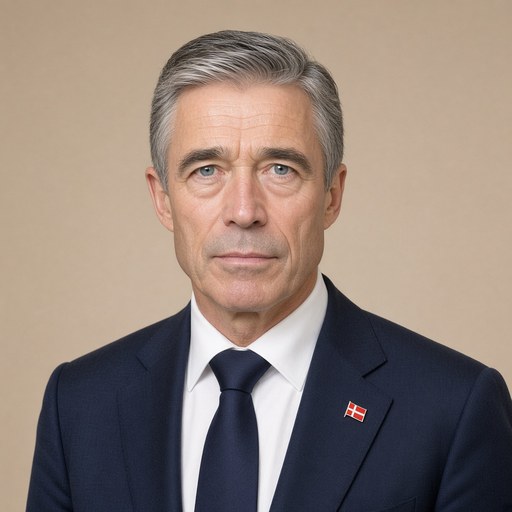
Prime Minister Anders Fogh Rasmussen's speech at the closing debate of the Folketing on June 15, 2005.
 Anders Fogh Rasmussen · Prime Minister of Denmark
- Context
- Rasmussen addressed the Danish Folketing at its closing debate on June 15, 2005, reviewing government achievements and outlining future reform priorities.
- Main themes
- Danish welfare state renewal, economic performance and competitiveness, education reform, freedom and democratic values, global competition and innovation, social mobility, responsible fiscal policy, labor market flexibility, national identity and well-being
- Duration
- ~36 min
- Words
- 4,346
- Sentences
- 320
- Readability
- 52
- Grade
- 9.0
- Syntax
- 2.54
- Vocabulary
- 2.10
Translated from Danish
The broad sphere of national life a sentence belongs to. Every sentence has an Arena, so it is the denominator the other indices are read against.
Other320 sentences in 111 paragraphs
Denmark is a good country to live in.
It may sound trivial to say that. And we may often forget it in a busy everyday life, where we have to deal with many larger or smaller problems. But nonetheless, it is true. And it is important to remember.
Few have, like us Danes, such good opportunities for a good life.
We live in a free society. We live in peace with our surroundings. And we live in a society that is progressing.
All of this is something we tend to take for granted. But it is not given. Just ask our elders, who experienced the horrors of World War II. Ask some of our new colleagues in the EU, who until 15 years ago were under communist regimes. Or ask the Iraqis, who until two years ago were oppressed by Saddam Hussein.
So we must not take freedom, peace, and progress for granted. History shows that it is far too often unfreedom, unrest, and regression that dominate. Therefore, we must cherish our freedom and our values. And we must ensure that we can continue to live in a country with prosperity and welfare in the future.
* * *
The starting point is good.
The Danish economy is on the rise. Well aided by the government's Spring Package with significant tax cuts and the acceleration of investments.
We have in Denmark a good combination of a flexible labor market and a strong social safety net.
Unemployment has fallen by 20,000 people over the past 1½ years. Employment is increasing. And we expect that employment next year will be higher than ever before.
We have large surpluses in public finances. The debt is being reduced at a rapid pace. The balance of payments shows a surplus. Interest rates are historically low.
These are results we can be quite satisfied with – not least when we compare with several of the countries around us.
So the foundation is good. And the direction is right. The government will therefore maintain a responsible economic policy. With the tax freeze. And with room for targeted improvements in public service and investments in the future.
The government's policy has sent the Danes' confidence in economic development soaring. And businesses view the prospects for production and employment positively.
The good Danish economy is also reflected in Denmark generally achieving exceptionally good rankings in international surveys that assess the strengths and weaknesses of countries. A number of surveys indicate that we are among the 5-6-7 most competitive countries in the world. In a recently published survey from an international journal, it is assessed that Denmark will have the world's best business climate in the coming years. And Denmark has been rated as the country in the EU with the best control over public finances.
Finally, a comparison of 90 countries shows that Danes, together with Maltese and Swiss, are the happiest people in the world!
Yes, that is not too shabby.
Denmark is indeed a good country to live in. But – even though it can be difficult – we must also not fall into national self-praise. Or stop and let things be.
For while it undeniably goes well, there is much that we can and must improve. Therefore, we must constantly work hard to ensure that Denmark can continue to be a good place to live. And everyone has a responsibility for that.
This applies not least to the Folketing and the government. In the election on February 8, the government received a mandate from the voters to continue the work of renewing and developing the Danish welfare state. As a basis for this effort, the government presented what is probably the most ambitious government program that a government in Denmark has ever presented.
The government will create the framework for us Danes to handle the challenges of tomorrow. And we are fully engaged in implementing the program.
* * *
The biggest challenge we face is that the world is developing faster than ever before. In Asia and Eastern Europe, entrepreneurship, growth, and trade with the outside world are at the top of the agenda. New knowledge and new technology are rapidly spreading across the globe, creating new, exciting opportunities.
To compete, we must strengthen Denmark. We cannot predict the future. But we can prepare ourselves by investing in people. So we have knowledge. So we have creativity. And so we have the adaptability to seize future opportunities.
Therefore, we need world-class education. Central to this is improving the public school system. We have one of the world's most expensive public school systems. Now it must also be one of the world's best.
The sins of the past mean that far too many young people leave public school without having learned the most basic skills. The sins of the past mean that we in Denmark are poor at breaking the negative social inheritance. And the sins of the past mean that we perform poorly compared to other countries.
The government has already begun to address the neglect of the past. Professionalism is now in focus. We have introduced goals for what children should learn in different subjects at different grade levels. And we have increased the number of hours in, among other subjects, Danish and mathematics.
And we are now following up on this effort. The government has set the ambitious goal that Danish students will be among the best in the world in three core subjects: reading, mathematics, and natural sciences. We will introduce mandatory tests in reading, mathematics, English, and natural sciences. Not for the sake of control. But as a tool to provide a helping hand to those students who struggle academically. So that problems are detected in time. So that something can be done about them.
We will present proposals for a broad national action plan for reading to ensure that children, young people, and adults have opportunities to improve their reading skills. Good reading skills are the key to education and jobs. We will strengthen the teaching of Danish and history. We will strengthen the education of teachers. And municipalities must fulfill their duty to intervene if things go wrong in a school.
We must ensure that young people receive further education. The government has set the goal that at least 95 percent of young people will obtain a youth education by 2015. And that at least half of a youth cohort will obtain a higher education by 2015. And we will strengthen adult and continuing education.
In general, all parts of our society – businesses, employees, and the public sector – must think in terms of renewal and be ready for change. We must educate more researchers. We must increase our research efforts. We must become better at translating research and new knowledge into new products and services – and into new jobs. And we must create more growth entrepreneurs – new businesses that can compete and create jobs.
To advise us on how best to prepare Denmark, the government has established a broadly composed globalization council. Based on this work, the government will present a number of concrete proposals next spring. On better education. On strengthened research and knowledge dissemination. On creating the background for more growth entrepreneurs. And on greater focus on renewal throughout society. Concrete steps that will strengthen both our competitiveness and our social cohesion.
* * *
Social cohesion. It is about ensuring a society that holds together. A society where there are not too great social and economic divides. A society where we avoid a split into an elite that can manage everything and a residual group that is left behind and pushed out into unemployment and social problems.
Therefore, it is absolutely crucial that we raise the academic level in public schools. And therefore, it is absolutely crucial that more young people receive further education. Because concrete academic skills are highly beneficial for the most disadvantaged. A tightening of academic requirements is one of the most important contributions to breaking the negative social inheritance.
But social cohesion is also about ensuring a society that is united in values. One of the strengths of Danish society is that despite differing opinions on a number of specific issues, we are based on a common foundation of certain fundamental values.
Some of these values are being challenged in these years. Let me take a current example. In connection with a murder case from Nørrebro, there have been proposals that the murderer’s family should pay so-called blood money to the family of the deceased. The intention was allegedly to avoid retaliatory actions from the deceased's family in exchange for this cash sum.
This has led some to believe that it is an exciting new development in Danish law. An evolution of the model of conflict resolution between the parties.
But let me remind you of some facts. We live in Denmark. In Denmark, we have a rule of law. A rule of law is characterized by the fact that it is the police that enforce law and order. It is the courts that decide questions of guilt and punishment. Private enforcement of the law through vigilantism, family feuds, and gang conflicts is not permitted. And therefore, one cannot and should not pay to avoid private retaliatory actions with blood money.
This is precisely the core of a true rule of law: That the individual is protected against arbitrary treatment from both the state and private groups. The law applies equally to all. And it is independent judges who decide on responsibility, guilt, and punishment.
If we, in misguided tolerance, give in here, we have accepted a slippery slope that effectively undermines our democratic thinking and our ideals of freedom.
It is the same slippery slope we experience when assaults, violence, and attacks gradually become a more or less accepted part of the political struggle.
Recently, the Minister for Integration was subjected to a horrific arson attack at her residence. Fortunately, the minister and her family suffered no physical harm.
We cannot condemn such attacks strongly enough – as has also been done by the parties in the Folketing.
The police have not yet completed the investigation into the case. Therefore, we do not know what the motive is. Nevertheless, I have heard voices in the subsequent public debate suggesting that the attack on the Minister for Integration is rooted in the belief that Denmark's immigration policy has been completely misguided.
One thing is that extremist groups directly express sympathy for such actions. That is serious enough. But it is directly frightening that others can express themselves so ambiguously that the condemnation of the arson attack comes to appear routine, while the actual message is that the minister and the government are indeed to blame for it, as the immigration policy is indecent.
It is fair to disagree with the government's immigration policy. But when an assassination attempt is made against an elected official, there is only one decent reaction – and that is an unequivocal condemnation. Without any possible circumlocution.
Otherwise, we are on the slippery slope. And then the social cohesion in our society is threatened.
In a free democracy, we must fight for our views. But it must be with words and votes. Not with assaults and attacks.
* * *
Recently, we have seen some alarming examples of the brutality that characterizes certain immigrant communities. In Nørrebro in Copenhagen, this has manifested itself in some extreme episodes of violence that we, as a society, cannot accept in any way. And that we must crack down on hard.
There is an almost incomprehensible lack of norms that some of these young immigrants exhibit. It is violently destructive. Not only for themselves. But also for society as a whole. And not least for the many other new Danes who completely undeservedly risk being lumped together with hardened young criminals.
The government will, based on the strategy that the Minister of Justice announced yesterday, intensify the efforts against criminal gangs.
From the efforts against the biker gangs, we have seen that a consistent and targeted effort yields results. Therefore, we will use the experiences from the biker efforts in relation to the criminal groups in the immigrant community. We must closely monitor the environments. Uncover the criminal networks. Remove the conditions for their criminal activities. And intensify the efforts to investigate and prosecute the criminals.
A main objective of the effort is to isolate the hard criminals from the vast majority of immigrants who want integration. Who want to become part of Danish society. And who support the values that Danish society is built upon.
The brutality in certain immigrant communities is one of the results of past misguided immigration and integration policies. Previously, so many immigrants came to the country that integration was effectively a hopeless task. We have now addressed that.
In 2001, over 500 asylum seekers were granted residence permits each month. In 2005, it is only 70 per month. In 2001, nearly 1,000 family reunifications were granted every single month. In 2005, it is only about 300 per month.
The tightening of immigration legislation makes a difference. The number of immigrants coming to Denmark has been reduced to a level that makes real integration possible. A firm and fair immigration policy is the prerequisite for a successful integration effort.
Since 2001, the government has taken a number of steps to promote integration.
Danish language instruction for both adult immigrants and bilingual children has been improved. And most recently, we have taken extra steps to ensure that those who are family reunified participate in Danish language instruction.
We have, among other things, increased the financial incentive to enter employment through the introduction of start assistance.
We have taken up the fight against ghettoization by, among other things, giving municipalities the opportunity to refuse housing to welfare recipients in particularly burdened areas.
And the government will do more than that. The opportunities for proper integration that the decline in immigration provides must be fully utilized.
The government has presented a comprehensive proposal this spring for further improvement of the integration efforts. Education is once again at the center. More young immigrants should receive vocational training. Therefore, we will introduce more practical pathways to vocational education. We want young recipients of social assistance between the ages of 18 and 25 to be required to begin a qualifying education if they do not already have one. And we will strengthen parents' responsibility to ensure that their children go to school and learn something.
We need to create more jobs for immigrants, including by having more employed in the public sector. We will reward municipalities that make an active effort in integration. And above all, the government will now work to ensure that long-term recipients of social assistance start education or internships. They should be given a new chance.
Integration into Danish society is a crucial challenge. And we have a shared responsibility that affects all parts of Danish society. Therefore, I strongly urge all parties in the Folketing to engage constructively in the work of implementing these initiatives. And I hope and expect broad political support for an ambitious effort for better integration.
* * *
The government has embarked on a thorough renewal of the way the public sector is organized. The goal is simple and clear: Each citizen should experience better service and more quality for their money. The means to achieve this is to strengthen local democracy through strong, sustainable municipalities.
On Friday, the Folketing will have completed the processing of a total of 50 bills that together constitute the municipal reform. This has been preceded by extensive work that has stretched over nearly three years. I can therefore confidently say that the municipal reform that the Folketing is now launching is both well thought out and thoroughly prepared.
We are organizing the public sector to fit the people. With clarity about responsibility and competence. With coherence in the efforts directed at each individual citizen. And with fewer barriers, less administration, and less duplication of work. We are now creating a public sector that is equipped to meet the challenges that the future brings.
The municipal reform is the right decision at the right time. And the many municipal politicians in the country have shown the right responsibility and the right courage to think anew. The Folketing has also shown the right responsibility. When the opposition – I believe mainly for tactical reasons – chose to withdraw from the work on the municipal reform last year, the Danish People's Party showed the responsibility that was needed. And that is why we have a good result today.
I am pleased that the Social Democrats and the Radical Left ultimately chose to support some of the bills. I am not really surprised. The municipal reform is broad in its content, and it enjoys broad support among the population and among municipal politicians.
* * *
Since 2001, the government has followed a strategy of gradual improvements in the public sector. This ensures that Danes receive the best possible public service for their tax money.
Take, for example, the hospitals. We have allocated over 3 billion kroner extra to the hospitals from 2002 to 2005. And all citizens – regardless of their financial situation – have been granted the right to be treated at a private or foreign hospital if the waiting time at public hospitals is long.
The efforts are working. More people are being treated, and waiting times have fallen. In 2004, over 70,000 more surgeries were performed than in 2001, and waiting times have, on average, decreased by about 20 percent compared to 2002. These are results that speak for themselves.
We have strengthened cancer treatment. With more funds for new equipment and new medicines. And as a result, more people than ever before are now being treated for their cancer.
We are now setting the goal of bringing cancer treatment in Denmark up to the highest international level. With the agreement between the government and the Danish People's Party on a new cancer plan, we are providing a boost to cancer treatment of over 1.1 billion kroner already in 2006. The funds will, among other things, go to new and better equipment, the introduction of new cancer medicines, and better continuing education for doctors. By 2008, all regions must offer screening for breast cancer. And we must reduce waiting times during the treatment process.
* * *
A very broad majority here in the Parliament reached a political agreement at the end of 2004 regarding Denmark in the EU. The agreement states that the EU treaty – and thus the EU – is not an end in itself, but a means to achieve concrete results for the benefit of citizens. The agreement outlines areas where the parties behind the agreement agree that the EU should make a greater effort in the coming years. I am very pleased with the broad consensus that the agreement represents. The agreement is one of the most important political results of this parliamentary year.
The referendums in France and the Netherlands have created uncertainty about the fate of the EU treaty. We must, of course, respect the outcomes of the two referendums.
The government's starting point is that each of the 25 EU countries should have the opportunity to take a position on the treaty. As is well known, this must happen in Denmark through a referendum.
But this naturally requires that we know exactly what we are voting on and that there is a plan for the further process. At the EU summit, we should therefore make a joint decision on what should happen next. This will create the basis for the decision we must make in Denmark regarding our own referendum. And it is clear that the new treaty will only come into force if all member states can approve it.
But we must not let the current unclear situation overshadow all the good things that the EU brings with it.
Consider, for example, that it was only a year ago that we welcomed ten new countries into the cooperation. In the vast majority of these countries, optimism is flourishing, and the economy has received a significant boost. And we should not only be happy for the Eastern Europeans. It will also benefit the rest of us as our Eastern European neighbors become more prosperous and build increasingly stable and well-ordered societies.
We must use the EU to tackle the problems and challenges that the European populations face. This includes, for example, the common effort in the EU to strengthen research, development, and competitiveness. Together, we can achieve significant progress in the EU. For the benefit of Danes. And for the benefit of Europeans.
The same applies to global challenges such as the fight against terrorism and cross-border crime. Climate and environmental issues. Regional conflicts. And poverty issues. Here, Denmark cannot solve the problems alone. And here, EU cooperation is the right framework for a joint effort.
Regardless of how the summit ends, we should focus on the tasks that the EU was created to solve, rather than year after year focusing on the association's rules and statutes. We must address the tasks that have a direct impact on Europeans and that contribute to creating a better everyday life for all of us. That is why we created the EU.
* * *
When it comes to the world outside Europe, there is reason to be pleased that there has been broad support in the Folketing for Denmark's political, economic, and military support for a new and democratic Iraq. This is incredibly important. For Iraq and for the Danish soldiers.
The Danish troops have just been extended by eight months. This provides time and calm to support the ongoing political process in Iraq.
For the Iraqis, it is about drafting a new constitution and, on that basis, holding new democratic elections by the end of the year. This is a difficult process under significant time pressure. But so far, the Iraqi democracy has managed to meet the demands of the international community. There is therefore reason for some optimism.
But there are forces in Iraq that are trying to halt progress. To turn back time. They must not succeed. They attack indiscriminately and do not care about innocent civilian casualties. In the end, the Iraqis are far better able to combat the terrorists in their midst. Therefore, assistance in training Iraqi security forces is also the best way we can help promote a safe and stable Iraq. I am therefore pleased that there is broad agreement in the Folketing that Danish troops should increasingly provide support for training Iraqi security forces and for civil reconstruction.
It is also positive that there is broad support in the Folketing for making a special effort for Africa. The government presented a new and comprehensive Africa policy at the end of last year. And we will continue the work for the benefit of Africa.
I can inform you that the government is preparing to initiate cooperation with a new program cooperation country in Africa.
Denmark has a good reputation in the world. We feel this in the UN Security Council, where we take shared responsibility for conflict resolution around the globe. It was important that we reached an agreement in the Security Council to prosecute those responsible for crimes and atrocities in Darfur. And it is important that, with the help of the Security Council, we prepare a solution for Kosovo's future status that is sustainable and can ensure lasting peace in this corner of Europe.
The UN Secretary-General has proposed a comprehensive reform and streamlining of the entire UN system. This is necessary. From the Danish side, we therefore warmly support the proposal and actively back it.
* * *
The government has long wished to renew and modernize the realm and the cooperation with the Faroe Islands and Greenland. This is now happening.
For the Faroe Islands, we are implementing the most comprehensive change in the relationship between the Faroe Islands and Denmark since the introduction of home rule nearly 60 years ago. The Faroe Islands will thus receive a very extensive self-government within the framework of the constitution and the realm.
The joint Greenlandic-Danish self-government commission has begun work on a new self-government arrangement within the framework of the constitution and the realm.
And the governments will have greater foreign policy responsibility. The goal is for them to have the authority to negotiate and enter into international agreements on behalf of the realm in areas that have been taken over by the Greenlandic and Faroese authorities.
I would like to take this opportunity today to thank for the broad support that the government's legislative initiatives have received. Both here in the Folketing, in the Greenlandic Landsting, and in the Faroese Lagting.
* * *
The election in February was a landmark election. The government received a renewed mandate from the voters. And the election led to significant changes in the opposition.
And it applies to the new opposition, as it did to the old, that the ultimate task of the opposition is and will remain to try to push the government out of power. That is how it is. That is how it should be.
But even though – or perhaps rather precisely because – the interests of the government and the opposition are, by definition, opposed, I cannot help but be pleased that it can again be stated this year that about 80 percent of the ordinary legislation in the Folketing has been passed with broad majorities.
This is a testament to the fact that in Denmark – even though we can often be in vehement disagreement about all sorts of things – as a general rule, we can find common solutions to the problems that are, after all, also common.
That, I believe, is a crucial strength of Danish democracy.
So yes – Denmark is a good country to live in.
The original Danish. The tags above are read on the English translation's sentences.
Danmark er et godt land at leve i.
Det kan lyde banalt at sige det. Og vi kan måske ofte glemme det i en travl hverdag, hvor vi skal håndtere mange større eller mindre problemer. Men ikke desto mindre er det sandt. Og det er vigtigt at huske på.
For få har som vi danskere så gode muligheder for at få et godt liv.
Vi lever i et frit samfund. Vi lever i fred med vores omverden. Og vi lever i et samfund i fremgang.
Alt sammen noget, som vi har tendens til at tage for givet. Men det er ikke givet. Spørg blot vore ældre, der oplevede 2. verdenskrigs gru. Spørg nogle af vores nye fæller i EU, der indtil for 15 år siden var underlagt kommunistiske regimer. Eller spørg irakerne, der indtil for to år siden var underkuet af Saddam Hussein.
Så vi må ikke tage friheden, freden og fremgangen for givet. Historien viser, at det alt for ofte er ufrihed, ufred og tilbagegang, der dominerer. Derfor skal vi værne om vores frihed og vores værdier. Og vi skal sikre, at vi også i fremtiden kan leve i et land med velstand og velfærd.
* * *
Udgangspunktet er godt.
Dansk økonomi er i fremgang. Godt hjulpet på vej af regeringens Forårspakke med markante skattelettelser og fremrykning af investeringer.
Vi har i Danmark en god kombination af et fleksibelt arbejdsmarked og et stærkt socialt sikkerhedsnet.
Ledigheden er faldet med 20.000 personer over de seneste 11⁄2 år. Beskæftigelsen er stigende. Og vi forventer, at beskæftigelsen næste år vil være højere end nogensinde før.
Vi har store overskud på de offentlige finanser. Gælden bliver bragt ned i hastigt tempo. Betalingsbalancen viser overskud. Renten er historisk lav.
Det er resultater, vi kan være godt tilfredse med – ikke mindst når vi sammenligner med flere af landene omkring os.
Så fundamentet er godt. Og retningen rigtig. Regeringen vil derfor fastholde den ansvarlige økonomiske politik. Med skattestoppet. Og med plads til målrettede forbedringer af den offentlige service og investeringer i fremtiden.
Regeringens politik har sendt danskernes tillid til den økonomiske udvikling i vejret. Og virksomhederne ser positivt på udsigterne for produktion og beskæftigelse.
Den gode danske økonomi giver sig også udslag i, at Danmark generelt opnår særdeles gode placeringer i internationale undersøgelser, hvor landenes styrker og svagheder bliver vurderet. En række undersøgelser peger på, at vi er blandt de 5-6-7 mest konkurrencedygtige lande i verden. I en nyligt offentliggjort undersøgelse fra et internationalt tidsskrift vurderes det, at Danmark vil have verdens bedste erhvervsklima i de kommende år. Og Danmark er blevet vurderet til at være det land i EU, hvor der er bedst styr på de offentlige finanser.
Endelig viser en sammenligning af 90 lande, at danskerne sammen med malteserne og svejtserne er verdens lykkeligste folk!
Ja, det er ikke så ringe endda.
Danmark er faktisk et godt land at leve i. Men – selvom det kan være svært - må vi på den anden side heller ikke kamme over i national selvros. Eller stoppe op og lade stå til.
For samtidig med at det unægtelig går godt, er der meget, vi kan og skal forbedre. Derfor er vi nødt til hele tiden at arbejde benhårdt for at sikre, at Danmark kan blive ved med at være et godt sted at leve. Og alle har et ansvar for det.
Det gælder ikke mindst Folketinget og regeringen. Ved valget den 8. februar fik regeringen et mandat fra vælgerne til at fortsætte arbejdet med at forny og udvikle det danske velfærdssamfund. Som grundlag for denne indsats fremlagde regeringen efter valget det vel nok mest ambitiøse regeringsprogram, en regering i Danmark har fremlagt.
Regeringen vil skabe rammerne for, at vi danskere kan håndtere morgendagens udfordringer. Og vi er i fuld gang med at gennemføre programmet.
* * *
Den største udfordring, vi står over for, er, at verden udvikler sig hurtigere end nogensinde før. I Asien og Østeuropa er foretagsomhed, vækst og handel med omverdenen øverst på dagsordenen. Ny viden og ny teknologi bliver lynhurtigt spredt over kloden og skaber nye, spændende muligheder.
For at klare os i konkurrencen skal vi styrke Danmark. Vi kan ikke forudsige fremtiden. Men vi kan ruste os ved at investere i mennesker. Så vi har viden. Så vi har kreativitet. Og så vi har omstillingsevne til at udnytte fremtidens muligheder.
Derfor skal vi have uddannelser i verdensklasse. Helt centralt er det at forbedre folkeskolen. Vi har en af verdens dyreste folkeskoler. Nu skal den også være en af verdens bedste.
Fortidens synder gør, at der er alt for mange unge, der forlader folkeskolen uden at have lært det mest basale. Fortidens synder gør, at vi i Danmark er dårlige til at bryde den negative sociale arv. Og fortidens synder gør, at vi klarer os dårligt i forhold til andre lande.
Regeringen har allerede taget fat på at gøre op med fortidens forsømmelser. Fagligheden er nu sat i fokus. Vi har indført mål for, hvad børnene skal lære i forskellige fag på forskellige klassetrin. Og vi har indført flere timer i bl.a. dansk og matematik.
Og vi følger nu op på denne indsats. Regeringen har sat det ambitiøse mål, at danske elever bliver blandt verdens bedste i tre centrale fag: læsning, matematik og naturfag. Vi vil indføre obligatoriske test i læsning, matematik, engelsk og naturfag. Ikke for kontrollens skyld. Men som et værktøj til at give en hjælpende hånd til de elever, der har svært ved det faglige. Så problemerne bliver opdaget i tide. Så der kan blive gjort noget ved dem.
Vi vil fremlægge forslag om en bred national handlingsplan for læsning for at sikre børn, unge og voksne muligheder for at forbedre deres læsefærdigheder. Gode læsefærdigheder er nøglen til uddannelse og job. Vi vil styrke undervisningen i dansk og historie. Vi vil styrke uddannelsen af lærere. Og kommunerne skal leve op til deres pligt til at gribe ind, hvis det kører skævt i en skole.
Vi skal sikre, at de unge får en videre uddannelse. Regeringen har sat som mål, at mindst 95 pct. af de unge får en ungdomsuddannelse i 2015. Og at mindst halvdelen af en ungdomsårgang får en videregående uddannelse i 2015. Og så vil vi styrke voksen- og efteruddannelserne.
I det hele taget skal alle dele af vores samfund – virksomheder, medarbejdere og det offentlige – tænke i fornyelse og være parate til omstilling. Vi skal uddanne flere forskere. Vi skal øge vores forskningsindsats. Vi skal blive bedre til at omsætte forskning og ny viden til nye produkter og ydelser – og til nye arbejdspladser. Og vi skal skabe flere vækstiværksættere – nye virksomheder, som kan klare sig i konkurrencen og skabe jobs.
Til at rådgive os om, hvordan vi bedst muligt ruster Danmark, har regeringen nedsat et bredt sammensat globaliseringsråd. På baggrund af blandt andet dette arbejde vil regeringen til næste forår fremlægge en række konkrete forslag. Om bedre uddannelser. Om styrket forskning og videnspredning. Om at skabe baggrund for flere vækstiværksættere. Og om større fokus på fornyelse i hele samfundet. Konkrete skridt, som skal forstærke både vores konkurrencekraft og vores sammenhængskraft.
* * *
Sammenhængskraft. Det er, at vi sikrer et samfund, der hænger sammen. Et samfund, hvor der ikke er for store sociale og økonomiske skel. Et samfund, hvor vi undgår en opsplitning i en elite, der kan klare det hele og en restgruppe, som bliver hægtet af og stødt ud i ledighed og sociale problemer.
Derfor er det helt afgørende, at vi højner det faglige niveau i folkeskolen. Og derfor er det helt afgørende, at flere unge får en videre uddannelse. For kontante faglige færdigheder er i højeste grad til gavn for de svagest stillede. En skærpelse af de faglige krav er ét af de vigtigste bidrag til at bryde den negative sociale arv.
Men sammenhængskraft er også at sikre et samfund, der værdimæssigt hænger sammen. Én af styrkerne i det danske samfund er, at vi trods forskellige holdninger til en række konkrete spørgsmål dog bygger på et fælles grundlag af visse fundamentale værdier.
Nogle af disse værdier bliver udfordret i disse år. Lad mig tage et aktuelt eksempel. I forbindelse med en drabssag fra Nørrebro er der stillet forslag om, at drabsmandens familie skulle betale såkaldte blodpenge til den afdødes familie. Hensigten skulle angiveligt være at undgå hævnaktioner fra den afdødes familie til gengæld for denne kontante sum penge.
Det har fået nogle til at mene, at det er en spændende nydannelse i dansk ret. En videreudvikling af modellen med konfliktløsning parterne imellem.
Men lad mig minde om nogle kendsgerninger. Vi bor i Danmark. I Danmark har vi et retssamfund. Et retssamfund er kendetegnet ved, at det er politiet, der står for håndhævelsen af lov og orden. Det er domstolene, der tager stilling til spørgsmål om skyld og straf. Privat retshåndhævelse ved selvtægt, familiefejder og bandeopgør er ikke tilladt. Og derfor hverken kan eller skal man betale sig fra private hævnaktioner med blodpenge.
Det er netop kernen i en sand retsstat: At det enkelte menneske er sikret mod vilkårlig behandling fra såvel statsmagten som fra private grupper. Loven gælder ens for alle. Og det er uafhængige dommere, der tager stilling til ansvar, skyld og straf.
Hvis vi i misforstået tolerance giver ind her, så har vi accepteret en glidebane, der reelt sætter vor demokratiske tankegang og vore frihedsidealer ud af kraft.
Det er den samme glidebane, vi oplever, når overfald, vold og attentater umærkeligt bliver en mere eller mindre accepteret del af den politiske kamp.
Forleden blev integrationsministeren udsat for et modbydeligt brandattentat på sin bopæl. Heldigvis led ministeren og hendes familie ingen fysisk overlast.
Vi kan ikke skarpt nok fordømme sådanne angreb – således som det også er sket fra Folketingets partier.
Politiet har endnu ikke afsluttet efterforskningen af sagen. Vi ved derfor ikke, hvad motivet er. Ikke desto mindre har jeg i den efterfølgende offentlige debat hørt røster, der mener, at anslaget mod integrationsministeren har baggrund i, at udlændingepolitikken i Danmark har været helt forfejlet.
Ét er, at ekstremistiske grupper direkte udtrykker sympati for den type aktioner. Det er alvorligt nok. Men det er direkte skræmmende, at andre kan udtrykke sig så tvetydigt, at fordømmelsen af brandattentatet kommer til at fremstå rutinemæssig, medens det egentlige budskab er, at ministeren og regeringen såmænd selv er ude om det, for udlændingepolitikken er uanstændig.
Det er en ærlig sag at være uenig i regeringens udlændingepolitik. Men når der bliver begået et attentat mod en folkevalgt, så er der kun én anstændig reaktion – og det er en utvetydig fordømmelse. Uden al mulig udenomssnak.
Ellers er vi ude på glidebanen. Og så bliver sammenhængskraften i vort samfund truet.
I et frit folkestyre skal vi kæmpe for vore holdninger. Men det skal være med ord og valg. Ikke med overfald og attentater.
* * *
Vi har på det seneste set nogle skræmmende eksempler på den forråelse, der præger visse indvandrermiljøer. På Nørrebro i København har det givet sig udslag i nogle ekstreme voldsepisoder, som vi fra samfundets side på ingen måde kan acceptere. Og som vi må slå hårdt ned på.
Det er en nærmest ufattelig mangel på normer, som nogle af disse unge indvandrere er præget af. Den er voldsomt destruktiv. Ikke kun for dem selv. Men også for samfundet som helhed. Og ikke mindst for de mange andre nye danskere, der fuldstændig ufortjent risikerer at blive slået i hartkorn med unge hårdkogte forbrydere.
Regeringen vil med udgangspunkt i den strategi, som justitsministeren offentliggjorde i går, intensivere indsatsen mod de kriminelle bander.
Vi har fra indsatsen mod rockerne set, at en konsekvent og målrettet indsats giver resultater. Derfor vil vi bruge erfaringerne fra rockerindsatsen i forhold til de kriminelle grupper i indvandrermiljøet. Vi skal følge miljøerne tæt. Afdække de kriminelle netværk. Fjerne forudsætningerne for deres kriminelle aktiviteter. Og intensive indsatsen for at efterforske og retsforfølge de kriminelle.
Et hovedformål med indsatsen er at isolere de hårde kriminelle fra det store flertal af indvandrere, som ønsker integrationen. Som ønsker at blive en del af det danske samfund. Og som støtter op om de værdier, det danske samfund bygger på.
Forråelsen i visse indvandrermiljøer er et af resultaterne af tidligere tiders forfejlede udlændinge- og integrationspolitik. Tidligere kom der så mange udlændinge til landet, at integration reelt var en håbløs opgave. Det har vi nu gjort op med.
I 2001 blev der hver måned givet opholdstilladelse til over 500 asylansøgere. I 2005 er det kun 70 pr. måned. I 2001 blev der givet næsten 1000 familiesammenføringer hver eneste måned. I 2005 er det kun ca. 300 pr. måned.
Stramningerne i udlændingelovgivningen gør en forskel. Antallet af udlændinge, som kommer til Danmark, er bragt ned til et niveau, som gør en reel integration mulig. En fast og fair udlændingepolitik er forudsætningen for en vellykket integrationsindsats.
Regeringen har siden 2001 taget en lang række skridt til fremme af integrationen.
Danskundervisningen af både voksne udlændinge og tosprogede børn er blevet forbedret. Og senest har vi taget ekstra skridt til at sikre, at familiesammenførte deltager i danskundervisningen.
Vi har, blandt andet ved indførelse af starthjælpen, øget den økonomiske tilskyndelse til at komme i beskæftigelse.
Vi har taget kampen op mod ghettoiseringen ved bl.a. at give kommunerne mulighed for at afvise kontanthjælpsmodtagere bolig i særligt belastede områder.
Og regeringen vil mere end det. De muligheder for ordentlig integration, som faldet i indvandringen giver, skal udnyttes fuldt ud.
Regeringen har her i foråret præsenteret et omfattende udspil til yderligere forbedring af integrationsindsatsen. Igen er uddannelse i centrum. Flere unge indvandrere skal have en erhvervsuddannelse. Derfor vil vi indføre flere praktiske indgange til erhvervsuddannelserne. Vi ønsker, at unge kontanthjælpsmodtagere mellem 18 og 25 år får pligt til at begynde en kompetencegivende uddannelse, hvis de ikke har en i forvejen. Og vi vil styrke forældrenes ansvar for, at børnene kommer i skole og lærer noget.
Vi skal skabe flere jobs til indvandrere, bl.a. ved at flere bliver ansat i det offentlige. Vi vil belønne kommuner, der gør en aktiv integrationsindsats. Og frem for alt vil regeringen nu arbejde for, at de langvarige kontanthjælpsmodtagere kommer i gang med undervisning eller praktik. De skal have en ny chance.
Integrationen i det danske samfund er en afgørende udfordring. Og vi har et fælles ansvar, som berører alle dele af det danske samfund. Derfor vil jeg kraftigt opfordre alle partier i Folketinget til at gå konstruktivt ind i arbejdet med at gennemføre disse initiativer. Og jeg håber og forventer bred politisk opbakning til en ambitiøs indsats for bedre integration.
* * *
Regeringen har taget fat på en gennemgribende fornyelse af den måde, den offentlige sektor er indrettet på. Målet er enkelt og klart: Den enkelte borger skal opleve at få bedre service og mere kvalitet for pengene. Midlet hertil er at styrke det lokale demokrati gennem stærke, bæredygtige kommuner.
På fredag vil Folketinget have færdigbehandlet de i alt 50 lovforslag, der tilsammen udgør kommunalreformen. Forud er gået et omfattende arbejde, som har strakt sig over næsten tre år. Jeg kan derfor med sindsro sige, at den kommunalreform, som Folketinget nu sætter i søen, er både gennemtænkt og gennemarbejdet.
Vi indretter den offentlige sektor, så den passer til menneskene. Med klarhed om ansvar og kompetence. Med sammenhæng i indsatsen over for den enkelte borger. Og med færre skranker, mindre administration, mindre dobbeltarbejde. Vi skaber nu en offentlig sektor, som er klædt på til at møde de udfordringer, fremtiden bringer.
Kommunalreformen er den rigtige beslutning på det rigtige tidspunkt. Og landets mange kommunalpolitikere har vist det rette ansvar og det rette mod til at tænke nyt. Også i Folketinget er der vist det rette ansvar. Da oppositionen – jeg tror mest af taktiske grunde – sidste år valgte at stå af arbejdet med kommunalreformen, viste Dansk Folkeparti det ansvar, der var brug for. Og derfor står vi i dag med et godt resultat.
Jeg er glad for, at Socialdemokraterne og Det Radikale Venstre i sidste ende har valgt at tilslutte sig en del af lovforslagene. Det overrasker mig nu egentlig ikke. For kommunalreformen er bred i sit indhold, og den nyder bred opbakning i befolkningen og blandt kommunalpolitikerne.
* * *
Siden 2001 har regeringen fulgt en strategi med gradvise forbedringer af den offentlige sektor. Så vi sikrer, at danskerne får den bedst mulige offentlige service for skattekronerne.
Se fx på sygehusene. Vi har tilført sygehusene over 3 mia. kr. ekstra fra 2002 til 2005. Og alle borgere – uanset pengepung – har fået ret til at blive behandlet på et privat eller udenlandsk sygehus, hvis ventetiden på de offentlige sygehuse er lang.
Indsatsen virker. Flere bliver behandlet, og ventetiderne er faldet. I 2004 blev der opereret over 70.000 flere end i 2001, og ventetiderne er i gennemsnit faldet med ca. 20 pct. i forhold til 2002. Det er resultater, der taler for sig selv.
Vi har styrket behandlingen af kræft. Med flere midler til nyt udstyr og ny medicin. Og med det resultat, at flere - end nogensinde før - i dag bliver behandlet for deres kræftsygdom.
Vi sætter nu det mål, at behandlingen af kræft i Danmark bliver bragt op på det højeste internationale niveau. Med aftalen mellem regeringen og Dansk Folkeparti om en ny kræftplan giver vi et løft til kræftbehandlingen på over 1,1 mia. kr. allerede i 2006. Pengene skal bl.a. gå til nyt og bedre udstyr, indførelse af ny kræftmedicin og bedre efteruddannelse af læger. Inden 2008 skal alle regioner tilbyde screening for brystkræft. Og vi skal have nedbragt ventetiderne undervejs i behandlingsforløbet.
* * *
Et meget bredt flertal her i Tinget indgik i slutningen af 2004 en politisk aftale om Danmark i EU. Aftalen slår fast, at EU-traktaten - og dermed EU - ikke er et mål i sig selv, men et middel til at opnå konkrete resultater til gavn for borgerne. Aftalen fastlægger områder, hvor partierne bag aftalen er enige om, at EU skal gøre en større indsats i de kommende år. Jeg er meget glad for den brede enighed, som aftalen er udtryk for. Aftalen er et af de vigtigste politiske resultater i dette folketingsår.
Folkeafstemningerne i Frankrig og Holland har skabt usikkerhed om EU-traktatens skæbne. Vi må naturligvis respektere udfaldet af de to folkeafstemninger.
Regeringens udgangspunkt er, at hvert af de 25 EU-lande bør have mulighed for at tage stilling til traktaten. Som bekendt skal det i Danmark ske ved en folkeafstemning.
Men det kræver naturligvis, at vi ved præcis, hvad vi stemmer om, og at der er en plan for den videre proces. På EU-topmødet bør vi derfor træffe en fælles beslutning om, hvad der nu skal ske. Det vil skabe grundlag for den beslutning, vi i Danmark må træffe om vores egen folkeafstemning. Og det er klart, at den nye traktat kun træder i kraft, hvis alle medlemsstater kan godkende den.
Men vi må ikke lade den nuværende, uklare situation overskygge alle de gode ting, som EU fører med sig.
Tænk fx på, at det det kun er ét år siden, at vi optog ti nye lande i samarbejdet. I langt størstedelen af disse lande blomstrer optimismen, og økonomien har fået et ordentligt skub fremad. Og vi skal ikke alene være glade på østeuropæernes vegne. Det kommer også os andre til gavn, efterhånden som vores østeuropæiske naboer bliver mere velstående og opbygger stadig mere stabile og velordnede samfund.
Vi skal anvende EU til at tackle de problemer og udfordringer, de europæiske befolkninger står overfor. Det gælder for eksempel den fælles indsats i EU for at styrke forskning, udvikling og konkurrenceevne. Sammen kan vi i EU komme virkeligt langt. Til gavn for danskerne. Og til gavn for europæerne.
Det samme gælder globale udfordringer som kampen mod terror og grænseoverskridende kriminalitet. Klima- og miljøproblemer. Regionale konflikter. Og fattigdomsproblemer. Her kan Danmark ikke selv løse problemerne. Og her er EU-samarbejdet den rigtige ramme for en fælles indsats.
Uanset hvad topmødet ender med, bør vi rette blikket mod de opgaver, EU er skabt til at løse, frem for år efter år at fokusere på foreningens regler og vedtægter. Vi skal tage fat på de opgaver, som har direkte betydning for europæerne, og som bidrager til at skabe en bedre hverdag for os alle. Det er jo derfor, vi har skabt EU.
* * *
Når det gælder verden uden for Europa, er der grund til glæde sig over, at der i Folketinget har været bred opbakning til Danmarks politiske, økonomiske og militære støtte til et nyt og demokratisk Irak. Det er utroligt vigtigt. For Irak og for de danske soldater.
De danske tropper er netop blevet forlænget med otte måneder. Det giver tid og ro til at støtte den fortsatte politiske proces i Irak.
For irakerne handler det om at få udarbejdet en ny forfatning og på det grundlag få afholdt nye demokratiske valg inden årets udgang. Det er en vanskelig proces under betydeligt tidspres. Men hidtil har det irakiske demokrati formået at overholde det internationale samfunds krav. Der er derfor grund til en vis optimisme.
Men der er kræfter i Irak, der prøver at standse fremskridtet. At skrue tiden tilbage. De må ikke lykkes. De angriber vilkårligt og skeler ikke til uskyldige civile ofre. I sidste ende kan irakerne langt bedre selv bekæmpe terroristerne i deres midte. Derfor er bistand til at uddanne irakiske sikkerhedsstyrker også den bedste måde, vi kan hjælpe med at fremme et sikkert og stabilt Irak. Jeg er derfor glad for, at der i Folketinget er bred enighed om, at de danske tropper i stigende grad skal yde støtte til at uddanne irakiske sikkerhedsstyrker og til civil genopbygning.
Det er også positivt, at der i Folketinget er bred støtte til at gøre en særlig indsats for Afrika. Regeringen fremlagde i slutningen af sidste år en ny og samlet Afrika-politik. Og vi vil fortsætte arbejdet til fordel for Afrika.
Jeg kan oplyse, at regeringen forbereder at indlede samarbejde med et nyt programsamarbejdsland i Afrika.
Danmark har et godt navn i verden. Det mærker vi i FN’s Sikkerhedsråd, hvor vi tager et medansvar for konfliktløsning over alt på kloden. Det var vigtigt, at vi i Sikkerhedsrådet opnåede enighed om at retsforfølge de ansvarlige for forbrydelser og uhyrligheder i Darfur. Og det er vigtigt, at vi med Sikkerhedsrådets hjælp får forberedt en løsning på Kosovos fremtidige status, der er holdbar, og som kan sikre en varig fred i dette hjørne af Europa.
FN's generalsekretær har lagt op til en omfattende reform og effektivisering af hele FN-systemet. Det er der behov for. Fra dansk side støtter vi derfor varmt forslaget og bakker aktivt op om det.
* * *
Regeringen har længe ønsket at forny og modernisere rigsfællesskabet og samarbejdet med Færøerne og Grønland. Det sker nu.
For Færøernes vedkommende gennemfører vi den mest omfattende ændring i forholdet mellem Færøerne og Danmark siden hjemmestyrets indførelse for snart 60 år siden. Færøerne får herved et meget vidtgående selvstyre inden for rammerne af grundloven og rigsfællesskabet.
Den fælles grønlandsk-danske selvstyrekommission har startet arbejdet med en ny selvstyreordning inden for grundlovens og rigsfællesskabets rammer.
Og landsstyrerne skal have større udenrigspolitisk ansvar. Målet er, at de skal have fuldmagt til på rigets vegne at forhandle og indgå folkeretlige aftaler inden for sagsområder, som er overtaget af de grønlandske og færøske myndigheder.
Jeg vil gerne i dag benytte anledningen til at takke for den brede opbakning, som regeringens lovinitiativer har fået. Både her i Folketinget, i Grønlands Landsting og i Færøernes Lagting.
* * *
Valget i februar var et skelsættende valg. Regeringen fik fornyet sit mandat fra vælgerne. Og valget førte til betydelige ændringer i oppositionen.
Og det gælder for den nye opposition, som det gjaldt for den gamle, at oppositionens ultimative opgave er og bliver at forsøge at skubbe regeringen af pinden. Sådan er det. Sådan skal det være.
Men selv om – eller måske rettere netop fordi - regeringens og oppositionens interesser derved pr. definition er modsatrettede, kan jeg ikke lade være med at glæde mig over, at det igen i år kan konstateres, at godt 80 pct. af den almindelige lovgivning i Folketinget er vedtaget med brede flertal.
Det vidner om, at vi i Danmark – selv om vi ofte som udgangspunkt kan være rygende uenige om alle mulige ting – som hovedregel kan finde fælles løsninger på de problemer, der jo netop også er fælles.
Det, synes jeg, er en afgørende styrke ved det danske demokrati.
Så ja - Danmark er et godt land at leve i.