




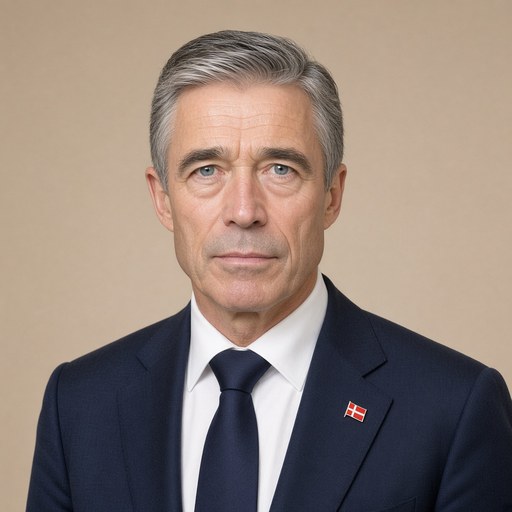
Prime Minister Anders Fogh Rasmussen's Constitutional Speech 2005 Broksø Gods and Edelgave
 Anders Fogh Rasmussen · Prime Minister of Denmark
- Context
- Rasmussen addressed a Constitution Day celebration on June 5, 2005, at Broksø Gods and Edelgave, marking the 156th anniversary of Denmark's first constitution.
- Main themes
- Danish Constitution, constitutional amendment, democracy and civil liberties, line of succession law, gender equality in monarchy, social and environmental rights, voting rights for women, rule of law, constitutional reform debate
- Duration
- ~31 min
- Words
- 3,685
- Sentences
- 248
- Readability
- 59
- Grade
- 8.4
- Syntax
- 2.67
- Vocabulary
- 2.01
Translated from Danish
The broad sphere of national life a sentence belongs to. Every sentence has an Arena, so it is the denominator the other indices are read against.
Other248 sentences in 75 paragraphs
Today is a festive day. We celebrate the 156th anniversary of the Constitution.
Denmark received its free constitution on June 5, 1849. The people gained power, and absolute monarchy was abolished. But not through bloody uprisings, as seen ravaging in other countries. No, here at home, it was over in an afternoon in Copenhagen in the spring of 1848. It was a revolution in peace and tolerance. Civilized and bloodless. And finished in time for everyone to get home for dinner.
That is probably typically Danish. And good for that.
* * *
This year, by the way, marks 90 years since we received the 1915 Constitution. It was the one that, among other things, introduced voting rights for women. On such a semi-round day, there are likely to be proposals for a new constitution. It is a proposal that tends to arise when the constitution reaches a round number. We heard it six years ago when we celebrated the 150th anniversary of the first constitution. And two years ago, when we marked the 50th anniversary of the 1953 Constitution.
Is there a need for a new constitution? No, I do not find the time ripe. To change the constitution, there must be an urgent need. I do not see such a compelling need at this time. The 1953 Constitution is written so briefly and precisely – and yet spaciously – that this constitution can frame Danish democracy for many years to come.
It is clear that a 50-year-old text contains some formulations that sound outdated and inappropriate to modern ears. However, the decisive factor cannot be the language, but rather the actual content and the way it is applied in practice.
I would like to remind you of the procedure for amending the constitution. First, the Folketing must adopt an amendment to the constitution. Then, elections to the Folketing must be called. The newly elected Folketing must then adopt the new constitution unchanged. Finally, a referendum must be held on the new constitution. And it is not enough for a majority to vote in favor of the new constitution. This majority must constitute at least 40 percent of all voters.
It is therefore a very cumbersome process to amend the constitution. And it should be so. For the constitution contains the fundamental principles upon which Danish democracy is built. This foundation must have broad support for any changes.
But this also means that we cannot simply change the constitution because we want it written in modern language. To gain support for amending the constitution, there must be a case or a need where a broad majority in the population finds that the existing constitution hinders a reasonable solution or a desirable development.
It is conceivable that at some point there will be such a broad desire for a new constitution. But I believe that most Danes are currently very satisfied with the constitution we have.
There are some politicians who believe that we should write social rights and environmental rights into the constitution.
That sounds very beautiful. But we do not get a better environment by writing paragraphs in the constitution. We achieve that by conducting sensible environmental policy.
We do not create jobs for everyone by writing paragraphs in the constitution. We achieve an increase in employment by providing businesses with good competitive conditions.
We do not get more housing by writing paragraphs in the constitution. We achieve that by conducting sensible housing policy.
We do not get more welfare by writing paragraphs in the constitution. We only achieve that by creating more production that can finance welfare.
So all these good purposes cannot be fulfilled by amending the constitution. Only by conducting sensible policy.
The actual purpose of the constitution is to guarantee citizens certain freedoms and protections against oppression from the state power. There may certainly be a need to strengthen freedoms and better secure the individual’s legal rights in relation to public authorities. But this purpose can also be well achieved within the framework of the current constitution. Just by conducting sensible policy.
But then there are some who believe that we should change the constitution to amend the line of succession law.
Recently, the royal court was able to give the joyful announcement that the heir apparent couple is expecting a child in October. First and foremost, there is reason to congratulate the royal family. And to share in the joy of the heir apparent couple. I believe that most of the Danish population looks forward to this joyful event.
But as soon as the news of the birth was out, the debate began about changing the constitution. Allegedly to amend the line of succession law so that there is full equality between women and men.
In this context, there are three points I would like to emphasize.
First: I want there to be full equality between women and men – also regarding access to become regent in Denmark. And I am convinced that this view is shared by a very large majority in both the population and the Folketing.
The current line of succession law does not provide such equality. Indeed, the line of succession law states that "upon the death of a king, the throne passes to his son or daughter." But it is then added: "…so that the son precedes the daughter." In other words: Even if a daughter is the firstborn, she will not be able to become regent if a son is born later. For the son precedes the daughter.
Therefore, it is my opinion that we should change the line of succession law so that it is always the firstborn – regardless of gender – who becomes Denmark's regent.
Second: It is important to find the right time for a change to the line of succession law. If the heir apparent couple's first child is a boy, there is no urgent need for a change to the line of succession law. For then, according to the current law, it is also the firstborn who will inherit the throne in due time. If, on the other hand, the firstborn is a girl, the question arises as to whether the Folketing should immediately initiate the process of changing the line of succession law.
Of course, no one knows at that time whether a change will become relevant. For if all of the heir apparent couple's children are girls, then it will also be the firstborn – that is, a woman – who will eventually become regent according to the current line of succession law.
However, it may seem wrong to wait to change the line of succession law until we see whether the heir apparent couple has a boy after a girl. For in that case, according to the current line of succession law, a boy will be born as the future heir, after which he will be retroactively stripped of the title.
Based on a comprehensive consideration, I therefore believe that we should take the initiative to change the line of succession law in any case already in the coming parliamentary year. Of course, as mentioned, there is not an urgent need for a change if the heir apparent couple's first child is a boy. But I do not think we should let the decision about changing the line of succession law depend on whether the crown princess gives birth to a boy or a girl in October.
Therefore, it would probably be best for the Folketing to immediately prepare a change to the line of succession law. This way, there is at least a clear political intention to change the law – even if it is not finally adopted before the next child may be born.
Third: It is often claimed that a change to the line of succession law requires a change to the constitution. But that is not the case. We can change the line of succession law without necessarily changing the constitution.
Technically, the line of succession law is a separate law. The only connection to the constitution is that the line of succession law is referenced in paragraph 2 of the constitution.
Legally, it is indeed possible to change the line of succession law alone. But a change to the line of succession law must follow the same procedure as a change to the constitution. And that is, as already mentioned, a very cumbersome process.
In 1953, the line of succession law and the constitution were changed simultaneously. In reality, the change to the line of succession law was used as leverage to get the changes to the constitution through the referendum. That was a political justification. Legally, there would have been nothing wrong with changing them separately.
The same is true now. If there is a broad political desire to change the constitution, it can be changed together with the line of succession law. But it is important to point out that in that case, it is a purely political decision.
I believe that in any case, it is best to keep the line of succession law and the constitution separate. Presumably, there is a very large majority in the population that would support a change to the line of succession law that provides full equality between women and men. In contrast, there will be very divided opinions on a change to the constitution.
At some point, we will undoubtedly need to modernize the constitution. But the current one works quite well. And the day we may believe that there is an urgent need to change it, those changes should truly be ones that have broad support in the population – and not something that can only be pushed through by using a princess as leverage.
This autumn, I will invite all parties in the Folketing to discuss the question of a possible change to the line of succession law. It is important that there is a very broad majority behind such a decision. Ideally, the entire Folketing.
* * *
The constitution is the framework of our democracy. Democracy is so self-evident for us Danes that we sometimes hardly appreciate the value of democracy. In far too many countries in the world, democracy is not a given. In far too many countries in the world, populations live oppressed by those in power. In far too many countries in the world, it is the barrel of a gun – and not the ballot – that determines who holds power.
Democracy in Danish also means that we involve the population directly in major decisions through referendums. Among other things, on major EU issues. We had a referendum on Denmark's membership in the EEC in 1972. Since then, we have had five referendums on EU issues. Now we have planned a new referendum on the EU Constitution Treaty on September 27. And apparently, referendums are spreading. For this time, there are nine other countries in the EU that have held or will hold referendums on the new treaty. That is good. Because it helps to ensure a popular anchoring of EU cooperation.
A week ago, there was a referendum in France. And on Wednesday, there was a vote in the Netherlands. In both countries, large majorities voted no to the new EU treaty. These are significant responses from the populations of the two countries. We must, of course, respect the decision. And we must take the results very seriously.
We have all been able to observe that part of the debate has revolved around issues other than the new EU treaty. But that is simply the conditions we must respect. To the extent that the debate has revolved around the treaty, the no votes have pulled in very different directions. In the Netherlands and on the French right, the no voters have wanted less EU influence in a number of areas. On the French left, the no voters have wanted more EU influence on, among other things, social and labor market policy.
Now it is up to the French government and the Dutch government to inform their partners in the EU how the two countries will react following the referendums.
Nevertheless, it is my opinion that we in the other EU countries should, as far as possible, continue the process of addressing the treaty. I believe, in principle, that all 25 countries should have the opportunity to express their views on the treaty. It is important to maintain the principle that all 25 countries are equal, whether they are large or small, whether they have been with the EU from the start or have joined later.
I know well that it is a common perception that it carries particular weight when one of the EU's founding countries says yes or no. Yes, but the point of the EU is actually that we should move away from the old divisions in Europe. We have gradually expanded the EU over the years precisely to create a whole and united Europe. We are all – large and small – one out of 25 countries. It is important for a small country like Denmark to hold on to that principle.
Therefore, it is best that all 25 countries have the opportunity to take a stance on the treaty.
My starting point is therefore that the Danish population should also have the opportunity to express their views on the new EU treaty. Therefore, my starting point is also that we maintain the referendum on September 27.
But there is a clear prerequisite for holding a referendum. It is, of course, that there is a treaty to vote on. We must know precisely what it is that we are to take a stance on. Therefore, it is crucial that the upcoming EU summit makes a clear decision to continue the ratification process based on the known treaty text – neither more nor less. We cannot and will not find ourselves in a situation where the population votes on one text – and then it is suddenly changed afterwards. We must know precisely what we are taking a stance on. And the EU summit must make that very clear.
I regret the outcome of the referendums in France and the Netherlands. Because it is a good treaty. It creates a better framework for the EU. The Constitution Treaty is simply better than our current basis for cooperation. It is not perfect. It is the result of negotiations between 25 countries. If Denmark had been allowed to write the text itself, it would have looked different in several areas. But all in all, in my opinion, it is a better treaty.
The crucial aspect of the new treaty is that it enables the EU to function properly with 25 member states. We need the EU more than ever when we are to create jobs, improve the environment, combat terrorism, crime, illegal immigration, etc. That is the reality we must relate to.
* * *
It is important to draw up the historical perspective. After World War II, Europe was divided in an unfortunate way. The Eastern and Central European countries became communist dictatorships, locked behind an iron curtain that the Soviet Union's Stalin lowered down through Europe. For forty years, the populations in the East suffered under communist oppression.
In Western Europe, freedom was allowed to flourish. The USA helped us get started with the so-called Marshall Aid. The USA guaranteed the security of Western Europe through NATO. And the Western European countries sought together in an economic and political cooperation that would prevent war in Europe from ever happening again. Within this framework, Western Europe flourished in freedom, peace, and prosperity.
Of course, the world was in some ways simpler when there were only 6 members of the Common Market. But the great European vision must, after all, be that we create a whole and united Europe, where we all live in freedom, peace, and harmony with each other. That is why the European community has gradually grown from 6 to 9 to 12 to 15 and now 25 members.
* * *
Most people today take close EU cooperation for granted. And they forget why Denmark and Europe need the EU. I see at least three important reasons why we need strong cooperation in the EU.
First, a small country like Denmark fundamentally has an interest in a Europe that is based on common rules and common institutions. A Europe without close and binding cooperation would not be in accordance with Danish interests.
The alternative could be that EU cooperation falls apart. Either because a few countries choose to enter into a closer cooperation. Or because the enlarged EU becomes paralyzed because we do not adjust the way we cooperate in the EU.
Second, the EU has over the years been of great benefit to Denmark. We often forget to appreciate the advantages that EU cooperation has brought and focus solely on the negative stories in the press today.
For example, we benefit from the entire EU internal market. It is the world's largest market. And our companies and jobs are completely dependent on access to it.
We decided to establish the so-called Internal Market in 1986. That was when we voted on the EC package. Since then, most people have probably forgotten all about the package. But the visions behind the Internal Market have slowly but surely been realized. And it has been a huge success. Internal trade between EU countries has increased significantly. It was among the main reasons for the great growth that many EU countries experienced in the 1990s.
Not least Denmark has achieved great gains. Danish companies with a relatively small home market have had access to freely and fairly compete in a common market with now almost half a billion people. This has been the basis for a large part of the increase in prosperity we have experienced in recent years. Consumers have also benefited from, for example, lower prices and a greater variety of goods. And this is not just theory. Look at the flight prices, for example. Danes are flying like never before. The very low flight prices in Europe are primarily due to the EU's liberalization of air traffic. But not many people think much about that.
Some may argue that the Internal Market can also be a threat to Denmark. That with the enlargement of the EU, we have brought countries into the EU cooperation that can threaten our social model with lower wages and job standards and lead to the relocation of jobs.
These are concerns we must take seriously. But I have the opposite argument. That membership in the EU precisely forces the new member states to raise their standards, whether it concerns the environment, workers' rights, or safety standards. And that it is in our interest that they develop into well-functioning economies and good markets for Danish products.
Many felt the same uncertainty when the EU was expanded in the 1980s with the Southern European countries. But what happened was that Spain, Portugal, and Greece, from being former dictatorships with backward economies and low standards, developed into well-functioning and prosperous democracies with high standards. They were seen by some as a threat, but ended up being good export markets for Danish companies.
Another thing is that I do not believe that we in Denmark should compete on low wages and standards. Our strength is that we have a well-educated and flexible workforce. We cannot always do it cheaper than abroad, but we can often do it better. And that is what we should focus on. Through research and product development, we should seek to get ahead of the rest of the field in the globalization race. And here the EU can help us again.
The third reason we need a strong EU is that the EU is the best answer we have to the major challenges that both Denmark and Europe face these years. In a world where no country can close itself off, our opportunity to influence the world around us largely goes through the EU.
Denmark is in many ways well-equipped to take on the major challenges. The Danish economy is doing well. We have a surplus in trade with other countries. We have a surplus in public finances. And more and more people are getting jobs. Many jobs are disappearing, but we are creating even more.
But we must acknowledge that many of the major global challenges can only be solved in close cooperation with other countries. This applies to economic development, climate and environmental issues, terrorism, illegal immigration, international crime, etc. Here, the EU is central. And here, the new treaty strengthens our opportunities to find common solutions in Europe.
With the enlargement of the EU with the countries of Central and Eastern Europe, we have united Europe in the EU. It is in the EU that the crucial decisions about Europe's future will be made. And if Denmark is to contribute and leave its mark, it is through the EU.
* * *
Denmark has an interest in holding together an EU where everyone is on equal footing. The worst that could happen is that the cooperation falls apart in a way where some countries join together in a smaller, tighter club that initiates enhanced cooperation in selected areas. And leaves the rest outside. Then we are back to a divided Europe. Then we are back to the old Europe, where each looks after its own national special interests.
I believe we should show solidarity with the new democracies in the East. Their populations broke free from the communist dictatorships. Now we owe it to them to provide a framework for EU cooperation, so we truly create a whole and undivided Europe.
It is the EU that is now the framework for the development of Europe's future. It is in the EU that most significant decisions will be made in the coming years. Denmark was a driving force behind the enlargement of the EU. Now we should also be fully and completely involved in shaping the new Europe.
The original Danish. The tags above are read on the English translation's sentences.
I dag er en festdag. Vi fejrer grundlovens 156 års dag.
Danmark fik sin frie forfatning den 5. juni 1849. Folket fik magten, og enevælden blev afskaffet. Men ikke ved blodige opstande, som man så hærge i andre lande. Nej, herhjemme blev det overstået på en eftermiddag i København i foråret 1848. Det var en revolution i fred og fordragelighed. Civiliseret og ublodig. Og overstået tids nok til, at alle kunne nå hjem og spise aftensmad.
Det er nok typisk dansk. Og godt for det.
* * *
I år er det i øvrigt 90 år siden, at vi fik 1915-grundloven. Det var den, som bl.a. indførte stemmeret for kvinder. På sådan en halvrund dag kommer der sikkert forslag om, at vi skal have en ny grundlov. Det er et forslag, som har det med at dukke op, når grundloven fylder rundt. Vi hørte det for seks år siden, da vi fejrede 150-året for den første grundlov. Og for to år siden, da vi markerede 50 året for 1953-grundloven.
Er der så behov for en ny grundlov? Nej, jeg finder ikke tiden moden. For at ændre grundloven skal der være et påtrængende behov. Et sådant tvingende behov ser jeg ikke på nuværende tidspunkt. 1953-grundloven er skrevet så kort og præcist – og alligevel rummeligt - at denne grundlov kan danne ramme om det danske folkestyre i mange år endnu.
Det er da klart, at en 50 år gammel tekst indeholder nogle formuleringer, der i nutidens øren lyder gammeldags og utidssvarende. Det afgørende kan dog ikke være sproget, men derimod det faktiske indhold og den måde den anvendes på i praksis.
Jeg vil lige erindre om proceduren for en ændring af grundloven. Først skal Folketinget vedtage en ændring af grundloven. Derefter skal der udskrives valg til Folketinget. Det nyvalgte Folketing skal derefter vedtage den nye grundlov uændret. Endelig skal der udskrives en folkeafstemning om den nye grundlov. Og det er ikke nok, at et flertal stemmer for den nye grundlov. Dette flertal skal udgøre mindst 40 procent af alle vælgerne.
Det er altså en meget omstændelig proces at ændre grundloven. Og således skal det også være. For grundloven indeholder de grundlæggende principper, som det danske folkestyre bygger på. Dette fundament skal der være bred opbakning til at ændre.
Men det betyder også, at vi ikke bare kan ændre grundloven, fordi vi gerne vil have den skrevet i et moderne sprog. For at få tilslutning til at ændre grundloven skal der være en sag eller et behov, hvor et bredt flertal i befolkningen finder, at den eksisterende grundlov forhindrer en fornuftig løsning eller en ønskelig udvikling.
Det er da tænkeligt, at der på et tidspunkt vil være et sådant bredt ønske om en ny grundlov. Men jeg tror, at de fleste danskere på nuværende tidspunkt er meget godt tilfredse med den grundlov, vi har.
Der er nogle politikere, som mener, at vi skal have skrevet sociale rettigheder og rettigheder for miljøet ind i grundloven.
Det lyder jo meget smukt. Men vi får ikke bedre miljø ved at skrive paragraffer i grundloven. Det får vi ved at føre en fornuftig miljøpolitik.
Vi får ikke job til alle ved at skrive paragraffer i grundloven. Stigning i beskæftigelsen får vi ved at give virksomhederne gode konkurrenceforhold.
Vi får ikke flere boliger ved at skrive paragraffer i grundloven. Det får vi ved at føre en fornuftig boligpolitik.
Vi får ikke mere velfærd ved at skrive paragraffer i grundloven. Det får vi kun ved at skabe mere produktion, som kan finansiere velfærden.
Så alle disse gode formål kan vi ikke opfylde ved at ændre grundloven. Kun ved at føre en fornuftig politik.
Grundlovens egentlige formål er at garantere borgerne nogle frihedsrettigheder og garantier mod undertrykkelse fra statsmagten. Der kan bestemt godt være brug for en styrkelse af frihedsrettighederne og en bedre sikring af det enkelte menneskes retssikkerhed i forhold til de offentlige myndigheder. Men også dette formål kan vi udmærket opnå inden for rammerne af den nuværende grundlov. Bare ved at føre en fornuftig politik.
Men så er der nogle, som mener, at vi skal ændre grundloven for at ændre tronfølgeloven.
For nylig kunne hoffet give den glædelige meddelelse, at tronfølgerparret venter barn til oktober. Først og fremmest er der grund til at ønske tillykke til den kongelige familie. Og deltage i tronfølgerparrets glæde. Jeg tror, at de fleste i den danske befolkning ser frem til den glædelige begivenhed.
Men ikke så snart var nyheden om fødslen ude, før debatten startede om en ændring af grundloven. Angiveligt for at få ændret tronfølgeloven, så der bliver fuld ligestilling mellem kvinder og mænd.
Der er i den forbindelse tre punkter, som jeg gerne vil slå fast.
For det første: Jeg ønsker, at der skal være fuld ligestilling mellem kvinder og mænd – også når det gælder adgangen til at blive regent i Danmark. Og jeg er overbevist om, at det synspunkt deles af et meget stort flertal i såvel befolkningen som Folketinget.
Den nuværende tronfølgelov giver ikke en sådan ligestilling. Ganske vist siger tronfølgeloven, at ”ved en konges død overgår tronen til hans søn eller datter”. Men så tilføjes det: ”.... således, at søn går forud for datter”. Med andre ord: Selvom en datter er den først fødte, vil hun ikke kunne blive regent, hvis der senere bliver født en søn. For søn går forud for datter.
Derfor er det min opfattelse, at vi skal ændre tronfølgeloven, således at det altid er den førstefødte – uanset køn - som bliver Danmarks regent.
For det andet: Det er vigtigt at finde det rigtige tidspunkt til en ændring af tronfølgeloven. Hvis tronfølgerparrets første barn er en dreng, opstår der ikke et akut behov for en ændring af tronfølgeloven. For så er det også ifølge den gældende lov den førstefødte, som til sin tid arver tronen. Hvis den førstefødte derimod er en pige, rejser det spørgsmålet, om ikke Folketinget straks bør igangsætte processen med at ændre tronfølgeloven.
Ganske vist ved ingen på det tidspunkt, om en ændring bliver aktuel. For hvis alle tronfølgerparrets børn bliver piger, så vil det også efter den gældende tronfølgelov være den førstefødte - altså en kvinde - som til sin tid bliver regent.
Imidlertid kan det virke forkert at vente med en ændring af tronfølgeloven, indtil vi ser, om tronfølgerparret får en dreng efter en pige. For i så fald bliver der efter den gældende tronfølgelov født en dreng som kommende tronfølger, hvorefter han med tilbagevirkende kraft får frataget titlen.
Ud fra en samlet betragtning mener jeg derfor, at vi bør tage initiativ til en ændring af tronfølgeloven under alle omstændigheder allerede i det kommende folketingsår. Ganske vist opstår der som sagt ikke et akut behov for en ændring, såfremt tronfølgerparrets første barn bliver en dreng. Men jeg synes ikke, at vi skal lade beslutningen om en ændring af tronfølgeloven afhænge af, om kronprinsessen føder en dreng eller en pige til oktober.
Derfor vil det nok være rigtigst, at Folketinget straks forbereder en ændring af tronfølgeloven. Så er der i hvert fald tilkendegivet en klar politisk hensigt om at ændre loven – også selvom den ikke endeligt er vedtaget, inden det næste barn måtte blive født.
For det tredje: Det bliver ofte hævdet, at en ændring af tronfølgeloven kræver en ændring af grundloven. Men sådan forholder det sig ikke. Vi kan godt ændre tronfølgeloven uden nødvendigvis at ændre grundloven.
Rent teknisk er det sådan, at tronfølgeloven er en selvstændig lov. Den eneste forbindelse med grundloven er, at der i grundlovens paragraf 2 er henvist til tronfølgeloven.
Juridisk kan det imidlertid godt lade sig gøre alene at ændre tronfølgeloven. Men en ændring af tronfølgeloven skal ske efter samme procedure som en ændring af grundloven. Og det er som allerede nævnt en meget besværlig proces.
I 1953 blev tronfølgeloven og grundloven ændret samtidig. I virkeligheden blev ændringen af tronfølgeloven brugt som trækkraft til at få ændringerne af grundloven igennem ved folkeafstemningen. Det var en politisk begrundelse. Rent juridisk havde der ikke været noget i vejen for at ændre dem hver for sig.
Sådan er det også nu. Hvis der er et bredt politisk ønske om at ændre grundloven, kan den ændres sammen med tronfølgeloven. Men det er vigtigt at gøre opmærksom på, at det i så fald er en rent politisk afgørelse.
Jeg synes, at det under alle omstændigheder er rigtigst at holde tronfølgelov og grundlov adskilt. Formentlig er der et meget stort flertal i befolkningen, som i givet fald vil støtte en ændring af tronfølgeloven, som giver fuld ligestilling mellem kvinder og mænd. Derimod vil der være meget delte meninger om en ændring af grundloven.
På ét eller andet tidspunkt skal vi da givetvis modernisere grundloven. Men den nuværende fungerer ganske glimrende. Og den dag, vi måtte mene, at der er et tvingende behov for at ændre den, bør det virkelig være ændringer, der er bred opbakning til i befolkningen – og ikke noget, der kun kan bjærges igennem ved at bruge en prinsesse som trækkraft.
Her til efteråret vil jeg indkalde alle Folketingets partier til en drøftelse af spørgsmålet om en eventuel ændring af tronfølgeloven. Det er vigtigt, at der står et meget bredt flertal bag en sådan beslutning. Helst hele Folketinget.
* * *
Grundloven er rammen om vort folkestyre. Demokrati er så selvfølgeligt for os danskere, at vi undertiden næppe skønner på, hvilken værdi der ligger i demokratiet. I alt for mange af verdens lande er demokrati ikke en selvfølge. I alt for mange af verdens lande lever befolkningerne undertrykt af magthaverne. I alt for mange af verdens lande er det geværløbet – og ikke stemmesedlen - der bestemmer, hvem der har magten.
Folkestyre på dansk er også, at vi inddrager befolkningen direkte i større beslutninger gennem folkeafstemninger. Bl.a. om større EU-spørgsmål. Vi havde folkeafstemning om dansk medlemskab af EF i 1972. Siden har vi haft fem folkeafstemninger om EU-spørgsmål. Nu har vi planlagt en ny folkeafstemning om EU’s forfatningstraktat den 27. september. Og tilsyneladende breder det sig med folkeafstemninger. For denne gang er der ni andre lande i EU, som har holdt eller vil holde folkeafstemning om den nye traktat. Det er godt. For det er med til at sikre en folkelig forankring af EU-samarbejdet.
For en uge siden var der folkeafstemning i Frankrig. Og i onsdags var der afstemning i Holland. I begge lande stemte store flertal nej til den nye EU-traktat. Det er markante svar fra befolkningerne i de to lande. Vi må naturligvis respektere afgørelsen. Og vi må tage resultaterne dybt alvorligt.
Vi har alle kunnet observere, at en del af debatten har drejet sig om andet end den nye EU-traktat. Men sådan er nu en gang vilkårene, som vi må respektere. I det omfang, debatten har drejet sig om traktaten, har Nej’et trukket i vidt forskellige retninger. I Holland og på den franske højrefløj har Nej-sigerne ønsket mindre EU-indflydelse på en række områder. På den franske venstrefløj har Nej-sigerne ønsket mere EU-indflydelse på bl.a. social- og arbejdsmarkedspolitikken.
Nu er det op til den franske regering og den hollandske regering at meddele partnerne i EU, hvordan de to lande vil reagere oven på folkeafstemningerne.
Ikke desto mindre er det min opfattelse, at vi i de øvrige EU-lande så vidt muligt bør fortsætte processen med at tage stilling til traktaten. Jeg synes principielt, at alle 25 lande skal have mulighed for at udtale sig om traktaten. Det er vigtigt at holde fast i det princip, at alle 25 lande er ligeværdige, hvad enten de er store eller små, hvad enten de har været med fra EU’s start eller er kommet til senere.
Jeg ved godt, at det er en almindelig opfattelse, at det vejer særlig tungt, når ét af EU’s grundlæggerlande siger Ja eller Nej. Jo, men meningen med EU er faktisk, at vi skal væk fra de gamle skel i Europa. Vi har udvidet EU gradvist over årene, netop for at skabe et helt og forenet Europa. Vi er alle – store som små – ét ud af 25 lande. Det er vigtigt for et lille land som Danmark at holde fast i det princip.
Derfor er det rigtigst, at alle 25 lande får mulighed for at tage stilling til traktaten.
Mit udgangspunkt er altså, at også den danske befolkning bør have lejlighed til at udtale sig om den nye EU-traktat. Derfor er mit udgangspunkt også, at vi holder fast i folkeafstemningen den 27. september.
Men der er en klar forudsætning for at kunne holde en folkeafstemning. Det er naturligvis, at der er en traktat at stemme om. Vi skal selvsagt vide præcist, hvad det er, vi skal tage stilling til. Derfor er det helt afgørende, at det kommende EU-topmøde træffer en klar beslutning om at fortsætte ratifikationsprocessen på basis af den kendte traktattekst – hverken mere eller mindre. Vi kan og vil ikke komme i den situation, at befolkningen tager stilling til én tekst – og så bliver den pludseligt ændret efterfølgende. Vi skal vide præcist, hvad vi tager stilling til. Og det må EU-topmødet gøre helt klart.
Jeg beklager udfaldet af folkeafstemningerne i Frankrig og Holland. For det er en god traktat. Den skaber en bedre ramme for EU. Forfatningstraktaten er simpelthen bedre end vores nuværende samarbejdsgrundlag. Den er ikke perfekt. Den er et resultat af forhandlinger mellem 25 lande. Hvis Danmark havde fået lov at skrive teksten selv, havde den på flere områder set anderledes ud. Men alt i alt er det efter min opfattelse en bedre traktat.
Det helt afgørende ved den nye traktat er, at den gør det muligt for EU at fungere ordentligt med 25 medlemslande. Vi har mere end nogensinde brug for EU, når vi skal skabe arbejdspladser, forbedre miljøet, bekæmpe terrorisme, kriminalitet, ulovlig indvandring m.v. Det er den virkelighed, som vi bliver nødt til at forholde os til.
* * *
Det er vigtigt at trække det historiske perspektiv op. Efter Anden Verdenskrig blev Europa delt på en ulykkelig måde. De øst- og centraleuropæiske lande blev kommunistiske diktaturer, spærret inde bag et jerntæppe, som Sovjetunionens Stalin sænkede ned gennem Europa. I fyrre år led befolkningerne i Øst under kommunistisk undertrykkelse.
I Vesteuropa fik friheden lov at blomstre. USA hjalp os i gang med den såkaldte Marshall-hjælp. USA garanterede Vesteuropas sikkerhed gennem NATO. Og de vesteuropæiske lande søgte sammen i et økonomisk og politisk samarbejde, som skulle forhindre, at der nogensinde igen blev krig i Europa. Inden for denne ramme blomstrede Vesteuropa i frihed, fred og fremgang.
Selvfølgelig var Verden på visse måder enklere, dengang der kun var 6 medlemmer af Fællesmarkedet. Men den store europæiske vision må trods alt være, at vi skaber et helt og samlet Europa, hvor vi alle lever i frihed, fred og harmoni med hinanden. Derfor er det europæiske fællesskab gradvist vokset fra 6 til 9 til 12 til 15 og nu 25 medlemmer.
* * *
De fleste tager i dag et tæt EU-samarbejde for givet. Og de glemmer, hvorfor Danmark og Europa har brug for EU. Jeg ser i hvert fald tre vigtige grunde til, at vi har brug for et stærkt samarbejde i EU.
For det første har et lille land som Danmark helt grundlæggende en interesse i et Europa, som er baseret på fælles regler og fælles institutioner. Et Europa uden et tæt og forpligtende samarbejde vil ikke være i overensstemmelse med danske interesser.
Alternativet kan være, at EU-samarbejdet falder fra hinanden. Enten fordi nogle få lande vælger at indgå i et mere snævert samarbejde. Eller fordi det udvidede EU bliver handlingslammet, fordi vi ikke får justeret den måde, vi samarbejder på i EU.
For det andet har EU gennem årene været til stor fordel for Danmark. Vi glemmer ofte at sætte pris på de fordele, som EU-samarbejdet har ført med sig og fokuserer udelukkende på de negative historier i dagspressen.
Vi nyder f.eks. godt af hele EU’s indre marked. Det er verdens største marked. Og vores virksomheder og arbejdspladser er helt afhængige af adgangen til det.
Vi besluttede at etablere det såkaldte Indre Marked i 1986. Det var den gang vi stemte om EF-pakken. Siden har de fleste mennesker sikkert glemt alt om pakken. Men visionerne bag det Indre Marked er langsomt og sikkert blevet realiseret. Og det har været en kæmpesucces. Den interne handel mellem EU-landene er steget kraftigt. Det var blandt hovedårsagerne til den store vækst, som mange EU-lande oplevede i 1990’erne.
Ikke mindst Danmark har opnået store gevinster. Danske virksomheder med et relativt lille hjemmemarked har haft adgang til frit og fair at kunne konkurrere på et fælles marked med nu næsten en halv milliard mennesker. Det har været grundlaget for en stor del af den velstandsstigning, vi har oplevet i de senere år. Også forbrugerne har gavn af f.eks. lavere priser og større vareudbud. Og det er ikke bare teori. Se f.eks. flypriserne. Danskerne flyver som aldrig før. De meget lave flypriser i Europa skyldes især EU’s liberalisering af flytrafikken. Men det er der ikke mange, som tænker nærmere over.
Nogen vil måske indvende, at Det indre Marked også kan være en trussel mod Danmark. At vi med udvidelsen af EU har fået lande med i EU-samarbejdet, der kan true vores samfundsmodel med lavere lønninger og job-standarder og føre til udflytning af arbejdspladser.
Det er bekymringer, vi skal tage alvorligt. Men der har jeg det modsatte argument. At medlemskabet af EU netop tvinger de nye medlemslande til at komme op på vores standard, hvad enten det gælder miljø, arbejdstagerrettigheder eller sikkerhedsstandarder. Og at det er i vores interesse, at de udvikler sig til velfungerende økonomier og gode markeder for danske produkter.
Mange følte den samme usikkerhed, da EU i 80’erne blev udvidet med de sydeuropæiske lande. Men det, der så skete, var, at Spanien, Portugal og Grækenland fra at være tidligere diktaturer med tilbagestående økonomier og lave standarder, udviklede sig til velfungerende og velstående demokratier med høje standarder. De blev af nogle set som en trussel, men endte altså med at blive gode eksportmarkeder for danske virksomheder.
Noget andet er så, at jeg ikke mener, at vi i Danmark skal konkurrere på lave lønninger og standarder. Vores force er, at vi har en veluddannet og fleksibel arbejdsstyrke. Vi kan ikke altid gøre det billigere end i udlandet, men vi kan ofte gøre det bedre. Og det er det, vi bør satse på. Gennem forskning og produktudvikling skal vi søge at komme foran resten af feltet i globaliseringskapløbet. Og her kan EU igen hjælpe os.
Den tredje grund til, at vi har brug for et stærkt EU, er, at EU er det bedste svar, vi har på de store udfordringer, som både Danmark og Europa står overfor i disse år. I en verden, hvor intet land kan lukke sig om sig selv, går vores mulighed for at få indflydelse på verden omkring os i høj grad gennem EU.
Danmark er på mange måder godt rustet til at tage de store udfordringer op. Dansk økonomi har det godt. Vi har overskud på samhandlen med udlandet. Vi har overskud på de offentlige finanser. Og stadig flere kommer i arbejde. Der forsvinder ganske vist mange arbejdspladser, men vi skaber endnu flere.
Men vi må erkende, at mange af de store globale udfordringer kan vi kun løse i tæt samarbejde med andre lande. Det gælder økonomisk udvikling, klima- og miljøproblemer, terrorisme, illegal indvandring, international kriminalitet osv. Her står EU centralt. Og her styrker den nye traktat vores muligheder for at finde fælles løsninger i Europa.
Med udvidelsen af EU med landene i Central- og Østeuropa har vi samlet Europa i EU. Det er i EU, at de afgørende beslutninger bliver taget om Europas fremtid. Og skal Danmark bidrage og sætte fingeraftryk, er det gennem EU.
* * *
Danmark har en interesse i at holde sammen på et EU, hvor alle er på lige fod. Det værste, der kunne ske, er, at samarbejdet falder fra hinanden på en måde, hvor nogle lande slutter sig sammen i en mindre, snæver klub, der indleder et forstærket samarbejde på nogle udvalgte områder. Og efterlader resten udenfor. Så er vi tilbage til et opsplittet Europa. Så er vi tilbage til det gamle Europa, hvor hver især varetager egne nationale særinteresser.
Jeg synes at vi bør vise en solidaritet med de nye demokratier i Øst. Deres befolkninger vristede sig fri af de kommunistiske diktaturer. Nu skylder vi at give dem en ramme om EU-samarbejdet, så vi virkelig får skabt et helt og udelt Europa.
Det er EU, som nu er rammen om udviklingen af Europas fremtid. Det er i EU, at de fleste væsentlige beslutninger vil blive truffet i de kommende år. Danmark var en drivende kraft bag udvidelsen af EU. Nu bør vi også være fuldt og helt med til at forme det nye Europa.