




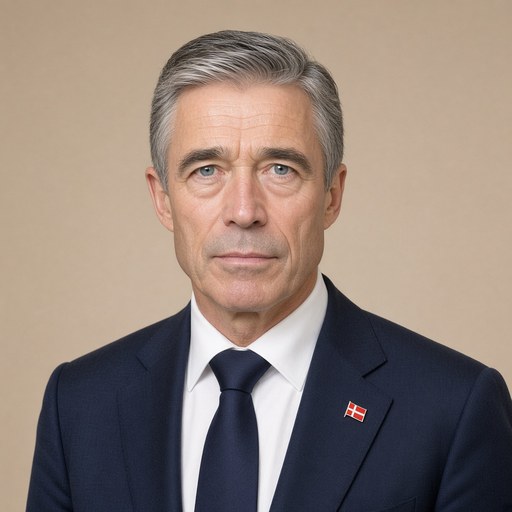
Prime Minister Anders Fogh Rasmussen's Constitutional Speech 2002, Terndruplund
 Anders Fogh Rasmussen · Prime Minister of Denmark
- Context
- Rasmussen delivered a constitutional address at Terndruplund on June 5, 2002, marking the 153rd anniversary of Denmark's Grundlov.
- Main themes
- Danish constitution anniversary, freedom of association, exclusive labor agreements, citizens' rights and freedoms, trade union membership, freedom of expression, Islamic extremism and Hizb-ut-Tahrir, Danish democracy, constitutional reform
- Duration
- ~21 min
- Words
- 2,460
- Sentences
- 183
- Readability
- 51
- Grade
- 9.1
- Syntax
- 2.59
- Vocabulary
- 2.16
Translated from Danish
The broad sphere of national life a sentence belongs to. Every sentence has an Arena, so it is the denominator the other indices are read against.
Other183 sentences in 66 paragraphs
This year we celebrate the 153rd anniversary of the Constitution. Unlike other countries, Denmark received its free constitution in peace and harmony.
On March 21, 1848, a mighty procession of the people marched to Christiansborg. President Hvidt from the Copenhagen City Council entered the royal palace.
The wait seemed endlessly long. But at last, the palace gate opened, and Hvidt announced the king's response: "The ministry is dissolved!"
The enormous assembly erupted: "Long live the king!" Then everyone went home to eat.
Thus peacefully did the revolution take place in Copenhagen in 1848. And the following year, on June 5, 1849, Denmark received its free constitution, the Grundlov.
With the constitution, absolute monarchy disappeared. Popular government was introduced with free elections and equal and universal suffrage. And provisions regarding citizens' rights to freedom were included in the constitution.
Since then, the constitution has been amended three times. The most recent constitution is from 1953. I believe it can serve as a framework for Danish democracy for many years to come. From time to time, there are calls for amendments to the constitution. And of course, the constitution must be amended periodically to adapt to developments in society. But there must be broad support among the population for something as important as an amendment to the constitution. Therefore, such an amendment must be thoroughly prepared. And there must be compelling reasons for a change before one embarks on such a significant task.
But already within the framework of the current constitution, there can – and should – be a better and stronger safeguarding of citizens' rights to freedom.
I would like to mention just one area. It is necessary to protect the individual against forced association. The problem is the so-called exclusive agreements, where employees or employers are forced into specific trade unions in order to obtain work or conduct business.
Around 200,000 employees in the private labor market are affected by exclusive agreements. An exclusive agreement binds an employer to only hire employees who are members of a specific trade union. In other words: An exclusive agreement forces an employee to be a member of a specific trade union as a condition for getting a job with the employer who has entered into the exclusive agreement.
There are examples of employees being fired because they refuse to join a trade union or because they choose to join the Christian Trade Union.
This is contrary to the government's understanding of freedom.
Freedom of association should not only be the freedom to join lawful associations, but it must also be the freedom to stay out of associations. And this applies to both employees and employers.
In the upcoming parliamentary session, the government will therefore present a bill that ensures the individual's freedom to choose an association or to remain outside an association. The government will propose a ban on exclusive agreements.
I would like to emphasize: The government has nothing against trade unions. On the contrary. It is quite reasonable for employees to join together to stand stronger professionally. But membership in a trade union should be voluntary. Trade unions should attract members by performing skilled professional work. Not by threatening employees' livelihoods.
Furthermore, the government's proposal will not only target the exclusive agreements of trade unions. We will also look at exclusive agreements where business owners are forced into specific associations in order to conduct business.
Critics say that the government, with such legislation, unreasonably intrudes into agreements and violates the freedom of contract. I must clearly reject this criticism. There are numerous examples of the Parliament setting legal frameworks for what can and cannot be freely agreed upon. Let me just mention the Holiday Act. It sets very specific frameworks for what can and cannot be agreed upon in agreements regarding holidays.
It is the government's view that there should be freedom – not only to be part of lawful associations, but also to be free from membership.
* * *
The constitution guarantees the individual the right to have their own opinions and to express them. In Denmark, it is a deep-rooted tradition that we manage freedom of expression with respect for other people, other cultures, and other religions.
I hope that this will continue to be the case in the future. But unfortunately, there are some young fundamentalists in Denmark who do not respect the fundamental principles upon which our democracy is built.
Some of the young fundamentalists have gathered in an international organization called 'Hizb-ut-Tahrir'. Hizb-ut-Tahrir defends suicide bombings. The organization works towards establishing an Islamic state.
According to Hizb-ut-Tahrir, the West, and thus Denmark, is only out to undermine and destroy Islam. The struggle between Islam and the West is eternal. And it is not permitted for any Muslim to be neutral or a bystander in that struggle.
Branches of this group exist in Denmark today. They are groups of young people who openly disdain our democracy and the values upon which our society is built. There are still only a few. But they are there. And they are growing in number.
Recently, Hizb-ut-Tahrir distributed leaflets that could be interpreted as a call to kill Jews. It was a despicable act. The case is now being investigated by the police to determine whether charges can be brought.
But the most important thing is that we take a massive stand against such activities. They are un-Danish. And they express a terrifying lack of respect for people, freedom, and democracy. In Denmark, there is freedom to think, speak, and believe as one wishes. But we must firmly establish that Danish society rests on some fundamental principles of freedom and respect for human life.
If you live in Denmark, you follow the Danish constitution. It is as simple as that. Regardless of which faith you belong to – Christian, Jewish, or Muslim – you must respect and adhere to the constitution when you live in Denmark.
In Denmark, politics and religion are separate. In Denmark, no religious law can stand above the constitution.
No one, whether they are self-serving politicians or fanatical imams and high priests, may take away our personal freedom. This is where the line is drawn – both in a geographical and a spiritual sense.
Denmark must not be a country divided by ethnic divisions. Loyalty is the key word. Loyalty to the fundamental democratic values. Respect for the constitution that forms the framework for these values.
No one asks foreigners in Denmark to be loyal to Danish food culture. No one asks them to be loyal to the Danish National Church. But to be in Denmark, one must be loyal to the constitution. This is a significant part of the foundation for our community.
Consider it a positive message to all foreigners in Denmark. You may have a different ethnic background. You may have a different cultural background. But that does not contradict the fact that you can be loyal to Denmark by being loyal to the constitution.
The rest of society must, of course, also be loyal to the new citizens. Those who are here and who make an effort must feel welcome – in every way. This is not just empty talk. If we let things be, Denmark will seriously enter a dangerous development. Immigrants must get to work. It is an incredible waste of human and economic resources if immigrants with good qualifications are denied a job simply because they have a foreign-sounding name.
A lack of Danish hospitality combined with the great dependence on social benefits among many foreigners creates ghetto formation, crime, idleness, lack of respect, and self-respect.
We do not want violence and unrest in Denmark. We do not want to see stone-throwing young Muslims attacking police officers, liberal women, and homosexuals. We will not show tolerance towards intolerance. Not even the intolerance shown towards hard-working Muslims who are making an honest attempt to become part of Danish society.
* * *
The constitution is the framework of our political life. But it is only the framework. We must fill the framework with a political culture based on openness and transparency in administration, legal security for the individual, decent and careful handling of citizens' money, and an overall humble attitude towards power.
Last year, I gave a constitutional speech that resonated with many. This was because I addressed a political culture that did not live up to these demands. I addressed favoritism, cronyism, collusion, and the arrogance of power within the Social Democratic movement. I illuminated it with a series of examples from the Municipality of Copenhagen, the Workers' Coffin Magazine, the Workers' Enlightenment Association, and others.
I said verbatim in last year's constitutional speech: "(The examples) show how the arrogance of power, favoritism, and collusion lead to abuse of power, misuse of money, negligence, and poor administration."
I would like to say: I mean every word. And I stand by every word.
All the more I regret that this year it is my own party that I must address. In recent months, a number of serious accusations have been raised against the leadership of Farum Municipality. A municipality where the Liberal Party has held power for many years.
In recent years, an unhealthy and highly questionable political culture has developed in Farum characterized by extravagance, overconsumption, abuse of power, and secrecy. It is not for me to judge whether illegalities have been committed. That is for the police and the courts to determine.
But extravagance, overconsumption, abuse of power, and secrecy are contrary to everything we stand for in the Liberal Party. Therefore, the Liberal Party's parliamentary group has also decided that Farum's former mayor, Peter Brixtofte, can no longer be a member of the Liberal Party's parliamentary group.
Peter Brixtofte and Farum Municipality have achieved outstanding results in getting people into work. This has been copied in several other municipalities.
But even the best results and excellent service offerings cannot excuse violations of the fundamental rules of a democracy.
A great responsibility now rests on the new mayor and on the Liberal Party's local branch in Farum. A responsibility to clean up the mess, get all skeletons out of the closets, and restore trust in the political culture of Farum Municipality.
I assume as a matter of course that the Liberal Party in Farum will take all necessary steps to restore trust in the party in the municipality.
We must protect a political culture that is based on openness, responsible administration, and trust in the elected representatives. In the Liberal Party, we do not shield anyone just because they are party comrades. On the contrary, I would like to set higher demands for our own than for others.
* * *
It is part of a good political culture in Denmark that we can cooperate across usual divides, and that we do not bully each other, but show consideration.
The election on November 20 last year resulted in a political system change. The population wanted a new policy. A new majority emerged, and a new government was formed.
The election was a break with the old-fashioned division of politics into right and left. The government is not constrained by outdated ideological thinking. What matters is not whether a proposal is perceived in the old-fashioned sense as right-wing or left-wing. What matters is whether the proposal contributes to solving the problems that people may have in their daily lives.
The government takes its starting point in the everyday lives of individuals. Therefore, the government has presented proposals that strengthen the efforts for the sick, the elderly, and the most vulnerable groups. And proposals that increase freedom, security, and safety in everyday life.
The majority of the government's bills have been passed with a broad majority in the Parliament. And that is good.
But there are also proposals that have been passed solely with the two governing parties and the Danish People's Party. The opposition calls it block politics.
I will very clearly reject the accusation of block politics. I do not want block politics. I want broad cooperation.
But I also want to fulfill the promises we made to the voters before the election. We campaigned on a number of clear promises. We said what we would do. And after the election, we did what we had said before the election.
It has been crucial for the government to fulfill the election promises. We have had to realize that the former governing parties would not participate in implementing our election promises. I do not even criticize them for that. They campaigned on fighting our election promises. So we can hardly demand that they support implementing them after the election.
On the other hand, one cannot blame the government for using the majority that exists to fulfill the promises that the voters were given. It would rightly draw criticism of the government if we did not fulfill the promises when we have the majority to do so. Even if it has sometimes meant that the proposals had to be passed with a smaller group of parties.
It is my expectation that in the next parliamentary session it will be easier to gather broad majorities behind the government's proposals. I would like to repeat my invitation to broad cooperation. It remains my view that major reforms are most sustainable if there are broad majorities behind them.
* * *
On July 1, Denmark will take over the presidency of the EU. It will be a significant and historic task. The goal is that by December we will make a decision on the expansion of the EU with up to 10 new countries.
It will be a difficult task. There are many hurdles to overcome before we can make this historic decision. But it must and shall succeed. It would be a mistake and a failure of gigantic proportions if the EU is unable to make this decision.
It is in our own interest to expand the EU eastward. But first and foremost, we have a moral obligation to include the Eastern European peoples in our Western cooperation organizations, the EU and NATO. They fought their way free from communist oppression. Should we then betray them, just as they had won the Western democratic system, which they saw as a model? It would be despicable if we simply turned our backs and let them fend for themselves.
By admitting the new democracies into the EU, we create a whole and undivided Europe once again. We create the best possible opportunities to ensure freedom, peace, and prosperity in our part of the world.
Therefore, Denmark now faces a historic task. Let us undertake it together. It will be in Denmark's interest. But above all, it will serve freedom and peace in Europe.
The original Danish. The tags above are read on the English translation's sentences.
Vi fejrer i år grundlovens 153 års dag. I modsætning til andre lande fik Danmark sin frie forfatning i fred og fordragelighed.
Den 21. marts 1848 gik et mægtigt folketog i procession til Christiansborg. Overpræsident Hvidt fra Københavns borgerrepræsentation gik ind på kongeslottet.
Ventetiden syntes uendelig lang. Men omsider åbnedes slotsporten, og Hvidt meddelte kongens svar: ”Ministeriet er opløst!”
Den enorme forsamling udbrød: ”Konge leve!” Så tog alle hjem for at spise.
Så fredeligt foregik revolutionen i København, 1848. Og året efter den 5. juni 1849 fik Danmark sin frie forfatning, Grundloven.
Med grundloven forsvandt enevælden. Folkestyret blev indført med frie valg og lige og almindelig valgret. Og der blev i grundloven indsat bestemmelser om borgernes frihedsrettigheder.
Siden er grundloven ændret tre gange. Den seneste grundlov er fra 1953. Jeg tror, at den kan fungere som ramme om det danske demokrati i mange år endnu. Fra tid til anden bliver der rejst ønske om en ændring af grundloven. Og selvfølgelig må grundloven med mellemrum ændres, så den bliver tilpasset udviklingen i samfundet. Men der skal være bred tilslutning i befolkningen til noget så vigtigt som en ændring af grundloven. Derfor skal en sådan ændring forberedes grundigt. Og der skal være tungt vejende grunde til en ændring, før man giver sig i kast med så stor en opgave.
Men allerede inden for rammerne af den nuværende grundlov kan der – og bør der – ske en bedre og stærkere sikring af borgernes frihedsrettigheder.
Jeg vil blot nævne et enkelt område. Det er nødvendigt at beskytte det enkelte menneske mod foreningstvang. Problemet er de såkaldte eksklusivaftaler, hvor lønmodtagere eller arbejdsgivere er tvunget ind i bestemte faglige foreninger for at kunne få arbejde eller drive erhverv.
Omkring 200.000 lønmodtagere på det private arbejdsmarked er ramt af eksklusivaftaler. En eksklusivaftale binder en arbejdsgiver til kun at ansætte medarbejdere, der er medlemmer af en bestemt fagforening. Med andre ord: En eksklusivaftale tvinger en lønmodtager til at være medlem af en bestemt fagforening som betingelse for at få arbejde hos den arbejdsgiver, som har indgået eksklusivaftalen.
Der er eksempler på, at medarbejdere er blevet fyret, fordi de nægter at melde sig ind i en fagforening, eller fordi de vælger at melde sig ind i Den Kristelige Fagbevægelse.
Det er i strid med regeringens frihedsopfattelse.
Foreningsfriheden bør ikke blot være friheden til at gå ind i lovlige foreninger, men det må også være friheden til at holde sig uden for foreninger. Og det gælder for både lønmodtagere og arbejdsgivere.
I den kommende folketingssamling vil regeringen derfor fremlægge et lovforslag, som sikrer det enkelte menneskes frihed til selv at vælge forening eller at stå uden for en forening. Regeringen vil fremsætte forslag om forbud mod eksklusivaftaler.
Jeg vil gerne understrege: Regeringen har ikke noget imod fagforeninger. Tværtimod. Det er en ganske fornuftig ting, at lønmodtagere slutter sig sammen for at stå stærkere fagligt. Men medlemskab af en fagforening bør være frivilligt. Fagforeninger skal tiltrække medlemmer ved at udføre et dygtigt fagligt arbejde. Ikke ved at true lønmodtagerne på deres levebrød.
I øvrigt vil regeringens forslag ikke kun rette sig mod fagforeningernes eksklusivaftaler. Vi vil også se på eksklusivaftaler, hvor erhvervsdrivende er tvunget ind i bestemte foreninger for at kunne drive erhverv.
Kritikerne siger, at regeringen med en sådan lovgivning på en ganske urimelig måde bryder ind i overenskomsterne og krænker aftalefriheden. Jeg må klart afvise denne kritik. Der er stribevis af eksempler på, at Folketinget ved lov sætter nogle rammer for, hvad der frit kan aftales og ikke aftales. Lad mig blot nævne ferieloven. Den sætter ganske bestemte rammer for, hvad der kan aftales og ikke aftales i overenskomsterne vedrørende ferie.
Det er regeringens opfattelse, at der skal være frihed – ikke blot til at være med i lovlige foreninger, men også til at være fri for medlemskab.
* * *
Grundloven sikrer det enkelte menneske retten til at have sine egne meninger og til at give udtryk for dem. I Danmark er det en rodfæstet tradition, at vi forvalter ytringsfriheden med respekt for andre mennesker, andre kulturer og andre religioner.
Sådan håber jeg, at det også kan være fremover. Men desværre er der i Danmark nogle unge fundamentalister, som ikke respekterer de grundlæggende principper, som vort folkestyre bygger på.
Nogle af de unge fundamentalister har samlet sig i en international organisation, der hedder, 'Hizb-ut-Tahrir'. Hizb-ut-Tahrir forsvarer selvmordsbomber. Organisationen arbejder for, at der skal etableres en islamisk stat.
Ifølge Hizb-ut-Tahrir er Vesten, og dermed også Danmark, kun ude på atundergrave og ødelægge islam. Kampen mellem islam og Vesten er evig. Og det er ikke tilladt nogen muslim at være neutral eller tilskuer til den kamp.
Forgreninger af denne gruppe findes i Danmark i dag. Det er grupper af unge, somåbent foragter vort demokrati og de værdier, vort samfund bygger på. Der er endnu kun få. Men de er der. Og de er ved at blive flere.
For nylig uddelte Hizb-ut-Tahrir løbesedler, der kunne tolkes som opfordring til at dræbe jøder. Det var en afskyelig handling. Sagen bliver nu efterforsket af politiet med henblik på, om der kan rejses tiltale.
Men det vigtigste er, at vi tager massivt holdningsmæssigt afstand fra den slags aktiviteter. De er udanske. Og de er udtryk for en uhyggelig mangel på respekt for mennesker, frihed og demokrati. I Danmark er der frihed til at tænke, tale og tro, som man vil. Men vi er nødt til at slå fast med syvtommersøm, at det danske samfund hviler på nogle helt fundamentale principper om frihed og respekt for menneskeliv.
Bor man i Danmark, følger man den danske grundlov. Så enkelt er det. Uanset hvilken tro man tilhører- den kristne, den mosaiske eller den muslimske – skal man respektere og efterleve grundloven, når man bor i Danmark.
I Danmark er politik og religion adskilt. I Danmark kan ingen religiøs lov stå over grundloven.
Vor personlige frihed må ingen magtmennesker - hverken nævenyttige politikere eller fanatiske imamer og ypperstepræster - tage fra os. Her går grænsen - både i geografisk og i åndelig forstand.
Danmark skal ikke være et land, der splittes af etniske modsætninger. Loyalitet er kodeordet. Loyalitet over for de grundlæggende demokratiske værdier. Respekt over for den grundlov, som danner rammen om disse værdier.
Ingen beder udlændinge i Danmark om at være loyale over for dansk madkultur. Ingen beder dem om at være loyale over for den danske folkekirke. Men for at være i Danmark skal man være loyal over for grundloven. Heri ligger en væsentlig del af grundlaget for vort fællesskab.
Betragt det som et positivt budskab til alle udlændinge i Danmark. Nok har I anden etnisk baggrund. Nok har I anden kulturel baggrund. Men det står ikke i modsætning til, at I kan være loyale overfor Danmark ved at være loyale over for grundloven.
Det øvrige samfund skal selvfølgelig også være loyalt over for de nye medborgere. De, som er her, og som gør en indsats, skal føle sig velkomne - på alle måder. Det er ikke bare tom snak. Hvis vi lader stå til, vil Danmark for alvor komme ind i en farlig udvikling. Indvandrere skal i arbejde. Det er et ufatteligt spild af menneskelige og økonomiske ressourcer, hvis indvandrere med gode kvalifikationer bliver nægtet et job, blot fordi de har et fremmed klingende navn.
Manglende dansk imødekommenhed kombineret med den store afhængighed af overførselsindkomster hos mange udlændinge skaber ghettodannelse, kriminalitet, lediggang, manglende respekt og selvrespekt.
Vi vil ikke have vold og ufred i Danmark. Vi vil ikke se stenkastende unge muslimer gå til angreb på politifolk, på frisindede kvinder og på homoseksuelle. Vi vil ikke vise tolerance over for intolerancen. Heller ikke den intolerance, som bliver vist over for de hårdtarbejdende muslimer, som gør et ærligt forsøg på at blive en del af det danske samfund.
* * *
Grundloven er rammen om vort politiske liv. Men netop kun rammen. Rammen skal vi fylde ud med en politisk kultur, som bygger på åbenhed og gennemsigtighed i forvaltningen, retssikkerhed for det enkelte menneske, anstændig og påpasselig omgang med borgernes penge og i det hele taget en ydmyg holdning til magten.
Sidste år holdt jeg en grundlovstale, som gav en del genlyd. Det skyldtes, at jeg tog fat på en politisk kultur, som ikke levede op til disse krav. Jeg tog fat på vennetjenester, kammerateri, sammenspisthed og magtens arrogance i den socialdemokratiske bevægelse. Jeg belyste det med en række eksempler fra Københavns kommune, Arbejdernes Ligkistemagasin, Arbejdernes Oplysningsforbund og andre.
Ordret sagde jeg i grundlovstalen sidste år: ”(Eksemplerne) viser, hvordan magtens arrogance, vennetjenester og sammenspisthed fører til misbrug af magt, misbrug af penge, sløseri og elendig administration”.
Jeg vil gerne sige: Jeg mener hvert et ord. Og jeg står ved hvert et ord.
Så meget mere beklager jeg, at det i år er mit eget parti, jeg må tage fat på. I de senere måneder er der rejst en række alvorlige anklager mod ledelsen af Farum kommune. En kommune, hvor Venstre har haft magten i mange år.
De senere år har der udviklet sig en usund og stærkt kritisabel politisk kultur i Farum med fråds, overforbrug, misbrug af magt og lukkethed. Det er ikke op til mig at bedømme, om der er begået ulovligheder. Det tager politiet og domstolene sig af.
Men fråds, overforbrug, misbrug af magt og lukkethed strider mod alt det, vi står for i Venstre. Derfor har Venstres folketingsgruppe også besluttet, at Farums tidligere borgmester, Peter Brixtofte, ikke længere kan være medlem af Venstres folketingsgruppe.
Peter Brixtofte og Farum kommune har præsteret strålende resultater med at skaffe folk i arbejde. Det er blevet kopieret i flere andre kommuner.
Men selv nok så gode resultater og flotte servicetilbud kan ikke undskylde brud på de fundamentale spilleregler i et folkestyre.
Der hviler nu et stort ansvar på den nye borgmester og på Venstres partiafdeling i Farum. Et ansvar for at rydde op i moradset, få alle skeletter ud af skabene og få genskabt tilliden til den politiske kultur i Farum kommune.
Jeg går ud fra som en selvfølge, at Venstre i Farum vil tage alle de nødvendige skridt for at genoprette tilliden til partiet i kommunen.
Vi skal værne om en politisk kultur, der bygger på åbenhed, forsvarlig forvaltning og tillid til de folkevalgte. I Venstre skærmer vi ikke nogen, blot fordi de er partikammerater. Tværtimod vil jeg gerne stille højere krav til vore egne end til andre.
* * *
Det hører med til en god politisk kultur i Danmark, at vi kan samarbejde på tværs af sædvanlige skel, og at vi ikke tryner hinanden, men tager hensyn.
Valget den 20. november sidste år gav et politisk systemskifte. Befolkningen ønskede en ny politik. Der kom et nyt flertal, og der blev dannet en ny regering.
Valget var et opgør med den gammeldags opdeling af politik i højre og venstre. Regeringen er ikke hæmmet af gammeldags ideologisk tænkning. Det afgørende er ikke, om et forslag i gammeldags forstand bliver opfattet som højre-orienteret eller venstre-orienteret. Det afgørende er, om forslaget bidrager til at løse de problemer, som mennesker måtte have i deres hverdag.
Regeringen tager sit udgangspunkt i det enkelte menneskes hverdag. Derfor har regeringen fremlagt forslag, som forstærker indsatsen over for de syge, de ældre og de mest udsatte grupper. Og forslag som øger frihed, tryghed og sikkerhed i hverdagen.
Hovedparten af regeringens lovforslag er vedtaget med et bredt flertal i Folketinget. Og det er godt.
Men der er også forslag, som er vedtaget alene med de to regeringspartier og Dansk Folkeparti. Oppositionen kalder det blokpolitik.
Jeg vil meget klart afvise beskyldningen om blokpolitik. Jeg ønsker ikke blokpolitik. Jeg ønsker bredt samarbejde.
Men jeg ønsker også at opfylde de løfter, vi gav til vælgerne før valget. Vi gik til valg på en række klare løfter. Vi sagde, hvad vi ville. Og efter valget gjorde vi, hvad vi havde sagt før valget.
Det har været afgørende for regeringen at opfylde valgløfterne. Vi har måttet indse, at de tidligere regeringspartier ikke ville være med til at gennemføre vore valgløfter. Det vil jeg ikke en gang kritisere dem for. De gik til valg på at bekæmpe vore valgløfter. Så kan vi dårligt forlange, at de skal lægge ryg til at gennemføre dem efter valget.
Til gengæld kan man heller ikke bebrejde regeringen, at den bruger det flertal, der er, til at gennemføre de løfter, som vælgerne blev stillet i udsigt. Det ville med rette give kritik af regeringen, hvis vi ikke opfyldte løfterne, når vi har flertal til at gøre det. Også selvom det i visse tilfælde har betydet, at forslagene skulle vedtages med en mindre kreds af partier.
Det er min forventning, at det i næste folketingssamling bliver nemmere at samle brede flertal bag regeringens forslag. Jeg vil gerne gentage min indbydelse til et bredt samarbejde. Det er fortsat min opfattelse, at store reformer bliver mest holdbare, hvis der står brede flertal bagved.
* * *
Den 1. juli overtager Danmark formandskabet for EU. Det bliver en stor og historisk opgave. Målet er, at vi til december skal træffe beslutning om udvidelse af EU med op til 10 nye lande.
Det bliver en svær opgave. Der er masser af hurdler, som skal overvindes, før vi kan træffe denne historiske beslutning. Men det må og skal lykkes. Det vil være en fejltagelse og et svigt af gigantiske dimensioner, hvis EU ikke er i stand til at træffe denne beslutning.
Det er i vor egen interesse at udvide EU mod øst. Men først som sidst har vi en moralsk forpligtelse til at optage de østeuropæiske folk i vore vestlige samarbejdsorganisationer, EU og NATO. De kæmpede sig selv fri af den kommunistiske undertrykkelse. Skulle vi da svigte dem, netop som de havde tilkæmpet sig det vestlige demokratiske system, de så som et forbillede? Det ville være usselt, om vi blot vendte ryggen til og lod dem sejle deres egen sø.
Ved at optage de nye demokratier i EU skaber vi igen et helt og udelt Europa. Vi skaber de bedst tænkelige muligheder for at sikre frihed, fred og velstand i vorverdensdel.
Derfor er det en historisk opgave, Danmark nu står overfor. Lad os løfte den i fællesskab. Det vil være i Danmarks interesse. Men først og fremmest vil det tjene friheden og freden i Europa.