




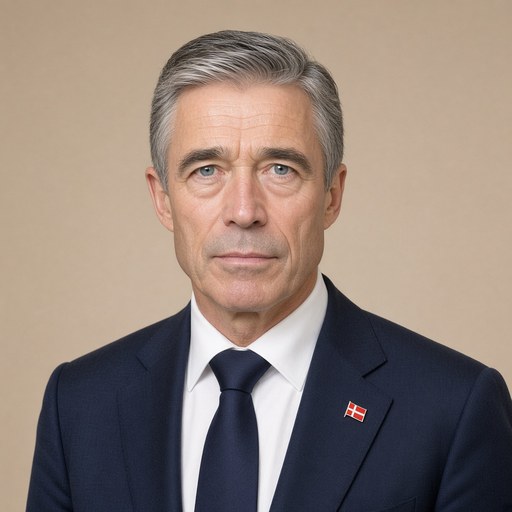
Prime Minister Anders Fogh Rasmussen's speech at the Laureate Celebration for Jens Smærup Sørensen on Saturday, March 29, 2008.
 Anders Fogh Rasmussen · Prime Minister of Denmark
- Context
- Rasmussen spoke at a laureate celebration honoring Danish author Jens Smærup Sørensen on March 29, 2008, praising his novel 'Significant Days'.
- Main themes
- Transformation of Danish peasant culture, generational change, rural to urban transition, individualism vs. collectivism, literary celebration and tribute, family and lineage, social progress and liberation, community and belonging, consumerism and frugality, obligation vs. freedom
- Duration
- ~15 min
- Words
- 1,853
- Sentences
- 138
- Readability
- 56
- Grade
- 8.8
- Syntax
- 2.68
- Vocabulary
- 2.16
Translated from Danish
The broad sphere of national life a sentence belongs to. Every sentence has an Arena, so it is the denominator the other indices are read against.
Other138 sentences in 43 paragraphs
Dear Jens Smærup Sørensen,
Today is a significant day. Tonight is a festive evening.
We celebrate Peder Godiksen's confirmation. Emma's and Orla's silver wedding anniversary. Henrik Lundbæk's 60th birthday.
We celebrate all the people we have come to know so well in the story of significant days. And we celebrate, of course, first and foremost you, who have given life to them all.
Actually, we should have had soup, roast, and ice cream tonight. But nothing is as it was back then in the Staun community hall. Everything has become so fine.
You have written a mighty and magnificent story about the transformation, indeed, the dissolution of the old peasant culture. With fascinating, challenging, and demanding leaps back and forth and sideways in time, you lead us through 4-5 generations of life rooted in your home region in Northwest Jutland.
You spare the readers nothing. It requires a steady tongue and full attention to follow you around the entire gallery of characters and their interrelations. But in return, we get a gripping generational story – one of the best contemporary portrayals I have read.
It is the story of 70 years of extraordinary material progress. But first and foremost, it is the story of Denmark's transformation from a peasant to an urban culture. About the development from local ties to longing for the outside world. From collectivism to individualism. From frugality to consumerism.
In the old society, work and the continuation of the farm and lineage were the very meaning of life. In response to the priest's question about what is the only thing God demands of us, Peder Godiksen answers at his confirmation in 1934: "We must take care of our heads!" Taking care of the heads, cultivating the land, ensuring that the next generation could take over the farm and carry on the lineage – that provided roots and direction in life.
The third generation of the Godiksen family sees life in a completely different light. Anders and Niels Jørgen have long since left agriculture behind. They are employees in private companies. They live a wonderful life in their houses and summer homes and at their holiday spots. At Henrik Lundbæk's 60th birthday in 2003, they sit and look forward to going on early retirement, so they can "dance around for the next thirty years without disturbance." It has "without embellishment become the highest goal of existence."
In this development from obligation to liberation, you tell a whole series of sub-stories about dramatic upheavals for societies, families, and individuals with great empathy and virtuosity.
About how the village community changes appearance. About how the farm changes from being a life mission to merely being a random business "with no other architectural scale or ambition than as many square meters as possible for the lowest possible mortgage loan."
About how old peasant lineages die out because the children do not want to take over the family farm. About the abrupt human upheavals, where old, ingrained norms for life and living together are dissolved along with the peasant culture. There are those who travel out into the world. There are those who find partners abroad. There are the divorces. There is the homosexual couple.
You tell a captivating story about human liberation. A liberation from what you call "the usual way" in the book.
"Significant Days" has been described as a tale of decline about the dissolution of the old peasant culture. That is not how I read the book. It is probably the story of the transformation of old structures. But not a decline.
I read "Significant Days" as an unsentimental portrayal of a societal development that has, in its way, been inevitable and has certainly been advantageous and desirable.
Although there were undoubtedly many qualities in the peasant culture and the village community. First and foremost, the personal sense of duty and responsibility. The responsibility to carry on the farm. The responsibility to pass on values to the next generation. The responsibility to help those in the local community who needed assistance. The responsibility for the community hall, the cooperative, the dairy cooperative, and the local community in general.
It was safe and good for children to grow up in the village. Mother and father at home to welcome them after school. No stabbings and crime. No temptations on street corners. There was no time for that either, as there was plenty of work on the farm. And in the scarce free time, good and healthy interests like football and gymnastics.
Yes, I can certainly see the positive qualities. And yet I am comfortable with the fact that society has changed. In the old peasant culture, the social structures were incredibly rigid. And we need pattern breakers to create progress in society.
It is good that children have the freedom to choose their own life path – and are not forced to carry on the family farm. Regardless of whether they have the desire, ability, and talent for it.
It is good that people have the freedom to choose the occupation they are best suited for and most inclined to. Because it creates dynamism and progress in society.
It is good that people have the freedom to choose the way of life they desire, without being bound by traditions or prejudices. Because it brings greater joy in life.
My own family's history is a narrative of how each generation has sought to break the old patterns and create new opportunities. My grandfather was a butcher and farm laborer. With the help of cheap state loans, he bought his own little place, a so-called "state smallholder farm."
Here my father grew up under very modest conditions. There was no money for further education after primary school. So he went out to work on the large farms. And his own dream was one day to have a farm himself. Through hard work, he saved money. And the dream came true.
I grew up on a farm in an environment that closely resembles what you so brilliantly describe in "Significant Days." Unlike my father, I had the chance to choose my own path. I became the first academic in my family. Just as you did in your family. Just as Søren Lundbæk in the book did in his family. And just like many others with us.
And the youngest generation in my family has now taken the step fully from the local to the global by both settling abroad and engaging in internationally oriented activities.
When I have spent some time on my family's history, it is not because it is anything special. But because all our small family stories tell the larger story of the colossal development that has taken place in Danish society. From a poor agricultural society to a rich welfare society.
For me, it is primarily a positive story. A story of greater individual freedom. And of better opportunities to break the social pattern.
But I am, of course, also aware that there can be a human cost when the firm values and fundamental stability of peasant culture are replaced by a new reality that can seem chaotic.
One of the book's dramatic points occurs when the village's long-standing leader, the stout farmer Søren Godiksen, nearly loses faith in God, king, and fatherland. He feels that "something inside him must have broken." He "had come to doubt why he was even there. Whether there was a reason for it."
For me, that sequence stands out as characteristic not only of "Significant Days" but of your entire authorship. An authorship that largely deals with people who are in a void, have lost their sense of direction, and are searching for the meaning of life.
That is how I read your novel, "Catastrophe." Like "Significant Days," it deals with the loss of a community that once was. About the '68 generation's community, which turned out to be a community about nothing. We follow the main characters for a day in the spring of 1986 and uncover their cynicism, fear, and loneliness. In search of the content of existence.
"The Human Principle," is the title of one of your short story collections. And the common theme of the stories – the human principle – seems to be the question of whether human life is determined by fate, historical determination, or by the individual's own will – in the words of the title story, "to be one's own master."
It seems to me that you are searching, pondering, and reflecting on precisely this existential question in your authorship.
In "Significant Days," Søren Lundbæk has written a book, "Playing Room." In it, he describes how three cultural orders, the ancient peasant society, the bourgeoisie, and petty-bourgeois consumerism, dissolved and disappeared. Thus, a book with a theme that closely resembles the theme in "Significant Days." And Søren Lundbæk reflects: "No matter how much he had tried (...) to put the human being at the center, he was close to ending up completely at the bottom of a determinism that he abhorred." It must remain uncertain whether it is you yourself who speaks here.
In "Significant Days," the development sweeps over the peasant society like a tidal wave from outside. There is a certain determinism to the course of events. Naturally, when the perspective is that of the village.
But the society we have today is neither random nor fate-determined. It is largely the result of human decisions. Of political decisions. We have built a welfare society with the goal of providing everyone with equal opportunities, regardless of social background.
My grandfather would not have been able to break the social pattern if the state had not helped establish state smallholder farms. And I would not have been able to break the social pattern without free education and student grants.
The freedom and opportunities have not come by themselves. Political decisions have given individuals better opportunities. And thus created progress in society.
Jens Smærup Sørensen, from the soup to the roast to the ice cream, I was captivated by reading your book. Because you tell a good story. Because you challenge the reader. Because I am taken by your linguistic artistry, your whimsical humor, and your delightful irony. Because your character portrayals are so distinctive, so condensed, and so authentic. We sit long at the table, but at no point does it become boring. On the contrary, I found myself chuckling several times during the reading as I vividly recalled your novel characters from the significant days of my home region.
You have said that the dissolution of the old peasant culture in the modern world is the absolutely greatest event of our time. You have yourself been a part of this colossal story. Precisely for that reason, you have been able to write it with such great empathy.
"Significant Days" is a great work. An exciting family saga and a significant snapshot of the times. Written by a firsthand witness. "Significant Days" will hold a strong place in literature. Yes, it already has.
Therefore, you deserve the Golden Laurel, and I wish you a hearty congratulations!
The original Danish. The tags above are read on the English translation's sentences.
Kære Jens Smærup Sørensen,
I dag er en mærkedag. I aften er en festaften.
Vi fejrer Peder Godiksens konfirmation. Emmas og Orlas sølvbryllup. Henrik Lundbæks 60 års fødselsdag.
Vi fejrer alle de mennesker, som vi har lært så godt at kende i historien om mærkedagene. Og vi fejrer selvfølgelig først og fremmest dig, der har givet liv til dem alle sammen.
Egentlig burde vi have haft suppe, steg og is i aften. Men ingenting er, som det var dengang i Staun forsamlingshus. Det er jo blevet så fint alt sammen.
Du har skrevet en mægtig og prægtig historie om forvandlingen, ja, opløsningen af den gamle bondekultur. Med fascinerende, udfordrende og krævende spring frem og tilbage og til siden i tid leder du os gennem 4-5 generationers liv med udspring i din hjemstavn i Nordvesthimmerland.
Du skåner ikke læserne for noget. Det kræver tungen lige i munden og fuld opmærksomhed at følge dig rundt i hele galleriet af personer og deres indbyrdes relationer. Men til gengæld får vi en medrivende generationshistorie – én af de bedste samtidsskildringer, jeg har læst.
Det er historien om 70 års enestående materiel fremgang. Men først og fremmest er det historien om Danmarks forvandling fra bonde- til bykultur. Om udvikling fra hjemstavnsbånd til udlængsel. Fra kollektivisme til individualisme. Fra nøjsomhed til forbrugerisme.
I det gamle samfund var arbejdet og gårdens og slægtens videreførelse selve meningen med livet. På præstens spørgsmål om, hvad det eneste er, som Gud forlanger af os, svarer Peder Godiksen til sin konfirmation i 1934: ”Vi skal passe vore høveder!” Passe høvederne, dyrke jorden, sørge for at næste generation kunne overtage gården og føre slægten videre – det gav rodfæste og retning i livet.
Tredje generation af familien Godiksen ser helt anderledes let på tilværelsen. Anders og Niels Jørgen har for længst lagt landbruget bag sig. Er funktionærer i private virksomheder. Lever et herligt liv i deres parcelhuse og sommerhuse og på deres feriesteder. Ved Henrik Lundbæks 60 års fødselsdag i 2003 sidder de og glæder sig til at gå på efterløn, så de ”ganske uforstyrret kan dandere den de næste tredive år”. Det er ”uden omsvøb blevet tilværelsens højeste mål”.
I denne udvikling fra forpligtelse til frigørelse får du med stor indføling og virtuositet fortalt en hel række af delhistorier om dramatiske omvæltninger for samfund, familier og mennesker.
Om hvordan landsbysamfundet ændrer udseende. Om hvordan gården ændrer sig fra at være en livsopgave til blot at være et tilfældigt erhvervsliv ”uden anden arkitektonisk målestok og ambition end flest mulige kvadratmeter for det lavest mulige kreditforeningslån”.
Om hvordan gamle bondeslægter dør ud, fordi børnene ikke vil overtage slægtsgården. Om de bratte menneskelige omvæltninger, hvor gamle, indgroede normer for liv og samliv bliver opløst sammen med bondekulturen. Der er dem, der rejser ud i verden. Der er dem, der får kærester i udlandet. Der er skilsmisserne. Der er det homoseksuelle par.
Du fortæller en medrivende historie om en menneskelig frigørelse. En frigørelse fra det, du i bogen kalder ”den sædvanlige måde”.
”Mærkedage” er blevet omtalt som en forfaldshistorie om opløsningen af den gamle bondekultur. Sådan læser jeg ikke bogen. Det er nok historien om forvandling af gamle strukturer. Men ikke et forfald.
Jeg læser ”Mærkedage” som en usentimental skildring af en samfundsudvikling, der på sin vis har været uundgåelig og bestemt har været fordelagtig og ønskværdig.
Selvom der helt sikkert var mange kvaliteter ved bondekulturen og landsbyfællesskabet. Først og fremmest den personlige følelse af pligt og ansvar. Ansvaret for at føre gården videre. Ansvaret for at overlade værdier til den næste generation. Ansvaret for at hjælpe dem i lokalsamfundet, som havde hjælp behov. Ansvaret for forsamlingshus, brugsforening, andelsmejeri og det lokale fællesskab i det hele taget.
Det var trygt og godt for børn at vokse op i landsbyen. Mor og far derhjemme til at tage imod efter skoletid. Ingen knivstikkerier og kriminalitet. Ingen fristelser på gadehjørnerne. Det var der heller ikke tid til, for der var masser af arbejde på gården. Og i den sparsomme fritid gode og sunde interesser med fodbold og gymnastik.
Ja, jeg kan sagtens få øje på de positive kvaliteter. Og dog er jeg godt tilpas med, at samfundet har ændret sig. I den gamle bondekultur var de sociale strukturer utroligt fastlåste. Og vi har brug for mønsterbrydere til at skabe fremskridt i samfundet.
Det er godt, at børnene har frihed til selv at vælge deres livsbane – og ikke er tvunget til at føre slægtsgården videre. Uanset om de har lyst, evner og anlæg for det.
Det er godt, at mennesker har frihed til at vælge den beskæftigelse, som de er bedst til og har mest lyst til. For det skaber dynamik og fremgang i samfundet.
Det er godt, at mennesker har frihed til at vælge den livsform, de ønsker, uden at være bundet af traditioner eller fordomme. For det giver en større glæde i livet.
Min egen families historie er en beretning om, hvordan hvert slægtled har søgt at bryde de gamle mønstre og skabe nye muligheder. Min bedstefar var slagter og landarbejder. Med hjælp fra billige statslån købte han sit eget lille sted, et såkaldt ”statshusmandsbrug”.
Her voksede min far så op under meget beskedne kår. Der var ikke råd til at læse videre efter folkeskolen. Så han kom ud at tjene på de store gårde. Og hans egen drøm var en dag selv at få en gård. Ved hårdt arbejde lagde han penge til side. Og drømmen gik i opfyldelse.
Jeg voksede op på en gård i et miljø, som meget ligner det, du så blændende beskriver i ”Mærkedage”. Modsat min far fik jeg chancen for selv at vælge min vej. Jeg blev familiens første akademiker. Ligesom du blev det i din familie. Som bogens Søren Lundbæk blev det i sin familie. Og lige som mange andre med os.
Og den yngste generation i min familie har nu taget skridtet fuldt ud fra det lokale til det globale ved dels at bosætte sig i udlandet, dels at beskæftige sig med internationalt orienterede aktiviteter.
Når jeg har brugt lidt tid på min families historie, så er det ikke, fordi den er noget særligt. Men fordi alle vore små familiehistorier fortæller den store historie om den kolossale udvikling, der er sket i det danske samfund. Fra et fattigt landbrugssamfund til et rigt velfærdssamfund.
For mig er det først og fremmest en positiv historie. En historie om større individuel frihed. Og om bedre muligheder for at bryde det sociale mønster
Men jeg er selvfølgelig også bevidst om, at der kan være en menneskelig omkostning, når bondekulturens faste værdier og grundlæggende ro bliver afløst af en ny virkelighed, som kan virke nok så kaotisk.
Ét af bogens dramatiske punkter indtræffer, da landsbyens mangeårige førstemand, den stoute bonde, Søren Godiksen, nærmest mister troen på Gud, konge og fædreland. Han føler, at ”noget inde i ham må være gået i stykker”. Han ”var kommet til at tvivle om, hvorfor han selv var der. Om der var en grund til det”.
For mig står netop den sekvens som karakteristisk ikke alene for ”Mærkedage”, men for hele dit forfatterskab. Et forfatterskab, som i høj grad handler om mennesker, der er ude i et tomrum, har mistet deres retningssans og leder efter meningen med livet.
Sådan læste jeg din roman, ”Katastrofe”. Ligesom ”Mærkedage” handler den om tabet af et fællesskab, som var engang. Om ’68-generationens fællesskab, som viste sig at være et fællesskab om ingenting. Vi følger hovedpersonerne en dag i foråret 1986 og får afsløret deres kynisme, angst og ensomhed. På jagt efter indholdet i tilværelsen.
”Det menneskelige princip”, hedder én af dine novellesamlinger. Og fællesemnet for novellerne - det menneskelige princip - synes at være spørgsmålet, om menneskets liv er bestemt af skæbne, historisk determination, eller af individets egen vilje – med titelnovellens ord, ”at være sin egen husbond”.
Det forekommer mig, at du i dit forfatterskab er søgende, funderende og reflekterende over netop dette eksistentielle spørgsmål.
I ”Mærkedage” har Søren Lundbæk skrevet en bog, ”Spillerum”. I den skildrer han, hvordan tre kulturelle ordener, det ældgamle bondesamfund, borgerligheden og den småborgerlige forbrugerisme, gik i opløsning og forsvandt. Altså en bog med et tema, som til forveksling ligner temaet i ”Mærkedage”. Og Søren Lundbæk reflekterer således: ”Hvor meget han end havde forsøgt (….) at få mennesket i centrum, var han nær ved alligevel at havne helt på bunden af en determinisme, som han afskyede”. Det må stå hen i det uvisse, om det er dig selv, der taler her.
I ”Mærkedage” skyller udviklingen hen over bondesamfundet som en flodbølge udefra. Der er en vis determinisme over forløbet. Naturligt nok, når synsvinklen er landsbyens.
Men det samfund, vi har i dag, er hverken tilfældigt eller skæbnebestemt. Det er i høj grad resultatet af menneskers beslutninger. Af politiske beslutninger. Vi har opbygget et velfærdssamfund med det mål at give alle lige muligheder, uanset social baggrund.
Min bedstefar havde ikke kunnet bryde det sociale mønster, hvis ikke staten havde hjulpet med at oprette statshusmandsbrug. Og jeg havde ikke kunnet bryde det sociale mønster uden gratis uddannelse og SU.
Friheden og mulighederne er ikke kommet af sig selv. Politiske beslutninger har givet det enkelte menneske bedre muligheder. Og dermed skabt fremdrift i samfundet.
Jens Smærup Sørensen, fra suppen over stegen til isen blev jeg fængslet af at læse din bog. Fordi du fortæller en god historie. Fordi du udfordrer læseren. Fordi jeg falder for din sprogkunst, dit underfundige lune og din fornøjelige ironi. Fordi dine personskildringer er så karakterfulde, så fortættede og så autentiske. Vi sidder længe til bords, men på intet tidspunkt bliver det kedeligt. Tværtimod sad jeg flere gange og klukkede under læsningen, når jeg så levende kunne genkalde mig dine romanpersoner fra min hjemstavns mærkedage.
Du har sagt, at den gamle bondekulturs opløsning i den moderne verden er den absolut største begivenhed i vor tid. Du har selv været en del af denne kolossale historie. Netop derfor har du kunnet skrive den med så stor indlevelse.
”Mærkedage” er et stort værk. En spændende slægtsroman og et betydningsfuldt tidsbillede. Skrevet af et førstehåndsvidne. ”Mærkedage” vil få en stærk plads i litteraturen. Ja, det har den allerede.
Derfor fortjener du De Gyldne Laurbær, og jeg ønsker dig et stort tillykke!