




- Context
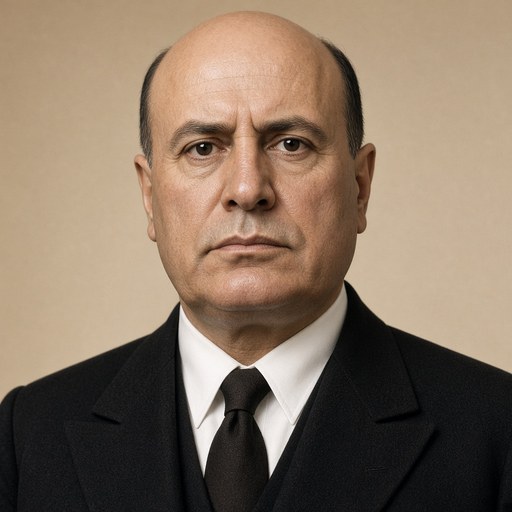
- Mussolini addressed the Italian Chamber of Deputies on July 16, 1923, during the debate on the Electoral Reform Bill, rebutting the opposition and demanding confidence in his Government, which won the vote by a large majority.
- Main themes
- Electoral Reform Bill, Popular Party collaboration, Fascismo as a lasting phenomenon, liberty and licence, Russian and Italian revolutions, bourgeoisie and proletariat, Caporetto and war discipline, Cavour and the Crimean expedition, moral unity of the Italian people, retention of power, confidence vote in the Government
- Duration
- ~64 min
- Words
- 7,736
- Sentences
- 958
- Readability
- 51
- Grade
- 8.0
- Syntax
- 2.30
- Vocabulary
- 3.44
The broad sphere of national life a sentence belongs to. Every sentence has an Arena, so it is the denominator the other indices are read against.
Other958 sentences in 699 paragraphs
Honourable Gentlemen,—I should have preferred to speak to this Assembly on that question of Foreign Policy which at this moment interests Italy and fills the world with excitement: I mean the Ruhr. I should have proved that the action of Italy is autonomous, and is inspired by the protection of our interests and also by the need generally felt to get out of a crisis which impoverishes and humiliates our continent. (Assent.) I promise myself to do so shortly, if the Chamber does not have the whim to-day of dying before its time. My speech will be calm and measured, although fundamentally forceful. It will be composed of two parts: one that I should like to call “negative,” and another which I shall call “positive.”
After all, I am not sorry that the discussion has gone, little or far, beyond the limits in which it could have been confined. The discussion on the Electoral Bill has offered opportunity to the Opposition to reveal itself, to move, from all its sections, from all its benches, to an attack against the policy and the political system of my Government. It will not surprise you, therefore, if, although not entering into details of all the speeches, I pick out from what has been said by the principal speakers those arguments and those propositions which I must definitely refute.
Warning to the Popular Party. As the speech by the Hon. Petrillo was favourable to the Government, it is not worth while to busy ourselves with it.
I shall give my attention to the speech delivered by the Hon. Gronchi,—a speech fine as regards its form, and perhaps still finer as regards its contents. The Hon. Gronchi has once again offered the Government a collaboration of convenience, as in those mariages de convenance which do not last or which end in ceaseless yawns. (Comment.)
Your collaboration, Gentlemen of the Popular Party, largely consists of details omitted. Your party, too, shows the same weakness. You should set to work and clear them up.
I do not know for how long these elements who wish to collaborate legally with the National Government can still remain united with your party, together with those who would wish to do so but cannot, because their inmost feelings do not allow them this step and this collaboration. You certainly know me well enough to understand that, as far as political discussion goes, I am intransigent. The small fry of the two-fifths and of the three-quarters or some other fraction of this electoral arithmetic does not interest nor concern me. Politics cannot be compared to a retail business. (Assent and comment.) To be or not to be! I am such a poor electoralist that I could even let you have the thirty or forty deputies who satisfy you; but I do not give them to you, as this would be immoral, because it would represent a transaction which must be repugnant to your conscience, as it is to mine. (Assent and comment.) In fact, I cannot accept a kind of Malthusian collaboration!
The Russian and the Italian Revolutions both tend to overcome all Ideologies. The speech delivered by the Hon. Labriola was certainly powerful. He said that Ministerial crises are a substitute for revolution. He should have said “Ersatz,” because substitutes, since the war, are of German origin. That is too like the opinion of a herbalist to be accepted. It may be that the want of Ministerial crises leads to revolution, but here you have an example that shows how excessive Ministerial crises lead also to revolution. But, above all, it astounded me to hear the Hon. Labriola still employ the old vocabulary of second-class Socialist literature, speaking of bourgeoisie and proletariat—two entities clearly defined and perpetually in a state of antagonism. It is certainly true that there is not one bourgeoisie, but there are, perhaps, twenty-four or forty-eight bourgeoisies and under-bourgeoisies. The same can be said of the proletariat. What relation can there be between a workman of the “Fiat” factory—specialised, refined, with tendencies and tastes already bourgeois, who earns thirty to fifty lire a day—what relation can there be between this so-called proletarian and the poor peasant of Southern Italy, who despairingly scrapes his land burnt by the sun? (Assent and comments.)
The Hon. Labriola has said that only the proletariat can give itself the luxury of a dictatorship. This is a mistake which is proved and can be proved. The only example of dictatorship is offered us by Russia. But the Hon. Labriola has written dozens of articles to prove that dictatorship does not exist in Russia and that dictatorship is not “of” but “upon” the proletariat. All those who govern the Russian States are professors, lawyers, economists, literary men, men of talent; that is to say, men coming from the professional classes, from the bourgeoisie.
The fault which the Hon. Labriola lays on us, finding an analogy between the methods and the evolution of the Russian and of the Italian revolution, does not exist. And here I make a simple statement of historical order. It is a fact that both revolutions tend to destroy all the ideologies and in a certain sense the Liberal and Democratic institutions which were the outcome of the French Revolution.
Italy pulled herself together after Caporetto, because the necessary Discipline of War was imposed on her. During the last few days use and abuse of a polemic method have been made, that of unearthing the writings and opinions of the past to employ them as a weapon in the present dispute. This is a very wretched system which I am going to use against those who have adopted it.
In his speech the Hon. Alessio has stated that the defeat of the Central Empires was due to the deficiency of their representative organs. This is a totally one-sided explanation. There has been a war; millions of men have fought against the Central Empires and defeated them. Another mistake is to say that after Caporetto Italy pulled herself together because she had regained her liberty. Nothing of the kind! The reason is that the necessary war discipline was imposed upon her. (Loud applause on the Right.) I am not one of those who think that Caporetto was due entirely to the disintegration of the country in rear of the fighting front. It was a military reverse in its causes and development; but there is no doubt that the atmosphere of the country, an atmosphere of leniency and of excessive tolerance, has produced disturbing moral phenomena which must have contributed to our reverse.
The Dawn of Italian Risorgimento came from the Bourgeoisie of Naples. The other statement made by the Hon. Alessio, that the Italian Risorgimento represented the efforts of the Italian lower classes, is superficial. Alas! it is not so. The Italian lower classes were absent and often hostile to it. The first dawn of the Italian Risorgimento came from Naples, from that bourgeoisie of intelligent and gallant professional men which in Southern Italy represents a class historically, politically and morally well-defined. Those who at Nola in 1821 hoisted the standard of revolution against the Bourbons were two cavalry officers. All the noble martyrology of the Italian Risorgimento is formed out of elements of the bourgeoisie. Nothing is sadder than the useless sacrifice of the Bandiera brothers. And when you think of the tragedy of Carlo Pisacane you are thrilled! I should like to deny that Giuseppe Mazzini himself can be included in Democracy. His methods were certainly not democratic. He was very consistent in his aims, but how many times was he not incoherent and changeable in his means?
The Expedition to the Crimea really prepared the way for the Unity of Italy. And what about Cavour? I think that the event which really prepared the way for the unity of the country was the expedition to the Crimea,—(Comment.)—which represents one of the most noteworthy in history. I recall it because it shows how in solemn hours the decision is left to one man, who must consult only his own conscience. When General Dabormida refused to sign the Treaty of Alliance with France and with England, Cavour, on the same evening of the 1st of January 1855, signed it without consulting Parliament or the Council of Ministers, and signed it above all at his discretion without imposing any condition whatsoever. It was a stroke of rashness that you might call sublime. Cavour himself recognised it, and when writing to Count Oldofredi, he said: “I have taken a tremendous responsibility on my shoulders. It does not matter. Let happen what may. My conscience tells me that I have fulfilled a sacred duty!”
When the soldiers of the small and valiant Piedmont were on the point of leaving, the discussion in the Subalpine Parliament took place, and Angelo Brofferio, a kind of Cavallotti of the time,—(Comment.)—accused Cavour of not having a definite political line of conduct. It is really worth while to read part of this speech, because it closely recalls the speeches which during the present week have been made in this hall.
“Our Ministers,” said Angelo Brofferio, “represent all ideas and all convictions. At one time they become Conservatives and withhold the Jury from the Press; another time they ape the Democrats and raise cries against usurpations of Rome; still another time they throw off the mask and become retrogrades in order to unite with Austria!”
Angelo Brofferio ends with these really singular words: “Where is in this system respect for convention and for constitutional morality?” and, referring to the Treaty, he added: “May God preserve us from that sinister eventuality! But if you agree to this Treaty, the prostitution of Piedmont and the ruin of Italy will be accomplished facts!”
It is curious, also, that another powerful ideologist, certainly sacred to the memory of all Italians, Giuseppe Mazzini, was very much against this Treaty, even to the extent of calling “deported” the Piedmontese soldiers who were leaving for the Crimea and of inciting them to desert! But Garibaldi, a far more practical leader, had an intuition of the fundamental importance of the Treaty of Alliance between Piedmont and Western Powers. “Italy,” said Garibaldi, “should lose no opportunity of unfurling her flag on the battlefield which might recall to European nations her political existence.”
To-day you certainly all agree in recognising that history has shown that Angelo Brofferio was in the wrong and Camillo Benso, Count of Cavour, was entirely in the right. (Assent.)
The Moral Unity of the Italian People. The speech delivered by the Hon. Amendola is, after that of the Hon. Labriola, more worthy of being analysed. He said: “The Italian people are affected by a moral and spiritual crisis, which is certainly connected with our intervention, with the war, and with the after-war period,” and he concluded by suggesting that it is necessary to give to this Italian people its moral unity. Well, we must be clear. What means “moral unity of the Italian people”? A minimum common denominator, a common field for action, in which all the National Parties meet and understand each other, a general levelling of all opinions, of all convictions, of all parties? For me it is sufficient that moral unity should exist in certain decisive hours of the life of the people. We cannot expect to have it on all days and on all questions. On the other hand I firmly believe that this moral, fundamental unity of the Italian people is already at work. We ourselves see it realised, perhaps not so much by our political work as by the war, which has made Italians know one another, and has thrown them together, making of this small peninsula of ours a kind of family.
Many local boundaries which separated provinces and regions have disappeared. Now we must complete the work. The Hon. Bentini, speaking of the freedom of the Press, to which subject we will return later, quoted the episode of Garibaldi and Dumas. I fully approve the answer given by Garibaldi. But I ask you—if the newspaper Indipendente had, by chance, published news concerning the movements of the Garibaldian troops or discrediting the military action, do you think that Garibaldi would not have suppressed that paper? (Assent and comment.)
We have the Power—we shall hold it and defend it against all! But in the speech by the Hon. Bentini, what is particularly singular is the confusion between tactics and political strategy. To-day it is possible to win many battles and the war can be lost or won. What happened? You had brilliant tactical results, but afterwards you had not the courage of undertaking what was necessary to reach the final goal. You conquered a great many outlying communes, provinces and institutions, and you did not understand that all this was perfectly useless if, at a given moment, you had not become masters of the brains, of the heart of the nation,—(Interruptions on the Extreme Left.)—if, that is to say, you had not the courage of making use of a political strategy. To-day your chance is over, and do not delude yourselves!
History offers certain chances only once. (Assent on the Extreme Right.) But to understand this law it is necessary, Honourable Gentlemen, to keep before you two very simple considerations, and they are these: there has been a war which has shifted interests, which has modified ideas, which has exasperated feelings, and there has also been a revolution. To make a revolution it is not necessary to play the great drama of the arena. We have left many dead on the roads to Rome and naturally anybody who deludes himself is a fool. We have the power and we shall hold it. We shall defend it against anybody!
The revolution lies in this firm determination to hold power! (Assent and comment.)
The Italian People under the Domination of a Liberticidal Government, groaning under the Fetters of Slavery? And now I come to the practical side of the discussion.
They speak of liberty. But what is this liberty? Does liberty exist? After all, it represents a philosophical and moral concept. There are various manifestations of liberty. Liberty never existed. The Socialists have always denied it. The liberty of work has never been admitted by you. You have beaten the blackleg when he presented himself at the factories when the other workmen were on strike.
But then is it really true and proved that the Italian people are under the domination of a liberticidal Government, and groans in the fetters of slavery? Is mine a liberticidal Government?
In the social field, No! I had the courage to transform the eight hours day into a law of the State. (Comments on the Extreme Left.) Do not despise this victory; do not undervalue it. (Assent.) I have approved all the social and pacifist Conventions of Washington. What has this Government done in the political field? It is said that Democracy lies where suffrage is widened. Well, this Government has maintained universal suffrage. And, although Italian women, who are intelligent enough to exact it, had not done so, I have given it, be it only as regards the municipal elections to from six to eight millions of women! No exceptional laws were passed,—(Comments on the Extreme Left.)—and the regulation of the Press is not an exceptional law.
You forget a very simple thing, that the revolution has the right of defending itself. (Approval from the Right: comments.) Is there in Russia liberty of association for those who are not Bolshevists? No! Is there liberty of Press for them? No! Is there liberty of meeting, of vote? No! You who are the defenders of the Russian régime have not the right to protest against a régime like mine, which cannot, even distantly, be compared with that of the Bolshevists. (Approval on the Right: comments on the Left.)
I am not, Gentlemen, a despot who remains locked up in a castle protected by strong walls. I circulate freely amongst the people without any concern whatsoever, and I listen to them. (Loud assent.) Well, the Italian people, up to now, have not asked for liberty. (Assent on the Right: comments on the Extreme Left.) At Messina the population which surrounded my carriage said: “Take us out of these wooden huts.” (Assent.) In Sardinia—(you will notice that I am speaking of a region where Fascismo has not tens of thousands of followers as in Lombardy)—in Sardinia, at Arbatax, men came to me with drawn faces; they surrounded me and, pointing out to me a track with a putrid river among the marshy reeds, said to me: “Malaria is killing us!” They did not speak to me of liberty, of the Statute, of the Constitution. It is the emigrants of the Fascista revolution who create this idol which the Italian people, and now, too, foreign public opinion, has largely dismantled. (Loud applause on the Right.)
Every day I receive dozens of Committees, and hundreds of applications are flung on my desk, in which one might say that the urgent needs of each of the eight thousand communes of Italy are represented.
Well, why should all those not come to me and say: “We suffer because you oppress us”? But there is a reason, a fact to which I wish to draw your attention. You say that the ex-soldiers fought for liberty. How does it happen, then, that these ex-soldiers are in favour of a liberticidal Government?
Are force and consent antagonistic elements? Not at all! In force there is already consent, and consent is force in itself and for itself.
But tell me, have you found on the face of the earth a Government, of whatsoever kind, which claimed to make happy all the people it governed? But this would mean the squaring of the circle! Whatever Government, be it even directed by men participating in the Divine wisdom, whatever measure it takes, will make some people discontented. And how can you check this discontent? By force! What is the State? It is the police. All your codes of law, the laws themselves, all your doctrines are nothing if, at a given moment, the police by their physical strength do not make felt the indestructible weight of the law. (Comments and assent.)
We do not want to abolish Parliament. They say that we want to abolish Parliament. No! It is not true. First of all, we do not know what we could substitute for it. (Comment.) Parliaments, the so-called Technical Councils, are still in the embryonic stage.
Maybe they represent some principles of life. With such subjects one can never be dogmatic or explicit; but, in the face of to-day’s state of affairs, they represent only attempts. Maybe that in a second stage it may be possible to allot to these Technical Councils a portion of the legislative work.
But, Gentlemen, I beg you to consider that Fascismo is in favour of elections. That is to say, it calls for the elections, in order to conquer the communes and the provinces. It has called for them in order to send Deputies to Parliament; it does not, therefore, seek to abolish Parliament. On the contrary, as I said before and I repeat it, the Government wants to make of Parliament a more serious, if not more solemn institution: it wants, if possible, to bridge over that hiatus which undeniably exists between Fascismo and the country.
Fascismo is not a transitory Phenomenon. Do not hope that its Life will be short! Gentlemen, we must follow Fascismo, I will not say with love, but with intelligence. There must be no illusions. How many times from those benches it was said that Fascismo was a transitory phenomenon! You saw it. It is an imposing phenomenon which gathers in its followers, one might say, by millions. It is the largest mass party which has ever existed in Italy. It has in itself some vital, powerful force, and since it is different from all others, as regards its extent, its organisation, its discipline, do not hope that its life be short!
To-day Fascismo is going through the travail of a profound transformation. You will ask: “When will Fascismo grow up?” Oh! I do not wish it to grow up too soon! I prefer that it should continue still for some time as it is to-day till all are resigned to the fait accompli, and have its fine armour and its virile warlike soul.
There is a fact which is rapidly transforming the essence of Fascismo. The Fascista Party, on one side, becomes a Militia, and, on the other, becomes an administration and a Government. It is incredible what a change the head of a “squadra” undergoes when he becomes an alderman or a mayor. He understands that it is not possible to attack abruptly the Communal Budgets without preparation, but that it is necessary to study them and devote himself to the administrative part, which is a hard, dry, and difficult task. And as the communes conquered by Fascisti number now several thousands, you will conclude that the transformation of Fascismo into an organ of administration is taking place and will be soon an accomplished fact.
Liberty must not be converted into Licence, and Licence I shall never grant! You ask: “When will this moral pressure of Fascismo end?” I understand that you are anxious about it. It is natural, but it depends on you. You know that I should be happy to-morrow to have in my Government the direct representatives of the organised working classes. I would like to have them with me; I would like also to entrust them with a Ministry which requires delicate handling, so as to convince them that the administration of the State is a thing of the utmost complexity and difficulty, that there is little to improvise, that tabula rasa must not be made, as in some revolutions, because afterwards it is necessary to rebuild. You cannot take a corporal of the division of Petrograd and make of him a general, because afterwards you have to call in a Brusiloff! (Comment.) To sum up, so long as opponents exist who, instead of resigning themselves to the fait accompli, contemplate a reactionary movement, we cannot disarm. But I say further that the last experience after your attempt at the strike of last year must also have convinced you by now that that road will lead you to ruin; whilst, on the other hand, you ought to take into account, once and for all, if you have in your veins a little Marxist doctrine, that there is a new situation, to which (if you are intelligent and watch over the interests of the classes you say you represent) you should conform. And, moreover, Colombino, who is a friend of Ludovico d’Aragona, can say if I am an enemy of the working classes. I dare him to deny my statement that six thousand workmen belonging to the Italian Metallurgic Consortium work to-day because I helped them and because I did my duty as citizen and head of the Italian Government. (Comment and assent.)
But liberty, Gentlemen, must not be converted into licence. What they ask for is licence, and this I shall never grant! You can, if you wish, organise and march along in processions and I shall have you escorted. But if you intend to throw stones at the carabineers or to pass through a street where it is forbidden to do so, you will find the State which opposes you, if necessary by force. (Loud applause on the Right: comment on the Left.)
Close Analysis of the Electoral Reform Bill. But this Electoral Law which harasses us so much: is it really a monster? I declare it to you that, were it a monster, I should like to hand it over at once to a museum of monstrosities. This law, of which I have traced the fundamental lines, but which afterwards has been successively elaborated by my friend the Hon. Acerbo, and re-elaborated by the Commission, I do not know whether for better or for worse,—(Much laughter.)—is a creation, and, like all creations of this world, has its qualities and defects. One must not condemn it as a whole; it would be a great mistake.
You must consider—I say this to you with absolute frankness—that it is a law for us;—(Comments.)—but it involves principles which are ultra-democratic—that of the State election schedule; that of the national constituency, which was the vindication of Socialism, as just now Constantino Lazzari recalled. You say that the struggle is impersonal, that the elections will cause unrest. But who tells you that the elections are near? The working of this law is such that a fourth part of the seats is guaranteed to the minorities, while I think that, calling the elections by the present law, the minorities would, perhaps, be further sacrificed. (Assent and comment.) At any rate the impersonality of the struggle withholds from the same struggle that character of harshness which might preoccupy from the point of view of public order. As things stand to-day, elections held on the uninominal constituency or even on the proportional basis would certainly lead to excesses. (Assent.)
The Government cannot accept Conditions. Either you give it your Confidence or deny it. I declare that I shall not call elections until I am sure that they will be held in independence and order. (Comment and applause.) I add that while on principle I am, and I must be, intransigent, I entrust myself, in a certain sense, as regards technical discussion, to the competent elements. In this hall there are very many competent elements. They will say how this law can be even more abused or improved. (Comment.) But this is the business of the Chamber, and the Government declares to you that it does not refuse to accept those improvements which would render easier the exercise of the right to vote.
This concerns in a certain sense the Popular Party, which must decide for itself. I have spoken plainly, but I must say not as plainly as has been spoken from those benches. The Government cannot accept conditions. Either you give it your confidence or you deny it. (Assent and comment.)
On your Vote will depend in a certain sense your Fate! I agree with all the speakers who have declared that the country wishes only to be left alone; to work in peace with discipline. And my Government makes enormous efforts to achieve this result and will go on, even if it has to strike its own followers, because, having wished for a strong State, it is only just that we should be the first to experience the consequences of strength. I have also the duty of telling you—and I tell you from a debt of loyalty—that on your vote depends in a certain sense your fate! Do not delude yourselves, even in this field, because nobody gets out of the Constitution—neither I nor the others—as nobody can suppose that he is not amply guaranteed according to the spirit and the letter of the Constitution. (Comment.) And then, if things are thus, I tell you, take into account this necessity. Do not let the country have once again the impression that Parliament is far from the soul of the nation and that this Parliament, after having manœuvred for an entire week in a campaign of opposition, has achieved sterile results at the end. Because this is the moment in which Parliament and country can be reconciled. But if this chance is lost, to-morrow will be too late, and you feel it in the air, you feel it in yourselves. And then, Gentlemen, do not hang on political labels, do not stiffen yourselves in the formal coherence of the parties, do not clutch at bits of straw, as do the shipwrecked in the ocean, hoping vainly to save themselves. But listen to the secret and solemn warning of your conscience; listen also to the incoercible voice of the nation!
(The last words of the speech of the Hon. Mussolini, which had been listened to all through with the greatest attention by the Assembly and the Tribunes, are greeted by frantic, repeated applause by the benches of the Right, by the Centre and by many Deputies of the Democratic Left. The ovation lasts for a long time and is intensified by that paid by all the Tribunes.
When the applause is over, all the members of the Government shake hands with the President of the Council, while from the benches of the Right all the Deputies come down to congratulate the Hon. Mussolini, amongst them the Hon. Fera, ex-Minister of Justice, and the ex-Prime Ministers, the Hon. Giolitti, the Hon. Salandra, the Hon. Orlando, and the President of the Chamber, the Hon. De Nicola, who exclaims: “It is the finest speech in the annals of Parliamentary history.”)
The sitting is suspended for half an hour. When it is resumed at 8.10 the Hon. Mussolini agrees to accept the order of the day proposed by Larussa, viz.:
“The Chamber, reaffirming its confidence in the Government, approves the principles contained in the Electoral Reform Bill, and passes to the discussion of the Articles of the project.”
At 11.10, the operation of voting having been completed, the result is proclaimed, viz.: “The Chamber of Deputies votes in favour of the Government by a large majority.”
(The sitting is adjourned.)
Hon. Mussolini’s Note to Greece demands on behalf of Italy:
1. Apologies in the most ample and official form, to be presented to the Italian Government at the Royal Italian Legation at Athens through the highest Greek authority;
2. Solemn funeral ceremony for the victims of the massacre, to be celebrated in the Catholic Cathedral at Athens, with the presence of all the members of the Greek Government;
3. Honours to the Italian flag to be paid by the Hellenic Fleet in the bay of the Piraeus to one of our naval divisions, which will proceed there purposely, and this by means of a salute of twenty-one shots fired by the Hellenic ships, whilst the Greek Fleet flies the Italian flag from the masthead;
4. A strict inquiry will be held by the Greek authorities on the scene of the massacre, with the assistance of the Royal Military Italian Attaché, Colonel Perrone, for whose personal safety the Hellenic Government holds itself absolutely responsible. Such an inquiry will have to be conducted within five days of the acceptance of these demands;
5. Capital punishment of the guilty;
6. Indemnity of fifty million Italian lire (about £500,000)—to be paid within five days of the presentation of this Note;
7. Military honours to the remains of the victims upon their embarkation at Prevesa on Italian warships.
ABBA GARIMA, 164
Abbazia, Conference of, 269, 271, 278–9, 281
Absolutism, 311
Acerbo, Signor, 310, 343;
Adige, Upper, 109, 111;
Adler, Fritz, 98
Admiralty, Fascisti demand the, 174
Adrianople, 241
Adriatic, eastern shore of, 59;
Ægean, Bulgaria’s right to a port on the, 125
Albania, rebels in, 21;
Albertini, Senator, 219–20
Alessio, Signor, 350
Alliance, Austro-German, 12;
Alps, the, 60;
Alsace, 100
Amalfi, 113
Ambassadors, Conference of, 268
Ambris, Alcesto de, 9
Amendola, 352
America, cables to, xviii;
American students, facilities for, in Italy, 335
Ancona, 307
Andreas Hoferbund, 185
Angell, Norman, 11
Angora, National Assembly of, 241;
Arbatax, malaria in, 356
“Arditi,” 74;
Armenia, oil wells of, 96
Army, Italian, and Fascismo, xii
Arosio, speech 30th March 1923 at, 277
Arpigati, Captain Arturo, 42
Association, of Fighters, 87, 92, 99;
Athens, Fascismo and “eterie” of, ix
Austria, 12;
Austrian Institute, 281
Austro-Hungarian monarchy, 187, 249
Avanti, xvi, 3, 4, 9, 87, 162
Bainsizza, 28
Balbo, Italo, xiii, 310
Baldwin, Mr. Stanley, 296
Balillas, 159, 343
Balkans:
Bandiera brothers, 351
Baracca Cup, 329
Barbarossa, 27
Barcelona, 270
Barzilai, 224
Battisti, Cesare, 48, 89, 134
Bazzi, 69
Bebel, 26
Belgium, martyrdom of, 12, 14;
Belgrade, Fiume and the agreement concluded at, 193
Bellini, Senator, 223
Benedict XV., Palestine and, 194;
Bentini, 353
Berchtold, Count, 19, 20
Berne Convention, powers of, respecting international traffic, 270
Bernhardi, von, 26
Bernstein, Edward, and Versailles Treaty, 99
Bersagliere Regt., 11th, Mussolini joins, xvi
Bessarabia, 20
Bezzi, Ergisto, 18, 88
Bianchi, Michele, xiii
Bismarck, 9
Bissolati, Leonida, 158
Black Shirts, Nationalists and, 148;
Bologna:
Bolshevism:
Bolzano, xiii, 163–4; 173, 185, 187, 308
Bonacini, Lieut. Mario, murder of, 363
Bono, General Cesare de, xii, xiii, 309, 343
Bordiga, General, 105
Bourbons, 75, 351
Bourgeoisie, Fascismo and the, 165;
Breitemburg, Count, 186
Brenner, the:
Brest-Litowsk, Treaty of, 44
Brofferio, Angelo, 351–2
Brussels Conference, 1923, 214
Bucharest, Peace of, 44
Budapest, Danube Confederation and, 124;
Budget, Italian State, 215, 272–3;
Bulgaria, 10, 125, 213;
Buozzi, 219
Burian, 20
Cables, conventions relative to, xviii
Cagliari, speech of 12th June 1923 at, 323
Canada, Commercial Treaty with, 214
Cannæ, 288
Capitulations, the, 241, 266
Caporetto, speech after, 30;
Carabineers, xvii, 359
Caradonna, 310
Carducci, 37
Carli, 99
Carso, 28;
Carthage, 177
Castelrosso, 280, 302
Castua, 278
Catholicism, Mussolini on, xii
Cattaneo, 53
Cavallotti, 351
Cavazzoni, 252
Caviglia, General, 129
Cavour, Camille, 311;
Ceccherini, Maj.-General, xii, 310
Central America, cable to, xviii
Central Empires, 9;
Cervantes, 114
Cettinge, 190
Chamber of Deputies, Fascista Government and the, 313
Chiesa, 255
Child, Mr. Richard Washburn, speech at Rome by, 335
Chiusa di Verona, 185
Cicerin, Commissioner of Foreign Affairs, Russia, 44
Ciccotti, Ettore, on Italian Fascismo, ix
Cinque Giornate, 28; monument of, 58;
Cipriani, Amilcare, 5
Civil Law Codes, reformation of, xvii
Class struggle, Mussolini on, 285
Clémenceau, 32, 40, 56;
Clemente, Maj.-General Ozol, 310
Coalition Ministry, 221
Coliseum, 234
Colombino, 359
Colonna di Cesaro, 307
Columbus, Christopher, 50
Commerce, Chambers of, International Congress of, 274 et seq.
Commercial Treaty:
Committee of Understanding and Action, 93
Committee of Wounded and Disabled Soldiers, 51
Communes, Italian, ix
Communism, x, 116, 334
Comunale, Bologna, speech at the, 37
Constantine, King, 125
Constitution, the, and the Government, 361
Contadini, adherents of Fascismo, 316
Conti, Senator, 219
Continental alliance. See under Alliance
Convention, of Washington, 243, 251;
Corriere della Sera, 163–4
Corridoni Club, 92
Corridoni, Filippo, 48, 59, 71, 88
Corsica, Italians of, 137
Corti, Major Luigi, murder of, 363
Cremona, speech at, 25th Sept. 1922, 158
Crespi, Senator, 161, 258
Crimea, expedition to the, 351
Crispi, Francesco, 108 n.
Cucco, 28
Cuno-Rosenberg Memorandum, 295
Curtatone, 289
Cyrus, 38
Czechoslovakia, Italy’s relations with, 213
Dabormida, General, 351
Dalmatia: residents, 132;
Dalmine, speech 20th March 1919 at, 63
Dante, 60, 77, 114, 133
D’Annunzio, 77, 114;
Danube Confederation, 124
Danubian States, economic settlement of, 300
D’Aragona, Ludovico, 359
Dardanelles, 214, 241
Death duties, xvii
De Bono, Cesare. See Bono, de, General Cesare
Debt, national, xviii;
Debt funding agreement, Anglo-American, 259, 296
Debts, inter-allied, and reparations, 294
Deffenu, 88
Del Croix, Carlo, 129
Delegation, Italian massacre of, at Janina, 363
Delta, the, 193, 262, 278
Democracy, meaning of, 36;
Democrats, 92
De Nicola, President of the Chamber, 362
Deutscher Verband, 185–7
Deutschland über Alles, 21
Diaz, General, 343
Dictatorship, proletariat and a, 349
Dinaric Alps, 120, 127
Diplomatic and consular services, 305
Dock-workers, Fascisti, 82
“Dolomites of Italian Thought,” the, 114
Dortmund, 235
Dumas, 353
Dunkirk, attack on, 19
Eastern Mediterranean. See under Mediterranean
Economic policy, 274
Economy, Ministry of National, xvii
Edvige, xvi
Eight Hours Day Bill, xvii, 198, 354
Electoral Reform, xvii, 101, 165, 314, 347, 359–60, 362
Elementary schools, religious instruction in, xii
Emigration, 341
Employers and employed, co-operation between, 285
Eneo, 262
England, Russian expectation of financial aid from, 19;
Entente, the:
Entente, Little, 124, 238, 240, 300, 345 d’Esperey, Franchet, 189
Esthonia, xviii, 283
Etna, eruption of, 331
Europe, economic system of, 275
Exchanges, European, 345
Ex-soldiers, blind, 277;
Facta, Signor, 165, 267
Fara, Gustavo, General, xii, 310
Farinacci, Roberto, 158
Fasci Italiani di Combattimento, 103, 328
Fascio of Fighters, 92;
Fascio Nazionale dei Combattenti, x
Fascismo: 176–7;
Fascista Council, Great, xv, 232–3, 314
Fascista Government, work of, xvii;
Fascista Party, National, xiv;
Fascista revolt, 76
Fascista State, 169, 173
Federation, of Labour, General, 106, 110;
Federzoni, Signor, 190, 192
Fera, Signor, ex-Minister of Justice, 362
Ferrara, speech of 4th April 1921 at, 75
Ferrari, Giuseppe, 78
Ferrarin, 133, 285
Ferrario, General, 192
Fiat factory, 349
Fighters, National Association of, 87, 92, 99;
Finance, Ministry of, 272–3
Finland, xviii, 283
Finzi, 310
Fiume, 53, 74; 278–9;
Florence, speech 9th Oct. 1919 at, 103;
Foreign Affairs, Ministry of, Fascisti demand, 174
Foreign policy, 121, 132, 149, 251, 278, 293, 345
Forli, xvi
Forum, the, 234
France:
Franche-Comté, 21
Frankfurt, Treaty of, 9
Frankfurter Zeitung, 21
Freedom of the Press, 353, 355
Freemasonry, 201, 314, 318
Galassi, Angelico, 201
Galicia, 20;
Galileo, 77, 114
Gandolfo, General, 309
Garibaldi, 14, 27, 77, 114, 134;
Gasparri, Cardinal, 345
Gay, Harry Nelson, 335
Geneva, Protocol of;
Genoa, 113, 311
Gentile, Senator, xii
George V., King of England, visit of, 304
Georgia, 133
Germany:
Gioberti, 261
Giolitti, revelations of, 12;
Giordani, Giulio, 134
“Giovinezza” (Youth), xiv
Giulietti, Captain, 104
Giuriati, 310
Giustizia, La, 315
Goethe, 114
Gorizia, 48;
Grappa, 120
Graziadei, Antonio, 196–7
Graziani, General, xii
Greco-Albanian frontier, massacre of the Italian delegation for
Greece, 10;
Grodno, 123
Gronchi, speech on Electoral Reform by, 348
Guardie Regie, abolition of, xvii
Guesde on Socialist nations, 14
Guglielmotti, Maj.-General, 310
Hapsburg, House of, domination of, prevented by the war, 89;
Harden on Germany’s desire for war, 26
Harding, President, 279
Heraclea coal mines, 96
Hermada, 48
High Commissioners, 315
Hindenburg, 36
Hohenzollerns, the Germany of the, 26, 36;
Holland, colonies of, 90
Hungary:
Iglesias, speech 13th June 1923 at, 326
Immigration Bill, 341
Imperial Italy, 292
Indipendente, 354
Inter-allied debts, 294, 346
Internal policy, 306 et seq.
“Internationals,” German, 26
Internationalism, 11
Islam, situation in, 213
Isonzo, fording of the Upper, 31; boundaries and the, 127;
Ismet Pasha, 266
Istria, Slavs in, 131;
Italian-Croat brotherhood, 104
Italian Proletariat, Assizes of the, 105
Italo-American Association, 336
Italo-American Society, 342
Italo-Russian Agreement, 303
Italo-Ukraine Agreement, 303
Italo-Yugoslav Commission, 301
Italy:
Jaffa, Conference of, 195
Janina, 363
Japan, conflict between U.S. and, 121–2
Jerusalem, conquest of, 100;
Jews:
Journalism, Parliamentarism and, 313
Judiciary Circuits, 314
Jugoslavia. See Yugoslavia
Kaiser, the, 66
Kemal, Mustapha, 150, 189, 266
Kerensky, 33
Klopstock, 114
Labour, Asiatic Utopia and, 82
Labour, General Confederation of, 106, 110;
Labriola, 348–9, 352
Lansing, Mr., on Dalmatian question, 96
Larussa, order of the day on Electoral Reform proposed by, 362
Lausanne Conference, recognition of Turkey’s successes by, 213;
Law, Mr. Bonar, proposals of, at Conference of Paris, 230, 295.
Lazzari, Constantino, on Election Law, 360
League of Nations, the:
League, National, 343
Legnano, 27, 45
Lenin, effect of gospel of, on Italy’s working classes, ix;
Lerici, Mayor of, 163
Lettonia, 133, 283
Levanto, Fascista programme described at, 150
Liberal State, the:
Liberticidal Government, 354–7
Liberty, 358
Libyan subjects, 303
Lithuania, commercial treaty with, xviii, 283;
Little Entente. See Entente, Little
Lombardy, iron foundries of, 79;
Lombroso’s classification of men, 54
London:
Lorenzino dei Medici, 291
Lorraine, reconquest of, 100
Lotta di classe, La, 3
Lucci on Mussolini’s foreign policy, 253
Ludendorff, 36
Lupi, Dario, xii
Macedonia, Bulgaria’s right to, 125
Machiavelli, 38
Maeterlinck, 38–9
Maltoni, Rosa, xvi
Manzoni, Alexandro, 313
Marconi, 133
Margherita, Santa, Agreements of. See Santa Margherita
Marx, Karl, 24, 27, 197, 359
Materialism, Mussolini on, 290
Mazzini, 53, 77;
Medals, 309
Mediterranean, compensation in, for loss of Sebenico, 96;
Melloni, 161
Memel, 241–2, 268
Memorandum of London. See London
Menotti Serrati, Giacinto, 9
Merano, commissioner of, and Upper Adige, 186
Merrheim, 94
Messina, 356
Metallurgic Consortium, Italian, 359
Metz, 53
Michael, Grand Duke, 33
Michelangelo, 114
Milan, Mussolini’s speeches at:
Militarism, Austro-German, 16.
Militia, National, xvii, 309
Miliukoff, 33
Mincio, the, 111
Ministerial departments, reduction of, xvii
Minorities and the Electoral Law, 360
Mirabello, Villa, blind ex-soldiers at, 276–7
Misiano, 129
Mohammedans, 213
Moltke, 9
Mommsen, 202
Monarchy, the, Statute Law and, 312.
Montagna, Commendatore, Janina massacre and, 363
Montanara, 289
Montemaggiore as Italian boundary, 127
Montenegro, independence of, 125, 189, 191
Monte Nero, 110
Monte Santo, 28
“Mopsy,” 195
Moratorium for reparations, 235–6, 238
Morgagni, 114
Moscow, Third International at, 195
“Most favoured nation” clause, 282
Mussolini, Arnaldo, xvi, 69
Mussolini, Benito:
Naples, speech of 26th Oct. 1922 at, 171;
Napoleon, 114
National League. See League, National
National Militia. See Militia, National
National Vindications, the, 89
Naval disarmament, 243
Neues Deutschland, 21
Neue Zurcher Nachrichten, 22
Neuilly, Treaty of, 123, 299
Nevoso, the, 120, 136, 184, 192, 286, 329
Nicholas, King of Montenegro, 189, 190
Nitti, Signor, 106
Nofri, Gregorio, 252
Nola, the Risorgimento and, 351
North African colonies, 303
North America, Italian emigration to, 341
Oberdan, Guglielmo, 344
Oldofredi, Count, 351
Olympic Games, 340, 342
Order, measures to restore, 308
Orlando, Cantiere, of Leghorn, xiii
Orlando, Signor, 362
Ortigara, 110
Ottoman Public Debt, 303
Padua, speeches:
Palestine, 194–5
Pangermanism, xiii, 21, 44
Pareto, 312
Paris Conference, Montenegrin independence and the, 189;
Parliament, Government of Fascisti and, 208, 221, 313, 357;
Parma, speech 13th Dec. 1914 at, 9
Passive resistance, 346
Perathoner, Herr, xiii, 164
Petrillo, 347
Petrograd, tyranny at, 33
Piave, the Germans on, 31, 32, 45;
Piedmont, Cavour and the constitutional movement of, 311, 351–2
Pisacane, Carlo, 78, 351
Po, Valley of (Valle Padana), 42, 125;
Poincaré, M., 346
Poland, xviii, 100, 123, 195, 213;
Pontifical Allocution, Zionism and the, 194
Popolo d’Italia, founded, xvi;
Popular Party, strike of textile workers belonging to, 68;
Porta Pia, breach of, 108, 144
Porto Baros, 193, 256, 262
Portorose Conventions, 270, 281
Porto Sauro, 278
Portugal, colonies of, 90
Post and Telegraph Offices, 307
Potsdam, 59
Prefects, 315
Press, the, 313;
Principe, the, 38
Priza, Admiral, 269
Proletariat, Italian, intervention and the, 16;
Proudhon, 10
Prussia, 9, 36, 50
Public services, industrialisation of, xvii
Public Works, Ministry of, Fascisti demand, 174
Quadrumvirate meeting, xiii
Quaranta di San Severino, Barone Bernardo, 335
Radice, Signor Lombardo, 343
Raffaello, 114
Railways, 270
Ramanadovich, Commander, 190
Rapallo, Treaty of, 123–4;
Red Cross, German, 21
Reggio Emilia, Congress of, 3
Regguzoni, 88
Religious instruction in elementary schools, xii
Renan, 55
Reparations Commission, 236, 298
Reparations: project, 297;
Republican Alliance, electoral reform and the, 101
Republican Party, intervention and the, 24;
Revolution, French, ix, 14, 349;
Rhine, German threat to Italy from, 45;
Rismondo on Dalmatia, 74
Risorgimento, Italian, 111, 144–5, 150–1
Risorgimento, Il, 312
Roccatagliata, Ceccardi, 18
Rodzianko, 33
Romanoff, House of, 33
Rome, Pact of, 126
Rome, Government of, and Government at Fiume, 128;
Rome, speeches of Mussolini at, 24th Feb. 1918, 30;
Romulus, 38
Ronchi, legions of, 128
Rossoni, Edmondo, xi
Rothermere, Lord, on Mussolini’s work, xiv
Roumania, intervention of, 19;
Rovigo, speech at, 2nd June 1923, 284
Ruffini, Senator, 335
Ruhr, Italian policy in the, 230–1, 238–9, 254; 231;
Ruskoie Slovo, admission of Russian vacillation in, 19
Russia, commercial treaty with, xviii;
Rybar, Signor, 269
Sabotino, 28
St. Germain, Treaty of, unsatisfactory to the victors, 123;
Salandra, Signor, his formula of “sacred egoism,” 16;
Salorno, Pass of, 185
Salute, Fascista, xv
San Terenzo, 163
Santa Margherita, Agreements of, 210;
Santi Quaranta, 363
Sardi, Baron, 335
Sardinia, soldiers of, 120;
Sassari, speech 10th June 1923 at, 320
Sasseno, occupation of, 20
Sauro Basin, 279
Sauro, Nazario, 269
Savoy, Upper, Switzerland, 21;
Scala, the, 25, 59
Schappner, 21
Schools, reform of, 314
Sciesa, Antonio, 161
Sea, Federation of the, 104
Seamen, Federation of, 106
Sebenico, 96
Seipel, 281
Serbia, 10, 12;
Serbo-Croat-Slovak Delegation at Abbazia, 278
Serrani, 88
Serrati on Tuscany, 103
Sesto San Giovanni, speech at, 1st Dec. 1917, 25
Sèvres, Treaty of: not satisfactory, 123;
Sforza, Count, on Montenegrin independence, 189, 191
Siam, commercial treaty with, xviii, 283
Silesia, Upper, 123, 189
Sionism. See Zionism
Skrzynski, 280
Smyrna, 124;
Social-Bolshevism, 108
Social-Communists, 161
Social Democrats, 203
Social-Extremists and economic policy, 275
Socialism, 5;
Socialist Party, Italian:
Socialist Union, Italian, 92
Socrates, 135, 162
Soldiers, Committee of Wounded and Disabled, 51
Soviet, in Italy, 97;
Spa, conference at, 295
Spain, commercial treaty with, xviii, 283;
Spalato, 255
Sparta, Fascismo and “krypteia” of, ix
Stambuliski, 345
Stampa, the, 97
Statute Law, the, 311–12, 356
Stefani, de, xviii, and Budgets, 272
Stelvio, 276
Straits, the. See Dardanelles
Strike, anti-Fascista, 307
Stringa, Major-General, 310
Sturck, 98
Südbahn Conference, 269–270
Sudekum, 99
Suffrage, universal, 355
Susak, 256, 262, 278
Switzerland, Mussolini expelled from, xvi, 21, 22
Syndicalist organisation of Bologna, 37;
Syndicalism, 9, 63, 148, 178, 313–14
Syndicalist corporations, xi
Syndicalists, in Parma, 9;
Syndicate, of Co-operation, 69;
Tacitus, 44
Tamassia, Senator, 260
Tangorra, 215
Tardieu, 95
Taxation, 317
Theseus, 38
Tellini, General Enrico, murder of, 363
Ticino, Canton, 136, 184
Timavo, 48
Tirso, Lake, 324
Tittoni, Senator, 263
Titus, 37
Tivaroni, Senator, 260
Tokyo, circulation of Our Next War With the United States in, 122
Tolstoy, 114, 118
Tonoli, 161
Toscanini, 133
Transylvania, 20
Trento, Fascismo in, xiii;
Treves, 14
Trianon, Treaty of, 123;
Trieste, 25;
Triple Alliance, 12, 22, 23
Triple Entente, 12, 15, 16
Tripoli, war in, 14
Turati, Filippo, 69, 105, 252
Turin, 43
Turkey, 10;
Tuscany, 328
Udine, speech of 20 Sept. 1922 at, 143
Ukraine, 195, 303
United States, internationalism and the, 46;
Unity, basis of, 93, moral, of the Italian people, 352–3
Universal suffrage, 355
Universities, Padua, 289;
Unknown Warrior, tomb of, 331, 343, 344
Utopia, the Asiatic, 82
Valona, 20, 117, 118
Vanzette, 79
Vatican, the, 202
Vecchi, Cesare Maria de, xiii, 310
“Venezia Giulia,” 343
Venezia Tridentina, 171
Venezian, 134
Venice, 113, 286
Venizelos, 125
Verdi, 77
Versailles, 56
Versailles, Treaty of:
Victor Emmanuel III., King, xii
Vidali, 88
Vienna, 11;
Vigevano, Colonel, 190
Vinci, Leonardo da, 114
Vittorio Veneto, 75, 77;
Votes for Women, 286
War Office, Fascisti demand, 174
War, revolutionary, 23
Warsaw, Italian firms and, 280
Washington Conference on Disarmament, xviii, 243;
Waterloo, 5
Wells, H. G., 41
White Federation, 197
Wilna, 123
Wilson, Woodrow, 28, 52, 126, 189
Woman’s Fascista Congress, 286;
Workers, General Federation of, 198
Working classes, post-war rights of, 63;
Workmen, Italian Union of, 66, 69
Yellow immigration, 121
Yugoslavia, pact of Rome, 126;
Zagabria, 127
Zahn, 21
Zambon, Maj.-General, 310
Zankoff, 345
Zara, 53, 59;
Zocchi, Fulvio, 9
------------------------------------------------------------------------
1. All items mentioned in the ERRATA were corrected. 2. Silently corrected typographical errors and variations in spelling. 3. Archaic, non-standard, and uncertain spellings retained as printed. 4. Footnotes were re-indexed using numbers. 5. Enclosed italics font in underscores.