





- Context
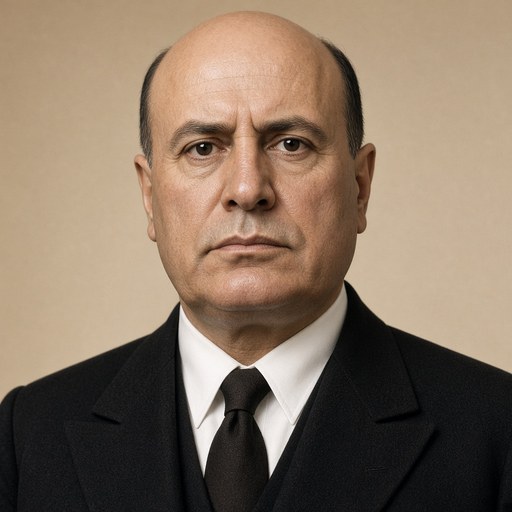
- Mussolini addressed the Chamber of Deputies on January 3, 1925, taking personal responsibility for Fascist violence, rejecting the Cheka charge, and promising to crush the Aventine opposition within 48 hours.
- Main themes
- Assumption of political, moral and historical responsibility for Fascist violence, denial of an Italian Cheka, Article 47 of the Statute and challenge to impeach, Aventine secession, opposition press campaign, Matteotti affair, subversive incidents of late 1924 and January 1925, speech of 7 June and attempted normalisation, resignation of Giunta, electoral reform bill, threat to crush the opposition by force
- Duration
- ~24 min
- Words
- 2,872
- Sentences
- 138
- Readability
- 58
- Grade
- 10.2
- Syntax
- 2.88
- Vocabulary
- 2.40
Translated from Italian Source: it.wikisource.org ↗
The broad sphere of national life a sentence belongs to. Every sentence has an Arena, so it is the denominator the other indices are read against.
Other138 sentences in 45 paragraphs
The year 1925 opens with this speech, which marks a fundamental date in the history of Fascism. Between November and the beginning of December 1924, as was seen in the previous volume, the oppositions had been routed and the Aventine was sinking into ridicule. At this point, and precisely in the second half of December 1924, the Aventine attempted one last desperate effort. The Liberals, who at the Livorno congress had declared themselves hostile to the Regime, managed to tow along even those right-wing Liberals who had joined the parliamentary majority. Salandra, leader of this tiny group, appeared to join Orlando and Giolitti in an attempt to overthrow the Fascist Government. At the same time a most violent press campaign was unleashed, led by the «Corriere della Sera» of Milan, organ of Senator Albertini, and by the «Mondo» of Rome, organ of the Hon. Amendola. The opposition newspapers sought a coup de théâtre that was meant to appear sensational: they published a slanderous memorandum written by a former Fascist imprisoned over the Matteotti affair. The wretched author of the memorandum, Cesare Rossi, was seeking an alibi for his own guilt by raising a supposed «moral question» against the Head of the Government. The year 1924 closed in this atmosphere, and since the Duce had convened the Council of Ministers for 31 December, the rumour was artfully spread that the Government was to present its resignation to the Chamber. There was already talk of a Salandra-Giolitti Ministry, and some hack writers were already preparing the ground to ingratiate themselves with the new Government, while in the streets and squares of the cities of Italy the soul of the people was seething and the Fascists stood ready for a reaction that would have been most violent and inexorable. But the hopes of the Aventine were dashed within twenty-four hours. The Council of Ministers took the severest measures against the press; the Duce closed the ranks of the Party with discipline and energy; and, strong in the consent of the people, shown in continuous demonstrations in every part of Italy, he presented himself to the Chamber (where the secession of the right had managed to reduce the majority only slightly). At the sitting of 3 January 1925 he delivered this speech, which revealed to public opinion the ignominy of the anti-Fascist manoeuvres and the stern strength of the Government, the Regime and the Fascist Party:
Gentlemen!
The speech I am about to deliver before you perhaps cannot, strictly speaking, be classified as a parliamentary speech. It may be that in the end some of you will find that this speech connects, even across the gap of the time that has passed, with the one I delivered in this same Chamber on 16 November. A speech of this kind may or may not lead to a political vote. Let it be known, in any case, that I am not seeking this political vote. I do not want it: I have had too many of them. Article 47 of the Statute says: «The Chamber of Deputies has the right to accuse the ministers of the King and to bring them before the High Court of Justice.» I ask formally whether in this Chamber, or outside this Chamber, there is anyone who wishes to avail himself of Article 47.
My speech will therefore be very clear, and such as to bring about an absolute clarification. You understand that after walking a long way together with travelling companions, to whom our gratitude would in any case always be due for what they have done, a halt is necessary to see whether the same road can still be travelled with the same companions in the future.
It is I, gentlemen, who raise in this Chamber the accusation against myself.
It has been said that I founded a Cheka.
Where? When? In what way? No one could say. There truly was a Cheka in Russia, which executed without trial between 150,000 and 160,000 people, as attested by almost official statistics. There was a Cheka in Russia, which systematically exercised terror over all the bourgeois classes and over individual members of the bourgeoisie, a Cheka that called itself the red sword of the revolution. But the Italian Cheka has never existed.
No one, to this day, has ever denied me these three qualities: a fair intelligence, a great deal of courage and a sovereign contempt for vile money.
Had I founded a Cheka, I would have founded it following the criteria I have always set as safeguards of that violence which cannot be expelled from history. I have always said, and those who have followed me in these five years of hard battle remember it, that violence, to be decisive, must be surgical, intelligent and chivalrous. Now the deeds of this so-called Cheka have always been unintelligent, disorderly and stupid.
But can you really think that I could order, on the day after Holy Christmas, a day on which all spirits are drawn to images of compassion and goodness, can you think that I could order an assault at ten in the morning in Via Francesco Crispi, in Rome, after the most conciliatory speech I have delivered during my government?
Spare me, gentlemen, from being thought so cretinous. And would I have plotted with the same lack of intelligence the lesser assaults on Misuri and on Forni? You certainly remember my speech of 7 June. It is perhaps easy for you to go back to that week of heated political passions when in this Chamber minority and majority clashed daily, so much so that some despaired of ever re-establishing the necessary terms of political and civil coexistence between the two opposing sides of the Chamber. Violent speeches crossed from one side and the other. Finally, on 6 June, the Honourable Delcroix, with his lyrical speech, full of life and strong with passion, rent the charged, stormy atmosphere.
The next day I delivered a speech that completely cleared the atmosphere. I say to the oppositions: I recognise your ideal right and also your contingent right; you may go beyond Fascism as a historical experience; you may subject all the measures of the Fascist Government to immediate criticism.
I remember, and I still have before my eyes, the sight of this side of the Chamber, where all, intent, felt that at that moment I had spoken profound words of life and had established the terms of that necessary coexistence without which no political assembly of any kind is possible. How could I, after a success, let me say it without false shame and ridiculous modesty, after a success so resounding that the whole Chamber acknowledged it, the oppositions included, so that the Chamber reopened the following Wednesday in an idyllic atmosphere, how could I think, without being struck by morbid madness, of having committed, I do not say a crime, but even the slightest, the most ridiculous affront against that adversary whom I esteemed because he had a certain «crânerie», a certain courage, that resembled my own courage and my own obstinacy in upholding my positions?
What was I to do?
They are cricket-brains, those who demanded of me on that occasion gestures of cynicism that I did not feel I could make, because they are repugnant to the deepest part of my conscience, or else gestures of force.
What force? Against whom? For what purpose? When I think of these gentlemen, I am reminded of those strategists who during the war, while we were eating the trench, did their strategy with pins on maps. But when it is then a matter of concrete cases, at the post of command and responsibility, things are seen in another light and from a different aspect. And yet I had not lacked occasions to give proof of my energy. I have not yet fallen short of events.
I liquidated a revolt of the Royal Guards in 12 hours. In a few days I liquidated an insidious sedition; in 48 hours I brought an infantry division and half the fleet to Corfu. These acts of energy, and this last one astonished even one of the greatest generals of a friendly nation, go to show that it is not energy my spirit lacks.
The death penalty? But this is a joke, gentlemen! First of all the death penalty would have to be introduced into the Penal Code, and then in any case the death penalty cannot be the reprisal of a Government.
It must be applied after a regular trial, indeed a most regular one, when the life of a citizen is at stake! It was at the end of that month, which is deeply marked in my life, that I said: I want there to be peace for the Italian people, and I wanted to establish normality in political life.
But how was this principle of mine answered? First of all with the secession of the Aventine, an unconstitutional and clearly revolutionary secession. Then with a newspaper campaign that lasted through the months of June, July and August, a filthy and wretched campaign that dishonoured us for three months. The most fantastic, the most horrifying, the most macabre lies were asserted far and wide in all the newspapers. There was truly a fit of necrophilia.
Inquisitions were made even into what was happening underground: they invented, they knew they were lying, but they lied all the same! I have always been tranquil and calm in the midst of this storm, which will be remembered by those who come after us with a sense of inner shame. There is one result of this campaign! On 11 September someone wished to avenge the slain man and shot one of our best, who died poor. He had sixty lire in his pocket. Nevertheless I continue in my effort of normalisation, or of normality. I repress illegal acts. It is no lie when I say that there are still hundreds of Fascists in prison today.
It is no lie to recall that I reopened Parliament regularly on the fixed date and that almost all the budgets were discussed, no less regularly.
The oath of the Militia is no lie, and the appointment of generals to all the zone commands is no lie.
Finally a question came before us that stirred us deeply: the request for authorisation to proceed, with the consequent resignation of the Hon. Giunta. The Chamber flares up. I understand the meaning of this revolt, and yet after 48 hours I bend once again, making use of my prestige, of my ascendancy, I bend this unruly and reluctant assembly, and I say: «Let the resignation be accepted», and the resignation is accepted.
But that is still not enough: I perform one last normalising act: the electoral reform bill. How is all this answered? It is answered with an intensification of the campaign, and the cry goes up: «Fascism is a horde of barbarians encamped in the Nation and a movement of bandits and marauders», and the moral question, gentlemen, is staged! We know the sad history of moral questions in Italy.
But then, gentlemen, what butterflies are we going to look for under the Arch of Titus? Well then, I declare here, in the presence of this assembly and in the presence of the whole Italian people, that I assume, I alone, the political, moral and historical responsibility for everything that has happened. If more or less mangled phrases are enough to hang a man, out with the post and out with the rope! If Fascism has been nothing but castor oil and the cudgel, and not instead a superb passion of the best Italian youth, mine is the blame! If Fascism has been a criminal association, if all the violence has been the result of a particular historical, political and moral climate, mine is the responsibility for this, because I created this historical, political and moral climate with a propaganda that runs from the intervention up to today.
In these last days not only the Fascists but many citizens have been asking themselves: is there a Government? Do these men have any dignity as men? Do they have any as a Government? It was I who wanted things to reach this particular extreme point. My experience of life in these six months is rich. I have tested the Party. Just as, to feel the temper of certain metals, one must strike them with a small hammer, so I have felt the temper of certain men. I have seen what they are worth and for what reasons, at a certain moment, when the wind is treacherous, they slip off at a tangent. I have tested myself. And mind you, I would not have resorted to those measures had the interests of the Nation not been at stake. A people does not respect a Government that allows itself to be vilified. The people wants its dignity mirrored in the dignity of the Government, and the people, even before I said it, said: enough! The measure is full!
And why was it full? Because the sedition of the Aventine has a republican background.
This sedition of the Aventine has had consequences, because in Italy today whoever is a Fascist still risks his life! In the months of November and December alone, eleven Fascists have fallen, killed, one of whom had his head crushed until it was reduced to a bloody wafer, and another, an old man of seventy-three, was killed and thrown from a high wall. Then there were three fires in one month, three mysterious fires on the Railways: one in Rome, another in Parma and a third in Florence. Then a subversive revival all along the line, which I document for you, because it is necessary to document it, through the newspapers of yesterday and today:
A squad leader of the Militia gravely wounded by subversives.
A clash between Carabinieri and subversives at Genzano.
An attempted assault on the headquarters of the Fascio at Tarquinia.
A Fascist wounded by subversives in Verona.
A militiaman of the Militia wounded in the province of Cremona.
Fascists wounded by subversives in Forlì.
A Communist ambush at S. Giorgio di Pesaro.
Subversives singing «Bandiera rossa» and attacking Fascists at Monzambano.
In just three days of this January 1925, and in a single area, incidents have occurred at Mestre, Pionca and Valombra: fifty subversives, armed with rifles, roam the village singing «Bandiera rossa» and set off petards; in Venice the militiaman Pascai Mario attacked and wounded; at Cavaso di Treviso another Fascist wounded; at Crespano the Carabinieri barracks invaded by some twenty frenzied women, a platoon leader attacked and thrown into the water; at Favara di Venezia Fascists attacked by subversives; at Mestre and at Padua other Fascists wounded by subversives.
I draw your attention to this, because it is a symptom: the express train 192 pelted with stones by subversives, with windows broken.
at Moduno di Livenza, a platoon leader assaulted and beaten.
You see from this situation that the sedition of the Aventine has had profound repercussions throughout the country. And so the moment comes when one says: enough! When two elements are in conflict and are irreconcilable, the solution lies in force. There has never been any other solution in history and there never will be.
Now I dare to say that the problem will be solved. Fascism, Government and Party, is in full efficiency. Gentlemen, you have deluded yourselves! You believed that Fascism was finished because I was restraining it, that the Party was dead because I was chastising it, and I even had the cruelty to say so. If I put into unleashing it a hundredth part of the energy I have put into restraining it, oh, then you would see…
But there will be no need for this, because the Government is strong enough to crush the sedition of the Aventine fully and definitively.
Italy, gentlemen, wants peace, wants tranquillity, wants industrious calm; we shall give it to her with love, if possible, or with force, if necessary. You may be certain that within the 48 hours following my speech the situation will be clarified over the whole area, as they say. And we all know that it is not a personal whim, that it is not a lust for government, that it is not an ignoble passion, but only a boundless and mighty love for the Fatherland.
After this decisive speech the Aventine found itself in an even worse position than before: absent from public life and covered by the contempt of the national conscience. In the Chamber the struggle continued, concentrating on the electoral reform bill, presented by the Government and defended, at the sitting of 17 January 1925, in a vigorous speech by H.E. Luigi Federzoni, Minister of the Interior. At the end of the debate the Government made a question of confidence of the following motion by the Hon. Roberto Farinacci: «The Chamber approves the guiding principles of the electoral reform bill and proceeds to the discussion of the articles». The motion was approved by the Senate, at the sitting of 14 February 1925, with 214 votes in favour and 58 against, with 272 voting.
The original Italian. The tags above are read on the English translation's sentences.
L’anno 1925 s’inizia con questo discorso che segna una data fondamentale nella storia del Fascismo. Fra il novembre e gli inizî del dicembre del 1924 — come si è visto nel volume precedente — le opposizioni erano sgominate, l’Aventino cadeva nel ridicolo. A questo punto — e precisamente nella seconda metà del dicembre 1924 — l’Aventino tentò un ultimo sforo disperato. I liberali, che al congresso di Livorno si erano dichiarati ostili al Regime riuscirono a rimorchiare anche quei liberali di destra che erano entrati a far parte della maggioranza parlamentare. Salandra, leader di questo esiguo gruppo, parve unirsi a Orlando e a Giolitti per tentare di rovesciare il Governo Fascista. Nel tempo stesso si scatenava una violentissima campagna di stampa, capeggiata dal «Corriere della Sera» di Milano, organo del sen. Albertini, e dal «Mondo» di Roma, organo dell’on. Amendola. I giornali d’opposizione cercarono un colpo di scena che doveva sembrare sensazionale: pubblicarono un calunnioso memoriale, scritto da un ex-fascista incarcerato per l’affare Matteotti.Lo sciagurato autore del memoriale, Cesare Rossi, cercava un alibi alle proprie colpe sollevando una presunta «questione morale» contro il Capo del Governo.In questa atmosfera si chiuse l’anno 1924, e poiché il Duce aveva convocato per il 31 dicembre il Consiglio dei Ministri si sparse ad arte la voce che il Governo dovesse presentarsi dimissionario alla Camera: già si parlava d’un Ministero Salandra-Giolitti, già qualche pennaiolo si preparava il terreno per ingraziarsi il nuovo Governo — mentre nelle vie, nelle piazze delle città d’Italia, l’anima popolare fremeva e i fascisti erano pronti a una reazione che sarebbe stata violentissima e inesorabile.Ma le speranze dell’Aventino furono deluse in ventiquattro ore. Il Consiglio dei Ministri prese severissime disposizioni contro la stampa; il Duce strinse disciplinatamente ed energicamente le file del Partito; e forte del consenso popolare — che si dimostrava in continue manifestazioni in ogni parte d’Italia — si presentò alla Camera (ove la secessione della destra non era riuscita che a diminuir di poco la maggioranza) e pronunciò — nella tornata del 3 gennaio 1925 — questo discorso che rivelò all’opinione pubblica l’ignominia delle manovre antifasciste e la forza severa del Governo, del Regime e del partito Fascista:
Signori!
Il discorso che sto per pronunziare dinanzi a voi forse non potrà essere a rigore di termini classificato come un discorso parlamentare. Può darsi che alla fine qualcuno di voi trovi che questo discorso si riallaccia, sia pure traverso il varco del tempo trascorso, a quello che io pronunciai in questa stessa aula il 16 novembre. Un discorso di siffatto genere può condurre e può anche non condurre ad un voto politico. Si sappia ad ogni modo che io non cerco questo voto politico. Non lo desidero: ne ho avuti troppi. L’articolo 47 dello Statuto dice: «La Camera dei deputati ha il diritto di accusare i ministri del re e di tradurli dinanzi all’Alta corte di giustizia.» Domando formalmente se in questa Camera, o fuori di questa Camera, c’è qualcuno che si voglia valere dell’articolo 47.
Il mio discorso sarà quindi chiarissimo, e tale da determinare una chiarificazione assoluta. Voi intendete che dopo aver lungamente camminato insieme con dei compagni di viaggio ai quali del resto andrebbe sempre la nostra gratitudine per quello che hanno fatto, è necessaria una sosta per vedere se la stessa strada con gli stessi compagni può essere ancora percorsa nell’avvenire.
Sono io, o signori, che levo in quest’Aula l’accusa contro me stesso.
Si è detto che io avrei fondato una Ceka.
Dove? Quando? In qual modo? Nessuno potrebbe dirlo. Veramente c’è stata una Ceka in Russia, che ha giustiziato senza processo, dalle 150.000 alle 160.000 persone, secondo attestano le statistiche quasi ufficiali. C’è stata una Ceka in Russia, che ha esercitato il terrore sistematicamente su tutte le classi borghesi e sui membri singoli della borghesia, una Ceka che diceva di essere la rossa spada della rivoluzione. Ma la Ceka italiana non è mai esistita.
Nessuno mi ha mai negato fino ad oggi queste tre qualità: una discreta intelligenza, molto coraggio ed un sovrano disprezzo del vile denaro.
Se io avessi fondato una Ceka, l’avrei fondata seguendo i criterî che ho sempre posto a presidio di quella violenza che non può essere espulsa dalla storia. Ho sempre detto, e qui lo ricordano quelli che mi hanno seguito in questi cinque anni di dura battaglia, che la violenza per essere risolutiva deve essere chirurgica, intelligente e cavalleresca. Ora le gesta di questa sedicente Ceka sono state sempre inintelligenti, incomposte e stupide.
Ma potete proprio pensare che io potessi ordinare nel giorno successivo a quello del Santo Natale, giorno nel quale tutti gli spiriti sono portati alle immagini pietose e buone, potete pensare che io potessi ordinare un’aggressione alle dieci del mattino in via Francesco Crispi, a Roma, dopo il discorso più pacificatore che io abbia pronunziato durante il mio governo?
Risparmiatemi signori, di pensarmi così cretino. Ed io avrei ordito con la stessa inintelligenza le aggressioni minori di Misuri e di Forni? Voi ricordate certamente il mio discorso del 7 giugno. Vi è forse facile ritornare a quella settimana di accese passioni politiche quando in quest’aula minoranza e maggioranza si scontravano quotidianamente, tanto che qualcuno disperava di riuscire a ristabilire i termini necessarî di quella convivenza politica e civile fra le due opposte parti della Camera. Era un incrociarsi di discorsi violenti da una parte e dall’altra. Finalmente il 6 giugno l’onorevole Delcroix squarcia, col suo discorso lirico, pieno di vita e forte di passione, l’atmosfera carica, temporalesca.
All’indomani, io pronunciai un discorso che rischiarò totalmente l’atmosfera. Io dico alle opposizioni: riconosco il vostro diritto ideale ed anche il vostro diritto contingente; voi potete sorpassare il Fascismo come esperienza storica; voi potete mettere sul terreno della critica immediata tutti i provvedimenti del Governo fascista.
Ricordo e ho ancora ai miei occhî la visione di questa parte della Camera, ove tutti intenti sentivano che in quel momento avevo detto profonde parole di vita ed avevo stabilito i termini di quella necessaria convivenza senza la quale non è possibile assemblea politica di sorta. Come potevo, dopo un successo — lasciatemelo dire senza falsi pudori e ridicole modestie — dopo un successo così clamoroso che tutta la Camera ha ammesso, comprese le opposizioni, per cui la Camera si riaperse il mercoledì successivo in un’atmosfera idilliaca, come potevo pensare, senza essere colpito da morbosa follia, di far commettere non dico un delitto ma nemmeno il più tenue, il più ridicolo sfregio a quell’avversario che io stimavo perché aveva una certa «crânerie», un certo coraggio, che rassomigliavano al mio coraggio e alla mia ostinatezza nel sostenere le tesi?
Che cosa dovevo fare?
Sono cervellini di grillo quelli che pretendevano da me in quell’occasione gesti di cinismo che io non sentivo di fare, perché ripugnano al più profondo della mia coscienza, oppure dei gesti di forza.
Di quale forza? Contro chi? Per quale scopo? Quando io penso a questi signori, mi ricordo di quegli strateghi che durante la guerra, mentre noi mangiavamo la trincea, facevano la strategia con gli spillini sulle carte geografiche. Ma quando poi si tratta di casi al concreto, al posto di comando e di responsabilità, si vedono allora le cose sotto un altro raggio e sotto un aspetto diverso. Eppure non mi erano mancate occasioni di dare prova della mia energia. Non sono ancora stato inferiore agli eventi.
Io ho liquidato in 12 ore una rivolta di guardie regie. In pochi giorni ho liquidato una insidiosa sedizione, in 48 ore ho condotto una divisione di fanteria e mezza flotta a Corfù. Questi gesti di energia — e quest’ultimo stupiva persino uno dei più grandi generali di una nazione amica — stanno a dimostrare che non è l’energia che fa difetto al mio spirito.
Pena di morte? Ma qui si scherza, signori! Prima di tutto la pena di morte bisognerà introdurla nel Codice penale e poi comunque la pena di morte non può essere la rappresaglia di un Governo.
Deve essere applicata dopo un giudizio regolare, anzi regolarissimo, quando si tratta della vita di un cittadino! Fu alla fine di quel mese che è segnato profondamente nella mia vita, che io dissi: Voglio che ci sia la pace per il popolo italiano, e volevo stabilire la normalità della vita politica.
Ma come si è risposto a questo mio principio? Prima di tutto con la secessione dell’Aventino, secessione anticostituzionale e nettamente rivoluzionaria. Poi con una campagna giornalistica durata nei mesi di giugno, luglio, agosto, campagna immonda e miserabile che ci ha disonorato per tre mesi. Le più fantastiche, le più raccapriccianti, le più macabre menzogne sono state affermate diffusamente su tutti i giornali. C’era veramente un accesso di necrofilia.
Si facevano inquisizioni anche su quello che succedeva sotto terra: si inventava, si sapeva di mentire, ma si mentiva lo stesso! Io sono stato sempre tranquillo e calmo in mezzo a questa bufera che sarà ricordata da coloro che verranno dopo di noi con un senso di intima vergogna. C’è un risultato di questa campagna! Il giorno 11 settembre qualcuno volle vendicare l’ucciso e sparò su uno dei nostri migliori, che morì povero. Aveva sessanta lire in tasca. Tuttavia io continuo nel mio sforzo di normalizzazione o di normalità. Reprimo gli illegalismi. Non è menzogna quando dico che nelle carceri ci sono ancor oggi centinaia di fascisti.
Non è menzogna il ricordo che io ho riaperto il Parlamento regolarmente alla data fissa e si sono discussi, non meno regolarmente, quasi tutti i bilanci.
Non è menzogna il giuramento della Milizia e non è menzogna la nomina di generali per tutti i comandi di zona.
Finalmente venne dinanzi a noi una questione che ci appassionava: la domanda dell’autorizzazione a procedere con le conseguenti dimissioni dell’on. Giunta. La Camera scatta. Io comprendo il senso di questa rivolta e pure dopo 48 ore io piego ancora una volta giovandomi del mio prestigio, del mio ascendente, piego questa assemblea riottosa e riluttante, e dico: «siano accettate le dimissioni» e le dimissioni sono accettate.
Ma non basta ancora: compio un ultimo gesto normalizzatore: il progetto della riforma elettorale. A tutto questo come si risponde? Si risponde con una accentuazione della campagna e si grida: «Il Fascismo è un’orda di barbari accampati nella Nazione ed un movimento di banditi e di predoni» e s’inscena, o signori, la questione morale! Noi conosciamo la triste istoria delle questioni morali in Italia.
Ma poi, o signori, quali farfalle andiamo a cercare sotto l’arco di Tito? Ebbene, io dichiaro qui al cospetto di questa assemblea ed al cospetto di tutto il popolo italiano che assumo, io solo, la responsabilità politica, morale, storica di tutto quanto è avvenuto. Se le frasi più o meno storpiate bastano per impiccare un uomo, fuori il palo e fuori la corda! Se il Fascismo non è stato che olio di ricino e manganello e non invece una superba passione della migliore gioventù italiana, a me la colpa! Se il Fascismo è stato un’associazione a delinquere, se tutte le violenze sono state il risultato di un determinato clima storico, politico, morale, a me la responsabilità di questo, perché questo clima storico, politico e morale io l’ho creato con una propaganda che va dall’intervento fino ad oggi.
In questi ultimi giorni non solo i fascisti, ma molti cittadini si domandano: c’è un Governo? Questi uomini hanno una dignità come uomini? Ne hanno una anche come Governo? Sono stato io che ho voluto che le cose giungessero a questo determinato punto estremo. È ricca la mia esperienza di vita di questi sei mesi. Io ho saggiato il Partito. Come per sentire la tempra di certi metalli bisogna batterli con un martelletto, così ho sentito la tempra di certi uomini. Ho visto che cosa valgono e per quali motivi a un certo momento quando il vento è infido, scantonano per la tangente. Ho saggiato me stesso. E guardate che io non avrei fatto ricorso a quelle misure se non fossero andati in gioco gli interessi della Nazione. Un popolo non rispetta un Governo che si lascia vilipendere. Il popolo vuole specchiata la sua dignità nella dignità del Governo, ed il popolo, prima ancora che lo dicessi io, ha detto: basta! La misura è colma!
Ed era colma perché? Perché la sedizione dell’Aventino ha sfondo repubblicano.
Questa sedizione dell’Aventino ha avuto delle conseguenze perché in Italia oggi chi è fascista rischia ancora la vita! Nei soli mesi di novembre e dicembre undici fascisti sono caduti uccisi, dei quali uno ha avuto la testa schiacciata fino ad essere ridotta un’ostia sanguinosa, e un altro, un vecchio settantatreenne, è stato ucciso e gettato da un muraglione. Poi tre incendî si son avuti in un mese, tre incendî misteriosi nelle Ferrovie: uno a Roma, l’altro a Parma ed un terzo a Firenze. Quindi un risveglio sovversivo su tutta la linea, che vi documento perché è necessario documentare attraverso i giornali di ieri e di oggi:
Un caposquadra della Milizia ferito gravemente dai sovversivi.
Un conflitto fra carabinieri e sovversivi a Genzano.
Un tentativo di assalto alla sede del Fascio a Tarquinia.
Un fascista ferito da sovversivi a Verona.
Un milite della Milizia ferito in provincia di Cremona.
Fascisti feriti da sovversivi a Forlì.
Imboscata comunista a S. Giorgio di Pesaro.
Sovversivi che cantano «Bandiera rossa» e aggrediscono i fascisti a Monzambano.
Nei soli tre giorni di questo gennaio 1925, e in una sola zona, sono avvenuti incidenti a Mestre, Pionca, Valombra: cinquanta sovversivi, armati di fucili, scorrazzano il paese cantando «Bandiera rossa» e fanno esplodere petardi; a Venezia il milite Pascai Mario aggredito e ferito; a Cavaso di Treviso, un altro fascista ferito; a Crespano la caserma dei carabinieri invasa da una ventina di donne scalmanate, un capo manipolo aggredito e gettato in acqua; a Favara di Venezia fascisti aggrediti da sovversivi; a Mestre, a Padova, altri fascisti feriti da sovversivi.
Richiamo su ciò la vostra attenzione, perché è un sintomo: il diretto 192 preso a sassate da sovversivi con rotture di vetri.
a Moduno di Livenza, un capo manipolo assalito e percosso.
Voi vedete da questa situazione che la sedizione dell’Aventino ha avuto profonde ripercussioni in tutto il paese. Ed allora viene il momento in cui si dice: basta! Quando due elementi sono in lotta e sono irreducibili, la soluzione è nella forza. Non c’è stata mai altra soluzione nella storia e non ci sarà mai.
Ora io oso dire che il problema sarà risolto. Il Fascismo, Governo e Partito, è in piena efficienza. Signori, vi siete fatte delle illusioni! Voi avete creduto che il Fascismo fosse finito perché io lo comprimevo, che il Partito fosse morto perché io lo castigavo e poi avevo anche la crudeltà di dirlo. Se io la centesima parte dell’energia che ho messo a comprimerlo la mettessi a scatenarlo, oh, vedreste allora…
Ma non ci sarà bisogno di questo, perché il Governo è abbastanza forte per stroncare in pieno e definitivamente la sedizione dell’Aventino.
L’Italia, o signori, vuole la pace, vuole la tranquillità, vuole la calma laboriosa; gliela daremo con l’amore, se è possibile, o con la forza se sarà necessario. Voi state certi che nelle 48 ore successive al mio discorso, la situazione sarà chiarita su tutta l’area, come dicono. E tutti sappiamo che non è capriccio di persona, che non è libidine di governo, che non è passione ignobile, ma è soltanto amore sconfinato e possente per la Patria.
Dopo queso discorso decisivo, l’Aventino si trovò in una posizione anche peggiore di prima: assente dalla vita pubblica e coperto dal disprezzo della coscienza nazionale. Alla Camera la lotta continuò, concentrandosi sul disegno di legge sulla riforma elettorale, presentato dal Governo e difeso — nella tornata del 17 gennaio 1925 — da un vigoroso discorso di S. E. Luigi Federzoni, Ministro degli Interni.Alla fine della discussione il governo pose la questione di fiducia sul seguente ordine del giorno dell’On. Roberto Farinacci: «La Camera approva i principî informatori del disegno di legge sulla riforma elettorale e passa alla discussione degli articoli», L’ordine del giorno fu approvato dal Senato, nella tornata del 14 febbraio 1925, con 214 voti favorevoli e 58 contrari, con 272 votanti.