




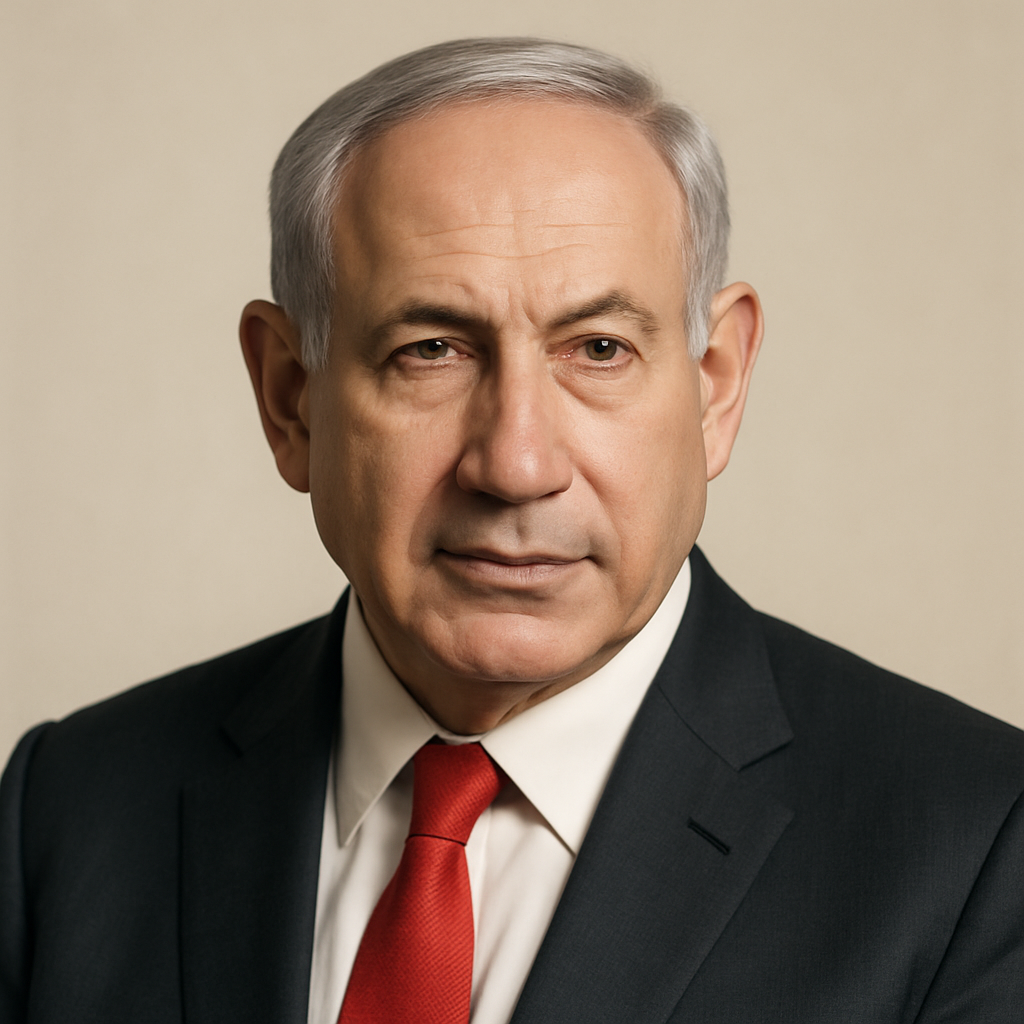
PM Netanyahu Meets with Austrian President Alexander Van der Bellen
 Benjamin Netanyahu · Prime Minister of Israel
- Context
- Netanyahu addressed Austrian President Van der Bellen during his first official visit to Israel in February 2019, discussing bilateral ties, antisemitism, and regional security.
- Main themes
- Antisemitism and anti-Zionism, Israel-Austria bilateral relations, Iran nuclear threat and regional aggression, militant Islam and radicalism, innovation and cyber security, Israel-Russia diplomacy on Syria, IHRA antisemitism declaration, small democracies and shared values, EU sanctions on Iran, cultural and scientific cooperation
- Duration
- ~5 min
- Words
- 635
- Sentences
- 32
- Readability
- 57
- Grade
- 10.2
- Syntax
- 3.02
- Vocabulary
- 2.10
The broad sphere of national life a sentence belongs to. Every sentence has an Arena, so it is the denominator the other indices are read against.
Other32 sentences in 8 paragraphs
This is your first official visit to Israel, and we receive you in great friendship and great warmth. We want to commend you and Chancellor Kurz for the very strong statement and very strong position you've taken on the truth, on history, on antisemitism.
The President of Austria and the Chancellor of Austria, I think, have been exemplary in putting out a simple truth – that antisemitism and anti-Zionism are one. Under the presidency of Austria in the EU, there was a call for countries to sign the declaration, adopt a declaration of antisemitism, adopted by IHRA. This is very much, we believe, commensurate with the truth and with morality. We have followed consistently your positions and the way that you put them forward, we appreciate it very much.
We have a lot in common with Austria, because we are both small democracies eager to seize the future. We face, obviously, great challenges, and also great opportunities. We both spend a very large proportion of our GDP on R&D, and that reflects our belief in innovation.
We’re going to discuss this today: Innovation, cyber security, all the areas of technology that are performing wonders in changing our world. We’re going to sign an agreement on culture and science, which we could do even more with each other. We both have advanced societies with very capable people, and the more we exchange with each other the better we’ll do for each of our countries.
The greatest challenge that we face is undoubtedly from radicalism and fanaticism that seeks to bring the world back to medieval ages. Here in the Middle East we face the two forces, the great forces of militant Islam: The militant Sunnis led by Daesh and militant Shiites led by Iran and its proxies. We are committed to blocking their advance and in so doing, we are defending not only ourselves, but in many ways, defending Europe. Israel is the great fortress, here at the edge of Asia, at the edge of the Mediterranean, that is preventing the forces of militant Islam from sweeping the region and sending millions and millions and millions of people into homeless wandering throughout the continents, especially the continent of Europe. The best way to deal with this is to deal with it here, to defeat these forces here. And Israel is doing more than its fair share in that regard.
We have a great challenge from Iran that openly calls for our destruction. It minces no words about this. We’re committed to preventing their acquisition of nuclear weapons which would be directed at us, but we’re also committed to preventing their aggression in Syria.
I’ll be going on February 21st again to Russia following my discussions with President Putin in Paris a few months ago and subsequent phone conversations. It’s very important that we continue to prevent Iran from entrenching in Syria. In many ways we’ve blocked that advance and we’re committed to continue blocking it, preventing Iran from creating another warfront against us, right here opposite the Golan Heights. This is the main subject I will be discussing with President Putin.
I also want to commend Austria for rejecting the hosting of the SPV discussions that are meant to go around the sanctions. It is an area that I’d like to discuss further with you, something that we have obviously very strong opinions about. But I believe that we share a common goal. And I believe that that common goal was probably in the note you put in the Western Wall, your prayers for the future. I’m guessing that our hopes for the future, our prayers for the future are for peace and harmony and security and prosperity. But you can correct me if I’m wrong. If I’m right, then we have a lot to discuss.