




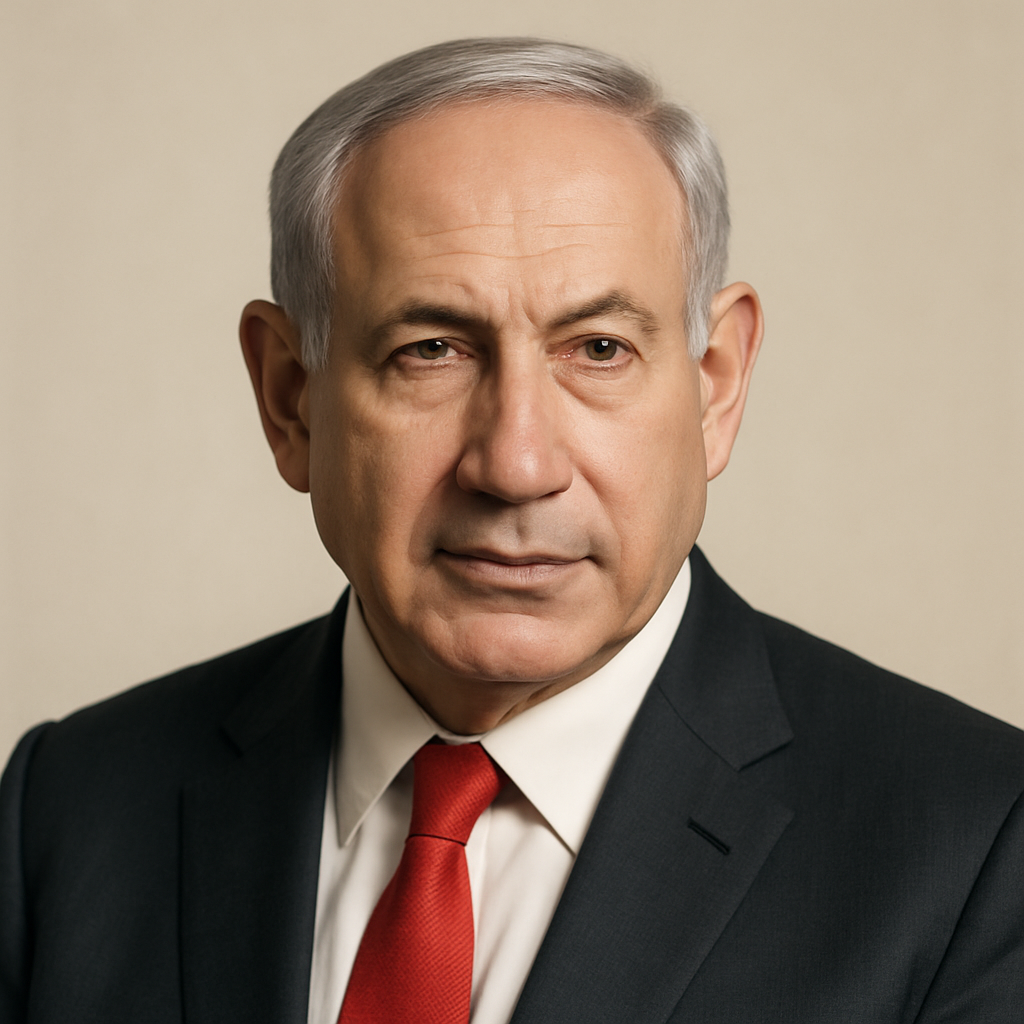
Prime Minister Netanyahu's Remarks at the Ceremony Marking the Remembrance Day for Israel's Fallen Soldiers at Mount Herzl
 Benjamin Netanyahu · Prime Minister of Israel
- Context
- Netanyahu addressed a ceremony at Mount Herzl on Israel's Remembrance Day for Fallen Soldiers, reflecting on the 1973 Yom Kippur War and national sacrifice.
- Main themes
- Remembrance of fallen soldiers, Yom Kippur War of 1973, sacrifice and military valor, lessons of preparedness and vigilance, Masada and Zionist symbolism, path to peace with Egypt, Israeli national resilience, personal military service, historical continuity of Jewish struggle
- Duration
- ~3 min
- Words
- 386
- Sentences
- 20
- Readability
- 64
- Grade
- 9.1
- Syntax
- 2.67
- Vocabulary
- 2.29
The broad sphere of national life a sentence belongs to. Every sentence has an Arena, so it is the denominator the other indices are read against.
Other20 sentences in 5 paragraphs
The number 73 is linked to another period that greatly tested our people. I remember the fall of '73 very clearly: The Yom Kippur War began with the shock of a surprise attack and ended in a great victory. In between, the battles to stop the enemies and to resolve the war were waged day and night.
On the second day of the war, I halted my studies in the United States to join the fight for our home. The flight to Israel was full of soldiers, officers, reservists. They crowded the plane, literally fighting one another for a seat in order to return home to fight for our homeland. But when I returned to America after the war to resume my studies, many seats on the plane were empty.
The 1973 campaign was fought in the sands of the Sinai Peninsula and on the basalt cliffs of the Golan Heights. The soldiers and commanders on the ground took on a tremendous responsibility. They stopped the attacks on two fronts with their bodies, they boldly charged into the line of fire, and ended the war on the outskirts of Cairo and Damascus. The battles of '73 and the tremendous sacrifice of our soldiers paved the path to peace with Egypt. They also taught us an unforgettable lesson: We cannot remain indifferent to the threats of war and destruction from those who wish to kill us. If we had recognized the danger in 1973 in time, it may very well be that we would have been spared many fallen and injured soldiers.
And there is yet an additional historic significance to the number 73. In the year 73 CE, exactly 1,900 years before the Yom Kippur War, Masada was under siege by the Romans. Although this last stronghold fell, Masada became a Zionist value, a symbol of a war for freedom. Many of the people sitting here today have visited Masada and climbed to the summit from one side or the other of the mountain and have taken in its ancient majesty.
My brother Yoni described his feelings during one of his exhausting navigation drills in the Judean Desert that ended at Masada. The steep cliffs made it clear to him why it was so difficult to defeat the handful of people defending the mountain. He wrote,