




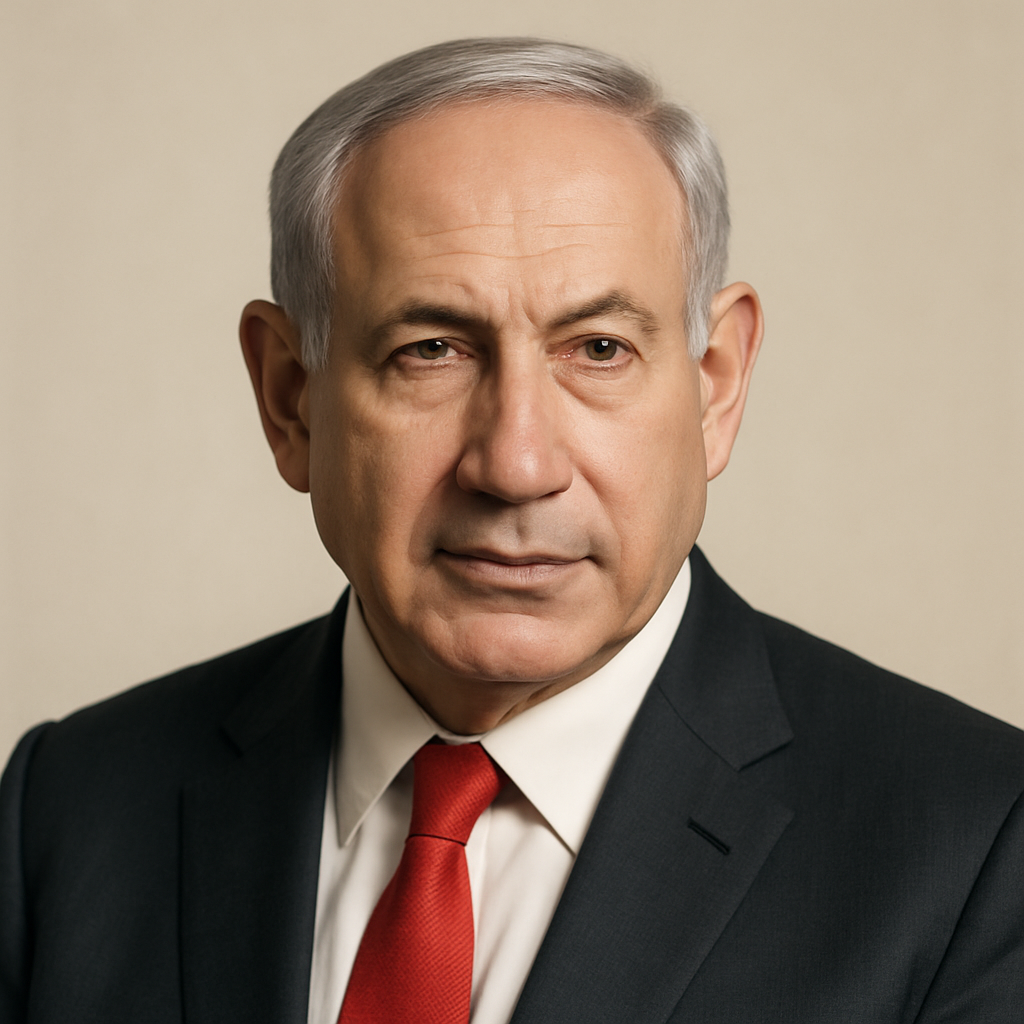
PM Netanyahu’s Remarks at the “Every Person has a Name” Ceremony at the Knesset Marking Holocaust Remembrance Day
 Benjamin Netanyahu · Prime Minister of Israel
- Context
- Netanyahu spoke at the Knesset's 'Every Person has a Name' ceremony on Holocaust Remembrance Day 2019, honoring victims through personal stories and poetry.
- Main themes
- Holocaust remembrance, personal testimony and memory, loss of family, Jewish identity and heritage, poetry and literature, the human spirit, survivors' stories, Sukkot and Jewish tradition, educators' impact, Holocaust literature
- Duration
- ~3 min
- Words
- 345
- Sentences
- 22
- Readability
- 75
- Grade
- 6.7
- Syntax
- 2.73
- Vocabulary
- 2.50
The broad sphere of national life a sentence belongs to. Every sentence has an Arena, so it is the denominator the other indices are read against.
Other22 sentences in 6 paragraphs
He was a teacher; he was the teacher.” The cantor Dudu Fischer, who was a lonely religious child in Kiryat Tivon, said that Shmuel embraced him and encouraged him daily. He used to call him Dudinka. At memorial ceremonies for Shmuel, his students from 60 years ago come to pay tribute, and they all talk about his enormous influence on their lives, the light that shone from his eyes, his deep humanity, his endless knowledge, his ability to instill in them a love of the Bible and the land.
None of this, however, touches on the vast void in Shmuel’s life, who had gradually lost contact with his family, including his beloved twin sister Yehudit. He would send them the money he earned from working in the fields, and eventually there was nowhere to send it anymore. And Shmuel understood. He wrote poems, as he was also a poet and author. He received the Ka-Tzetnik prize for Holocaust literature. His poems are soul-crushing, but they also demonstrate his wisdom, beyond the wisdom of his heart. He wrote a poem at the beginning of the war, when things were hidden and no one really knew anything, but he knew. And he wrote the following poem about a dream he had:
“Last night I was in the village of my birth, In the landscape that is dear to my heart in its radiance, In the well of my childhood a reflection still shimmers, My father’s house still stands.
The chestnut trees are already stained red, This is the nature of Poland’s autumn. My brother and I lumber, as before, On the path to our sukkah, we carry branches for s'chach.
The wind chases a cloud through the sky; Tonight the rain won’t dare to come. We will arrive home in a moment. We will decorate the sukkah by hand as dictated in law.
We approached the house—Gentiles in our midst! I searched for a sukkah of peace in vain. My brother left me his burden—and is no more! All alone there I cried until the dream ended.