




Ecuador — Statement to the General Debate of the 81st Session of the United Nations General Assembly (2026)
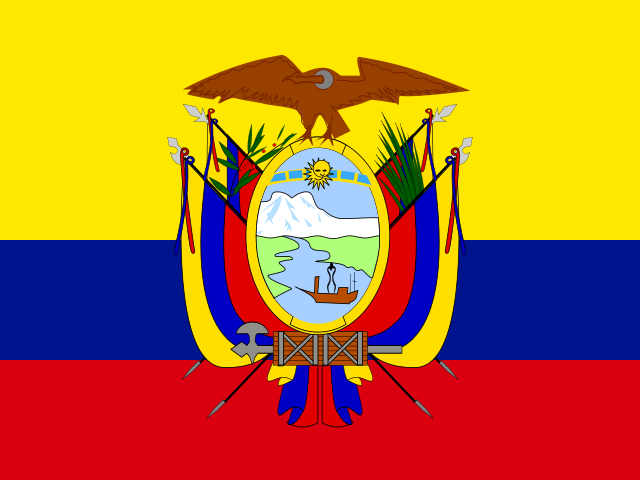 Daniel Noboa · Constitutional President
- Context
- Noboa addressed the General Debate of the 81st session of the UN General Assembly in New York on September 23, 2026, proposing three UN actions against transnational organized crime.
- Main themes
- Transnational organized crime as threat to peace and security, international mechanism to trace and freeze illicit financial flows, platform for police and prosecutor information exchange, UN80 initiative and conflict prevention, vulnerability criteria for middle-income countries, open and equitable trade, Galápagos Islands and illegal fishing, illegal mining in the Amazon, artificial intelligence governance, reform and trust in the multilateral system, Latin America and the Caribbean
- Duration
- ~10 min
- Words
- 1,153
- Sentences
- 76
- Readability
- 44
- Grade
- 10.9
- Syntax
- 2.71
- Vocabulary
- 2.21
UN General Assembly Translated from Spanish Source: gadebate.un.org ↗
The broad sphere of national life a sentence belongs to. Every sentence has an Arena, so it is the denominator the other indices are read against.
Other76 sentences in 25 paragraphs
Mr. Secretary-General of the United Nations; Mr. President of the General Assembly of the United Nations; Your Excellencies, Heads of State and Government; distinguished delegations; ladies and gentlemen: There was a time when, in my country, fear had more authority than the law. It was lived by families who stopped going out at night, by shopkeepers who paid to be able to work. By young people who were offered a gun before a diploma.
We decided that this would not be Ecuador's destiny, and we have acted with determination. But along that path we learned something I have come to share with you: no State defeats alone an enemy that recognizes no borders. The weapons that reach our streets crossed several countries. The money that finances the mafias is laundered far from where the crime is committed. The routes of drug trafficking, human trafficking and illegal mining cross continents. Criminals have already globalized their cooperation. They share routes, logistics, finances and technology, without red tape, without mistrust and without delays.
It is unacceptable that criminal organizations cooperate with one another more effectively than States do. That is the reality that the United Nations must recognize and take on. For a long time, organized crime was treated as a police problem. Today we know it is more than that. When it controls territories and penetrates institutions, it supplants legitimate authority, erodes the rule of law and destabilizes entire societies. And when that happens in several countries at once, it ceases to be an internal matter: it becomes a threat to international peace and security. Let me say it clearly: we are not asking others to act in place of States. We are asking for cooperation on request, with full respect for the sovereignty of each nation and with results that can be measured. That is why Ecuador today proposes three concrete actions:
First, an international mechanism, within the framework of the United Nations, to trace and freeze the illicit financial flows of transnational organized crime. If money is the fuel of these networks, let us cut it off wherever it circulates. Second, a permanent platform for information exchange among police forces, prosecutors' offices and financial intelligence units, allowing States to anticipate rather than react.
Third, that the UN80 initiative incorporate transnational organized crime as a conflict-prevention priority, and give the Organization the capacity to support the States that request it.
These are proposals that Ecuador is ready to advance, together with all the countries that wish to join.
Excellencies:
Security is not an end in itself. It is the condition for a country to flourish, and today we are living through a crisis of the soul. Restoring security means giving back the future. That a young person can choose a university instead of being trapped by a criminal gang. That a family can open a business without fear. That a company can invest and create jobs. That institutions respond to citizens and not to illicit interests.
That is why the success of an economy is measured not only by how much production grows, but by how much poverty it reduces. It is measured in young people with decent jobs, in children with better education, in citizens who build their future with dignity. And that measure must also guide the international development agenda.
We middle-income countries face vulnerabilities that per capita income does not reflect. We ask that access to cooperation and financing be defined by fairer vulnerability criteria, and that the international financial architecture support the efforts of those who carry out their reforms.
We believe in open, predictable and equitable trade. When a producer can export, innovate and grow, a family rises out of poverty. The best social policy is the one that generates opportunities and income for all.
Mr. President:
I come from a country small in territory and great in nature. The Galápagos Islands, where Darwin found the clues to the evolution of life, are the heritage of all humanity. And today they too are threatened by illegal fishing networks that operate with the same logic and the same finances as other organized crimes.
The same happens with illegal mining in the Amazon, which destroys forests and finances the mafias.
Protecting nature is also a security task. Ecuador will continue to fulfil that responsibility and invites everyone to join it. Latin America and the Caribbean is a region of talent, of energy, of food, of strategic resources and, above all, of a youth determined to build a different future. It is a region that does not come to this Assembly to ask for others' solutions, but to offer its own. And one of the greatest tests of the future is artificial intelligence.
It can transform education, multiply productivity and close historic gaps. But it can also deepen inequalities or serve those who seek to weaken our institutions.
We need international governance that allows us to innovate without renouncing our values, and that does not leave behind those with fewer resources to access this technology.
Excellencies:
Trust in the multilateral system is going through a difficult test. We receive plenty of criticism over the fight against organized crime and very little questioning about the number of victims we are suffering from organized crime. Many citizens see a gap between what is agreed here and what they live day to day. Closing that gap is the task of our generation. As a founding State, Ecuador believes in the United Nations. And precisely for that reason, it wants an organization capable of responding to today's world, not to that of 1945.
Supporting the United Nations also means the will to transform it. That is why we back the UN80 initiative and invite it to answer with courage an essential question: What United Nations does today's world need? We need a more efficient Organization, with the capacity to prevent and resolve crises and to help States face threats that did not exist when it was created. An Organization whose legitimacy depends not only on the decisions it adopts, but on the way it adopts them. And we need the Charter and International Law to remain our common language.
More than eighty years ago, countries understood that peace could not depend on the power of each one, and they built institutions to cooperate. That remains our greatest strength.
The citizens of the world will not judge this Organization by its declarations. They will judge it by its capacity to turn commitments into peace and security, into respect for human rights and into real opportunities for development. By how many lives we truly save.
Mr. President:
The mafias have already coordinated. It is up to us to do it better. Ecuador comes to this Assembly to defend collective solutions, because no country can build a safe, prosperous and sustainable future on its own. And because when international cooperation works, we are all stronger.
Thank you very much.
The original Spanish. The tags above are read on the English translation's sentences.
Señor secretario general de la Organización de las Naciones Unidas; señor presidente de la Asamblea General de la Organización de las Naciones Unidas; excelentísimos jefes de Estado y de gobierno; distinguidas delegaciones; damas y caballeros: Hubo un tiempo en que, en mi país, el miedo tenía más autoridad que la ley. Lo vivieron familias que dejaron de salir de noche, comerciantes que pagaban para poder trabajar. Jóvenes a quienes les ofrecían un arma antes que un diploma.
Decidimos que ese no sería el destino del Ecuador, y hemos actuado con determinación. Pero en ese camino aprendimos algo que vengo a compartir con ustedes: ningún Estado derrota solo a un enemigo que no reconoce fronteras. Las armas que llegan a nuestras calles cruzaron varios países. El dinero que financia a las mafias se lava lejos de donde se comete el crimen. Las rutas del narcotráfico, de la trata de personas y de la minería ilegal atraviesan continentes. Los criminales ya globalizaron su cooperación. Comparten rutas, logística, finanzas y tecnología, sin trámites, sin desconfianza y sin demoras.
Es inadmisible que las organizaciones criminales cooperen entre sí con mayor eficacia que los Estados. Esa es la realidad que las Naciones Unidas deben reconocer y asumir. Durante mucho tiempo se trató al crimen organizado como un problema policial. Hoy sabemos que es más que eso. Cuando controla territorios y penetra instituciones, sustituye a la autoridad legítima, erosiona el Estado de derecho y desestabiliza sociedades enteras. Y cuando eso ocurre en varios países a la vez, deja de ser un asunto interno: se convierte en una amenaza para la paz y la seguridad internacional. Lo digo con claridad: no pedimos que otros actúen en lugar de los estados. Pedimos cooperación solicitada, con pleno respeto a la soberanía de cada nación y con resultados que se puedan medir. Por eso, el Ecuador propone hoy tres acciones concretas:
Primero, un mecanismo internacional, en el marco de las Naciones Unidas, para rastrear y congelar los flujos financieros ilícitos del crimen organizado transnacional. Si el dinero es el combustible de estas redes, cortémoslo donde sea que circule. Segundo, una plataforma permanente de intercambio de información entre policías, fiscalías y unidades de inteligencia financiera, que permita a los Estados anticiparse en lugar de reaccionar.
Tercero, que la iniciativa ONU80 incorpore el crimen organizado transnacional como una prioridad de prevención de conflictos, y dote a la Organización de la capacidad para apoyar a los estados que lo soliciten.
Son propuestas que el Ecuador está dispuesto a impulsar, junto a todos los países que quieran sumarse.
Excelencias:
La seguridad no es un fin en sí mismo. Es la condición para que un país pueda florecer y hoy vivimos una crisis del alma. Recuperar la seguridad significa devolver el futuro. Que un joven pueda elegir una universidad en lugar de quedar atrapado por una banda criminal. Que una familia abra un negocio sin miedo. Que una empresa invierta y genere empleo. Que las instituciones respondan a los ciudadanos y no a intereses ilícitos.
Por eso, el éxito de una economía no se mide solo por cuánto crece la producción, sino por cuánta pobreza reduce. Se mide en jóvenes con empleo digno, en niños con mejor educación, en ciudadanos que construyen su futuro con dignidad. Y esa medida también debe guiar la agenda internacional de desarrollo.
Los países de renta media enfrentamos vulnerabilidades que el ingreso per cápita no refleja. Pedimos que el acceso a la cooperación y al financiamiento se defina con criterios de vulnerabilidad más justos, y que la arquitectura financiera internacional acompañe los esfuerzos de quienes hacen sus reformas.
Creemos en un comercio abierto, predecible y equitativo. Cuando un productor puede exportar, innovar y crecer, hay una familia que sale de la pobreza. La mejor política social es la que genera oportunidades e ingresos para todos.
Señor presidente:
Vengo de un país pequeño en territorio y grande en naturaleza. Las Islas Galápagos, donde Darwin encontró las pistas de la evolución de la vida, son patrimonio de toda la humanidad. Y hoy también están amenazadas por redes de pesca ilegal que operan con la misma lógica y las mismas finanzas que otros delitos organizados.
Lo mismo ocurre con la minería ilegal en la Amazonía, que destruye bosques y financia a las mafias.
Proteger la naturaleza también es una tarea de seguridad. El Ecuador seguirá cumpliendo con esa responsabilidad e invita a todos a unirse a ella. América Latina y el Caribe es una región de talento, de energía, de alimentos, de recursos estratégicos y, sobre todo, de una juventud decidida a construir un futuro distinto. Es una región que no llega a esta Asamblea a pedir soluciones ajenas, sino a ofrecer las suyas. Y una de las mayores pruebas del futuro es la inteligencia artificial.
Puede transformar la educación, multiplicar la productividad y cerrar brechas históricas. Pero también puede profundizar desigualdades o servir a quienes buscan debilitar nuestras instituciones.
Necesitamos una gobernanza internacional que permita innovar sin renunciar a nuestros valores, y que no deje atrás a quienes tienen menos recursos para acceder a esta tecnología.
Excelencias:
La confianza en el sistema multilateral atraviesa una prueba difícil. Recibimos bastantes cuestionamientos en la lucha contra el crimen organizado y muy pocos cuestionamientos sobre la cantidad de víctimas que estamos teniendo del crimen organizado. Muchos ciudadanos ven una distancia entre lo que aquí se acuerda y lo que viven en su día a día. Cerrar esa brecha es la tarea de nuestra generación. Como Estado fundador, el Ecuador cree en las Naciones Unidas. Y precisamente por eso, quiere una organización capaz de responder al mundo de hoy, no al de 1945.
Apoyar a las Naciones Unidas es también la voluntad de transformarlas. Por eso respaldamos la iniciativa ONU80 y la invitamos a responder con valentía una pregunta esencial: ¿Qué Naciones Unidas necesita el mundo de hoy? Necesitamos una Organización más eficiente, con capacidad de prevenir, resolver crisis y ayudar a los Estados frente a amenazas que no existían cuando fue creada. Una Organización cuya legitimidad dependa no solo de las decisiones que adopta, sino de la forma en que las adopta. Y necesitamos que la Carta y el Derecho Internacional sigan siendo nuestro lenguaje común.
Hace más de ochenta años, los países entendieron que la paz no podía depender del poder de cada uno, y construyeron instituciones para cooperar. Esa sigue siendo nuestra mayor fortaleza.
Los ciudadanos del mundo no juzgarán a esta Organización por sus declaraciones. La juzgarán por su capacidad de convertir los compromisos en paz y seguridad, en respeto a los derechos humanos y en oportunidades reales de desarrollo. En cuántas vidas salvamos de verdad.
Señor presidente:
Las mafias ya se coordinaron. Nos toca a nosotros hacerlo mejor. El Ecuador viene a esta Asamblea a defender soluciones colectivas, porque ningún país puede construir por sí solo un futuro seguro, próspero y sostenible. Y porque cuando la cooperación internacional funciona, todos somos más fuertes.
Muchas gracias.