




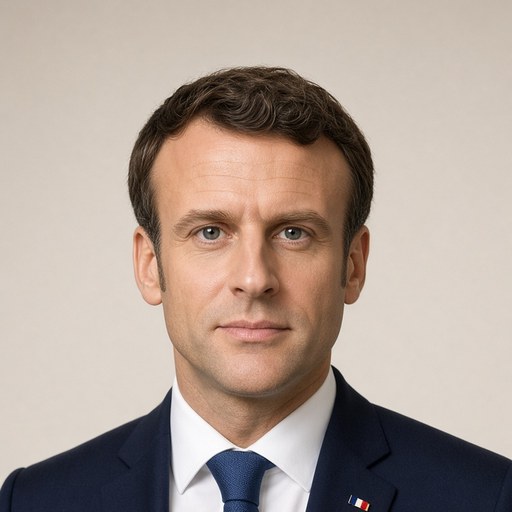
Transcript of the speech by the President of the Republic, Emmanuel Macron, on the transformation of the health system "Taking care of everyone"
 Emmanuel Macron · President of France
- Context
- Macron addressed healthcare professionals gathered at the Élysée Palace in September 2018 to express gratitude and outline his vision for reforming the French healthcare system.
- Main themes
- Healthcare system reform, caregiver recognition and malaise, patient-centered care, chronic disease and aging population, public and private hospital medicine, life expectancy and health outcomes, welfare state modernization, healthcare spending and supply regulation, medical research and innovation, working conditions for caregivers
- Duration
- ~82 min
- Words
- 9,848
- Sentences
- 326
- Readability
- 37
- Grade
- 15.5
- Syntax
- 3.36
- Vocabulary
- 2.12
Translated from French
The broad sphere of national life a sentence belongs to. Every sentence has an Arena, so it is the denominator the other indices are read against.
Other326 sentences in 112 paragraphs
My dear friends,
Thank you for being here today in this room at the Élysée, and I believe it has been a long time since your professions were gathered at the Élysée. I wanted to do this, some will say because of my long companionship with this profession, but above all to express my gratitude to all of you, students, caregivers, hospital doctors, private practitioners, researchers, academics, directors of establishments or organizations.
I know that your work is sometimes challenged today by contradictory injunctions, by reforms that are experienced as permanent, and I also know that there are impatiences, sometimes doubts that may drive you.
Yet, and this is the first reality I want to remind you of here, thanks to you and your efforts, our healthcare system remains our strength and our pride. It is thanks to your extreme dedication that the system still holds. Moreover, the French people, your patients, recognize this. They hold all healthcare professionals in very high regard. And allow me, here today, on their behalf, to thank you and to solemnly express our republican recognition.
No one wishes to be treated anywhere other than in France; many of our neighbors envy the excellence of our healthcare system. We are attached to our model that combines public and private hospital medicine with liberal medicine.
Thanks to this original model, France is the country where, by the age of 60, the life expectancy of French women and men ranks second in the world. It is in France that the out-of-pocket expenses for households regarding their health are the lowest in the world. It reached less than 8% in 2017. And this is primarily due to a high level of coverage by Social Security and all those who cover these risks, which is an achievement that I intend to preserve.
But, and this is a second reality, even if the satisfaction of treating and saving is always present in the daily lives of caregivers, a sense of malaise has now deeply settled in. The evolution of working conditions, the relationship with patients often presented as "hindered," the feeling of not having the time to do what is essential, and the lack of career advancement prospects, especially for those working in public hospitals, are all realities as well.
My ambition is clear; I want what we call the healthcare system to be one of the pillars of the welfare state of the 21st century, a healthcare system that prevents and protects against today's and tomorrow's health risks, but also a healthcare system that can accompany the life paths of each of our fellow citizens.
1958 was a turning point because the organization of university hospital centers allowed the return of medical excellence in care and research to hospitals, which had until then been mainly considered as dispensaries. It was a real change in approach. Today, we must again work towards a paradigm shift. It will be of equivalent magnitude to adapt to the evolutions of science and our society, to new pathologies and the care needs of patients, to the challenges of research and innovation, to adapt to your aspirations as caregivers and to refocus our system around the patient.
I want to express to you today my confidence in our ability to succeed collectively. This will not happen overnight, but we must start right now and work hard, even if it takes 2 to 3 years. We must restructure our organization for the next fifty years.
To do this, what observations do we share? I said our healthcare system has strengths, but it has been considerably weakened in recent decades. Why? Because it was designed for a society where people did not live as long as they do today; it was designed to treat acute pathologies and was conceived at a time when the supply of care corresponded to the needs of society.
And gradually, in recent years, several developments, some of our doing, others linked to the broader evolution of our society, have put it under strain.
First, we thought, and it was a dogma for several years, relatively ecumenical on the political level, that we could reduce healthcare spending by regulating it through supply. So we thought that reducing the number of doctors, the number of facilities, would reduce the number of patients; it did not work, and the lag effects being what they are, the decisions made sometimes 20 or 30 years ago are now having full consequences. And the corrections that, I will return to, we could make will only have their full effects in 10 to 15 years.
Then society changed, precisely because our healthcare system has been effective, and thus we live longer, longer in good health, and the pathologies that our system has to treat are no longer the same. They are increasingly chronic pathologies, increasingly pathologies related to an aging population, and thus this system of care as organized is no longer adapted to these few evolutions I mentioned. This creates tension in terms of access to care, and we see it every day when faced with the difficulties of finding a general practitioner or obtaining an appointment within a reasonable timeframe, which is linked to the fact that the number of available consultations with general practitioners has decreased by 15% in 15 years, even as the population aged, and access to specialists has become increasingly difficult, with specialties having great heterogeneity among themselves. Medical offices, emergency services, and medico-social establishments are saturated in this regard.
Tensions then arise in terms of the working conditions of healthcare professionals, many of whom feel they are losing the very meaning of their profession, their vocation, due to the administrative and financial constraints they face. And also because the new generations of doctors aspire to different practices, and this is a reality we observe every day to better reconcile personal and professional life, which can also lead to creating tensions in supply in certain areas.
Finally, financial tension is linked to the challenges of aging, the development of chronic pathologies, and the costs of therapeutic innovations that test our ability to preserve our model of solidarity-based health in the long term, to which our fellow citizens are fundamentally attached.
All these tensions are not, however, inevitable; nothing, among our neighbors, in some of our territories, initiatives, and local experiments are managing to trigger new organizations and can inspire us starting today.
In many territories of our country, we have already begun to move, based on these observations, and I look around us; several countries have conducted profound evolutions that have allowed them to respond to these challenges, without drama, without crisis, and without renouncing the values of solidarity and the demands of quality.
They did not respond by spending more, but by organizing better, because our healthcare system does not primarily suffer from a problem of underfunding; it suffers from a real organizational handicap; the organizational model is no longer adapted to either demand or supply of care.
France, when I look at the figures, currently devotes a considerable share of its national wealth to its healthcare spending, about 11.5% of its gross domestic product, which places us third among OECD countries after the United States and Switzerland, and ahead of Germany, Sweden, or Japan. It is not a question of doing less, and I will return to this point, but it is also not a question of saying, for convenience, that it would suffice to spend more for everything to get better; that would be false.
Aging, the legitimate demand of our population, innovations in both medications and medical devices create a dynamic of spending, and it is indeed through collective reorganization that we can respond to the challenges I mentioned.
Let us be clear; if the overall budget we allocate to health is high, but everyone considers it insufficient in their daily lives, it is definitively because our care organizations, our modes of resource allocation are not the right ones. They are not adapted to the evolution of more complex, more chronic pathologies that require more coordination among professionals and more prevention.
Indeed, our system prevents poorly, and the observation is now established. In France, we treat well, but we are not necessarily healthier than our neighbors because we prevent resolutely less well than many of our neighbors, particularly in Europe. And in doing so, heavier and therefore more costly pathologies settle in, and in mirror, our system suffers from too many unnecessary acts, from over-medication because we arrive too late or in a system that is too blind that performs too many acts.
Our system then remains atomized, compartmentalized, unbalanced, with too many city professionals who still practice too isolated, health establishments too often competing with one another, sectors of the city and the hospital that do not communicate enough, an outpatient shift that should lead to more treatment without resorting to hospitalization that still struggles to materialize, and remuneration modes that encourage a race for activity and acts.
The hospital concentrates its dysfunctions and risks implosion without comprehensive transformation, as the hospital is becoming, in the most strained or troubled areas, a dispensary welcoming all health and social emergencies, developing more and more activities to survive financially, while at the same time being asked to perform more advanced interventions, to enhance the excellence of its clinical research, to continue efforts in training, and to facilitate care pathways in the community.
The hospital has modernized with new organizations, new financing modes, but today the hospital is at the end of what it can do to remedy our collective disorganization, and this is particularly true for its emergency services.
This race for activity has become insane—everything in our system encourages it—because it loses sight of quality. And the situation is absurd in this regard; we are doing more and more in certain activities, the relevance of which is not always proven; 30% according to evaluations of costly acts serve no purpose, and we cannot meet the demand for basic care in proximity. And by doing acts, we expose ourselves to doing more but sometimes poorly. For example, for all patients suffering from heart failure, we re-hospitalize twice as many in France as in the United Kingdom, 30% more than in Switzerland. Patients and caregivers alike suffer from this system I have just described and its absurdities.
We owe it to them, we owe it to you, to break this vicious circle in which we have locked ourselves to regain the spirit that presided over the construction of our healthcare system, with a commitment from all, not the hospital on one side, the private practitioners on the other, and patients that we would forget in the process, no, by trying to place all the actors of this system in a cooperative approach that will allow us to respond to these challenges.
So faced with this observation, what is, what should be in my eyes, the vision for the future of this healthcare system? It is a system that must better prevent, be centered on the patient, and on the quality of care.
Better prevention first; I mentioned this by citing this French paradox where we treat very well, but we are not healthier than our neighbors because we prevent resolutely less well. From the commitments I made before our fellow citizens, I called for a revolution in prevention, which would resolutely shift our system and your practices from a curative approach to a preventive approach.
The minister, whose commitment and work I salute here, dear Agnès Buzyn, has been leading this fight from the very first days and on a daily basis, with vaccines made mandatory, which have sparked some debates, the fight against tobacco, cancer screening, and 100% coverage for optical, dental, and hearing care, essential so that our state of health does not deteriorate even further. And the establishment of the health service starting this school year.
40,000 first-year health students will carry out their health service this year to teach good practices in prevention, primarily in schools, among children and young people who need it most, in rural areas or disadvantaged neighborhoods, but also because better trained in prevention from the start, they will be different healthcare professionals and will have contributed to deploying more preventive actions in these priority territories.
All public policies are concerned, and the entire government must be committed to this Prevention Priority Plan adopted last March. When, a few days ago, the Prime Minister and the Minister of State presented a Bicycle Plan, it is also within the framework of a prevention policy and an improvement of the health of our fellow citizens. When Parliament votes in the second reading on a bill regarding food and agriculture, it is a prevention policy aimed at developing organic farming, the quality of food, particularly in school cafeterias and collective catering.
When we ban neonicotinoids, it is a policy of prevention and health; social pricing in cafeterias or breakfast in disadvantaged schools presented last week as part of the Poverty Plan is a health prevention strategy. And it is this spirit that must permeate the actions of the government and parliamentarians in the coming months to continue this essential work.
The second axis is the quality of the healthcare system serving the patient. We must indeed move from a quantitative and budgetary approach to healthcare offerings to a patient-centered approach, pragmatically speaking, because we have seen over the past few years that the one who decides in our healthcare systems is the patient. It is neither the government nor the one who reimburses nor even the doctor; it is the patient who chooses, which has sometimes led us to try to impose measures or reorganizations from above. If the patient does not decide for themselves, does not understand, does not support them, they are not effective.
It is not up to them to adapt to the system, but rather the system to adapt to their needs. And it is around the patient that the response of caregivers must be built, in proximity, and coordinated in a network. Thus, structuring primary care is the top priority. Because it is from this essential lever that many of the responses to the tensions we are experiencing depend. The response to the population's demand for care, the acceleration of the shift to outpatient care, the alleviation of pressure on hospitals, the improvement of working conditions for healthcare professionals in the community—all of this relies on better structuring of primary care.
The healthcare system of tomorrow is a network of primary care, which includes all healthcare professionals in a territory, regardless of their status, and which guarantees the population permanent access to scheduled or unscheduled care. The caregivers in this network can be hospital staff, private practitioners, doctors, nurses, midwives, pharmacists; what matters is that everyone, in their place with their expertise and competence, can intervene at the right moment, in a coordinated manner with their colleagues and as a team.
The patient must always be able to access a primary care physician, an emergency response, and specialized medical expertise when necessary. This approach precisely requires us to stop opposing hospital staff and private practitioners, general practitioners and specialists, doctors and other healthcare professionals, and to finally build a collective functioning.
Tomorrow, caregivers will work increasingly in the community and at the same time in hospitals. And this priority for primary care must be coordinated with excellence in clinical research, innovation, training, and cutting-edge technologies; the target in my eyes is this collective, decompartmentalized, coordinated practice.
So the transformation strategy that you have been working on since the launch of the work by the Prime Minister last February must lead us toward this target. Minister Agnès Buzyn will have the opportunity to detail all the measures planned to support this transformation. There are many, as all professionals are involved, but I would like to particularly emphasize three orientations and sets of measures that will mark this path of transformation.
The first orientation is to build the system around the patient, and first and foremost, simply to allow them to access the care they need. This is the top priority, as I mentioned when talking about the target we must pursue. In this regard, the absolute priority is to regain medical and caregiving time available for our fellow citizens. To start, we must ensure that we train enough doctors; for that, we cannot be satisfied with the current system, which has an absurdity that is a problem for all of us, as it is evident to all our fellow citizens.
Today, it is a waste that concerns 25,000 students each year, 25,000 students who, overnight, go from being excellent high school students to those who fail for the first, second, or third time in their first year, at the same time that our fellow citizens are suffering from difficulties in accessing care, at the same time that when they go to their local hospital, they realize that it only functions because we rely on temporary doctors, whose payment methods burden the same hospital budget, in this vicious circle that we know, and where we have 10% of doctors graduated abroad.
The system is absurd, and we must therefore face it. At the same time, our companies are looking for talent in biotechnology, in research laboratories, and are seeking these same skills. I have long expressed my conviction on this point, and the ministers have proposed a complete renovation of health studies, particularly medical studies. The numerus clausus will therefore be abolished to stop maintaining an artificial scarcity and to allow us to train more doctors with a renewed selection method and to strengthen the qualitative dimension and the level of training in health studies.
This is the work that the ministers will carry out in the coming months to rethink, after the necessary consultations, medical studies. But let us not be deluded about the immediate effectiveness of such a device; we are currently suffering the consequences of decisions made decades ago, as I mentioned, and our decisions on the numerus clausus will have a symmetrical impact in 10 to 15 years; we must therefore activate all levers today to move faster.
There are already students who wish to join medical studies or medical training after spending a few years in other university fields, in sciences, in biology, where they have acquired similar and complementary skills. We too often require them to enroll in the first year and go through the gauntlet of rote learning and exams, which is also absurd.
Starting in the 2020 school year, there will no longer be an exam at the end of the first year, meaning no more PACES, this acronym synonymous with failure for so many young people. Tomorrow, all students enrolled in a bachelor's degree, regardless of their specialty, will be able to join the medical curriculum in the second, third, or fourth year, and the ministers will detail all the training for health professions that will thus be renovated, to promote pathways between professions, common teachings, the possibility of continuing or resuming training, and participating in research activities.
By valuing and fully evaluating the skills needed in medicine, skills that have a relational and sometimes written dimension, where, it must be said, the current system, essentially based on multiple-choice questions, does not fully allow for the proper identification of these skills, which are only identified much later in the curriculum, with, again, a certain waste.
To all those who might see in this reform a renunciation of the excellence derived today from the end-of-first-year exam, I say that this training pathway will remain selective, will be more open, more vibrant, will attract more varied and equally excellent profiles, and will also be based on the principles I mentioned that better correspond to the reality of daily medical practice.
But to free up medical time, to have more consultations, more patients welcomed, the greatest short-term gains therefore come from a different distribution of tasks. We have already allowed vaccinations to be carried out by pharmacists; we must continue to relieve doctors of tasks that can be performed by others, much like orthoptists have allowed ophthalmologists to be relieved of certain tasks or nurses who support general practitioners in screening, monitoring, and therapeutic education for their chronic illness.
On this subject, there is a better distribution of tasks and time among the different healthcare professionals. And this will be more rewarding for all of them. To free up even more medical time and ensure that doctors can treat more and better, we must allow them to be supported by professionals who perform simple tasks for them, such as taking blood pressure or temperature, preparing for the consultation, advising and following the patient's journey, and taking on part of the administrative management and coordination tasks; this goes hand in hand with a revaluation of all health professions—
(Sound of glass breaking)
I hope there are no injuries—and of the contribution that everyone can make in the medical follow-up of the patient; otherwise, this is the right time and the right day to have a workplace accident. Everything is fine.
It is in this spirit, and to this end, that we will create medical assistants, that is to say, professionals who will assist doctors, long established in the medical practices of our neighbors. These health personnel will accompany and relieve the doctor of simple tasks, contributing precisely to the patient's care. These positions will be funded for all doctors, first, general practitioners and specialists, for whom access to care difficulties are identified, as long as they practice in a grouped manner and commit to objectives and results. Taking on new patients, shortening waiting times, prevention actions, unscheduled consultations.
So how many medical assistants will we finance, these professionals who will help our doctors in the coming years? As many as needed to support this movement in all territories, the first will arrive in priority neighborhoods for access to care and in under-dense areas, starting in 2019. Professionals estimate that we could gain between 15 and 20% of medical time with such an organization; the goal of the five-year term must be to deploy at least 4,000. This would represent a gain of medical time equivalent to nearly 2,000 additional doctors given the current organization, but if the movement is there, if the need is there, we will finance as much as needed. Because it is at the heart of the reorganization of all these professions, and it is an essential evolution.
We must finally pay particular attention to the most deprived territories, where we cannot replace our doctors who are retiring, these so-called medical deserts that are today a source of anxiety for many of our fellow citizens, for their elected representatives, rightly so. These medical deserts are not only in rural areas; on this subject, let us not be mistaken, they are often found in the outskirts of large cities, in the most difficult neighborhoods, in very rural areas.
And so it is a multiple France, but it is the France that is demographically falling behind, it is the France that today can no longer attract businesses, that can no longer sufficiently attract new doctors, this part of France where the population is aging, and where therefore the needs are new, and with the aging of the population, the aging of the medical demographic, and where at the same time that needs continue to grow, doctors are retiring and are not being replaced.
The number of retired doctors has doubled in the last ten years, and unfilled departures are concentrated precisely in these most rural territories and in difficult urban neighborhoods.
Today, we have nearly 20% of the population located in these priority territories for access to care that we call under-dense areas. So what I have just mentioned is a first response, and it is in these areas that we will promote the reorganization of healthcare professionals and investment in these medical assistants to free up useful medical time, support them, and also encourage these practices, a form of organization that young healthcare professionals favor. But we must also acknowledge that legitimate impatience is present.
So, we all know the debate by heart here. Should we impose constraints? Should we not impose constraints? I have said this for a long time, and this long companionship with healthcare professionals has taught me a lot in this area. Unilateral constraints coming from above may please – I understand that very well – the elected officials in these territories and be an immediate response that one proposes to their fellow citizens: it will not work. It will not work. One of the problems today in our medical demographics is that more and more young doctors, or less young ones who have been trained by the system, are stopping practice due to these constraints. This is a reality. And so, if we start today to say: "We are going to completely impose the mapping of medical graduates," I think we will have a lot of trouble meeting this challenge. In any case, it would be a fallacious response, a rhetorical one, so I do not believe in it.
But we must also, and I ask that the ministers take this into account in the redesign of medical and health studies, succeed in addressing some absurdities where the territorialization and the constraints we impose throughout the course of studies do not correspond to the needs we have afterwards. And I think that on this subject, we have collectively a lot of progress to make, and I believe we can improve the system without talking about constraints, by allowing more mobility for students, by avoiding concentrating students in the same areas, and then being surprised that students who have been in these most metropolitan areas do not necessarily want to go to the most rural or most difficult areas. I close this parenthesis.
Nevertheless, if we do not manage at some point to have a system that collectively organizes the distribution better across the territory, it is obvious that these debates regarding constraints and the obligation to settle will continue to rise. But in the short term, I believe that through this spirit of trust, of collective action, we can have a more appropriate response. First, by continuing to guide and encourage the installation of healthcare professionals in these areas, by developing structures – health houses, collective installations, and the support I just mentioned – but also by financing positions in a somewhat innovative way that corresponds, I believe, to what we can offer.
Also, I wish that starting in 2019, 400 additional positions for general practitioners in shared city/hospital practice could be financed and sent to priority territories, employed by the local hospital or a health center to offer consultations. I bet that this exceptional measure will be attractive because we see that younger generations are demanding a more significant collective practice, sometimes salaried, than before. The Minister will conduct negotiations within two months to calibrate with you the incentive dimension of this measure, which must be real to be effective and to meet this ambition, and this device will be focused on the most critical territories.
It is both about supporting and accelerating the movement of health houses, but it is also about starting with proof to show this porosity that we must organize between the hospital system and the liberal system by offering attractive remuneration, an organizational framework on the ground for these healthcare professionals that is more suited to contemporary choices. This is therefore the first axis of this transformation that I wanted to recall and defend here: that of allowing better access to the care that the patient needs.
The second orientation that I want to emphasize today in front of you is that of building a system around the patient by allowing them to be cared for in a fluid and coordinated care pathway. This idea is not new. We have been talking about it for years, if not decades. It is the one that has led to the implementation of the referring physician, the care pathway, to change, thanks to the cooperation of all learned societies, the modes of organization and reimbursement. But as chronic pathologies develop, the coordination of different specialists has become today even more essential than yesterday, and coordinated practice must become a reference.
We know very well: a patient suffering from diabetes must have around them a small team with their general practitioner, their endocrinologist, their dietitian, their nurse, their podiatrist, their ophthalmologist… It is this team that must share information in real time, allow the optimization of care to support them and live in the best conditions. This first and foremost requires the deployment of new digital tools. Here too, I feel like I am speaking to you about a long-awaited issue. We know that these tools are currently insufficient. They are compartmentalized, leaving aside the patients who are, after all, the primary stakeholders. I would even go further: nothing will be possible without a radical update of the digital architecture. It is imperative to coordinate the actors, to personalize care, to relieve caregivers of their administrative tasks, to also develop artificial intelligence and deploy new treatments.
We must equip ourselves in the next three years with a real digital service offering that allows patients and healthcare professionals, precisely those who take care of them, to share medical information and communicate with each other in a completely secure manner, obviously respectful of both professional secrecy and the confidentiality that everyone wishes for themselves. This will start with the shared medical record that we will deploy nationally next November. Finally. But it must go much further by providing all insured individuals with a broader patient digital space, enriched with useful information and a bouquet of health services and applications. It will also be about developing with and for healthcare professionals the essential territorial digital tools for good coordination.
In the age of artificial intelligence, what we need to deploy is the digital system that allows all healthcare professionals as well as patients, the former to perform their functions as they should today and the latter to benefit from this personalized medicine that is emerging. And this is not a trend, a whim, or simply a technical change. What is emerging is a profound revolution in medical practice. We must therefore place it at the heart of the system and its redesign, knowing, too, that this transformation will allow for a better distribution of tasks and enable healthcare professionals to focus much more on value-added actions. And I want this objective of personalized medicine and these innovations to be placed at the heart of these reorganizations and this strategy for the precise interest of the patient.
The best organization also involves greater responsibility for healthcare professionals in organizing the response to the health needs of the population in their territories. We know these needs. It is the care of every patient by a primary care physician. It is the response to unscheduled care within the framework of the continuity of care during the day. It is the development of a structured telemedicine offering. It is the follow-up and coordination of interventions around the most complex patients, particularly upon discharge from hospitalization or to prevent hospitalization, or to ensure the maintenance at home of fragile and elderly individuals. It is the development of prevention programs.
We all know these needs. And to meet these real challenges for which we have an obligation to deliver results, all professionals in a territory must commit, work together, and bear collective responsibility towards patients and the population. The framework for this commitment will be the establishment of territorial professional health communities that must also bridge the gap between healthcare facilities, particularly local hospitals, and the medico-social sector. It is about enabling and encouraging all professionals in a territory to work together and organize together because it is in their interest, where we see today in too many situations non-cooperative strategies, if I were to use a euphemistic term, which are corrected how? By services that are put in place and that allow for treatment, in the most urban areas, of night emergency services. But is this completely satisfactory? Not always. Or which lead to shifting the burden onto one actor in the system: the hospital and its emergency services with the conditions and risks that we know and the burden on hospital facilities, and thus, a system where everyone, in the end, becomes a loser.
I want us to be able today, in these relevant territories, to have true cooperation among all healthcare professionals beyond the boundaries of status and positioning, and that all those who are responsible for the health of a population share this responsibility. We must ensure that these professional communities cover all territories by July 1, 2021. I trust local initiatives to deploy in very large numbers. I do not want to make these professional communities a kind of top-down system that should be the same model everywhere in the territory. There are several initiatives that have already emerged today. They need to be encouraged, they need to be developed. They will probably not take the same form depending on the territories. What is certain is that people need to talk to each other, to organize together around the patient. To encourage each and everyone and to ensure that we have these communities that must cover between 20,000 and 100,000 patients by 2022, I want precisely that isolated practice becomes progressively marginal, becomes the aberration, and can disappear by January 2022.
So, I know what this type of statement can provoke in terms of reactions from liberal healthcare professionals. I also know what the stakes and expectations are, and I also see what the aspirations of the new generation are. I am not here to impose an obligation that should be seen as a constraint accompanied by some kind of sanction, but I am instead stating a principle that the law must affirm, an objective that must become a reality, and for that, we must give ourselves the means. And instead of constraints, I want to prioritize incentives. A demanding incentive, focused on the results to be achieved. We will thus commit to financially supporting all professional communities that will be created within the next 18 months for a duration of 10 years.
Furthermore, for professionals, certain elements of existing and future remuneration should tomorrow be reserved for those who engage in this new model of cooperation. I also wish to offer willing professionals the opportunity to go further, faster, to opt for a remuneration that completely shifts from fee-for-service to a flat rate for the care of populations in their territory. This is the logic in which we must engage, and rather than impose, I want us to strongly encourage those who will proactively enter this dynamic.
It is therefore on this basis that I wish to allow initiatives to unfold in the territory. It will then be up to define, in future contractual negotiations with healthcare professionals, the terms of this new pact, and I hope they will succeed because such a reform is always stronger when it comes from an agreement rather than from a law. And I believe that this is the spirit of what has been worked on since last February and the philosophy that I am presenting here before you. We all have an interest in working to set our healthcare system in motion in this direction. In this regard, it is no longer possible for patients in emergency situations not to know whom to turn to and for us to always end up, as I said, at the hospital, overloading services that should focus on vital difficulties.
We have here the most emblematic example of our dysfunctions and the necessity to reposition the hospital in its rightful place. We must reverse in this regard the spiral of congestion in hospital emergency services that welcome vital emergencies day and night, but also many patients who could be treated in consultation. It is estimated that at least one in five visits to the emergency room would fall under a general medicine consultation or sometimes, indeed, these same procedures could be done in a lighter structure: a technical platform for radiology, suturing, or medical analyses, we know that well too. But why today do people go to the emergency room when they could go to consultations? It is not for pleasure, obviously, but almost by reflex, as an obviousness that we have allowed to settle in recent years and most often also for a reason of availability. It is that we no longer find doctors outside the hospital at the end of the day or early in the morning and sometimes for a financial reason: it is that there is no need to pay upfront.
Non-vital emergencies must therefore be able to be managed in the city by professionals organized within their professional community, in connection with their local hospital; they will need to organize collectively to ensure a continuity of non-scheduled care during the day, every day until 8:00 PM.
Initially, I was in favor of saying until 10:00 PM, but I was told that I would open an absolutely impossible war if we said until 10:00 PM, so I am reasonable and I said 8:00 PM, but it would be wonderful if we could find an agreement until 10:00 PM, sincerely. Because when we look at the emergency numbers, there are a lot of them between 8:00 PM and 10:00 PM, so I have trusted the minister, the director of the CNAM, and all the professionals who will have to conduct this negotiation; I am convinced that we can find an intelligent solution until 10:00 PM. But I said until 8:00 PM today.
So it is obvious that doctors will be compensated for this and that it will also be necessary to organize, as in the hospital, the advance of costs for patients; therefore, the system needs to change. I am not saying that we should push people to have the same organization, the same constraints, for this continuity of care. I am telling you that we will indeed push people to better organize themselves, we will support them financially, help them to be better compensated when they organize, that they have medical assistants, and for those who provide continuity of care, that there be a real incentive and thus that we also help them with their equipment and compensation.
In the areas where the situation of hospital emergencies is most critical, I really want this organization of non-scheduled care, as we say, and therefore city emergencies, to be implemented by 2020 at the latest. In parallel, we must make emergency services much more responsive to vital emergencies. Our system, as we have seen, is not always as efficient as it should be and does not guarantee either the quality or the speed of care across all areas of the territory. And on this, I want to say a word for all those who keep our emergency systems running; if we have had cases that have sometimes made headlines, it is not their fault, it is the fault of our organization. If they were not there day and night to already keep the system running, to already ensure every day the excellence of a system as it exists and the ability to endure both the extreme stress of those who present themselves to the emergency room and the quality of that care, we would not even have the luxury of discussing it.
And so they are the first victims of this currently unsatisfactory organization, of which I want to say a word for all those who are either regulators or healthcare staff in our emergencies; they have sometimes been stigmatized in recent debates, it will be up to us to define responsibilities, but if there is a primary responsibility, it is ours; we must not shift the blame onto this or that person.
So this subject is eminently complex; I know that several works are underway, particularly on the unique emergency call number; proposals have been made by representatives of emergency physicians, firefighters, and parliamentarians, and by the end of the year, a decision will be made based on the proposals that will be made in the coming weeks by the ministers of Health and the Interior. But I am well aware of the importance of this subject and the reorganization that we must undertake on this point.
Finally, the third direction I wanted to share with you to build this system around the patient is to guarantee them the quality of care, regardless of where they live in the territory. We must tackle the question of this quality of care without taboos because it is hypocritical to say that it is the same across all of France. A hypocrisy, we know well, is linked to where one lives, to the accidents that may have occurred in the organization of the supply of care, to the network available, to the privileges that can be activated to gain access as quickly as possible or to the best professionals; and thus we have a very French way of addressing the issue of waiting lines, which is that we have organized privileges and parallel systems that work well for those who are best placed in the system, making it viable but which at the very least does not resolve the situation for a very large majority of our fellow citizens.
And on this, we must set things right. Hospitals and local clinics must do much more primary care. Leading establishments must focus on specialized care, and I know that a reflection is underway within your conferences on the future of the hospital-university model, the performance of research, and health innovation to arrive at proposals by your December meetings, which will coincide with the 60th anniversary of the founding act of the CHUs by the so-called Debré ordinances of December 1958. But to put it concretely, I prefer that a patient undergo a major operation 50 kilometers from their home, with the highest level of quality, if they can then do their rehabilitation, their postoperative follow-up as close to home as possible, surrounded by their loved ones in a local establishment. To make them believe that they can have this cutting-edge surgery in their local establishment is false; to make them believe that this local establishment must be closed because it is local is also false, because we need it to organize this offer as close to the ground as possible.
And so, in this regard, each hospital must focus on the care for which it is most relevant. The organization of the activities of the establishments will therefore adapt according to three redefined levels: primary care with general medicine, geriatrics, rehabilitation, non-scheduled care; specialized care with surgery, maternity, specialized medicine; and ultra-specialized care or cutting-edge technical platforms.
For public establishments, this gradation of activities will continue to be organized around hospital groupings of territories that must continue to be developed, but I want this distribution of activities from proximity to ultra-specialty to also concern the private sector so that both public and private establishments can develop shared technical platforms, associate themselves within the framework of a territorial health project to meet the needs of patients without unnecessary and harmful competition.
We still have too many territories today where we block projects for the installation of cutting-edge equipment because there are competitive games between the public and private sectors, where we do not meet needs, where we do not have the right organization; we think we will do everything at all levels until it breaks and we completely close the local structure.
I believe that if we manage to reorganize things around this gradation, these three levels, and we establish this principle, we can usefully advance towards a better quality of care. Thus, certain medical activities will need to be strengthened in proximity when others will need to concentrate in expert establishments. Some activities will need to close in certain places when underutilized technical platforms become dangerous or when the absence of qualified doctors does not allow them to be secured. But these structures can be reused either for primary or first-level services or for postoperative follow-up as close to the family as possible and to also relieve cutting-edge structures during the postoperative period. I do not wish to close a service, an establishment for financial reasons, but I will not keep open a service in which none of you would send your children.
I thus ask the Minister of Health, but I know that consultations have already begun on this subject, to define a modern and attractive status for local hospitals, which must be a priority in the coming months. All establishments will have to reposition themselves and will be concerned by this transformation of the offer, from the smallest local hospital to the large AP-HP, and this work must obviously involve all stakeholders, all care offers – liberal medicine, private, sectors associated with public service – and obviously local elected officials.
Access to quality care also means tackling more strongly non-relevant procedures and evolving the funding model to value the quality of patient pathways. I have already said, I want us to move away from a kind of system that has shown all its limits, which promotes the race for procedures and activity, as embodied today by the famous T2A, in favor of a funding model that promotes prevention, supports cooperation among professionals, and places quality as the primary objective of care. As I committed to, starting in 2019, the financial incentive for quality will be significantly increased in hospital establishments. It will rise from a budget of 60 million euros today to 300 million euros. Furthermore, starting in 2019, we will begin the shift towards a greater proportion of funding based on quality by creating a flat-rate payment for two chronic conditions: diabetes and chronic kidney failure instead of activity-based pricing.
By 2022, this more incentive-based pricing system for pathways and quality of care will have become the main component of funding for both the city and the hospital, and we will have finished with pricing solely focused on activity, whether it is T2A on the one hand or the exclusivity of fee-for-service payment. This access to quality care is also, finally and above all, allowing healthcare personnel to regain a calm working environment and a fair revaluation of their work, particularly in hospitals.
The road will be long to reverse the vicious circle I mentioned earlier. This transformation must be accompanied as closely as possible by the healthcare teams. The hospital, I have said several times, is on the front line of the transformations of the health system and has experienced very strong budgetary pressure in recent years.
In this context, we must question more specifically the working conditions of hospital professionals to restore meaning to their mission and perspectives for their careers. Supporting the pathways of caregivers, their professional projects must become a reality in all hospitals. The management, in particular, of the second halves of careers must become a privileged moment. This is true in all professional fields; it is even more so for caregivers.
This requires reinvesting in social dialogue on work organization and skills development. It will also involve better training for those who accept responsibilities, recognizing through incentive measures the roles of management, whether medical or nursing, whether it concerns the president of the medical establishment commission or local health managers.
Healthcare professionals on the ground expect more flexible, supportive management and expect us to provide the means for this management to do this work. In hospitals, we can train good doctors, good managers; we can also train managers, and I know that the representatives of directors, doctors, and all the staff are convinced of this. Decisions will thus be made to value and compensate new so-called advanced practices for nurses, an essential link in our healthcare teams. This modern form of practice allowing paramedical professionals to be recognized for competencies that are legally the domain of doctors, desired for more than 10 years, is finally possible.
Particular attention will be given to nursing assistants, whose skills and training framework will be updated to better respond to the realities of their practice. Employment conditions in the second half of their careers will be the subject of specific reflection, and I confirm that a financial effort will be implemented, particularly for nursing assistants working in nursing homes.
In terms of hospital organization, things must also be clearer; I want to restore the service to its rightful place, as it is the reference space for caregivers and the place for patient care. Not to restore isolated strongholds; I certainly do not want to enter the much too complex debate for me between services and poles, of which I have understood that I would not be able to grasp the essence, but rather to promote a framework that fosters a sense of belonging to an organized collective whose missions, objectives, and procedures are known and shared.
In listening to many healthcare staff in the hospital, I was struck by one thing: they felt somewhat dispossessed of the evolution of the hospital over the past few years and the recent reforms. Dispossessed because we may have grouped services together in an attempt to create complementarities and moved decisions to the level closest to patients, moved because we created a management administration that has sometimes distanced or disempowered healthcare staff. And sometimes healthcare staff may have also settled into this mindset, considering that if it was like this, they no longer had to be co-actors in the evolution of the hospital. And we may have collectively weakened the strength that is a caring collective to whom we must give all the recognition and responsibilities that go with it.
And so, for this, I want to place the physician at the heart of governance. We need to strengthen the participation of physicians in strategic steering by better associating the Medical Commission (CME) with medical decisions; the CME must have a say in hospital decisions and be able to take its own share of decision-making. Empowering practitioners in the implementation of decisions implies that they feel involved, and for this reason, representatives of professional communities will join the supervisory board of their local hospital partner. Hospital groupings will be equipped with a genuine medical establishment commission whose competencies will be expanded, but I also want physicians and their representatives to take a more active role in the direct decisions of hospitals. And I wish for the possibility already opened to hospital practitioners and PU-PH to lead hospitals to be fully realized during the next appointments and to be more widespread.
We will also need to modernize the status of hospital practitioners to provide more flexibility in career progression and in the diversity of practice modes. Here too, we need to break down barriers; a physician should be able to easily transition from practice in the city to practice in the hospital and vice versa, and especially to combine the two through mixed practice, which should become increasingly common.
In essence, many barriers that we have established over the past decades must fall; we have gradually installed the barrier of limiting the non-direct hospital practice of hospital practitioners or PU-PH. The result is clear: hospital directors or department heads present in this room can say how many positions are to be filled. Thirty years ago, this was unthinkable; unthinkable, the most prestigious positions are no longer filled in hospitals because the ability to organize freely, to weigh in on decisions, to be justly compensated when looking at competitors in the private sector, is no longer there, and therefore we must respond to this through reorganizations, in terms of the ability to decide and participate in decision-making, in terms of the ability to organize by also breaking down the boundary with the organization, with the city, and with private practice.
In this regard, the diversity of medical practice is most often neither valued nor recognized, and it is essential that all the missions of the hospital practitioner—clinical, non-clinical, managerial, institutional, research, teaching, innovation—be statutorily recognized and integrated into service obligations. This is the best guarantee of sustainable involvement in the functioning of the hospital institution.
And this reorganization around quality for quality is all the more essential, whether it concerns hospitals or private structures, as we have a real revolution in terms of innovation to drive. And we will also pursue this in our budgetary and industrial choices. The coming years will be guided by a clear strategy for medication, which was announced last July to professionals. We need to give them visibility, focus our funding on innovation, but we can become—or rather, regain—a great land of innovation in medications. If we give ourselves the means, we can also become one of the champions of artificial intelligence in medicine, medical devices, and the organization of the healthcare system. We have an advantage: our Jacobinism, the concentration of all health information in the same regulated structures, protecting individual interests, is an unparalleled opportunity; only the Chinese, who are less respectful of individual freedoms, have such a centralized organization. Almost no other country has this capacity to cross-reference citizens' health data for therapeutic purposes in a fully monitored framework; it is unprecedented. We have excellence in research in CNRS, INSERM, our university hospitals, private research structures, and biotechnology start-ups; we must seize this revolution today. And it makes the transformation I mentioned around quality even more imperative because it will allow our healthcare professionals, both in hospitals and in private structures, and through this partnership that I want to rebuild, to work together and be the actors, also the co-producers of this collective innovation.
What our health needs is not a miserable discourse; it is a discourse of ambition. We are not going back to 1958; we have to invent the next 50 years of our healthcare system, with the real strengths I have mentioned, the challenges we must meet through collective intelligence and some decisions, but we have to invent a healthcare system that is emerging. We can do it if we give ourselves the means.
So some skeptics may doubt, and I will conclude on this point: why would we succeed today? First, because we are stronger for what we have not succeeded in, and many things have been attempted, perhaps in a piecemeal manner, sometimes blocked, but I believe that today we are at a level of maturity of the observation that is evident. We are at a level of suffering in certain services, in certain parts of our country that is real and tangible. And as I have said several times, I do not believe in purely curative or symptomatic responses; I do not believe that the answer to what we are experiencing in many of our territories is simply to say, put in more money, change nothing in the system, we just need public money, that is the only problem. That is false; it is everything we have just discussed, and I believe that the maturity of all actors, our collective maturity, means that we can do it today, and that it is indeed a bit of this dynamic that has always animated our country.
I have often said it, and I have sometimes been reproached for it: France is not a country that reforms in small steps; that is not its deep social political culture. It is a country that makes great transformations, which make our country a pioneer, a leader in one sector or another, and which then, when difficulties arise, locks itself into the certainty that the great transformation made 30 years earlier was the right one and that it is always right, until the evidence emerges. The evidence is here.
So it is not about making yet another small step, and that is precisely why I believe we can do it and succeed. It is about building a deep transformation that will lead us all to change our reflexes, our habits, and I believe that is what you expect from us and, deep down, from yourselves.
We know where we want to go, and we will get there by investing because we believe that this horizon will allow us to better prevent, to have better quality of care, to have a system centered around the patient.
So I committed to an ONDAM, as we say, of 2.3% for the five-year term, which was a real effort, but proportional to what is asked of local authorities and the State, legitimate, but I am aware that given the transformation we are discussing, we need to invest today to address short-term issues that we know, whether it concerns the situation of hospitals in overseas territories, the AP-HP, the AP-HM, or psychiatric establishments where we know we have emergency situations that will require urgent measures. But we also need to finance, starting next year, the recruitment of medical assistants, the establishment of these professional communities, the remuneration of new advanced practice nurses, and everything I have just mentioned.
That is why we will concentrate an additional part of the future investment plan on health issues and transformation investments, and we have decided to push the ONDAM to 2.5%, thus investing an additional 400 million euros on these priorities for next year.
Beyond this investment, to achieve this, a bill will be necessary to support the evolution of health studies, governance, mixed practice frameworks, and funding modes, and it will be on the agenda for the year 2019 so that innovations and initial measures can begin as early as 2019 through the Social Security financing bill, but so that everything we have discussed can be fully deployed from the end of 2019 and completely by the beginning of 2020.
This is to give you the milestones and clarifications, but beyond this subject, to tell you that this challenge, and I know you are not here to be convinced, is one of the essential challenges for our nation. First, because it is what our fellow citizens expect from us. When we ask the French what matters most to them in their daily lives, health always comes out on top. Then, because it is what is expected of a great nation, and it is what we owe to both patients and those who have dedicated their lives to caring for others.
And so for all these reasons, I hope that the spirit in which you have worked since last February, of cooperation and demand, can be continued in the coming years to achieve the right agreements, the right transformations, simply because I believe it is the right moment, it is time, and we are capable of it.
Thank you.
The original French. The tags above are read on the English translation's sentences.
Mes chers amis,
Merci d’être là aujourd'hui dans cette salle de l’Elysée et je crois qu’il y a bien longtemps que vos professions n’avaient pas été réunies à l’Elysée. J’ai souhaité le faire, certains diront du fait de mon long compagnonnage avec cette profession, mais surtout et avant tout pour vous témoigner ma gratitude à vous tous, étudiants, soignants, médecins hospitaliers, libéraux, chercheurs, universitaires, directeurs d’établissement ou d’organisme.
Votre travail, je le sais est aujourd'hui parfois malmené par des injonctions contradictoires, des réformes vécues comme permanente et je le sais aussi ce sont des impatiences, parfois des doutes qui peuvent vous animer.
Pourtant, et c’est une première réalité que je veux ici rappeler, grâce à vous et à vos efforts, notre système de santé reste notre force et notre fierté. C’est grâce à votre dévouement extrême que le système tient encore. D’ailleurs les Français, vos patients, vous le reconnaissent. Ils portent une très haute considération à l’ensemble des professionnels de santé. Et permettez-moi, ici, aujourd’hui, en leur nom, de vous remercier et de vous témoigner solennellement de notre reconnaissance républicaine.
Personne ne souhaite se faire soigner ailleurs qu’en France, beaucoup de nos voisins nous envient l’excellence de notre système de soins. Nous sommes attachés à notre modèle qui associe une médecine hospitalière, publique et privée, et une médecine libérale.
Grâce à ce modèle original, la France est ce pays où arrivé à l’âge de 60 ans, l’espérance de vie des Françaises et des Français se situe au 2ème rang des pays du monde. C’est en France que le reste à charge des ménages pour leur santé est le plus faible des pays du monde. Il atteint moins de 8 % en 2017. Et cela tient d’abord à un haut niveau de couverture par la Sécurité sociale et l’ensemble de celles et ceux qui couvrent ces risques qui constitue un acquis que j’entends préserver.
Mais, et c’est une seconde réalité, même si la satisfaction de soigner et de sauver est toujours présente au quotidien chez les soignants, le mal-être s’est désormais installé profondément. Evolution des conditions d’exercice des métiers, relation au malade souvent présentée comme « empêchée », sentiment de n’avoir pas le temps de faire l’essentiel, manque de perspectives d’évolution lorsque l’on est soignant en particulier à l’hôpital public. Tout cela, sont aussi des réalités.
Mon ambition est claire, je veux que ce qu’on appelle le système de santé soit l’un des piliers de l’Etat-providence du XXIème siècle, un système de santé qui prévienne et protège contre les risques de santé d’aujourd’hui et de demain, mais aussi un système de santé qui puisse accompagner les parcours de vie de chacun de nos concitoyens.
1958 a été un tournant car l’organisation des centres hospitaliers universitaires a permis de faire revenir l’excellence médicale du soin et de la recherche à l’hôpital, jusque-là surtout considéré comme un dispensaire. C’était un vrai changement d’approche. Aujourd’hui, c’est à nouveau à un changement de paradigme que nous devons œuvrer. Il sera d’ampleur équivalente pour s’adapter aux évolutions de la science et de notre société, aux nouvelles pathologies et besoins de soins des patients, aux enjeux de la recherche et de l’innovation, pour s’adapter à vos aspirations de soignants et recentrer notre système autour du patient.
Je voudrais vous dire aujourd’hui ma confiance dans notre capacité à réussir collectivement. Cela ne se fera pas en un jour mais, nous devons commencer dès maintenant et travailler ardemment même si cela doit durer 2 à 3 ans. Nous devons restructurer notre organisation pour les cinquante années à venir.
Pour ce faire quels constats partageons-nous ? Je le disais notre système de santé a des forces, mais il s’est considérablement fragilisé ces dernières décennies. Pourquoi ? Parce qu’il a été conçu pour une société où on ne vivait pas aussi vieux qu’aujourd'hui, il a été conçu pour traiter des pathologies aiguës et il a été conçu à une époque avec une offre de soins qui correspondait aux besoins de la société.
Et progressivement ces dernières années, plusieurs évolutions, certaines de notre fait, d’autres liées à l’évolution plus large de notre société, l’ont mis en tension.
D’abord nous avons pensé, et ça a été un dogme pendant plusieurs années, relativement œcuménique sur le plan politique qu'on pouvait réduire la dépense de santé en la régulant par l'offre. Donc on a pensé que raréfier le nombre de médecins, le nombre d'équipements, allait réduire le nombre de malades, ça n'a pas marché et les effets de décalage étant ce qu'ils sont, les décisions prises il y a parfois 20 ou 30 ans nous en vivons les pleines conséquences aujourd'hui. Et les corrections que, j'y reviendrai, nous pourrions apporter nous n'en aurons les pleins effets que dans 10 à 15 ans.
Ensuite la société a changé, précisément parce que notre système de santé a été efficace et donc on vit plus longtemps, plus longtemps en bonne santé et les pathologies que notre système a à traiter ne sont plus les mêmes. Ce sont de plus en plus des pathologies chroniques, c'est de plus en plus des pathologies liées au vieillissement d'une population et donc ce système de soins ainsi organisés n'est plus adapté à ces quelques évolutions que j'évoquais. Ce qui crée une tension en termes d'accès aux soins et on la voit chaque jour quand on est confronté aux difficultés de trouver un médecin traitant ou d'obtenir un rendez-vous dans des délais raisonnables qui est lié au fait que le nombre de consultations disponibles de médecins généralistes a baissé de 15 % en 15 ans, alors même que la population vieillissait, que l'accès aux spécialistes est devenu de plus en plus difficile, les spécialités ayant une grande hétérogénéité des unes entre les autres. Les cabinets médicaux comme les services d'urgence ou les établissements médico-sociaux sont à cet égard saturés.
Tensions ensuite en termes de conditions d'exercice des professionnels de santé dont beaucoup ont le sentiment de perdre le sens même de leur métier, de leur vocation en raison des contraintes administratives et financières qu'ils subissent. Et aussi parce que les nouvelles générations de médecins aspirent à des pratiques différentes et c'est une réalité que nous constatons chaque jour pour mieux concilier vie personnelle et professionnelle, ce qui peut conduire à créer là aussi des tensions d'offres sur les territoires.
Tension financière enfin liée aux défis du vieillissement, du développement des pathologies chroniques, aux coûts des innovations thérapeutiques qui mettent à l'épreuve notre capacité à préserver dans la durée notre modèle de santé solidaire auquel nos concitoyens sont fondamentalement attachés.
Toutes ces tensions n'ont pour autant rien d'inéluctable, rien, chez nos voisins, chez nous dans certains territoires des initiatives, des expérimentations locales parviennent à enclencher de nouvelles organisations et peuvent nous inspirer dès aujourd'hui.
Dans de nombreux territoires de notre pays on a déjà commencé à bouger, fort de ces constats et je regarde autour de nous plusieurs pays ont conduit des évolutions profondes qui ont permis de répondre à ces défis, sans drame, sans crise et sans renoncement aux valeurs de solidarité et aux exigences de qualité.
Ils n'y ont pas non plus répondu en dépensant plus mais, en s'organisant mieux, parce que notre système de santé ne souffre pas d'abord d'un problème de sous-financement, il pêche par un vrai handicap d'organisation, le modèle d'organisation n'est plus adapté ni à la demande, ni à l'offre de soins.
La France, quand je regarde les chiffres, consacre aujourd'hui à ses dépenses de santé une part considérable de sa richesse nationale, à peu près 11,5 % de son produit intérieur brut, ce qui nous situe au 3ème rang des pays de l'OCDE après les Etats-Unis et la Suisse et devant l'Allemagne, la Suède ou le Japon. Il n'est pas question de faire moins et j'y reviendrai là aussi, mais il n'est pas question non plus par facilité de dire, il suffirait de dépenser plus pour que tout aille mieux, ce serait faux.
Le vieillissement, la demande légitime de notre population, les innovations aussi bien en termes de médicaments que de dispositifs médicaux, créent de fait une dynamique de dépenses et c'est donc bien par une réorganisation collective que nous pouvons répondre aux défis que j'évoquais.
Soyons clairs si le budget global que nous consacrons à la santé est élevé, mais que tout le monde considère qu'il est insuffisant dans son quotidien, c'est définitivement que nos organisations de soins, nos modes d'allocation des ressources ne sont pas les bons. Ils ne sont pas adaptés en effet à l'évolution des pathologies plus complexes, plus chroniques qui nécessitent plus de coordinations entre professionnels et plus de prévention.
En effet notre système prévient mal et le constat est aujourd'hui établi. En France on soigne bien, mais on n'est pas forcément en meilleure santé que chez nos voisins, parce qu'on prévient moins bien que chez nombre de nos voisins, en particulier européens. Et ce faisant des pathologies plus lourdes et donc plus coûteuse s'installent et en miroir notre système souffre d'un trop grand nombre d'actes inutiles, d'une sur-médication parce que l'on arrive trop tard ou dans un système trop aveugle qui fait trop d'actes.
Notre système ensuite reste atomisé, cloisonné, déséquilibré, avec de trop nombreux professionnels de ville qui exercent encore de manière trop isolée, des établissements de santé trop souvent en concurrence les uns avec les autres, des secteurs de la ville et de l'hôpital qui ne se parlent pas assez, un virage ambulatoire devant conduire à soigner plus sans recours à l'hospitalisation qui peine encore à se concrétiser et des modes de rémunération qui incitent à la course à l'activité et à l'acte.
L'hôpital concentre ses dysfonctionnements et risque l'implosion sans transformation d'ensemble, car l'hôpital redevient dans les zones les plus tendues ou les plus en difficultés, un dispensaire accueillant toutes les urgences sanitaire et sociale, développant toujours plus d'activités pour survivre financièrement, alors qu'on lui demande au même moment de réaliser plus d'interventions de pointe, d'accentuer l'excellence de sa recherche clinique, de poursuivre les efforts en matière de formation et de faciliter les parcours de soins de ville.
L'hôpital s'est modernisé avec de nouvelles organisations, de nouveaux modes de financement mais aujourd'hui l'hôpital est au bout de ce qu'il peut faire pour pallier notre désorganisation collective et c'est particulièrement vrai pour ses services d'urgences.
Cette course à l'activité est devenue folle - or tout dans notre système y incite - parce qu'elle fait perdre le cap de la qualité. Et la situation est à cet égard absurde, on fait toujours plus dans certaines activités, dont la pertinence n'est pas toujours avérée, 30 % selon les évaluations d'actes coûteux ne servent à rien et on ne parvient pas à satisfaire la demande de soins de base en proximité. Et à force de faire de l'acte, on s'expose à faire toujours plus mais parfois mal. Par exemple pour tous les patients souffrant d'insuffisance cardiaque, on ré-hospitalise deux fois plus en France qu'au Royaume-Uni, 30 % de plus qu'en Suisse. Les patients comme les soignants subissent ce système que je viens de décrire et ses aberrations.
Nous leur devons, nous vous devons donc de casser ce cercle vicieux dans lequel nous nous sommes enfermés pour retrouver l'esprit qui a présidé à la construction de notre système de santé, avec un engagement de tous, pas l'hôpital d'un côté, les libéraux de l'autre et des patients qu'on oublierait au passage, non, en essayant de replacer l'ensemble des acteurs de ce système dans une approche de coopération qui permettra de répondre à ces défis.
Alors face à ce constat, quel est, quel doit être à mes yeux, la vision d'arrivée de ce système de santé ? C'est un système qui doit mieux prévenir, être centré sur le patient et sur la qualité du soin.
Mieux prévenir d'abord, je l'évoquais en citant en quelque sorte ce paradoxe français où on soigne très bien mais, on n'est pas en meilleure santé que chez les voisins parce qu'on prévient résolument moins bien. Dès les engagements que j'avais pu prendre devant nos concitoyens, j'avais appelé à une révolution de la prévention, qui ferait résolument passer notre système et vos pratiques d'une approche curative à une approche préventive.
La ministre, dont je salue ici l’engagement et le travail, chère Agnès BUZYN, mène ce combat depuis les premiers jours et au quotidien, avec des vaccins rendus obligatoires, qui n’ont pas manqué de lever certains débats, la lutte contre le tabac, le dépistage des cancers, la prise en charge à 100 % pour ne plus renoncer aux soins optiques, dentaires, auditifs, essentiels pour que notre état de santé ne se dégrade pas encore plus. Et la mise en place dès cette rentrée du service sanitaire.
40.000 étudiants en premier cycle de santé vont effectuer cette année leur service sanitaire pour enseigner les bonnes pratiques en matière de prévention, en priorité, en milieu scolaire, auprès des enfants et des jeunes qui en ont le plus besoin, dans les zones rurales ou dans les quartiers défavorisés, mais parce qu’aussi mieux formés à la prévention dès le départ, ils seront des professionnels de santé différents, et auront contribué à déployer plus d'actions de prévention dans ces territoires prioritaires.
Toutes les politiques publiques d'ailleurs sont concernées et tout le gouvernement doit être engagé derrière ce Plan priorité prévention adopté en mars dernier. Lorsque, il y a quelques jours, le Premier ministre et le ministre d'Etat présentent un Plan vélo, c'est dans le cadre aussi d’une politique de prévention et d'une amélioration de la santé de nos concitoyens. Lorsque le Parlement vote en deuxième lecture un texte de loi en matière d'alimentation et d'agriculture, c’est une politique de prévention qui vise à développer le bio, la qualité de l'alimentation, en particulier dans les cantines et la restauration collective.
Lorsqu'on interdit les néonicotinoïdes, c'est une politique de prévention et de santé, la tarification sociale dans les cantines ou le petit-déjeuner dans les écoles défavorisées présentés la semaine dernière dans le cadre du Plan pauvreté, c'est une stratégie de prévention en matière de santé. Et donc c'est cet esprit qui doit irriguer l'action du gouvernement comme des parlementaires dans les mois à venir pour poursuivre ce travail indispensable.
Le deuxième axe, c'est la qualité du système de soins au service du patient. Il faut en effet passer d'une approche quantitative et budgétaire d'offres de soins à une approche tournée vers le patient, par pragmatisme, si je puis dire, parce que nous l’avons constaté durant toutes ces dernières années, celui qui décide dans nos systèmes de santé, c’est le patient. Ça n’est ni le gouvernement ni celui qui rembourse ni même le médecin, c’est le patient qui choisit, ce qui, parfois, nous a conduits d’ailleurs à essayer de décider d’en haut des mesures ou des réorganisations, si le patient ne le décide pas lui-même, ne le comprend pas, ne le porte pas, elles ne sont pas efficaces.
Ce n’est pas à lui d’ailleurs de s’adapter au système, mais bien au système de s’adapter à ses besoins. Et c’est autour du patient que doit se construire la réponse des soignants, en proximité, et coordonnée en réseau. Aussi, la structuration des soins de proximité est la priorité des priorités. Car c’est de ce levier essentiel que dépendent beaucoup des réponses aux tensions que nous connaissons. La réponse à la demande de soins de la population, l’accélération du virage ambulatoire, l’allègement de la pression sur l’hôpital, l’amélioration des conditions d’exercice des professionnels de santé de la ville, tout cela tient, repose sur une meilleure structuration des soins de proximité.
Le système de santé demain, c’est un réseau de soins de proximité, dont font partie tous les professionnels de santé d’un territoire, quel que soit leur statut, et qui garantit à la population l’accès permanent à des soins programmés ou non programmés. Les soignants de ce réseau pourront être des hospitaliers, des libéraux, des médecins, des infirmiers, des sages-femmes, des pharmaciens, ce qui importe, c’est que chacun, à sa place avec son expertise, sa compétence, puisse intervenir au bon moment, de manière coordonnée avec ses collègues et en équipe.
Le patient, lui, doit toujours pouvoir accéder à un médecin traitant, à une réponse en urgence, à une expertise médicale spécialisée quand elle est nécessaire. Cette approche exige précisément d’arrêter d’opposer les hospitaliers et les libéraux, les généralistes et les spécialistes, les médecins aux autres professionnels de santé, et de construire un fonctionnement enfin collectif.
Demain, les soignants travailleront de plus en plus en ville, et en même temps, à l’hôpital. Et cette priorité aux soins de proximité doit se coordonner avec l’excellence de la recherche clinique, de l'innovation, de la formation et des technologies de pointe, la cible à mes yeux, c'est cet exercice collectif, décloisonné, coordonné.
Alors la stratégie de transformation à laquelle vous avez travaillé depuis le lancement des travaux par le Premier ministre, en février dernier, doit nous emmener vers cette cible, la ministre Agnès BUZYN aura l'occasion de détailler l'ensemble des mesures envisagées pour accompagner cette transformation. Elles sont nombreuses, car l'ensemble des professionnels est impliqué, mais je voudrais, ici, insister tout particulièrement sur trois orientations et séries de mesures qui jalonneront ce chemin de transformation.
La première orientation, c'est de construire le système autour du patient, et d'abord, tout simplement, de lui permettre d'avoir accès aux soins dont il a besoin. C'est la priorité des priorités, comme je l'évoquais en parlant de la cible que nous devons poursuivre. Et à ce titre, la priorité absolue, c'est de regagner du temps médical et soignant, disponible pour nos concitoyens. Pour commencer, il faut pouvoir être sûr qu'on forme bien et suffisamment de médecins, pour cela, on ne peut pas se satisfaire du système actuel, il a une absurdité qui est un problème pour nous toutes et tous, parce qu'elle est lisible pour tous nos concitoyens.
Aujourd'hui, c'est un gâchis qui concerne chaque année 25.000 étudiants, 25.000 étudiants qui, du jour au lendemain, passent d'excellents lycéens à celui ou celle qui échoue pour la première, deuxième ou troisième fois à la première année, au même moment où nos concitoyens souffrent de difficultés d'accès aux soins, au même moment où quand ils vont dans leur hôpital de proximité, ils s'aperçoivent bien que celui-ci ne fonctionne que parce qu'on a recours à des médecins vacataires, dont les modes de rémunération grèvent le même budget de l'hôpital, dans ce cercle vicieux que nous connaissons, et où on a 10 % de médecins diplômés à l'étranger.
Le système est absurde, et il nous faut donc le regarder en face. Au même moment, nos entreprises cherchent des talents en biotechnologie, dans les laboratoires de recherche et cherchent ces mêmes compétences, j’ai exprimé sur ce point ma conviction de longue date, et les ministres m'ont proposé une rénovation complète des études de santé, et notamment médicales. Le numerus clausus sera donc supprimé pour cesser d'entretenir une rareté artificielle, et pour nous permettre de former plus de médecins avec un mode de sélection rénové, et de renforcer la dimension qualitative et le niveau de formation des études de santé.
C’est ce travail que les ministres conduiront dans les prochains mois pour repenser, après les concertations indispensables, les études de médecine. Mais ne nous leurrons pas sur l'efficacité immédiate d'un tel dispositif, nous subissons aujourd'hui les conséquences de décisions prises, il y a plusieurs décennies, comme je l'évoquais, et nos décisions sur le numerus clausus auront un impact symétriquement dans 10 à 15 ans ; nous devons donc actionner tous les leviers aujourd'hui pour aller plus vite.
Il y a dès aujourd'hui des étudiants qui souhaitent rejoindre des études de médecine ou des études médicales après quelques années passées dans d'autres filières universitaires, en sciences, en biologie, où ils ont acquis des compétences similaires et complémentaires, on exige aujourd'hui trop souvent qu'ils s'inscrivent en première année et repassent par les fourches caudines du bachotage et des concours, ce qui, là aussi, est absurde.
Dès la rentrée 2020, il n'y aura plus de concours à la fin de la première année, c'est-à-dire plus de PACES, cet acronyme, synonyme d'échec pour tant de jeunes. Demain, tous les étudiants inscrits en licence, quelle que soit leur spécialité, pourront rejoindre en deuxième, troisième ou quatrième année le cursus de médecine, et les ministres détailleront justement toutes les formations aux métiers de la santé qui seront ainsi rénovés, pour favoriser les passerelles entre les métiers, les enseignements communs, la possibilité de poursuivre ou de reprendre une formation et de participer à des activités de recherche.
En valorisant et en évaluant aussi pleinement les compétences dont on a besoin en médecine, des compétences qui ont une dimension relationnelle parfois rédactionnelle, là où, il faut bien le dire, le système actuel, essentiellement à base de QCM, ne permet pas totalement de bien identifier ces compétences, qu'on identifie que bien plus tard dans le cursus, avec, là aussi, un gâchis certain.
A tous ceux qui pourraient voir dans cette réforme un renoncement à l'excellence tirée aujourd'hui du concours de fin de première année, je leur dis que ce parcours de formation restera sélectif, sera plus ouvert, plus vivant, attirera des profils plus variés et tout aussi excellents, et sera aussi fondé sur les principes que j'évoquais qui correspondent mieux à la réalité de la pratique médicale quotidienne.
Mais pour libérer du temps médical, pour avoir plus de consultations, plus de patients accueillis, les plus forts gains à court terme viennent donc d'une autre répartition des tâches, nous avons déjà permis que les vaccinations puissent se faire par les pharmaciens, nous devons continuer à décharger les médecins d'actes qui peuvent être faits par d'autres, un peu comme les orthoptistes ont permis de décharger des ophtalmologistes de certaines tâches ou les infirmières qui épaulent les généralistes pour les aider dans le dépistage, le suivi, l'éducation thérapeutique de leur maladie chronique.
Sur ce sujet, il y a une meilleure répartition des tâches et du temps entre les différents professionnels de santé. Et ce qui sera plus valorisant pour l'ensemble de ces dernières. Pour libérer davantage encore de temps médical et faire que les médecins puissent soigner plus et mieux, nous devons leur permettre d'être accompagnés par des professionnels qui effectuent pour eux des gestes simples, comme une prise de tension ou de température, qui préparent à la consultation, qui conseillent et suivent le parcours de patients, qui assument une partie des tâches administratives de gestion et de coordination ; cela va de pair avec une revalorisation de toutes les professions de santé –
(Bruit de verre cassé)
J’'espère qu'il n'y a pas de blessés – et du concours que chacun peut apporter dans le suivi médical du patient, sinon, c'est le bon moment et la bonne journée pour avoir un accident du travail. Tout va bien.
C'est dans cet esprit, et pour ce faire, que nous créerons des assistants médicaux, c'est-à-dire des professionnels qui assisteront les médecins, installés de longue date dans les pratiques médicales de nos voisins, ces personnels de santé accompagneront et déchargeront le médecin d'actes simples, concourant justement à la prise en charge du patient, ces postes seront financés auprès de tous les médecins, d'abord, les généralistes et les spécialistes, pour lesquels des difficultés d'accès aux soins sont identifiés, dès lors qu'ils exerceront de manière regroupée et s'engageront sur des objectifs et des résultats. Prise en charge de nouveaux patients, raccourcissement des délais d'attente, actions de prévention, consultations non programmées.
Alors combien financerons-nous d'assistants médicaux, de ces professionnels qui aideront nos médecins dans les prochaines années ? Autant qu'il en faudra pour accompagner ce mouvement dans tous les territoires, les premiers arriveront dans les quartiers prioritaires pour l'accès aux soins et dans les zones sous-denses, dès 2019. Les professionnels estiment qu'on pourrait gagner entre 15 et 20 % de temps médical avec une telle organisation, l'objectif du quinquennat doit être au moins d'en déployer 4.000. Ce qui représenterait un gain de temps médical équivalant à près de 2.000 médecins supplémentaires compte tenu de l'organisation actuelle, mais si le mouvement est là, si le besoin est là, nous en financerons autant que de besoin. Car c'est au cœur de la réorganisation de l'ensemble de ces professions, et c'est une évolution indispensable.
Nous devons enfin avoir une attention particulière pour les territoires les plus démunis, là où nous ne parvenons pas à remplacer nos médecins qui partent à la retraite, ces fameux déserts médicaux qui sont aujourd'hui une source d'anxiété pour nombre de nos concitoyens, pour leurs élus, de manière légitime, ces déserts médicaux ne sont pas que dans les campagnes, sur ce sujet, ne nous trompons pas, ils sont bien souvent dans les périphéries proches des grandes villes, dans les quartiers les plus difficiles, dans les zones en effet très rurales.
Et donc c'est une France multiple, mais c'est la France qui décroche démographiquement, c'est la France qui aujourd'hui ne parvient plus à attirer d'entreprises, qui ne parvient plus suffisamment à attirer de nouveaux médecins, cette partie de la France où la population vieillit, et où donc les besoins sont nouveaux, et avec le vieillissement de la population, le vieillissement de la démographie médicale, et où en même temps que les besoins continuent de croître, les médecins partent à la retraite et ne sont pas remplacés.
Le nombre de médecins retraités a doublé ces dix dernières années, les départs non remplacés se concentrent justement dans ces territoires les plus ruraux et dans les quartiers urbains difficiles.
Nous avons aujourd'hui près de 20 % de la population qui se situe dans ces territoires prioritaires pour l’accès aux soins que l’on appelle les zones sous-denses. Alors ce que je viens d’évoquer est une première réponse et c’est dans ces zones que nous allons favoriser la réorganisation des professionnels de santé et l’investissement dans ces assistants médicaux pour dégager du temps médical utile, les accompagner et aussi encourager ces pratiques, une forme d’organisation que les jeunes professionnels de santé plébiscitent. Mais nous devons aussi constater que l’impatience légitime est là.
Alors, nous connaissons tous par cœur ici le débat. Faut-il contraindre ? Ne faut-il pas contraindre ? Je l’ai déjà dit de longue date et ce long compagnonnage avec les professionnels de santé m’a instruit en la matière. La contrainte unilatérale venant d’en haut peut faire plaisir – je le conçois très bien – aux élus qui sont sur ces territoires et être une réponse immédiate qu’on propose à ses concitoyens : elle ne marchera pas. Elle ne marchera pas. L’un des problèmes aujourd'hui dans notre démographie médicale, c’est que de plus en plus de jeunes médecins ou moins jeunes qui ont été formés par le système arrêtent la pratique compte tenu de ces contraintes. C’est une réalité. Et donc, si on se met aujourd'hui à dire : « Nous allons totalement contraindre la cartographie en sortie des études de médecine », je pense que nous aurons énormément de mal à répondre à ce défi. En tout cas, ce serait une réponse fallacieuse, de tribune, donc je n'y crois pas.
Mais nous devons là aussi, et je demande à ce que les ministres s'en saisissent dans le cadre de la re-conception des études médicales et des études de santé, quand même réussir à traiter quelques aberrations où la territorialisation et les contraintes que nous posons au long du parcours des études ne correspond pas aux besoins que nous avons ensuite. Et je pense que sur ce sujet, nous avons collectivement beaucoup de progrès à faire et je pense qu'on peut améliorer le système sans parler de contraintes, en permettant plus de mobilité des étudiants, en évitant de concentrer les étudiants sur toutes les mêmes zones, en s'étonnant après que les étudiants qui ont été dans ces zones les plus métropolitaines n'aient pas forcément envie d'aller dans les zones les plus rurales ou les plus difficiles. Je ferme cette parenthèse.
Néanmoins, si nous ne parvenons pas à un moment à avoir un système qui collectivement organise mieux la répartition sur le territoire, il est évident que ces débats relatifs à la contrainte, à l’obligation d’installation, continueront de monter. Mais à court terme, je pense par cet esprit de confiance, d’action collective que nous pouvons avoir une réponse plus adaptée. D’abord en continuant à orienter et favoriser l’installation dans ces zones des professionnels de santé, en développant les structures – maison de santé, installation collective et l’accompagnement que j’évoquais à l’instant – mais également en finançant des postes sur un mode un peu innovant et correspondant, je pense, à ce que nous pouvons offrir.
Aussi, je souhaite que dès 2019, 400 postes supplémentaires de médecins généralistes à exercice partagés ville/hôpital puissent être financés et envoyés dans les territoires prioritaires, salariés par le centre hospitalier de proximité ou un centre de santé pour y proposer des consultations. Je fais le pari que cette mesure exceptionnelle sera attractive parce que nous constatons que les jeunes générations sont en demande d’un exercice collectif, parfois salarié plus important que précédemment. La Ministre conduira sous deux mois une négociation pour calibrer avec vous la dimension incitative de cette mesure qui doit être réelle pour être efficace et pour répondre à cette ambition et ce dispositif sera concentré sur les territoires les plus critiques.
C’est à la fois accompagner et accélérer le mouvement des maisons de santé mais c’est aussi commencer par la preuve à montrer cette porosité que nous devons organiser entre le système hospitalier et le système libéral en proposant des rémunérations attractives, un cadre d’organisation sur le terrain pour ces professionnels de santé plus adapté au choix contemporain. C’est donc le premier axe de cette transformation que je souhaitais ici rappeler et défendre : celui de permettre un meilleur accès aux soins dont le patient a besoin.
La deuxième orientation sur laquelle je veux aujourd'hui devant vous insister, c’est celle qui consiste à construire un système autour du patient en lui permettant d’être pris en charge dans un parcours de soins fluide et coordonné. Cette idée n’est pas nouvelle. Cela fait des années, pour ne pas dire des décennies, que nous en parlons. C’est celle qui a conduit à mettre en œuvre le médecin référent, le parcours de soins, à changer grâce à la coopération de l’ensemble des sociétés savante les modes d’organisation et de remboursement. Mais alors que les pathologies chroniques se développent, la coordination des différents spécialistes devient aujourd'hui incontournable de manière encore plus criante qu’hier et l’exercice coordonné doit devenir une référence.
On le sait très bien : un patient qui souffre de diabète doit avoir autour de lui une petite équipe avec son généraliste, son endocrinologue, son diététicien, son infirmière, son podologue, son ophtalmologue… C’est cette équipe qui doit partager l’information en temps réel, permettre l’optimisation du soin pour pouvoir l’accompagner et vivre dans les meilleures conditions. Ceci suppose d’abord et avant tout le déploiement de nouveaux outils numériques. Là aussi, j’ai le sentiment de parler devant vous d’une arlésienne. Ces outils, nous le savons, sont aujourd'hui insuffisants. Ils sont cloisonnés, ils laissent de côté les patients qui sont pourtant les premiers intéressés. J’irai même plus loin : rien ne sera possible sans une mise à jour radicale de l’architecture numérique. Elle est impérative pour coordonner les acteurs, pour personnaliser les soins, pour décharger les soignants de leurs tâches administratives, pour développer aussi l’intelligence artificielle et déployer de nouveaux traitements.
Nous devrons nous doter dans les trois prochaines années d’une véritable offre de services numériques qui permettent aux patients et aux professionnels de santé, justement qui les prennent en charge, de partager l’information médicale et de communiquer entre eux de manière totalement sécure, respectueuse évidemment à la fois du secret professionnel et de la confidentialité que chacun souhaite pour soi. Cela partira du dossier médical partagé que nous allons déployer au plan national en novembre prochain. Enfin. Mais cela doit aller beaucoup plus loin en dotant tous les assurés d’un espace numérique patient plus large, enrichi d’informations utiles et d’un bouquet de services et d’applications en santé. Il s’agira aussi de développer avec et pour les professionnels de santé des outils numériques territoriaux indispensables à la bonne coordination.
A l’heure de l’intelligence artificielle, ce que nous devons déployer-là c’est le système numérique qui permet à l’ensemble des professionnels de santé comme aux patients, les uns d’exercer leurs fonctions comme il se doit aujourd'hui et les autres de bénéficier de cette médecine personnalisée qui est en train d’advenir. Et ça n’est pas une mode, une lubie ou simplement un changement technique. Ce qui est en train d’advenir, c’est une révolution profonde de la pratique médicale. Nous devons donc la mettre au cœur du système et de sa re-conception en sachant, là aussi, que cette transformation permettra une meilleure répartition des tâches et permettra aux professionnels de santé de se concentrer sur les actes à valeur ajoutée bien davantage. Et je souhaite que dans le cadre de ces réorganisations et de cette stratégie, cet objectif d’une médecine personnalisée et de ces innovations soit placé au cœur pour l’intérêt précisément du patient.
La meilleure organisation passe aussi par une plus grande responsabilité des professionnels de santé dans l'organisation de la réponse aux besoins de santé de la population dans leurs territoires. Ces besoins, nous les connaissons. C'est la prise en charge de tout patient par un médecin traitant. C'est la réponse aux soins non programmés dans le cadre de la permanence des soins en journée. C'est le développement d'une offre structurée de télémédecine. C'est le suivi et la coordination des interventions autour des patients les plus complexes, notamment en sortie d'hospitalisation ou pour prévenir une hospitalisation, ou pour garantir le maintien à domicile de personnes fragiles et âgées. C'est le développement de programmes de prévention.
Nous connaissons tous ses besoins. Et pour répondre à ces vrais défis sur lesquels nous avons une obligation de résultat, il faut que tous les professionnels d'un territoire s'engagent, travaillent ensemble et portent une responsabilité collective vis-à-vis des patients et de la population. Le cadre de cet engagement sera la constitution de communautés professionnelles territoriales de santé qui doivent aussi faire le pont entre les établissements de santé, notamment les hôpitaux de proximité et avec le secteur médico-social. C’est permettre, inciter l'ensemble des professionnels d'un territoire à travailler ensemble et à s'organiser ensemble parce que c'est leur intérêt, là où nous voyons aujourd'hui sur le terrain dans trop de situations des stratégies en quelque sorte non coopératives, si je devais employer un terme pudique, qui sont corrigées comment ? Par des services qui sont mis en place et qui permettent de traiter, dans les zones les plus urbaines, les services d'urgences de nuit. Mais est-ce totalement satisfaisant ? Pas toujours. Ou qui conduisent à reporter la charge sur un acteur du système : l'hôpital et ses urgences avec les conditions et les risques que nous connaissons et la charge sur les établissements hospitaliers, et donc, un système où tout le monde, au fond, devient perdant.
Moi, je souhaite que nous puissions aujourd'hui, sur ces territoires pertinents, avoir une vraie coopération de l'ensemble des professionnels de santé au-delà des frontières de statut, de positionnement, et que l'ensemble de celles et ceux qui portent la bonne santé d'une population en soient coresponsables. Nous devrons faire que ces communautés professionnelles couvrent tous les territoires d'ici au 1er juillet 2021. Je fais confiance aux initiatives de terrain pour qu’elles se déploient en très grand nombre. Je ne veux pas faire de ces communautés professionnelles une espèce de système plaqué d'en haut qui devrait être du même modèle partout sur le territoire. Il y a plusieurs initiatives qui aujourd'hui ont déjà émergé. Il faut les encourager, il faut les développer. Elles n'auront sans doute pas la même forme selon les territoires. Ce qui est sûr, c'est que les gens doivent se parler, s'organiser ensemble autour du patient. Pour encourager chacune et chacun est pour faire que nous ayons ces communautés qui devront couvrir entre 20 000 et 100 000 patients d'ici à 2022, je veux précisément que l'exercice isolé devienne progressivement marginal, devienne l'aberration et puisse disparaître à l'horizon de janvier 2022.
Alors, je sais ce que ce type de propos peut nourrir comme réactions chez des professionnels de santé libéraux. Je sais aussi ce que sont les enjeux et les attentes et je vois aussi ce que sont les aspirations de la nouvelle génération. Je ne viens pas ici poser une obligation qu'il faudrait dire comme une contrainte assortie de je ne sais quelle sanction, mais je pose en revanche un principe que la loi devra affirmer, un objectif qui doit devenir une réalité et, pour cela, il faut s'en donner les moyens. Et à la contrainte, je veux privilégier l'incitation. Une incitation exigeante, orientée sur le résultat à atteindre. Nous nous engagerons ainsi à aider financièrement dans la durée sur 10 ans toutes les communautés professionnelles qui seront créées d'ici 18 mois.
Par ailleurs, pour les professionnels, certains éléments de rémunérations existantes et à venir devront être demain réservés à ceux qui s'inscrivent dans ce nouveau modèle de coopération. Je souhaite également proposer aux professionnels volontaires d'aller plus loin, plus vite, d'opter pour une rémunération qui passe complètement de l'acte à un forfait de prise en charge des populations sur leur territoire. C'est la logique dans laquelle nous devons nous engager et, plutôt que de contraindre, je veux que nous puissions fortement encourager ceux qui se mettront dans cette dynamique de manière proactive.
C’est donc sur cette base que je souhaite laisser se déployer les initiatives sur le territoire. Il appartiendra ensuite de définir, dans les futures négociations conventionnelles avec les professionnels de santé, les termes de ce nouveau pacte et je souhaite qu'ils y parviennent car une telle réforme est toujours plus forte quand elle procède d'un accord plutôt que d'une loi. Et je pense que c'est l'esprit de ce qui a été travaillé depuis le mois de février dernier et de la philosophie que je porte ici devant vous. Nous avons tous intérêt à œuvrer pour mettre en mouvement notre système de santé dans cette direction. A cet égard, il n'est plus possible non plus qu'en situation d'urgence le patient ne sache pas à qui s'adresser et que l'on finisse toujours, comme je le disais, à l'hôpital surchargeant des services qui devraient se concentrer sur les difficultés vitales.
Nous avons ici l'exemple le plus emblématique de nos dysfonctionnements et de la nécessité de repositionner l'hôpital à sa juste place. Nous devons inverser à cet égard cette spirale d'engorgement des services d'urgence hospitaliers qui accueillent nuit et jour des urgences vitales, mais aussi beaucoup de patients qui pourraient être pris en charge en consultation. On estime qu'au moins un passage aux urgences sur cinq relèverait d'une consultation de médecine générale ou parfois, d'ailleurs, ces mêmes actes pourraient être faits dans une structure plus légère : un plateau technique de radiologie, de suture ou d'analyses médicales, on le sait bien aussi. Mais pourquoi aujourd'hui se rend-on aux urgences quand on pourrait se rendre aux consultations ? Ça n’est pas par plaisir évidemment, mais presque par réflexe, comme une évidence que nous avons laissée s'installer ces dernières années et le plus souvent aussi pour une raison de disponibilité. C’est qu’on ne trouve plus de médecins hors de l'hôpital en fin de journée ou tôt le matin et parfois pour une raison financière : c'est qu'on n'a pas besoin de faire l'avance de frais.
Les urgences non vitales doivent donc pouvoir être prises en charge en ville par les professionnels organisés dans leur communauté professionnelle, en lien avec leur hôpital de proximité, ils devront s’organiser collectivement pour assurer une permanence de soins non programmés de jour, tous les jours jusqu’à 20h00.
Initialement, moi j’étais pour dire jusqu’à 22h00, mais on m’a dit que j’ouvrais une guerre absolument impossible si on disait jusqu’à 22h00, donc je suis raisonnable et j’ai dit 20h00, mais ce serait formidable si on pouvait trouver un accord jusqu’à 22h00 sincèrement. Parce que quand on regarde les chiffres des urgences, il y en a énormément entre 20h00 et 22h00, donc j’ai fait confiance à la ministre, au directeur de la CNAM, à l'ensemble des professionnels qui auront cette négociation à conduire, je suis persuadé qu'on peut trouver une solution intelligente jusqu'à 22h00. Mais j'ai dit jusqu'à 20h00 aujourd'hui.
Alors il est évident que les médecins seront rémunérés pour cela et qu'il faudra également organiser, comme à l'hôpital, l'avance de frais pour les patients donc il faut changer le système, je ne suis pas en train de dire qu’il faut pousser les gens à avoir avec la même organisation, les mêmes contraintes, cette permanence de soins. Je suis en train de vous dire que justement on va pousser les gens à mieux s'organiser, on va les accompagner financièrement, les aider à ce qu’ils soient mieux rémunérés quand ils s'organisent, qu’ils aient les assistants médicaux et pour ceux qui font la permanence de soins, qu’il y ait une vraie incitation et donc qu'on les aide là aussi dans leurs équipements et la rémunération.
Dans les territoires où la situation des urgences hospitalières est la plus critique, je souhaite vraiment que cette organisation des soins non programmés, comme on dit, et donc des urgences de villes, soit mise en œuvre au plus tard en 2020. En parallèle nous devons rendre les services d'urgence beaucoup plus réactifs aux urgences vitales. Notre système, on l'a vu, n'est pas toujours aussi efficient qu'il devrait l'être et ne garantit ni la qualité, ni la rapidité de prise en charge en tous points du territoire. Et là-dessus je veux avoir un mot pour toutes celles et ceux qui font tourner nos systèmes d'urgences, si nous avons eu des cas qui ont parfois défrayé la chronique, ça n'est pas leur faute, c'est la faute de notre organisation. S'ils n'étaient pas là jour et nuit pour déjà faire tourner le système, pour déjà assurer chaque jour l'excellence d'un système tel qu'il existe et le fait de pouvoir subir à la fois le stress extrême de celles et ceux qui se présentent aux urgences comme la qualité de ces soins, nous n'aurions même pas le luxe d'en parler.
Et donc ils sont les premières victimes de cette organisation aujourd'hui insatisfaisante, dont je veux avoir un mot pour toutes celles et ceux qui sont ou régulateurs, ou personnels soignant dans nos urgences, on les a parfois stigmatisé dans les débats récents, il appartiendra de définir des responsabilités, mais s'il y a une première responsabilité, c'est la nôtre, il ne faut pas se défausser sur tel ou tel.
Alors ce sujet est éminemment complexe, je sais que plusieurs travaux sont en cours sur en particulier le numéro unique d'appel d'urgences notamment, des propositions ont été faites par les représentants des urgentistes, des pompiers, des parlementaires et d'ici à la fin de l'année la décision sera prise sur la base des propositions qui seront faites dans les prochaines semaines par les ministres de la Santé et de l'Intérieur. Mais je suis bien conscient de l'importance de ce sujet et de la réorganisation à laquelle nous devons procéder sur ce point.
Enfin la troisième orientation que je voulais partager avec vous pour construire ce système autour du patient, c'est de lui garantir la qualité des soins, quel que soit l'endroit où il vit sur le territoire. Nous devons là-dessus sans tabou nous attaquer à la question de cette qualité des soins parce que c'est une hypocrisie de dire quelle est la même sur tout le territoire français. Une hypocrisie, on le sait bien, elle est liée à l'endroit où l'on vit, aux accidents qu'il y a pu avoir dans l'organisation de l'offre de soins, au réseau dont on dispose, aux passe-droits qu'on peut activer pour avoir accès le plus vite possible ou aux meilleurs professionnels et donc nous avons une manière bien française de traiter la problématique des files d'attente, c'est que nous avons organisé des passe-droits et des systèmes parallèles qui fonctionnent bien et pour celles et ceux qui sont les mieux placés dans le système, le rend viable mais qui pour le moins ne règle pas la situation d'une très large majorité de nos concitoyens.
Et là-dessus nous devons remettre les choses à l'endroit. Les hôpitaux et les cliniques de proximité doivent faire bien davantage de soins de proximité. Les établissements de pointe doivent se concentrer sur les soins de pointe et je sais d'ailleurs qu'une réflexion est engagée au sein de vos conférences sur l'avenir du modèle hospitalo-universitaire, la performance de la recherche et l'innovation en santé pour aboutir à des propositions d'ici vos assises de décembre qui coïncideront avec l'anniversaire des 60 ans de l'acte constitutif des CHU par les ordonnances dites Debré de décembre 1958. Mais pour le dire de manière concrète, je préfère qu'un patient subissent une opération lourde à 50 kms de chez lui, avec le plus haut niveau de qualité, s'il peut ensuite faire sa rééducation, son suivi postopératoire au plus près de chez, entouré de ses proches dans un établissement de proximité. Lui faire croire qu'il pourra avoir cette chirurgie de pointe dans son établissement de proximité est faux, faire croire que cet établissement de proximité parce qu'il est de proximité doit être fermé est aussi faux, parce qu'on en a besoin pour organiser justement cette offre au plus près du terrain.
Et donc à ce titre chaque hôpital devra se concentrer sur les soins pour lequel il est le plus pertinent. L'organisation des activités des établissements s'adaptera donc selon trois niveaux redéfinis, le soin de proximité avec la médecine, la gériatrie, la réadaptation, les soins non programmés ; les soins spécialisés avec la chirurgie, la maternité, la médecine spécialisée et les soins ultra spécialisés ou les plateaux techniques de pointe.
Pour les établissements publics cette gradation des activités continuera de s'organiser autour des groupements hospitaliers de territoires qu'il faut continuer à développer mais, je souhaite que cette répartition des activités de la proximité à l'ultra spécialité concerne aussi le secteur privé et que les établissements publics comme privés puissent ainsi développer des plateaux techniques partagés, s'associer dans le cadre d'un projet de santé de territoires pour répondre aux besoins des patients sans concurrence inutile et néfaste.
On a encore aujourd'hui trop de territoires où on bloque des projets d'installation d'équipements de pointe parce qu'il y a des jeux de concurrence entre le secteur public et le secteur privé, où on ne répond pas aux besoins, où on n'a pas la bonne organisation on pense qu'on va tout faire à tous les niveaux jusqu'au moment où ça casse et où on ferme totalement la structure de proximité.
Je crois que si on arrive à réorganiser les choses autour de cette gradation, de ces trois niveaux, et qu’on acte ce principe, nous pouvons utilement avancer dans une meilleure qualité de l’offre de soins. Ainsi, certaines activités médicales devront être renforcées en proximité quand d’autres devront se concentrer dans les établissements experts. Certaines activités devront fermer à certains endroits quand des plateaux techniques sous-utilisés deviennent dangereux ou que l’absence de médecin qualifié ne permet pas de les sécuriser. Mais ces structures-là pourront être réutilisées soit pour des services de proximité ou de premier niveau, soit pour du suivi postopératoire au plus près de la famille et pour décharger aussi des structures de pointe de la période postopératoire. Je ne souhaite pas qu’on ferme un service, un établissement pour des raisons financières mais je ne laisserai pas non plus ouvert un service dans lequel aucun d’entre vous n’enverrai ses enfants.
Je demande ainsi à la Ministre de la Santé, mais je sais que les concertations ont déjà commencé sur ce sujet, de définir un statut moderne et attractif pour les hôpitaux de proximité, ce qui doit être une priorité des prochains mois. Tous les établissements auront à se repositionner et seront concernés par cette transformation de l’offre, du plus petit hôpital local à la grande AP-HP, et ces travaux devront évidemment associer l’ensemble des acteurs, l’ensemble de l’offre de soins – médecine libérale, privée, secteurs associés au service public – et évidemment les élus locaux.
L’accès à la qualité des soins, c’est aussi s’attaquer plus fortement aux actes non pertinents et faire évoluer le mode de financement pour valoriser la qualité des parcours des patients. Je l'ai déjà dit, je veux que nous sortions d’une espèce de système qui a montré toutes ses limites, qui favorise la course à l'acte et l'activité, qu'incarne aujourd'hui la fameuse T2A, au profit d'un financement qui favorise la prévention, qui soutient la coopération entre les professionnels et qui remette la qualité comme premier objectif des prises en charge. Comme je m'y étais engagé, dès 2019 l'incitation financière à la qualité sera nettement augmentée dans les établissements hospitaliers. Elle passera d'une enveloppe de 60 millions d'euros aujourd'hui à 300 millions d'euros. De plus, dès 2019, nous amorcerons la bascule vers une proportion plus importante de financement à la qualité en créant un financement au forfait pour deux pathologies chroniques : le diabète et l'insuffisance rénale chronique en lieu et place de la tarification à l'activité.
D’ici à 2022, ce système de tarification plus incitative au parcours et à la qualité des soins sera devenu la composante principale du financement de la ville et de l'hôpital et nous en aurons fini avec la tarification uniquement centrée sur l'activité qu'il s'agisse de la T2A d'une part ou l'exclusivité du paiement à l'acte. Cet accès à la qualité des soins, c'est aussi enfin et surtout permettre au personnel soignant de retrouver un environnement de travail apaisé et une juste revalorisation de leur travail singulièrement à l'hôpital.
Le chemin sera long pour inverser le cercle vicieux que j'évoquais tout à l'heure. Cette transformation doit être accompagnée au plus près des équipes soignantes. L'hôpital, je l'ai dit à plusieurs reprises, est en première ligne des transformations du système de santé et a connu une pression budgétaire très forte ces dernières années.
Dans ce contexte il faut s'interroger de façon plus spécifique sur les conditions d'exercice des professionnels hospitaliers pour redonner du sens à leur mission, des perspectives à leur carrière. L'accompagnement des parcours des soignants, de leur projet professionnel doit devenir une réalité dans tous les hôpitaux. La gestion en particulier des deuxièmes parties de carrière doit devenir un moment privilégié. C'est vrai dans tous les univers professionnels, cela l'est encore plus pour les soignants.
Cela suppose de réinvestir le dialogue social sur les organisations du travail et le développement des compétences. Il s'agira aussi de mieux former les personnes qui acceptent des responsabilités, de reconnaître par des mesures d'intéressement les fonctions d'encadrement, de management qu'il soit médical ou soignant, qu'il concerne le président de la commission médicale d'établissement ou les cadres de santé de proximité.
Les professionnels de santé sur le terrain attendent un encadrement plus souple, plus aidant et attendent que nous donnions les moyens à cet encadrement de faire ce travail. A l'hôpital on peut former de bons médecins, de bons gestionnaires, on peut aussi former des managers et je sais que les représentants des directeurs et des médecins et de l'ensemble des cadres en sont convaincus. Des décisions seront ainsi prises pour valoriser et rémunérer de nouvelles pratiques dites avancées pour les infirmières, maillon essentiel de nos équipes soignantes. Cette forme moderne d'exercice permettant à des professionnels paramédicaux de se voir reconnaître des compétences relevant réglementairement des médecins, souhaitée depuis plus de 10 ans est enfin possible.
Une attention particulière sera réservée aux aides soignantes, dont le cadre de compétences et de formation sera actualisé, afin de mieux répondre aux réalités de leur exercice. Les conditions d'emploi en seconde partie de carrière feront l'objet d'une réflexion spécifique et je confirme qu'un effort indemnitaire sera mis en œuvre en particulier pour les aides soignantes qui exercent dans les EHPAD.
En termes d'organisation de l'hôpital les choses doivent aussi être plus claires, je veux redonner toute sa place au service, car c'est l'espace de référence des soignants et le lieu de la prise en charge des patients. Non pas pour restaurer des bastions cloisonnés, je ne veux surtout pas rentrer dans le débat beaucoup trop complexe pour moi entre les services et les pôles, dont j'ai compris que je ne parviendrais pas à en saisir la substantifique moelle, mais il s'agit au contraire de promouvoir un cadre favorisant le sentiment d'appartenance à un collectif organisé dont les missions, les objectifs, les procédures sont connues et partagée.
Au fond en écoutant beaucoup de personnels soignants à l'hôpital j'ai été frappé d'une chose, c'est qu’ils ont eu le sentiment d'être un peu dessaisis de l'évolution de l'hôpital durant ces dernières années et les dernières réformes. Dessaisis parce qu'on a peut-être regroupées en voulant créer des complémentarités entre services et éloigner les décisions au niveau le plus proche des patients, éloigner parce qu’on a créé une administration de gestion qui a parfois aussi éloigné ou déresponsabilisé des personnels de santé. Et puis parfois les personnels de santé se sont peut-être installés aussi dans cet esprit-là en considérant que si c'était comme ça, ils n’avaient plus à être les co-acteurs de l'évolution de l'hôpital. Et on a peut-être affaibli collectivement la force qui est que c'est un collectif soignant à qui on doit donner toute la reconnaissance et les responsabilités qui vont avec.
Et donc pour cela je veux remettre le médecin au cœur de la gouvernance. Il faut renforcer la participation des médecins au pilotage stratégique en associant mieux la CME aux décisions médicales, la CME doit peser dans les décisions à l'hôpital et pouvoir d'ailleurs prendre une part de décision propre. Responsabiliser les praticiens dans la mise en œuvre des décisions implique qu'ils s'en sentent partie prenante et à ce titre des représentants des communautés professionnelles de territoire intégreront le conseil de surveillance de leur centre hospitalier de proximité partenaires. Les groupements hospitaliers territoires seront dotés d'une véritable commission médicale d'établissement dont les compétences seront élargies, mais je souhaite aussi que les médecins et leurs représentants puissent prendre une part plus active dans les décisions directes des hôpitaux. Et je souhaite que la possibilité déjà ouverte aux praticiens hospitaliers et au PU-PH de diriger des hôpitaux se réalise pleinement à l'occasion des prochaines nominations et puisse être plus massive.
Il faudra aussi moderniser le statut de praticien hospitalier pour donner plus de souplesse dans l'évolution de carrière et dans la diversité des modes d'exercice. Là aussi il faut faire tomber les cloisons, un médecin doit pouvoir facilement passer d'un exercice en ville à un exercice à l'hôpital et réciproquement et surtout combiner les deux par un exercice mixte qui devrait devenir de plus en plus fréquent.
Au fond beaucoup de barrières qu'on a installées ces dernières décennies doivent tomber, on a progressivement installé la barrière consistant à limiter la pratique non directement hospitalière des praticiens hospitaliers ou des PU-PH. Le résultat des courses est là, que les directeurs d'hôpitaux ou chefs de service présent cette salle disent combien de postes sont à pourvoir. Il y a 30 ans, c'était inenvisageable, inenvisageable, des postes les plus prestigieux ne sont plus pourvus à l'hôpital parce que la capacité de s'organiser librement, de peser dans la décision, d'être justement rémunéré quand on regarde les compétiteurs du secteur privé, n'est plus là et donc nous devons y répondre par ces réorganisations, en termes de capacité à décider et participer à la décision, en termes de capacité à s'organiser en faisant aussi tomber la frontière avec l'organisation, avec la ville et le libéral.
A ce titre la diversité de l'existence de l'exercice médical n’est la plupart du temps ni valorisée, ni reconnue et il faut que l'ensemble des missions du praticien hospitalier, clinique, non clinique, managérial, institutionnel, recherche, enseignement, innovation soit reconnu statutairement et intégré dans les obligations de service. C'est le meilleur gage d'une implication durable dans le fonctionnement de l'institution hospitalière.
Et cette réorganisation autour de la qualité pour la qualité est d'autant plus indispensable qu'il s'agisse de l'hôpital comme des structures privées, que nous avons aujourd'hui une vraie révolution en termes d'innovation à conduire. Et que nous allons conduire là aussi dans nos choix budgétaires et industriels. Les prochaines années se feront en ayant une stratégie claire du médicament, qui a été annoncée en juillet dernier aux professionnels. Il faut leur donner de la visibilité, axer nos financements sur l'innovation mais nous pouvons devenir ou plutôt redevenir une grande terre d'innovation en médicaments. Si nous nous en donnons les moyens et nous pouvons là aussi le faire, nous avons tous les moyens de devenir un des champions de l'intelligence artificielle en médecine, des dispositifs médicaux à l'organisation du système de soins. Nous avons un avantage notre jacobinisme, la concentration dans les mêmes structures de toutes les informations de santé dans un cadre régulé, protecteur des intérêts individuels est une chance incomparable, seuls les Chinois qui sont moins respectueux des libertés individuelles ont une telle organisation centralisée. Quasiment aucun autre pays n'a cette capacité de croiser les données de santé des concitoyens à des fins thérapeutiques et dans un cadre totalement surveiller, c'est inédit. Nous avons de l'excellence de recherche dans les organismes CNRS, INSERM, dans nos CHU, dans les structures de recherche privée, dans les start-up de la biotechnologie, cette révolution nous devons aujourd'hui la saisir. Et elle rend encore plus impérieuse la transformation que j'évoquais de notre système autour de la qualité parce que c'est ce qui permettra à nos professionnels de santé aussi bien à l'hôpital que dans les structures privées et par ce partenariat que je veux refonder, de travailler ensemble et d'être les acteurs, aussi les coproducteurs de cette innovation collective.
Ça n'est pas d'un discours misérabiliste dont notre santé a besoin, c'est un discours d'ambition. Nous n'allons pas à revenir à 1958, nous avons à inventer les 50 prochaines années notre système de soins, avec des vraies forces que j'ai rappelées, des défis qu'il nous faut relever par l'intelligence collective et quelques décisions, mais nous avons à inventer un système de santé qui advient. Nous pouvons le faire si nous nous donnons ces moyens.
Alors certains sceptiques douteront peut-être et je terminerai sur ce point pour conclure, pourquoi réussirions-nous aujourd'hui ? D'abord parce qu’on est plus fort de ce qu'on n'a pas réussi et beaucoup de choses ont été tentées, peut-être de manière parcellaire, ont parfois bloqués, mais je crois qu'aujourd'hui nous sommes à un niveau de maturité du constat qui est évident. Nous sommes à un niveau de souffrance dans certains services, dans certaines parts de notre pays qui est réel et tangible. Et comme je l'ai déjà dit à plusieurs reprises, moi je ne crois pas aux réponses uniquement curatives ou symptomatiques, je ne crois pas que la réponse à ce que nous vivons dans nombre de nos territoires soit simplement de dire, remettez de l'argent en plus, ne changez rien au système, il faut simplement de l'argent public, c'est le seul problème. C'est faux, c'est tout ce qu'on vient de se dire et je crois que la maturité de tous les acteurs, notre maturité collective, fait que nous pouvons aujourd'hui le faire et que c'est d'ailleurs un peu cette dynamique qui a toujours animé notre pays.
Je l'ai souvent dit, on me l'a parfois reproché, la France n'est pas un pays qui se reforme par petits pas, ce n'est pas sa culture politique sociale profonde. C'est un pays qui fait des grandes transformations, qui font de notre pays un pionnier, un leader dans tel ou tel secteur et qui ensuite quand les difficultés adviennent, s'enferme dans la certitude que la grande transformation fait 30 ans plus tôt était la bonne et qu'il a toujours raison, jusqu'à ce que l'évidence advienne. L'évidence est là.
Donc il ne s'agit pas de faire un énième petit pas et c'est bien pour ça que je pense que nous pouvons le faire et le réussir. Il s'agit de construire une transformation en profondeur qui va nous amener les uns et les autres à changer les réflexes, les habitudes et je crois que c'est ce que vous attendez de nous et au fond de vous-mêmes.
Nous savons où nous voulons aller et nous irons en investissant parce que nous pensons que cet horizon permettra justement de mieux prévenir, d'avoir une meilleure qualité de soins, d'avoir un système centré autour du patient.
Alors je m'étais engagé à un ONDAM, comme on dit, de 2,3 % pour le quinquennat, ce qui était un véritable effort, mais au prorata de ce qui est demandé aux collectivités territoriales et l'Etat, légitime, mais j'ai conscience que compte tenu de la transformation que nous évoquons, il nous faut investir aujourd'hui pour répondre à des problématiques de court terme que nous connaissons, qu'il s'agisse de la situation des hôpitaux en Outre-mer, de l'AP-HP, de l’AP-HM ou des établissements psychiatriques où nous savons, nous avons des situations d'urgence qui appelleront de toute façon là des mesures d'urgence. Mais nous avons aussi à financer dès l'année prochaine le recrutement des assistants médicaux, la constitution de ces communautés professionnelles, la rémunération des nouvelles infirmières de pratiques avancées et tout ce que je viens d'évoquer.
C’est pourquoi nous concentrerons une part supplémentaire du plan d’investissements d’avenir sur les sujets de santé et d’investissements de transformation et que nous avons décidé de pousser l’ONDAM à 2,5 % et donc d’investir 400 millions d’euros supplémentaires sur ces priorités pour l’année prochaine.
Au-delà de cet investissement, pour y arriver, un projet de loi sera nécessaire pour accompagner l’évolution des études de santé, de la gouvernance, des cadres d’exercice mixtes, des modes de financement et il sera à l’agenda de l’année 2019 pour que les innovations et les premières mesures puissent être commencées dès 2019 à travers le projet de loi de financement de la Sécurité sociale mais que l’ensemble de ce que nous avons évoqué puisse être pleinement déployé à partir de la fin 2019 et totalement dès le début de l’année 2020.
Ceci pour vous donner les jalons et les précisions mais au-delà de ce sujet, pour vous dire que ce défi, et je sais que vous n’êtes pas ici à convaincre, est un des défis essentiels pour notre nation. D’abord, parce que c’est ce qu’attendent nos concitoyens de nous. Lorsqu’on demande aux Françaises et aux Français ce qui leur importe le plus dans leur quotidien, la santé ressort toujours au premier chef. Ensuite, parce que c’est ce qu’on attend d’une grande nation et c’est ce que nous devons aussi bien aux patients qu’à celles et ceux qui ont dédié leur vie aux soins de l’autre.
Et donc pour toutes ces raisons, je souhaite que l’esprit dans lequel vous avez travaillé depuis le mois de février dernier de coopération et d’exigence, nous puissions le poursuivre dans les années qui viennent pour parvenir aux bons accords, aux bonnes transformations, simplement parce que je pense que c’est le bon moment, c’est l’heure et que nous en sommes capables.
Je vous remercie.