




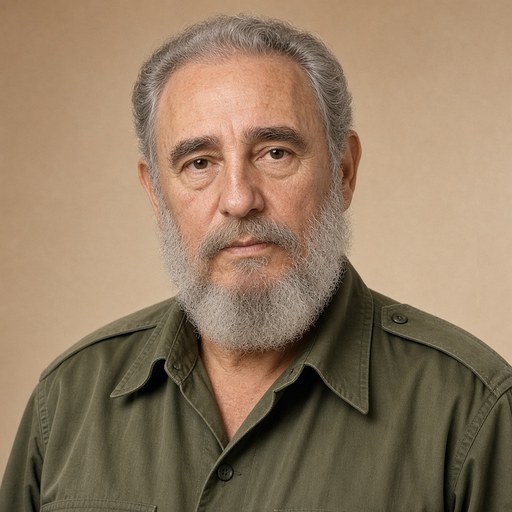
Speech delivered at the Closing of the National Cloister of Medical Sciences, at the "Karl Marx" Theater, on the
 Fidel Castro · President of Cuba
- Context
- Castro addressed the closing session of Cuba's National Cloister of Medical Sciences at the Karl Marx Theater on April 16, 1983, reviewing reforms in medical education.
- Main themes
- Medical education reform, student selection and vocation, national assembly of medical sciences, the Carlos J. Finlay Detachment, Mario Muñoz Advance Movement, universalization of medical education, revolutionary consciousness, specialist and student deployment, demand and discipline in training, Cuba's healthcare development
- Duration
- ~98 min
- Words
- 11,743
- Sentences
- 419
- Readability
- 42
- Grade
- 14.3
- Syntax
- 3.29
- Vocabulary
- 2.09
Translated from Spanish
The broad sphere of national life a sentence belongs to. Every sentence has an Arena, so it is the denominator the other indices are read against.
Other419 sentences in 140 paragraphs
Dear colleagues:
In the previous months, we had always been reminding ourselves of the purpose of holding a National Assembly of Medical Sciences Professors this year, since the first assembly was of a western nature. And encouraged by the results of that meeting, we thought it was appropriate to hold a national meeting this year.
In reality, the meeting has had the quality that we all expected. It could not have been otherwise when a considerable group of men and women with a high level of preparation, a strong sense of responsibility, and a high political consciousness come together.
In the previous meeting, I remember — I think I have a little pamphlet with the speech here — that we talked then about a series of ideas that were already underway, but above all about a series of ideas that we intended to apply in what we considered a true revolution in the field of medical education. And, indeed, the value of ideas cannot be known until they are put into practice. That is why it was very important for us to know how the Detachment was progressing, how the "Mario Muñoz" Advance was progressing, and, above all, how this entire plan to universalize education was progressing, to bring education to all hospitals in the country, to bring education to the municipalities, and even to rural hospitals. It was of utmost importance to know the results, how all this was progressing. And, to tell the truth, everything that has been raised here is highly stimulating to continue down that path.
Following the order in which the issues were discussed, we must begin with some reference to the issue of the "Carlos J. Finlay" Detachment. This already represented a great advance in the selection of students for admission to the medical faculties. And I remember how in the previous assembly several professors expressed their concerns regarding the lack of vocation, the lack of level with which a certain number of students entered medical schools. I believe this filled a significant gap; it was, in fact, a promotion of the young people with the most interest, the most vocation, and the best intellectual, political, and moral qualities to enter medical studies.
We are of the opinion, and we will continue to be, that with the Detachment we must be very demanding. We must be demanding with everyone. We must be demanding with the Advance Movement, although it must be said that the behavior of the current second-year university students and beyond has been excellent. Those who remained — about 50 percent remained — have behaved excellently. This was demonstrated by the First Contingent of sixth-year students who went to Nicaragua, in which a one hundred percent willingness was manifested. And so it was in each of the calls that were made: a one hundred percent willingness. It was demonstrated in the Second Contingent, at the moment of organizing the Second Contingent; a one hundred percent willingness. But, in addition, it was demonstrated when the call was made for the anemic specialties and when the call was made to carry out this revolution, which were the internships in the municipalities and in the rural areas. The response given by the Advance students could not have been better. And thanks to them, this revolution can be carried out; thanks to them and to the excellent response from the professors; and, moreover, thanks also to the excellent response from the specialists, who demonstrated their willingness to work anywhere in the country in numbers exceeding 90 percent of the total. Because we could say that one hundred percent of the sixth-year students showed willingness to go wherever necessary, it was somewhat logical, but it is truly remarkable that 90 percent of the specialists demonstrated the same willingness. That is a huge advance, let us say a genuine fruit of the Revolution and the development of revolutionary consciousness.
However, we must make it our goal that the new generations of doctors have, if possible, an even higher attitude. A careful selection process was carried out for the students of the Detachment, and a special regulation was developed for them. They are the only university students who have a special regulation; they are the only university students, even, who have a uniform. And the basic principle regarding all students, which must be in relation to all students, is especially necessary for these students of the Detachment. And I explained it well to them when I met with them, that we were going to be very demanding with them, that we were going to demand a lot from them in every sense, not only in discipline but also in studies. And I believe there is human quality and revolutionary quality in those young people to be able to continue with this policy of demand.
Yesterday I had some concerns, and perhaps some of the things expressed here reflect that we have a long way to go in our faculties, in our institutes, and in our body of professors, to raise this level of demand. For example, some of the things I heard caught my attention. Some were pointed out here.
Here, there was talk of fraud. I really cannot conceive of a medical student, and even less so one from the Detachment, committing fraud. We already explained the reasons: a doctor is not just any professional; a doctor has to do with the health and life of their compatriots. And if in any activity the attempt to obtain a degree, a grade, through fraudulent means is absolutely unacceptable, and it is not acceptable with any type of student, it is even less so with medical students, and less so with students from the "Carlos J. Finlay" Detachment, and that is why the Regulation establishes severe measures regarding fraud.
I believe that everyone understands this, our people understand it, and fundamentally, the students of the Detachment themselves understand it.
I believe that we must avoid all ease regarding exams, regarding studies, regarding demands. And, really, we prefer quality over quantity. We, of course, desire high promotions, but it must be the result of rigorous work and high-quality work, but above all, the quality of the promotion is more important. We must not forget this principle, the quality of the promotion.
I believe it is necessary to delve into this topic that was discussed, about when there is indiscipline, when there is fraud. I found what the President of the Student Federation expressed very interesting; they have been discussing, it has been talked about whether fraud should or should not be an element of emulation, or they had raised that the fundamental issue was not whether there was fraud, but what the reaction of the professors and students was in the face of fraud. But I think that is a point where we need to continue defining and deepening.
Of course, I cannot wrap my head around the idea of a guide of questions. I remember how things were in my time — which was not this time — and there were some subjects where important questions were prepared, but the important questions could be 20 or 25 percent of the material, and there were professors who strictly adhered to the principle of important questions, and then the students studied exclusively the important questions, and many times did not even read the rest of the material. Undoubtedly, where there is a guide of questions, no matter how important they are, where the student has the certainty that among them the questions for the exam will be chosen, that, without a doubt, is very negative.
Also, the possibility of choosing three out of four questions, or four out of five, does not seem to me to favor the spirit of study and the application of the student. I believe that the student should know all the content of the subject and all the content of the program, and should be examined in relation to any content of the program.
It is also concerning that exams have to be made, or on occasions are made, based on answering class notes, because that is very limited. As if all the students were shorthand writers, and even being shorthand writers, there is always much material in the textbooks that it is not possible to explain in a class, or refer to all of it, to the professor. That is supposed to help understand, to explain a subject, but the subject must then be studied in the texts.
Of course, I understand that in the absurd situation we had, there was no choice but to resort to the notes, since, gentlemen, there were not enough textbooks or there were no texts. One of the problems we encountered when we began to delve into the issues of medical education and as a result of the work of the commission chaired by Fernández, one of the first things that appeared were the texts. Then, there was another absurd thing: the texts had to be returned, they had to be returned at the end of the year. It is assumed that the text with which one studies must become part of the first books in the personal library of each professional.
Tell me about that famous biochemistry — and that biochemistry has been causing headaches for a while, because since "Victoria de Girón" was founded, I passed by there and heard students talking about biochemistry and biochemistry — with its quantity of formulas, with the complexity of the subject, that many times the student needs to mark, highlight, underline; the book cannot be untouchable, much less for someone to really study a book. Imagine what book he leaves to the one who comes the following course, full of lines, scribbles, marks. It was absurd.
That is why one of the first steps we took was to coordinate with the Ministry of Culture to guarantee the books for medical students. I say: "Let's start with those of the Detachment, when the course begins, all the books must be there, all the books of the first year and, if possible, all the books of the Faculty of Medicine." And I believe this principle must then be applied to all texts of all university faculties. Of course, one cannot expect to resolve everything first in order to resolve a part; we will start with those of Medicine. And with great effort, we managed to print all the available books for the first year. And the criterion was adopted to sell the books, and it was not fundamentally for economic reasons, because these books are sold cheaply; it was so that the student would appreciate them more, would keep them, would take care of them, and would preserve them as their property.
I believe that we even encountered constitutional problems, because there was talk of the books, and what we were doing was lending some books; so, well, the concept was changed: some books, if not sold, at least in usufruct for life. We did not want to violate the Constitution. And that is still pending some interpretation, but it was decided to sell the books to the students.
Someone made a mistake in the first days and did not tell the students anything. I say: "Go over there quickly and explain to them that these books, like the uniforms, are sold." I believe the collection of first-year books cost forty-something pesos, selling them practically at cost with a small additional percentage, which was supposed to be the distribution costs, etc.
But we started by solving the problems of the books. I really cannot conceive of a medical faculty without books, it is inconceivable! And we set out to solve that problem, so that they have the texts.
Of course, a lot of work needs to be done in that regard, and here the importance was already pointed out, as well as the capacity we have to draft those books by individual professors or groups of professors. That is another area where we need to make a great effort, to create good textbooks. This does not mean renouncing other books.
There may be some case of a very classic textbook that we use, because we should not be chauvinistic in these matters, and where a book of optimal quality appears, that we can translate and print, we translate it and print it. It does not mean that this has to be an absolute principle that all texts must be ours; it may be that on occasions we use texts written elsewhere and, above all, we will always need classic texts for reference, we will need them!
So this issue of books is fundamental, and an even greater effort is being made and will be made in this regard, because everything that has to do with the information and the possibilities of information for students, professors, and doctors is fundamental. And in that direction, work is being done. We started doing it with the biology front, with a good library of the biological front, using certain resources that allow even from Baracoa to request any information, and that in a matter of hours, or at most in a matter of days, they have the information there. A system with computers, computers that we hope will have a good information bank and that, in addition, can connect with the computers of socialist countries, to receive via satellite information that interests us from abroad.
A science and technology library is being created in the Capitol, very modern, with all the resources, and with the same principles. It will also have some medical texts, although regarding medicine we plan to create a special system, specifically for medicine. That is to say, we will have the science and technology library and we will have the information center for medicine. This means that we will not lack texts. And there is a whole program —I will talk a bit about that later— in this regard.
This is the type of concern that I was left with yesterday: related to discipline, fraud, and evaluation methods. I believe this is another point where we need to delve as deeply as necessary, and we, as professors, must demand that our students be rigorous, that they be as demanding as necessary, so that we can guarantee the quality of our future doctors.
This also implies a great effort for self-improvement on the part of the professors themselves, because in your hands lies the success that we can achieve; in your improvement, not only as professors but as doctors who participate in care, as eminent professionals called to set standards in our hospitals, called to elevate the quality of care. Because when we talk about the improvement of the thousands of medical science professors, we are also talking about the improvement of our medical care. In that double sense, the improvement of the professors is of enormous importance. We also need to be very concerned in the future about the improvement of doctors who are not professors, and we will have to establish systems for the advancement of our doctors. It is essential, because medicine evolves constantly, and one cannot keep up with medicine without constant study, without constant improvement. And we must create the mechanisms to achieve these objectives.
Everything that has been raised here about the success of the internships in municipal hospitals is truly encouraging. This is a very new idea, implemented after last year's faculty meeting. It was necessary to work hard, to make a great organizational effort, to create conditions, with the cooperation of the Party and the People's Power in all provinces, who were extraordinarily interested in this idea and supported it, because they were aware from the very beginning of how much it meant for medical care in the provinces, and they really provided great cooperation. I believe this is a revolutionary step, unique. It seems to me that we are the first country to implement such a policy, where we convert all municipal hospitals into teaching hospitals. The idea seemed bold, but life is proving that it was possible to carry it out. And the results, from everything that has been said here, are evident; and not only from what has been said here, but from what the comrades from the Party who work in the field of medicine say, from what the comrades who work in the People's Power express: that this has meant a great leap in quality. And it was seen, it was deduced, from the moment that eminent professors began to participate in the activities of the municipal hospitals. Moreover, the level, the prestige that this formula gives to those hospitals, the peace of mind, the security it provides to the population, how it improves services.
And this idea continues to evolve, because so far it is about the teaching of interns; but we intend to extend it to the teaching of residents, in all those specialties that can be learned and developed there. We will not mention cardiovascular surgery, ophthalmology, but obstetrics, pediatrics, general medicine. Because I continue to insist on the idea, which has not been discussed here, but I continue to insist on the idea of converting general medicine into a specialty. The comrade from Cienfuegos referred to what the best quarry was. Work is already underway to define the profiles of this career, how it will resemble the internal doctor and how it will differ from the internal doctor; what a general doctor will be, what name we will give it. When I want to name it somehow, I call it clinical. I do not know if it is the best name or the worst, it will have to have some name; but the idea, in essence, is that the general doctor also does their residency, and is a specialist, has the status of a specialist and has all the social considerations that a specialist has. This entails the idea that in the future all doctors will also have the status of specialists, even those who are general doctors, who today are considered as such if they started surgery and did not finish, if they started another specialty and did not finish, if they studied for six years and then did not do any other type of systematic study. It is assumed that this general doctor will have to do their six years, their practice, and, in addition, their three years of residency, at a minimum. If we have extended teaching to municipal hospitals, this facilitates it for us, because we want every medical student to have the incentive to rise to the status of specialist. And that comrade we send to Ocujal del Turquino, or to any other rural hospital, knows that there they can also perhaps become that general doctor, doing their residency, or a pediatrician, or something.
I really like the idea of the general doctor as a specialist, because while in other subjects, in other specialties, we may encounter the limiting factor of numbers, with this type of doctor we would not have the limiting factor of numbers, since it is the doctor that can be needed anywhere; for international cooperation, it is an ideal type of doctor. But if you were to send a doctor to a camping center —and there will be hundreds of centers— what doctor would you send? A pediatrician, a general adult doctor, a surgeon, a radiologist? You would simply have to send this specialist in general medicine, who also knows a bit about children, about adults, and about everything they need to know. If you are going to send a doctor to every factory —and there is no doubt that every factory collective would feel very reassured having a doctor there, in any sugar mill, even if there is a polyclinic nearby, knowing that there is a doctor in the mill, who can help if someone has pain here, or here, or anywhere, and has the doctor there, a doctor who can also save a life in a certain circumstance— you would send a clinical doctor. If you have to send a doctor to a basic secondary school, you have to send this type of doctor. If you decide one day, or the country decides to send a doctor for every block, like the Committees for the Defense of the Revolution, what doctor would you send there? So this is the type of specialist, with a broad field, that can really serve to create a complete health network, and whose number would have no limits. If you are going to support any underdeveloped country, logically you have to send some specialists, there will always be a need to send the surgeon and the anesthetist, and the radiologist, etc.; but above all, what they need are these general doctors, who we aspire to have a high level.
That is why we are so interested in this specialty, whose profile is being defined, and then we will see where it comes from, it can come from general adult medicine, or it can come from those who do the rotation.
And it facilitates us that if hundreds of young people, or thousands of young people are out there in the field, in rural hospitals, as a recognition of society to those young people, it can tell them: while you are there, which you will be for three years, if not from the first year, at least from the second year you start to do your specialty, and even better if we tell them to start doing the specialty from the first year. That is the idea, even bolder, of taking the residency to... what is the name of the little town? Ramona, Cayo Ramona, taking the residency to Cayo Ramona, not only to Jagüey Grande, but also to Cayo Ramona.
I start from the principle that we will not have an excess of doctors; but if one day there were so many doctors, and the phenomenon occurred that doctors start to be in surplus, we can do different things: from limiting enrollments, there is plenty of time for that, a lot of time, and it is not known when, and dedicate faculties to medical advancement. If we are going to have 18 or 20 faculties, it will then be very good to say: wow, now we have a stock of 5,000 surplus doctors, which is a wonderful thing. That means we can put 5,000 doctors to study every year, and the others occupy their positions.
From a national point of view, it would take us many years, and I do not foresee when there would be an excess of doctors; and, from an international point of view, I see clearly that there will never be an excess, because it is not about having students in universities, the serious problem, and you know it perfectly well, is having doctors who go to the field, is having doctors who go to difficult places, and we have the privilege of having doctors who go to Kampuchea, to Laos, to Vietnam, to Yemen, to Ethiopia, to Mozambique, to any place, to the Sahara, to the Sahrawi Republic in the desert.
That is a great privilege, it is a great achievement, it is a great honor, it is a great pride of the Revolution, that as we are already accustomed to things being as they should be, to revolutionaries acting as they should act, that is why we see as the most natural thing in the world that comrades from Cayo Ramona, from Ocujal, from Baracoa, from anywhere, stand up here, and that comrades from Nicaragua speak, and speak in the way they did, as the comrade spoke, as the companion spoke, with seriousness, with weight, with a consciousness overflowing with satisfaction, aware of what it has meant for their formation as integral men and women, their formation as revolutionaries and their formation as doctors. That is already something natural within our students and our people. They represented nothing less than 200; but if instead of 200 it had been necessary to have 500, the 500 would have been there doing exactly the same; if it had been necessary to have 1,000, the 1,000 would have been there. And I believe that says a lot about a country, about its moral quality, about its human quality, about its spiritual strength.
Because before, and a comrade reminded me a few minutes ago, what we had to do and how much we had to plead for the triumph of the Revolution, to have doctors to send to the mountains, and there were none. It was the newly graduated students, fundamentally, that we could send to the mountains, from where many of the public health cadres and many of the best doctors we have today emerged, and many who became political cadres and can no longer be counted on as doctors.
And today we have 100, 200, 500, 1,000, to wherever. And we are no longer only talking about Nicaragua, we are also talking about a group that next course will go to Guinea Bissau, 20, to do the internship in Guinea Bissau; and another group in Ethiopia, a small group, but we will also have an internship in Ethiopia. And to the Sahara, we sent a group last year, not this course, but the previous one, they already graduated as doctors there in the Sahara. And we have a wide field. But that is the type of doctor we wanted to form and that we are forming.
I had also thought about whether they could do the residency there; we are discussing with the Nicaraguans and studying the possibilities; because I am particularly concerned about some of the students who have to do surgery, some of the so-called anemic specialties, that if they are doing two years of rural medicine, it would be two years that, excellent kids, selected, would have to wait before starting to do the residency. That is why I think we should at least try to ensure that some of those comrades can do their residency abroad, precisely so that it does not take too long, especially in some specialties; not for the one who is going to be a pediatrician, because they will be constantly dealing with children; but for the one who is going to be a surgeon or some other specialty, a specialty like that which requires manual skills, or some other anemic specialty, that the country loses a lot of time before being able to have those specialists.
All these ideas are in full development, not everything, everything, everything is elaborated; but they are developing with absolute sequence and absolute logic.
We have talked about this issue of special skills, which perhaps will be the ones that require preparation from the earliest time after the anemic ones are covered. A professor has already spoken about what he is doing with a group of students. We have even talked about starting to do that from pre-school or from secondary school in scientific-technical interest circles, with boys and girls who have special vocations, to guide them from a very early age in that direction. I previously gave the example of musicians and dancers, who are put to dance from the age of 8, and the musician to study from very early on, those that require special qualities. When we delve deeper, I am sure we will discover specialties that require starting very early to acquire those manual skills; I think that surgery, logically, will be one of them.
In this whole program, it was also necessary to change some old things that had been happening, such as the case of those who came through the worker route, as workers, where they admitted up to 35 years to enter the Faculty of Medicine. We have set a limit of 25 years.
There used to be a certain privilege for health workers, which other workers did not have; they could work in any public health activity and had a certain priority. Today we have set aside that priority to allow entry for health technicians, and it is one of the pathways for those young men and women who could not achieve the required averages but have a strong vocation to pursue a career as a health technician, and before the age of 25, through an exam, to enter; and the pathway is also open for those young people who have completed their General Military Service and have a special vocation for the medical career. This means that the only way to enter will not be through pre-university students, but these two pathways will remain open. Those problems have already been overcome.
I believe that since the medical career is a field that requires so much knowledge, it is not logical to enter medical school at the age of 35; it does not mean that it is not possible, what I am saying is that it is not logical. In the Armed Forces, for example, there is an age limit for entering the Armed Forces cadet schools, and there is also a limit for remaining in the Armed Forces.
In these areas, we have made considerable progress with this revolution in teaching. And it seems to me that it promises a lot for the country, it truly promises a lot.
Someone said yesterday, with very good judgment, that if we focus on the human aspect, on the moral aspect, on the quality of our medical students, our doctors, our medical professors, we are beginning to become a medical power; because we could calmly ask what other country has this revolutionary availability, this human availability that we have today, and man is and will always be the fundamental factor. Of course, material resources are needed, technology is needed, all of that, but we have the human foundation; and if we have the human foundation, everything is possible, everything is possible.
However, this requires that we are very aware, at every moment, of our limitations: at what point we are strong, at what point we are weak, at what point we need to advance more. And I would say that in almost all areas we need to advance much more.
We are working in this direction, without neglecting anything, and the purpose is firm. And with this subjective advantage, it is logical that we can reach and surpass many developed countries in the field of Medicine, which have wealth, have the material foundation, but do not have the social possibilities and do not have the human factors that we have.
And of course, one of the essential things is the quality of teaching. We should not start from the presumption that we know everything, that we have to invent everything, that we have to develop our own experiences. On that path, we would not achieve our objectives. We must analyze the complete international experience, the experience of all socialist countries and the experience of the most developed capitalist countries, both in the field of teaching and in the field of assistance. We know the tremendous problems that these latter countries have, which we do not have, and the first of all is private medicine, and the tremendous contradictions they have; even in countries where there is an advanced distribution of wealth, where large resources are invested in social assistance, they encounter problems such as, for example, many professors have private beds in hospitals — I do not want to mention countries, because it is not convenient for us to raise issues against anyone — private beds, and despite having very advanced social assistance, there are cases of patients who, if they go through Social Security, have to wait 40 days; if they go to a private doctor, they are attended to the next day and all their problems are resolved. And they have created tremendous interests and antagonisms, which prevent them from having a program, a whole development plan, as we can do, without anything limiting us, without anything obstructing us. They may limit us, in a certain sense, by economic resources; our own incapacity to carry out our objectives may limit us, but we have no social obstacles that prevent us from reaching any goal.
And thinking that we have to gather the best experiences everywhere, after the faculty meeting at the end of last year, we organized seven delegations of professors to visit the best universities in the seven countries that we considered the most advanced in the field of Medicine. They were Czechoslovakia, the USSR, Sweden, England, France, Canada, and the United States. We sent our delegations of professors, I will not say as spies, we were not spying, we were exploring; they were our group of explorers, with very concrete, detailed instructions, to follow a common line regarding all the issues that interested us: programs, content of all programs, evaluation systems, duration of the career, audiovisual means, new techniques for teaching. Of course, we discovered in the socialist countries more uniformity, more state participation, the national character in the programs, in various aspects. We discovered in the capitalist countries a great diversity; almost every university had its own program, minimal state participation, and very famous universities with great resources.
They studied everything, in order to assess and utilize what would be useful for us in the work of analyzing and reworking the programs. All of this takes time, as is known. Programs, no matter how perfect they are, need to be changed and updated every few years, as some countries do, especially socialist countries, and it cannot be otherwise. But for the study of our programs and the development of our programs, we are gathering the experience of the best universities in the most advanced countries in the world, where we placed special emphasis on any detail: which ones use audiovisual means the most, what audiovisual means, who is more advanced, and they discovered many interesting things, including some programs for medical advancement through computers, where a small number of people handle the equipment for courses sent to thousands and thousands of doctors. Thus, in a constant updating, in a constant improvement.
And we will try to assimilate from all these explorations what we consider useful for us and apply it; we cannot wait 50 years to invent what has already been invented once, twice, or three times. We must appropriate everything that is useful. And it must be said that everywhere our delegations were very well received, with much respect, much interest, and much cooperation.
In the subjects, some use texts, others use lectures; there each teacher truly has their little book.
And each of the delegations also came back with hundreds of books, textbooks and reference books from those universities.
Here is a summary of the work — I will not read it to you. They even make some recommendations already. But there is a report compiled for each country, and all the data, and the colleagues who participated in those delegations will have to work hard now, when the time comes to elaborate the programs, the changes that we must gradually introduce. They also had the opportunity to observe issues of assistance and advances in certain techniques.
Now, the same thing we did with teaching I think we should do with the different specialties, because there are countries that have remarkable advances in diagnostic techniques, remarkable advances, that we need to start mastering to apply in our country. And we will do the same; we will see: this one is very strong in this specialty, this one in another, this one in another; apart from our investigations, our modest investigations. Because there are thousands, tens of thousands, hundreds of thousands of technicians and scientists working in medical research, and I have no doubt that in the next 20 years there will be great revolutions in medicine and in the fight against many diseases, including, of course, cancer.
We are also developing certain research centers, working also in genetic engineering and in some new techniques. It is not very difficult; it is more difficult to develop in metallurgy or petrochemicals than to develop in the fields of biology. We took about three months to produce interferon, from the moment we heard about it until we produced the first ampoules here. And we are working in genetic engineering, in tissue culture, and in other areas.
Now we are fighting to try to obtain an international research center on genetic engineering, which is from UNIDO; we have hopes. At least we are working to see if we can get Cuba assigned as the headquarters for that research center. But if we do not succeed, rest assured that we will create similar centers; no one should doubt that. We will not fall behind in the field of medical research and in the field of research on all these biological products, which are the ones that will set the pace, will outline the path in the coming years.
But there are tens of thousands of scientists working, and we must keep up to date with respect to that work, with respect to that research and with the application of those discoveries, making our contribution, and we can make quite a few. But, in addition, we must ambitiously gather all the achievements that can be reached everywhere in the field of medicine.
That is why it is required — as someone said in this Faculty — a great preparation of our professors, a great preparation of our doctors. The combination of teaching, research, and assistance. I believe that all these realities should indicate to us the need to achieve a maximum level of preparation, to have a collective of professors, doctors, and researchers of the highest quality, of first-rate quality. It is in our hands; if we set our minds to it, we will achieve it.
I was remembering something when we talk about the preparation of medical personnel. There is something with which we cannot be satisfied, and we refer to the very small number of students in the Nursing Degree program; I believe there are about 500 students. We must study what the difficulties are and significantly increase the number of students in the Nursing Degree program; 500 is very few. We must try to ensure that as many nurses as possible become graduates; otherwise, we will be left with a weak leg. It is another point to which we must pay attention, just as we are paying attention, for example, in biology, to the training of new personnel, also very selective, of very high intellectual level, which we are promoting at the University of Havana and others, and of all the technicians: engineers and auxiliary medical technicians.
Here I have some data regarding what is being done with books.
In 1982, measures were taken to ensure that at the beginning of the 1982-83 school year, all medical students could have the necessary textbooks — I already spoke about this — with approximately 480,000 copies produced by the Ministry of Culture.
As I said, the books will be sold to the students.
For 1983 — this year — a plan for textbooks of 802,400 copies has been projected. For the first semester, 62 titles, with 522,000 copies; for the second semester, 15 titles, with 239,000 copies. This textbook plan includes practice brochures, programs, texts for medical teaching, books for interns, and the standards of the specialties, and guarantees the sale in the next course of all textbooks to all students, including the Second Contingent of the "Carlos J. Finlay" Detachment.
A module of reference books, for import, was prepared for the libraries of all municipal and rural hospitals, as well as 13 modules for Nicaragua.
Given the high cost of editions of scientific books recognized for their quality and necessity, such as textbooks and reference books for interns, residents, specialists, and professors, an agreement has been established with the Ministry of Culture to carry out a reproduction program for these. This program will cover approximately 200 titles, of which 60 will be published in the second semester of this year. The first of these has already been completed, "Conn's Therapeutics, 1982," with 20,000 copies, which you have available at a low price. Twenty pesos is not much, right? For a book like that, which is renewed every two years. Even I got one of those little books.
The Ministry of Public Health approved the creation of the Medical Sciences Publishing House, which should respond to the needs for scientific publications related to medical sciences in the country.
A framework of 167,000 pesos was approved for the purchase of books in the capitalist area intended for libraries, reprints, and acquisition of these for sale to specialists and residents of those specialties that, due to their small number of professionals, do not justify a national edition. But we are going to work on this and will pay close attention to matters related to textbooks, reference books, etc.
Since last year, some reforms have also been made: the salary scale was applied; we still have the issue of family members who, however, are not doctors. I explained yesterday the reasons that troubled us regarding this, but we hope to find some solution, which is the only accepted discrimination, the only one!
Regarding our health program, investments continue for assistance, for teaching, for the pharmaceutical industry, and for electromedicine workshops. The investment plan approved in 1982 for health works, medical teaching, and the pharmaceutical industry amounted to 33,429,000 pesos. This figure was subsequently increased by 19,584,000 pesos from the state reserve, from funds that are reserved every year and can be used to meet many needs. Most of it was dedicated last year to the field of public health, with the aim of prioritizing the advancement of committed works, fundamentally for the new faculties of medical sciences, the classroom modules annexed to teaching hospitals, and a set of other health buildings that were being constructed.
All of the above led to the 1982 plan being raised to 53,013,000 pesos, of which a real execution of 51,763,000 pesos was achieved, for a national compliance of 98% in values.
The breakdown of what was executed by type of work is as follows: assistance works, 42,147,600 pesos; medical teaching, 8,431,000 pesos; pharmaceutical industry, 1,184,000 pesos.
In the current year, 1983, the planned investment plan in directive figures exceeds 54 million pesos, to be executed in a total of 168 works, with the breakdown of this value as follows: in assistance works, more than 32 million; in medical teaching, 12,684,000; in the pharmaceutical industry, 6,277,000; in other buildings, 2,113,000. As can be seen, for medical teaching, values higher than in previous years are proposed.
In 1983, four new faculties are beginning to be executed in Ciudad de La Habana, which will be annexed to large hospitals. Also this year, the planned investment for the development of our pharmaceutical industry is prioritized, and the construction of warehouses for the distribution network of medicines and electromedical equipment begins, as well as new electromedicine workshops.
As you know, we lean towards the idea that each faculty should have its basic sciences, and one day "Victoria de Girón" will become a faculty, which will be close to "Finlay," the ophthalmology hospital, the maternity hospital, the clinical surgical hospital that will be built in the future near "Victoria de Girón," and the very modern pediatric hospital in Marianao, which will also be built near that area, around Ciudad Libertad, which begins construction this year. So that faculty will have a large hospital area; and all the others will have their basic sciences. It makes no sense for students from Guanabacoa, from all those places, to have to come every day to "Girón" for classes.
The installation, maintenance, and repair of electromedical equipment in health institutions must be of high quality. This entire process has been analyzed, and proposals for a new form of organization have been made.
It is proposed to build a network of electromedicine centers that includes: one national center, 13 provincial centers, 24 territorial centers; electromedicine services in research institutes and in hospitals with more than 300 beds. An investment program has been developed to be executed in the next three years, with an approximate value of 8 million pesos. The number of engineers and mid-level technicians needed for this activity in the next five years has been determined, as well as the need for retraining the professional workforce currently available.
Health development program: national program for the expansion and development of pediatric hospitals. This program, which began in July 1981, following the dengue epidemic, includes the following objectives: construction of pediatric intensive care units; expansion and improvement of current pediatric hospitals; construction of four new pediatric hospitals in Marianao, Bayamo, Ciego de Avila, and Sancti Spíritus; ensuring the start of the four hospitals this year. These are the first pediatric hospitals built by the Revolution, because the others were adapted hospitals. This is a very modern, very functional model, and the same type that will be built here is the one that will be built in Ciego de Avila, in Sancti Spíritus, and in Bayamo, to complete the network of pediatric hospitals.
Among the investments being executed by this program, the following stand out: construction of 31 intensive care units, with 232 beds, of which 25 are completed, 4 are under construction, and 2 are in project.
During the year 1982, in the first 15 intensive care units that came into operation, 3,172 patients were treated, of which 205 died, that is, 6.6%.
To date, 59 specialists in pediatrics have been trained as intensivists, more than 300 nurses, and 50 laboratory technicians. Work must continue until the entire staff required for this service is completed.
In the expansion and improvement of current pediatric hospitals, the construction of 13 specialty polyclinics annexed to the same number of hospitals is being executed. New inpatient wards are being built and remodeled in more than 16 hospitals, which will allow for an additional growth of 700 pediatric beds. New surgical rooms are being improved and built in more than six hospitals, and capacities in kitchens, dining rooms, general services, etc., are also being expanded.
Along with this program, hemodialysis services have been created in some pediatric hospitals; the experience obtained to date in the pediatric hospital of Centro Habana, where 444 hemodialyses have been performed on a group of chronic patients and 19 acute ones, has yielded highly positive results.
To date, the value executed in construction and assembly for the achievement of this program amounts to 17 million pesos. And it is expected that in 1983, around 9 million more will be executed.
Thus, the network of pediatric hospitals will be complete, modernized, and the four new ones. Of course, this requires resources, which those people in the pediatric area are asking for! Yesterday I was reading a list of the equipment, including some X-ray equipment that costs 350,000 dollars, which is quite pricey. And since I have taken on the task of seeking funds for all these development plans, I find myself quite pressed; and I mobilize heaven and earth, and appeal for international cooperation, and we try to seek funds through all avenues with these countries, not only with brother countries but with countries that have friendly positions with us without being socialist. And thus we have obtained some aid for medicine, for public health. And we continue to do intense diplomatic work in favor of medicine. And some sources of income that are set aside for medicine.
As I am optimistic, I think we will solve the problems. Because you also have those in rural medicine, they require one and a half million dollars for their X-ray and laboratory equipment that they are asking for. And we plan to resolve that; we have some little funds there, and we are going to solve it in those hospitals. I believe that within a few months they will have them in the pediatric hospitals. And regarding what they are asking for the rural hospitals, for the pediatric ones, we need to conduct a study, one by one, of the items they request, and equipment by equipment, in the coming days, so that they are good equipment, suitable equipment, and equipment that is used in a rational manner. But in the investment, in addition to what was made in intensive care in relation to the expansion and remodeling that has been done of the pediatric hospitals, relatively high amounts in convertible currencies are required.
On the introduction of diagnostic ultrasound.
The diagnostic ultrasound program includes the extension of this service to 63 healthcare centers in the country, with 70 machines — all the equipment is already here, all the personnel is prepared — of which: 24 clinical-surgical hospitals, 17 maternity hospitals, 3 pediatric hospitals, 12 municipal hospitals, and 7 national institutions.
Until September 1981, only nine hospitals in the country had these machines, concentrated mainly in Ciudad de La Habana. In the short span of a year, the goal of training 68 radiologists in this new technology was achieved, who are now working in their respective hospitals. Additionally, training courses were conducted for the maintenance personnel of these machines.
Data obtained until February 1983 show that by that date, 177,000 patients had been examined by general ultrasound, 29,000 pregnant women, and 2,000 patients in heart examinations (echocardiography).
I even had one of those ultrasound exams of a certain type, and you can see everything. You can see everything with a little television next to it. That is the one mainly used for heart matters. But it registers everything: the gallbladder, the pancreas, the liver, intestines, everything. They even get the prostate with this, they register it! Besides that, the heart, gentlemen, the heart! Sometimes looking for that little gap — as the doctors say — here, and sometimes down here; but they get it all: the ventricles, the arteries, how they function, if they are normal, if they are not.
That equipment is incredible, the tremendous utility it has and how economical it is, because they don’t have to be using plates. Well, they can even discover if the baby is a boy or not, even that, gentlemen! Because I know the case of Núñez, who was going to be a grandfather, and how a month before the baby was born, he made a tremendous fuss; because since all of Núñez Jiménez's children are girls, a grandson was coming, and they found out by ultrasound a month before. So the surprise disappeared.
It is truly an excellent piece of equipment, of extraordinary utility. And I think it speaks in favor of the advances of our medicine, that in just one year all the equipment for 63 healthcare centers has been acquired, in just one year, and the personnel has been trained and the equipment is already functioning. I would say it is a revolution within diagnostic technique, one of the many that can be introduced. And the cost was not very high: 1,800,000 dollars. That is to say, this is the typical case of a great innovation, of a great resource with a relatively small expense.
Now: cardiovascular surgery development plan.
With a view to developing in our country, in the shortest possible time, a cardio-surgical care system capable of responding to national demand for this treatment with results comparable to those of developed countries, a program has been planned that projects the development of this service in the following centers: Institute of Cardiovascular Surgery, "Hermanos Ameijeiras" Hospital, "William Soler" Hospital for children; "Luis Díaz Soto" Hospital, Provincial Clinical-Surgical Hospital of Santa Clara, Provincial Clinical-Surgical Hospital "Saturnino Lora" Santiago de Cuba. Here it cannot be extended to other provinces, because they need a certain number of operations every year, a minimum limit.
This is to meet our needs and the growing external demand. Later, some Latin American countries will surely ask us for collaboration in this.
It is considered that once the set of services mentioned above is stabilized, more than 500 patients can be operated on annually — these patients have to be sent abroad today. Due to the high level of development achieved in Czechoslovakia in this specialty, collaboration has been requested from that country for the training of our personnel.
The estimated cost of the equipment required for the implementation of this program is as follows: medical equipment and complementary materials, 5,032,312 dollars; non-medical equipment, air conditioning, and others, 1,772,000 dollars. That is to say, in medical equipment and materials, this costs about 5 million.
Currently, work is being done on completing the personnel required for this program, as well as on their training. Additionally, the executive projects for the new facilities have been prepared, with a view to ensuring the gradual start-up of all services, no later than in 1984.
Development of the specialty of hematology and blood banks. There is also a program for modernization and development; several are being built.
This year, the construction of a building for the Institute of Hematology and Immunology begins. The construction of the plant for the production of blood derivatives, supplied by the Soviet Union, should be completed this year.
Improvement of optical services. Another task that has been carried out during this period. For a year now, work has been underway to address issues related to optical services and the acquisition of glasses, which have been affecting our population. Among the measures taken in response to this situation, we can point out the following — because we conducted an analysis of how this problem with optical services was progressing and the issues faced by the population, we delved into them, discovered a series of difficulties, and began to take measures. It is also costly, because all of this costs money.
Acquisition of lenses. We acquired 886,702 pairs of lenses in addition to what was in the plan, because there was a deficit, and materials for their cutting, at a cost exceeding 1,625,000 dollars, which has allowed us to significantly reduce the backlog in deliveries, with the same facilities. In Havana, where 3,500 to 4,000 orders are received weekly, we have managed to reduce the pending orders from 28,000 at the end of 1982 to 8,000 at the present time.
Frames. We acquired 200,000 frames for women and children, which will soon be put on sale in optical stores, as well as materials to increase the national production figure at a cost of one million dollars. In 1982, approximately 825,000 frames were produced in the country, which doubled the figure from the previous year. We will soon proceed to purchase a line of hardware and equipment to expand the installed capacity and improve the technology and quality of the frames, which is still deficient.
We acquired the necessary equipment to modernize most of our optical services, at a cost of 500,000 dollars — there were optical services whose equipment dated back 35 years —; this equipment is already in Cuba and training for personnel on handling and maintenance will soon begin, followed by installation.
We also acquired the necessary equipment for the modernization of provincial prescription workshops, at a cost of 1,500,000 dollars, with part of it already received. Work is currently underway to remodel a central workshop in Havana and to construct or remodel workshops in the provinces, as well as to remodel optical services across the country, many of which are already completed. The necessary transportation for optical activities has been provided to the province.
Currently, a workshop for cutting, starting from raw glass, to produce lenses is in the process of being contracted through the State Committee for Economic Collaboration. We are also studying the feasibility of producing optical glass in the country, in collaboration with the GDR. That is to say, we are going to set up a workshop for cutting, because the raw material costs 20% less if we cut it here; it costs 4 or 5 times more when the cut material is purchased, and this is a matter of machines that do that work, to save what we have to spend every year on cut lenses, which almost all come from convertible currency areas. But we are also studying a factory to produce the glass, because we have excellent quality raw materials for it.
We will receive a machine for coloring lenses on a trial basis — anti-reflective coating. The purchase of equipment and technological updates in Spain has been authorized to improve the production of contact lenses. We received advice from Czechoslovakia for the development of soft contact lens production. The acquisition of plastic lenses for a limited number of patients has been authorized to assess future possibilities for these in the country.
Development perspectives for specialties.
At the present moment, work is being done on the development perspectives of some specialties, and we must accelerate this work if we want to become a medical power; work has already begun in microbiology and clinical laboratory, so that both can reach an optimal level. This is a point where we are weak.
Progress has been made in some areas of pediatrics such as intensive therapy, pediatric nephrology, and ophthalmology, addressing optical issues, so we must develop a complete plan for the development of these two specialties.
The radiology specialty has benefited from the introduction of new technologies such as diagnostic ultrasound and computed axial tomography. The future acquisition of radiological equipment for rural and municipal hospitals, as well as for institutions at other levels, will further improve this discipline.
Work is being done on the cardiovascular surgery program, hematology, blood banks, nephrology, the Institute of Tropical Medicine, genetics, and immunochemistry. In addition to these specialties, we must work in the coming months, as a priority, on the development plans for internal medicine, surgery, gynecology and obstetrics, and pathological anatomy.
The development of the four major specialties: Internal Medicine, Pediatrics, Gynecology and Obstetrics, and Surgery, and the fundamental diagnostic means: laboratory, microbiology, radiology, pathological anatomy, will significantly improve our level of care in all health centers, benefiting the majority of our population.
We must also progressively work on the rest of the medical specialties and in stomatology, to achieve their development, according to the availability of resources and our needs.
We intend to make a small foray into the field of stomatology, as we did in optics, to see what problems they have, what can be done, in what direction we should work. I am sure that when we delve into it, we will discover problems and we will discover possibilities. But in reality, we have to work in all specialties, in all; what is being done with ultrasounds, what will be done with surgery. Programs must be organized based on the personnel of the national teams of the specialties. I have the impression that it is necessary to emphasize this work, one by one all the specialties, to see what their immediate and future fields of development will be; what the international technical level is, what level we are at, and what we can do and in what time to reach the appropriate levels, the best international levels. But this requires effort, specialty by specialty.
As fundamental aspects to which this work should be directed, we must point out the following: training and improvement of human resources, equipment and technological development, scientific-technical information, coverage and organization of services.
There are times when we have scholarships in different countries for different specialties, and many times we do not use them; sometimes we use 20, 25, or 30% of the scholarships. We must not miss a single opportunity; we must relate internationally in the field of medicine; take advantage of all the scholarships offered to us and obtain more scholarships; prepare ourselves and, of course, stay up to date with all advancements.
Among the fundamental tasks being developed through the Biological Front in support of health, the following stand out: the preparation of a project for a new center for the production and research of human vaccines, which should begin construction next year; the implementation of a program for research on human vaccines and support for organized research teams with the assistance of different agencies; the setup of an experimental laboratory for the production of meningococcal vaccines; remodeling of the biological company "Carlos J. Finlay."
In the area of vaccines, we must work hard. As you know, we have the issue of meningococcal meningitis, which affects a growing number of people, with a high mortality rate, and which has us very concerned. By making efforts, coordinating with the Soviets, an attempt was made at a triple vaccine, which did not yield the expected results; work is being done on the famous B serotype or B14 vaccine, because that is the one affecting us at this moment by 90%. On one occasion, vaccines against serotype C were brought in, and the problem was resolved; we hardly have any of that type. But there is no vaccine in the world against this serotype that is affecting our country and many other countries, and which is showing an increasing incidence. It is a problem that has us thinking a lot, if there are any usable methods in case of an epidemic. But this case of the same disease, which is a sword of Damocles over the country, demonstrates the importance of seriously and deeply developing all these works and vaccine production centers. That is one of the fields where we will work hard.
Preparation of a project for a center for the production of laboratory animals, free of pathogens, which will begin construction this year at an investment cost exceeding 20 million pesos. This is called the National Biotherium, which is essential for both the production of medicines and for research, and it is a complicated center, how to achieve those animals free of pathogens.
Advanced technology diagnostic program. Work continues on the development of the Kappa equipment for immunochemical diagnosis of diseases in humans, animals, and plants. This advanced technology equipment constitutes a micro-analytical system coupled by computers, which allows us to carry out mass screenings for rapid diagnosis, with great reliability and at minimal cost for reagents.
Steps have been taken to guarantee, starting from the end of 1983, and within a period not exceeding two years, the supply of such equipment to all provinces of the country.
Development of medical genetics. This program is directed at three fundamental aspects — research, assistance, and teaching — with its main objective being the introduction of modern methods to increase the diagnosis and prevention of genetic diseases.
Among the tasks carried out, the following stand out: development of a pilot plan for the mass detection of open malformations of the central nervous system, using Kappa equipment and ultrasound. The results obtained in one year were as follows: 20,000 pregnant women between 15 and 19 weeks were analyzed in Havana and Matanzas; 47 fetuses with various anomalies were detected; genetic counseling consultations were offered, and pregnancy was interrupted in 24 cases at the request of the parents.
This technique allows us to detect cases with these malformations, of which a number of children are born each year that constitute a horrible tragedy for the family, and through this technique, it can be avoided by interrupting the pregnancy. Naturally, all of this requires a culture. Why, if 47 cases were detected, were only 24 interrupted? We do not have a culture. It is a new thing, and the patient is still susceptible to the doctor telling them whether the technique is safe, whether it is not safe, whether it is reliable, whether it is not reliable. All of this requires greater information, but this is a pilot work that was done, and with great certainty could save us I don’t know how many hundreds, I believe it is around 200 or 300 cases a year.
A pilot plan for the prevention of sickle cell disease is also being carried out, and new diagnostic techniques are being developed. The results achieved by December 1982 were: number of patients attended in genetic consultation, 1,616; number of families studied, 606; number of families at high risk, 20.
Pilot work began in Havana for the determination of phenylketonuria in newborns among other congenital metabolic errors. Measures are being taken to extend this type of analysis to all provinces of the country this year, with the second laboratory to be installed in Santiago de Cuba.
Training courses have already begun to gradually create genetic consultation services in all provinces of the country starting this year.
In 1982, work was done on consolidating the technological base that allows us to develop automated diagnosis in different medical specialties, with the production of MEDICID, a piece of equipment in which we are participating in its development, which consists of a system of national microcomputers to which medical use equipment is connected.
In 1983, there is a plan to carry out pilot projects in Havana related to the use of this equipment in early diagnosis of hearing deficits, evaluation of brain damage in newborns, and automation of neurological and cardiovascular examinations.
Some steps have been taken to improve the front of medical microbiology — a weak point — with the support of the different institutions that make up the Biological Front, highlighting among them the following: projection of a national laboratory of medical microbiology, which will begin construction in 1984 and will be integrated into the Institute of Tropical Medicine; study of the current situation of the national network of microbiology laboratories; review of study programs and planning of improvement courses; solution of the scientific-technical information of the specialty.
Work is underway on the project for the Institute of Tropical Medicine, which will begin construction in 1984. This institute already exists. It is about its definitive installation with all the means. It will have the appropriate facilities for the development of the main objectives of this institution, which are based on: protecting our population against native tropical diseases and preventing the introduction of exotic diseases; collaborating in the fight against tropical diseases in underdeveloped countries; contributing to the development of biomedical science and tropical medicine in particular.
This year, a series of important events are taking place in our country, in addition to this assembly: the accountability report of the Ministry of Public Health to the National Assembly to be held in July 1983; "Health for All, 25 Years of Cuban Experience," an international conference, which will take place from July 3 to 9; the XXIV Meeting of Ministers of Public Health of Socialist Countries, and a Cuban Seminar on Interferon, which will be held from August 4 to 6, 1983.
I have given you this information, taking the opportunity to inform you of the work we are doing, of the goals we have, of the resources we need to seek, because we must seek these resources without taking them away from other things, and we must become magicians of diplomacy and everything to obtain the resources and use them well, because these people, when they ask, ask hard. Every time they ask, we must review in detail everything they request, in order to make the most rational investments.
This gives us an idea of the efforts we are making. But this is just a beginning, this is just a beginning. Because I say that we must pay attention to each and every specialty, pay attention to all the points where we are aware that we are weak to face them, and work equally in all necessary directions; despite the economic difficulties of the country, despite these winter cyclones that have dealt us a hard blow; despite the Yankee blockade, we have been acquiring an increasing capacity to confront problems. The fight against dengue was a good test; I would say that it actually turned the setback into victory. It is true that we suffered the painful loss of more than 150 people, of which more than 100 were children. But I am sure that the children who were saved in the intensive therapies that were carried out after the dengue are many more than those who died from dengue. Furthermore, we took it as one more reason to promote health, to take phytosanitary measures, to develop the organization of hygiene and epidemiology, to reduce the levels of Aedes aegypti to a minimum, so that they do not pose a danger of epidemic; we continue to develop new centers for the defense of human life, animal life, and plants; we are developing new research centers, to be in a position to protect ourselves from epidemics that may come accidentally, or may be the result of the enemy's actions. All these battles have been strengthening us, have been preparing us; from each of these blows we have emerged stronger; the more the enemy has tried to make our lives difficult, to make our path difficult, to the inhumane extreme of prohibiting the export of medicines to our country, this almost on the eve of the year 2000: a savage act, an uncivilized act. With our medicine, we are not only capable of defending ourselves, but we are also capable of helping other countries.
Health indices continue to improve, we are in first place among all Third World countries, and we are above several developed countries. And if we continue on this path, if we continue applying research, if we continue detecting cases of malformations in a timely manner, etc., we should be decreasing the mortality rate year by year.
And I have no doubt that with the human factors we have, with men and women like you, with our students, with our internationalist workers, there is no goal in the field of health that we are not capable of achieving. This will be a source of security, tranquility, and well-being for our people, and it will be a source of pride for our homeland, whose prestige in the field of medicine grows day by day. But the fundamental thing to achieve these goals lies in your work. And that idea, that prioritized awareness, is what I want you to take back to the institutes, to the faculties, and to the provinces.
Homeland or Death!
We will overcome!
The original Spanish. The tags above are read on the English translation's sentences.
Queridas compañeras y queridos compañeros:
Durante los meses anteriores habíamos estado siempre recordando el propósito de efectuar este año un Claustro Nacional de Profesores de Ciencias Médicas, ya que el primer claustro fue de carácter occidental. Y estimulados por los resultados de aquella reunión, pensábamos en la conveniencia ya de efectuar este año una reunión de tipo nacional.
En realidad, la reunión ha tenido la calidad que todos esperábamos. No podía ser de otra forma, cuando se reúne un grupo tan considerable de hombres y mujeres con un alto nivel de preparación, con un alto sentido de la responsabilidad y con una alta conciencia política.
En la reunión anterior, recuerdo —-creo que tengo por aquí un folletico con el discurso— que nosotros hablábamos entonces de una serie de ideas que ya estaban marchando, pero sobre todo de una serie de ideas que nos proponíamos aplicar en lo que considerábamos una verdadera revolución en el campo de la docencia médica. Y, realmente, el valor de las ideas no se puede conocer hasta que no se ponen en práctica. Por eso era muy importante para nosotros saber cómo estaba marchando el Destacamento, cómo estaba marchando la Avanzada "Mario Muñoz" y, sobre todo, cómo estaba marchando todo este plan de universalizar la docencia, de llevar la docencia a todos los hospitales del país, de llevar la docencia a los municipios, e incluso a los hospitales rurales. Era de suma importancia conocer los resultados, cómo estaba marchando todo esto. Y, a decir verdad, todo lo que se ha planteado aquí resulta altamente estimulante para seguir por ese camino.
Siguiendo el orden en que se discutieron los problemas, debemos comenzar nosotros por alguna referencia a la cuestión del Destacamento "Carlos J. Finlay". Ya esto significó un gran avance en la selección de los alumnos para ingresar en las facultades de Medicina. Y recuerdo cómo en el claustro anterior varios profesores explicaron sus preocupaciones con relación a la falta de vocación, a la falta de nivel con que determinado número de estudiantes ingresaban en las escuelas de Medicina. Yo pienso que esto vino a llenar una gran laguna; a ser una promoción, en realidad, de los jóvenes con más interés, con más vocación y con mejores cualidades intelectuales, a la vez que políticas y morales, para ingresar en los estudios de Medicina.
Nosotros somos del criterio, y lo seguiremos siendo, de que con el Destacamento hay que ser muy exigente. Hay que ser exigente con todos. Hay que ser exigente con el Movimiento de Avanzada, aunque hay que decir que la conducta de los actuales estudiantes de la Universidad de segundo año en adelante, ha sido una conducta excelente. Aquellos que fueron quedando —iba quedando el 50 por ciento—, se han comportado excelentemente. Lo demostró el Primer Contingente de alumnos de sexto año que fue para Nicaragua, en el que se manifestó una disposición del ciento por ciento. Y así también en cada uno de los llamados que se hicieron: disposición del ciento por ciento. Se demostró en el Segundo Contingente, en el momento de organizar el Segundo Contingente; disposición del ciento por ciento. Pero, además, se demostró cuando se hizo el llamado para las especialidades anémicas y cuando se hizo el llamado para llevar a cabo esta revolución, que eran los internados en los municipios y en los rurales. La respuesta que dieron los estudiantes de la Avanzada no podía ser mejor. Y gracias a ellos se puede estar llevando a cabo esta revolución; gracias a ellos y a la excelente respuesta de los profesores; y, además, gracias también a la excelente respuesta de los especialistas, que demostraron su disposición a ir a trabajar a cualquier parte del país en número superior al 90 por ciento del total. Porque pudiéramos decir que el ciento por ciento de los estudiantes de sexto año se mostraron dispuestos a ir donde fuera necesario, era en cierto modo lógico, pero es realmente notable que el 90 por ciento de los especialistas hayan demostrado la misma disposición. Eso es un enorme avance, digamos que fruto genuino de la Revolución y del desarrollo de la conciencia revolucionaria.
No obstante, nosotros tenemos que hacernos el propósito de que las nuevas generaciones de médicos tengan todavía, si es posible, una actitud superior. Y se hizo un trabajo cuidadoso de selección de los estudiantes del Destacamento, se elaboró un reglamento especial para ellos. Son los únicos estudiantes universitarios que tienen un reglamento especial; son los únicos estudiantes universitarios, incluso, que tienen uniforme. Y el principio básico con relación a todos los estudiantes, que debe ser en relación con todos los estudiantes, es especialmente necesario para estos estudiantes del Destacamento. Y yo se lo expliqué bien cuando me reuní con ellos, que íbamos a ser muy exigentes con ellos, que les íbamos a exigir mucho en todos los sentidos, no solo en la disciplina sino también en los estudios. Y creo que hay calidad humana y calidad revolucionaria en esos jóvenes para poder seguir con esta política de exigencia.
Ayer yo tenía algunas preocupaciones, y quizás algunas de las cosas expresadas aquí reflejan que nos queda un trecho largo por recorrer en nuestras facultades, en nuestros institutos y en nuestro cuerpo de profesores, para elevar este nivel de exigencia. Por ejemplo, algunas de las cosas que escuché me llamaron la atención. Algunas se señalaron aquí.
Aquí se habló del fraude. Realmente no concibo un estudiante de Medicina y menos aún uno del Destacamento, cometiendo un fraude. Ya nosotros explicamos las razones: un médico no es un profesional cualquiera; un médico tiene que ver con la salud y con la vida de sus compatriotas. Y si en alguna actividad el intento de obtener un título, una nota, por medio fraudulento, es absolutamente inaceptable, y no es aceptable con ningún tipo de estudiante, lo es menos con los estudiantes de Medicina, y menos con los estudiantes del Destacamento "Carlos J. Finlay", y por eso en el Reglamento se establecen medidas severas con relación al fraude.
Creo que esto lo comprende todo el mundo, lo comprende nuestro pueblo y lo comprenden, fundamentalmente, los propios estudiantes del Destacamento.
Creo que nosotros debemos rehuir a todo facilismo en lo que se refiere a los exámenes, en lo que se refiere a los estudios, en lo que se refiere a las exigencias. Y, realmente, preferimos la calidad a la cantidad (APLAUSOS). Nosotros, desde luego, deseamos promociones altas, pero tiene que ser el resultado de un trabajo riguroso y de un trabajo de mucha calidad, pero es más importante, sobre todo, la calidad de la promoción. No debemos olvidarnos de este principio, la calidad de la promoción.
Creo que es necesario profundizar en este tema que se discutió, sobre cuándo hay indisciplina, cuándo hay fraude. Me pareció muy interesante lo que expresó la compañera Presidenta de la Federación de Estudiantes; ellos han estado discutiendo, se ha estado hablando de si debe o no estar el fraude como un elemento de la emulación, o ellos habían planteado que lo fundamental no era si había un fraude, sino cuál era la reacción de los profesores y de los estudiantes frente al fraude. Pero pienso que ese es un puntico en que tenemos que seguir definiendo y profundizando.
Desde luego, no me cabe en la cabeza la idea de una guía de preguntas. Yo me acuerdo de cómo eran las cosas en mi época —que no era la época esta—, y había algunas asignaturas en que se confeccionaban preguntas importantes, pero las preguntas importantes podían ser el 20 ó el 25 por ciento de la materia, y había profesores que se regían estrictamente por el principio de las preguntas importantes y entonces los alumnos estudiaban exclusivamente las preguntas importantes, y muchas veces ni leían el resto de la materia. Indiscutiblemente donde hay una guía de preguntas, por muy importantes que sean, donde el alumno tiene la seguridad de que entre ellas se van a escoger las preguntas del examen, eso, sin duda, es muy negativo.
También la posibilidad de escoger de cuatro preguntas, tres, o de cinco, cuatro, a mí no me parece que eso favorezca el espíritu de estudio y la aplicación del estudiante (APLAUSOS). Yo creo que el estudiante debe conocer todo el contenido de la materia y todo el contenido del programa, y debe ser objeto de examen en relación con cualquier contenido del programa (APLAUSOS).
Es preocupante también que los exámenes tengan que hacerse, o en ocasiones se hagan, a base de responder las notas de clases, porque eso es muy limitado. Ni que fueran taquígrafos todos los alumnos, y aun siendo taquígrafos, siempre en los libros de texto o hay mucho material que no le es posible explicarlo en una clase, o referirse a todos ellos, al profesor. Eso se supone que ayuda a entender, a explicar una materia, pero la materia tiene que ser después estudiada en los textos.
Claro que yo comprendo que en la situación absurda que teníamos, no quedaba más remedio que acudir a las notas, puesto que, señores, no había suficientes libros de textos o no había textos. Uno de los problemas con que nosotros nos encontramos cuando empezamos a hurgar en las cuestiones de la docencia médica y como resultado del trabajo de la comisión presidida por Fernández, una de las primeras cosas que aparecieron fueron los textos. Luego, había otra cosa absurda: los textos había que devolverlos, tenían que ser devueltos a fin de año. Se supone que el texto con que uno estudia tiene que formar parte de los primeros libros de la biblioteca particular de cada profesional.
Dígame usted esa bioquímica famosa —y esa bioquímica viene dando dolores de cabeza desde hace rato, porque desde que se fundó "Victoria de Girón" yo pasaba por allí y oía a los estudiantes hablar de la bioquímica y la bioquímica—, con su cantidad de fórmulas, con la complejidad de la materia, que muchas veces el alumno necesita marcar, señalar, puntualizar, subrayar; el libro no puede ser intocable, más para que vaya a estudiar de verdad un libro. Imagínense qué libro le deja al que viene el curso siguiente, lleno de rayas, de garabatos, de marcas. Era absurdo.
Por eso uno de los primeros pasos que dimos fue coordinar con el Ministerio de Cultura para garantizar los libros de los estudiantes de Medicina. Digo: "Vamos a empezar por los del Destacamento, cuando empiece el curso deben estar todos los libros, todos los libros del primer año y, de ser posible, todos los libros de la Facultad de Medicina". Y creo que este principio hay que aplicarlo después a todos los textos de todas las facultades universitarias (APLAUSOS). Desde luego, no se puede esperar resolver el todo primero para poder resolver una parte; vamos a empezar por los de Medicina. Y con un gran esfuerzo se lograron imprimir todos los libros disponibles para el primer año. Y se adoptó el criterio de vender los libros, y no era fundamentalmente por razones económicas, porque esos libros se venden baratos; era para que el estudiante los apreciara más, los guardara, los cuidara y los conservara como su propiedad.
Creo que hasta se nos presentaron problemas constitucionales, porque por ahí se hablaba de los libros, y lo que estábamos era dando unos libros prestados; entonces, bueno, se cambió el concepto: unos libros, si no vendidos, por lo menos en usufructo para toda la vida (RISAS). No queríamos violar la Constitución. Y todavía eso está pendiente de alguna interpretación, pero se decidió poner a la venta los libros a los estudiantes.
Alguien se equivocó los primeros días y no les dijo nada a los estudiantes. Digo: "Vayan para allá rápido y explíquenles que estos libros, como los uniformes, son vendidos". Creo que costó cuarenta y tantos pesos la colección de libros del primer año, vendiéndolos prácticamente a precios de costo con un pequeño por ciento adicional, que se suponía eran los gastos de distribución, etcétera.
Pero empezamos por resolver los problemas de los libros. Realmente no concibo una facultad de Medicina sin libros, ¡es inconcebible! Y nos dimos a la tarea de resolver ese problema, para que tengan los textos.
Claro está que hay que trabajar mucho en ese orden, y aquí se señaló ya la importancia, a la vez que la capacidad con que contamos para redactar esos libros por parte de profesores individuales o de colectivos de profesores. Ese es otro campo en que tenemos que hacer un esfuerzo grande, para hacer buenos libros de texto. Esto no significa renunciar a otros libros.
Puede haber algún caso de algún libro de texto muy clásico que nosotros lo usemos, porque no debemos estar con chovinismos en estas cosas, y donde aparezca un libro de óptima calidad, que podamos traducirlo y podamos imprimirlo, lo traducimos y lo imprimimos. No quiere decir que esto tiene que ser un principio absoluto de que todos los textos sean nuestros; puede ser que en ocasiones usemos textos escritos en otros lugares y, sobre todo, siempre necesitaremos textos clásicos para consultas, ¡los necesitaremos!
De modo que esta cuestión de los libros es fundamental, y se está haciendo y se va a hacer un esfuerzo aún mayor en este sentido, porque todo lo que tiene que ver con la información y las posibilidades de información de estudiantes, de profesores, de médicos, es fundamental. Y en esa dirección se está trabajando. Empezamos haciéndolo con el frente de biología, con una buena biblioteca del frente biológico, empleando determinados recursos que permitan incluso desde Baracoa pedir cualquier información, y que en cuestión de horas, o como máximo en cuestión de días, tengan la información allí. Un sistema con computadoras, computadoras que pensamos que tengan un buen banco de información y que, además, puedan conectarse con las computadoras de países socialistas, para recibir vía satélite informaciones que nos interesen del exterior.
Se está creando una biblioteca de ciencia y técnica en el Capitolio, modernísima, con todos los recursos, y con los mismos principios. Va a tener también algunos textos de medicina, aunque con relación a la medicina pensamos hacer un sistema propio, especial para la medicina. Es decir que vamos a tener la biblioteca de ciencia y técnica y vamos a tener el centro de información para la medicina (APLAUSOS). Esto significa que no vamos a carecer de textos. Y hay todo un programa —después hablaré algo de eso— en este sentido.
Este es el tipo de preocupación que me quedó ayer: lo relacionado con la disciplina, los fraudes y los métodos de evaluación. Creo que es otro punto en que tenemos que profundizar tanto cuanto sea necesario, y nosotros, a los profesores, pedirles que sean exigentes con sus alumnos, que sean exigentes todo lo necesario, para que nosotros podamos garantizar la calidad de nuestros futuros médicos.
Esto implica también un gran esfuerzo de superación por parte de los propios profesores, porque en manos de ustedes está el éxito que nosotros podamos alcanzar; en la superación de ustedes, no solo como profesores sino como médicos que participan en la asistencia, como profesionales eminentes llamados a sentar pautas en nuestros hospitales, llamados a elevar la calidad de la asistencia. Porque cuando hablamos de la superación de los miles de profesores de ciencias médicas, estamos hablando también de la superación de nuestra asistencia médica. En ese doble sentido tiene una enorme importancia la superación de los profesores. Como también tenemos que preocuparnos mucho en el futuro por la superación de los médicos aunque no sean profesores, y tendremos que establecer sistemas de perfeccionamiento para nuestros médicos. Es imprescindible, porque la medicina evoluciona constantemente, y no se puede estar al día en la medicina sin un estudio constante, sin una superación constante. Y nosotros debemos crear los mecanismos para alcanzar estos objetivos.
Es realmente alentador todo lo que aquí se ha planteado acerca del éxito de los internados en los hospitales municipales. Esta es una idea muy nueva, se aplicó después del claustro del año anterior. Fue necesario trabajar duro, hacer un gran esfuerzo organizativo, crear condiciones, con la cooperación del Partido y de los Poderes Populares en todas las provincias, que se interesaron extraordinariamente por esta idea y la apoyaron, porque estuvieron conscientes desde el primer momento de cuánto significaba para la asistencia médica en las provincias, y realmente dieron una gran cooperación. Creo que este es un paso revolucionario, único. Me parece que somos el primer país en aplicar una política semejante, de donde convertimos en hospitales docentes todos los hospitales municipales. La idea parecía audaz, pero la vida está demostrando que era posible llevarla a cabo. Y los resultados, por todo lo que se ha dicho aquí, están a la vista; y no solo por lo que se ha dicho aquí, sino por lo que dicen los compañeros del Partido que trabajan en el campo de la medicina, por lo que expresan los compañeros que trabajan en los Poderes Populares: que esto ha significado un gran salto de calidad. Y se veía, se deducía, desde el momento en que profesores eminentes llegan a participar también de las actividades de los hospitales municipales. Además, el nivel, el prestigio que le da a esos hospitales esta fórmula, la tranquilidad, la seguridad que le da a la población, lo que mejoran los servicios.
Y esta idea sigue evolucionando, porque hasta ahora se trata de docencia de internos; pero nosotros nos proponemos ya llevarla a docencia de residentes, en todas aquellas especialidades que sean posible aprender allí, desarrollar allí. No vamos a decir la cirugía cardiovascular, la oftalmología, pero sí obstetricia, pediatría, medicina general. Porque yo sigo insistiendo en la idea, de la cual no se ha hablado aquí, pero sigo insistiendo en la idea de convertir la medicina general en una especialidad. El compañero de Cienfuegos se refería a cuál era la mejor cantera. Se está trabajando ya en definir los perfiles de esta carrera, en qué se va a parecer al médico interno y en qué se va a diferenciar del médico interno; qué va a ser un médico general, qué nombre le ponemos. Yo cuando lo quiero bautizar de alguna manera lo llamo clínico. No sé si es el mejor nombre o el peor, algún nombre tendrá que tener; pero la idea, en esencia, es que el médico general haga también su residencia, y sea un especialista, tenga la categoría de especialista y tenga todas las consideraciones sociales que tiene un especialista. Esto entraña la idea de que en un futuro todos los médicos tengan también categoría de especialistas, incluso ese que es médico general, al que hoy se conceptúa como tal si empezó cirugía y no la terminó, si empezó otra especialidad, y no la terminó, si estudió los seis años y después no hizo ningún otro tipo de estudio sistemático. Se supone que ese médico general tendrá que hacer sus seis años, su práctica y, además, sus tres años de residencia, como mínimo. Si hemos extendido la docencia a los hospitales municipales, esto se nos facilita, porque nosotros queremos que todo estudiante de medicina tenga el estímulo de ascender a la categoría de especialista. Y ese compañero que enviamos allá a Ocujal del Turquino, o a cualquier otro de los hospitales rurales, sepa que allí él también puede hacerse quizás ese médico general, haciendo su residencia, o un pediatra, o algo.
Me gusta mucho la idea del médico general como especialista, porque si bien en otras materias, en otras especialidades, podemos encontrarnos con el limitante del número, con este tipo de médico no tendríamos el limitante del número, puesto que es el médico que se puede necesitar en cualquier lugar; para la cooperación internacional es un tipo de médico ideal. Pero si ustedes fueran a enviar un médico a un centro de campismo —y van a ser cientos de centros—, ¿qué médico mandarían? ¿Un pediatra, un general de adultos, un cirujano, un radiólogo? Tendrían, sencillamente, que mandar a este especialista en medicina general, que sabe un poco de niños también, de adultos y de todo lo que necesite saber. Si ustedes van a mandar un médico para cada fábrica —y no hay dudas de que cada colectivo de fábrica se sentiría muy tranquilo teniendo un médico allí, en cualquier central azucarero, aunque haya policlínico cerca y todo, saber que hay un médico en el central, que le dio un dolor por aquí, o por aquí, o por acá, o por cualquier lugar, y tiene el médico allí, médico que, además, puede salvar una vida en determinada circunstancia—, ustedes enviarían a un clínico. Si ustedes tienen que enviar un médico a una secundaria básica, tienen que enviar este tipo de médico. Si ustedes deciden un día, o el país decide enviar un médico para cada cuadra, como los Comités de Defensa de la Revolución, ¿qué médico enviarían allí? De manera que este es el tipo de especialista, de amplio campo, que puede servir realmente para crear una red de salud completa, y cuyo número no tendría límites. Si ustedes van a apoyar cualquier país subdesarrollado, lógicamente tienen que mandar a algunos especialistas, siempre habrá que mandar al cirujano y al anestesista, y al radiólogo, etcétera; pero sobre todo lo que necesitan son estos médicos generales, que nosotros aspiramos que tengan un alto nivel.
Es por eso que tenemos tanto interés en esta especialidad, cuyo perfil se está definiendo, y después veremos de dónde sale, puede salir de general de adultos, o puede salir de los que hacen el rotatorio.
Y nos facilita que si cientos de jóvenes, o miles de jóvenes están allá en el campo, en los hospitales rurales, como un reconocimiento de la sociedad a esos jóvenes, le puede decir: mientras tú estás allí, que vas a estar tres años, si no desde el primer año, por lo menos desde el segundo año tú empiezas a hacer tu especialidad, y mejor todavía si le decimos que empiece a hacer la especialidad desde el primer año. Esa es la idea, más audaz todavía, de llevar la residencia a... ¿cómo se llama el pueblecito? Ramona, Cayo Ramona, llevar la residencia a Cayo Ramona, no solo a Jagüey Grande, sino también a Cayo Ramona.
Yo parto del principio de que médicos no nos van a sobrar; pero si un día fueran tantos, tantos los médicos, y se diera el fenómeno de que los médicos empiezan a sobrar, nosotros podemos hacer distintas cosas: desde limitar matrículas, tiempo hay para eso, mucho tiempo, y no se sabe cuándo, y dedicar facultades a la superación médica. Si vamos a tener 18 ó 20 facultades, después será muy bueno decir: caramba, ahora tenemos un stock de 5 000 médicos sobrantes, que es cosa maravillosa. Eso significa que podemos poner 5 000 médicos a estudiar todos los años, y los otros ocupan sus puestos.
Desde el punto de vista nacional tardaríamos muchos años, y no lo vislumbro cuando sobrarían los médicos; y, desde el punto de vista internacional, veo con claridad que no van a sobrar nunca, porque no se trata de tener alumnos en las universidades, el problema serio, y ustedes lo saben perfectamente bien, es tener médicos que vayan al campo, es tener médicos que vayan a los lugares difíciles, y nosotros tenemos el privilegio de contar con médicos que van a Kampuchea, a Lao, a Viet Nam, a Yemen, a Etiopía, a Mozambique, a cualquier lugar, al Sahara, a la República Saharauita en el desierto (APLAUSOS).
Ese es un gran privilegio, es un gran logro, es un gran honor, es un gran orgullo de la Revolución, que como estamos acostumbrados ya a que las cosas sean así como deben ser, a que los revolucionarios actúen en así como deben actuar, por eso vemos como la cosa más natural del mundo el que aquí se levanten compañeros de Cayo Ramona, de Ocujal, de Baracoa, de cualquier parte, y que hablen compañeros que vienen de Nicaragua, y hablen de la forma que lo hicieron, como habló la compañera, como habló el compañero, con la seriedad, con el peso, con la conciencia rebosante de satisfacción, conscientes de lo que ha significado para su formación como hombres y mujeres integrales, su formación como revolucionarios y su formación como médicos. Ya eso es algo natural en el seno de nuestros estudiantes y de nuestro pueblo. Ellos representaban nada menos que a 200; pero si en vez de 200 hubiesen sido necesarios 500, estarían los 500 allí haciendo exactamente igual; si hubiesen sido necesarios 1 000, estarían los 1 000 allí. Y yo creo que eso dice mucho de un país, de su calidad moral, de su calidad humana, de su fortaleza espiritual.
Porque antes, y lo recordaba una compañera hace unos minutos, lo que teníamos que hacer nosotros y cuánto teníamos que rogar al triunfo de la Revolución, para contar con médicos que enviar a las montañas, y no los había. Fueron los alumnos recién graduados, fundamentalmente, los que pudimos enviar a las montañas, de donde salieron muchos de los cuadros de la salud pública y muchos de los mejores médicos que tenemos hoy, y muchos que se nos hicieron cuadros políticos y ya no se puede contar con ellos como médicos (RISAS).
Y hoy tenemos 100, 200, 500, 1 000, para donde sea. Y no se habla ya solo de Nicaragua, se está hablando también de que un grupo el próximo curso va para Guinea Bissau, 20, a hacer el internado en Guinea Bissau; y otro grupo en Etiopía, grupo reducido, pero vamos a tener internado también en Etiopía. Y al Sahara mandamos un grupo el año pasado, no este curso, del anterior ya se graduaron de médico allí en el Sahara. Y tenemos un amplio campo. Pero ese es el tipo de médico que queríamos formar y que estamos formando.
Yo había pensado también si podían hacer la residencia allá; estamos discutiendo con los nicaragüenses y estudiando las posibilidades; porque me preocupan, sobre todo, algunos de los alumnos que tienen que hacer cirugía, algunas de las especialidades llamadas anémicas, que si están haciendo dos años la medicina rural, serían dos años que, muchachos excelentes, seleccionados, tendrían que esperar antes de empezar a hacer la residencia. Por eso pienso que al menos debemos tratar que una parte de esos compañeros puedan hacer la residencia en el exterior, precisamente para que no se dilate demasiado, sobre todo en algunas especialidades; no para el que va a ser un pediatra, porque va a estar constantemente tratando con niños; pero el que va a ser cirujano o alguna otra especialidad, una especialidad como esa que requiere habilidades manuales, o alguna otra especialidad anémica, que pierda mucho tiempo el país antes de poder disponer de esos especialistas.
Todas estas ideas están en pleno desarrollo, no todo, todo, todo está elaborado; pero están desarrollándose con absoluta secuencia y absoluta lógica.
Hemos hablado de esta cuestión de las habilidades especiales, que quizás sean después que las anémicas estén cubiertas, las que requieran una preparación desde la época más temprana. Ya un profesor habló de lo que está haciendo con un grupo de alumnos. Nosotros hemos hablado, incluso, de que pudiera empezarse a hacer eso desde el pre o desde la secundaria en los círculos de interés científico-técnicos, con muchachos y muchachas que tengan vocaciones especiales, para irlos desde bien temprano orientando en ese sentido. Yo antes ponía el ejemplo del músico y de las bailarinas y los bailarines, que los ponen a bailar desde los 8 años, y al músico a estudiar desde muy temprano, aquellas que requieren cualidades especiales. Cuando nosotros profundicemos, estoy seguro de que descubriremos especialidades que requieran empezar desde muy temprano a adquirir esas habilidades manuales; pienso que la cirugía, lógicamente, sea una de ellas.
En todo este programa también hubo que cambiar algunas viejas cosas que venían ocurriendo, como era el caso de los que venían por la vía de trabajadores, como trabajadores, en que se admitían hasta los 35 años para ingresar en la Facultad de Medicina. Hemos puesto un tope de 25 años.
Antes había un cierto privilegio para los trabajadores de salud, que no tenían otros obreros, podían trabajar en cualquier actividad de salud pública y tenían una cierta prioridad. Hoy dejamos esa prioridad para ingresar como trabajadores a los técnicos medios de la salud, y es una de las vías para aquel joven o aquella joven que no pudo alcanzar los promedios y tiene una gran vocación el poder hacer una carrera de técnico medio, y antes de los 25 años, mediante examen, ingresar; y también queda abierta la vía para aquellos jóvenes que cumplieron el Servicio Militar General y tengan una especial vocación por la carrera de medicina. Quiere decirse que la única vía de ingreso no será a través de los alumnos del preuniversitario, sino que quedarán estas dos vías abiertas. Esos problemas se han superado ya.
Yo creo que siendo la carrera de medicina una rama que requiere tantos conocimientos, no es lógico que se ingrese a los 35 años a estudiar medicina; no quiere decir que no sea posible, lo que digo es que no es lógico. En las Fuerzas Armadas, por ejemplo, tienen un límite de edad para ingresar en las escuelas de cadetes de las Fuerzas Armadas y tienen también un límite para permanecer en las Fuerzas Armadas.
En estos campos hemos avanzado considerablemente con esta revolución de la docencia. Y me parece que promete mucho para el país, promete realmente mucho.
Alguien dijo ayer, con muy buen criterio, que si nos atenemos al aspecto humano, al aspecto moral, a la calidad de nuestros estudiantes de medicina, de nuestros médicos, de nuestros profesores de medicina, estamos empezando a ser ya una potencia médica; porque nosotros podíamos preguntar tranquilamente qué otro país cuenta con esta disponibilidad revolucionaria, con esta disponibilidad humana con que nosotros contamos hoy, y el hombre es y será siempre el factor fundamental. Claro que hace falta la base material, hace falta la tecnología, todo eso, pero nosotros tenemos la base humana; y si se tiene la base humana, todo es posible, todo es posible.
Ello requiere, sin embargo, que estemos muy conscientes, en cada instante, de nuestras limitaciones: en qué punto estamos fuertes, en qué punto estamos débiles, en qué punto debemos avanzar más. Y yo diría que en casi todos debemos avanzar mucho más.
Se trabaja en esta dirección, sin descuidar nada, y el propósito es firme. Y con esta ventaja de carácter subjetivo, es lógico que nosotros podamos alcanzar y sobrepasar en el campo de la Medicina, incluso a muchos países muy desarrollados, que tienen riquezas, tienen la base material, pero no tienen las posibilidades sociales y no cuentan con los factores humanos con que nosotros contamos.
Y desde luego, una de las cosas esenciales es la calidad de la enseñanza. No debemos partir de la presunción de que nosotros lo sabemos todo, de que nosotros tenemos que inventarlo todo, de que nosotros tenemos que ir desarrollando nuestras propias experiencias. Por ese camino no llegaríamos a cumplir nuestros objetivos. Nosotros tenemos que analizar la experiencia internacional completa, la experiencia de todos los países socialistas y la experiencia de los países capitalistas más desarrollados, tanto en el campo de la docencia como en el campo de la asistencia. Sabemos los problemas que tienen estos últimos países, tremendos, y que no los tenemos nosotros, y el primero de todos el de la Medicina privada, y las contradicciones tremendas que tienen; incluso países donde hay una distribución de la riqueza avanzada, donde se invierten grandes recursos en la asistencia social, se encuentran con problemas tales como que, por ejemplo, muchos profesores tienen camas privadas en los hospitales —no quiero mencionar países, porque no nos conviene levantar ronchas contra nadie—, camas privadas, y a pesar de tener una asistencia social muy avanzada, hay casos de pacientes que si van por el Seguro Social tienen que esperar 40 días; si van con el médico privado, al otro día lo están atendiendo y le están resolviendo todos los problemas. Y han creado unos intereses y han creado unos antagonismos tremendos, que les impiden un programa, todo un plan de desarrollo, como podemos hacer nosotros, sin que nada nos limite, sin que nada nos obstaculice. Nos pueden limitar, en cierto sentido, recursos económicos; nos puede limitar nuestra propia incapacidad para llevar adelante nuestros objetivos, pero no tenemos ningún obstáculo de tipo social que nos impida alcanzar cualquier meta.
Y pensando en que tenemos que recoger las mejores experiencias en todas partes, después del claustro, a fines del pasado año, organizamos siete delegaciones de profesores para visitar las mejores universidades de los siete países que considerábamos más avanzados en el campo de la Medicina. Fueron Checoslovaquia, la URSS, Suecia, Inglaterra, Francia, Canadá y Estados Unidos. Enviamos nuestras delegaciones de profesores, no voy a decir como espías, no estábamos espiando, estábamos explorando, fueron nuestro grupo de exploradores, con instrucciones bien concretas, elaboradas, para seguir una misma línea acerca de todas las cuestiones que nos interesaban: programas, contenido de todos los programas, sistema de evaluaciones, duración de la carrera, medios audiovisuales, técnicas nuevas para la enseñanza. Claro, descubrimos en los países socialistas más uniformidad, más participación del Estado, el carácter nacional en los programas, en las distintas cosas. Descubrimos en los capitalistas una gran diversidad, casi cada universidad tenía su programa, una participación mínima del Estado, y universidades muy famosas y con grandes recursos.
Ellos fueron estudiando todo, al objeto de valorar y utilizar lo que fuera útil para nosotros en los trabajos que hay que hacer de análisis y de reelaboración de los programas. Todo eso lleva tiempo, como se sabe. Programas que por perfectos que sean hay que cambiarlos y actualizarlos cada cierto número de años, como hacen algunos países, sobre todo países socialistas, y no puede ser de otra forma. Pero para el estudio de nuestros programas y la elaboración de nuestros programas, estamos recogiendo la experiencia de las mejores universidades de los países más avanzados del mundo, donde poníamos especialmente énfasis en cualquier detalle: cuáles son los que usan más los medios audiovisuales, qué medios audiovisuales, quiénes están más adelantados, y descubrieron muchas cosas interesantes, incluso algunos programas para superación médica a través de computadoras, en que una poca cantidad de personas manejan los equipos para cursos enviados a miles y miles de médicos. Así, en una constante actualización, en una constante superación.
Y nosotros vamos a tratar de asimilar de todas estas exploraciones lo que sea y consideremos útil para nosotros, y aplicarlo; no podemos esperar 50 años para inventar lo que ya está inventado una vez, dos veces o tres veces. De todo lo que sea útil debemos apropiarnos. Y hay que decir que en todas partes nuestras delegaciones fueron muy bien recibidas, con mucho respeto, con mucho interés, con mucha cooperación.
En las materias, unos usan los textos, otros usan conferencias; allí cada maestro tiene de verdad su librito.
Y también cada una de las delegaciones vino con cientos de libros, libros de textos y de consultas de esas universidades.
Aquí hay un resumen del trabajo —yo no se lo voy a leer. Ellos hacen incluso algunas recomendaciones ya. Pero está reunido un informe por cada país, y todos los datos, y los compañeros que participaron en esas delegaciones tendrán que trabajar duro ahora, cuando llegue la hora de elaborar los programas, los cambios que debemos ir introduciendo progresivamente. Tuvieron oportunidad de observar también cuestiones de asistencia y avances de determinadas técnicas.
Ahora, eso mismo que hicimos con la docencia yo pienso que debemos hacerlo con las distintas especialidades, porque hay países que tienen adelantos notables en técnicas de diagnósticos, adelantos notables, que nosotros tenemos que empezar a dominar para aplicar en nuestro país. Y vamos a hacer lo mismo, vamos a ver: este es muy fuerte en esta especialidad, este en la otra, este en la otra; aparte de nuestras investigaciones, de nuestras modestas investigaciones. Porque hay miles, decenas de miles, cientos de miles de técnicos y científicos trabajando en las investigaciones médicas, y yo no tengo la menor duda de que en los próximos 20 años se van a producir grandes revoluciones en la medicina y en la lucha contra muchas enfermedades, incluido, por supuesto, el cáncer.
Nosotros también estamos desarrollando ciertos centros de investigación, trabajando también en la ingeniería genética y en algunas de las técnicas nuevas. No es muy difícil; es más difícil desarrollarse en la siderurgia o en la petroquímica que desarrollarse en las ramas de la biología. Nosotros para producir el interferón tardamos alrededor de tres meses, desde que oímos hablar de él hasta que produjimos aquí las primeras ámpulas. Y estamos trabajando en ingeniería genética, en cultivo de tejidos y en otras áreas.
Ahora estamos luchando por tratar de obtener un centro internacional de investigación sobre ingeniería genética, que es de la ONUDI, tenemos esperanzas. Por lo menos estamos trabajando para ver si logramos que a Cuba le asignen la sede de ese centro de investigaciones. Pero si no lo consiguiéramos, tengan la seguridad de que nosotros haremos centros similares a ese, no le quede duda a nadie. No nos vamos a quedar detrás en el campo de las investigaciones médicas y en el campo de las investigaciones de todos estos productos biológicos, que son los que van a dar la pauta, a trazar la pauta en los próximos años.
Pero hay decenas de miles de científicos trabajando, y nosotros tenemos que estar al día con relación a esos trabajos, con relación a esas investigaciones y con la aplicación de esos descubrimientos, haciendo nuestro aporte, y podemos hacer bastantes. Pero, además, recogiendo ambiciosamente todos los logros que en todas partes puedan irse alcanzando en el campo de la medicina.
Por eso se exige —como alguien decía en este Claustro— una gran preparación de nuestros profesores, una gran preparación de nuestros médicos. La combinación de la docencia, la investigación, la asistencia. Yo creo que todas estas realidades deben de indicarnos la necesidad de alcanzar un máximo de preparación, para llegar a tener un colectivo de profesores, de médicos y de investigadores de altísima calidad, de primerísima calidad. Está en nuestras manos, si nos lo proponemos lo logramos.
Estaba recordando algo cuando hablamos de la preparación del personal médico. Hay algo con lo que no podemos estar conformes, y nos referimos al reducidísimo número de alumnos de la escuela de Licenciatura de Enfermería, creo que son unos 500 alumnos. Nosotros tenemos que estudiar cuáles son las dificultades y elevar considerablemente el número de alumnos de la escuela de Licenciatura de Enfermería, 500 es muy poco. Nosotros debemos tratar de que el mayor número posible de enfermeras y enfermeros se hagan licenciados, de lo contrario nos va a quedar una pierna floja (APLAUSOS). Es otro punto al que tenemos que prestarle atención, al igual que se la estamos prestando, por ejemplo, en la biología, a la formación del nuevo personal, también muy selecto, de muy alto nivel intelectual, que estamos impulsando en la Universidad de La Habana y otras, y de todos los técnicos: ingenieros y técnicos auxiliares de la medicina.
Aquí tengo algunos datos con relación a lo que se está haciendo con los libros.
En 1982 se tomaron las medidas para garantizar que al inicio del curso 1982-83, todos los alumnos de medicina pudieran contar con los libros de texto necesarios —ya hablé de esto—, habiéndose producido aproximadamente 480 000 ejemplares por el Ministerio de Cultura.
Ya, como les dije, los libros se les van a vender a los estudiantes.
Para 1983 —este año— se ha proyectado un plan de libros de texto de 802 400 ejemplares. Para el primer semestre 62 títulos, con 522 000 ejemplares; para el segundo semestre 15 títulos, con 239 000 ejemplares. Este plan de libros de texto incluye folletos de prácticas, programas, textos para docencia médica, libros para internos y las normas de las especialidades, y garantiza la venta en el próximo curso de todos los libros de texto a todos los alumnos, incluyendo al Segundo Contingente del Destacamento "Carlos J. Finlay".
Se confeccionó —como se explicó aquí— un módulo de libros de consultas, de importación, para las bibliotecas de todos los hospitales municipales y rurales, así como 13 módulos para Nicaragua.
Dado el alto costo de las ediciones de libros científicos reconocidos por su calidad y su necesidad, como libros de texto y consultas para alumnos internos, residentes, especialistas y profesores, se ha establecido un acuerdo con el Ministerio de Cultura para realizar un programa de reproducción de éstos. Este programa alcanzara aproximadamente 200 títulos, de los cuales 60 se editarán en el segundo semestre de este año. Se ha terminado ya el primero de éstos, la "Terapéutica de Conn, 1982", con 20 000 ejemplares, que ustedes lo tienen a disposición y a bajo precio. Veinte pesos no es mucho, ¿verdad?, un libro así, y que se renueva cada dos años. Hasta yo me conseguí un librito de esos (RISAS).
Se aprobó por el Ministerio de Salud Pública la creación de la Editorial de Ciencias Médicas, que debe dar respuesta a las necesidades de publicaciones científicas relacionadas con las ciencias médicas en el país.
Se aprobó un marco de 167 000 pesos para la compra de libros en el área capitalista destinados a bibliotecas, reimpresiones y adquisición de estos para la venta a especialistas y residentes de aquellas especialidades que por su número reducido de profesionales no justifica una edición nacional. Pero se va a trabajar en esto y se le va a prestar mucha atención a lo relacionado con los libros de textos, de consultas, etcétera.
Del año pasado para acá se hicieron también algunas reformas: se aplicó la escala salarial; nos queda pendiente el problema de los miembros de la familia que sin embargo no son médicos. Yo expliqué ayer las razones que nos perturbaban con relación a esto, pero tenemos la esperanza de que alguna solución encontremos, que es la única discriminación aceptada, ¡la única! (APLAUSOS)
Con respecto a nuestro programa de salud continúan las inversiones para la asistencia, para la docencia, para la industria farmacéutica y para los talleres de electromedicina. El plan de inversiones aprobado en 1982 para las obras de la salud, la docencia médica y la industria farmacéutica ascendía a 33 429 000 pesos. Esta cifra posteriormente fue incrementada en 19 584 000 pesos por la reserva estatal, de unos fondos que se reservan todos los años y que pueden ser para responder a muchas necesidades. La mayor parte se dedicó el año pasado al campo de la salud pública, con el interés de priorizar el avance de las obras comprometidas, fundamentalmente para las nuevas facultades de ciencias médicas, los módulos de aulas anexas a los hospitales docentes, y un conjunto de otras edificaciones de la salud que se venían construyendo.
Todo lo anterior motivó que el plan de 1982 se elevara a 53 013 000 pesos, de lo cual se logró una ejecución real de 51 763 000 pesos, para un cumplimiento nacional del 98% en valores.
El desglose de lo ejecutado por tipo de obra es el siguiente: obras asistenciales, 42 147 600 pesos; docencia médica, 8 431 000 pesos; industria farmacéutica, 1 184 000 pesos.
En el presente año, 1983, el plan de inversiones previsto en cifras directivas es superior a los 54 millones de pesos, a ejecutar en un total de 168 obras, siendo el desglose de este valor el siguiente: en obras asistenciales, más de 32 millones; en docencia médica, 12 684 000; en industria farmacéutica, 6 277 000; en otras edificaciones, 2 113 000. Como se observa, para la docencia médica se plantean valores superiores a los años anteriores.
Ya en 1983 se comienzan a ejecutar cuatro nuevas facultades en Ciudad de La Habana, las cuales irán anexas a grandes hospitales. También en este año se prioriza el plan de inversiones previsto para el desarrollo de nuestra industria farmacéutica, y se inicia la construcción de almacenes para la red de distribución de medicamentos y equipos electromédicos, así como nuevos talleres de electromedicina.
Como ustedes saben, nosotros nos inclinamos por la idea de que cada facultad tenga sus ciencias básicas, y algún día "Victoria de Girón" se convertirá ella en una facultad, que estará cerca del "Finlay", del hospital de oftalmología, el de maternidad, el clínico quirúrgico que se construirá, en el futuro, en las proximidades de "Victoria de Girón", y el pediátrico de Marianao, muy moderno, que se construirá también en las proximidades de esa área, por allí cerca de Ciudad Libertad, que se empieza a construir este año. De manera que esa facultad va a tener una gran área hospitalaria; y todas las demás tendrán sus ciencias básicas. No tiene sentido que tengan que estar viniendo los estudiantes de Guanabacoa, de todos esos lugares, todos los días hasta "Girón" para las clases.
La instalación, mantenimiento y reparación del equipamiento electromédico de las instituciones de salud es esencial que tengan calidad. Se ha analizado todo este proceso y se han hecho proposiciones de nueva forma de organización.
Se propone construir una red de centros de electromedicina que comprende: un centro nacional, 13 centros provinciales, 24 centros territoriales; servicios de electromedicina en los institutos de investigación y en los hospitales de más de 300 camas. Se ha hecho un programa de inversiones para ejecutarse en los próximos tres años, con un valor aproximado de 8 millones de pesos. Se ha determinado el número de ingenieros y técnicos medios que se necesitan para esta actividad en los próximos cinco años, así como la necesidad de recalificación de la fuerza profesional con que actualmente se cuenta.
Programa de desarrollo de la salud: programa nacional de ampliación y desarrollo de los hospitales pediátricos. Este programa que se inicia en el mes de julio de 1981, a raíz de la epidemia del dengue, comprende los objetivos siguientes: construcción de las unidades de terapia intensiva pediátrica; ampliación y mejoramiento de los hospitales pediátricos actuales; la construcción de cuatro nuevos hospitales pediátricos en Marianao, Bayamo, Ciego de Avila y Sancti Spíritus; garantizándose el inicio de los cuatro hospitales en el presente año. Estos son los primeros hospitales pediátricos que hace la Revolución, porque los otros fueron hospitales adaptados. Este es un modelo muy moderno, muy funcional, y del mismo tipo que se va a construir aquí es el que se va a construir en Ciego de Avila, en Sancti Spíritus y en Bayamo, para completar la red de hospitales pediátricos.
Entre las inversiones que se ejecutan por este programa se destacan las siguientes: construcción de 31 unidades de terapia intensiva, con 232 camas, de las cuales se encuentran terminadas 25, en construcción 4 y en proyecto 2.
Durante el año 1982 en las primeras 15 terapias que entraron en funcionamiento se atendieron 3 172 pacientes, de los cuales fallecieron 205, es decir, 6,6%.
Hasta la fecha se han entrenado como intensivistas 59 especialistas en pediatría, más de 300 enfermeras y 50 técnicos en laboratorio. Debe continuarse trabajando hasta que se complete la totalidad del personal que demande este servicio.
En la ampliación y mejoramiento de los hospitales pediátricos actuales se ejecuta la construcción de 13 policlínicos de especialidades anexos al mismo número de hospitales. Se construyen y remodelan nuevas salas de hospitalizados en más de 16 hospitales, lo cual permitirá un crecimiento adicional de 700 camas pediátricas. Se mejoran y construyen nuevos salones de cirugía en más de seis hospitales, y además, se amplían capacidades en cocinas, comedores, servicios generales, etcétera.
Unido a este programa se crearon en algunos hospitales pediátricos los servicios de hemodiálisis; la experiencia obtenida hasta la fecha en el hospital pediátrico de Centro Habana, donde se han realizado 444 hemodiálisis a un grupo de pacientes crónicos y 19 agudos, ha dado resultados altamente positivos.
Hasta la fecha, el valor ejecutado en construcción y montaje para el logro de este programa, asciende a 17 millones de pesos. Y se prevé, en 1983, se ejecuten alrededor de 9 millones más.
Así que la red de hospitales pediátricos queda completa, modernizada, y los cuatro nuevos. Claro que esto requiere recursos, ¡que esa gente del área de pediatría piden! (RISAS) Ayer estuve yo leyendo una lista de los equipos, entre ellos algunos equipos de rayos X que valen 350 000 dólares, están caritos (RISAS). Y como yo me he echado encima la tarea de buscar fondos para todos estos planes de desarrollo, me veo bastante apretado; y movilizo cielo y tierra, y apelo a la cooperación internacional, y tratamos de buscar fondos por todas las vías con estos países, no solo con los países hermanos sino con países que tienen posiciones amistosas con nosotros sin ser socialistas. Y así hemos conseguido algunas ayudas para la medicina, para la salud pública. Y seguimos haciendo un intenso trabajo diplomático en aras de la medicina (RISAS). Y algunas fuentes de ingresos que están separadas para la medicina.
Como soy optimista, pienso que vamos a resolver los problemas. Porque también ahí tienen ustedes a los de la medicina rural, esos requieren un millón y medio de dólares para sus equipos de rayos X y de laboratorio que están pidiendo. Y pensamos resolvérselos; tenemos unos fonditos ahí, y vamos en los hospitales esos a resolver (APLAUSOS). Yo creo que dentro de algunos meses van a tenerlos en los hospitales pediátricos. Y de lo que nos están pidiendo para los hospitales rurales, para los pediátricos, tenemos que hacer un estudio, uno por uno, del renglón que piden, y equipo por equipo, en los próximos días, para que sean equipos buenos, equipos adecuados y equipos que se utilicen de una manera racional. Pero en la inversión, además de la que se hizo en las terapias intensivas en relación con la ampliación y remodelación que se ha hecho de los pediátricos, se requiere en divisas convertibles cantidades relativamente altas.
Sobre la introducción del ultrasonido diagnóstico.
El programa de ultrasonido diagnóstico comprende la extensión de este servicio a 63 centros asistenciales del país, con 70 equipos —ya todos los equipos están aquí, ya todo el personal está preparado—, de ellos: 24 hospitales clínico-quirúrgicos, 17 hospitales maternos, 3 hospitales pediátricos, 12 hospitales municipales y 7 instituciones nacionales.
Hasta septiembre de 1981, solo nueve hospitales del país contaban con estos equipos, concentrados fundamentalmente en Ciudad de La Habana. En el breve plazo de un año, se logró el objetivo de entrenar en esta nueva tecnología a 68 radiólogos, los cuales ya se encuentran trabajando en sus respectivos hospitales. Fueron realizados, además, los cursos de entrenamiento al personal de mantenimiento de estos equipos.
Datos obtenidos hasta el mes de febrero de 1983, demuestran que hasta esa fecha 177 000 pacientes fueron examinados por ultrasonido general, 29 000 embarazadas, además, y 2 000 pacientes en exámenes del corazón (ecocardiografía).
Hasta yo mismo me hice un examen de esos con ultrasonido de un tipo determinado, y se ve todo (RISAS). Se ve todo con un televisorcito al lado. Ese es el que se usa principalmente en la cosa del corazón. Pero lo registran completo: la vesícula, el páncreas, el hígado, intestinos, todo. ¡Hasta la próstata la sacan con esto, la registran! (RISAS) Además de eso, el corazón, caballero, ¡el corazón!, a veces buscando la hendijita esa —como dicen los médicos— por aquí, y a veces por aquí abajo; pero lo sacan completo: los ventrículos, las arterias, cómo funcionan, si están normales, si no lo están.
Es increíble el equipo ese la utilidad tremenda que tiene y lo económico que resulta, porque no tienen que estar usando placas. Bueno, pues por ahí ya descubren hasta si es varón la criatura o no, ¡hasta eso, caballero! Porque sé el caso por Núñez, que iba a ser abuelo, y cómo un mes antes de que naciera la criatura armó una gritería, una algarabía tremenda; porque como todos los hijos de Núñez Jiménez son hembras, venía un nieto varón, y se enteraron por el ultrasonido un mes antes. Así que desaparecieron la sorpresa ya (RISA).
Es realmente un equipo excelente, de una utilidad extraordinaria. Y creo que habla en favor de los avances de nuestra medicina, que en solo un año se hayan adquirido todos los equipos para 63 centros asistenciales, en solo un año, y se haya preparado el personal y ya están funcionando los equipos. Yo diría que es una revolución dentro de la técnica de diagnóstico, una de las muchas que pueden introducirse. Y el costo no fue muy alto: 1 800 000 dólares. Es decir que este es el caso típico de una gran innovación, de un gran recurso con un gasto relativamente pequeño.
Ahora: plan de desarrollo de la cirugía cardiovascular.
Con vistas a desarrollar en nuestro país, en el plazo más breve posible, un sistema de atención cardioquirúrgica capaz de dar respuesta a la demanda nacional en este tratamiento con resultados comparables a los países desarrollados, se ha previsto la ejecución de un programa que proyecta el desarrollo de este servicio en los centros siguientes: Instituto de Cirugía Cardiovascular, Hospital "Hermanos Ameijeiras", Hospital "William Soler", para niños; Hospital "Luis Díaz Soto", Hospital provincial Clínico-Quirúrgico Santa Clara, Hospital provincial Clínico-Quirúrgico "Saturnino Lora" Santiago de Cuba. Aquí no se puede extender a otras provincias, porque necesitan una cantidad de operaciones todos los años, un límite mínimo.
Eso para satisfacer nuestras necesidades y la creciente demanda externa. Después algunos países latinoamericanos seguramente nos van a pedir colaboración en esto.
Se considera que una vez estabilizado el conjunto de los servicios antes mencionados, se podrán operar anualmente más de 500 pacientes —estos pacientes hay que mandarlos hoy al extranjero. Por el alto nivel de desarrollo alcanzado en Checoslovaquia en esta especialidad, se solicitó a ese país la colaboración en el entrenamiento de nuestro personal.
El costo estimado del equipamiento que demanda la realización de este programa, es el siguiente: equipos médicos y materiales complementarios, 5 032 312 dólares; equipos no médicos, climatización y otros, 1 772 000 dólares. Es decir que en equipos médicos y materiales, esto cuesta unos 5 millones.
En la actualidad se trabaja en el completamiento del personal que demanda dicho programa, así como en su entrenamiento. Se confeccionaron, además, los proyectos ejecutivos de las nuevas instalaciones, con vistas a garantizar la puesta en marcha gradual de todos los servicios, a más tardar en 1984.
Desarrollo de la especialidad de hematología y los bancos de sangre. También en esto hay un programa de modernización y desarrollo; se están construyendo varios.
Se comienza este año la construcción de un edificio para el Instituto de Hematología e Inmunología. Debe concluirse este año la construcción de la planta de producción de hemoderivados, suministrada por la Unión Soviética.
Mejoramiento del servicio de ópticas. Otro trabajo que se ha venido haciendo durante este período. Desde hace un año se ha venido trabajando en la solución a problemas relacionados con las ópticas y la adquisición de espejuelos, que han estado afectando a nuestra población. Entre las medidas tomadas ante esta situación, podemos señalar las siguientes —porque hicimos un análisis de cómo andaba este problema de las ópticas y los problemas que tenía la población, los profundizamos, descubrimos una serie de dificultades, y se empezaron a tomar medidas. También cuesta, porque todo esto cuesta.
Adquisición de cristales. Se adquirieron 886 702 pares de cristales adicionales a lo que estaba en el plan, porque había un déficit, y materiales para el tallado de los mismos, con un costo superior a 1 625 000 dólares, lo que ha permitido disminuir apreciablemente el atraso existente en las entregas, con las mismas instalaciones. En Ciudad de La Habana, donde se recepcionan de 3 500 a 4 000 órdenes semanales, se ha logrado disminuir ya, de 28 000 órdenes pendientes a fines de 1982, a 8 000 en el momento actual.
Armaduras. Se adquirieron 200 000 armaduras de mujer y niño, que se pondrán próximamente a la venta en las ópticas, así como materiales para elevar la cifra de la producción nacional a un costo de un millón de dólares. En 1982 se produjeron en el país 825 000 armaduras aproximadamente, lo que duplicó la cifra del año anterior. Se procederá próximamente a comprar una línea de herrajes y equipos para ampliar la capacidad instalada y mejorar la tecnología y la calidad de las mismas, que aún es deficiente.
Se adquirieron los equipos necesarios para modernizar la mayoría de nuestras ópticas, a un costo de 500 000 dólares —había ópticas cuyos equipos databan de hacía 35 años—; estos equipos ya se encuentran en Cuba y próximamente se comenzará un entrenamiento al personal para el manejo y mantenimiento de los mismos, procediéndose a su instalación.
También se adquirieron los equipos necesarios para la modernización de los talleres de recetas provinciales, a un costo de 1 500 000 dólares, habiéndose recibido ya una parte de los mismos. Se trabaja actualmente en la remodelación de un taller central en Ciudad Habana y la construcción o remodelación de los talleres en las provincias, así como en la remodelación de las ópticas del país, muchas de las cuales ya están terminadas. Se entregó a la provincia el transporte necesario para la actividad de óptica.
Actualmente está en vías de contratación, a través del Comité Estatal de Colaboración Económica, un taller de tallado, partiendo del vidrio bruto, para producir cristales. También con el MINBAS se estudia la factibilidad de producción de vidrio óptico en el país, en colaboración con la RDA. Es decir, vamos a poner un taller para tallar, porque cuesta un 20% la materia prima si la tallamos aquí; cuesta 4 ó 5 veces más cuando se adquiere el material tallado, y esto es cuestión de máquinas que hacen ese trabajo, para ahorrar lo que tenemos que gastarnos todos los años en cristales tallados, que casi todos vienen del área convertible. Pero estamos estudiando, además, una fábrica para producir el vidrio, porque nosotros tenemos materia prima de excelente calidad para ello.
Se recibirá a prueba una máquina para colorear cristales —recubrimiento antireflexivo. Se autorizó la compra de equipos y la actualización tecnológica en España para mejorar la producción de lentes de contacto. Se recibió asesoría de Checoslovaquia para el desarrollo de la producción de lentes de contacto blandos. Se autorizó la adquisición de lentes plásticos para un número limitado de pacientes y valorar posibilidades futuras de estos en el país.
Perspectivas de desarrollo de las especialidades.
Al momento actual se trabaja en la perspectiva de desarrollo de algunas especialidades, y debemos acelerar esta labor si queremos convertirnos en una potencia médica; se ha comenzado ya en microbiología y laboratorio clínico, para que ambas puedan alcanzar un nivel óptimo. Este es un punto donde estamos débiles.
Se ha avanzado en algunos frentes de la pediatría como la terapia intensiva, la nefrología pediátrica y en oftalmología y dando solución a los problemas ópticos, por lo que debemos elaborar el plan completo de desarrollo de estas dos especialidades.
La especialidad de radiología se ha beneficiado con la introducción de nuevas tecnologías como el ultrasonido diagnóstico y la tomografía axial computarizada. La adquisición futura de equipos radiológicos para hospitales rurales y municipales, así como para instituciones de otros niveles, mejorará aún más esta disciplina.
Se trabaja en el programa de la cirugía cardiovascular, hematología y los bancos de sangre, nefrología, el Instituto de Medicina Tropical, genética e inmunoquímica. Además de en estas especialidades, se debe trabajar en los próximos meses, priorizadamente, en los planes de desarrollo de la medicina interna, cirugía, ginecobstetricia y anatomía patológica.
El desarrollo de las cuatro grandes especialidades: Medicina Interna, Pediatría, Ginecobstetricia y Cirugía, y las de medios diagnósticos fundamentales: laboratorio, microbiología, radiología, anatomía patológica, mejorará ostensiblemente nuestro nivel de atención en todos los centros de salud, con lo que se beneficiará la mayor parte de nuestra población.
Debemos trabajar también progresivamente en el resto de las especialidades médicas y en estomatología, para lograr el desarrollo de las mismas, de acuerdo con las disponibilidades de recursos y de nuestras necesidades.
Nosotros pensamos hacer una incursioncita por el campo de la estomatología (APLAUSOS), como hicimos en la óptica, para ver qué problemas tienen, qué puede hacerse, en qué dirección debemos trabajar. Estoy seguro de que cuando profundicemos allí vamos a descubrir problemas y vamos a descubrir posibilidades. Pero en realidad nosotros tenemos que trabajar en todas las especialidades, en todas; lo que se está haciendo con los ultrasonidos, lo que se va a hacer con la cirugía. Hay que organizar programas basándonos en el personal de los equipos nacionales de las especialidades. Yo tengo la impresión de que es necesario enfatizar ese trabajo, una por una todas las especialidades, para ver cuáles van a ser sus campos de desarrollo inmediato y futuro; cuál es el nivel técnico internacional, en qué nivel estamos nosotros, y qué podemos hacer y en qué tiempo para ponernos en los niveles adecuados, en los mejores niveles internacionales. Pero ello requiere un esfuerzo, especialidad por especialidad.
Como aspectos fundamentales a los cuales debe estar dirigido este trabajo, debemos señalar los siguientes: formación y superación de recursos humanos, equipamiento y desarrollo tecnológico, información científico-técnica, cobertura y organización de los servicios.
Hay veces que tenemos becas en distintos países para distintas especialidades, y muchas veces no las utilizamos; a veces utilizamos el 20, el 25 ó el 30% de las becas. No debemos perder una sola oportunidad de esas; relacionarnos mucho internacionalmente en el campo de la medicina; aprovechar todas las becas que nos ofrecen y obtener más becas; prepararnos y, desde luego, estar al día en todos los adelantos.
Entre las tareas fundamentales que se desarrollan a través del Frente Biológico en apoyo de la salud, se destacan las siguientes: elaboración del proyecto de un nuevo centro para la producción e investigación de vacunas humanas, el cual debe comenzarse a construir a partir del próximo año; realización de un programa de investigaciones de vacunas humanas y atención a los equipos de investigadores organizados con el apoyo de diferentes organismos; montaje de un laboratorio experimental para la producción de vacunas meningocócicas; remodelación de la empresa de biológicos "Carlos J. Finlay".
En esto de las vacunas hay que trabajar duro. Como ustedes saben, tenemos la cuestión de la meningitis meningocócica, que afecta a un número creciente de personas, con una mortalidad alta, y que nos tiene muy preocupados. Haciendo esfuerzos, coordinando con los soviéticos, se hizo un intento de vacuna triple, no dio los resultados esperados; se está trabajando en la famosa vacuna del serotipo B o B14, porque ese es el que nos afecta en este momento en un 90%. En una ocasión se trajeron contra el serotipo C, y se resolvió el problema, apenas tenemos de ese tipo. Pero no hay una vacuna en el mundo contra este serotipo que está afectando a nuestro país y a muchos otros países, y del que se observa una incidencia creciente. Es un problema que nos tiene pensando mucho, si hay algunos métodos utilizables en caso de epidemia. Pero este caso de esa misma enfermedad, que es una espada de Damocles sobre el país, demuestra la importancia de desarrollar seriamente, profundamente, todos estos trabajos y centros de producción de vacunas. Ese es uno de los campos donde vamos a trabajar arduamente.
Elaboración del proyecto de un centro para la producción de animales de laboratorio, libres de patógenos, el cual se comenzará a construir en el presente año a un costo de inversión superior a los 20 millones de pesos. Este se llama el Bioterio Nacional, tan indispensable tanto para las producciones de medicamentos como para las investigaciones, y es un centro complicadito, cómo se logran esos animales libres de patógenos.
Programa de diagnóstico con tecnología avanzada. Se continúa trabajando en el desarrollo del equipo Kappa para el diagnóstico inmunoquímico de enfermedades del campo humano, animal y vegetal. Este equipo de tecnología avanzada constituye un sistema microanalítico acoplado por computadoras, que nos permite realizar pesquisajes masivos para el diagnóstico rápido, con gran confiabilidad y a un costo mínimo, de reactivos.
Se han dado los pasos para garantizar a partir de finales de 1983, y en un período no mayor de dos años, el suministro de dichos equipos a todas las provincias del país.
Desarrollo de la genética médica. Este programa está dirigido a tres aspectos fundamentales —investigación, asistencia y docencia—, siendo su objetivo principal la introducción de métodos modernos para incrementar el diagnóstico y prevención de enfermedades genéticas.
Entre las tareas realizadas se destacan las siguientes: desarrollo de un plan piloto para la detección masiva de malformaciones abiertas del sistema nervioso central, con la utilización del equipo Kappa y el ultrasonido. Los resultados obtenidos en un año fueron los siguientes: se analizaron 20 000 embarazadas de entre 15 y 19 semanas en Ciudad de La Habana y Matanzas; se detectaron 47 fetos con diversas anomalías; se ofrecieron las consultas de consejo genético y se realizó la interrupción del embarazo en 24 casos a solicitud de los padres.
Esta técnica nos permite detectar los casos que tienen estas malformaciones, de los cuales nacen un número de niños al año que se constituyen en una horrible tragedia para la familia, y mediante esta técnica se puede evitar interrumpiendo el embarazo. Naturalmente que todo esto requiere de una cultura. ¿Por qué, si se detectaron 47 casos, se interrumpieron solo 24? No tenemos una cultura. Es una cosa nueva, y todavía el paciente es susceptible de que el médico le diga que si la técnica es segura, que si no es segura, si es confiable, si no es confiable. Todo esto requiere ya una mayor información, pero esto es un trabajo de pilotaje que se hizo, y con mucha seguridad podría ahorrarnos no sé cuántos cientos, creo que son alrededor de 200 ó 300 casos al año.
Se realiza también un plan piloto para la prevención de la sicklemia y se desarrollan nuevas técnicas diagnósticas. Los resultados alcanzados hasta diciembre de 1982 fueron: número de pacientes atendidos en consulta genética, 1 616; número de familias estudiadas, 606; número de familias con alto riesgo, 20.
Se comenzó el pilotaje en Ciudad de La Habana para la determinación en recién nacidos de fenilcetonuria entre otros errores congénitos del metabolismo. Se están tomando las medidas para lograr extender en este año este tipo de análisis a todas las provincias del país, con el segundo laboratorio que se instalará en Santiago de Cuba.
Ya se iniciaron los cursos de entrenamiento para crear los servicios de consulta de genética gradualmente en todas las provincias del país a partir de este año.
En 1982 se trabajó en la consolidación de la base tecnológica que nos permita desarrollar el diagnóstico automatizado en diferentes especialidades médicas, con la producción de MEDICID, un equipo en cuya elaboración nosotros estamos participando, el cual consiste en un sistema de microcomputadoras de producción nacional a las que se acoplan equipos de uso médico.
En 1983 existe el propósito de lograr la realización de pilotajes en Ciudad de La Habana relacionados con el uso de este equipo en diagnóstico temprano de déficit auditivo, evaluación del daño cerebral en recién nacidos y automatización de los exámenes neurológicos y cardiovasculares.
Se han dado algunos pasos encaminados a mejorar el frente de la microbiología médica —punto débil— con el apoyo de las diferentes instituciones que integran el Frente Biológico, destacándose entre ellos los siguientes: proyección de un laboratorio nacional de microbiología médica, el cual se comenzará a construir en 1984 y se integrará al Instituto de Medicina Tropical; estudio de la situación actual de la red nacional de laboratorios de microbiología; revisión de los programas de estudio y programación de cursos de perfeccionamiento; solución de la información científico-técnica de la especialidad.
Se trabaja en la elaboración del proyecto del Instituto de Medicina Tropical, el cual comenzará su construcción en el año 1984. Este instituto existe ya. Se trata de su instalación definitiva con todos los medios. El mismo contará con las instalaciones apropiadas para el desarrollo de los principales objetivos de esta institución, los cuales se basan en: protección de nuestra población contra las enfermedades tropicales nativas y la prevención de la introducción de enfermedades exóticas; colaborar en la lucha contra las enfermedades tropicales en los países subdesarrollados; contribuir al desarrollo de la ciencia biomédica y la medicina tropical en particular.
Este año tienen lugar en nuestro país una serie de eventos importantes, además de este claustro: la rendición de cuentas del Ministerio de Salud Pública a la Asamblea Nacional a celebrarse en julio de 1983; "Salud para todos, 25 años de experiencia cubana", conferencia internacional, que tendrá lugar del 3 al 9 de julio; la XXIV Reunión de Ministros de Salud Pública de los Países Socialistas, y un Seminario Cubano sobre Interferón, que se realizará del 4 al 6 de agosto de 1983.
Les he dado estos datos, aprovechando la ocasión para informarles de los trabajos que estamos haciendo, de los propósitos que albergamos, de los recursos que tenemos que buscar, porque hay que buscar estos recursos sin quitárselos a otra cosa, y hay que convertirse en magos de la diplomacia y de todo para ir consiguiendo los recursos, y utilizarlos bien, porque esta gente cuando piden, piden duro (RISAS). A ellos, cada vez que piden, hay que revisarles bien al detalle todo lo que piden, al objeto de hacer las inversiones más racionales.
Esto nos da idea de los esfuerzos que estamos haciendo. Pero esto no es más que un comienzo, esto no es más que un comienzo. Porque ya digo que tenemos que prestarles atención a todas y cada una de las especialidades, prestarles atención a todos los puntos en que estamos conscientes de que somos débiles para enfrentarlos, y trabajar parejamente en todas las direcciones necesarias; a pesar de las dificultades económicas del país, a pesar de los ciclones invernales estos, que nos han dado un golpe duro; a pesar del bloqueo yanki, hemos estado adquiriendo una creciente capacidad de enfrentarnos a los problemas. La lucha contra el dengue fue una buena prueba; yo diría que en realidad se convirtió el revés en victoria. Cierto que tuvimos la dolorosa pérdida de más de 150 personas, de ellas más de 100 niños. Pero yo estoy seguro de que los niños que se han salvado en las terapias intensivas que se hicieron después del dengue son muchos más que los que murieron en el dengue. Además, lo tomamos como una razón más de impulsar la salud, de tomar medidas fitosanitarias, de desarrollar la organización de higiene y epidemiología, reducir los niveles del Aedes aegypti al mínimo, de tal manera que no constituyan peligro de epidemia; seguimos desarrollando nuevos centros para la defensa de la vida humana, de la vida animal, de las plantas; desarrollamos nuevos centros de investigación, para estar en condiciones de protegernos de epidemias que puedan venir accidentalmente, o puedan ser resultado de la acción del enemigo. Todas estas batallas nos han ido fortaleciendo, nos han ido preparando; de cada uno de estos golpes hemos salido con más fuerza; mientras más se ha empeñado el enemigo en hacernos difícil nuestra vida, en hacernos difícil el camino, hasta llegar al extremo inhumano de prohibir la exportación de medicinas a nuestro país, esto en vísperas casi del año 2000: un acto salvaje, un acto incivilizado. Nosotros con nuestra medicina no solo somos capaces de defendernos, sino que somos capaces también de ayudar a otros países (APLAUSOS).
Los índices de salud siguen mejorando, estamos en primer lugar entre todos los países del Tercer Mundo, y estamos por encima de unos cuantos países desarrollados. Y si seguimos por este camino, si seguimos aplicando las investigaciones, si seguimos detectando a tiempo casos de malformaciones, etcétera, nosotros debemos ir disminuyendo año por año el índice de mortalidad.
Y yo no tengo la menor duda de que contando con los factores humanos con que contamos, contando con hombres y mujeres como ustedes, contando con nuestros estudiantes, contando con nuestros trabajadores internacionalistas, no hay en el campo de la salud ninguna meta que nosotros no seamos capaces de alcanzar. Esto será fuente de seguridad, de tranquilidad, de bienestar para nuestro pueblo, y será fuente de orgullo para nuestra patria, cuyo prestigio en el campo de la medicina crece día a día. Pero lo fundamental para lograr estos propósitos está en el trabajo de ustedes. Y esa idea, esa conciencia, priorizada, es la que quiero que ustedes lleven de regreso a los institutos, a las facultades y a las provincias.
¡Patria o Muerte!
¡Venceremos!
(OVACION)