




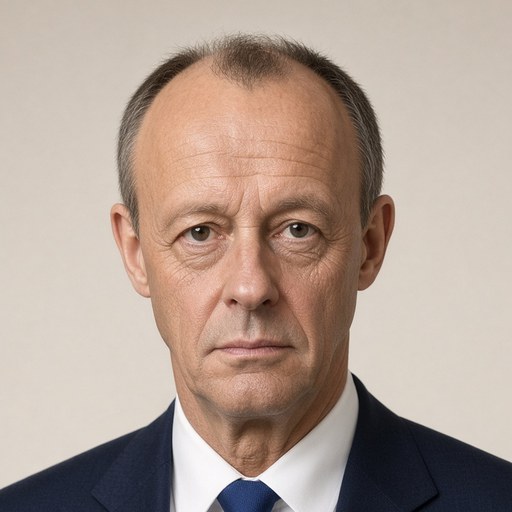
Speech by Chancellor Merz at the Day of the Construction Industry "We must build more simply"
 Friedrich Merz · Chancellor of Germany
- Context
- Merz addressed the Day of the Construction Industry on May 21, 2025, urging simpler, faster, and more affordable building to tackle Germany's housing shortage.
- Main themes
- Construction industry reform, affordable housing, bureaucracy reduction, skilled labor shortage, working hours and retirement incentives, active pension policy, building simplification, serial construction, approval processes, tax relief, economic recovery, integration of foreign workers
- Duration
- ~32 min
- Words
- 3,886
- Sentences
- 233
- Readability
- 59
- Grade
- 9.6
- Syntax
- 2.87
- Vocabulary
- 1.91
Translated from German
The broad sphere of national life a sentence belongs to. Every sentence has an Arena, so it is the denominator the other indices are read against.
Other233 sentences in 97 paragraphs
Dear Mr President, dear Mr Hübner,
ladies and gentlemen,
thank you very much for the kind welcome and the invitation to this place! Unlike last year, you are back in a solid building; that is nice too.
I am pleased that colleagues from the German Bundestag are here. I would have liked to hear Peer Steinbrück. I am, after all, one of those who like listening to Social Democrats
–
above all when they get older. Thank you for the approving and kind words about our coalition agreement, which we signed at this very spot just over two weeks ago. It feels to me like three months
–
so much has happened in the meantime in foreign policy and in European policy. In domestic policy we are still in the process of preparing the Cabinet's first decisions. They are to be put on the agenda next week and then adopted before the summer. But there is also a whole range of issues that will keep us busy for somewhat longer.
Let me perhaps give a brief description of where we stand now, in the summer of 2025. Ladies and gentlemen, first of all, foreign policy and foreign economic policy are in the foreground; for both the war in Ukraine and the Americans' trade policy are shaping our day-to-day work in government very strongly at the moment, and international politics as well. It was important to me that we very quickly send a signal from Germany that we want to make greater efforts than before to act once again in coordination with our representatives, our European partners, but also, wherever possible, in coordination with our American partners.
What we are currently experiencing in Ukraine, experiencing with Russia, makes me rather worried about the coming days, weeks and perhaps months. At the moment there are no signs that this war will end quickly. We are endeavouring to achieve everything possible through diplomatic means. The Italian Prime Minister
Giorgia Meloni
yesterday even made contact with the Holy Father, with the newly elected Pope, with whom there was an opportunity on Sunday in Rome to talk about this topic as well. But that is, so to speak, the last earthly authority, and we can all only hope that at least there it will be possible to bring the parties to the conflict together for constructive talks.
It was important to me that Germany play an active, facilitating, strong role in this. That cannot be done alone; it can only be done together with our European partners, that is
–
you kindly mentioned it
–
with France, but equally with our most important European partners in the East, with Poland. And thank God it can also be done together with Great Britain, which has unfortunately left the European Union, but which in foreign and security policy is making great efforts to walk this path now together with us, with the continental Europeans. I am being received in this circle of European heads of state and government with great personal approval, but it is not about me and my person, it is not even about the office; it is simply about the largest economy in Europe once again actively taking part in these processes in Europe in a manner appropriate to its weight and its size. That is what I am striving for, because I know that this applies not only to foreign and security policy; rather, it also applies to economic policy, it applies to trade policy, it applies to the completion of the European single market.
That brings me to a brief look at the United States of America in tariff policy, in trade policy. As you all know, trade policy is no longer the sole responsibility of the member states either, but is a matter for the European Union. There are only two areas that are so strongly European that the national member states no longer have them in their own hands: monetary policy and trade policy. At European level, too, we are endeavouring to find a way with America to settle the tariff conflict as quickly as possible. Other countries have already been able to make initial progress there
–
although of course always on shaky ground, on uncertain foundations. But at least there are recognisable signs that the American administration might be prepared to reach an arrangement with us so that we come down from these high tariffs. There is still a fair amount of persuading to be done.
High tariffs, economic policy and open and free trade are not a one-way street; nor are they zero-sum games that are, so to speak, offset against one another
–
one gets a little more and the other has a little less. Open markets and free trade
–
that has in any case always been our conviction and remains my personal conviction
–
serve everyone who takes part in them, and it is an advantage for everyone when markets are open, when there is open competition and above all when there is worldwide trade. I want this to be said from Europe
–
it is being said, we are saying it. But we still need to do a lot of persuading with the American administration and above all with the American President. I will visit him shortly and try, in this way too, to convince him to some extent that it is in our mutual interest that we do not escalate further into a tariff conflict here, but that we get out of it and that we agree with one another on tariffs at the lowest possible level, or ideally no tariffs at all. If we could then also arrive at mutual recognition of technological standards in various sectors
–
which is always the second side of trade policy, one that receives rather little attention
–
, then we would have a potential in transatlantic trade that we are not tapping at all at present and that could ensure prosperity on both sides of the Atlantic.
Ladies and gentlemen, these are, so to speak, the foreign policy and foreign economic policy framework conditions under which we are currently working in the new Federal Government. But we know that we must also devote all our energy to economic policy and domestic policy. I am grateful that today, less than a year after I was last with you, Mr Hübner, I have the opportunity to set out briefly what we in the new Federal Government have in mind when it comes to the question of how we can get our economy going again and what we then also want to do for the construction industry.
Let me begin with the economy in general. I am grateful to you for having expressed it that way once again. The foundation of our country, the foundation of our economy, is still there. We have a strong industry, we have a strong base. But if we are honest with one another: not just for the past three years, but for roughly a decade, we have no longer had the productivity in our country that we actually need to maintain prosperity, above all to finance our social security systems adequately. That means we will have to change a number of things here, do a number of things, to improve this.
From my point of view there are four points, which are perhaps also important in a certain order of priority. The very first is: we must get out of this truly ever more excessive bureaucracy! Now I am going to tell you something that you have all heard before, but I want to say it perhaps under a different sign from the one we have always used so far, with the heading "reducing bureaucracy" or, as I now put it, "dismantling bureaucracy": I am very grateful that we agreed with the Social Democrats in the coalition agreement that we want to change our mindset here. We want to get out of this culture of the state's mistrust towards the private sector and private households, and we want to move into a fundamental culture of trust towards the private sector and towards the people who live in our country. I believe that is a very important precondition if we want to manage simply to do better than in recent years and decades.
Hardly any law illustrates this so clearly, or makes it as visible, as this so-called Supply Chain Due Diligence Act. You see, I already know it by heart. But this really is the expression of deep mistrust. That none of us wants child labour, let alone wants to promote it, that we want to uphold working conditions, that we want to uphold human rights, nobody would dispute. That also applies to those who, like me, are of the opinion that the national law should be abolished, just like, ideally, the European directive. Something is expressed in it that we want to change. What needs to be expressed is that we fundamentally trust companies to make sure that they do not trade with countries or have upstream suppliers and suppliers involving inhumane conditions, child labour and exploitation. There will be a liability regime for this. But in return all the recording obligations and all the bureaucratic burdens will be drastically reduced.
We are also pushing for this in Brussels. I know: it makes no sense to abolish a supply chain due diligence act here and three years later get a comparable directive from Brussels that then turns the whole thing back again. In Brussels we must at least reform it fundamentally so that this basic mistrust is removed from what currently exists there, and so that we then talk, at most, about liability, but not about obligations to document things down to the smallest corner of the earth, which nobody can trace and which nobody can really record accurately.
You can bring it down to a supposedly small domestic issue. That is the issue of the Working Hours Act. You mentioned it, Mr Hübner. It was not entirely easy to get this into the coalition agreement. But here too it is about trust that workforces with their management, and employers with employees' organisations, are better able to judge how many hours a day people work. We want to cap it at 40 hours a week. That is the standard working time. How the 40 hours are divided up, over seven days or six days or five days or four days a week, we want to and must leave to the parties at company level and the parties to collective agreements. That is a piece of trust that we are giving back, where we are of the opinion: the state does not need to regulate this. You can do it better in your companies with your workforces!
The second big issue, ladies and gentlemen, is the burden of taxes and social contributions. That is probably the biggest chunk for us over the next few years, because here it is indeed a matter, first of all, of getting budgets into reasonable order, at any rate keeping their growth under control, and of reforming the social insurance systems. I admit: apart from declarations of intent, we have not yet written anything down on this in the coalition agreement. That is also damned difficult. But we have agreed in the coalition that we will launch a fundamental reform of pension insurance, long-term care insurance and health insurance respectively, also with the aim of limiting the constantly rising social insurance contributions and the constantly rising need for a federal subsidy, and of correcting them in the longer term. It is a mammoth task to accomplish this. We did not trust ourselves to do that in the coalition agreement in the short four weeks of negotiations. But we wrote down the intention, and it is meant seriously. I am very grateful to Lars Klingbeil, the Vice-Chancellor and Finance Minister, for emphasising once again over the weekend these days: here we really do have an ambitious reform agenda ahead of us that we want to deliver on. – I know what I am saying here, I know how difficult it is, but we have to do it if we do not at the same time want to let labour costs in Germany keep rising constantly.
The third point in this context, ladies and gentlemen, is of course also other costs that you have in companies, labour costs that you have. You can put all of that under the very big heading "labour costs in Germany". We want to try to correct and improve something here overall.
Last, but not least
: we need workers in Germany, yes. We need better use of the existing labour potential. I agree with what you said, Mr Hübner. However, I have just come from lunch with the German Council of Economic Experts. So allow me to go into this matter in, let us say, somewhat more detail. We cannot say quite so sweepingly: the Germans work too little. – Overall we have a volume of work that is too low, also in relation to the number of people living in Germany. But in Germany we have groups, above all among younger people, who work very, very much. Millions of hours of overtime are worked in Germany. In some sectors, in some areas, we really have a very, very high workload. But willingness to work and working time decline with increasing age, right up to the question of when we retire. Not everyone has to follow my example, but we must make sure that people who are still capable and who want to work can still work, and do so in Germany under reasonable conditions. That is why we will very soon introduce what we call the active pension, namely to create an economic incentive for those who have turned 67 and can nevertheless still work and want to work. We will combine this with a doubling of the basic tax allowance, that is, with 2,000 euros of tax-free income per month. I am very curious to see what effects this has, what incentive it creates for older people to work. In any case, this is the step we now want to take, in order in this way to give older people, too, a reasonable incentive to work longer. We need longer working lives. We know that, and we now want to go down this path first of all through these sensible incentives.
Ladies and gentlemen, these are, so to speak, the boundary conditions that apply to the economy as a whole, to all sectors. But in the last part I would like to come back to the construction industry. Mr Hübner, I accepted your invitation partly because – today is the first time in my new office that I am at an industry day of German business like this one – and I was glad to come here, because I assess precisely this role of the construction industry the way you described it. In your industry you have a disproportionately high gross value added per employee. It is a key industry for the question of whether this country, whether this economy, gets back on its feet and whether we move forward again. That applies in two respects: it applies to affordable private housing. That is probably one of the biggest social questions we are facing at the moment, and one to which we must give better answers than in the past.
I want to put it in very simple terms: in Germany we build too expensively, too complicatedly, and everything takes far too long. We are determined to change that. You just mentioned building type E. Germany is short of several hundred thousand homes a year, probably 500,000 and more. We must build more simply, we must build serially. I also appeal to the municipalities to make plots of land available. We need building land, land ready for building, and we then also need approval procedures that go faster. Ms Brantner just pointed out: in some federal states these deemed-approval rules already exist. Unfortunately we do not have a uniform state building code in Germany
–
we have 16 different ones
–
, but we can also do a number of things from the federal level. We are determined to do this, to promote it, and to bring about a situation in which building in Germany is faster, simpler and cheaper, so that a family on an average income in Germany can, as a rule, also afford to own a home. I think we simply owe it to the people in Germany that this offer continues to hold: anyone in Germany who earns a normal income must be able to acquire a normal home of their own. It is unacceptable that this is no longer possible in many large cities in Germany.
That brings me to the second big issue that concerns you, namely the expansion of infrastructure. Yes, you are right: we
–
in the transition from the 20th to the 21st German Bundestag
–
pushed through an amendment to the Basic Law in a tremendous effort between the two parliaments, firstly to do something for the Bundeswehr
–
I will come back to that in a moment, because it also affects you
–
, and secondly, in the infrastructure area, it was about the so-called special fund.
At first glance that sounds like a great deal
–
500 billion euros. But, ladies and gentlemen, that is spread over twelve years. That means we are at roughly 40 billion euros a year. We have planned roughly 150 billion euros of that for this legislative period. But if you put that in relation to our gross domestic product of over 4 trillion euros, it is a comparatively small amount. For the federal budget it is a great deal; for the economy it is fairly little. That is why it is now very important that we get the procedure right, that we set the right priorities with the implementing laws that are needed, so that this money really is invested in additional infrastructure, not in consumptive spending – and it is even more important that private capital is mobilised with it.
If we do not manage to use this money in such a way that, in a ratio of at least five to one
–
better: ten to one
–
additional private capital is mobilised for investment in infrastructure, then the effect of this money that many of us
–
you, and I too
–
hopefully associate with it will not materialise. So we will have to handle it carefully.
As I said, we still need two laws: one for the states and one for the federal level, which we have to do together. Then we must invest this money in the right place, namely in our country's infrastructure. In the panel discussion, which I was able to follow for a few minutes, you also raised the right issues on this.
Why is the issue of security, of the Bundeswehr, also important for you? Quite simply: on the way to the
NATO
summit at the end of June, we are in the process of committing ourselves to providing 3.5 percent of the
NATO
quota for military procurement and an additional 1.5 percent for infrastructure that has military relevance, for example for bridge roads or transport routes. That will provide the infrastructure sector with additional corresponding funds. But here too: the money must be spent carefully. It must be invested sustainably. It must be invested in such a way that it produces militarily usable infrastructure, which we then also build in Germany.
If you see all this in context, ladies and gentlemen, then I am back at the starting topic
–
our security.
We are often asked: what guiding vision do you have? What is, so to speak, the vision for Germany?
I am somewhat cautious with terms like vision; but I do have a guiding principle. I want us to remain and become a country
–
become, where we no longer are, and remain, where we are
–
that can first of all live in peace and freedom. Given what we are currently witnessing in the world, that is no longer a matter of course.
Then we want to be a country in which prosperity is possible, in which social security is possible, and in which there is the greatest possible social cohesion. That is why I am grateful to you for the words you found here, Mr Hübner. That is exactly the message we want to convey too. A country in freedom, a country at peace, but also a country in which the young generation in particular sees opportunities to be able to live in prosperity and social security, that is a damned high aspiration.
Ladies and gentlemen, for what Ludwig Erhard promised us Germans 70 years ago with the three words "prosperity for all" is no longer believed by the young generation today. For the first time we have a young generation in Germany that, probably rightly, has great doubts as to whether this promise of advancement and prosperity of our country, of our society, of our market economy order, which held true for my generation, still holds for their generation. That is exactly what we must work on. If we want to preserve our country's social cohesion, then not only are freedom and peace the basic preconditions, but precisely this prospect in life for young people in our country is also a basic precondition. If we achieve that, and also convey that we seriously want it, and we make progress step by step along this path
–
as we have resolved together in the coalition
–
, then
–
of this I am sure
–
we will also get out of this somewhat ambivalent mood again. Then the majority of Germans will not say "the glass is half empty", but will say "the glass is half full", and then we will go into the next few years with a reasonable degree of confidence. I, in any case, am firmly determined to do everything I can to that end. The Federal Government is determined to do everything we can do together, and together, ladies and gentlemen, means bearing responsibility for our country. It is not a case of saying "let them get on with it". Responsibility for our country lies with every single individual. It lies with 84 million inhabitants in Germany. Mr Hübner, it also lies with the parties to collective agreements, with those who sit at the table and, in free responsibility, negotiate the conditions that are absolutely essential for our labour market; that includes you.
I have spoken of responsibility. We wrote "Responsibility for Germany" above our coalition agreement. Last week, in my first government statement, I spoke about it at length. If we feel this responsibility together and exercise this responsibility together, then I am sure that we have a great chance of getting out of this mood again, namely of making growth possible again, of securing employment for the long term, and also of being a country in which people like to live cheerfully and with optimism.
Thank you very much.
The original German. The tags above are read on the English translation's sentences.
Sehr geehrter Herr Präsident, lieber Herr Hübner,
meine sehr geehrten Damen und Herren,
herzlichen Dank für die freundliche Begrüßung und die Einladung an diesen Ort! Im Gegensatz zum letzten Jahr gehen Sie wieder in ein befestigtes Gebäude; das ist ja auch schön.
Ich freue mich, dass Kolleginnen und Kollegen aus dem Deutschen Bundestag da sind. Ich hätte Peer Steinbrück gerne gehört. Ich gehöre ja zu denen, die Sozialdemokraten gerne hören
–
vor allen Dingen, wenn Sie älter werden. Ich bedanke mich für die zustimmenden und freundlichen Worte zu unserem Koalitionsvertrag, den wir vor gerade einmal gut zwei Wochen an dieser Stelle unterschrieben haben. Mir kommt es vor wie drei Monate
–
so viel ist in der Zwischenzeit in der Außenpolitik und in der Europapolitik geschehen. In der Innenpolitik sind wir noch auf dem Weg, die ersten Entscheidungen des Kabinetts vorzubereiten. Sie sollen in der nächsten Woche auf die Tagesordnung kommen und dann noch vor dem Sommer verabschiedet werden. Es gibt aber auch eine ganze Reihe von Themen, die uns noch für eine etwas längere Zeit beschäftigen werden.
Lassen Sie mich vielleicht eine kurze Beschreibung geben, wo wir jetzt, im Sommer des Jahres 2025, stehen. Meine Damen und Herren, zunächst einmal steht da die Außenpolitik und steht da die Außenwirtschaftspolitik im Vordergrund; denn sowohl der Krieg in der Ukraine als auch die Handelspolitik der Amerikaner bestimmen im Augenblick sehr stark unseren Alltag in der Regierung, aber auch in der internationalen Politik. Mir war es wichtig, dass wir sehr schnell aus Deutschland heraus ein Zeichen setzen, dass wir mehr als vorher darum bemüht sein wollen, wieder abgestimmt mit unseren Vertretern, europäischen Partnern, aber auch abgestimmt, wo immer möglich, mit unseren amerikanischen Partnern vorzugehen.
Das, was wir gegenwärtig in der Ukraine erleben, mit Russland erleben, lässt mich einigermaßen besorgt sein um die nächsten Tage, Wochen und vielleicht Monate. Es gibt im Augenblick keine Zeichen dafür, dass dieser Krieg schnell endet. Wir sind darum bemüht, auf diplomatischem Wege alles zu erreichen, was möglich ist. Die italienische Ministerpräsidentin
Giorgia Meloni
hat gestern dann sogar mit dem Heiligen Vater, mit dem neu gewählten Papst Kontakt aufgenommen, mit dem es am Sonntag Gelegenheit gab, auch über dieses Thema in Rom zu sprechen. Das ist dann aber sozusagen die letzte irdische Instanz, und wir können alle nur hoffen, dass es wenigstens dort gelingt, die Konfliktparteien zu einem konstruktiven Gespräch zusammenzubringen.
Mir war es wichtig, dass Deutschland dabei eine aktive, befördernde, starke Rolle spielt. Das geht nicht allein; das geht nur zusammen mit unseren europäischen Partnern, also
–
Sie haben es dankenswerterweise gesagt
–
mit Frankreich, aber genauso mit unseren wichtigsten europäischen Partnern im Osten, mit Polen. Und das geht Gott sei Dank auch zusammen mit Großbritannien, die nun leider aus der Europäischen Union ausgetreten sind, sich aber in der Außen- und Sicherheitspolitik sehr darum bemühen, mit uns zusammen, mit den Kontinentaleuropäern, jetzt diesen Weg gemeinsam zu gehen. Ich werde in diesem Kreis der europäischen Staats- und Regierungschefs mit großer persönlicher Zustimmung aufgenommen, aber es geht nicht um mich und meine Person, es geht auch gar nicht einmal um das Amt, sondern es geht einfach darum, dass die größte Volkswirtschaft Europas an diesen Prozessen in Europa ihrem Gewicht, ihrer Größe angemessen aktiv wieder teilnimmt. Darum bemühe ich mich, weil ich weiß, dass das nicht nur für die Außen- und Sicherheitspolitik gilt; vielmehr gilt es auch für die Wirtschaftspolitik, es gilt für die Handelspolitik, es gilt für die Vollendung des europäischen Binnenmarktes.
Damit bin ich dann schon mit einem kurzen Blick auf die Vereinigten Staaten von Amerika in der Zollpolitik, in der Handelspolitik. Wie Sie alle wissen, liegt auch die Handelspolitik nicht mehr in der alleinigen Zuständigkeit der Mitgliedstaaten, sondern ist Sache der Europäischen Union. Es gibt nur zwei Bereiche, die so stark europäisch sind, dass die nationalen Mitgliedstaaten sie nicht mehr in eigener Hand haben: Das ist die Währungspolitik und das ist die Handelspolitik. Wir sind eben auch auf europäischer Ebene darum bemüht, mit Amerika einen Weg zu finden, wie wir den Zollkonflikt möglichst schnell beilegen können. Andere Länder haben da schon erste Fortschritte erzielen können
–
obwohl natürlich immer auf schwankendem Boden, auf unsicherem Fundament. Aber immerhin, es gibt erkennbare Anzeichen dafür, dass die amerikanische Regierung bereit sein könnte, mit uns eine Verabredung zu treffen, dass wir von diesen hohen Zöllen herunterkommen. Da ist noch einiges an Überzeugungsarbeit zu leisten.
Hohe Zölle, Wirtschaftspolitik und offener und freier Handel sind keine Einbahnstraße; es sind auch nicht Nullsummenspiele, die man sozusagen gegeneinander aufrechnet
–
der eine bekommt ein bisschen mehr und der andere hat ein bisschen weniger. Offene Märkte und freier Handel
–
das ist jedenfalls immer unsere Überzeugung gewesen und bleibt auch meine persönliche Überzeugung
–
dienen allen, die daran teilnehmen, und es ist eben für alle ein Vorteil, wenn die Märkte offen sind, wenn es offenen Wettbewerb gibt und wenn es vor allen Dingen weltweiten Handel gibt. Ich möchte, dass das aus Europa heraus gesagt wird
–
das wird gesagt, das sagen wir. Wir brauchen da aber noch viel Überzeugungsarbeit mit der amerikanischen Regierung und vor allen Dingen mit dem amerikanischen Präsidenten. Ich werde ihn in Kürze besuchen und versuchen, ihn auch auf diesem Weg ein Stück weit davon zu überzeugen, dass es in unserem gegenseitigen Interesse liegt, dass wir uns hier nicht weiter in einen Zollkonflikt hineinsteigern, sondern dass wir da herauskommen und dass wir Zölle auf einem möglichst niedrigen Niveau bzw. am besten sogar gar keine Zölle miteinander verabreden. Wenn wir dann auch noch zu einer gegenseitigen Anerkennung technologischer Standard in verschiedenen Branchen kommen könnten
–
was ja immer die zweite Seite der Handelspolitik ist, die ein bisschen wenig Beachtung findet
–
, dann hätten wir ein Potenzial im transatlantischen Handel, das wir zurzeit überhaupt nicht ausschöpfen und das für Wohlstand auf beiden Seiten des Atlantiks sorgen könnte.
Meine Damen und Herren, dies sind sozusagen die außenpolitischen und außenwirtschaftspolitischen Rahmenbedingungen, unter denen wir zurzeit in der neuen Bundesregierung arbeiten. Wir wissen aber, dass wir unsere ganze Kraft auch der Wirtschaftspolitik und der Innenpolitik zuwenden müssen. Ich bin dankbar, dass ich heute, weniger als nach einem Jahr, nachdem ich zum letzten Mal bei Ihnen war, Herr Hübner, die Gelegenheit habe, auch einmal kurz vorzutragen, was wir uns in der neuen Bundesregierung vorstellen, wenn es um die Frage geht, wie wir unsere Volkswirtschaft wieder in Gang bringen können und was wir dann auch für die Bauindustrie tun wollen.
Lassen Sie mich mit der Volkswirtschaft im Allgemeinen beginnen. Ich bin Ihnen dankbar, dass Sie das noch einmal so zum Ausdruck gebracht haben. Die Basis unseres Landes, die Basis unserer Volkswirtschaft ist nach wie vor vorhanden. Wir haben eine starke Industrie, wir haben eine starke Basis. Aber wenn wir ehrlich miteinander sind: Nicht erst seit drei Jahren, schon seit ungefähr einem Jahrzehnt haben wir nicht mehr die Produktivität in unserem Lande, die wir eigentlich bräuchten, um den Wohlstand zu erhalten, vor allem, um unsere sozialen Sicherungssysteme ausreichend zu finanzieren. Das heißt, wir werden hier einiges verändern müssen, einiges tun müssen, um das zu verbessern.
Da gibt es aus meiner Sicht vier Punkte, die vielleicht auch in einer gewissen Rangfolge wichtig sind. Das Allererste ist: Wir müssen raus aus dieser wirklich immer weiter überbordenden Bürokratie! Jetzt sage ich Ihnen etwas, das Sie alle schon einmal gehört haben, aber ich will es vielleicht einmal unter einem anderen Vorzeichen sagen, als wir es bisher immer mit der Überschrift „Bürokratieabbau“ oder, wie ich es jetzt sage, mit „Bürokratierückbau“ versehen haben: Ich bin sehr dankbar, dass wir uns mit den Sozialdemokraten im Koalitionsvertrag darauf verständigt haben, dass wir hier einmal eine Veränderung unseres Mindsets haben wollen. Wir wollen raus aus dieser Kultur des Misstrauens des Staates gegen die Privatwirtschaft und die privaten Haushalte, und wir wollen rein in eine grundsätzliche Kultur des Vertrauens gegenüber der Privatwirtschaft und gegenüber den Menschen, die in unserem Lande leben. Ich glaube, das ist eine ganz wichtige Voraussetzung, wenn wir dazu kommen wollen, es einfach besser zu machen als in den letzten Jahren und Jahrzehnten.
Das macht sich an kaum einem Gesetz so deutlich fest oder wird an keinem so deutlich sichtbar wie an diesem sogenannten Lieferkettensorgfaltspflichtengesetz. Sie sehen, ich kann es schon auswendig. Aber dies ist eben wirklich der Ausdruck tiefen Misstrauens. Dass niemand von uns Kinderarbeit will oder gar fördern will, dass wir Arbeitsbedingungen, dass wir Menschenrechte einhalten wollen, das will niemand bestreiten. Das gilt auch für diejenigen, die wie ich der Meinung sind, man müsste das nationale Gesetz genauso abschaffen wie am besten die europäische Richtlinie. Es kommt darin etwas zum Ausdruck, das wir ändern wollen. Es muss nämlich zum Ausdruck kommen, dass wir den Unternehmen grundsätzlich vertrauen, dass sie darauf achten, dass sie nicht mit Ländern Handel treiben und Vorlieferanten und Zulieferer haben, die unter menschenunwürdigen Bedingungen mit Kinderarbeit und Ausbeutung verbunden sind. Es wird ein Haftungsregime dafür geben. Aber dafür werden die ganzen Aufzeichnungspflichten und die ganzen bürokratischen Lasten drastisch reduziert.
Dafür setzen wir uns auch in Brüssel ein. Ich weiß: Es ergibt keinen Sinn, hier ein Lieferkettensorgfaltspflichtengesetz abzuschaffen und drei Jahre später in Brüssel eine vergleichbare Richtlinie zu bekommen, die das Ganze dann wieder zurückdreht. Wir müssen das in Brüssel mindestens grundlegend so reformieren, dass aus dem, was es da zurzeit gibt, dieses grundsätzliche Misstrauen herauskommt und dass wir dann allenfalls über Haftung reden, aber nicht über Pflichten zur Dokumentation bis in den kleinsten Winkel der Erde, die niemand nachvollziehen kann und die niemand wirklich zutreffend aufschreiben kann.
Sie können es auf ein vermeintlich kleines innenpolitisches Thema bringen. Das ist das Thema Arbeitszeitgesetz. Sie haben es angesprochen, Herr Hübner. Es war nicht ganz einfach, dies in den Koalitionsvertrag hineinzubringen. Aber auch da geht es eben um das Vertrauen, dass Belegschaften mit ihren Geschäftsführungen und Arbeitgeber mit den Arbeitnehmerorganisationen besser in der Lage sind, zu beurteilen, wie viele Stunden man am Tag arbeitet. Wir wollen es auf 40 Stunden in der Woche begrenzen. Das ist die Regelarbeitszeit. Wie die 40 Stunden aufgeteilt werden, auf sieben Tage oder sechs Tage oder fünf Tage oder vier Tage in der Woche, das wollen und müssen wir den Betriebsparteien und den Tarifparteien überlassen. Das ist ein Stück Vertrauen, das wir zurückgeben und wo wir der Meinung sind: Das muss der Staat nicht regeln. Das können Sie in Ihren Unternehmen mit Ihren Belegschaften besser!
Das zweite große Thema, meine Damen und Herren, ist die Steuer- und Abgabenbelastung. Das ist für uns wahrscheinlich für die nächsten Jahre der größte Brocken, weil es hier in der Tat darum geht, zunächst einmal die Haushalte einigermaßen in Ordnung zu bringen, sie jedenfalls bei den Zuwächsen unter Kontrolle zu halten und die Sozialversicherungssysteme zu reformieren. Ich gebe zu: Wir haben hierzu im Koalitionsvertrag außer Absichtserklärungen noch nichts aufgeschrieben. Das ist auch verdammt schwierig. Aber wir haben in der Koalition verabredet, dass wir zur Rentenversicherung, Pflegeversicherung, Krankenversicherung jeweils eine grundlegende Reform auf den Weg bringen, auch mit dem Ziel, die ständig steigenden Sozialversicherungsbeiträge und die ständig steigende Notwendigkeit eines Bundeszuschusses zu begrenzen und in der längeren Perspektive auch zu korrigieren. Es ist eine Mammutaufgabe, das zu leisten. Das haben wir uns im Koalitionsvertrag in der Kürze der Verhandlungen von vier Wochen nicht zugetraut. Aber wir haben die Absicht aufgeschrieben, und die ist ernst gemeint. Ich bin Lars Klingbeil, dem Vizekanzler und Finanzminister, sehr dankbar, dass er in diesen Tagen über das Wochenende hinweg noch einmal betont hat: Hier haben wir wirklich eine ambitionierte Reformagenda vor uns, die wir einlösen wollen. – Ich weiß, was ich hier sage, ich weiß, wie schwierig das ist, aber wir müssen es machen, wenn wir nicht gleichzeitig die Arbeitskosten in Deutschland ständig weiter steigen lassen wollen.
Das Dritte in diesem Zusammenhang, meine Damen und Herren, sind natürlich auch sonstige Kosten, die Sie in den Unternehmen haben, Arbeitskosten, die Sie haben. Das können Sie alles unter die ganz große Überschrift „Arbeitskosten in Deutschland“ setzen. Wir wollen versuchen, hier in der Summe etwas zu korrigieren und zu verbessern.
Last, but not least
: Wir brauchen Arbeitskräfte in Deutschland, ja. Wir brauchen eine bessere Ausschöpfung des vorhandenen Arbeitskräftepotenzials. Ich stimme Ihnen zu in dem, was Sie gesagt haben, Herr Hübner. Ich komme allerdings gerade aus dem Mittagessen mit dem Sachverständigenrat. Deswegen erlauben Sie mir, dass ich vielleicht etwas, sagen wir einmal, detailgenauer auf diesen Sachverhalt eingehe. Wir können nicht so ganz pauschal sagen: Die Deutschen arbeiten zu wenig. – Wir haben in der Summe ein Arbeitsvolumen, das zu gering ist, auch auf die Zahl der Menschen, die in Deutschland leben, bezogen. Aber wir haben in Deutschland Gruppen, vor allen Dingen unter den Jüngeren, die sehr, sehr viel arbeiten. Wir haben Millionen von Überstunden, die in Deutschland gemacht werden. Wir haben in einigen Branchen, in einigen Bereichen wirklich eine sehr, sehr hohe Arbeitsbelastung. Aber die Arbeitsbereitschaft und die Arbeitszeit gehen mit zunehmendem Lebensalter zurück, bis hin zu der Frage, zu welchem Zeitpunkt wir in den Ruhestand gehen. Es müssen sich nicht alle an mir ein Beispiel nehmen, aber wir müssen aufpassen, dass die Menschen, die noch leistungsfähig sind und die arbeiten wollen, auch noch arbeiten können und dies in Deutschland unter vernünftigen Bedingungen tun. Deswegen werden wir sehr bald das einführen, was wir Aktivrente nennen, um nämlich einen ökonomischen Anreiz für diejenigen zu schaffen, die 67 geworden sind und trotzdem noch arbeiten können und arbeiten wollen. Wir werden das mit einer Verdopplung des Grundfreibetrages einhergehen lassen, also mit 2.000 Euro steuerfreiem Einkommen pro Monat. Ich bin sehr gespannt, welche Wirkungen das hat, welchen Anreiz das für die älteren Menschen auslöst, zu arbeiten. Das ist jedenfalls der Schritt, den wir jetzt einmal gehen wollen, um auf diese Art und Weise auch älteren Menschen einen vernünftigen Anreiz zu geben, noch länger zu arbeiten. Wir brauchen längere Lebensarbeitszeiten. Das wissen wir, und wir wollen diesen Weg jetzt zunächst einmal über diese vernünftigen Anreize gehen, das zu tun.
Meine Damen und Herren, das sind sozusagen die Randbedingungen, die für die gesamte Volkswirtschaft, für alle Branchen gelten. Aber ich will gerne noch einmal im letzten Teil auf die Bauindustrie zu sprechen kommen. Herr Hübner, ich habe Ihre Einladung auch deshalb angenommen – ich bin heute das erste Mal im neuen Amt auf einem Industrietag der deutschen Wirtschaft wie diesem – und bin gerne hierhergekommen, weil ich genau diese Rolle
der Bauindustrie so einschätze, wie Sie es gesagt haben. Sie haben in Ihrer Industrie eine überproportional hohe Bruttowertschöpfung der Beschäftigten pro Kopf. Es ist eine Schlüsselindustrie für die Frage, ob dieses Land, ob diese Volkswirtschaft, wieder auf die Beine kommt und ob wir wieder nach vorn kommen. Das gilt gleich in doppelter Hinsicht: Das gilt für den bezahlbaren, privaten Wohnraum. Das ist wahrscheinlich einer der größten sozialen Fragen, vor denen wir im Augenblick stehen, und auf die wir bessere Antworten als in der Vergangenheit geben müssen.
Ich will es auf einen ganz einfachen Nenner bringen: Wir bauen in Deutschland zu teuer, zu kompliziert, und es dauert alles viel zu lange. Daran sind wir entschlossen etwas zu ändern. Sie haben eben den Gebäudetyp E angesprochen. Es fehlen uns mehrere 100.000 Wohnungen im Jahr in Deutschland, wahrscheinlich 500.000 und mehr. Wir müssen einfacher bauen, wir müssen seriell bauen. Ich appelliere auch an die Gemeinden, Grundstücke zur Verfügung zu stellen. Wir brauchen Bauland, baureifes Bauland, und wir brauchen dann eben auch Genehmigungsverfahren, die schneller gehen. Frau Brantner hat eben darauf hingewiesen: In einigen Bundesländern gibt es bereits diese Genehmigungsfiktionen. Wir haben leider keine einheitliche Landesbauordnung in Deutschland
–
da haben wir 16 verschiedene
–
, aber wir können da auch vom Bund aus einiges machen. Wir sind entschlossen, das zu tun, das zu fördern, und auf den Weg zu bringen, dass in Deutschland schneller, einfacher und preisgünstiger gebaut wird, sodass sich eine durchschnittlich verdienende Familie in Deutschland im Regelfall auch Wohneigentum leisten kann. Ich finde, das sind wir einfach den Menschen in Deutschland schuldig, dass dieses Angebot weiter gilt: Wer in Deutschland normal verdient, der muss ein normales Wohneigentum erwerben können. Es ist inakzeptabel, dass das in vielen großen Städten in Deutschland nicht mehr geht.
Dann bin ich bei dem zweiten großen Thema, das Sie beschäftigt, nämlich der Ausbau der Infrastrukturen. Ja, Sie haben Recht: Wir haben
–
im Übergang vom 20. auf den 21. Deutschen Bundestag
–
in einem Kraftakt zwischen den beiden Parlamenten eine Grundgesetzänderung auf den Weg gebracht, um zum einen etwas für die Bundeswehr zu tun
–
darauf komme ich gleich zurück, weil das nämlich auch Sie betrifft
–
, zum zweiten ging es im Infrastrukturbereich um das sogenannte Sondervermögen.
Das klingt auf den ersten Blick sehr, sehr viel
–
500 Milliarden Euro. Aber, meine Damen und Herren, das ist für zwölf Jahre angelegt. Das heißt, dann sind wir ungefähr bei 40 Milliarden Euro pro Jahr. Wir haben uns für diese Wahlperiode ungefähr 150 Milliarden Euro davon vorgenommen. Aber wenn Sie das einmal zu unserem Bruttoinlandsprodukt von über 4 Billionen Euro ins Verhältnis setzen, dann ist das ein vergleichsweise kleiner Betrag. Für den Bundeshaushalt ist es sehr viel; für die Volkswirtschaft ist es ziemlich wenig. Deswegen kommt es jetzt sehr darauf an, dass wir das im Verfahren richtig machen, dass wir mit den Errichtungsgesetzen, die notwendig sind, die richtigen Prioritäten setzen, sodass dieses Geld wirklich in die zusätzliche Infrastruktur investiert wird, nicht in die konsumtiven Ausgaben – und es kommt noch mehr darauf an, dass damit auch privates Kapital mobilisiert wird.
Wenn wir es nicht hinbekommen, dieses Geld so einzusetzen, dass im Verhältnis von mindestens fünf zu eins
–
besser: zehn zu eins
–
privates Kapital zusätzlich an Investitionen in die Infrastruktur mobilisiert wird, dann wird die Wirkung dieses Geldes, die viele von uns
–
Sie, ich auch
–
damit hoffentlich verbinden, nicht eintreten. Wir werden damit also sorgfältig umgehen müssen.
Wir brauchen, wie gesagt, noch zwei Gesetze: eins für die Länder und eins für den Bund, das wir gemeinsam machen müssen. Dann müssen wir dieses Geld an der richtigen Stelle investieren, eben in die Infrastruktur unseres Landes. Sie haben in der Podiumsdiskussion, die ich einige Minuten verfolgen konnte, dazu auch die richtigen Themen angesprochen.
Warum ist das Thema Sicherheit, Bundeswehr, auch für Sie wichtig? Ganz einfach: Wir sind auf dem Weg zum
NATO
-Gipfel Ende Juni dabei, uns zu verpflichten, 3,5 Prozent der
NATO
-Quote für die militärische Beschaffung und zusätzlich 1,5 Prozent für die Infrastruktur zur Verfügung zu stellen, die militärische Relevanz hat, also etwa für Brückenstraßen oder Transportwege. Das wird den Bereich der Infrastruktur zusätzlich mit entsprechenden Mitteln versehen. Aber auch hier gilt: Das Geld muss sorgfältig ausgegeben werden. Es muss nachhaltig investiert werden. Es muss so investiert werden, dass daraus eine militärisch nutzbare Infrastruktur entsteht, die wir dann auch in Deutschland bauen.
Wenn Sie dies alles im Zusammenhang sehen, meine Damen und Herren, dann bin ich damit beim Ausgangsthema
–
unsere Sicherheit
–
zurück. Wir werden häufig gefragt: Was habt ihr denn für ein Leitbild? Was ist sozusagen die Vision für Deutschland?
Ich bin mit solchen Begriffen wie Vision etwas vorsichtig; aber ein Leitbild habe ich schon. Ich möchte, dass wir ein Land bleiben und werden
–
werden, wo wir es nicht mehr sind, und bleiben, wo wir es sind
–
, das zunächst einmal in Frieden und Freiheit leben kann. Das ist angesichts dessen, was wir zurzeit auf der Welt erleben, nicht mehr selbstverständlich.
Dann wollen wir ein Land sein, in dem Wohlstand möglich ist, in dem soziale Absicherung möglich ist, und in dem es einen möglichst großen gesellschaftlichen Zusammenhalt gibt. Deswegen bin ich Ihnen für die Worte dankbar, die Sie hier gefunden haben, Herr Hübner. Das ist genau die Botschaft, die wir auch geben wollen. Ein Land in Freiheit, ein Land im Frieden, aber auch ein Land, in dem insbesondere die junge Generation Chancen erkennt, in Wohlstand und sozialer Sicherheit leben zu können, das ist ein verdammt hoher Anspruch.
Meine Damen und Herren, denn das, was Ludwig Erhard uns Deutschen vor 70 Jahren mit den drei Worten „Wohlstand für alle“ versprochen hat, wird uns von der jungen Generation heute nicht mehr geglaubt. Wir haben das erste Mal eine junge Generation in Deutschland, die wahrscheinlich zu Recht große Zweifel daran hat, ob dieses Aufstiegs- und Wohlstandsversprechen unseres Landes, unserer Gesellschaft, unserer marktwirtschaftlichen Ordnung, das für meine Generation gegolten hat, auch für ihre Generation noch Bestand hat. Genau daran müssen wir arbeiten. Wenn wir den gesellschaftlichen Zusammenhalt unseres Landes erhalten wollen, dann sind nicht nur Freiheit und Frieden die Grundvoraussetzungen, dann ist auch genau diese Lebensperspektive für junge Menschen in unserem Land eine Grundvoraussetzung. Wenn wir das schaffen und auch vermitteln, dass wir das ernsthaft wollen, und wir Schritt für Schritt auf diesem Weg vorankommen
–
wie wir uns das in der Koalition gemeinsam vorgenommen haben
–
, dann
–
so bin ich mir sicher
–
kommen wir auch aus dieser etwas ambivalenten Stimmung wieder heraus. Dann wird die Mehrheit der Deutschen nicht sagen „Das Glas ist halb leer“, sondern sie wird sagen „Das Glas ist halb voll“, und dann gehen wir mit einigermaßen Zuversicht in die nächsten Jahre. Ich jedenfalls bin fest entschlossen, alles dafür zu tun, was ich tun kann. Die Bundesregierung ist dazu entschlossen, alles zu tun, was wir gemeinsam tun können, und gemeinsam heißt, meine Damen und Herren, Verantwortung für unser Land zu tragen. Da ist nicht zu sagen „die sollen das einmal machen“. Die Verantwortung für unser Land liegt bei jedem einzelnen. Sie liegt bei 84 Millionen Einwohnerinnen und Einwohnern in Deutschland. Herr Hübner, sie liegt auch bei den Tarifvertragsparteien, bei denen, die am Tisch sitzen und in freier Verantwortung die Bedingungen aushandeln, die für unseren Arbeitsmarkt ganz wesentlich sind; das sind auch Sie.
Ich habe von Verantwortung gesprochen. Wir haben „Verantwortung für Deutschland“ über unseren Koalitionsvertrag geschrieben. Ich habe in der letzten Woche in meiner ersten Regierungserklärung ausführlich darüber gesprochen. Wenn wir diese Verantwortung gemeinsam empfinden und diese Verantwortung gemeinsam wahrnehmen, dann bin ich sicher, dass wir eine große Chance haben, aus dieser Stimmung wieder herauszukommen, nämlich wieder Wachstum zu ermöglichen, Beschäftigung dauerhaft zu sichern und auch ein Land zu sein, in dem die Menschen gern fröhlich und mit Optimismus leben.
Herzlichen Dank.